
In This Article
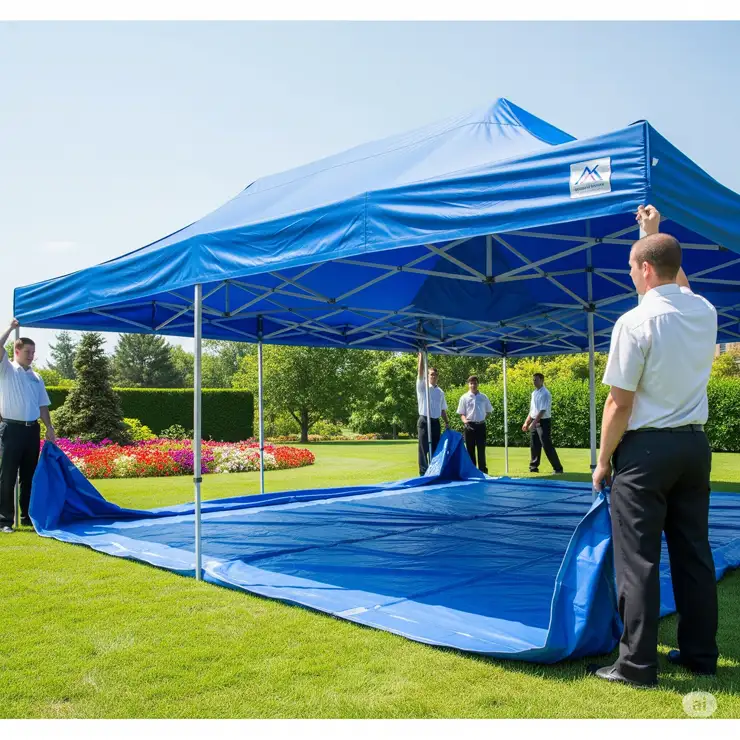
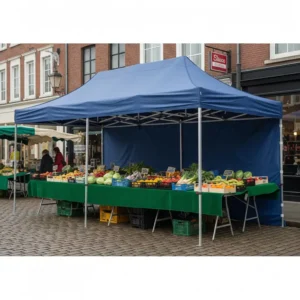
A 20×20 pop up tent is a portable canopy that covers a 20-by-20-foot footprint, which works out to 400 square feet of shade, and goes up without any permanent foundation. Some models use a true scissor-style instant frame. Most big-box versions are sectional frames that assemble in under an hour. Either way, you are buying a small pavilion that fits in a few storage bags.
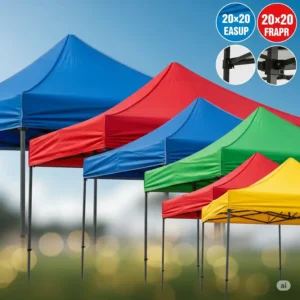
Here is the thing nobody mentions on the listing page: a 20×20 pop up tent is not a bigger 10×10. It behaves differently. Four times the roof area means four times the wind to catch, so the jump from “cute shade for the cooler” to “backyard wedding reception” comes with real engineering consequences. As outdoor gear reviewers at Outdoor Life point out, a canopy deserves the same care you’d give a camping tent if you want it to survive wind, rain, and sun.
I built this guide the honest way. The specs come from manufacturer and retailer listings. The review sentiment is aggregated from public buyer feedback. The analysis is reasoning from those two things, not claimed hands-on testing. You’ll get seven real options, what the numbers actually mean, and the anchoring and safety rules that decide whether your party stays up.
Quick Comparison: 20×20 Pop Up Tent Options at a Glance
Before the deep dive, here is the short version. Price ranges are approximate and based on retail listings at the time of research. They move constantly, so check current price before you buy.
| Product | Standout Feature | Wind Claim (Anchored) | Approx. Price Range | Best For |
|---|---|---|---|---|
| Quictent Premium 20×20 Reinforced Heavy Duty Party Tent | 38mm galvanized steel frame | Verify on listing | $400-$650 | Frequent, long-term use |
| COBIZI 20×20 Party Tent | Built-in sandbags, UV50+ | Up to 25 mph claimed | $300-$600 | First-time buyers |
| HOTEEL 20×20 Heavy Duty Canopy Tent | Many variants and sidewall options | Verify on listing | $300-$450 | Value shoppers |
| GARTOO 20×20 Heavy Duty Party Tent | 10.17 ft peak, banquet-friendly | Stow above roughly 34-39 mph | $350-$600 | Seated events |
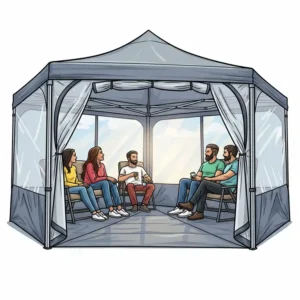
| EROMMY 20×20 Heavy Duty Party Tent | 8 sidewalls, 2 roll-up doors | Up to 25 mph claimed | $350-$600 | Weather enclosure |
| Westshade 20×20 Pop-Up Canopy | Aluminum true instant frame | Model-dependent | Premium, quote-based | Vendors, branded events |
| Outsunny 10′ x 20′ Pop Up Canopy Tent | UPF50+ roof, 200 sq ft | 6-7 level winds claimed | Around $200 | Smaller gatherings |
Read that table with one eye on the “Best For” column. The Quictent Premium and Westshade lean toward people who will use the tent repeatedly. The COBIZI and HOTEEL are the low-friction entry points. The Outsunny is the odd one out, deliberately included as a half-size sanity check for anyone who doesn’t truly need 400 square feet.
💬 Just one click — help others make better buying decisions too!😊
Top 7 20×20 Pop Up Tent Picks: Expert Analysis
One honesty note first. Many listings sold as a “20×20 pop up tent” are really sectional frame tents with a pop-up-style top. They go together in about an hour with two or three people. A true one-motion instant frame at this size is rarer and pricier. Each entry below says which kind you’re getting.
1. Quictent Premium 20×20 Reinforced Heavy Duty Party Tent — sturdiest frame in this lineup
The frame is the reason this tent tops the list. Reviewers who compare 20×20 options describe a 38mm (1.5-inch) galvanized steel tube frame with 42mm metal connectors, specs that beat most competitors in this size class.
On paper, thicker tube walls mean less flex when a gust hits a 400-square-foot roof. Connectors are where cheap tents usually fail first, so beefier ones matter. The package ships with three storage bags, which tells you something about the weight you’ll be hauling. This is a “set up once for the season” tent, not a “toss it in the trunk” one.
Based on the spec comparison, this suits people hosting repeat events: recurring family gatherings, a seasonal market stall, a yearly party. Buyer feedback in published reviews highlights responsive customer support that replaces missing or damaged parts quickly, which counts for a lot with a multi-box tent where one missing connector can stall setup.
Pros:
- ✅ Thick galvanized steel frame and connectors
- ✅ Three storage bags for organized hauling
- ✅ Support reportedly replaces missing parts fast
Cons:
- ❌ Heavy, so setup needs several adults
- ❌ Priced above entry-level 20×20 options
Expect roughly $400-$650 depending on sidewall kit and sale timing. Verdict: the best long-term value if you’ll use it more than twice a year.
2. COBIZI 20×20 Party Tent — built-in sandbags, easiest to anchor
Anchoring is the hardest part of owning a tent this size, and the COBIZI quietly solves part of it. The listing describes built-in sandbags alongside ropes and stakes, plus UV50+ fabric.
The numbers: a 20×20 footprint, roughly 10.5 feet to the peak and 6.9 feet at the eave. That eave height is fine for seated guests but tight for a tall person standing near the edge, so plan the layout accordingly. The manufacturer claims it can handle winds up to 25 mph when fully secured, a modest but honest figure. Treat it as a “pack it up when the forecast turns” tent, not a storm shelter.
On the retailer listing I reviewed, the tent showed roughly 4.6 out of 5 across about 190 ratings. Reviewers repeatedly mention that the instruction manual is clear and that assembly and takedown are manageable. It ships in two boxes, which is gentler than some competitors.
Pros:
- ✅ Built-in sandbags speed up anchoring
- ✅ UV50+ fabric for sunny afternoons
- ✅ Clear instructions praised by buyers
Cons:
- ❌ 25 mph claim is modest for exposed sites
- ❌ Low eave height limits headroom at edges
Check current price; heavy-duty 20×20 tents from this tier generally land around $300-$600. Verdict: the friendliest first 20×20 pop up tent for new owners.
3. HOTEEL 20×20 Heavy Duty Canopy Tent — widest variant choice
Choice is the story here. The HOTEEL shows up on retail listings with around eight configuration options, so you can match sidewalls and extras to your event instead of paying for a kit you don’t need.
It’s marketed as a waterproof, commercial-style canopy for weddings and large events. Detailed frame gauges vary by variant and are not always spelled out, so confirm tube thickness and wind rating on the exact listing you choose. That’s the downside of a variant-heavy product: the spec sheet you read may not describe the tent that arrives.
On the listing I reviewed, the tent had close to 200 reviews, a decent sample, and it has been tagged a best seller on at least one retailer. Many 20×20 buyers lean on that kind of social proof when comparing unfamiliar brands.
Pros:
- ✅ Many size and sidewall configurations
- ✅ Frequently discounted below list pricing
- ✅ Decent review volume for the category
Cons:
- ❌ Specs differ across variants, so verify carefully
- ❌ Shipping costs sometimes added by sellers
Expect roughly $300-$450 at the time of research. Verdict: a smart value pick if you read the exact variant’s specs first.
4. GARTOO 20×20 Heavy Duty Party Tent — built around banquet seating
If your event involves tables, the GARTOO has the geometry. Its 400 square feet and 10.17-foot peak reportedly seat up to six banquet tables with chairs while leaving headroom that doesn’t make guests duck.
Here’s what that means in practice: six tables is a mid-sized reception or family reunion. Buyers describe setups on both grass and concrete using the included L-shaped stakes and wind ropes. Remember, stakes don’t grip pavement, so on concrete you’ll need proper weights on every leg.
The manufacturer is refreshingly blunt: it advises stowing the tent when winds exceed roughly 34-39 mph, even with sandbags. That honesty is a green flag. A brand that tells you its limits is usually one that has thought about them.
Pros:
- ✅ Roomy peak height for banquet layouts
- ✅ Includes L-shaped stakes and wind ropes
- ✅ Honest, clearly stated wind limits
Cons:
- ❌ Not meant for prolonged high-wind exposure
- ❌ Needs extra weights on hard surfaces
Plan on roughly $350-$600. Verdict: the pick for seated-dinner hosts.
5. EROMMY 20×20 Heavy Duty Party Tent — most weather enclosure for the money
Think of the EROMMY as the “bad weather insurance” option. The listing bundles eight removable sidewalls, two roll-up doors, and two storage bags, which together turn an open canopy into a partially enclosed room.
That enclosure is genuinely useful: sidewalls block low-angle sun, drizzle, and nosy breezes. The catch is physics. Closed sidewalls turn the tent into a sail, so in gusty conditions you should remove them first. The listing states a wind range of around 25 mph with extended covers on the sidewalls and a thickened base for stability.
Retail pages show strong sales volume, but individual-listing ratings are mixed and hard to attribute cleanly, so read recent reviews on your exact variant rather than trusting a headline star number.
Pros:
- ✅ Eight sidewalls plus two roll-up doors
- ✅ Thickened base improves stability
- ✅ Two storage bags included
Cons:
- ❌ Sidewalls magnify wind load when closed
- ❌ Mixed review signals demand careful reading
Roughly $350-$600 at the time of research. Verdict: ideal for rainy-region hosts who will actually use the walls.
6. Westshade 20×20 Pop-Up Canopy — true instant frame, custom printing
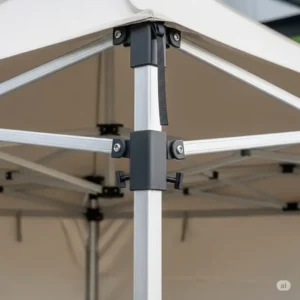
This is the grown-up in the room. Westshade builds its pop-up canopy frames from aluminum that it describes as both lightweight and heavy-duty, and offers custom printing so your logo or brand can ride on the roof.
Here’s why that matters: aluminum won’t rust, and a scissor-style instant frame pops open far faster than a sectional tent. The tradeoff is price and, in some designs, long-term rigidity compared with thick steel. Industry commentary on 20×20 canopies notes that aluminum trades some stiffness for lighter weight, while galvanized steel handles wind shear better when properly staked.
Who should care? Vendors, festival exhibitors, and anyone who will erect and strike the tent weekly. For them, speed and branding often justify the premium. For a once-a-summer backyard party, it’s probably overkill.
Pros:
- ✅ Aluminum frame resists rust and weight
- ✅ Custom branding options available
- ✅ Fast true pop-up deployment
Cons:
- ❌ Premium pricing versus big-box tents
- ❌ Aluminum can flex more than thick steel
Pricing is premium and quote-based, so check current price directly. Verdict: worth it for working vendors, not casual hosts.
7. Outsunny 10′ x 20′ Pop Up Canopy Tent — budget half-size alternative with UPF50+
Not every event needs 400 square feet, and the Outsunny is here as an honest reality check. At 200 square feet it covers about half the area, but it brings a UPF50+ 300D Oxford roof, a powder-coated steel frame, three push-button height settings, and a full anchoring kit with 12 spiral stakes, six guy ropes, and six sandbags.
The manufacturer claims a setup time near 30 minutes without tools and rates the tent for level 6-7 winds. Treat that as a best-case figure. Buyer feedback on one retailer listing averaged about 3.9 out of 5 across roughly 160 reviews, with the most common complaint being that it is not suitable for moderate wind and prone to breaking. Setup typically needs two or three people.
Two of these side by side can mimic a 20×20 footprint for less money, though the seam between them needs a plan.
Pros:
- ✅ UPF50+ fabric for strong sun blocking
- ✅ Complete anchoring kit included
- ✅ Wheeled bag simplifies transport
Cons:
- ❌ Only 200 square feet of coverage
- ❌ Some reviewers report wind-related damage
Around $200 at the time of research. Verdict: the budget choice for smaller groups, but skip it if wind is routine.
How to Choose a 20×20 Pop Up Tent
A 20×20 pop up tent is chosen by weighing frame strength, roof fabric, anchoring method, and fire or permit requirements against how often you’ll use it. Work through these steps in order.
- Decide your frequency of use. One party a year can live with a lighter frame. Weekly use demands steel or quality aluminum.
- Check the frame specifics. Tube thickness and connector size tell you more than adjectives like “heavy duty.”
- Read the roof honestly. “Waterproof” and “water-resistant” are not synonyms. Look for fabric weight and a UPF rating.
- Confirm the wind claim and its conditions. Any stated mph figure assumes proper anchoring, and some listings cap at only 20-25 mph.
- Match anchoring to your surface. Stakes for soil, weights for pavement. Never assume one kit does both.
- Verify fire certification if renting out or hosting publicly. Some venues and jurisdictions require flame-retardant ratings.
- Budget for extras. Weights, sidewalls, and a ground tarp can add real money.
Common Mistakes When Buying a 20×20 Pop Up Tent
The most common mistake is trusting the headline wind number. A listing’s “30 mph” is typically a best-case figure with every stake driven and every guy line tensioned. Real sites have gusts, slopes, and soft soil.
The second mistake is underbuying for the surface. Shoppers see “stakes included” and assume they’re covered, then discover their patio is concrete. Stakes won’t hold on pavement, so a 20×20 pop up tent on a hard surface needs weights on every leg, full stop.
Third, people forget the labor. A 20×20 pop up tent isn’t a solo project, and several buyer reviews on retail listings note that setup went faster with extra hands. Budget two to four adults and a quiet hour.
Fourth, ignoring storage. A heavy steel tent spans multiple bags. If your garage is already full, that matters.
Finally, many buyers skip the permit question. Larger tents sometimes require a fire-department review for public events, depending on your city. A five-minute phone call beats a shut-down reception.
Features That Actually Matter (And Those That Don’t)
Let’s cut through the listing poetry.
What matters: frame tube thickness, connector quality, roof fabric weight, how the roof attaches to the frame, and whether the anchoring kit actually suits your ground. Sidewall quality matters if you’ll use them, because zippers and attachment points are common failure spots.
What barely matters: the number of sidewall windows, decorative scalloped trim, and bundled extras like cheap stakes you’ll replace anyway. Color is mostly aesthetic, though lighter roofs keep the interior cooler and make people look better in photos. That’s not nothing.
A fair filter: if a feature doesn’t change how the tent handles wind, rain, sun, or setup, it’s decoration. Spend your money on the first group.
One more subtlety. Peak height and eave height are different numbers. A listing may boast a 10-foot peak while the eave sits near 7 feet, which affects how usable the outer ring of the tent is. Bring a tape measure when planning your table layout.
20×20 Pop Up Tent vs Alternatives
How does a 20×20 pop up tent compare with the other ways to shelter a crowd? Here is the breakdown.
| Option | Setup Effort | Wind Handling | Coverage | Best For |
|---|---|---|---|---|
| 20×20 pop up tent | Moderate (2-4 people) | Moderate with anchoring | 400 sq ft | Backyard events, markets |
| Two 10×10 canopies | Low (1-2 people each) | Moderate each | 200 sq ft total unless joined | Flexible small groups |
| Rented professional tent | Delivered and installed | High, engineered | Scalable | Weddings, large events |
| Permanent pergola/gazebo | High, one-time | High | Fixed | Daily home use |
A 20×20 pop up tent hits a sweet spot between portability and coverage. Two smaller canopies are easier to handle individually, but the gap between them leaks rain and rarely looks polished. A professional rental wins on wind engineering and labor, though you’ll pay for the service. Pergolas win for permanence, but they’re not leaving the yard with you.
For most hosts planning two or three events a year, owning a 20×20 pop up tent costs less than renting once or twice, as long as you accept the anchoring responsibilities.
✨ Don’t Miss These Exclusive Deals!
🔍 Ready to upgrade your outdoor gatherings? Click any highlighted product name above to check current pricing and availability. These tents can help you create shaded, comfortable memories your guests will talk about!
What to Expect: Real-World Performance of a 20×20 Pop Up Tent
Performance comes down to wind, rain, and heat, in that order.
Wind. A 400-square-foot roof catches wind like a sail. Published guidance generally says canopies should come down once sustained winds pass roughly 30 mph, and many listings claim only 20-25 mph. In practice, gusts matter more than averages, so watch the forecast hourly.
Rain. Most budget roofs shed light-to-moderate rain, but pooling is the enemy. A sagging roof holds water that stresses the frame. Look for designs with drainage holes or a steep pitch, and push up from underneath if water collects.
Heat. Shade reduces temperature but doesn’t eliminate it. A white roof reflects more heat than darker colors, and opening sidewall windows or rolling up doors encourages airflow.
Comfort. Plan for roughly 10-12 square feet per seated guest at tables, which puts a 20×20 pop up tent around 35-40 people at rounds, fewer with a buffet line. Standing cocktail setups fit more.
The practical takeaway: treat any 20×20 pop up tent as a fair-weather structure with some weather tolerance, not a storm shelter.
Safety, Wind, and Sun: A 20×20 Pop Up Tent Compliance Guide
Safety is the most overlooked section in most tent reviews. Take it seriously.
Anchoring numbers are bigger than you think. One city fire department’s tent guidelines recommend a 15 pounds-per-square-foot load with a 1.5 safety factor when manufacturer charts are unavailable, which works out to 22.5 pounds per square foot. See the Bloomington Fire Department tent application for the framework. For 400 square feet, that implies thousands of pounds of ballast, far more than the sandbag sets in a typical kit. The takeaway: follow the manufacturer’s anchoring chart and don’t treat bundled bags as a guarantee.
Know your wind limits. The same guideline suggests evacuating tents at no more than 25 mph unstaked or 30 mph staked without engineered plans.
Sun protection. The Skin Cancer Foundation notes that fabric used in shade structures should have a UPF of 30 or higher, and that reflected UV can still reach you from the sides. Shade helps, but it isn’t a substitute for sunscreen and hats.
Fire safety. Keep heaters, grills, and open flames well away from the fabric, and check whether your venue requires flame-retardant certification.
Long-Term Cost and Maintenance of a 20×20 Pop Up Tent
The sticker price is only the opening bid. Here is a realistic view of total cost of ownership.
| Cost Item | Typical Range | Notes |
|---|---|---|
| Tent itself | $200-$650 | Based on retail listings; varies widely |
| Weights/ballast | $50-$200 | Essential on hard surfaces |
| Sidewalls (if not included) | $60-$200 | Optional but often worth it |
| Replacement parts/repairs | $20-$100 per year | Connectors and fabric patches |
| Storage solution | $0-$50 | Bins or shelving for heavy bags |
Looking at the numbers, a tent in the $400-$600 band that lasts five seasons works out to roughly $80-$120 per year, which compares favorably with a single professional rental. A cheaper tent that survives one or two seasons can cost more per year than a sturdier one. Cost-per-use is the metric to watch.
Maintenance is simple but non-negotiable. Dry the fabric completely before storing to prevent mildew, rinse off pollen and dust, and lubricate moving joints lightly. Inspect connectors before every use. Small cracks grow when stressed.
Practical Usage Guide: Setting Up a 20×20 Pop Up Tent the Right Way
Amazon listings tell you the tent exists. They rarely tell you how to survive the first install.
Before you start: check the forecast, clear the ground, and recruit helpers. A 20×20 pop up tent goes together best with three or four people, so schedule it like a mini project.
Setup order:
- Lay out all parts and confirm everything is present.
- Assemble the frame on the ground, then raise it in stages.
- Attach the roof before final height adjustment, which makes it easier to tension evenly.
- Anchor every leg right away, before adding sidewalls.
- Add sidewalls last, and only if conditions are calm.
First 30 days: re-check bolts and connectors after your first use, since vibration loosens fasteners. Watch for fabric stretch near the corners.
Common first-month mistakes: skipping the second anchor on each leg, leaving sidewalls up in gusts, and folding a damp roof into storage. The last one is the leading cause of mildew complaints.
A tip that costs nothing: photograph the assembled frame once. Next season, that picture saves twenty minutes of head-scratching.
Real-World Scenarios: Matching a 20×20 Pop Up Tent to Your Life
Specs mean more when attached to a person. Here are three profiles.
The weekend backyard host. Picture a family hosting two summer cookouts and a graduation party, on grass, with a $400 budget. The COBIZI 20×20 Party Tent or HOTEEL 20×20 Heavy Duty Canopy Tent fits: easy setup, adequate coverage, and stakes that grip soil. Sidewalls are optional, so skip the pricier kit.
The farmers market vendor. A vendor setting up weekly on asphalt needs speed, branding, and durability. The Westshade 20×20 Pop-Up Canopy earns its premium here, because an instant aluminum frame and custom print pay back across dozens of events. Heavy weights on every leg are mandatory on pavement.
The wedding or banquet host. A couple planning a seated outdoor reception for around 35 guests wants headroom and layout flexibility. The GARTOO 20×20 Heavy Duty Party Tent fits six banquet tables, and the Quictent Premium 20×20 Reinforced Heavy Duty Party Tent offers a sturdier frame if the tent stays up for days. Either way, check local permit rules and have a rain plan.
In all three cases, the common thread is honesty about frequency, surface, and weather. Match those, and the right tent usually becomes obvious.
Buyer’s Decision Framework for a 20×20 Pop Up Tent
If you want a shortcut, use this checklist.
- If you’ll use it more than four times a year, choose the Quictent Premium 20×20 Reinforced Heavy Duty Party Tent for its steel frame, because durability beats price over time.
- If it’s your first purchase and the ground is grass, choose the COBIZI 20×20 Party Tent because the anchoring is simplified.
- If your region is rainy, choose the EROMMY 20×20 Heavy Duty Party Tent for sidewalls and doors, and remove them in wind.
- If you need tables and headroom, choose the GARTOO 20×20 Heavy Duty Party Tent.
- If you’re hunting deals and will check specs carefully, choose the HOTEEL 20×20 Heavy Duty Canopy Tent.
- If you sell at events, choose the Westshade 20×20 Pop-Up Canopy for speed and branding.
- If 200 square feet is enough, choose the Outsunny 10′ x 20′ Pop Up Canopy Tent and save money.
Priority checklist: surface first, wind exposure second, frequency third, budget last. Reversing that order is how people end up with a tent that fights them every weekend.
FAQ: 20×20 Pop Up Tent Questions
❓ How many people fit under a 20x20 pop up tent?
❓ Can I use a 20x20 pop up tent on concrete?
❓ How much wind can a 20x20 pop up tent handle?
❓ Is a 20x20 pop up tent waterproof?
❓ How long does it take to set up a 20x20 pop up tent?
Conclusion: Is a 20×20 Pop Up Tent Worth It?
For the right host, absolutely. A 20×20 pop up tent gives you 400 square feet of flexible, portable shelter at a fraction of the cost of repeated rentals. But it rewards the prepared and punishes the optimistic. The tent is only as good as its anchoring, its frame, and your respect for the forecast.
To recap the field: the Quictent Premium 20×20 Reinforced Heavy Duty Party Tent leads for durability, the COBIZI 20×20 Party Tent for beginners, the HOTEEL 20×20 Heavy Duty Canopy Tent for value, the GARTOO 20×20 Heavy Duty Party Tent for seating, the EROMMY 20×20 Heavy Duty Party Tent for enclosure, the Westshade 20×20 Pop-Up Canopy for vendors, and the Outsunny 10′ x 20′ Pop Up Canopy Tent for smaller budgets and smaller crowds.
Decide your surface, your wind exposure, and how often you’ll use it, then buy accordingly. Do that, and your next gathering gets a roof that actually earns its keep.
✨ Ready to shade your next event? 🔍 Click any product name above to check current price and availability, and pick the tent that matches your ground, your guests, and your weather. Your future self (and your guests) will thank you!
Recommended for You
- 7 Best Pop Up Dog Tent Options For Ultimate Outdoor Adventure in 2025
- 7 Best Canopy 20×30 Options For Ultimate Outdoor Protection in 2025
- 10 x 20 Canopy Pop Up: Ultimate Guide for Outdoor Events and Party Planning in 2025
Disclaimer: This article contains affiliate links. As an Amazon Associate, I earn from qualifying purchases. If you purchase products through these links, we may earn a small commission at no additional cost to you.
✨ Found this helpful? Share it with your friends! 💬🤗
