
In This Article
Mosquitoes have a gift for finding the one evening you forgot the repellent. The chairs are out, the grill is hissing, the sky is going gold, and then comes that thin whine near your ear. Ten minutes later you’re slapping your own ankles like a drummer who lost the beat.
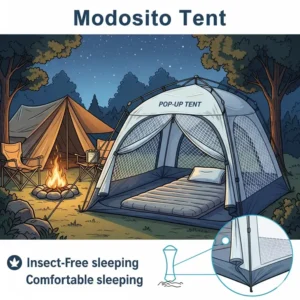
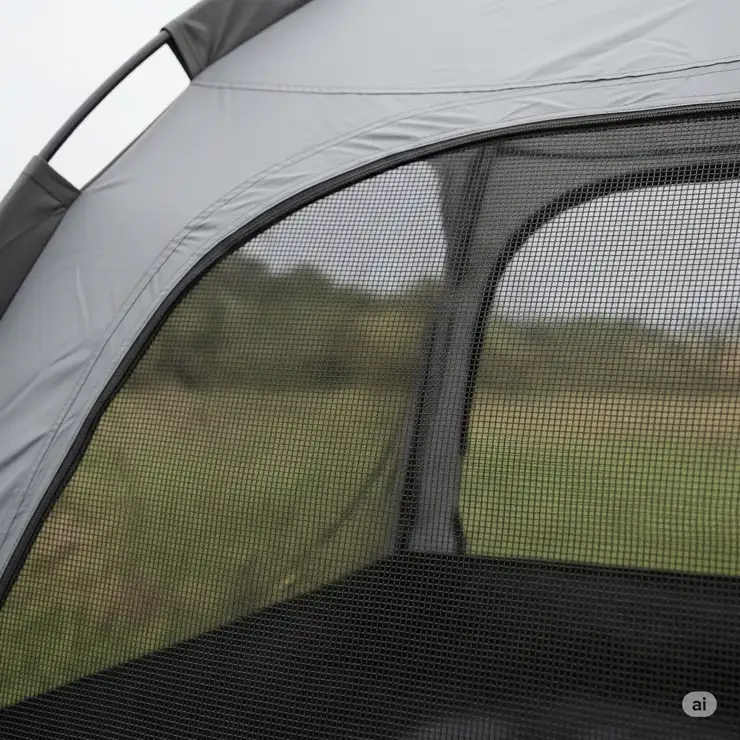
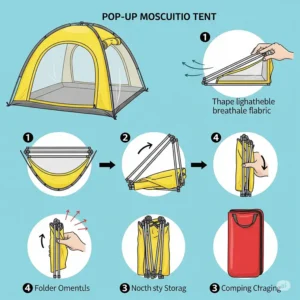
That’s where a pop up tent mosquito shelter earns its spot in the trunk. Instead of fighting bugs with sprays and smoke alone, you put a wall of fine mesh between you and them. The better designs spring open in about a minute, with no pole-threading, no instruction-manual archaeology, and no arguments about which sleeve goes where.
The timing matters, too. The CDC points out that mosquitoes bite day and night, and its travel guidance lists camping among the activities that raise your bite risk. A good pop up tent mosquito shelter gives you a physical barrier that works whether it’s dawn, dusk, or the middle of a sticky afternoon.
This guide covers what these shelters really are, how mesh and frames differ, and seven real models across budget, mid-range, and premium tiers. One honest note up front: everything here is built from published specs, retailer listings, and aggregated reviewer sentiment. It is not hands-on lab testing. Where review data couldn’t be verified, I say so instead of papering over it.
Quick Comparison: Pop Up Tent Mosquito Picks at a Glance
Here’s the lineup in one scannable table. Prices are tiers and ranges only, since they shift constantly. Check current pricing before you buy.
| Product | Type | Claimed Setup | Weight | Best For |
|---|---|---|---|---|
| Alvantor Pop Up Screen House | Pop-up screen house (6×6 and 10×10) | Around 30 seconds | About 9-12 lbs | Lightweight car camping |
| East Oak Pop Up Screen Tent | 10×10 steel-frame screen tent | Under 1 minute | Heavier (steel frame) | Solo setup on a budget |
| SANSBUG Instant Pop-Up Screen Tent | One-person bug tent | Seconds | About 2.2 lbs | Solo sleepers, no-see-um zones |
| Coleman Instant Screenhouse (Small) | Hub-frame screen house | About 1 minute | About 16.5 lbs | Backyards and campgrounds |
| Wenzel Magnetic Screen House | Screen house, 7’6″ peak | Quick pitch | About 17.4 lbs | Taller campers, picnics |
| CORE Instant Screen House (Small) | Instant screen house | About 60 seconds | About 8 lbs | Easy hauling |
| Gazelle G4 Deluxe Gazebo | Four-wall screen gazebo | About 60 seconds | Heavier, premium build | Frequent campers who want durability |
Looking at the table, the CORE Instant Screen House (Small) and Alvantor Pop Up Screen House are the light-and-easy options. The SANSBUG Instant Pop-Up Screen Tent is in a separate category, a personal bug-proof bedroom rather than a living room. The Gazelle G4 Deluxe Gazebo is the one you buy once and keep for years, assuming your budget agrees.
💬 Just one click — help others make better buying decisions too!😊
What Is a Pop Up Tent Mosquito Shelter?
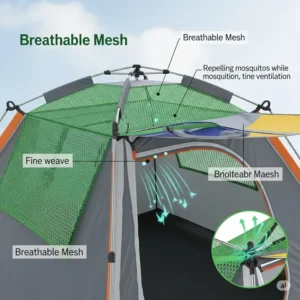
A pop up tent mosquito shelter is a freestanding, spring-framed tent or screen house whose walls are fine insect mesh instead of solid fabric. It springs open in seconds, blocks mosquitoes and other flying pests, and lets breeze and light through. Some models are sleeping tents; others are open-air screen rooms.
Think of it as the difference between a bedroom and a porch. A pop up mosquito tent for sleeping is a small, closed bubble, usually one or two people, with a zip door and often a floor. A pop up screen house is a roomy, floorless shelter with a roof and mesh walls, built for sitting, eating, and playing cards.
You’ll see the same thing sold as a “screen tent,” “screen room,” “screen gazebo,” or “mosquito net tent.” They share one job: keep the biters out while you stay comfortable.
Top 7 Pop Up Tent Mosquito Options: Expert Analysis
Every pick below is a real product. The analysis is grounded in specs, retailer data, and aggregated review sentiment, and it is not a claim of personal testing.
1. Alvantor Pop Up Screen House — lightest auto-pop-up in its class
The headline here is weight. Roundups put the 10×10 version at roughly 12 lbs, and the 6×6 variant is listed at around 9 lbs. That’s a big deal for a shelter this size.
The 10×10 gives roughly a 10x10x7 ft interior, while the 6×6 (6’x6’x6.5′) is aimed at two or three adults plus a grill or small table. The top fabric carries a UPF 50+ rating, so you get shade as well as bug defense. The mesh walls on all four sides keep air moving, which matters when a closed fabric tent would turn into a sauna.
On paper, this is a strong fit for car campers and backyard hosts who want the “toss it open and sit down” experience. The 6×6 especially suits couples or small families who don’t need acreage. The trade-off is that the listing itself notes it isn’t waterproof, so treat it as a fair-weather shelter.
Reviewers on the 6×6 listing show a 4.8-star average across a couple hundred ratings, with the recurring praise being one-person setup. A recurring caution is that the middle of the roof isn’t supported, so rain can pool there.
Pros:
- ✅ Very light for the floor area
- ✅ Single-person pop-up setup
- ✅ UPF 50+ roof plus full mesh walls
Cons:
- ❌ Not waterproof; rain can pool on the roof
- ❌ Fiddly to refold the first time
Pricing: the 6×6 has been seen in roughly the $120-$160 range, with the 10×10 sitting above that. Value verdict: strong for fair-weather use, weaker if you camp in unsettled climates.

2. East Oak Pop Up Screen Tent — steel frame at a friendly price
East Oak’s 10×10 leans on a steel frame, which is a different personality than the featherweight fiberglass-and-spring designs. Steel generally means a sturdier feel in a breeze and a heavier carry, so expect to feel it when you lift the bag.
It features instant pop-up setup (roundups quote under a minute), mesh walls, and UPF 50+ UV protection on the roof. A few reviewers and roundups specifically credit it for being easy for one person to put up, which is useful if your camping partner vanishes whenever there are stakes to hammer.
Here’s the honest spec-sheet reading: a steel frame is a good match for people who set up in one spot, such as a deck, patio, or long-stay campsite, and move it rarely. If you hike gear from a parking lot, the weight penalty is a real cost.
I couldn’t verify a clean, sizeable review pool for this model across independent sources, so the praise above comes mainly from roundup commentary and listing claims. Treat it as promising rather than proven, and read current reviews before you commit.
Pros:
- ✅ Sturdy steel frame for patios and decks
- ✅ Roof UPF 50+ sun protection
- ✅ Described as easy to pitch solo
Cons:
- ❌ Heavier than fiberglass-frame rivals
- ❌ Limited independent review data found
Pricing: mid-range tier; check current price. Value verdict: good for stay-put shade, less so for portability.
3. SANSBUG Instant Pop-Up Screen Tent — featherweight no-see-um bedroom
This is the odd one out, and on purpose. At about 2.2 lbs, with a fiberglass pop-up frame and a polyethylene floor, it’s a one-person bubble that you slide out of its strap and toss. It opens by itself.
The real selling point is the mesh. Listings describe it as ultra-fine no-see-um netting, with holes much smaller than standard mosquito netting. If you’ve ever been eaten alive by midges near a lake or marsh, that distinction is the entire ballgame, because regular mosquito mesh can let those tiny biters walk straight through.
Reviewers report it fits adults who are not especially tall, and they note comfortable sitting height. One consistent caution is that people over about six feet find the interior snug. Another reviewer mentioned harmless spiders crawling across the outside, which is a reminder that mesh keeps bugs out, not off.
Retail listings show roughly 4.6 stars, one across several hundred reviews, a sister-model listing across more than 2,000. Common themes: tight seams, easy deploy, and, with practice, easy fold-down.
Pros:
- ✅ Ultra-fine no-see-um mesh
- ✅ Weighs about 2.2 lbs
- ✅ Sets up in seconds, no poles
Cons:
- ❌ Snug for taller adults
- ❌ Folding takes a little practice
Pricing: budget tier; check current price. Value verdict: excellent for solo sleepers and bug-heavy campgrounds.
4. Coleman Instant Screenhouse (Small) — familiar brand, one-minute setup
Coleman Instant Screenhouse (Small) is the “nobody got fired for buying it” pick. One comparison site lists it at roughly 16.5 lbs with around 100 sq ft of floor area and a 7’0″ peak height, and it quotes a one-minute setup.
That weight is the trade-off for a hub-style frame. It feels more like a small building than a toy, which helps when a gusty afternoon tests it. It rated 7.6 on that comparison site, a solid but not dazzling score.
What does 100 sq ft actually mean? Roughly room for a picnic table, a few chairs, and a cooler without elbowing each other. It’s a very comfortable size for a family backyard or a standard campsite.
Review data for this exact model was thin in the sources I could verify, so I won’t invent a rating. Coleman’s wide retail availability does make replacement parts and return handling easier than with some lesser-known imports, though that’s a general brand observation rather than a documented guarantee.
Pros:
- ✅ Roughly 100 sq ft of usable space
- ✅ About one-minute pitch
- ✅ Widely available and familiar
Cons:
- ❌ Heavier than ultralight rivals
- ❌ Peak height lower than some competitors
Pricing: that comparison site estimated it around the mid-$150s, though prices vary. Value verdict: solid middle-of-the-road choice.
5. Wenzel Magnetic Screen House — extra headroom for tall campers
If you duck under every doorway in your life, the headroom here matters. The Wenzel Magnetic Screen House lists a 7’6″ peak, taller than the Coleman and CORE small models at 7’0″, and roughly 99 sq ft of floor space.
It weighs about 17.4 lbs, so it’s another “car, not backpack” shelter. A comparison site rated it 7.8, the highest of the three small screen houses in that head-to-head, and described it as best for bug-free shade at picnics and parties. As the name suggests, the “magnetic” part points to magnetic door closures, so check the listing for how the doors work.
The analytical takeaway is that six extra inches of peak height are easy to underestimate on a spec sheet. In practice, it’s the difference between standing comfortably and doing the slow “tall person shuffle” under the roof.
Aggregated review data was limited across sources I could verify, so I’m leaving ratings out rather than guessing.
Pros:
- ✅ 7’6″ peak for tall campers
- ✅ About 99 sq ft floor space
- ✅ Higher comparison-site score than similar small models
Cons:
- ❌ Heavy at about 17.4 lbs
- ❌ Limited verified review data
Pricing: roughly the low-to-mid $140s on one comparison site. Value verdict: fair price for headroom.
6. CORE Instant Screen House (Small) — easiest to haul
At roughly 8 lbs, the CORE Instant Screen House (Small) is the lightest hub-style option in this group. It’s quoted at 60-second setup, a 7’0″ peak, and a comparison-site score of 7.6.
That same site noted it beat the Wenzel on ease of setup even though it trailed on overall score. The lesson is that ease and comfort don’t always travel together. You’re trading a little headroom and polish for a shelter that goes up fast and carries easily.
Who is this for? Campers who set up and tear down often, such as weekend trips, tailgates, and kids’ sports days. If you’re shuffling a shelter in and out of a hatchback every few days, 8 lbs versus 17 lbs isn’t a rounding error.
Verified reviews were thin, so treat the performance claims as listing-level, and check recent buyer feedback.
Pros:
- ✅ Around 8 lbs, easy to carry
- ✅ About 60-second setup
- ✅ Strong for frequent pack-ups
Cons:
- ❌ 7’0″ peak limits tall users
- ❌ Little verified review data
Pricing: around the $150 range on one comparison site. Value verdict: pay for portability.
7. Gazelle G4 Deluxe Gazebo — premium build with four walls
Gazelle G4 Deluxe Gazebo sits at the premium end. According to New Atlas’s coverage of the launch, it’s Gazelle’s screen room with four simple walls and a roof, pitched with the brand’s pull-and-pop hubs.
The pitch time is quoted at 60 seconds, and for people using it as an open gazebo, the doors roll up and tie off against the roof edge. It joins larger G5 and G6 gazebos in the line, and Gazelle markets the whole range on heavy-duty construction.
The real insight is flexibility. Roll the doors up for a breezy daytime canopy, zip them down at dusk for a bug-proof lounge. Most budget screen houses force a single mode; this one is designed to switch.
I couldn’t verify independent customer-review aggregates for this model, so I’m not stating a rating. Gazelle’s pricing generally sits well above the budget picks here, and that premium is justified mainly if you camp often.
Pros:
- ✅ Four walls plus roof, versatile
- ✅ Roll-up doors for open-air use
- ✅ Heavy-duty construction claims
Cons:
- ❌ Premium price tier
- ❌ Independent review data not verified
Pricing: premium tier; check current price. Value verdict: worth it for frequent use, overkill for occasional use.
Spec Showdown: Pop Up Tent Mosquito Models Compared
| Product | Frame / Build | Floor Area | Peak Height | Price Range | Best For |
|---|---|---|---|---|---|
| Alvantor Pop Up Screen House | Pop-up hub frame | 6×6 or 10×10 | 6.5 ft or 7 ft | $120-$160 (6×6) | Light carrying |
| Coleman Instant Screenhouse (Small) | Instant hub frame | About 100 sq ft | 7’0″ | Mid-$150s | Backyards |
| Wenzel Magnetic Screen House | Screen house frame | About 99 sq ft | 7’6″ | Low-to-mid $140s | Taller people |
| CORE Instant Screen House (Small) | Instant hub frame | Small | 7’0″ | Around $150 | Fast pack-ups |
| SANSBUG Instant Pop-Up Screen Tent | Fiberglass pop-up | One-person | About 3 ft | Budget tier | Solo sleeping |
Looking at the numbers, the three “small” hub houses cluster tightly on price. That means weight and height should decide it, not budget. The Wenzel Magnetic Screen House wins for headroom, the CORE Instant Screen House (Small) wins for carryability, and the Coleman Instant Screenhouse (Small) is the middle road. The SANSBUG Instant Pop-Up Screen Tent isn’t competing with any of them; it’s a different job entirely.
How to Choose a Pop Up Tent Mosquito Shelter
Here’s the short version, in order of importance.
- Decide: sleeping tent or screen room. If you want a place to sleep without bites, pick a closed mosquito tent with a floor. If you want a place to live outside, pick a screen house.
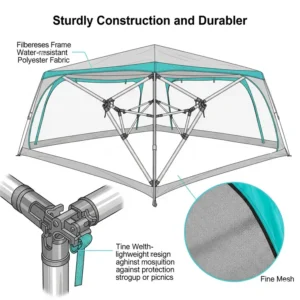
- Check the mesh grade. Standard mosquito netting stops mosquitoes. If you camp near water, coasts, or wetlands, step up to no-see-um grade. Manufacturers quote different hole counts, so compare like with like.
- Match size to people, not square feet. A 10×10 sounds huge until a table, four chairs, and a cooler arrive. Plan roughly 25 sq ft of floor per seated adult, with extra for gear.
- Weigh weight honestly. An 8 lb shelter gets used; a 17 lb one gets “left at home just this once.”
- Think about wind and rain. Most screen houses are not rainproof. Look for stake loops and guy-out points.
- Check the doors. Zippers beat flaps, and two doors beat one when someone is carrying plates.
- Plan the floor. No floor means ants and grass; a floor means more bug defense but less airflow.
Features That Actually Matter (And Those That Don’t)
Mesh quality is the feature that matters most, and marketing rarely explains it well. The CDC’s own mosquito-net guidance for travelers, for example, describes a net with about 156 holes per square inch, a useful benchmark for mosquitoes. No-see-um grade is much finer. Vendor claims range from roughly 800 to over 2,000 holes per square inch, so there’s no single standard. One review of a mosquito head net noted that a 500-hole mesh is not no-see-um proof, which shows how fast the goalposts move.
Meanwhile, a randomized trial of permethrin-treated tents found that treated campsites had about 44% fewer mosquito landings and bites than controls. That’s evidence that the fabric itself can be part of your defense, not only the mesh.
Features that matter: mesh grade, door design, frame strength, weight, and UPF-rated roofing. Features that mostly don’t: fancy color names, “tactical” branding, and the dozens of tiny pockets that nobody uses. A cup holder is nice. A cup holder is not a reason to spend $80 more.
Pop Up Tent Mosquito Shelters vs Traditional Alternatives
| Option | Bug Protection | Setup Time | Cost | Best For |
|---|---|---|---|---|
| Pop up tent mosquito shelter (e.g., Alvantor Pop Up Screen House) | High (mesh walls) | Under a minute | Low-mid | Fast, flexible shelter |
| Standard canopy plus add-on netting | Medium (gaps at edges) | Several minutes | Low-mid | Existing canopy owners |
| Repellent only | Variable | None | Low | Short, light exposure |
| Permanent screened porch | Very high | None | Very high | Homeowners |
The pattern is clear. A pop up shelter beats repellent alone for long evenings, because repellent wears off and needs reapplying, while mesh keeps working. It beats a canopy with add-on netting on setup time, since mesh kits tend to leave gaps. And it can’t match a permanent porch, but it also doesn’t need a contractor. The CDC recommends combining protections, using repellent, covering skin, and treating gear. A shelter is one layer in that stack, not a replacement for the stack.
What to Expect: Real-World Performance
Specs describe the object. Performance describes your Saturday.
In calm air, any of these shelters will do what they promise. Mesh walls cut the flying-insect traffic dramatically, and the roof knocks down sun. Airflow is the quiet bonus, because mesh breathes where nylon tents trap heat.
Wind is the first stress test. Ultralight pop-up frames can flex, and an unstaked shelter can become a kite. Stake it every time, even on a calm day.
Rain is the second. Listings and reviewers say plainly that some of these shelters, including the Alvantor Pop Up Screen House, are not waterproof. Expect fine drizzle to blow through the mesh and the roof to collect water if the center sags.
Third is the “door effect.” Every time someone opens a zip, a few mosquitoes slip in. Good habits, such as one person in, door closed, and a quick sweep, matter more than any fabric spec.
Pop Up Tent Mosquito Setup and Maintenance Guide
First-Use Setup
Do a practice pitch at home. Pop-up frames are simple, but folding them back is where people get stuck.
- Clear the ground of sticks, stones, and fire-ant mounds.
- Pop it open on flat ground and stake every corner.
- Zip all doors closed, then open one briefly to enter.
- Sweep inside with a hand or small brush before settling in.
Folding Without Tears
Most reviewers who struggled said the same thing: pay attention to how it unfolds, then reverse that motion. Take a phone video the first time you pop it open. That ten-second clip will save you a frustrated hour next spring.
Maintenance Schedule
- After each trip: shake out debris, wipe the mesh, dry fully before bagging.
- Monthly in-season: check zippers, seams, and frame joints for wear.
- End of season: store loosely in a dry spot, never damp.
Mistakes in the First 30 Days
Skipping stakes, packing a wet shelter, forcing a stiff zipper, and leaving it in direct sun for weeks. UV is the quiet killer of mesh and fabric.
Real-World Scenarios: Which Pop Up Tent Mosquito Shelter Fits You?
The weekend car-camping family. Two adults, two kids, a long weekend. A 10×10-class shelter such as the Alvantor Pop Up Screen House or the Coleman Instant Screenhouse (Small) gives room for a table and chairs. The reasoning: light enough to haul, big enough that no one is elbowed out. Budget tier: mid-range.
The solo lake angler. One person, near water, dusk bites. The SANSBUG Instant Pop-Up Screen Tent fits better than a big screen house, because no-see-um mesh matters near lakes and the 2.2 lb weight disappears in a trunk. Budget tier: low.
The backyard host. Weekly summer dinners on a patio, in a humid state. The East Oak Pop Up Screen Tent and its steel frame suit a shelter that stays put. A stay-put shelter doesn’t punish extra weight.
The tall dad. If you’re 6’3″ and tired of crouching, the Wenzel Magnetic Screen House and its 7’6″ peak is the spec-sheet answer.
The frequent camper who wants one for years. The Gazelle G4 Deluxe Gazebo is built for that audience, since its flexibility, with roll-up doors for sun and zipped doors for bugs, spreads the premium cost across many trips.
Problem → Solution Guide
Problem: bugs sneak in at the door. Make entering a two-step habit. Open, step in, zip. Don’t prop the door while carrying gear.
Problem: the roof pools rain. Several reviewers of lightweight models flagged this. Tilt the shelter slightly with stake tension, or tuck a tarp over the top in drizzle. Better still, don’t rely on a non-waterproof screen house in real rain.
Problem: no-see-ums are getting through. Standard mosquito mesh may be too coarse. Move to a no-see-um-grade option like the SANSBUG Instant Pop-Up Screen Tent, or add finer netting at vents.
Problem: wind keeps lifting it. Use every stake loop, add guy lines, and weigh the base with sandbags or water jugs. Never leave it unattended in a gusty forecast.
Problem: it won’t fold back down. Rewatch your setup video. Fold slowly, don’t force joints, and try letting it sit open for a few minutes to relax the frame.
Common Mistakes When Buying a Pop Up Tent Mosquito Shelter
The most common error is buying by “capacity” labels. A tent marketed for “4-6 people” assumes everyone is sitting still and sharing. Add a table and you have room for three.
The second is ignoring weight. A shelter that stays in the garage protects nothing.
The third is assuming “mosquito mesh” means “bug-proof.” As the mesh section showed, no-see-ums and midges can pass through netting that stops mosquitoes. If you camp near water, ask the manufacturer.
Fourth, trusting star ratings blindly. Some listings show tiny review counts or mixed-quality sellers. Read recent reviews, look for photos of real setups, and be wary of any listing with a glowing average and very few ratings.
Finally, skipping permethrin and repellent entirely because you own a shelter. The CDC advises layering protections.
Long-Term Cost and Value
Price is only the entry fee. Total cost of ownership comes from durability, repair, and how often you actually use it.
| Tier | Typical Range | Example | Best For |
|---|---|---|---|
| Budget | Under about $100 | SANSBUG Instant Pop-Up Screen Tent | Solo sleeping |
| Mid-range | About $120-$160 | Alvantor Pop Up Screen House, Coleman Instant Screenhouse (Small), CORE Instant Screen House (Small) | Families, weekends |
| Premium | Higher | Gazelle G4 Deluxe Gazebo | Frequent campers |
The cost-per-use math is simple. A $150 shelter used 20 times costs about $7.50 per trip. A premium unit used 60 times can beat it. A budget unit left in the garage after two outings is the most expensive option of all.
Maintenance is cheap: wipe, dry, store loose. Zipper and frame failures are the usual end of life, which is why weight and build quality matter more than a first-week thrill.
Safety, Repellent, and Permethrin: A Practical Guide
A shelter reduces bites; it doesn’t remove disease risk. The CDC says to use EPA-registered repellents, wear long sleeves and pants, and consider treated gear. Its guidance on permethrin-treated clothing and gear says to use 0.5% permethrin to treat items such as tents, to follow label instructions, and never to apply it directly to skin.
Practical takeaways:
- Treat tent fabric, not mesh you’ll touch, and follow the product label exactly.
- Apply sunscreen first, repellent second, if you use both.
- Don’t use repellent on babies younger than two months, and avoid oil of lemon eucalyptus on children under three.
- Cover strollers and carriers with netting.
If you’re traveling somewhere with known mosquito-borne illness, talk to a healthcare provider before you go.
✨ Don’t Miss These Exclusive Deals!
🔍 Ready to take your next outing bug-free? Click on any highlighted product above to check current pricing and availability. A good pop up tent mosquito shelter turns buzzing evenings into peaceful ones for your whole crew!
FAQ
❓ What size pop up tent mosquito shelter do I need for a family of four?
❓ Is a pop up mosquito tent safe for sleeping overnight?
❓ Can a pop up tent mosquito shelter handle rain?
❓ How do I stop no-see-ums in a pop up tent mosquito shelter?
❓ Should I treat my pop up mosquito tent with permethrin?
Conclusion
The best pop up tent mosquito shelter is the one that matches your actual weekend. If you want light and fast, look at the Alvantor Pop Up Screen House or the CORE Instant Screen House (Small). If you’re solo near water, the SANSBUG Instant Pop-Up Screen Tent and its no-see-um mesh make the most sense. For headroom, the Wenzel Magnetic Screen House leads. For a familiar, middle-of-the-road pick, the Coleman Instant Screenhouse (Small) is a sensible choice, and for a long-haul, flexible build, the Gazelle G4 Deluxe Gazebo is the premium route. The East Oak Pop Up Screen Tent rounds things out as a steel-frame, stay-put option.
Remember the honest caveats. Most screen houses aren’t rainproof, mesh grade matters more than marketing, and review data is thinner for some models than others. Stake everything down, layer repellent and clothing, and read recent reviews before you buy. Do that, and the whine near your ear becomes someone else’s problem.
✨ Found a shelter that fits your plans? Check current pricing, grab your pick, and enjoy bite-free evenings outdoors! 🦟🚫🏕️
Recommended for You
- 7 Best 6×6 Pop Up Canopy Options for Ultimate Outdoor Comfort in 2025
- 7 Best 20×20 Pop Up Tent Options That Actually Work – Ultimate 2025 Guide
- 7 Best Pop Up Dog Tent Options For Ultimate Outdoor Adventure in 2025
Disclaimer: This article contains affiliate links. As an Amazon Associate, I earn from qualifying purchases. If you purchase products through these links, we may earn a small commission at no additional cost to you.
✨ Found this helpful? Share it with your friends! 💬🤗
