
In This Article
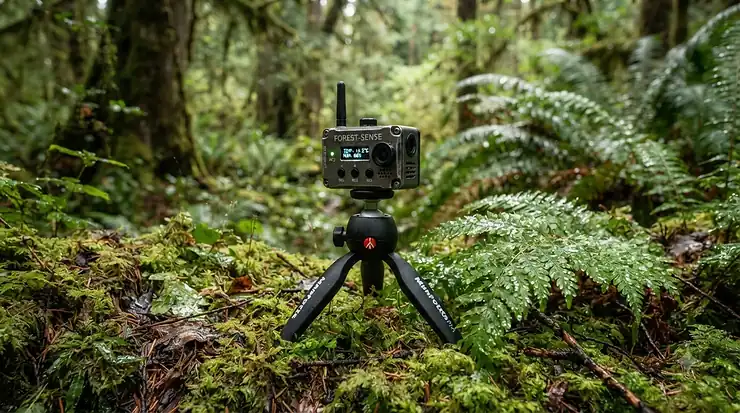
Somewhere between the third s’more and the moment your headlamp catches a raccoon staring back at you from the treeline, you’ll wish you’d hit record. That’s the whole pitch behind an action camera for camping: a pocket-sized, weatherproof witness that doesn’t flinch at rain, dust, river crossings, or getting dropped on a rock. Phones do fine on a sunny trailhead, but they sulk the moment things get wet, cold, or genuinely bouncy — which, if you’ve ever set up a tent in a crosswind, describes most of camping.

This guide breaks down seven real cameras worth packing this season, from a sub-$100 backup camera to flagship gear built for low-light campfire scenes. We researched specs, verified availability, and pulled honest aggregated review sentiment rather than inventing glowing testimonials — because a rewritten spec sheet doesn’t actually help you choose. Every recommendation here weighs waterproofing depth, battery stamina, stabilization quality, and mounting flexibility against what campers, backpackers, and van-lifers actually report using these cameras in the field.
Whether you’re chasing cinematic 5.3K footage of a sunrise hike or just want proof that yes, the bear really did walk through camp, there’s an action camera for camping below sized to your budget and your trip.
What Is an Action Camera for Camping?
An action camera for camping is a compact, ruggedized camera built to record video and stills in outdoor conditions a phone or standard camera can’t handle — rain, dust, freezing temperatures, submersion, and physical shock. Most models pair a wide-angle lens with electronic image stabilization, an IP-rated waterproof housing, and mounts compatible with helmets, backpacks, and tripods, making them ideal for hiking, kayaking, and campsite documentation alike.
That IP rating matters more than marketing copy suggests. A camera billed as “waterproof” without a published depth or standard is a red flag; the honest ones state a tested depth (in meters or feet) and whether that figure applies with or without a protective case.
Quick Comparison Table
| Camera | Waterproof (no case) | Battery Life | Best For |
|---|---|---|---|
| GoPro HERO13 Black | 10m / 33ft | ~1.5-2.5 hrs | All-around resolution & ecosystem |
| DJI Osmo Action 5 Pro | 20m / 65.6ft | Up to 4 hrs | Longest runtime, coldest weather |
| Insta360 X5 | 15m / 49ft | ~3 hrs | 360-degree campsite storytelling |
| AKASO EK7000 Pro | 40m / 131ft (with case) | ~2.3 hrs (2 batteries) | Budget backup camera |
Looking at this snapshot, waterproofing depth and battery life don’t move together the way you’d expect — the DJI Osmo Action 5 Pro posts both the deepest native waterproof rating and the longest single-charge runtime among premium models, while the AKASO EK7000 Pro only reaches its impressive 131ft figure with its case attached. Runtime is where budget and flagship cameras diverge the most sharply, since cold campsite mornings punish smaller batteries disproportionately. If your trips involve multi-day recording without reliable power, that column deserves more weight than resolution does.
💬 Bookmark this comparison — it’s the fastest way to find your match before you scroll further.
Top 7 Action Cameras for Camping: Expert Analysis
We narrowed a crowded field down to seven real, currently available cameras spanning budget, mid-range, and premium tiers, including variants built specifically for low-light, 360-degree, and vlogging-style camping content.
1. GoPro HERO13 Black — best all-around resolution and ecosystem
The GoPro HERO13 Black remains the reference point every other action camera gets compared against, and for camping footage that means dependable, richly detailed video without much of a learning curve. Its 1/1.9-inch sensor shoots up to 5.3K60 or 4K120 video and 27MP stills, and the redesigned 1900mAh Enduro battery pushes runtime to roughly 2.5 hours at 1080p30 or about 1.5 hours at 5.3K30 — a real gain over prior generations, though DJI’s flagship still beats it on paper. HyperSmooth 6.0 stabilization is the headline feature for hikers: based on the spec comparison, its AutoBoost mode reduces the aggressive cropping older HyperSmooth versions applied, so wide establishing shots of a campsite stay wide.
Who should care: campers who already own GoPro mounts, want the largest accessory and lens-mod ecosystem on the market, or plan to mix this camera with cycling and water sports beyond the campground. Reviewers at outlets like Amateur Photographer consistently rank the HERO13 Black as the best all-around action camera for 2026, citing ease of use and broad availability over dramatic generational leaps. A recurring theme in aggregated user feedback is that the battery, while improved, still lags behind DJI’s newer Extreme Plus cell in cold weather — something worth knowing before a shoulder-season trip.
Pros:
- ✅ Industry-leading 5.3K60 resolution captures crisp trail detail
- ✅ HyperSmooth 6.0 stabilization smooths handheld footage
- ✅ Massive third-party mount and interchangeable-lens ecosystem
Cons:
- ❌ Battery still trails DJI’s Action 5 Pro in cold-weather runtime
- ❌ Cloud backup features nudge toward a recurring subscription
The GoPro HERO13 Black typically sits in the $380-$450 range depending on bundle, and given how widely supported it is by third-party mounts and lens mods, it’s a fair value pick for anyone planning to use one camera across multiple outdoor hobbies, not just camping.
2. DJI Osmo Action 5 Pro — longest battery life for all-day filming
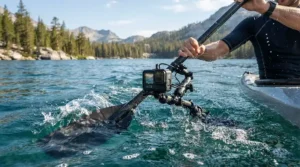
If a single spec decides your trip, make it battery life, and the DJI Osmo Action 5 Pro currently wins that fight outright. Its 1950mAh Extreme Battery Plus is rated for up to four hours of continuous 1080p30 recording and roughly two hours at 4K60, a claim independent testers have largely corroborated in cold-weather conditions down to -20°C. The 1/1.3-inch sensor delivers 13.5 stops of dynamic range and a dedicated SuperNight mode, which in practice means less noise when you’re filming around a dying campfire instead of full daylight.
What most buyers overlook about this model is its native waterproofing: 20 meters (65.6ft) without any housing at all, which is deeper than both the GoPro HERO13 Black and the Insta360 Ace Pro 2 manage before a case is added. That matters for campers who wade through creek crossings or get caught in sudden downpours without time to grab a dive case. Dual OLED touchscreens, front and rear, stay legible in direct sun — a small but genuinely useful upgrade for framing a shot alone at a campsite. Aggregated reviewer sentiment from outlets like Trusted Reviews and TechRadar is largely positive, though several testers flag that SuperNight can look softer or noisier than expected in near-total darkness, and the sensor’s 4K ceiling means it won’t match 5.3K or 8K rivals on paper.
Pros:
- ✅ Class-leading up to 4-hour battery life, even in freezing temps
- ✅ Deepest native waterproofing among flagship models (20m/65.6ft)
- ✅ Dual bright OLED touchscreens visible in daylight
Cons:
- ❌ Video tops out at 4K rather than 5.3K or 8K
- ❌ SuperNight low-light mode is inconsistent per several testers
Pricing has been unusually competitive for this model, often landing in the $270-$350 range and occasionally dropping lower during sales — undercutting the GoPro HERO13 Black‘s typical asking price while out-lasting it on a single charge.
3. DJI Osmo Action 4 — best value flagship-adjacent pick
The DJI Osmo Action 4 is what happens when last year’s flagship tech becomes this year’s smart budget buy. It shares the same 1/1.3-inch sensor family that made the Action 5 Pro’s low-light performance a standout, plus 4K/120fps video and 10-bit D-Log M color, giving campers who want to color-grade their footage more flexibility than most budget cameras offer. Battery life lands around 160 minutes in ideal conditions, which is respectable but noticeably shorter than its Action 5 Pro sibling’s four-hour ceiling.
Here’s what to weigh: if you don’t need the newest processor, the dual front-and-rear screens of the 5 Pro, or the deepest waterproofing tier, the Action 4 delivers nearly identical image quality for meaningfully less money. It’s a smart pick for a second camera in a two-camera camping kit — one mounted on a backpack, one handheld — where redundancy matters more than having the latest chip. Reviewers who’ve used both models generally agree the image-quality gap between the Action 4 and Action 5 Pro is small next to the battery and screen differences, which is exactly the kind of trade-off a budget-conscious camper should be comfortable making.
Pros:
- ✅ Shares the Action 5 Pro’s strong low-light sensor at a lower price
- ✅ 10-bit D-Log M color adds real post-production flexibility
- ✅ Reliable ~160-minute battery life for the price tier
Cons:
- ❌ Superseded by the Action 5 Pro’s newer chip and dual screens
- ❌ Fewer camping-specific bundle accessories than flagship kits
Expect this camera in the low-to-mid $200s for the standard combo, making it one of the strongest price-to-performance ratios in this entire roundup.
4. Insta360 Ace Pro 2 — sharpest low-light campfire footage
Campfire scenes are brutal on cameras: minimal light, flickering color temperature, and constant small movement. The Insta360 Ace Pro 2 was built around exactly that problem, pairing a co-engineered Leica sensor with a dedicated AI imaging chip to pull in more usable light than most action cameras manage. It shoots up to 8K video and 50MP RAW stills, and its flip-up display — larger than the previous Ace Pro’s screen — lets solo campers frame themselves accurately instead of guessing.
Based on the spec comparison, the tradeoffs are waterproofing depth and price. It’s rated to 12 meters (39.4ft) without a case, roughly 8 meters shallower than the DJI Osmo Action 5 Pro, and at close to $400-$500 it’s among the priciest cameras here. What the spec sheet won’t tell you, but user reports on retailer review pages suggest, is a real (if not universal) pattern of charging-port reliability complaints, alongside consistently strong praise for image and video quality. If you’re weighing this against the Action 5 Pro specifically for diving or heavy water use, the DJI model’s deeper native rating is the more forgiving choice; if campfire and low-light detail is your priority, the Leica-tuned sensor here is hard to beat.
Pros:
- ✅ Leica-co-engineered sensor excels in dim campsite and campfire light
- ✅ Large flip-up screen makes solo framing far more accurate
- ✅ 8K video and 50MP RAW stills for hybrid photo/video shooters
Cons:
- ❌ Among the priciest cameras in this camping roundup
- ❌ Some verified buyers report charging-port reliability issues
At around $400-$480 depending on the battery bundle, this is a considered purchase rather than an impulse buy — best suited to campers who already shoot enough low-light content to justify the premium.
5. Insta360 X5 — best 360-degree campsite storytelling
Most action cameras ask you to aim before you shoot. The Insta360 X5 flips that entirely: its dual-lens 360-degree design captures everything around the camera simultaneously, so you frame the shot afterward in the app instead of guessing in the moment. For a chaotic campsite scene — someone flipping a canoe, a dog stealing a hot dog, a group photo nobody’s ready for — that after-the-fact framing is genuinely transformative rather than a gimmick.
The larger 1/1.28-inch sensors improve low-light capture over the previous X4, and waterproofing has jumped to 15 meters (49ft) without a case, a 50% improvement generation-over-generation and currently the deepest native rating of any 360 camera in this class. One outdoor tester’s account of the camera surviving an accidental drop into a lake and continuing to record afterward lines up with the manufacturer’s stated durability claims, though that’s an anecdotal data point rather than a guarantee. Reviewers consistently note the tradeoff is workflow: 360 footage requires more time in the companion app to reframe and export than a standard point-and-shoot action camera, and file sizes run larger.
Pros:
- ✅ Captures the entire campsite in one pass — reframe shots later
- ✅ Deepest native waterproofing of any 360 camera in its class (15m/49ft)
- ✅ Replaceable lens system extends the camera’s usable life
Cons:
- ❌ 360 footage demands extra app time to reframe and export
- ❌ Priciest single camera in this roundup at full bundle price
Standard bundles run about $550, with the Essentials Bundle (extra battery, selfie stick, hard case) closer to $650-$660 — a real investment, but one that replaces the need for a separate wide-angle and POV camera for many creators.
6. AKASO EK7000 Pro — best budget pick under $100
Not every camper needs 8K or a Leica sensor; some just want proof the trip happened without spending flagship money. The AKASO EK7000 Pro shoots 4K30fps video and 20MP stills with electronic image stabilization, and ships with two 1350mAh batteries rated for about 140 minutes of recording each — a smart hedge against the shorter runtimes budget cameras are known for. Its waterproof housing is rated to 131ft (40m), though — and this is the honest caveat reviewers at Digital Camera World and Shotkit both raise — that depth applies only with the included case attached, not to the bare camera body the way GoPro and DJI’s flagships now allow.
Reviewers consistently frame this camera as “good enough” rather than exceptional: stabilization and low-light performance clearly trail the flagship models above, and the touchscreen interface can feel sluggish navigating menus. What most buyers overlook is that the included wired remote — not the app — is actually the fastest way to trigger recording, since it skips the Wi-Fi pairing dance entirely. For a first action camera, a loaner for kids on a family trip, or a backup body that lives in a dry bag while the primary camera stays on a tripod, it’s a genuinely sensible pick.
Pros:
- ✅ Rock-bottom price gets a camper into real 4K recording
- ✅ Two included batteries extend a full weekend of shooting
- ✅ GoPro-compatible mounting system works with existing accessories
Cons:
- ❌ Case-dependent waterproofing lags the bare-body ratings of flagships
- ❌ Stabilization and low-light quality noticeably trail premium models
Pricing typically runs under $100, often closer to $70-$90 in standalone bundles, making it one of the least risky entry points into camping video in this entire lineup.
7. AKASO Brave 4 — best budget vlogging with front screen
Solo campers who like narrating their own trips have a specific problem: most sub-$150 action cameras don’t have a front screen, so you’re recording blind. The AKASO Brave 4 solves that with a dual-screen layout — a 2-inch rear display plus a smaller front LCD — letting you check framing before you start talking to the lens. It records up to 4K30fps video with 20MP stills and Electronic Image Stabilization 2.0, a meaningful step up from the original EK7000 generation’s stabilization.
Here’s what to weigh against the AKASO EK7000 Pro: the Brave 4’s two 1050mAh batteries run about 90 minutes each versus the EK7000 Pro’s 140, a real tradeoff for the added front screen and slightly refined stabilization. Waterproofing again requires the included case, rated to 131ft (40m), matching its stablemate. Aggregated feedback from Amazon and dedicated review sites is broadly positive on image quality for the price, with the most common complaints centering on the non-touch rear screen slowing down menu navigation compared to the EK7000 Pro’s touch interface — a small but real usability gap between AKASO’s own budget lineup.
Pros:
- ✅ Front screen makes it a genuine budget vlogging option
- ✅ 131ft case-based waterproofing suits lake and river camping trips
- ✅ Comprehensive accessory kit included at checkout
Cons:
- ❌ Shorter ~90-minute-per-battery runtime than the EK7000 Pro
- ❌ Non-touch rear screen slows menu navigation
Expect to pay around $100-$130, positioning it as a direct alternative to the EK7000 Pro for campers who specifically want to film themselves talking to camera.
GoPro Camping: How the HERO Line Stacks Up for Campers
GoPro camping setups earned their reputation the old-fashioned way: broad accessory support and a stabilization system that’s been refined across more than a decade of hardware. The current GoPro HERO13 Black benefits directly from that history — HB-series interchangeable lenses, an enormous secondhand and third-party mount market, and near-universal software compatibility with editing apps make it the path of least resistance for a first-time buyer.
Reviewers consistently note that GoPro’s biggest weakness in 2026 isn’t image quality, it’s battery life relative to DJI’s newest flagship, and pricing that sits at the higher end of this comparison. For camping specifically — where charging options can be limited to a power bank or a car battery — that runtime gap is worth taking seriously. If your camping trips are short (a weekend, one or two nights) and you value the mount ecosystem, GoPro remains a defensible default. If you’re stringing together multi-day backcountry trips without reliable charging, weigh that against the DJI Osmo Action 5 Pro‘s longer runtime before committing to a brand purely on reputation.
Waterproof Rating Camera: What IP Ratings and Meter Depths Actually Mean
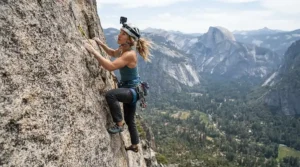
Every camera in this guide lists a waterproof depth, but not all of those numbers mean the same thing. Depth ratings for action cameras generally follow, or are inspired by, the international IP Code standard (IEC 60529), where the second digit specifically measures liquid ingress protection. A rating like IP68 means a device is dust-tight and rated for continuous immersion beyond one meter, but manufacturers still specify their own tested depth and duration on top of that baseline.
The practical distinction that trips up campers most is “waterproof with a case” versus “waterproof without one.” The DJI Osmo Action 5 Pro and Insta360 X5 both reach meaningful depths (20m and 15m respectively) with nothing attached, while the AKASO EK7000 Pro and AKASO Brave 4 only hit their headline 131ft figure once the included housing is snapped on. Neither approach is dishonest, but it changes how you use the camera day to day — a bare-body rating means you can rinse mud off at a campsite spigot without fumbling for a case first, while a case-dependent rating means planning ahead before a river crossing.
Stabilization Footage: HyperSmooth vs RockSteady vs FlowState Compared
Shaky trail footage is the fastest way to make a beautiful hike look amateur, and every major brand has its own answer. GoPro’s HyperSmooth, DJI’s RockSteady, and Insta360’s FlowState all rely primarily on electronic image stabilization, which uses a gyroscope and cropped sensor area to digitally counteract shake — a cheaper, more compact approach than the physically moving lens elements found in optical stabilization systems, though generally a half-step behind them in raw smoothness under extreme motion.
In practice, reviewers testing the GoPro HERO13 Black‘s HyperSmooth 6.0 and the DJI Osmo Action 5 Pro‘s RockSteady side by side describe both as excellent for walking and hiking footage, with GoPro slightly better at handling sudden jolts and DJI slightly better preserving field of view during correction. The Insta360 Ace Pro 2‘s FlowState held up well even during gravel-road motorcycle testing, according to one hands-on review, suggesting it transfers reasonably well to uneven trail conditions. For most camping use — walking, setting up gear, filming wildlife from a stationary tripod — any of the three will look smooth; the differences show up mainly in high-motion scenarios like mountain biking into camp or running with the camera.
Mounting Accessories Camera: Building Your Camp Kit
A camera is only as useful as what it’s attached to, and camping introduces mounting needs a bike helmet mount doesn’t cover: tripod legs for a stable campfire timelapse, a chest harness for hands-free trail filming, and a floating hand grip in case the camera ends up in a lake instead of your pocket. The GoPro HERO13 Black and both AKASO models share a compatible tripod-and-clip mounting standard, which means accessories bought for one often work across the others — a real cost saver if you’re building out a kit gradually.
Storage matters just as much as mounts here. Sustained 4K or 5.3K recording requires a microSD card rated at minimum Video Speed Class V30, and using a slower card is a common reason campers report dropped frames or a camera that simply stops recording mid-clip. Budget cameras like the AKASO Brave 4 are more forgiving of slower cards given their lower bitrate, but anything shooting 4K60 or above — including the DJI Osmo Action 5 Pro and Insta360 Ace Pro 2 — genuinely needs the faster card to avoid corrupted footage on a trip you can’t reshoot.
✨ Don’t Miss These Exclusive Deals!
🔍 Take your camping footage to the next level with these carefully selected cameras. Click on any highlighted pick to check current pricing and availability, and build a kit that captures every campfire, sunrise, and trail mishap your family will actually want to rewatch.
Adventure Camera Hiking: Matching Gear to the Trail
Hiking-specific demands differ from general camping use in a few concrete ways: weight matters more over long mileage, battery drain from cold temperatures at elevation is a real constraint, and one-handed operation matters when your other hand holds trekking poles. The DJI Osmo Action 5 Pro‘s documented performance at -20°C, sustaining 3.6 hours of runtime in lab testing, is a meaningful advantage for shoulder-season and alpine hikers who’d otherwise watch a battery die in freezing temperatures well before the four-hour room-temperature figure.
For thru-hikers and backpackers prioritizing pack weight, the compact Insta360 X5 at 246 grams and the GoPro HERO13 Black at roughly 154 grams sit well within the range hikers already tolerate for headlamps and water filters. One outdoor content creator’s account of using a compact 360 camera across a 40-mile, four-day backpacking trip — citing its light weight and easy pocket access throughout — lines up with what most hiking-focused reviewers report: smaller, lighter cameras get used more consistently on the trail than bulkier rigs that stay buried in a pack.
Outdoor Camera Review Roundup: What Reviewers Agree On
Cross-referencing multiple 2026 outdoor camera reviews reveals more consensus than disagreement. Amateur Photographer, Tom’s Guide, and Trusted Reviews all currently rank the GoPro HERO13 Black and DJI Osmo Action 5 Pro as the two strongest all-around action cameras on the market, disagreeing mainly on which specific weakness matters more — GoPro’s shorter battery life versus DJI’s lower maximum resolution. On low-light performance specifically, reviewers are unusually aligned: DJI and the Insta360 Ace Pro 2 both consistently outperform GoPro’s smaller sensor in dim conditions, a genuinely useful data point for anyone planning early-morning or after-dark camping footage.
Where reviews diverge more is budget gear. AKASO’s lineup earns consistently positive “value for the price” framing rather than direct comparisons to flagship image quality, which is a fair distinction — nobody testing the AKASO EK7000 Pro claims it matches a $400 camera, but multiple outlets agree it delivers usable 4K footage well beyond what its price tag would suggest.
Practical Usage Guide: Setting Up Your Camera for a Camping Trip
Getting reliable footage starts before you leave the driveway. First, format your microSD card in-camera rather than on a computer — this avoids file-system mismatches that cause recording errors mid-trip, a surprisingly common first-30-days mistake. Second, download the companion app and pair your camera at home over stable Wi-Fi; campsite cell service is unreliable enough that first-time pairing shouldn’t happen for the first time in the field.
Charge every battery to 100% the night before, and if your camera (like the DJI Osmo Action 5 Pro or GoPro HERO13 Black) supports it, bring a small power bank rated for at least 10,000mAh — enough for two to three full recharges. Set your default video resolution one step below maximum; 4K60 instead of 5.3K60, for instance, roughly doubles your card’s recording time and battery efficiency without a dramatic quality drop for footage mostly viewed on phones and social platforms. Finally, do a five-minute test recording at home in low light to confirm stabilization and exposure settings match what you expect before you’re relying on them at a campfire 50 miles from the nearest outlet.
Real-World Scenarios: Which Camper Needs Which Camera
The weekend car camper with kids: Budget and durability matter more than resolution here, since the camera will get handed to a nine-year-old at some point. The AKASO EK7000 Pro‘s low price and included spare battery make a dropped or lost camera far less painful, and its case-based waterproofing covers splashing at the lake without extra gear.
The solo backpacker doing multi-day trips: Battery life and weight dominate this decision. The DJI Osmo Action 5 Pro‘s four-hour runtime and cold-weather performance directly solve the biggest pain point of extended trips without power access, and its compact size doesn’t add meaningfully to pack weight.
The content creator building a camping vlog: Framing yourself accurately and standing out visually both matter for retention. The Insta360 Ace Pro 2‘s flip screen and low-light sensor suit campfire storytelling specifically, while the Insta360 X5 better suits creators who want dramatic, reframable establishing shots of a whole campsite in one take.
How to Choose an Action Camera for Camping
- Match waterproofing to your actual water exposure. A car camper near a dry campsite needs far less depth than someone kayaking or crossing rivers regularly — don’t overpay for 20m of protection you’ll never test.
- Prioritize battery life over resolution for multi-day trips. A stunning 8K clip you missed because the battery died an hour early isn’t stunning; runtime under real conditions beats a marketing spec sheet.
- Check whether waterproofing requires a case. This single detail changes how spontaneously you can use the camera around water, rain, or mud.
- Buy a card rated for your resolution, not your budget. A V30-rated microSD card is the practical minimum for smooth 4K recording; a slower card causes dropped frames regardless of camera quality.
- Weigh mount compatibility with gear you already own. GoPro-style tripod mounts are close to a universal standard, and buying into that ecosystem saves money on accessories long-term.
- Decide if 360-degree capture actually fits your workflow. It’s transformative for group scenes but adds real editing time; don’t buy it purely for the novelty if you rarely reframe footage after a shoot.
- Factor in low-light needs honestly. If your trips lean toward dawn hikes or campfire footage, a larger sensor like the ones in the DJI Osmo Action 5 Pro or Insta360 Ace Pro 2 earns its higher price back in usable footage.
Common Mistakes When Buying an Action Camera for Camping
The most common mistake is buying based on maximum resolution alone. A camera that shoots 8K but dies after 90 minutes in cold weather is less useful on a three-day trip than one shooting 4K for four hours straight — resolution only matters if the battery survives to capture the moment. A close second is assuming “waterproof” applies without a case; campers who skip the fine print on models like the AKASO EK7000 Pro are sometimes surprised the bare camera body isn’t rated for submersion.
Underestimating memory card requirements is another recurring issue: pairing a high-resolution camera with a cheap, slow microSD card is a leading cause of corrupted or dropped footage, and it’s an easy problem to avoid for the cost of a better card. Finally, skipping a home test run before a trip means discovering a stabilization setting or exposure issue for the first time in the field, when it’s too late to fix.
Action Camera vs Smartphone for Camping
| Factor | Action Camera | Smartphone |
|---|---|---|
| Waterproofing | Purpose-built, often IP68-class or deeper | Typically shallower, shorter duration |
| Stabilization | Dedicated systems (HyperSmooth, RockSteady, FlowState) | Software-based, less aggressive |
| Battery in cold | Swappable batteries extend runtime | Fixed battery, drains faster in cold |
| Mounting | Purpose-built helmet, chest, tripod mounts | Limited third-party mount ecosystem |
| Best For | Water exposure, extreme motion, hands-free shots | Quick, casual shots and instant sharing |
The comparison above makes the tradeoff fairly clear: a smartphone wins on convenience and instant social sharing, but an action camera wins decisively the moment water, cold, or hands-free filming enters the picture. Campers who already own a capable phone often still benefit from adding a budget option like the AKASO Brave 4 specifically for the scenarios — swimming, rain, extended battery needs — where a phone becomes a liability rather than a tool.
Long-Term Cost & Maintenance of a Camping Action Camera
The sticker price is only part of the real cost. Budget cameras like the AKASO EK7000 Pro and AKASO Brave 4 need replacement batteries more often since their smaller cells degrade with repeated full-discharge cycles, though replacement batteries for AKASO’s lineup are inexpensive and widely available. Flagship cameras carry a hidden cost in accessories: HB-series lens mods for the GoPro HERO13 Black, or a dive case for the Insta360 Ace Pro 2 to reach deeper water, can add $50-$150 on top of the camera itself.
Cost-per-use tends to favor mid-range cameras like the DJI Osmo Action 4 for casual campers who take two or three trips a year, since the initial outlay is lower and the core image quality holds up well against pricier siblings. Frequent campers and content creators, by contrast, often find the higher upfront cost of the DJI Osmo Action 5 Pro or Insta360 X5 pays off faster through fewer battery-related missed shots and less need to buy a second budget camera as backup.
Safety, Regulations & Camera Etiquette Outdoors
Filming in shared outdoor spaces comes with a few practical and ethical guardrails worth knowing. Many U.S. national parks and wilderness areas restrict drone use but generally permit handheld action cameras, though rules vary enough by park that it’s worth checking specific regulations before a trip involving anything beyond simple handheld or tripod shots. Respecting wildlife distance guidelines applies to camera use just as much as it does to general park behavior — getting closer for a better shot is a leading cause of dangerous wildlife encounters.
The Leave No Trace principles that govern general camping conduct extend naturally to filming: don’t build or alter a campsite for a better angle, avoid disturbing wildlife to get a reaction on camera, and be mindful that other campers didn’t sign up to appear in your footage without being asked. None of this requires sacrificing good content — it just means planning shots that work with the environment rather than around it.
📸 Ready to capture your next trip the right way? Grab the camera that fits your adventure style and start building a library of footage you’ll actually want to watch again.
FAQ
❓ What is the best action camera for camping on a budget?
❓ Do I need a waterproof action camera for camping if I'm not swimming?
❓ How long do action camera batteries last while camping?
❓ What size memory card do I need for a 4K action camera?
❓ Is a 360-degree camera worth it for camping?
Conclusion
Choosing an action camera for camping comes down to matching real trip conditions to real specs, not chasing the highest resolution number on the box. If you want one camera that does almost everything well, the GoPro HERO13 Black and DJI Osmo Action 5 Pro remain the two safest premium bets, differing mainly on battery life versus maximum resolution. Campers on a tighter budget shouldn’t feel like they’re settling with the AKASO EK7000 Pro or AKASO Brave 4 — both deliver genuinely usable 4K footage for a fraction of flagship pricing, with waterproofing that covers typical camping water exposure once the case is attached.
For creators specifically chasing standout footage, the Insta360 Ace Pro 2‘s low-light sensor and the Insta360 X5‘s 360-degree reframing both solve problems the other cameras here simply can’t. Whichever tier you land in, prioritize battery life and waterproofing honesty over marketing resolution claims, buy a fast enough memory card, and do a test run before you’re relying on the camera fifty miles from an outlet. The right camera won’t just survive your next camping trip — it’ll actually make you want to relive it.
Recommended for You
- Weather Radio for Camping: 7 Life-Saving Picks for 2026
- Garmin vs Suunto Hiking Watch: 7 Rugged Picks for 2026
- GPS Watch for Hiking: 7 Trail-Tested Picks for 2026
Disclaimer: This article contains affiliate links. As an Amazon Associate, I earn from qualifying purchases. If you purchase products through these links, we may earn a small commission at no additional cost to you.
✨ Found this helpful? Share it with your friends! 💬🤗
