

In This Article
There’s a particular kind of quiet that settles in once you’re four miles past the last cell tower — no bars, no bluff, just wind and whatever decisions you made getting there. That’s exactly the moment an emergency beacon PLB earns its keep. A personal locator beacon is a small, battery-powered device that talks directly to search-and-rescue satellites when nothing else will, transmitting your GPS coordinates and a registered ID the instant you press the button. No cell signal required, no Wi-Fi, no luck involved.

This guide skips the marketing fluff and gets into what actually matters: real specs, real aggregated review sentiment from people who’ve carried these things up mountains and across open water, and honest analysis of which beacon fits which kind of trip. We researched seven current, purchasable models spanning budget-friendly no-frills units to premium beacons with two-way messaging, so whether you’re outfitting a weekend hiking kit or a full offshore go-bag, you’ll walk away knowing exactly which emergency beacon PLB deserves a spot on your gear list — and which registration paperwork you can’t skip.
What is an emergency beacon PLB? A personal locator beacon (PLB) is a compact distress device that transmits a 406 MHz digital signal containing your GPS coordinates and a unique registered ID to the international Cospas-Sarsat satellite network, alerting search-and-rescue authorities anywhere on Earth. Unlike a phone, it needs no cell tower, subscription, or paid plan to summon help.
Quick Comparison Table
| Beacon | Type | Battery Life | Subscription | Best For |
|---|---|---|---|---|
| ACR ResQLink 400 | PLB, no screen | 28 hrs transmit | None | Budget all-rounder |
| Ocean Signal rescueME PLB1 | PLB, no screen | 24 hrs transmit / 7-yr battery | None | Ultralight packing |
| ACR ResQLink View | PLB, GPS display | 24+ hrs transmit | None | Solo hikers who want feedback |
| McMurdo FastFind Ranger | PLB, no screen | 24 hrs transmit | None | Budget land use |
| ACR ResQLink AIS | PLB + AIS | 24+ hrs transmit | None | Boaters, coastal paddlers |
| Garmin inReach Mini 2 | Satellite messenger | Up to 14 days (tracking mode) | Required, monthly | Two-way texting |
| Garmin inReach Mini 3 Plus | Satellite messenger | Up to 350 hrs | Required, monthly | Long expeditions |
Based on the spec comparison, the split here isn’t really “good vs. bad” — it’s PLB vs. satellite messenger, and that distinction drives almost every buying decision in this category. The four pure PLBs (ACR ResQLink 400, Ocean Signal PLB1, ACR ResQLink View, McMurdo FastFind Ranger) share a no-subscription, emergency-only design philosophy, while the two Garmin units trade that simplicity for ongoing two-way communication at the cost of a monthly bill. The ACR ResQLink AIS sits in its own lane entirely, built specifically for people on the water who want local boat-to-boat alerting layered on top of global satellite coverage.
Just one click — help others make better buying decisions too! 😊
Top 7 Emergency Beacon PLB Options: Expert Analysis
Coverage below spans budget, mid-range, and premium tiers, plus one land-focused budget option and two Garmin satellite messengers for anyone who wants texting alongside SOS capability. Every product name below stays bolded so you can scan the article and jump straight to the model that fits your trip.
1. ACR ResQLink 400 — longest battery burn time in its price class
The ACR ResQLink 400 leans on brute-force reliability rather than screens or subscriptions, and that simplicity is exactly the point. Its 406 MHz transmitter runs a full 28 hours once triggered, which in practice means rescuers get roughly four extra hours of transmit window compared to most competing PLBs — a real cushion if weather grounds the first response helicopter.
The 66-channel GPS receiver locks a position fix quickly even under partial tree canopy, something older PLB generations struggled with. Based on the spec comparison, this is the beacon for hikers, hunters, and backcountry skiers who want a “buy it, register it, forget about it” safety net rather than another gadget to manage.
Reviewers consistently report that the housing feels overbuilt in a reassuring way, and the multiple mounting options — belt clip, oral-inflation-tube clip, lanyard — mean it survives being crammed into whatever bag or vest you’re already carrying. A common theme in aggregated feedback is that the ResQLink line has an established track record of documented rescues, which matters when you’re trusting a device with your life.
Pros:
- ✅ Longest transmit battery life in its class at 28 hours
- ✅ 66-channel GPS locks fast even in rough terrain
- ✅ Rugged housing with flexible mounting options
Cons:
- ❌ No digital display to confirm GPS status
- ❌ No two-way messaging for non-emergency check-ins
Expect a price in the $300-$350 range, with kits that bundle a strobe and dry bag running slightly higher — check current price before buying, since retailers rotate promotions often. For the money, it’s one of the strongest value plays in the whole category.

2. Ocean Signal rescueME PLB1 — smallest and lightest in this roundup
At 4.1 ounces and roughly the size of a large lighter, the Ocean Signal rescueME PLB1 is built for people who resent carrying anything they don’t have to. The 7-year battery life is the longest interval between mandatory battery swaps of any beacon here, translating to lower long-term ownership cost even though the sticker price sits in similar territory to competitors.
What most buyers overlook about this model is that its compact size doesn’t come at the expense of output power — it still transmits a full 5-watt signal and broadcasts continuously for up to 24 hours once activated. A spring-loaded flap covers the activation button, which is a small design choice that meaningfully reduces the odds of an accidental trigger while stuffed in a pack pocket.
Reviewers consistently describe it as the easiest PLB to simply forget you’re carrying, and outdoor gear testers have specifically recognized it for best value among SOS-only devices. On paper this means trail runners, kayakers, and ultralight backpackers get full rescue capability without the bulk penalty that older PLB designs imposed.
Pros:
- ✅ Lightest and smallest PLB in this comparison
- ✅ 7-year battery life reduces long-term maintenance
- ✅ Spring-loaded cover guards against accidental activation
Cons:
- ❌ No GPS display or status screen
- ❌ Doesn’t float independently without the included pouch
Price typically falls in the $330-$400 range depending on retailer stock. If ounces matter more than features, this is the one to check current price on first.
3. ACR ResQLink View — the only beacon here with a built-in GPS screen
The ACR ResQLink View solves a real anxiety that older PLBs never addressed: not knowing whether the thing is actually working. Its onboard digital display shows live GPS coordinates, satellite status, and operating instructions, which is a genuinely different experience than blindly trusting a blinking light.
The 66-channel GPS receiver pairs with Galileo GNSS for faster, more accurate position fixes, and the beacon still runs on the same no-subscription 406 MHz/121.5 MHz combination as its simpler siblings. Based on the spec comparison, the tradeoff is size and weight — at 4.52 x 2.03 x 1.49 inches, it’s noticeably larger than the PLB1, and reviewers have flagged that as its main drawback next to smaller competitors.
Aggregated review sentiment describes the screen as genuinely reassuring in a high-stress moment, since you can watch the GPS fix resolve in real time instead of wondering. ACR has built emergency beacons since 1956 for the Coast Guard and NASA, and that manufacturing pedigree shows up in the buoyant, waterproof housing rated to 5 meters for an hour.
Pros:
- ✅ Only model here with a live GPS status screen
- ✅ Galileo GNSS support speeds up position accuracy
- ✅ Five-year warranty backed by a decades-old beacon manufacturer
Cons:
- ❌ Larger and heavier than screen-free competitors
- ❌ Premium price for the added display convenience
Look for pricing in the $380-$450 range. For solo hikers who want visual confirmation their signal is transmitting, this is the pick worth the extra cost.
4. McMurdo FastFind Ranger — budget-friendly land-focused PLB
Built on the same chassis as McMurdo’s well-regarded FastFind 220 marine beacon, the McMurdo FastFind Ranger repackages that proven internals for hikers and land-based adventurers rather than boaters. It carries the standard GPS-plus-406-MHz combination with a 121.5 MHz homing signal for final-approach direction finding once rescue teams are in the area, and requires no ongoing subscription.
Reviewers consistently note that its rubberized casing feels more rugged than its FastFind 220 sibling, with increased shock protection that matters if it’s living loose in a backpack. What most buyers overlook is that McMurdo, established in 1937, has decades of GMDSS marine-safety pedigree behind this land-focused spinoff, even though the brand isn’t as widely recognized in hiking circles as ACR.
On paper this makes it a smart pick for budget-conscious campers who still want a name-brand beacon with a track record rather than an unknown import. Activation is refreshingly simple — deploy the antenna, pull the anti-tamper seal, press the button — with no menus or settings to fumble through under stress.
Pros:
- ✅ Same proven internals as McMurdo’s marine FastFind line
- ✅ Rugged rubberized housing with added shock protection
- ✅ Simple three-step activation with no subscription required
Cons:
- ❌ Less brand recognition among US hikers than ACR or Ocean Signal
- ❌ No digital display or GPS status confirmation
Pricing typically lands under $300, making it one of the more affordable full-featured PLBs in this guide. Camping and general outdoor use cases suit it well; check current price before checkout since McMurdo inventory fluctuates more than ACR’s.
5. ACR ResQLink AIS — local boat-to-boat alerting plus global satellite coverage
The ACR ResQLink AIS is the most technically layered beacon in this lineup, combining the standard 406 MHz global satellite distress signal with Automatic Identification System (AIS) broadcasting that alerts any AIS-equipped vessel within radio range. Here’s what to weigh: that dual-alert design means nearby boats can respond directly to your position long before a Coast Guard helicopter could arrive, which is a meaningful advantage for anyone regularly on open water.
It also includes Return Link Service (RLS), which sends a confirmation back to the beacon once Search and Rescue has actually received your signal — a small blue light that provides real psychological reassurance during an already frightening event. Near Field Communication (NFC) lets you tap the beacon with a smartphone to verify it’s functioning correctly and review stored data, addressing the same “is this actually on” anxiety that plagues older PLB designs.
Built specifically for marine use, the GNSS receiver draws on GPS, Galileo, and GLONASS simultaneously for faster fixes in open water. This is a premium, specialized tool rather than a general hiking beacon, and it’s priced accordingly.
Pros:
- ✅ AIS broadcasts alert nearby boats directly, not just satellites
- ✅ Return Link Service confirms your signal was received
- ✅ NFC lets you verify beacon status via smartphone
Cons:
- ❌ Marine-focused design offers limited advantage on land
- ❌ Highest price point of the pure-PLB options here
Expect a price in the $450-$550 range for this level of technology. Serious boaters and coastal kayakers will get the most out of the AIS layer; casual land hikers can likely skip the premium and save with a standard PLB instead.
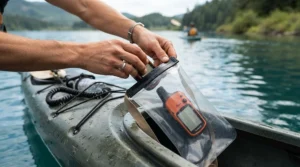
6. Garmin inReach Mini 2 — two-way texting layered on top of SOS
The Garmin inReach Mini 2 steps outside the pure-PLB category entirely, functioning as a satellite messenger with an SOS button rather than an emergency-only beacon. At 3.5 ounces with a 1.75-inch color display, it uses the Iridium satellite network to send and receive text messages, share location via TracBack routing, and trigger an SOS that connects to a 24/7 monitored emergency response center rather than routing directly to government search and rescue.
Reviewers consistently rank it among the smallest, toughest two-way communicators available, and the shift from Garmin’s older Earthmate app to the newer Explore app has been well received for ease of use. Here’s the honest tradeoff: unlike the pure PLBs above, this device requires an active monthly subscription plan — typically starting in the mid-teens per month plus a one-time activation fee — before any satellite feature works at all.
What most buyers overlook is that this ongoing cost, stacked over several years, can exceed the price of the device itself. On paper, though, the ability to tell a worried family member “I’m okay, running two hours late” without triggering a full emergency response is a real quality-of-life upgrade that pure PLBs simply can’t offer.
Pros:
- ✅ Two-way texting via Iridium satellite network
- ✅ Compact 3.5-ounce body with color display
- ✅ TracBack routing and location sharing for non-emergency use
Cons:
- ❌ Requires a paid monthly subscription to function
- ❌ Small screen makes standalone typing tedious without a phone
Device price generally runs in the $350-$400 range, not counting the recurring subscription fee. Choose this over a standard PLB if you want ongoing communication, not just emergency signaling.
7. Garmin inReach Mini 3 Plus — premium two-way beacon with the longest battery life here
The newest entry in this guide, the Garmin inReach Mini 3 Plus pushes the satellite-messenger category further with a color touchscreen, voice and photo messaging alongside standard text, and a battery rated for up to 350 hours in tracking mode — dramatically longer than the original Mini 2. Based on the spec comparison, this is the most feature-dense device in the entire roundup, adding LiveTrack location sharing and an interactive SOS that lets rescuers communicate back with you in real time rather than receiving a one-way distress ping.
Because this model is newly released, verified long-term aggregated review data is still limited compared to the well-established Mini 2, so treat early impressions with appropriate caution rather than the confident verdicts available for older devices; what is verifiable is the spec sheet upgrade over its predecessor.
The touchscreen addresses a longtime complaint about the Mini 2’s tiny button-driven interface, and the extended battery life suits multi-week expeditions where daily charging isn’t realistic. Like the Mini 2, it requires an active monthly Garmin subscription plan, and the higher device price reflects its expanded feature set rather than any change to the underlying safety technology.
Pros:
- ✅ Touchscreen interface fixes the Mini 2’s fiddly button navigation
- ✅ Up to 350 hours of battery life in tracking mode
- ✅ Voice, photo, and text messaging plus interactive SOS
Cons:
- ❌ Highest device price in this guide before subscription costs
- ❌ Long-term aggregated review data is still limited given its recent release
Pricing sits in the $500-$550 range, plus the same recurring subscription structure as the Mini 2. This is the pick for extended expeditions where communication matters as much as emergency signaling.
Practical Usage Guide: Setting Up, Registering, and Testing Your Beacon
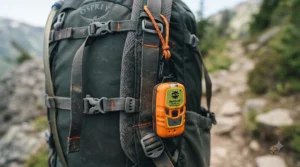
Buying an emergency beacon PLB is step one; getting it rescue-ready is a separate job that too many people skip. First, register the device — in the United States, this is legally required for every 406 MHz beacon and is completely free through NOAA’s national beacon registration system. Registration takes about fifteen minutes online and links your identity, emergency contacts, and beacon ID directly to the Cospas-Sarsat alert message, so rescuers know who they’re looking for the moment your signal reaches a satellite. Second, run the manufacturer’s self-test monthly — most beacons have a dedicated test button or sequence separate from the actual distress activation, and skipping this is how people discover a dead battery at the worst possible moment. Third, avoid running a full GPS test more than once or twice a year, since that specific test burns meaningfully more battery than the basic self-check. Fourth, mount the beacon somewhere with a genuinely clear view of the sky when stowed — a top pack pocket or exterior PFD clip works far better than burying it under gear where its GNSS receiver can’t see satellites. Finally, mark your battery expiration date somewhere visible, since most PLB batteries need professional replacement at an authorized service center rather than a DIY swap, typically running $100-$150 depending on the model.
Real-World Scenarios: Who Actually Needs This Beacon
Consider three genuinely different buyers. A college student who commutes eight miles by bike through cell-dead canyon roads twice a week probably doesn’t need a beacon at all — cell coverage gaps that short don’t justify the investment. Now picture a solo backpacker doing a five-day traverse through terrain with zero cell coverage and unreliable trail traffic; here, a no-subscription PLB like the ACR ResQLink 400 or Ocean Signal rescueME PLB1 makes enormous sense, since the entire trip happens without needing ongoing communication, just a reliable emergency backstop. A different profile entirely: a family planning a three-week international expedition who wants daily check-ins home alongside emergency capability. For them, a satellite messenger like the Garmin inReach Mini 2 or Garmin inReach Mini 3 Plus earns its subscription cost by replacing what would otherwise require a separate satellite phone. Finally, weekend coastal kayakers who paddle regularly but rarely travel internationally get the best return from the ACR ResQLink AIS, since its local AIS alerting is genuinely more useful to them than it would be to a landlocked hiker.
Problem → Solution: Common PLB Mistakes and How to Fix Them
Problem one: buyers purchase a beacon and never register it, which is both illegal under FCC regulation and dramatically slows rescue response. Solution: register immediately at NOAA’s beacon registration portal — it’s free and takes under fifteen minutes. Problem two: accidental activations from beacons stored loosely in a pack, which needlessly divert search-and-rescue resources. Solution: choose a model with a physical activation guard, like the PLB1’s spring-loaded cover, and store the unit in its dedicated pouch. Problem three: letting the battery lapse past its expiration without realizing it, since most PLBs will still power on but with drastically reduced transmit time. Solution: set a calendar reminder six months before the printed expiration date to schedule service. Problem four: mounting the beacon somewhere the GNSS antenna can’t get a clear sky view, which delays your position fix during an actual emergency. Solution: clip it externally on a pack strap or PFD rather than burying it in a main compartment. Problem five: assuming any of these devices replaces basic trip planning — filing a route plan with a trusted contact remains essential regardless of what beacon you carry.
How to Choose a Personal Locator Beacon
- Define your activity type first. Land hikers and hunters generally want a standard PLB; boaters benefit specifically from AIS-equipped models like the ResQLink AIS.
- Decide if you need two-way communication. If daily check-ins matter to you, a Garmin inReach model justifies its subscription; if not, a subscription-free PLB saves money long-term.
- Weigh battery life against replacement cost. A 7-year battery, like the PLB1’s, means fewer service trips even if the upfront price looks similar to shorter-lived competitors.
- Consider weight and size realistically. Ultralight backpackers should prioritize the smallest options; car campers have more flexibility.
- Check for a GPS status display if reassurance matters to you. The ACR ResQLink View’s screen genuinely reduces uncertainty during high-stress activation.
- Confirm US registration compatibility before buying. Beacons must be coded for US registration with NOAA to work correctly within the American Cospas-Sarsat system.
- Budget for the full ownership cost, not just the sticker price. Factor in eventual battery replacement and, for satellite messengers, years of monthly subscription fees.
Personal Locator Beacon vs Satellite Messenger
This comparison sits at the heart of nearly every PLB shopping decision, and it’s worth understanding the mechanics rather than just the marketing. A personal locator beacon, like the ACR ResQLink 400 or McMurdo FastFind Ranger, connects directly to the government-run Cospas-Sarsat satellite network and alerts an actual Search and Rescue authority the moment you activate it — there’s no subscription, no company in between, and no monthly bill. A satellite messenger, like the Garmin inReach Mini 2, instead routes its SOS through a commercial monitoring center that then contacts local authorities on your behalf, and it requires an active paid plan to function for any satellite feature, including basic messaging. The tradeoff is genuinely two-sided: PLBs win on cost, simplicity, and directness of the emergency signal, while satellite messengers win on flexibility, since they let you communicate non-emergency information — arrival delays, minor injuries that don’t need a helicopter, simple reassurance — that a PLB has no mechanism to send. Reviewers consistently note that serious backcountry travelers increasingly carry both: a subscription-free PLB as the emergency backstop, and a satellite messenger for day-to-day communication, accepting the redundancy as cheap insurance against either device failing when it matters most.
| Factor | PLB | Satellite Messenger |
|---|---|---|
| Ongoing cost | None | Monthly subscription |
| Signal path | Direct to Cospas-Sarsat SAR | Routed via commercial monitoring center |
| Two-way messaging | No | Yes |
| Battery life | Years on standby | Days to weeks per charge |
| Best For | ACR ResQLink 400, one-time emergency signaling | Garmin inReach Mini 2, ongoing communication |
Looking at the table above, the choice really comes down to whether you value zero ongoing cost or two-way flexibility more. Budget-conscious occasional hikers should lean toward a pure PLB, while frequent long-haul travelers who want daily check-ins will find the subscription cost of a Garmin device justified over time.
Understanding the 406 MHz Signal: How Your Distress Call Reaches Space
Every beacon in this guide transmits on the same core frequency for a reason: 406 MHz is the internationally standardized digital distress frequency recognized by the Cospas-Sarsat program, a treaty-based satellite system that Canada, France, Russia, and the United States founded specifically to relay these signals to search-and-rescue authorities worldwide. Here’s what the spec sheet won’t tell you: that 406 MHz burst isn’t a continuous transmission — it fires in short digital pulses roughly every fifty seconds, encoding your unique beacon ID and, on GPS-equipped models, your precise coordinates. Those pulses get picked up by a constellation of low-earth-orbit, geostationary, and medium-earth-orbit satellites, relayed to ground stations called Local User Terminals, processed by a Mission Control Center, and forwarded to the nearest Rescue Coordination Center — a chain that typically completes in minutes, not hours. Many beacons also emit a secondary 121.5 MHz homing signal, which carries no location data but lets rescue teams on the ground or in the air perform final direction-finding once they’re already in your general area. What most buyers overlook is that this entire relay system is free to use and funded by participating governments, which is precisely why none of the pure PLBs in this guide carry a subscription fee — you’re tapping into public safety infrastructure, not a private company’s satellite lease.

GPS Coordinates and Beacon Accuracy: What the Numbers Actually Mean
A beacon’s GPS chip is arguably more important to your actual rescue time than its transmit power, and it’s worth understanding why. Without an internal GPS fix, a 406 MHz beacon can still be located by the satellite network’s Doppler processing alone, but that method can take considerably longer and lands within a wider search radius — sometimes several miles. Add a working GPS receiver, like the 66-channel unit in the ACR ResQLink 400 or the GPS-plus-Galileo combination in the ACR ResQLink View, and that radius shrinks to roughly 100 meters in good conditions, which is the difference between a helicopter crew scanning a mountainside for hours versus flying almost directly to your position. On paper, more GNSS channels and multi-constellation support (GPS plus Galileo, or GPS plus GLONASS on the ACR ResQLink AIS) mean faster initial fixes and better performance in tricky terrain like narrow canyons or dense forest canopy, where a single-constellation receiver might struggle to see enough satellites. Reviewers have noted that beacons without a display leave you trusting this process blind, which is exactly the anxiety the ResQLink View’s onboard screen was designed to solve — you can watch your coordinates lock in real time rather than wondering if the fix succeeded at all.
PLB Registration Requirements: What US Law Actually Demands
Registration isn’t optional paperwork you can skip if you’re in a hurry — under Code of Federal Regulations Title 47, every US-coded 406 MHz beacon must be registered with NOAA before use, and doing so costs nothing. The process requires your beacon’s unique 15-character hex ID, found both on the packaging and stamped on the device itself, along with your contact information and at least one 24-hour emergency contact who isn’t you. That registration data gets pulled automatically the instant your beacon activates, appending your identity and emergency contact details to the distress message sent to the responsible Rescue Coordination Center — this is precisely what separates a fast, targeted rescue response from a slower one built entirely on Doppler-derived guesswork. If you buy a used beacon, you’re legally required to register it under your own name even if the previous owner already did; failing to update ownership means rescuers may end up trying to reach a total stranger during your emergency. The same applies in reverse: if you sell or dispose of a beacon, you must update or cancel that registration so a false alarm doesn’t get traced back to you years later. Registration information stays valid for two years and requires periodic renewal, so mark your calendar rather than assuming a “set it and forget it” registration lasts forever.
Common Mistakes When Buying a PLB
The most frequent mistake is buying based purely on price without checking whether a beacon is US-coded for NOAA registration — some grey-market imports are coded for other countries and won’t register correctly stateside. A second common error is assuming any PLB includes two-way messaging; as covered above, pure PLBs are strictly one-directional emergency devices, and buyers expecting to text home are often disappointed to learn that only satellite messengers like the Garmin inReach line offer that. Third, shoppers frequently underweight battery replacement costs when comparing sticker prices, missing that a cheaper beacon with a shorter battery life span might cost more over a decade than a pricier one with a longer interval between services. Fourth, buyers sometimes skip reading real aggregated review sentiment around ergonomics — a beacon that’s hard to activate one-handed while injured or wearing gloves is a meaningful safety gap that specs alone won’t reveal. Finally, some people buy a beacon and stash it unregistered “for later,” which is both illegal and defeats the entire purpose of the device.
Long-Term Cost & Maintenance: What a Beacon Really Costs Over Time
Sticker price tells an incomplete story here, and running the actual multi-year math changes the value calculus meaningfully. A pure PLB like the Ocean Signal rescueME PLB1, priced around $330-$400 with a 7-year battery, works out to roughly $50-$60 per year of ownership before any service costs, with a single battery replacement around $100-$150 near the end of that span. Compare that to a Garmin inReach Mini 2 at $350-$400 upfront plus a subscription running well over $100 annually even on a basic plan — over five years, total cost of ownership can easily exceed $1,000, dwarfing what any pure PLB costs across the same period. That’s not an argument against the Garmin option; it’s an argument for being honest about what you’re actually paying for, which is ongoing two-way communication rather than emergency signaling alone. Buyers who only need occasional emergency backup and rarely require daily check-ins get dramatically better long-term value from a subscription-free beacon, while frequent international travelers or expedition leaders may find the subscription cost genuinely justified by the communication flexibility it buys.
PLBs vs Cell Phones and Other Alternatives
| Factor | PLB | Smartphone SOS | Personal Locator App |
|---|---|---|---|
| Requires cell/data signal | No | Partial (satellite SOS varies by phone) | Yes |
| Cost after purchase | Free (Cospas-Sarsat) | Varies by carrier/device | Subscription |
| Battery life | Years on standby | Hours to a day | Hours to a day |
| Best For | ACR ResQLink View, true backcountry | Areas with partial coverage | Urban/suburban day trips |
Based on this comparison, the appeal of a dedicated beacon becomes obvious once you’re truly off-grid: phone-based satellite SOS features, while a welcome recent development, depend on battery life and device-specific hardware that simply can’t match a purpose-built PLB’s years-long standby capability. A phone that’s dead, cracked, or submerged is a phone that can’t call for help, whereas a beacon like the ACR ResQLink 400 is engineered specifically to survive the conditions in which you’d actually need it.

Frequently Asked Questions
❓ Do I need a subscription for a personal locator beacon?
❓ How long does a PLB battery actually last?
❓ Is PLB registration really required by law?
❓ Can a personal locator beacon work without GPS?
❓ What's the difference between a PLB and an EPIRB?
Conclusion
Choosing the right emergency beacon PLB really comes down to two honest questions: how remote do your trips actually get, and do you want ongoing communication or just a reliable last-resort signal? For most weekend hikers and budget-conscious campers, a subscription-free option like the ACR ResQLink 400 or McMurdo FastFind Ranger delivers everything that matters at a fraction of the long-term cost of a satellite messenger. Boaters and coastal paddlers get real, specific value from the ACR ResQLink AIS‘s local alerting layer, while anyone craving the reassurance of a GPS screen should look hard at the ACR ResQLink View. If two-way texting and daily check-ins matter more to you than saving money, the Garmin inReach Mini 2 and Garmin inReach Mini 3 Plus justify their subscription costs with genuine flexibility no pure PLB can match. Whichever beacon you land on, the device itself is only half the safety equation — registering it with NOAA, testing it monthly, and mounting it where it can actually see the sky matter just as much as the model number on the box.
Recommended for You
- Action Camera For Camping: 7 Best Rugged Picks for 2026
- Weather Radio for Camping: 7 Life-Saving Picks for 2026
- Garmin vs Suunto Hiking Watch: 7 Rugged Picks for 2026
Disclaimer: This article contains affiliate links. As an Amazon Associate, I earn from qualifying purchases. If you purchase products through these links, we may earn a small commission at no additional cost to you.
✨ Found this helpful? Share it with your friends! 💬🤗
