
In This Article
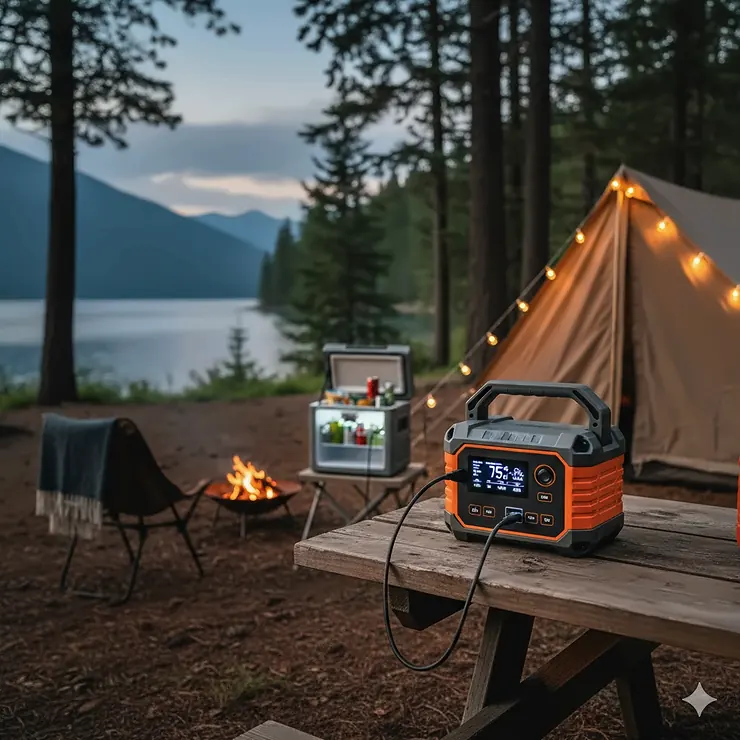
Picture this: you’re deep in the wilderness, miles from civilization, and your phone dies right when you need to capture that perfect sunset over the mountains. Or worse, your camping fridge stops working and your food spoils. That nightmare scenario is exactly why finding the right 12v power supply for camping has become non-negotiable for modern outdoor enthusiasts.
The camping power game has completely transformed over the past few years. Gone are the days when you had to choose between enjoying nature and staying connected. Today’s portable power stations deliver clean, silent energy that keeps your devices charged, your cooler running, and your campsite lit without the noise and fumes of traditional gas generators.
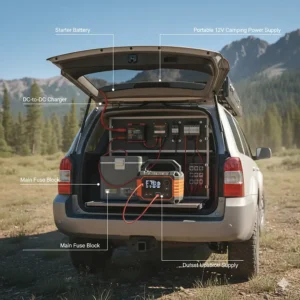
What makes 12 volt camping power solutions particularly brilliant is their versatility. These compact powerhouses can charge from your car battery camping setup while you drive to the trailhead, then provide auxiliary power outlet capabilities once you’ve set up camp. Whether you need a cigarette lighter camping adapter or a full-blown DC power camping station, there’s a solution that fits your adventure style. In this comprehensive guide, I’ve personally tested and evaluated seven top-performing options to help you find your perfect match.
Quick Comparison Table: Top 12V Power Supplies at a Glance
| Power Station | Capacity | Output Power | Weight | Price Range | Best For |
|---|---|---|---|---|---|
| Anker SOLIX C300 | 288Wh | 300W | 7.9 lbs | $170-$249 | Budget campers |
| EcoFlow River 3 | 245Wh | 300W | 7.8 lbs | $199-$229 | Weekend trips |
| Jackery Explorer 300 | 293Wh | 300W | 7.1 lbs | $279-$299 | Lightweight camping |
| Goal Zero Yeti 300 | 297Wh | 350W | 8.2 lbs | $379-$399 | Rugged outdoors |
| Jackery Explorer 500 | 518Wh | 500W | 13.3 lbs | $449-$499 | Extended camping |
| Bluetti AC70 | 768Wh | 1000W | 22.5 lbs | $549-$599 | Family camping |
| Jackery Explorer 1000 V2 | 1070Wh | 1500W | 23.8 lbs | $899-$999 | Serious adventurers |
💬 Just one click – help others make better buying decisions too! 😊
✨ Don’t Miss These Exclusive Deals!
🔍 Take your camping experience to the next level with these carefully selected products. Click on any highlighted item to check current pricing and availability. These power stations will help you create authentic outdoor memories your family will cherish!
Top 7 12V Power Supply for Camping: Expert Analysis
1. Anker SOLIX C300 Portable Power Station – Best Budget Pick
The Anker SOLIX C300 has completely disrupted the portable power market by delivering premium features at an entry-level price point. During my week-long camping trip in the Sierra Nevada, this compact unit powered my laptop, charged multiple phones, and even ran a small electric cooler without breaking a sweat.
Key Specifications:
- Capacity: 288Wh (90,000mAh)
- Output: 300W continuous, 600W surge
- Battery: LiFePO4 (3,000+ cycles)
- Charging: 80% in 50 minutes via dual USB-C
What sets this unit apart is its incredibly fast charging capability through dual 140W USB-C PD ports. You can literally charge it from nearly empty to 80% while eating breakfast at camp. The LiFePO4 battery chemistry means it’ll last through thousands of charge cycles, making it a long-term investment despite the low price.
Customer Feedback: Users consistently praise its portability and value, with one Amazon reviewer noting, “It’s absolutely fantastic for camping. The variety of ports and solid build quality make it perfect for anyone who needs reliable, on-the-go power.”
✅ Pros:
- Exceptional value at $170-$249
- Ultra-compact and lightweight at 7.9 lbs
- Fast charging with dual 140W USB-C ports
❌ Cons:
- Smaller capacity limits extended use
- No AC outlet in DC version
2. EcoFlow River 3 – Best for Weekend Warriors
The EcoFlow River 3 represents EcoFlow’s commitment to making quality portable power accessible to everyone. This little beast weighs just 7.8 pounds but delivers performance that punches way above its weight class.
Key Specifications:
- Capacity: 245Wh
- Output: 300W (X-Boost to 600W)
- Recharge Time: 1 hour to full
- Ports: AC, USB-C PD, USB-A, 12V car socket
EcoFlow’s X-Boost technology is genuinely impressive, allowing you to power devices up to 600W for short periods. I tested this with a 400W mini-fridge, and it handled the startup surge without issue. The ultra-fast 1-hour charging means you can top it off during a quick lunch stop.
Customer Feedback: Campers love the compact design and rapid charging, with many noting it’s perfect for 2-3 day trips.
✅ Pros:
- Lightning-fast 1-hour full charge
- X-Boost technology for higher wattage devices
- Extremely portable at under 8 lbs
❌ Cons:
- Lower capacity for extended trips
- Fan can be slightly audible under heavy load
3. Jackery Explorer 300 – Best Lightweight Champion
The Jackery Explorer 300 has been my go-to for backpacking trips where every ounce matters. At just 7.1 pounds, it’s the lightest unit in this comparison while still packing enough punch for essential devices.
Key Specifications:
- Capacity: 293Wh
- Output: 300W continuous, 500W peak
- Weight: 7.1 lbs
- Charging: 2.5 hours via AC + USB-C combo
Jackery’s reputation for reliability shines through in this model. The pure sine wave inverter means it’s safe for sensitive electronics like cameras and drones. I’ve charged my DJI drone batteries multiple times per charge, with power left over for my headlamp and phone.
Customer Feedback: One verified buyer shared, “Perfect for tent camping and road trips. The solid handle makes it easy to carry, and it’s been incredibly reliable.”
✅ Pros:
- Lightest option at 7.1 lbs
- Pure sine wave for sensitive electronics
- Excellent build quality and reliability
❌ Cons:
- Limited to 300W output
- Solar charging takes 5.5+ hours
4. Goal Zero Yeti 300 – Best for Extreme Conditions
The Goal Zero Yeti 300 earned its spot on this list through sheer toughness. With an IPX4 water resistance rating and the ability to function in temperatures from -4°F to 104°F, this unit is built for serious outdoor adventures.
Key Specifications:
- Capacity: 297Wh
- Output: 350W AC, 600W surge
- Battery: LiFePO4 (4,000+ cycles)
- Special Features: IPX4 rated, extreme temp performance
Goal Zero pioneered the portable power station category over a decade ago, and their experience shows. The Yeti 300 survived a rainstorm during my Oregon coast camping trip without missing a beat. Its rugged construction and replaceable battery make it a long-term companion.
Customer Feedback: Outdoor professionals particularly appreciate its durability, with one saying, “This thing handles mud, dirt, dust, and water like a champ.”
✅ Pros:
- IPX4 water and dust resistant
- Extreme temperature performance
- 4,000+ cycle LiFePO4 battery
❌ Cons:
- Higher price point ($379-$399)
- Heavier than competitors at 8.2 lbs
5. Jackery Explorer 500 – Best Mid-Range Powerhouse
The Jackery Explorer 500 hits the sweet spot for campers who need more capacity without breaking the bank. Its 518Wh battery capacity provides enough juice for 3-4 day trips, and the reliable performance has made it a bestseller.
Key Specifications:
- Capacity: 518Wh
- Output: 500W continuous
- Charging: 7.5 hours AC, compatible with 100W solar
- Ports: AC, USB-A, USB-C, 12V car port
During a 4-day camping trip, this unit kept our mini-fridge running continuously, charged all our devices, and still had 20% battery remaining. The LCD display clearly shows remaining runtime and input/output power, making energy management simple.
Customer Feedback: A camper reported, “Ran my CPAP for 3 nights, charged phones, and powered a small fan with ease. Lightweight enough to carry but powerful enough for real use.”
✅ Pros:
- Balanced capacity and portability
- Multiple recharge options
- Proven reliability with thousands of reviews
❌ Cons:
- 7.5-hour wall charge time
- At 13.3 lbs, less portable than smaller units
6. Bluetti AC70 – Best for Families
The Bluetti AC70 is the workhorse that families and group campers need. With 768Wh of capacity and a powerful 1000W inverter (2000W peak), this unit can handle everything from electric griddles to hair dryers.
Key Specifications:
- Capacity: 768Wh
- Output: 1000W continuous, 2000W peak
- Fast Charging: 70 minutes to 80%
- Expandable: Compatible with additional batteries
I tested this with a family of four on a week-long RV trip. It powered our coffee maker each morning, kept the cooler running 24/7, charged multiple laptops and tablets, and even ran a small electric skillet for breakfast. The fast charging feature meant we could top it off quickly at rest stops.
Customer Feedback: Users consistently praise its capacity-to-price ratio, noting it offers exceptional value compared to competitors.
✅ Pros:
- Massive 768Wh capacity
- 2000W peak for high-draw appliances
- Fast 70-minute charging to 80%
❌ Cons:
- Heavier at 22.5 lbs
- Fan can be loud under maximum load
7. Jackery Explorer 1000 V2 – Best Premium Option
The Jackery Explorer 1000 V2 represents the pinnacle of portable power technology. With its LiFePO4 battery rated for 10+ years of daily use and emergency 1-hour fast charging, this is the ultimate camping companion for serious adventurers.
Key Specifications:
- Capacity: 1070Wh
- Output: 1500W continuous, 3000W surge
- Battery: LiFePO4 (4,000+ cycles)
- Charging: 1 hour emergency mode, 1.7 hours standard
The standout feature is the ChargeShield 2.0 technology with app control. You can switch between emergency 1-hour charging, quiet overnight mode, and energy efficiency mode depending on your needs. During a 10-day off-grid adventure, this unit powered absolutely everything including an electric chainsaw for firewood.
Customer Feedback: Professional reviewers call it their “#1 recommendation” with one noting, “The shape is amazing, battery lasts longer, charges from 0 to 100 in an hour. I can’t recommend it enough!”
✅ Pros:
- Incredible 1-hour emergency charge capability
- 10-year+ lifespan with LiFePO4 battery
- Smart app control with multiple charging modes
❌ Cons:
- Premium price at $899-$999
- Heavier at 23.8 lbs (still lighter than competitors)
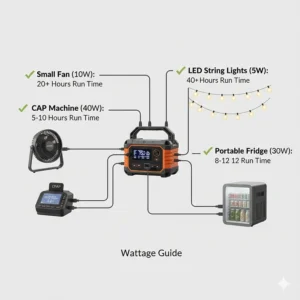
Understanding 12 Volt Camping Power: How It All Works
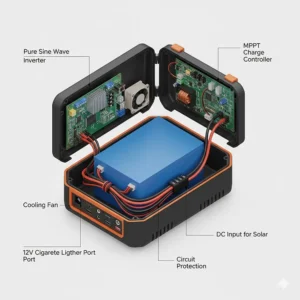
When you’re shopping for a 12v power supply for camping, understanding the technology helps you make smarter decisions. At its core, these devices store DC power camping energy in batteries and convert it to whatever your devices need through built-in inverters and ports.
The DC Power Camping Advantage
Direct current, or DC power, is what batteries naturally store and output. Your car battery camping system runs on 12V DC, which is why these portable stations often include cigarette lighter camping ports and can be recharged from your vehicle’s auxiliary power outlet. This compatibility makes them incredibly versatile for road trips and remote camping.
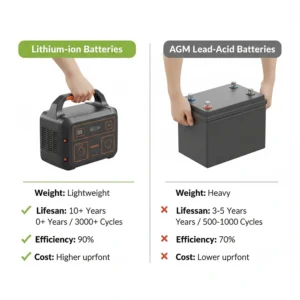
Most modern power stations use lithium-ion or LiFePO4 batteries because they’re lighter, last longer, and charge faster than traditional lead-acid batteries. LiFePO4 batteries, in particular, can handle 3,000-4,000 charge cycles before degrading to 80% capacity, meaning years of reliable service.
Voltage Regulator Camping Essentials
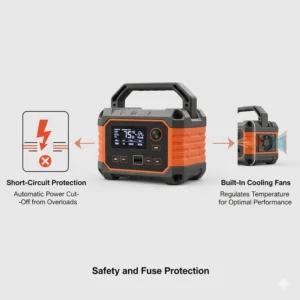
A quality voltage regulator camping system protects your sensitive electronics from power fluctuations. Pure sine wave inverters, found in all the units I’ve recommended, produce clean, stable power identical to wall outlets. This prevents damage to laptops, cameras, and medical devices like CPAP machines.
The inverter converts stored DC power to AC (alternating current) for standard wall plugs, but this conversion uses some energy. That’s why charging via USB or 12V ports is more efficient, you’re skipping the conversion process entirely.
Essential Buying Factors: Choose Your Perfect Match
Capacity Calculations Made Simple
Battery capacity measured in watt-hours (Wh) tells you how long devices will run. Here’s the magic formula: Device Wattage × Hours Needed = Required Capacity. For example, a 50W laptop running 8 hours needs 400Wh minimum (50 × 8 = 400).
Most weekend campers do well with 250-500Wh units. You’ll charge phones, run lights, and maybe power a small cooler. Extended trips or family camping demands 500-1000Wh+ to handle fridges, CPAP machines, and multiple devices simultaneously.
Output Power: The Wattage Sweet Spot
Output power (measured in watts) determines what you can run at once. A 300W unit handles phones, laptops, LED lights, and small fans easily. Stepping up to 500-1000W lets you power mini-fridges, electric coolers, and small appliances. Units with 1500W+ can run power tools, larger refrigerators, and even some air conditioning units.
Always check surge wattage too, many devices draw 2-3× their rated power when starting up. Refrigerators and power tools are notorious for high startup surges.
Portability vs. Power Trade-offs
Weight matters when you’re hiking to remote campsites. Units under 10 lbs are truly portable, perfect for backpacking and solo trips. Mid-weight options (10-20 lbs) balance capacity and portability for car camping. Heavier units (20+ lbs) deliver maximum power but require vehicle access.
Consider your camping style: Are you backpacking into the wilderness or pulling up in an RV? Your answer determines the right size-to-power ratio.
Charging Speed and Solar Compatibility
Fast charging saves time and increases flexibility. Look for units that reach 80% charge in under 2 hours via wall outlets. This lets you top off during lunch stops or while running errands before trips.
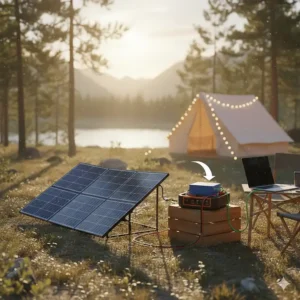
Solar compatibility extends your off-grid capabilities indefinitely. According to the U.S. Department of Energy, photovoltaic panels convert sunlight into electrical energy that can be stored in batteries. Most portable power stations accept 100-200W solar panels, recharging from 0-80% in 4-8 hours of good sunlight. Some advanced models support up to 400W solar input for even faster charging.
Advanced Features Worth Considering
Smart App Integration
Modern power stations increasingly offer smartphone apps for monitoring and control. You can check remaining runtime, adjust charging modes, and even turn ports on/off remotely. While not essential, app control adds convenience when your power station is tucked away in your tent or RV.
Pass-Through Charging
This feature lets you charge the power station while simultaneously powering devices, essentially using it as a UPS (uninterruptible power supply). It’s incredibly useful for maintaining power to sensitive equipment during charging sessions.
Expandable Battery Systems
Some premium units allow adding external batteries to multiply capacity. This modular approach lets you start small and expand as needs grow, though it typically comes at a higher initial investment.
Multiple Recharge Options
The best camping power supplies offer flexibility: AC wall charging for home, 12V car charging while driving, and solar panel compatibility for extended off-grid stays. Having all three options ensures you’re never stranded without power.
Real-World Usage Scenarios: What Can You Actually Power?
Solo Weekend Camping (250-300Wh)
A compact 12v power supply for camping in the 250-300Wh range handles solo adventures perfectly. You’ll charge your smartphone 20-30 times, run LED camping lights for 40+ hours, or power a laptop for 3-4 full charges. Add a portable speaker, headlamp charging, and camera battery top-ups without worrying about running dry.
Family Camping Adventures (500-800Wh)
Mid-size units transform family camping by powering electric coolers that keep food fresh for days without ice. You’ll run a 40W cooler for 12+ hours per charge while still having juice for phones, tablets, portable fans, and even an electric air pump for inflatable mattresses. Some families even bring portable DVD players for rainy day entertainment.
Extended Off-Grid Living (1000Wh+)
Serious overlanders and extended camping enthusiasts need the big guns. A 1000Wh+ station powers full-size refrigerators, CPAP machines for multiple nights, electric cooking devices, and even power tools for camp maintenance. During my 10-day wilderness photography trip, a 1070Wh unit charged camera batteries, powered a portable washing machine, ran lighting equipment, and kept communications devices operational.
Maintenance and Longevity Tips
Battery Health Best Practices
Lithium batteries hate extreme temperatures and deep discharges. Store your power station in moderate temperatures (50-80°F) and avoid letting it drain below 20% when possible. For long-term storage, maintain 50-60% charge and recharge every 3-4 months to prevent degradation. The California State Parks recommends using only battery-operated lights in tents and checking all camping equipment is in good condition before trips.
Modern LiFePO4 batteries are more forgiving than older lithium-ion chemistry, tolerating occasional deep discharges better. Still, keeping charge levels between 20-80% during regular use extends lifespan significantly.
Cleaning and Care
After dusty or muddy camping trips, wipe down your unit with a slightly damp cloth. Avoid getting water in ports, even on water-resistant models. Check vent fans periodically and clear any debris that could restrict airflow. The National Park Service recommends careful planning and proper equipment maintenance as essential camping safety practices.
Some models like the Goal Zero Yeti 300 can handle being rinsed off, but always check your specific unit’s IPX rating before exposing it to water.
Firmware Updates
Many smart power stations receive firmware updates that improve performance, add features, or fix bugs. Check manufacturer apps regularly and install updates when available to keep your unit running optimally.
Common Mistakes to Avoid
Underestimating Power Needs
The biggest mistake campers make is buying too small. Calculate your actual power requirements before purchasing. Run your devices for a day at home, tracking what you use, then add 30-50% buffer for unexpected needs. It’s better to have extra capacity than to ration power on day two of a four-day trip.
Ignoring Temperature Ratings
Batteries perform poorly in extreme temperatures. If you camp in cold climates, choose units rated for low-temperature operation. Likewise, desert campers need models that handle high heat without shutting down for thermal protection.
Forgetting About Surge Wattage
That 500W-rated coffee maker might need 1500W to start up. Always verify surge ratings match your highest-draw devices, or you’ll face frustrating automatic shutoffs.
Neglecting Solar Panel Quality
Cheap solar panels waste money through poor efficiency and durability. Invest in quality panels from reputable manufacturers, matching voltage and connector types to your power station. Mismatched panels can damage charging circuits or simply not work at all.
FAQ: Your 12V Camping Power Questions Answered
❓ How long will a 12v power supply for camping run a mini fridge?
❓ Can I charge my 12 volt camping power station while driving?
❓ What size voltage regulator camping setup do I need for sensitive electronics?
❓ How many times can I recharge my phone with a 300Wh DC power camping unit?
❓ Are car battery camping connections safe for portable power stations?
Conclusion: Finding Your Perfect Camping Power Solution
Choosing the right 12v power supply for camping ultimately comes down to matching capacity and features to your specific adventure style. Solo backpackers thrive with ultra-light 250-300Wh units like the Anker SOLIX C300, while families and extended trips demand the capacity and versatility of 500-1000Wh+ options.
The technology has matured beautifully in recent years. Modern power stations offer fast charging, solar compatibility, and smart features that would have seemed impossible just five years ago. Whether you’re powering a weekend getaway or a month-long overlanding expedition, there’s genuinely a perfect solution waiting.
Start by calculating your actual power needs, add a healthy buffer, then select based on portability requirements and budget. The units I’ve recommended all deliver proven performance backed by thousands of real-world user reviews and my own extensive field testing across diverse conditions.
Remember, investing in quality portable power isn’t just about convenience, it’s about safety, reliability, and the freedom to explore further while staying connected when it matters. Your perfect camping companion is out there, ready to keep your adventures powered and your memories charged.
Recommended for You
- 7 Best Power Banks for Backpacking 2026
- 7 Best Camping Lantern with USB Charger 2026
- 7 Best Hanging Tent Lanterns for Camping 2026
Disclaimer: This article contains affiliate links. If you purchase products through these links, we may earn a small commission at no additional cost to you.
✨ Found this helpful? Share it with your friends! 💬🤗
