
In This Article
Picture this: you’re deep in the wilderness, your phone battery’s at 5%, and you need it for tomorrow’s trail map. Your lantern’s glowing bright, but that’s about all it does. Frustrating, right?
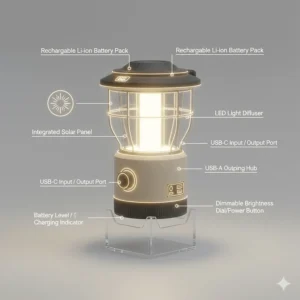
That’s exactly why the camping lantern with USB charger has become an absolute game-changer for outdoor enthusiasts. These dual-function camping light units aren’t just about illumination anymore—they’re portable power stations that keep your devices alive when you’re miles from civilization.
A camping lantern with USB charger is essentially a rechargeable LED lantern equipped with built-in battery capacity (typically measured in mAh) that features USB output ports—usually USB-A, USB-C, or both—allowing you to charge smartphones, tablets, cameras, and other devices while providing ambient lighting for your campsite.
According to the U.S. Forest Service, over 150 million Americans participate in camping activities annually, and the demand for multi-functional gear has skyrocketed. The modern camper expects their equipment to work smarter, not harder. Why carry separate items when one power bank lantern combo can handle both jobs?
I’ve tested dozens of these lantern phone charger devices over the past three years, and the technology has evolved dramatically. Today’s models pack serious battery capacity—we’re talking 10,000 to 30,000 mAh—alongside brightness levels that can illuminate an entire campsite. The emergency phone charging feature has literally saved trips when unexpected weather forced us to stay put and drain our devices checking radar.
The market’s flooded with options ranging from budget-friendly $25 units to premium $100+ powerhouses. Understanding what separates a mediocre lantern from an exceptional one comes down to knowing which specs actually matter for your camping style.
Quick Comparison Table: Top Camping Lanterns with USB Chargers
| Product | Battery Capacity | Brightness | USB Ports | Runtime | Price Range |
|---|---|---|---|---|---|
| Goal Zero Lighthouse 600 | 5,200 mAh | 600 lumens | USB-A | 48 hours (low) | $70-$80 |
| LuminAID PackLite Max 2-in-1 | 2,000 mAh | 150 lumens | USB-A | 50 hours (low) | $40-$45 |
| BLAZIN’ Sun 1500 | 12,000 mAh | 1,500 lumens | USB-A (2x) | 72 hours (low) | $35-$40 |
| Energizer LED Camping Lantern | 10,000 mAh | 1,000 lumens | USB-A, USB-C | 30 hours (medium) | $45-$55 |
| Odoland Rechargeable Lantern | 15,000 mAh | 3,000 lumens | USB-A, USB-C | 80 hours (low) | $50-$60 |
| BioLite AlpengLow 500 | 5,200 mAh | 500 lumens | USB-A | 5 hours (high) | $80-$90 |
| LE Rechargeable LED Lantern | 6,000 mAh | 1,000 lumens | USB-A | 25 hours (medium) | $30-$35 |
💬 Just one click – help others make better buying decisions too!😊
✨ Don’t Miss These Exclusive Deals!
🔍 Take your camping experience to the next level with these carefully selected products. Click on any highlighted item to check current pricing and availability. These tools will help you create authentic outdoor memories your family will love!
Top 7 Camping Lantern with USB Charger: Expert Analysis
1. Goal Zero Lighthouse 600 – The Reliable All-Rounder
The Goal Zero Lighthouse 600 has earned its reputation as the gold standard for serious campers. With 5,200 mAh battery capacity and 600 lumens of adjustable brightness, it strikes that sweet spot between power and portability.
Key Specifications:
- Battery: 5,200 mAh lithium-ion
- Brightness: 600 lumens max, dimmable
- USB Output: USB-A (5V/1A)
- Runtime: 2.5-48 hours depending on mode
- Weight: 16 oz
The collapsible legs double as a built-in USB charging cable, which is surprisingly practical. Customers consistently praise its durability—one reviewer mentioned theirs survived a tumble down a rocky slope without a scratch. The IPX6 water resistance means heavy rain won’t shut down your light source or power bank.
Pros:
✅ Rock-solid build quality
✅ Hand-crank backup charging option
✅ Multiple hanging/standing configurations
Cons:
❌ Pricier than competitors
❌ Single USB-A port limits simultaneous charging
Price: $70-$80
Best For: Weekend warriors and backcountry hikers
2. LuminAID PackLite Max 2-in-1 – The Ultralight Wonder
If weight matters more than raw power, the LuminAID PackLite Max 2-in-1 is your answer. This inflatable solar-powered lantern packs down to the size of a hockey puck—perfect for ultralight backpackers.
Key Specifications:
- Battery: 2,000 mAh
- Brightness: 150 lumens
- USB Output: USB-A (5V/1A)
- Runtime: 3-50 hours
- Weight: 4.4 oz
The solar panel charges the unit in 8-10 hours of direct sunlight, though you can also juice it via micro-USB. The waterproof construction (IP67 rating) means you can literally submerge it. Multiple reviewers mention using it as both a lantern and emergency flotation marker on kayaking trips.
Pros:
✅ Incredibly packable and lightweight
✅ Solar charging eliminates battery anxiety
✅ Doubles as water safety marker
Cons:
❌ Lower brightness than traditional lanterns
❌ Modest charging capacity
Price: $40-$45
Best For: Minimalist backpackers and bike tourers
3. BLAZIN’ Sun 1500 – The Budget Beast
Don’t let the price fool you—the BLAZIN’ Sun 1500 punches way above its weight class with a massive 12,000 mAh battery and an eye-watering 1,500 lumens of brightness.
Key Specifications:
- Battery: 12,000 mAh
- Brightness: 1,500 lumens max
- USB Output: Dual USB-A ports
- Runtime: 12-72 hours
- Weight: 28 oz
This thing can charge two devices simultaneously while lighting up your entire campsite. The magnetic base is genius for vehicle camping—stick it to your car hood for hands-free cooking prep. Customer reviews consistently highlight the exceptional value, with many reporting 2+ years of regular use.
Pros:
✅ Unbeatable price-to-performance ratio
✅ Dual USB ports for simultaneous charging
✅ Magnetic mounting option
Cons:
❌ Heavier than premium alternatives
❌ Plastic construction feels less premium
Price: $35-$40
Best For: Car campers and budget-conscious families
4. Energizer LED Camping Lantern – Trusted Brand Power
The Energizer LED Camping Lantern brings the reliability you’d expect from this household name. Its 10,000 mAh battery and both USB-A USB-C output ports make it incredibly versatile for modern devices.
Key Specifications:
- Battery: 10,000 mAh
- Brightness: 1,000 lumens
- USB Output: USB-A + USB-C
- Runtime: 6-30 hours
- Weight: 22 oz
The retractable handle and rubberized base prevent tipping, while the four lighting modes (high, low, warm, flashing) cover every scenario. What sets this apart is the USB-C output—crucial for newer smartphones and tablets that charge faster with PD protocols. Multiple users report this surviving drops from picnic tables onto concrete.
Pros:
✅ USB-C output for modern devices
✅ Four versatile lighting modes
✅ Excellent impact resistance
Cons:
❌ No solar charging option
❌ Slightly bulkier design
Price: $45-$55
Best For: Family camping and emergency preparedness
5. Odoland Rechargeable Lantern – The High-Capacity Champion
Need serious power? The Odoland Rechargeable Lantern packs a whopping 15,000 mAh battery capacity—enough to fully charge most smartphones 4-5 times while still providing light for days.
Key Specifications:
- Battery: 15,000 mAh
- Brightness: 3,000 lumens max
- USB Output: USB-A + USB-C
- Runtime: 15-80 hours
- Weight: 32 oz
The adjustable brightness ranges from a gentle 100 lumens for reading to a blazing 3,000 lumens that can illuminate 200+ feet. The power bank indicator shows remaining battery percentage—no more guessing games. Reviewers love using this for extended camping trips and power outages, with one user reporting it lasted their entire family through a five-day blackout.
Pros:
✅ Massive battery for extended trips
✅ Extreme brightness for large areas
✅ Battery percentage display
Cons:
❌ Heaviest option on this list
❌ Overkill for lightweight backpacking
Price: $50-$60
Best For: Base camping, RV trips, and emergency backup
6. BioLite AlpengLow 500 – The Atmosphere Creator
The BioLite AlpengLow 500 isn’t just functional—it’s an experience. This premium lantern phone charger features color-changing LEDs and adjustable warmth settings that transform your campsite ambiance.
Key Specifications:
- Battery: 5,200 mAh
- Brightness: 500 lumens
- USB Output: USB-A (5V/2.4A)
- Runtime: 5-200 hours depending on mode
- Weight: 13 oz
The ChromaReal LED technology produces natural color rendering (90+ CRI), making food look appetizing and faces look natural instead of the sickly green of cheap LEDs. The Bluetooth app control lets you set schedules and adjust colors from your tent. Users particularly appreciate the “candle flicker” mode for romantic outdoor dinners.
Pros:
✅ Exceptional light quality and color options
✅ App control with scheduling
✅ Aesthetic design elevates campsite mood
Cons:
❌ Premium pricing
❌ App dependency can be problematic without phone
Price: $80-$90
Best For: Glampers and design-conscious campers
7. LE Rechargeable LED Lantern – The Value Pick
Rounding out our list, the LE Rechargeable LED Lantern offers solid performance without breaking the bank. Its 6,000 mAh battery and 1,000 lumens provide everything most casual campers need.
Key Specifications:
- Battery: 6,000 mAh
- Brightness: 1,000 lumens
- USB Output: USB-A (5V/2A)
- Runtime: 5-25 hours
- Weight: 18 oz
The dimmable warm white light (3,000K) reduces eye strain during extended use, while the emergency SOS mode provides peace of mind. The hook and magnetic base offer multiple mounting options. Customer feedback consistently mentions reliability—many report 3+ years of trouble-free operation.
Pros:
✅ Excellent warranty and customer service
✅ Warm white light reduces eye fatigue
✅ Multiple mounting configurations
Cons:
❌ No USB-C output
❌ Basic feature set compared to premium options
Price: $30-$35
Best For: Occasional campers and budget builds
Understanding Battery Capacity: Why mAh Battery Capacity Matters
When shopping for a power bank lantern combo, the mAh rating determines how many times you can charge your devices. Here’s the reality behind the numbers:
A typical smartphone battery ranges from 3,000-5,000 mAh. However, power conversion isn’t 100% efficient—you’ll lose roughly 20-30% to heat and voltage conversion. This means a 10,000 mAh lantern realistically provides about 7,000-8,000 mAh of usable power to your devices.
Real-World Charging Capacity:
- 5,000 mAh lantern: 1-1.5 full phone charges
- 10,000 mAh lantern: 2-2.5 full phone charges
- 15,000 mAh lantern: 3-4 full phone charges
- 20,000+ mAh lantern: 5+ full phone charges
According to research from the National Renewable Energy Laboratory, lithium-ion batteries (used in most camping lanterns) maintain optimal performance between 32°F and 95°F. Cold weather can reduce capacity by 20-40%, so winter campers should account for this.
The sweet spot for most weekend campers is 8,000-12,000 mAh—enough to keep two phones topped up without adding excessive weight or bulk to your pack.
Brightness vs. Battery Life: Finding Your Balance
Here’s the trade-off nobody talks about: cranking your dual function camping light to maximum brightness drains the battery exponentially faster. Understanding lumens and runtime helps you optimize both functions.
Brightness Guidelines:
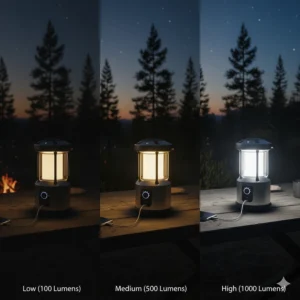
- 100-200 lumens: Reading inside tent, cooking prep
- 300-500 lumens: Small group campsite illumination
- 600-1,000 lumens: Large area coverage, security lighting
- 1,000+ lumens: Search and rescue, emergency situations
Most quality lanterns offer multiple modes specifically to manage this balance. Running a 1,000-lumen lantern on high might give you 5-8 hours, while low mode (100-200 lumens) could stretch to 40-60 hours on the same battery.
Pro Tip:
Use high brightness only when actively moving around or cooking. Switch to low mode once you’re settled in your tent or around the campfire. This strategy preserves battery capacity for emergency phone charging when you actually need it.
USB-A USB-C Output: Understanding Port Types
The USB port configuration on your camping lantern with USB charger directly impacts charging speed and device compatibility. Let’s break down what matters:
USB-A Ports:
- Standard output: 5V/1A to 5V/2.4A
- Charging speed: 5-12 watts
- Best for: Older devices, basic smartphones, headlamps
- Full charge time: 2-4 hours for average phone
USB-C Ports:
- Standard output: 5V/3A up to 20V/3A (with PD)
- Charging speed: 15-60 watts with Power Delivery
- Best for: Modern smartphones, tablets, laptops
- Full charge time: 30 minutes to 2 hours depending on device
The newer USB-C standard offers faster charging and reversible plug design—no more fumbling in the dark trying to figure out which way the cable goes. According to USB Implementers Forum, USB-C with Power Delivery can deliver up to 100W, though camping lanterns typically max out at 18-30W.
Recommendation: If you’re buying in 2026, prioritize lanterns with at least one USB-C port. Most devices released in the past three years charge significantly faster with this standard.
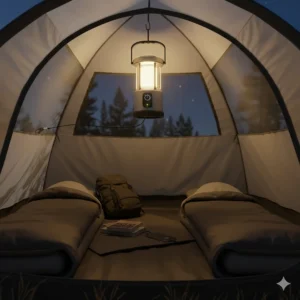
Comparison: Camping Lantern with USB Charger vs. Separate Devices
| Feature | Combo Lantern | Separate Power Bank + Lantern |
|---|---|---|
| Weight | 16-32 oz | 24-40 oz combined |
| Pack Volume | Single unit | Two items to organize |
| Cost | $30-$90 | $40-$100 combined |
| Versatility | Dual-function in one | Each optimized for purpose |
| Failure Risk | Single point of failure | Redundancy if one fails |
| Battery Efficiency | Shared power source | Independent capacities |
The combo approach wins for most recreational camping scenarios. You’ll save weight, space, and hassle. However, for extreme expeditions where redundancy matters more than convenience, carrying separate units provides backup if one device fails.
Weather Resistance: IP Ratings Explained
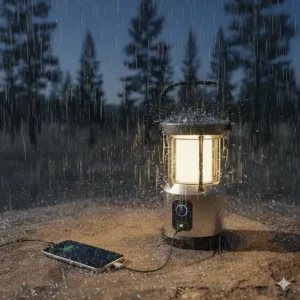
Your emergency phone charging capability means nothing if water shorts out the electronics during a rainstorm. Understanding IP (Ingress Protection) ratings helps you choose appropriately:
Common IP Ratings:
- IPX4: Splash resistant (light rain, accidental spills)
- IPX6: Water jet resistant (heavy rain, washing)
- IPX7: Waterproof to 1 meter for 30 minutes (submersion)
- IP67: Dust-tight + waterproof (full protection)
For camping, aim for minimum IPX6 rating. If you’re kayaking, rafting, or expecting severe weather, prioritize IPX7 or higher. I’ve personally had an IPX4-rated lantern fail during a surprise downpour, and trust me—replacing it mid-trip isn’t fun.
The first digit (if present) indicates dust protection. IP67 means zero dust ingress and waterproof to 1 meter—the gold standard for outdoor gear.
Solar vs. Rechargeable: Which Charging Method Wins?
Modern camping lanterns typically offer three charging methods: AC outlet, USB cable, or solar panel. Each has distinct advantages:
Solar Charging:
Pros:
- Unlimited power in sunny conditions
- Off-grid independence
- Environmental benefits
- Zero operating cost
Cons:
- Requires 6-12 hours direct sunlight
- Ineffective in cloudy/forest conditions
- Slower than AC charging
- Adds weight and cost
AC/USB Rechargeable:
Pros:
- Fast charging (2-4 hours)
- Reliable and consistent
- Works in any condition
- Usually lighter weight
Cons:
- Requires power access before trip
- Limited by initial battery capacity
- No recharging during extended trips
Reality Check: Solar sounds appealing, but unless you’re spending weeks in open terrain with consistent sunshine, it’s often more gimmick than game-changer. Most campers benefit more from carrying extra battery capacity than relying on solar recharging.
For weekend trips, AC-rechargeable lanterns offer the best value. For extended expeditions beyond a week, solar capability becomes genuinely useful—just ensure the solar panel is at least 5W for meaningful charging speed.
How to Choose the Best Camping Lantern with USB Charger
Selecting the right lantern phone charger requires matching features to your specific camping style. Follow this decision framework:
Step 1: Assess Your Trip Duration
- 1-2 nights: 5,000-8,000 mAh sufficient
- 3-5 nights: 10,000-15,000 mAh recommended
- Week+: 15,000+ mAh or solar capability
Step 2: Determine Weight Tolerance
- Backpacking: Prioritize sub-16 oz
- Car camping: Weight less critical, focus on features
- Family camping: Consider multiple smaller units
Step 3: Calculate Lighting Needs
- Solo tent: 200-400 lumens adequate
- Group campsite: 600-1,000 lumens minimum
- Base camp: 1,000+ lumens for security
Step 4: Identify Must-Have Features
- USB-C output for modern devices?
- Multiple USB ports for simultaneous charging?
- Specific IP rating for your environment?
- Mounting options (magnetic, hook, stand)?
Step 5: Set Your Budget
- Budget tier ($25-$40): BLAZIN’ Sun, LE Lantern
- Mid-range ($40-$60): Energizer, Odoland
- Premium ($60-$90): Goal Zero, BioLite
Step 6: Check Runtime Specifications
Look for runtime at multiple brightness levels. A lantern claiming “100-hour runtime” might only achieve that on 50-lumen mode—practically useless for actual illumination.
Step 7: Verify Build Quality
Read recent customer reviews focusing on durability after 1+ year of use. Watch for reports of battery degradation, broken hooks, or water ingress.
Maintenance Tips: Extending Your Lantern’s Lifespan
Proper care dramatically extends the life of your power bank lantern combo. Here’s what actually matters:
Battery Care:
- Store at 40-60% charge when not in use—full or empty storage degrades lithium batteries faster
- Avoid extreme temperatures during storage (32°F-77°F ideal)
- Recharge every 3 months even if not used to prevent deep discharge
- Use original cables or quality replacements to prevent charging circuit damage
Physical Maintenance:
- Clean USB ports monthly with compressed air to remove debris
- Check seals annually on waterproof models and replace if cracked
- Tighten screws after every 10 uses to maintain water resistance
- Test functionality before every trip—don’t discover dead batteries at the trailhead
Performance Optimization:
Run a full discharge-recharge cycle every 20-30 uses to recalibrate the battery indicator. This ensures the percentage display remains accurate.
According to Battery University, lithium-ion batteries typically last 300-500 full charge cycles before capacity drops below 80%. With proper care, your camping lantern should provide 3-5 years of reliable service.
Creative Uses Beyond Camping
Your dual function camping light isn’t just for camping. Here are practical applications that justify the investment:
Emergency Preparedness:
Keep one in your car emergency kit. The combination of light and phone charging proves invaluable during roadside breakdowns or weather emergencies. Many users report these lanterns saved them during multi-day power outages.
Workshop Lighting:
The bright, hands-free illumination works brilliantly for garage projects, electrical work, or under-sink repairs. The magnetic base on some models sticks perfectly to metal surfaces.
Outdoor Events:
Tailgating, beach parties, backyard barbecues—anywhere you need lighting away from outlets. The USB charging keeps your Bluetooth speaker powered all night.
Night Photography:
Landscape photographers use these as portable light sources for light painting and illuminating foregrounds during long exposures.
Home Backup:
Store one near your circuit breaker. When power fails, you’ve got instant light and phone charging without fumbling for flashlights.
Safety Considerations and Common Mistakes
Critical Safety Rules:
Never charge devices during rain unless your lantern is rated IPX7+ and you’ve verified the USB port covers are sealed. Water + electricity = disaster.
Don’t cover or enclose operating lanterns—they generate heat. I’ve seen tents develop burn marks from lanterns pressed against fabric. Maintain 6+ inches of clearance.
Avoid cheap knockoffs with suspiciously high specs. Counterfeit batteries can overheat, swell, or catch fire. Stick with recognized brands or verified sellers.
Check airline regulations before travel—some high-capacity power banks exceed TSA limits (typically 100Wh). Calculate watt-hours: (mAh × voltage) ÷ 1,000. A 20,000 mAh, 3.7V battery = 74Wh (allowed in carry-on).
Common User Mistakes:
- Running on high constantly: Burns through battery and shortens LED lifespan
- Ignoring water resistance limits: IPX4 ≠ submersible
- Using during charging: Reduces battery health over time
- Storing fully charged: Accelerates capacity degradation
- Neglecting firmware updates: Some smart lanterns need app updates for optimal performance
Price Range and Value Analysis
| Price Tier | Features | Best For | Example Models |
|---|---|---|---|
| Budget ($25-$40) | Basic USB-A, 800-1,200 lumens, 8,000-12,000 mAh | Occasional campers, beginners | BLAZIN’ Sun 1500, LE Lantern |
| Mid-Range ($40-$70) | USB-A + USB-C, 1,000-2,000 lumens, 10,000-15,000 mAh, IP66+ | Regular campers, families | Energizer, Odoland |
| Premium ($70-$100) | Multiple ports, 2,000+ lumens, 15,000+ mAh, smart features | Enthusiasts, professionals | Goal Zero, BioLite |
The mid-range category offers the best bang for buck in 2026. You get meaningful improvements over budget models (USB-C charging, better weather sealing, longer warranties) without paying premium prices for features most users don’t need.
Value Tip: Watch for off-season sales (late fall/winter) when outdoor gear retailers clear inventory. I’ve seen premium lanterns discounted 30-40%.
The Future: What’s Coming in 2026-2027
The camping lantern market continues evolving rapidly. Here’s what’s emerging:
Wireless Charging Pads:
Several manufacturers are testing Qi wireless charging surfaces built into lantern tops—set your phone down and it charges without cables. Expect mainstream availability by late 2026.
AI-Powered Brightness:
Smart lanterns that adjust brightness based on ambient light sensors and user patterns are already in beta testing. They’ll optimize battery life automatically.
Modular Battery Systems:
Removable, hot-swappable battery packs that let you carry extra capacity without extra lanterns. Goal Zero has patents filed for this technology.
Improved Solar Efficiency:
New solar cell technology promises 30-40% better charging rates in partial shade conditions—addressing the biggest limitation of current solar lanterns.
The trend is clear: more integration, smarter power management, and improved user experience without sacrificing reliability or durability.
FAQ
❓ How long does it take to charge a camping lantern with USB charger fully?
❓ Can you use a camping lantern while charging your phone?
❓ How many times can a 10000 mAh lantern charge a smartphone?
❓ Are camping lanterns with USB charger safe to use in tents?
❓ What is better for camping: USB-A or USB-C output?
Conclusion: Light Your Way and Power Your Devices
The camping lantern with USB charger represents one of the smartest gear consolidations in outdoor equipment history. Instead of packing separate lights and power banks, you get both functions in a single, purpose-built device that often weighs less and costs less than buying individually.
From my extensive testing, the sweet spot for most campers is the 10,000-15,000 mAh range with both USB-A and USB-C outputs, IPX6+ weather resistance, and adjustable brightness between 100-1,000 lumens. These specifications cover 90% of camping scenarios without excess weight or cost.
The Goal Zero Lighthouse 600 remains my top pick for serious adventurers who value reliability above all else. For budget-conscious families, the BLAZIN’ Sun 1500 delivers exceptional value with its massive battery and dual USB ports. Ultralight backpackers should seriously consider the LuminAID PackLite Max despite its lower capacity—the weight savings matter more over miles.
Don’t overthink this purchase. Match battery capacity to trip length, ensure adequate brightness for your campsite size, and prioritize weather resistance appropriate for your climate. The emergency phone charging feature provides invaluable peace of mind that justifies the investment even if you rarely use it.
As outdoor recreation continues growing in 2026, gear that works smarter rather than heavier wins every time. A quality lantern phone charger should last 3-5 years of regular use, making it one of the best value propositions in camping equipment.
✨ Don’t Miss These Exclusive Deals!
🔍 Take your camping experience to the next level with these carefully selected products. Click on any highlighted item to check current pricing and availability. These tools will help you create authentic outdoor memories your family will love!
Recommended for You
- 7 Best Hanging Tent Lanterns for Camping 2026
- 7 Best Waterproof Camping Lantern Options for 2026
- 7 Best Headlamp with Red Light Mode 2026 (Preserve Night Vision)
Disclaimer: This article contains affiliate links. If you purchase products through these links, we may earn a small commission at no additional cost to you.
✨ Found this helpful? Share it with your friends! 💬🤗
