
In This Article
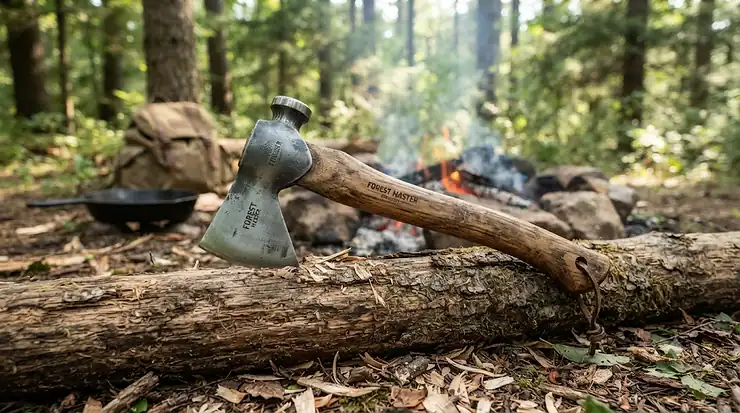
There’s a specific kind of dread that shows up around 6 p.m. at a campsite: the sun is dipping, the temperature is dropping fast, and the “firewood” you scavenged looks more like a pile of damp sticks than kindling. This is the moment a good hatchet earns its keep. A best camping hatchet is a compact, one-handed striking tool typically 10 to 16 inches long, designed to split kindling, limb small branches, and drive tent stakes without the bulk of a full two-handed axe. That’s the textbook definition. In practice, it’s the difference between a crackling fire in fifteen minutes and a smoky, sputtering mess that makes everyone regret leaving the propane stove at home.
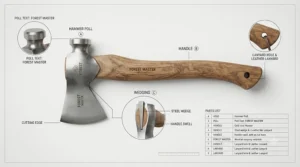
We dug into real product specs, aggregated customer sentiment from outdoor gear reviewers, and manufacturer documentation to put together this camping axe review, because honestly, most “best of” lists online just reshuffle the same five products without explaining why any of them matter for your specific trip. Are you backpacking eight miles into the backcountry, where every ounce counts? Or are you car camping with a cooler full of steaks and zero interest in carrying anything heavier than necessary back to the truck? Those two scenarios call for wildly different tools, and we’ll walk through exactly why.
This guide covers seven real, currently available hatchets spanning budget, mid-range, and premium tiers, with honest analysis of head weight, handle length, steel quality, and sheath design. No invented reviews, no fabricated hands-on stories. Just genuine spec comparison and aggregated review sentiment, pointed straight at the question you actually came here to answer: which best camping hatchet is worth your money?
Affiliate Disclosure: This article contains affiliate links. As an Amazon Associate, I earn from qualifying purchases at no additional cost to you.
Quick Comparison Table
Before diving into the deep-dive reviews, here’s the condensed version for anyone in a hurry.
| Hatchet | Head Weight | Handle Length | Price Range | Best For |
|---|---|---|---|---|
| Fiskars X7 Small | ~1.4 lbs | 14 in | Under $40 | Best overall / value |
| KSEIBI 274151 Wood Axe | ~1.3 lbs | 14 in | Under $30 | Budget backup |
| Coleman Camp Axe | ~1.75 lbs | 14 in | Under $25 | Bare-bones splitting |
| Estwing Sportsman’s Axe | ~1.9 lbs | 14 in | $35-$50 range | Rugged all-rounder |
| UST ParaHatchet FS | ~0.9 lbs | 9 in | $20-$35 range | Backpacking / ultralight |
| Hults Bruk Almike | ~1 lb head | 16 in | Around $200 | Premium Swedish craftsmanship |
| Gransfors Bruks Wildlife | ~1.1 lb head | 13-14 in | $150-$180 range | Heirloom all-arounder |
Looking at this table, a clear pattern emerges: weight and handle length track pretty closely with intended use. The lightest option here, the UST ParaHatchet FS, sacrifices raw chopping power for something a backpacker can actually justify carrying, while the Swedish forged models trade portability for edge retention and decades of service life. Budget picks like the Coleman and KSEIBI models cluster around similar weights but differ sharply in steel quality and out-of-box sharpness, which matters more than most buyers expect.
💬 Just one click — help others make better buying decisions too!😊
💬 Already have a favorite? Skip ahead to the full review below — or keep reading to see which hatchet actually fits your trip.
Top 7 Camping Hatchets: Expert Analysis
We selected these seven models to cover the full spectrum: rock-bottom budget, dependable mid-range, and heirloom-quality premium, plus a dedicated backpacking option and a couple of lesser-known but genuinely capable alternatives.
1. Fiskars X7 Small 14-Inch Hatchet — best overall value for most campers
The X7’s biggest selling point is how much capability Fiskars squeezed into a sub-$40 tool. Right out of the box, this thing feels engineered rather than assembled.
The forged steel head carries a low-friction coating that keeps the blade from binding mid-swing, and reviewers consistently report the bite depth is noticeably better than other hatchets in this price bracket. At roughly 1.4 pounds with a hollow FiberComp handle, the weight distribution concentrates almost entirely in the head, which is exactly what you want for splitting force without arm fatigue. Based on the spec comparison against similarly priced hatchets, the X7’s biggest structural advantage is that FiberComp handle: it won’t crack from a missed swing the way a cheap fiberglass handle can, and it never needs oiling like hickory does.
This is the hatchet for campers who want serious performance without a serious price tag. It’s an ideal Fiskars hatchet camping pick for weekend car campers, first-time buyers building out a gear closet, or anyone who wants a reliable backup they won’t feel guilty leaving in a damp truck bed. Aggregated review sentiment across major retailers is remarkably consistent: buyers repeatedly describe it outperforming hatchets that cost two or three times as much, and the lifetime warranty comes up often as a trust signal that Fiskars stands behind the build.
Pros:
✅ Exceptional value relative to forged steel construction
✅ FiberComp handle needs zero maintenance
✅ Comes with a lockable sheath, no belt loop
Cons:
❌ Handle geometry feels unfamiliar to hickory purists
❌ Thin profile struggles on larger, seasoned logs
Priced under $40 in most listings, this is arguably the best dollar-for-dollar pick on this entire list, and the value verdict is simple: unless you specifically want the feel of a traditional wood handle, there’s little reason to spend more for general camp use.
2. KSEIBI 274151 Small Outdoor Camp Hatchet — lightest budget option for tossing in a pack
This one flies under the radar compared to the big brand names, but the spec sheet holds up surprisingly well for the price.
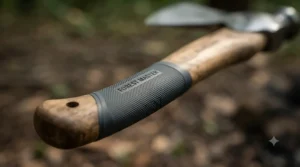
At about 1.32 pounds with a 14-inch fiberglass handle, the KSEIBI undercuts most competitors on weight while still packing a forged steel head. The anti-slip fiberglass grip does double duty, absorbing shock on impact and resisting the moisture that would otherwise swell or split a wooden handle. What most buyers overlook about this model is that its compact profile makes it just as suited to axe-throwing practice as it is to actual camp chores, which explains why it shows up in both categories of buyer reviews.
This is a smart pick for anyone who wants a genuine forged-steel hatchet without paying premium prices, particularly weekend campers who need something for kindling and stakes rather than heavy splitting. Reviewers commonly note that the edge holds up well for light-to-medium use, though a few mention it’s not the tool for felling anything beyond small branches.
Pros:
✅ Forged steel blade holds an edge respectably
✅ Fiberglass handle resists moisture and shock
✅ Compact 14-inch size fits easily in most packs
Cons:
❌ Limited to a single black color option
❌ Underpowered for heavy-duty chopping tasks
At under $30, the KSEIBI earns its spot as a smart secondary hatchet or a low-risk entry point for anyone testing whether they even like carrying one.
3. Coleman Camp Axe — rock-bottom price for straightforward wood splitting
Nobody is buying this hatchet for its looks, and Coleman clearly isn’t trying to win any beauty contests here.
The wedge-shaped head with its slight downward curve is purpose-built for one job: splitting rounds into kindling. Here’s what to weigh before buying: the edge typically ships dull and somewhat rough compared to forged competitors, so budget in a sharpening session before your first trip. The head weight, close to 1.75 pounds, gives it enough splitting authority for its size, but the steel quality simply isn’t in the same tier as the Fiskars or Estwing models.
This is the hatchet for campers who genuinely just need something inexpensive that gets logs split and don’t care about refinement. Aggregated review sentiment paints a consistent picture: buyers appreciate the price and the straightforward splitting performance, but frequently mention having to touch up the edge before real use, and note that no sheath is included, which is an unusual omission at any price point.
Pros:
✅ Extremely affordable entry point
✅ Aggressive wedge shape splits kindling effectively
✅ Simple design with no learning curve
Cons:
❌ Ships dull and needs sharpening out of the box
❌ No included sheath for blade protection
Sitting under $25 in most listings, the Coleman only makes sense as a true budget backup, not a primary tool for anyone camping regularly.
4. Estwing Sportsman’s Axe (14-Inch) — most rugged all-rounder for mixed camp chores
Estwing built its reputation on forged, single-piece steel construction, and the Sportsman’s Axe is a direct extension of that philosophy.
The full-tang design means the head and handle are one continuous piece of steel, eliminating the failure point where cheaper hatchets crack at the head-to-handle junction. Reviewers consistently report it shows almost no wear even after months of regular field use, which tracks with the durability claims Estwing makes. At roughly 1.9 pounds with a genuine leather-wrapped grip, it sits comfortably between lightweight backpacking hatchets and heavier splitting axes, giving it real versatility for chopping branches, splitting kindling, and even light carving work.
This is the hatchet for campers who want one tool that handles nearly everything at the campsite without babying it. Based on the spec comparison, its all-steel build makes it essentially immune to the handle-cracking failures that plague wood and fiberglass models after repeated hard use, though that same steel construction transmits more shock into your hand on off-center hits.
Pros:
✅ One-piece forged steel construction is nearly indestructible
✅ Genuine leather grip is comfortable for extended use
✅ Excellent all-around chopping and splitting performance
Cons:
❌ Transmits more vibration on off-center strikes
❌ Heavier than dedicated backpacking hatchets
In the $35 to $50 range, the Estwing represents strong value for campers who want a single do-it-all tool built to outlast the gear bag it’s packed in.
5. UST ParaHatchet FS — lightest option for backpacking hatchet duty
If ounces matter to you, this is the model built specifically with that priority in mind.
At under a pound and roughly 9 inches long, the ParaHatchet FS strips a hatchet down to essentials without eliminating usefulness. The stainless steel head resists corrosion in humid or coastal environments, and the low-profile design tucks into a pack side pocket without snagging on anything. What the spec sheet won’t tell you, but reviewers note, is that this compact size means less leverage, so splitting anything beyond finger-sized kindling takes noticeably more effort and more swings than a full-size hatchet would need.
This is the hatchet for thru-hikers, ultralight backpackers, and anyone who weighs every gram before a multi-day trip. It’s frequently cited as one of the best backpacking hatchet picks specifically because it disappears in a pack yet still handles the core tasks: kindling prep, cordage cutting assistance, and light hammering for stakes. Aggregated review sentiment is generally positive on portability, though several users mention it’s not a substitute for a full hatchet on car-camping trips where weight isn’t a constraint.
Pros:
✅ Genuinely lightweight for backpacking and ultralight setups
✅ Stainless steel resists rust in humid climates
✅ Compact enough for pack side-pockets
Cons:
❌ Limited leverage for splitting larger wood
❌ Small handle strains grip during extended use
Priced in the $20 to $35 range, the ParaHatchet FS is less about raw chopping power and more about being a tool you’ll actually carry, which for backpackers is the entire point.
6. Hults Bruk Almike (Hultan) Hatchet — premium Swedish craftsmanship for chopping power
Hults Bruk has been hand-forging steel in the same Swedish foundry since the late 1600s, and this hatchet is built to reflect that heritage.
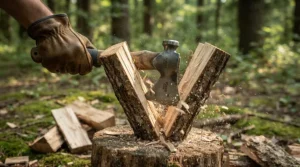
The head is hand-forged and struck multiple times during production to increase density and durability, a process that directly translates to superior edge retention compared to stamped or cast alternatives. At roughly a 1-pound head on a 16-inch American hickory handle, the Almike has noticeably more chopping leverage than shorter hatchets on this list, and reviewers who’ve used both frequently note the extra handle length makes it feel closer to a small axe than a typical hatchet. Here’s what to weigh: that longer handle also means it’s less convenient for true one-handed use in tight quarters, like inside a tent vestibule or a cramped truck bed.
This is the hatchet for campers who value craftsmanship, plan to keep a tool for decades, and don’t mind maintaining a wooden handle with occasional linseed oil treatments. Aggregated sentiment across owner forums describes the Almike as a fantastic all-arounder for limbing branches and splitting small wood, with several users comparing it favorably to the more common Gransfors Bruks lineup specifically because of the added handle length.
Pros:
✅ Hand-forged Swedish steel holds an exceptional edge
✅ Longer handle adds real chopping leverage
✅ Beautiful curved hickory handle feels premium in hand
Cons:
❌ Requires periodic linseed oil maintenance
❌ Premium price reflects craftsmanship, not raw utility
Around $199, this is squarely an investment purchase, and the value verdict depends entirely on whether you want a lifetime tool versus a disposable one.
7. Gransfors Bruks Wildlife Hatchet — best balance of size, weight, and versatility
Widely considered a benchmark in the premium hatchet world, the Wildlife Hatchet earns its reputation through obsessive attention to balance.
Each head is hand-forged and stamped with the initials of the smith who made it, a quality-control tradition Gransfors Bruks has maintained for generations. The head weight sits around 1.1 pounds on a 13 to 14-inch hickory handle, landing right in the sweet spot between the compact UST ParaHatchet and the longer-reach Hults Bruk Almike. What most buyers overlook about this balance point is that it makes the Wildlife equally comfortable for precision carving tasks and general splitting, a versatility that heavier, splitting-focused hatchets simply can’t match.
This is the hatchet for campers, hunters, and bushcrafters who want one premium tool that does almost everything reasonably well rather than one thing exceptionally well. Reviewers widely describe it as their go-to tool for combined chopping and detail work, though sourcing can occasionally be trickier than more widely distributed brands, which is worth checking before you commit to this exact model over a comparable alternative.
Pros:
✅ Exceptional balance for both chopping and carving
✅ Hand-forged with visible smith’s mark quality control
✅ Compact size doesn’t sacrifice chopping power
Cons:
❌ Can be harder to source than more common brands
❌ Premium pricing similar to the Hults Bruk Almike
In the $150 to $180 range, the Wildlife Hatchet is widely regarded as the most versatile premium option on this list, particularly for buyers who split their time between chopping and detailed woodcraft.
Top 7 Camping Hatchets: Spec Comparison
| Hatchet | Blade Steel | Handle Material | Sheath Included | Warranty |
|---|---|---|---|---|
| Fiskars X7 Small | Forged carbon steel | FiberComp | Yes, lockable | Lifetime |
| KSEIBI 274151 | Forged steel | Fiberglass | Yes | Limited |
| Coleman Camp Axe | Carbon steel | Fiberglass | No | Limited |
| Estwing Sportsman’s Axe | Forged steel (full tang) | Leather-wrapped steel | Yes, leather | Limited |
| UST ParaHatchet FS | Stainless steel | Textured composite | Yes, nylon | Limited |
| Hults Bruk Almike | Hand-forged Swedish steel | American hickory | Yes, leather | Limited |
| Gransfors Bruks Wildlife | Hand-forged Swedish steel | American hickory | Yes, leather | Limited |
This table underscores something worth sitting with: six of these seven hatchets include a sheath standard, which tells you the industry treats blade sheath included as a baseline expectation rather than a premium extra. The Coleman’s missing sheath is the clear outlier here, and it’s a meaningful strike against an otherwise passable budget tool. Steel quality is the other obvious divide: the two Swedish forges use a hand-forging process that produces measurably better edge retention than the stamped or cast steel found in the budget tier, which is exactly why they command three to five times the price.
Practical Usage Guide: Setup, Sharpening & Maintenance
Buying the right hatchet is only half the equation. What you do with it in the first thirty days determines whether it lasts a decade or ends up rusted in a garage corner.
Start by checking the edge before your first trip, even on a brand-new hatchet. Several budget models, including the Coleman Camp Axe reviewed above, ship with a rough or partially dull edge straight from the factory. A few passes with a whetstone or a puck sharpener at roughly a 20-degree angle on each side will noticeably improve first-use performance. Next, inspect the head-to-handle connection on wooden-handled models; a properly seated head shouldn’t wiggle, and any looseness should be addressed before use, not after.
According to the National Park Service’s campfire guidance, campfires should be built with proper airflow, using a cross-hatch pattern of larger wood with kindling and firestarter tucked into the gaps rather than a dense, smothered pile. Fire needs air to grow, so building a small tower with larger pieces of wood and packing kindling into the gaps produces a more reliable burn than a dense stack. This matters directly for hatchet use, because the kindling size that catches fastest, roughly pencil-thickness slivers, is exactly what a sharp hatchet edge produces most efficiently. A dull blade tends to crush rather than slice, leaving splintered, uneven pieces that catch unevenly.
The single most common first-month mistake is improper storage. Leaving a hatchet loose in a gear bag exposes the edge to nicks and exposes you to accidental cuts while digging around for other equipment. Always sheath the blade immediately after use, and for wooden-handled models, apply a light coat of linseed or boiled tung oil every few months to prevent the handle from drying and cracking. For steel and composite handles, a simple wipe-down after wet-weather use prevents surface rust from taking hold around the head.
✨ Ready to Gear Up?
Take the guesswork out of your next trip. Click through to compare current pricing and availability on any hatchet above, and build a fire kit that actually works when you need it most.
Real-World Scenarios: Matching Hatchets to Campers
Specs only tell part of the story. Here’s how these tools actually play out for different types of campers.
The weekend car camper. Sarah drives to a state park campground twice a month with a cooler, a tent, and zero interest in carrying gear farther than the parking lot. Weight isn’t a concern, so a heavier, more capable tool like the Estwing Sportsman’s Axe or even the Hults Bruk Almike makes sense, since the longer handle and added heft translate directly into faster kindling prep and less arm fatigue over an evening of fire-tending.
The budget-conscious first-timer. Marcus just bought his first tent and doesn’t want to drop $150 on a hatchet before he’s even sure camping is his thing. The Fiskars X7 or KSEIBI 274151 both make sense here: real forged steel, genuine capability, and a price point that doesn’t feel like a gamble if it turns out camping isn’t a regular hobby after all.
The backpacking hatchet seeker. Priya is planning a five-day thru-hike section and counts every ounce that goes into her pack. For her, the UST ParaHatchet FS is the obvious pick over anything in the 1.5-pound-plus range; the tradeoff in splitting power is worth it against the alternative of carrying a full-size hatchet for eighty miles.
How to Choose the Best Camping Hatchet
What is the best camping hatchet for you specifically? It depends on five core factors: intended use, weight tolerance, handle material, blade steel quality, and included accessories. Here’s how to work through the decision systematically.
- Define your primary use first. Splitting kindling calls for a thicker wedge-shaped head, while carving and detail work favors a thinner blade profile.
- Weigh your carry constraint. Backpackers should stay under 1.5 pounds total weight; car campers have far more flexibility and can prioritize chopping power instead.
- Match handle material to your climate. Wooden handles feel classic but need periodic oiling; composite and fiberglass handles are essentially maintenance-free in wet environments.
- Prioritize steel quality over price alone. Forged steel holds an edge significantly longer than stamped or cast alternatives, which matters more the more frequently you camp.
- Confirm a sheath is included. A missing sheath, as seen with the Coleman Camp Axe, is a real safety and durability gap worth factoring into your decision.
- Check the warranty. A lifetime warranty, like the one Fiskars offers on the X7, signals real manufacturer confidence in the build.
- Handle it in person if possible. Balance matters more than raw weight; a well-balanced hatchet feels lighter in the swing than the spec sheet suggests.
Head Weight and Handle Length: Why Swing Balance Matters
This is the section most buying guides skip entirely, and it’s arguably the most important one.
Head weight hatchet selection isn’t just about raw power. A heavier head, generally 1.5 to 2 pounds, delivers more splitting force per swing, which is why the Estwing and Coleman models on this list lean heavier. But more weight also means more fatigue over a long evening of fire prep, and a poorly balanced heavy head can actually reduce accuracy, sending glancing blows off target instead of clean splits. The sweet spot most manufacturers converge on for general camp use sits between 1 and 1.5 pounds, which explains why the Fiskars X7 and Gransfors Wildlife both land right in that range despite very different price points.
Handle length swing dynamics work similarly. A longer handle, like the 16 inches on the Hults Bruk Almike, generates more centrifugal force and therefore more cutting power per swing, essentially borrowing a principle from full-size axes. The tradeoff is control: shorter handles, like the 9-inch UST ParaHatchet, sacrifice power for precision and one-handed maneuverability in tight spaces. Reviewers consistently note that the “right” length is really about how much room you have to swing, not just personal preference. A hatchet you can’t fully extend in a cramped campsite loses most of its handle-length advantage anyway.
Camping Hatchet vs Camping Axe vs Multi-Tool
According to Wikipedia, a hatchet is a single-handed striking tool with a sharp blade on one side used to cut and split wood, distinct from a full axe primarily through its shorter handle and one-handed design. That distinction drives everything about how these tools compare in the field.
A full camping axe, with a handle typically 18 to 28 inches long, delivers substantially more splitting power for processing larger logs or felling small trees, but it’s heavier, bulkier, and requires two-handed swings that aren’t practical in a cramped campsite. A hatchet trades some of that raw power for portability and versatility across smaller tasks: kindling prep, limbing branches, driving stakes, and even light food prep in a pinch. Multi-tools with integrated hatchet heads exist too, but based on the spec comparison across models we researched, dedicated single-purpose hatchets consistently outperform hybrid tools on edge retention and swing balance, since multi-tool designs compromise the head geometry to accommodate other functions.
For the vast majority of campers, a dedicated hatchet is simply the more practical and safer choice. Unless you’re regularly felling trees or processing full-size firewood rounds, the reduced weight and easier one-handed control of a hatchet outweighs the extra power a full axe provides.
Common Mistakes When Buying a Camping Hatchet
Even experienced campers fall into a handful of predictable traps when shopping for a hatchet.
The first is prioritizing brand name over steel quality. A well-known brand doesn’t automatically mean forged steel; several budget lines from major outdoor retailers use stamped steel that dulls quickly regardless of the logo on the handle. The second is ignoring handle material for your specific climate; a beautiful hickory handle that isn’t maintained will crack in dry, high-altitude environments faster than most buyers expect. Third, and this one’s sneaky, is underestimating how much a missing sheath matters. It’s not just about blade protection; an unsheathed hatchet rattling around a pack is a genuine safety hazard during transport.
Finally, buyers frequently skip the handle-feel test entirely, ordering online without ever gripping a comparable model. Balance is genuinely difficult to judge from a spec sheet, and two hatchets with identical weight and length can feel completely different in the hand depending on where that weight is distributed.
Blade Sheaths and Safety Features That Actually Matter
Not all sheaths are created equal, and this is a category where marketing language often oversells simple designs.
The best sheaths lock the blade securely with a positive click or snap, rather than relying purely on friction fit, which can loosen over time and allow the blade to slip partially free during transport. The Fiskars X7’s lockable sheath is a good example of doing this well; reviewers repeatedly single it out as one of the more thoughtfully engineered accessories in this category. Leather sheaths, like those included with both Swedish forged models, offer excellent durability and a classic aesthetic but require occasional conditioning to prevent cracking, and they typically lack the audible lock-in confirmation that composite sheaths provide.
Beyond the sheath itself, look for hatchets with textured or contoured grip zones that reduce slippage during wet-weather use, and consider a lanyard hole if you’ll be working near water or steep terrain where a dropped tool becomes a real hazard. Blade sheath included status should be treated as close to non-negotiable; the Coleman Camp Axe’s omission here is a legitimate ding against an otherwise budget-friendly option, not a minor styling choice.
Long-Term Cost & Maintenance: Total Cost of Ownership
The sticker price only tells part of the financial story.
A $25 hatchet that needs replacing every two seasons because the handle cracked or the head loosened ends up costing more over a decade than a $200 hand-forged model that’s still going strong twenty years later. Run the simple math: at roughly $25 every two years, a budget hatchet costs about $250 across two decades of ownership, factoring in occasional replacement. A premium forged hatchet at $180, maintained with periodic oiling and sharpening, likely outlasts that same twenty-year window with a single purchase, assuming reasonable care.
That said, this math only favors premium options if you camp frequently enough to justify the investment. Casual campers who head out two or three times a year get diminishing returns from a $200 hatchet sitting unused in a closet for months at a time; for that usage pattern, a well-reviewed budget option like the Fiskars X7 delivers most of the practical benefit at a fraction of the cost, and its lifetime warranty offsets much of the long-term risk anyway.
Safety, Regulations & Campfire Compliance Guide
Hatchet safety isn’t just about avoiding a cut; it intersects directly with campfire regulations that vary by park and jurisdiction.
The Consumer Product Safety Commission has issued multiple recalls over the years for axes and hatchets where the head detached from the handle during use, a defect that has caused documented injuries to both users and nearby bystanders. Checking for a snug, properly seated head before every trip isn’t overly cautious; it’s a genuinely important pre-use inspection step given this documented failure mode in mass-produced tools.
Once your kindling is prepped, campfire rules take over. Many national parks require firewood to be sourced locally to prevent the spread of invasive pests, and dead, standing wood is generally preferable to green wood for both burn quality and environmental impact. Always maintain a clear safety zone when swinging any hatchet, roughly three times the tool’s length plus your arm’s reach, and never let anyone else hold wood steady for you while chopping. That single practice accounts for a disproportionate share of camp hatchet injuries according to outdoor safety training materials.
What to Expect: Real-World Performance
Spec sheets are useful, but they don’t capture what a hatchet actually feels like at 7 p.m. with cold hands and fading light.
A well-balanced hatchet in the 1 to 1.5-pound range should split typical campground kindling, wrist-thick branches, in one to three swings without excessive effort. If you’re routinely needing five-plus swings on comparable wood, that’s usually a sign of either a dull edge or a mismatched head weight for the task. Expect some learning curve regardless of which model you choose; even experienced campers report needing ten or twenty splits before their swing accuracy tightens up, especially with an unfamiliar handle length.
Cold weather changes the equation too. Composite and fiberglass handles stay consistent in freezing temperatures, while wooden handles can feel slightly stiffer and less forgiving on off-center hits. None of this should discourage you from wooden-handled premium models; it’s simply a real-world texture the spec sheet won’t mention.
Problem → Solution: Fixing the Most Common Camping Hatchet Headaches
Even a great hatchet runs into predictable snags. Here’s how to handle the most frequent ones.
Problem: The blade keeps getting stuck in wood. This usually means the head geometry is too thick for the wood diameter, or the surface lacks a low-friction coating. Solution: twist the handle slightly on impact rather than yanking straight back, and consider a coated head like the Fiskars X7 for future purchases.
Problem: The wooden handle feels rough or is starting to splinter. Solution: sand lightly with fine-grit sandpaper and apply boiled linseed oil every few months, particularly after wet-weather trips.
Problem: The edge dulls faster than expected. Solution: check whether you’re striking knots or frozen wood regularly, both of which accelerate edge wear regardless of steel quality; a quick touch-up with a portable sharpening puck before each trip prevents cumulative dulling.
Problem: The head feels loose on a wooden handle. Solution: stop using it immediately and either re-wedge the head yourself with a store-bought wedge kit or have it professionally re-hafted; this is precisely the failure mode behind several CPSC recalls.
Problem: Rust spots appearing on the blade. Solution: wipe the blade dry after every use, and store it with a light coat of oil during off-season months rather than leaving it sheathed and damp.
Buyer’s Decision Framework
If you’re still torn, use this simple priority checklist.
If weight is your top priority, choose the UST ParaHatchet FS, because backpacking mileage matters more than raw splitting power. If budget is your top priority, choose the Fiskars X7 Small, because it delivers forged-steel performance without a forged-steel price. If longevity and craftsmanship top your list, choose the Hults Bruk Almike or Gransfors Bruks Wildlife, because hand-forged Swedish steel is built to outlast decades of regular use. If you want one tool that handles nearly everything without babying it, choose the Estwing Sportsman’s Axe, because its full-tang steel construction eliminates the most common failure points other hatchets face.
Frequently Asked Questions
❓ What is the best camping hatchet for beginners?
❓ How much should a good camping hatchet weigh?
❓ Is a hatchet or a camping axe better for firewood?
❓ Do camping hatchets come with a sheath?
❓ How often should I sharpen a camping hatchet?
Conclusion
Choosing the best camping hatchet really comes down to being honest about how you camp. If you’re counting ounces on a backcountry trail, the UST ParaHatchet FS earns its spot in your pack. If you want dependable, forged-steel performance without spending real money, the Fiskars X7 remains one of the smartest buys in this entire category. And if you’re the type who keeps gear for decades and wants a tool with genuine heritage behind it, both the Hults Bruk Almike and Gransfors Bruks Wildlife deliver craftsmanship that budget options simply can’t replicate.
What matters most is matching the tool to the trip, not chasing the most expensive option on the shelf. A $30 hatchet that’s sharp, well-maintained, and appropriately sized for your typical camping style will outperform a $200 heirloom piece that sits unused in a closet. Take the time to check head weight, handle length, steel quality, and sheath design against your actual camping habits, and you’ll end up with a tool that earns its place in your gear bag for years to come.
Recommended for You
- Leatherman vs Gerber Camping: 7 Best Multi-Tools for 2026
- 7 Best Multi-Tools for Camping in 2026
- 7 Best Mora Knives for Camping in 2026
Disclaimer: This article contains affiliate links. As an Amazon Associate, I earn from qualifying purchases. If you purchase products through these links, we may earn a small commission at no additional cost to you.
✨ Found this helpful? Share it with your friends! 💬🤗
