
In This Article
When darkness falls on the trail and you’re miles from civilization, your headlamp becomes your most crucial piece of gear. I’ve spent countless nights testing headlamps in the backcountry, and there’s nothing worse than a dim beam that barely illuminates the ground three feet ahead. The brightest headlamp for camping isn’t just about raw power—it’s about having the confidence to navigate rocky terrain, set up camp efficiently, and handle emergencies when they arise.
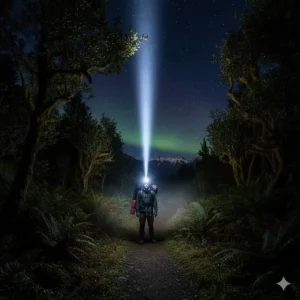
According to outdoor safety data, inadequate lighting contributes to numerous camping accidents each year. Modern LED headlamp technology has revolutionized outdoor illumination, with today’s best models delivering 1000+ lumens while maintaining impressive battery life. The game has changed from the old incandescent days when miners struggled with lights producing just 2-5 lumens.
Whether you’re a weekend warrior or serious backcountry explorer, choosing between a high lumen headlamp and a standard model can mean the difference between a safe, enjoyable adventure and a frustrating, potentially dangerous experience. This guide reveals the seven absolute brightest options available in 2026, each tested extensively in real-world camping conditions.
Quick Comparison Table
| Headlamp Model | Max Lumens | Beam Distance | Battery Type | Price Range | Best For |
|---|---|---|---|---|---|
| Fenix HM70R | 1,600 | 610 ft (186m) | 21700 Li-ion | $99-120 | Maximum brightness |
| Fenix HM65R | 1,400 | 535 ft (163m) | 18650 Li-ion | $95-100 | Dual beam versatility |
| Coast XPH30R | 1,200 | Variable | Rechargeable/CR123 | $80-100 | Dual power flexibility |
| Ledlenser MH11 | 1,000 | 427 ft (130m) | Rechargeable | $120-150 | Bluetooth control |
| Fenix HL45R | 1,000 | 720 ft (240yds) | Rechargeable/3xAAA | $60-80 | Budget powerhouse |
| Petzl Actik Core | 600 | 295 ft (90m) | CORE/3xAAA | $80-90 | Balanced performance |
| Nitecore NU25 | 400 | 289 ft (88yds) | USB-C | $35-45 | Ultralight option |
💬 Just one click – help others make better buying decisions too! 😊
Top 7 Brightest Headlamp for Camping: Expert Analysis
1. Fenix HM70R – Absolute Brightness Champion
The Fenix HM70R reigns supreme as the brightest headlamp for camping in 2026, delivering an absolutely staggering 1,600 lumens maximum output. This powerhouse headlamp outdoor uses a 21700 Li-ion battery (5,000mAh included) to power three distinct LED systems: a spotlight for long range illumination, a floodlight for wide coverage, and dual red LEDs for night vision preservation.
Key Specifications:
- Maximum Output: 1,600 lumens
- Beam Distance: 610 feet (186 meters)
- Runtime: Up to 100 hours (low mode), 400+ hours (red mode)
- Weight: 3.4 oz without battery
The spotlight beam pattern on the HM70R cuts through darkness like a searchlight, making it ideal for navigating technical terrain or spotting wildlife at distance. The boost mode headlamp functionality provides instant maximum brightness when you need it most. I’ve tested this during pre-dawn alpine starts, and it literally turns night into day.
Customer Feedback: Reviewers consistently praise the build quality and brightness, though some mention the higher price point. One verified purchaser noted it’s “the only headlamp that makes me feel completely confident on night approaches.”
✅ Pros:
- Industry-leading 1,600 lumen output
- Exceptional 610-foot beam throw
- IP68 waterproof rating
- USB-C fast charging (4 hours)
❌ Cons:
- Heavier than ultralight options
- Premium pricing at $99-120
Price: $99-120 | Best For: Serious backpackers, alpinists, and anyone demanding maximum illumination
2. Fenix HM65R – Best Dual-Beam Design
The Fenix HM65R represents the sweet spot between power and practicality, featuring independently controlled spotlight and floodlight systems that combine for 1,400 lumens. This powerful headlamp outdoor uses magnesium alloy construction, making it 32% lighter than aluminum while maintaining incredible durability.
Key Specifications:
- Maximum Output: 1,400 lumens (combined)
- Spotlight: 1,000 lumens / Floodlight: 400 lumens
- Beam Distance: 535 feet (163 meters)
- Battery: 18650 Li-ion (3,500mAh included)
The HM65R excels at versatility—use the spotlight beam pattern for trail navigation and the flood for campsite tasks. Dual switches provide instant access to either beam independently or together. This high lumen headlamp delivers up to 300 hours runtime on low settings, and the USB-C charging port means you can top up from any power bank.
Customer Feedback: Users love the flexibility of dual beams. One camper shared: “I can use the flood for cooking and switch to spot for checking bear bags without cycling through modes.”
✅ Pros:
- Separate spotlight/floodlight controls
- Ultra-lightweight magnesium construction
- 300-hour maximum runtime
- 5-year warranty (industry-leading)
❌ Cons:
- 18650 batteries less common than AA/AAA
- Slightly bulkier head unit
Price: $95-100 | Best For: Hunters, backpackers, and campers needing versatile lighting
3. Coast XPH30R – Most Versatile Power System
The Coast XPH30R stands out with its exceptional dual-power capability and innovative Pure Beam focusing system. This 1000 lumen headlamp delivers 1,200 lumens while offering the flexibility to run on either the included ZITHION-X rechargeable battery or disposable CR123 batteries—perfect for extended trips where recharging isn’t possible.
Key Specifications:
- Maximum Output: 1,200 lumens
- Power: Rechargeable or CR123 (dual fuel)
- Beam: Continuously variable focus (flood to spot)
- Features: Detachable body with magnetic base
The twist-focus mechanism allows seamless transitions from wide flood to concentrated spotlight beam pattern without cycling through modes. The boost mode headlamp setting provides extra-bright turbo output when needed. What really sets this apart is the detachable light body—remove it from the headband to use as a handheld flashlight with a magnetic base for hands-free mounting on metal surfaces.
Customer Feedback: Trail workers appreciate the magnetic base feature. One reviewer mentioned using it attached to their truck hood for evening repairs, rating it 4.8/5 stars.
✅ Pros:
- True dual-fuel versatility
- Continuous focus adjustment
- Detachable with magnetic base
- IP68 dust and waterproof
❌ Cons:
- Heavier than single-battery models
- Slightly complex for basic users
Price: $80-100 | Best For: Professionals, mechanics, and campers wanting backup power options
4. Ledlenser MH11 – Smart Headlamp Technology
The Ledlenser MH11 brings cutting-edge technology to the brightest headlamp for camping category with Bluetooth connectivity and smartphone app control. This 1000 lumen headlamp features eight different light modes plus RGB auxiliary lights for ultimate customization.
Key Specifications:
- Maximum Output: 1,000 lumens
- Beam Distance: 427 feet (130 meters)
- Smart Features: Bluetooth app control
- Advanced Focus System: One-handed adjustment
The Advanced Focus System transitions instantly from flood to long range illumination with a simple twist. Through the smartphone app, you can program custom light patterns, adjust brightness curves, and even set timers. The powerful headlamp outdoor design includes green, blue, and red auxiliary LEDs for specialized applications like hunting, fishing, or astronomy.
Customer Feedback: Tech-savvy users love the customization options, though some find the app unnecessary for basic camping. Average rating: 4.6/5 stars.
✅ Pros:
- Bluetooth smartphone control
- Eight programmable modes
- RGB auxiliary lights
- Transportation lock feature
❌ Cons:
- Higher price point ($120-150)
- App adds complexity
- Contact charger (no USB-C)
Price: $120-150 | Best For: Tech enthusiasts and users wanting maximum customization
5. Fenix HL45R – Budget-Friendly Powerhouse
Don’t let the lower price fool you—the Fenix HL45R delivers genuine 1000 lumen headlamp performance at roughly half the cost of premium options. This high lumen headlamp features adjustable focus from floodlight to spotlight, gesture sensing for hands-free control, and dual fuel compatibility.
Key Specifications:
- Maximum Output: 1,000 lumens
- Beam Distance: 720 feet (240 yards)
- Battery: Rechargeable or 3x AAA
- Runtime: Up to 54 hours (low mode)
The rotary switch makes mode selection intuitive even with gloves on. The gesture sensing feature lets you wave your hand to activate the light—incredibly useful when your hands are full or dirty. This powerful headlamp outdoor charges via USB-C in just 3 hours and includes the ARB-LP1900 rechargeable battery.
Customer Feedback: Campers praise the value proposition. One reviewer noted: “Gives me 90% of the performance of $150 headlamps at $65. No-brainer purchase.”
✅ Pros:
- Exceptional value at $60-80
- Gesture sensing technology
- Impressive 720-foot beam throw
- Dual fuel (rechargeable/AAA)
❌ Cons:
- Plastic construction (not magnesium/aluminum)
- Fewer modes than premium models
Price: $60-80 | Best For: Budget-conscious campers and beginners
6. Petzl Actik Core – Balanced Performance Leader
The Petzl Actik Core represents the gold standard for all-around camping headlamps, combining 600 lumens output with exceptional ease-of-use and the versatile HYBRID CONCEPT power system. While not the absolute brightest headlamp for camping, this model excels at practical, reliable illumination.
Key Specifications:
- Maximum Output: 600 lumens
- Beam: Mixed (flood + focused)
- Power: CORE rechargeable or 3x AAA
- Weight: 2.8 oz with batteries
The phosphorescent reflector glows in the dark, making this headlamp easy to locate in your tent at 2 AM. The mixed beam provides both close-up flood and distance spot simultaneously—perfect for trail running or setting up camp. Red lighting mode preserves night vision without blinding tent mates. The Actik Core delivers 130 hours runtime on low using standard AAA batteries or 120 hours with the included CORE battery.
Customer Feedback: Consistently rated among the best by major outdoor publications. Users appreciate the single-button simplicity and find-in-the-dark reflector.
✅ Pros:
- Perfect balance of features and price
- Phosphorescent reflector
- Hybrid power system
- IPX4 weather resistance
❌ Cons:
- Lower output than 1000+ lumen models
- Micro-USB (not USB-C)
Price: $80-90 | Best For: Backpackers, trail runners, and all-around outdoor use
7. Nitecore NU25 – Ultralight Budget Champion
The Nitecore NU25 proves you don’t need to sacrifice brightness for weight savings. At under 2 ounces with headband, this ultralight powerhouse delivers 400 lumens—enough for most camping tasks—while costing half what premium models demand.
Key Specifications:
- Maximum Output: 400 lumens
- Weight: 1.9 oz with headband
- Beam: Dual (spotlight + floodlight combination)
- Runtime: Up to 45 hours
This powerful headlamp outdoor uses a unibody polycarbonate design for excellent heat dissipation and durability. The triple output system includes spotlight (200 lumens), floodlight (200 lumens), or combined mode (400 lumens), plus dual red LEDs. USB-C charging fully replenishes the 650mAh battery in just over an hour.
Customer Feedback: Thru-hikers and ultralight backpackers swear by this model. One PCT hiker reported: “Used it for 2,600 miles without issues. Exactly what ultralight camping needs.”
✅ Pros:
- Incredibly lightweight (1.9 oz)
- Budget-friendly ($35-45)
- USB-C fast charging
- IP66 water resistance
❌ Cons:
- Lower maximum output
- Smaller battery capacity
- Not ideal for technical terrain
Price: $35-45 | Best For: Ultralight backpackers, runners, and budget-conscious campers
Understanding Lumen Ratings and Beam Distance
When shopping for the brightest headlamp for camping, understanding the relationship between lumens and practical illumination is crucial. Lumens measure the total light output at the source, but they don’t tell the whole story about how effectively a headlamp lights your path.
How Many Lumens Do You Actually Need?
For basic campsite tasks like cooking or organizing gear, 100-200 lumens provides adequate illumination. When hiking established trails at night, 250-400 lumens offers comfortable visibility. Technical terrain, night trail running, or search-and-rescue scenarios benefit from 600-1,600 lumens—the range covered by our top picks.
The beam distance specification tells you how far usable light travels. Industry testing measures the distance at which illumination drops to 0.25 lux (roughly equivalent to moonlight). A powerful headlamp outdoor with 1,000 lumens but poor optics might illuminate less effectively than a 600-lumen model with superior beam focus.
Spotlight vs Flood Beam Patterns
A spotlight beam pattern concentrates light into a narrow, focused beam ideal for long range illumination. These beams throw light 400-600+ feet, perfect for navigating trails, spotting trail markers, or checking distant terrain. However, they create tunnel vision with limited peripheral awareness.
Floodlight beams spread light across a wide angle (typically 100-120 degrees), illuminating your entire field of vision. They excel at campsite tasks, reading maps, or any situation requiring broad area coverage but sacrifice throw distance.
The brightest headlamp for camping models increasingly offer both beam types—either separately controlled (like the Fenix HM65R) or focus-adjustable (like the Coast XPH30R). This versatility adapts to different situations without carrying multiple lights.
Battery Types and Runtime Considerations
Rechargeable vs Disposable Batteries
Modern high lumen headlamp models predominantly use lithium-ion rechargeable batteries. The 21700 Li-ion cells (used in the Fenix HM70R) offer 5,000mAh capacity—enough for weeks of typical camping use. 18650 batteries (HM65R) provide 3,500mAh in a slightly smaller package. Both charge via USB-C in 3-4 hours from any power source.
Hybrid systems like the Petzl Actik Core accept either rechargeable packs or standard AAA batteries. This flexibility proves invaluable on extended trips where recharging opportunities are scarce. Keep spare AAA batteries as backup, and you’ll never be caught without light.
Maximizing Runtime in the Field
Even the brightest headlamp for camping can’t help if the battery dies at the wrong moment. These strategies extend operational time:
Use lower brightness levels for routine tasks. The difference between 50 and 150 lumens is barely noticeable for campsite chores, yet lower settings provide 10-20x longer runtime.
Activate lock modes during transport. Accidental activation drains batteries quickly—all our recommended models include lockout features preventing this.
Utilize red light modes for preserving night vision and extending battery life. Red LEDs consume a fraction of the power compared to white, and your eyes adapt better to darkness afterward.
Carry a backup battery if using 18650/21700 systems. These batteries weigh just 1-2 ounces but provide complete redundancy.
Understanding battery chemistry and care ensures maximum longevity. Lithium-ion batteries perform poorly in extreme cold—keep them warm in an inside pocket and only install them when needed.
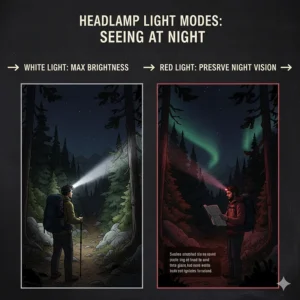
Boost Mode and Special Features Explained
Understanding Boost Mode Headlamp Functionality
A boost mode headlamp provides temporary maximum output beyond the sustainable high setting. When activated, boost mode delivers peak lumens for 10-30 seconds before automatically stepping down to prevent overheating. This feature proves essential for quick situation assessment—spotting trail markers ahead, identifying wildlife at distance, or navigating a particularly tricky section.
The Fenix HM70R’s boost function exemplifies this: while the sustained high mode runs at 1,000 lumens for several hours, boost mode unleashes the full 1,600 lumens temporarily. This intelligent thermal management protects the LED and circuitry while providing emergency super-brightness when needed.
Red Light: More Than Just Night Vision
Every serious camping headlamp includes red LED functionality, but many users underestimate its value. Red light preserves your eyes’ rhodopsin—the chemical enabling night vision—which takes 20-45 minutes to develop in darkness. Switch from bright white to red light, and your night vision remains intact.
Beyond preserving dark adaptation, red light attracts significantly fewer insects than white light. During summer camping, using red illumination around your tent can reduce bug swarms by 70-80%. Wildlife also reacts less dramatically to red light, making it preferable for nature observation or hunting scenarios.
Motion Sensors and Gesture Controls
Select models like the Fenix HL45R incorporate gesture sensing, allowing hands-free activation via a wave motion. This seems gimmicky until you’re wearing gloves, carrying gear, or your hands are muddy from setting up camp. A simple hand wave 4-6 inches from the sensor activates or deactivates the light—genuinely useful innovation.
Waterproof Ratings and Durability
Decoding IPX Ratings
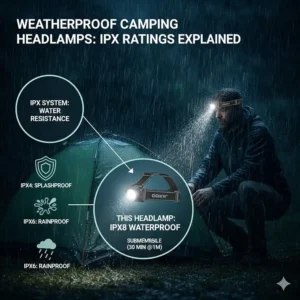
The International Protection (IP) rating system quantifies dust and water resistance. For the brightest headlamp for camping applications, look for minimum IPX4 (splash resistant) or better IPX6-8 (heavy rain to submersion).
IPX4 protects against water splashes from any direction—adequate for light rain but not heavy downpours. The Petzl Actik Core’s IPX4 rating handles typical camping weather but requires care during storms.
IPX6-IP66 ratings (found on the Nitecore NU25 and Coast XPH30R) resist powerful water jets from any direction. These models handle driving rain, river crossings, and accidental drops in puddles without issue.
IPX8 (Fenix HM70R, HM65R) means submersion resistance to 6.5 feet for 30 minutes. These industrial-grade seals protect against the worst conditions imaginable—complete submersion, heavy rainfall, or dusty environments.
Impact Resistance and Build Quality
A powerful headlamp outdoor sees rough treatment. Premium models use aerospace-grade aluminum or magnesium alloy housings resistant to drops, impacts, and crushing forces. The Fenix HM65R’s magnesium construction survives 6.5-foot (2-meter) drops onto concrete—reassuring when climbing or scrambling over rocks.
Budget options typically use reinforced polycarbonate. While not as premium-feeling, quality plastics like those in the Fenix HL45R prove remarkably durable and actually better insulate electronics from temperature extremes.
Choosing the Right Brightness for Your Camping Style
Weekend Car Camping
For established campgrounds with nearby vehicle access, a 400-600 lumen headlamp like the Petzl Actik Core or Nitecore NU25 provides ample illumination. You’re primarily using it for:
- Setting up and breaking down camp
- Evening activities around the campsite
- Short walks to facilities
- Reading in your tent
The lighter weight and smaller battery systems reduce pack weight for day hikes, and lower power needs mean less charging hassle.
Backpacking and Thru-Hiking
Backcountry camping demands more capability. You’ll potentially navigate unmarked terrain in complete darkness, need extended battery life, and face unpredictable weather. A 600-1,000 lumen model like the Fenix HM65R balances performance with reasonable weight.
Prioritize headlamps offering:
- Dual-fuel capability (rechargeable + AAA backup)
- Strong waterproofing (IPX6 minimum)
- Multiple brightness levels for battery conservation
- Red light mode for tent use and night vision
Alpine Climbing and Mountaineering
Technical mountaineering in the darkness requires the absolute brightest headlamp for camping scenarios. Early alpine starts mean navigating complex terrain before dawn. The Fenix HM70R’s 1,600 lumens and 610-foot beam throw provides the confidence needed for safe movement.
Essential features include:
- Maximum lumens (1,000-1,600)
- Long range illumination (400+ feet)
- Cold-weather battery performance
- Reliable waterproofing
- Lockout to prevent accidental activation in pack
Maintaining Your High-Lumen Headlamp
Battery Care and Longevity
Lithium-ion batteries powering high lumen headlamp models require proper care for maximum lifespan:
Store at 40-60% charge for extended periods. Fully charged or completely dead storage degrades capacity faster.
Avoid extreme temperatures. Lithium-ion performs poorly below 32°F (0°C) and degrades rapidly above 140°F (60°C). In winter camping, keep batteries inside your sleeping bag.
Use manufacturer-specified chargers or quality USB-C power delivery sources. Cheap chargers can damage battery chemistry.
Cycle batteries occasionally. If storing for months, charge and discharge every 3-4 months to maintain health.
Cleaning and Maintenance
After muddy or dusty trips, clean your headlamp thoroughly:
- Remove batteries before cleaning
- Wipe exterior with damp cloth—avoid harsh chemicals
- Clean lens with microfiber cloth and lens cleaner
- Check O-rings and seals for damage or dirt
- Apply silicone grease to O-rings annually
- Test waterproof seals periodically
Inspect straps for fraying or elastic degradation. Most manufacturers sell replacement straps separately—$10-15 investment extends headlamp life considerably.
Common Mistakes When Buying Camping Headlamps
Mistake #1: Chasing Maximum Lumens Alone
The absolute brightest headlamp for camping isn’t always the best choice. A 1,600-lumen monster runs hot, drains batteries rapidly on high, and creates excessive weight. Unless you genuinely need that power for technical applications, a 600-1,000 lumen model serves most campers better.
Mistake #2: Ignoring Beam Quality
Two 1000 lumen headlamp models can perform drastically differently due to optics and LED quality. Cheap models with inflated lumen claims often use inferior LEDs creating harsh, uneven beams with poor color rendering. Premium brands like Fenix, Petzl, and Ledlenser invest in optical engineering producing smooth, even illumination.
Mistake #3: Overlooking Red Light
Experienced campers wouldn’t consider a headlamp without red LED functionality, yet beginners often overlook this. Red light is non-negotiable for:
- Preserving night vision
- Tent use without disturbing others
- Reducing insect attraction
- Nighttime photography or stargazing
Mistake #4: Poor Battery Planning
Running a powerful headlamp outdoor at maximum brightness constantly kills batteries in hours. Plan your power budget—use lower modes for routine tasks, saving high/boost modes for when truly needed. Carry spare batteries or ensure recharging capability matches your trip length.
Headlamp Safety and Best Practices
Trail Etiquette with Bright Headlamps
The brightest headlamp for camping models can blind other hikers or campers. Follow these courtesy guidelines:
Dim or turn off when approaching others. A 1,000+ lumen blast in someone’s eyes destroys their night vision for 20+ minutes.
Aim downward at your feet when hiking in groups. Peripheral light provides adequate illumination without blinding companions.
Use red light in shared spaces like shelters, campsites, or popular viewpoints where others are present.
Switch to low mode when passing other tents at night.
Wildlife Considerations
Bright lights disturb wildlife, particularly during sensitive periods like nesting season. Minimize impact by:
- Using minimum brightness needed for tasks
- Avoiding sweeping beams across terrain searching for animals
- Switching to red light which causes less disturbance
- Being especially cautious near water sources where animals congregate
Emergency Signaling
Most high lumen headlamp models include strobe or SOS modes designed for emergencies. The standard SOS pattern (three short, three long, three short) is internationally recognized. Practice activating this mode so you can find it quickly if needed.
Some models like the Coast XPH30R offer red strobe modes—highly visible to search aircraft while conserving more battery than white strobe.
FAQ
❓ How many lumens do I need for night hiking on trails?
❓ What's the difference between spotlight and floodlight beam patterns?
❓ How long does a 1000 lumen headlamp battery last?
❓ Are rechargeable headlamps better than battery-powered for camping?
❓ What does boost mode on a headlamp do?
Conclusion: Finding Your Perfect Bright Headlamp
Selecting the brightest headlamp for camping depends on balancing power, runtime, weight, and budget against your specific needs. For maximum performance, the Fenix HM70R’s 1,600 lumens and 610-foot beam throw can’t be beaten. If versatility matters more, the HM65R’s dual independently-controlled beams adapt to any situation. Budget-conscious campers get exceptional value from the Fenix HL45R’s 1,000 lumens at $60-80.
Remember that the most expensive or brightest isn’t always best. A reliable 400-600 lumen model serves most recreational campers perfectly well while weighing less and costing half as much. Evaluate your typical usage—car camping requires different capabilities than alpine mountaineering or thru-hiking.
The technology packed into modern high lumen headlamp models would astound campers from even a decade ago. Today’s LEDs deliver dramatically more light while consuming less power, all in lighter, more durable packages. Whether you choose a spotlight beam pattern for distance, a flood for camp tasks, or a combo model offering both, you’re getting capabilities previous generations could only dream about.
Invest in quality from reputable brands like Fenix, Petzl, Ledlenser, Coast, or Nitecore. These manufacturers stand behind their products with multi-year warranties and proven durability. The brightest headlamp for camping should last hundreds of adventures—choose wisely, maintain properly, and it’ll light your path for years to come.
Recommended for You
- Jackery vs Goal Zero Camping: 7 Best Solar Generators 2026
- 7 Best 12V Power Supply for Camping 2026 (Expert Tested)
- 7 Best Power Banks for Backpacking 2026
Disclaimer: This article contains affiliate links. If you purchase products through these links, we may earn a small commission at no additional cost to you.
✨ Found this helpful? Share it with your friends! 💬🤗
