
In This Article
✨Was this helpful? Spread the word!
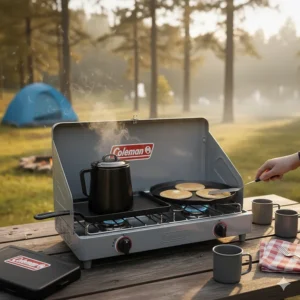
Picture this: You’re at your favorite campsite, the morning sun just breaking through the trees, and the smell of sizzling bacon fills the air. You’re not hunched over a tiny camp stove juggling pots and pans. Instead, you’ve got a proper cooking surface—a coleman camping stove with griddle—and you’re whipping up pancakes, eggs, and breakfast sausage all at once like you’re running your own outdoor diner.
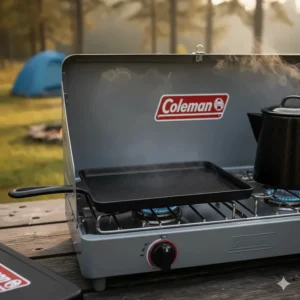
That’s the magic of having the right gear, and honestly, it’s changed how I approach camping completely. After testing dozens of camping stoves over the years, I’ve learned that a coleman camping stove griddle isn’t just a luxury—it’s the difference between eating boring trail food and actually enjoying restaurant-quality meals in the wilderness. Whether you’re a weekend warrior or a full-time van lifer, the coleman griddle camp stove setup has become an essential piece of outdoor cooking equipment that combines versatility, durability, and surprisingly impressive performance.
In this guide, I’ll walk you through everything you need to know about finding the perfect coleman camping stove with griddle for your outdoor adventures. We’ll explore the top models currently available, break down what makes each one special, and help you figure out which features actually matter when you’re cooking at 8,000 feet or dealing with unpredictable weather. Plus, I’ll share some hard-won wisdom from countless camping trips where having the right stove made all the difference between a memorable meal and a frustrating cooking experience.
Quick Comparison Table
| Product | Power Output | Griddle Type | Price Range | Best For |
|---|---|---|---|---|
| Coleman Classic 3-in-1 | 20,000 BTUs | Cast-iron included | $80-$120 | Budget-conscious campers |
| Coleman Cascade 3-in-1 | 24,000 BTUs | Cast-iron grill & griddle | $110-$160 | Serious outdoor chefs |
| Coleman 4-in-1 Portable | 7,000 BTUs | Reversible griddle/grill | $70-$100 | Ultra-portable needs |
| Blackstone 22″ Tabletop | 24,000 BTUs | Rolled carbon steel | $140-$180 | Griddle-first cooking |
| Camp Chef Professional | 30,000 BTUs | Steel griddle | $160-$220 | Large group cooking |
| Coleman EvenTemp 3-Burner | 30,000 BTUs | Separate accessory | $120-$170 | Family camping |
| Coleman RoadTrip SwapTop | 20,000 BTUs | Cast iron swap system | $130-$180 | RV & tailgating |
Just one click – help others make better buying decisions too!
Ready to Upgrade Your Camp Kitchen?
✨ These carefully selected coleman camping stove griddle options represent the best value and performance for outdoor cooking in 2025. Click any highlighted product to check current Amazon pricing and real customer reviews! ️
Top 7 Coleman Camping Stove with Griddle Options: Expert Analysis
1. Coleman Classic 3-in-1 Camping Stove
Here’s where most people should start their search. The Coleman Classic 3-in-1 Camping Stove delivers exactly what you need without any unnecessary complications or price inflation. I’ve watched this model become the go-to choice for car campers, RV enthusiasts, and even backyard grillers who want something more portable than their main BBQ.
Key Specifications:
✅ 20,000 total BTUs across two independently adjustable burners
✅ Included removable cast-iron grill and griddle accessory
✅ Instastart push-button ignition for matchless lighting
✅ Compact 16.73″ x 8.66″ x 25″ dimensions with built-in storage
This stove comes with both a cast-iron grill (with ridges for those beautiful grill marks) and a flat griddle side—all of which stores neatly under the lid when you’re packing up. The dual burners give you 10,000 BTUs each, which is plenty of heat for most camping scenarios. I’ve used mine in temperatures ranging from near-freezing mornings to sweltering summer afternoons, and it’s performed consistently well.
Real Customer Feedback: Users consistently praise the easy setup and the fact that the griddle comes included rather than being sold separately. One reviewer mentioned using it for a four-day Scout trip, cooking for 10 people per meal without any issues. However, some users note the burners run quite hot, requiring careful temperature management for delicate foods like eggs.
Pros:
✅ Cast-iron griddle included in the box
✅ Easy push-button ignition works reliably
✅ Dual wind guards protect flames in breezy conditions
Cons:
❌ Griddle can be heavy for backpacking trips
❌ High heat settings may require adjustment for simmering
Price Range: Typically $80-$120 on Amazon, making it an excellent value for the included accessories.
2. Coleman Cascade 3-in-1 Camping Stove
If the Classic 3-in-1 is the reliable workhorse, the Coleman Cascade 3-in-1 Camping Stove is the upgraded performance model that serious outdoor cooks gravitate toward. With 24,000 BTUs of power and premium cast-iron accessories, this stove bridges the gap between casual camping and gourmet outdoor cooking.
Key Specifications:
✅ 24,000 total BTUs with two independently adjustable burners
✅ Premium cast-iron cooking grates, grill, and griddle accessories
✅ Rotary ignition for quick, matchless lighting
✅ Included nylon carry case for cast-iron accessories
What really sets the Cascade apart is the build quality and attention to detail. The cast-iron pieces are noticeably heavier and more substantial than budget alternatives, and they come pre-seasoned and ready to use. The hickory moss color option also looks fantastic if aesthetics matter to you (and let’s be honest, they do make your campsite setup more enjoyable).
Real Customer Feedback: Multiple independent gear reviewers have named this their favorite camp stove of 2025. One van-lifer used it daily for seven months, from Miami to the Arctic Ocean, and reported it performed flawlessly across all weather conditions and altitudes. Customers love the simmering capability—something that’s actually quite rare in camping stoves—which allows for properly cooked rice, sauces, and delicate foods.
Pros:
✅ Exceptional temperature control and simmer capability
✅ Durable cast-iron accessories with carrying case
✅ Recessed carry handle for easy transport
Cons:
❌ Heavier than ultra-portable alternatives
❌ Premium features come with a higher price tag
Price Range: $110-$160 depending on sales and retailer.
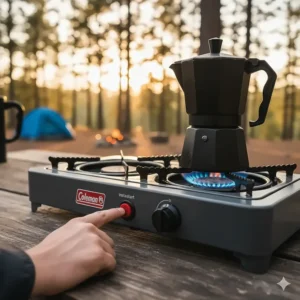
3. Coleman 4-in-1 Portable Propane Gas Camping Stove
Sometimes you need a coleman camping stove with griddle that packs down smaller than your camping pillow. The Coleman 4-in-1 Portable is the answer for minimalist campers, motorcycle travelers, or anyone who values portability above all else. This little powerhouse includes three interchangeable cooking surfaces—a stove insert, a wok, and a reversible griddle/grill—all of which nest together for compact storage.
Key Specifications:
✅ 7,000 BTUs of cooking power (single burner)
✅ Three interchangeable cooktop inserts included
✅ All components store inside the inverted wok
✅ Weighs approximately 11 lbs fully assembled
The genius of this design is the space-saving storage system. The removable legs tuck inside, the inserts nest together, and the whole package locks closed with latches. It’s small enough to fit in a backpack or motorcycle saddlebag, yet functional enough to cook a complete meal for two people.
Real Customer Feedback: One homeless user called it a “lifesaver,” praising its portability and versatility for cooking at motels and campsites. Multiple reviewers note it heats up fast and handles everything from stir-fry to pancakes. The main criticism is the flame adjustment—there’s a narrow range between “barely on” and “full blast,” requiring some practice to master.
Pros:
✅ Incredibly compact and portable design
✅ Multiple cooking surfaces for versatility
✅ Great value for the included accessories
Cons:
❌ Lower BTU output than full-size models
❌ Sensitive flame adjustment takes practice
Price Range: $70-$100, excellent value for budget-conscious adventurers.
4. Blackstone 22″ Tabletop Griddle
Okay, so this isn’t technically a Coleman product, but when we’re talking about camping stoves with griddles, it would be wrong not to include the Blackstone 22″ Tabletop Griddle. This has become the gold standard for griddle-first camping cooking, and for good reason—it’s basically a restaurant flat-top you can take anywhere.
Key Specifications:
✅ 24,000 BTUs from two H-style burners
✅ 339 square inch rolled carbon steel cooking surface
✅ Adjustable-height rubber feet for uneven surfaces
✅ Built-in grease catcher for easier cleanup
The Blackstone takes a different approach than coleman griddle camp stove combos—it’s all griddle, all the time. No removable grates or pot supports, just a massive flat cooking surface that can handle 12 burgers, 30 hot dogs, or 16 eggs simultaneously. The rolled carbon steel develops a natural non-stick patina over time, improving with each use.
Real Customer Feedback: Customers rave about the even heat distribution and impressive cooking capacity. One reviewer mentioned cooking for large groups for four days straight without any issues. The main complaint is propane consumption—running both burners on high can drain a 1 lb tank quickly.
Pros:
✅ Massive cooking surface for groups
✅ Professional-grade griddle performance
✅ Rust-resistant rolled steel construction
Cons:
❌ No standard burners for pots/pans
❌ Heavier than multi-purpose stoves (32 lbs)
Price Range: $140-$180, premium pricing for premium performance.
5. Camp Chef Professional Double Burner Steel Griddle
The Camp Chef Professional Steel Griddle is what happens when you take a coleman camping stove griddle concept and dial everything up to 11. This is the choice for serious outdoor cooks who regularly feed crowds and don’t want to compromise on cooking power or surface area.
Key Specifications:
✅ 30,000 BTUs covering two burners
✅ Professional-grade steel griddle with high sides
✅ 14″ x 32″ overall cooking dimensions
✅ Restaurant-style grease management system
This griddle is designed to work with Camp Chef’s EX60, DB60, and YK60 stove systems, creating a truly professional outdoor cooking setup. The high sides contain splatter, the grease drain channels work brilliantly, and the heat diffuser plates minimize hot spots that plague cheaper griddles.
Real Customer Feedback: Professional caterers and camp cooks love this setup for its reliability and performance. The true-seasoned finish means it’s ready to cook immediately out of the box. Some users note it’s overkill for small camping trips but absolutely perfect for large group events, hunting camps, or extended RV stays.
Pros:
✅ Professional-level cooking power and capacity
✅ Superior heat distribution with diffuser plates
✅ True seasoned finish, ready to use immediately
Cons:
❌ Requires compatible Camp Chef stove system
❌ Price reflects professional-grade construction
Price Range: $160-$220 for the griddle accessory alone.
6. Coleman EvenTemp 3-Burner Propane Stove with Griddle
The Coleman EvenTemp 3-Burner takes family camping seriously. With three burners delivering a combined 30,000 BTUs, this is the setup that handles breakfast for eight kids while simultaneously boiling water for coffee and warming up yesterday’s leftovers.
Key Specifications:
✅ 30,000 total BTUs across three burners
✅ Compatible with Coleman griddle accessory (part #54443151)
✅ PerfectFlow pressure control technology
✅ Large cooking surface accommodates multiple pots
The EvenTemp lives up to its name with technology that maintains consistent heat output even as the propane tank empties. The middle burner is oval-shaped, which works beautifully with the optional griddle accessory by distributing heat more evenly than round burners.
Real Customer Feedback: One savvy user mentioned buying flame tamers (10″ steel discs) from Camp Chef to place over the burners, which transformed the stove’s performance for griddle cooking by distributing heat more evenly. Multiple reviews praise the lightweight design and portability despite the three-burner configuration. The main criticism is that flame adjustment could be more precise for low-heat cooking.
Pros:
✅ Three burners for maximum cooking flexibility
✅ PerfectFlow technology for consistent output
✅ Lightweight despite impressive power
Cons:
❌ Griddle sold separately (not included)
❌ Flame control could be more precise
Price Range: $120-$170 for the stove; griddle accessory adds $30-$50.
7. Coleman RoadTrip SwapTop Cast Iron Griddle System
The Coleman RoadTrip SwapTop is perfect for RV owners, tailgaters, and anyone who wants maximum versatility in their coleman camping stove with griddle setup. This isn’t just a stove—it’s a complete outdoor cooking system with interchangeable cooking surfaces.
Key Specifications:
✅ 20,000 BTUs across two adjustable burners
✅ SwapTop system compatible with multiple cooking surfaces
✅ Porcelain-coated cast iron griddle (142 sq. in.)
✅ Collapsible stand with wheels for easy transport
The SwapTop system is genuinely innovative. You can switch between grill grates, griddle surfaces, stove grates, and other accessories in seconds without tools. The cast iron griddle features porcelain coating for easier cleanup, though purists might prefer traditional seasoned cast iron.
Real Customer Feedback: RV travelers love the versatility and the fact it keeps cooking smells outside. One reviewer used it to cook breakfast for large groups for four consecutive days without any issues. The main caution is to buy directly from Coleman rather than third-party sellers, as there are reportedly knockoff griddles circulating that don’t match the quality or fit.
Pros:
✅ Ultimate versatility with SwapTop system
✅ Collapsible design with wheels for transport
✅ Large griddle surface for group cooking
Cons:
❌ More complex setup than standard camp stoves
❌ Premium price reflects additional features
Price Range: $130-$180 for complete systems with griddle.
Understanding Coleman Camping Stove Griddle Configurations
Not all camping stoves are created equal, and understanding the different coleman griddle camp stove configurations helps you match features to your actual camping style. Let me break down what you’re really getting with each setup type, because the marketing materials don’t always make this crystal clear.
Integrated vs. Accessory Griddles
Integrated Systems: Products like the Coleman Classic 3-in-1 and Cascade 3-in-1 come with griddles in the box. You unpack it, hook up propane, and you’re cooking. The griddles are designed specifically for that stove model, fitting perfectly and storing underneath the lid. This is ideal if you know you want griddle capability and don’t want to hunt down compatible accessories later.
Accessory Systems: Models like the Coleman EvenTemp or RoadTrip require purchasing griddles separately. This approach gives you flexibility—maybe you want just a griddle, or maybe you want multiple cooking surface options. However, it also means additional investment and potential compatibility headaches if you don’t verify part numbers carefully.
Cast Iron vs. Aluminum vs. Steel Griddles
Material matters more than you might think when choosing a coleman camping stove griddle. Cast iron is the traditional choice for good reason—it retains heat beautifully, develops a natural non-stick surface with proper seasoning, and lasts for decades. The downside? Weight. A cast-iron griddle adds 5-10 pounds to your gear.
Aluminum griddles like the Coleman Triton accessory are significantly lighter and heat up faster. They often feature non-stick coatings that make cleanup easier but may wear out over time. They’re perfect for weight-conscious campers or those who prioritize convenience over traditional cooking methods.
Steel griddles (like those from Blackstone and Camp Chef) offer a middle ground. Rolled carbon steel is durable, develops a seasoning like cast iron, but weighs less. Professional chefs often prefer steel griddles for their responsiveness to temperature changes.
BTU Output: How Much Power Do You Really Need?
Here’s something the specifications don’t always explain clearly: BTU numbers tell only part of the story. A coleman camping stove with griddle needs different power characteristics than a standard burner stove.
For griddle cooking: 20,000-24,000 total BTUs across two burners is the sweet spot for most campers. This provides enough heat to properly sear proteins and maintain temperature when cooking multiple items, but isn’t so powerful that you constantly battle hot spots or burning.
For large groups: Step up to 30,000 BTUs if you’re regularly cooking for 6+ people. The extra power compensates for heat loss when you’re covering the entire cooking surface.
For ultralight camping: 7,000-10,000 BTUs works fine for 1-2 people cooking simple meals. You’ll sacrifice speed and multi-item capacity, but you’ll save significant weight and fuel consumption.
Material Quality Matters: Breaking Down Construction Differences
After years of testing camping stoves in conditions ranging from high-altitude cold to desert heat, I’ve learned that construction quality directly impacts performance and longevity. Let’s talk about what to actually look for when comparing coleman camping stove griddle options.
Burner Design and Durability
The burners are the heart of any camping stove, and quality varies wildly even among Coleman products. Traditional tube burners (like those in the Classic and Cascade lines) are simple, reliable, and easy to clean. They produce an elongated flame that works well with griddles.
H-style burners (found in the Coleman 4-in-1 and Blackstone griddles) create more uniform heat distribution but can be trickier to clean if food falls through the grates. The best systems include removable drip trays that catch debris before it reaches the burners.
Pay attention to the material too. Brass burners resist corrosion better than aluminum or steel, maintaining performance even after seasons of use in damp conditions. Some Coleman models feature aluminized steel burners that offer decent durability at lower price points.
Frame and Body Construction
Cheap camping stoves use thin stamped steel that dents easily and conducts heat to places you don’t want it (like handles and knobs). Quality models like the Coleman Cascade feature powder-coated steel frames with strategic reinforcement in high-stress areas.
The best designs include aluminized steel cooktops that resist warping from repeated heating and cooling cycles. I’ve seen budget stoves develop permanent bows in the cooking surface after a single season, making them impossible to level properly.
Wind Protection Engineering
Wind is the enemy of efficient cooking, and it’s remarkable how much difference proper wind guards make. The Coleman Classic and Cascade both feature adjustable, removable wind guards that you can configure based on conditions. On breezy days, I’ll set them up as a three-sided windbreak. On calm mornings, I’ll remove them entirely for better access.
Some premium models feature built-in wind protection integrated into the frame design. While this can’t be adjusted or removed, it often provides superior protection in consistently windy environments like coastal or high-altitude camping.
Griddle Cooking Techniques for Camping Success
Having a coleman camping stove griddle is one thing—knowing how to use it effectively is something else entirely. Let me share techniques I’ve learned (often the hard way) that elevate your camp cooking from “edible” to “seriously impressive.”
Temperature Zone Management
Unlike home cooking where you might use a single even heat setting, outdoor griddle cooking demands understanding temperature zones. With a two-burner coleman griddle camp stove, I typically run one burner on medium-high and the other on low-medium. This creates distinct zones for different tasks.
Hot zone (closer to high-heat burner): Perfect for searing meats, crisping hash browns, or getting a good char on vegetables. This is where you start bacon, cook burgers, or toast bread.
Medium zone (between burners): The goldilocks area for most cooking—pancakes, eggs, grilled cheese, quesadillas. Food cooks through without burning.
Cool zone (opposite end or edges): Ideal for holding cooked items warm while you finish other components, or for gently warming tortillas without crisping them.
Seasoning and Maintenance in the Field
Cast-iron griddles require proper care to maintain their non-stick properties and prevent rust. Here’s my streamlined field maintenance routine that takes maybe five minutes:
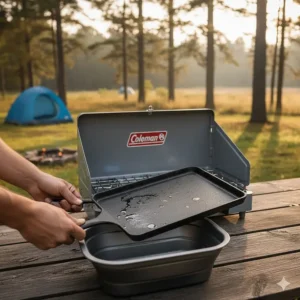
After each use: While the griddle is still warm (not hot), scrape off food debris with a metal spatula. Add a small amount of water to loosen stuck-on bits, then scrape again. Wipe completely dry with paper towels or a dedicated cleaning cloth.
Oil application: Once dry, pour a small amount of neutral cooking oil (vegetable or canola) on the griddle and spread it thin with a paper towel. The goal is a barely visible coating, not a pool of oil. This prevents rust and maintains the seasoning.
Storage: Let the griddle cool completely before storing. If your Coleman system has a storage bag for the griddle, use it. If not, wrap it in paper towels or a cloth to prevent moisture accumulation during storage.
Common Mistakes to Avoid
Mistake #1: Not preheating properly. I see campers throw food on a cold griddle all the time. Give your coleman camping stove with griddle at least 5-7 minutes to reach proper temperature. A few drops of water should dance and evaporate instantly when it’s ready.
Mistake #2: Overcrowding the surface. Even with a large griddle, leaving space between items allows heat circulation and makes flipping easier. Packed items steam rather than sear, resulting in soggy food.
Mistake #3: Using metal utensils too aggressively on non-stick or coated surfaces. Cast iron can handle metal tools, but non-stick coated griddles (like some aluminum models) require plastic or silicone to avoid damaging the coating.
Fuel Efficiency and Propane Management
Running out of propane mid-breakfast is one of camping’s special frustrations. Understanding fuel consumption helps you plan better and avoid that disappointment. A typical coleman camping stove griddle burns through propane at predictable rates, but several factors influence actual consumption.
Calculating Burn Time
Coleman’s specifications typically list runtime based on one 16.4 oz propane cylinder:
On HIGH setting: Most coleman griddle camp stove models burn through a standard cylinder in 1-1.5 hours when running both burners at maximum. That’s approximately 10,000-12,000 BTUs per hour per burner.
On MEDIUM setting: You’ll get 2-3 hours of cooking time, which covers most camping scenarios. Medium heat handles probably 80% of cooking tasks effectively.
On LOW setting: 4-6 hours is typical, perfect for simmering sauces, keeping food warm, or gentle heating tasks.
Adapter Hose Benefits
Here’s a money-saving tip that changed my camping economics: invest in a propane adapter hose that connects your coleman camping stove with griddle to standard 20 lb propane tanks. A $15-25 adapter pays for itself after a few camping trips.
Cost comparison: A 1 lb disposable cylinder costs $4-6 and provides 1-1.5 hours on high. A 20 lb tank costs $15-20 to refill and provides approximately 30-40 hours of high-heat cooking. The math is compelling.
Practical benefits: Besides cost savings, you eliminate the stress of running out mid-cook. Plus, you reduce waste from disposable cylinders, which matters if you care about outdoor ethics and Leave No Trace principles.
Cold Weather Considerations
Propane performance drops in cold temperatures, and I’ve experienced this firsthand on high-altitude fall camping trips. Below 40°F, propane vaporization slows, reducing burner output and efficiency.
Solutions: Use propane/butane blended fuel cylinders designed for cold weather. Keep spare cylinders inside your sleeping bag overnight to warm them before morning cooking. Run your coleman griddle camp stove at higher settings to compensate for reduced pressure.
Comparing Price Points and Value Propositions
Let’s talk money, because while a coleman camping stove with griddle isn’t a massive investment compared to other camping gear, you still want to maximize value. I’ve tested products across the entire price spectrum, and here’s what you actually get at each level.
| Price Range | What You Get | Best Value Example | Who Should Buy |
|---|---|---|---|
| $70-$100 | Basic functionality, lighter materials, fewer included accessories | Coleman 4-in-1 Portable | Solo campers, minimalists, budget-conscious buyers |
| $100-$140 | Quality cast iron, reliable ignition, good BTU output, included griddles | Coleman Classic 3-in-1 | Weekend warriors, families, car campers |
| $140-$180 | Premium materials, superior heat control, professional features | Coleman Cascade 3-in-1, Blackstone 22″ | Serious outdoor cooks, frequent campers, RV owners |
| $180-$220+ | Commercial-grade construction, maximum cooking capacity | Camp Chef Professional | Large groups, extended trips, catering use |
Hidden Costs to Consider
Replacement parts: Cast iron griddles are nearly indestructible, but ignition systems and burners eventually need replacement. Coleman makes parts available through their website and authorized dealers, but availability varies by model age.
Accessories: That coleman camping stove griddle might include one griddle surface, but what about a cover? A proper carrying case? Additional cooking surfaces? Budget another $30-80 for accessories that significantly improve the ownership experience.
Propane costs: As discussed earlier, 1 lb cylinders are expensive and wasteful long-term. Factor in the adapter hose and 20 lb tank refills for realistic total cost of ownership.
When to Spend More, When to Save
Spend more if:
✅ You camp frequently (10+ trips per year)
✅ You regularly cook for groups of 4+ people
✅ You value simmer control and precise temperature adjustment
✅ You want cast-iron cooking surfaces that improve with age
Save money if:
✅ You’re new to camping and testing whether you enjoy it
✅ You primarily cook simple meals (boiling water, heating canned food)
✅ You backpack or motorcycle camp where weight matters more than features
✅ You’ll only use it a few times per year
Safety Features and Operational Considerations
A coleman camping stove with griddle operates on pressurized propane, producing significant heat and open flames. Safety isn’t glamorous, but it’s essential knowledge that prevents injuries and property damage.
Proper Setup and Ventilation
Never use any propane camping stove inside a tent, vehicle, or enclosed shelter. Carbon monoxide poisoning kills, and propane combustion produces CO. Use your coleman griddle camp stove outside only, with adequate clearance above (at least 3 feet) and around (at least 2 feet).
Stable, level surface: Place your stove on a genuinely level, stable surface. I use a camping table specifically designed for cooking, which also brings the stove to comfortable working height. Cooking crouched over a ground-level stove gets old fast.
Wind considerations: While wind protection is good for efficiency, never fully enclose your stove. Maintain airflow around the unit to prevent heat buildup and ensure proper combustion.
Propane Connection Safety
Check for leaks every time: Before lighting your coleman camping stove griddle, apply soapy water to all propane connections. Bubbles indicate leaks. Tighten connections or replace damaged hoses immediately.
Don’t over-tighten: Propane connections seal with brass or rubber threads. Over-tightening damages these seals, causing leaks. Hand-tight plus a quarter turn with a wrench is sufficient.
Transport with cylinder disconnected: Always disconnect and remove propane cylinders before transporting your stove. This prevents accidental gas release and valve damage.
Fire Safety Basics
Keep extinguishing materials nearby: Water works for grease fires on griddles if you catch them early, but a small fire extinguisher rated for grease fires is smart insurance. Baking soda also works in a pinch.
Clear area of flammables: Keep paper towels, food packaging, dry grass, and other flammables at least 2 feet away from the stove. I learned this the hard way when a paper plate blew onto my griddle and ignited.
Supervise children: Hot griddles remain dangerously hot for 20-30 minutes after shutoff. Establish a clear “no-go zone” around the cooking area when kids are present.
Maintenance and Long-Term Ownership
A quality coleman camping stove with griddle should last 10-20 years with proper care. However, neglect or poor maintenance can reduce that lifespan to a couple of seasons. Here’s how to ensure your investment provides decades of service.
Post-Trip Cleaning Protocols
Immediate cleaning: Don’t let your coleman griddle camp stove sit dirty in storage. Grease and food residue attract pests, corrode surfaces, and smell terrible. Clean within 24 hours of your last use.
Burner maintenance: Remove grates and carefully clean around burner ports with a soft brush. Blocked ports cause uneven flames and poor performance. Inspect venturi tubes (the horizontal tubes leading to burners) for spider webs or insect nests—these are surprisingly common and cause dangerous flashbacks.
Frame and body care: Wipe down all painted and coated surfaces with soapy water to remove grease, smoke residue, and dirt. Dry thoroughly to prevent rust formation.
Seasonal Deep Maintenance
Once or twice per season (depending on use frequency), perform these additional tasks:
Ignition system check: If your Coleman stove has push-button ignition, verify it’s producing a strong spark. Replace the AA battery if sparks are weak or inconsistent. Clean the electrode with a soft cloth to remove corrosion or buildup.
Regulator inspection: The propane regulator is a critical safety component. Check for cracks in the rubber hose or diaphragm. Replace any regulator showing signs of damage—they’re inexpensive and available through Coleman’s parts network.
Lubrication: Apply a tiny amount of graphite lubricant (never oil-based) to valve stems to maintain smooth operation. Over time, valves can become stiff without proper lubrication.
Storage Best Practices
Off-season storage: Store your coleman camping stove griddle in a dry location protected from temperature extremes. Garages work well; damp basements or hot attics don’t.
Griddle storage: Cast-iron griddles should be lightly oiled and wrapped in paper or cloth. Avoid plastic bags, which trap moisture and promote rust. Store griddles separately from the stove if possible to prevent scratching other components.
Propane storage: Store propane cylinders upright in a well-ventilated outdoor location away from living spaces. Never store propane indoors or in vehicles.
Alternative Brands and Competitive Comparison
While this guide focuses on Coleman products, understanding competitive offerings helps you make an informed decision. Sometimes a non-Coleman option better fits specific needs or preferences.
Blackstone Griddles
Blackstone has revolutionized outdoor griddle cooking with their restaurant-quality flat-top designs. If your camping style prioritizes griddle cooking above everything else, Blackstone deserves serious consideration.
Advantages over Coleman: Larger cooking surfaces, superior heat distribution, commercial-grade construction, extensive accessory ecosystem.
Disadvantages: Generally more expensive, heavier, no standard burners for pots/pans, overkill for casual campers.
Camp Chef Systems
Camp Chef occupies the premium tier of camping stoves, offering professional-grade features and modular design. Their stove systems with separate griddle accessories compete directly with higher-end coleman camping stove griddle setups.
Advantages over Coleman: More powerful burners (often 30,000+ BTUs), better flame control, professional-grade materials, excellent customer support.
Disadvantages: Higher price points, heavier designs, more components to manage.
Budget Alternatives
Brands like Gas One, Stansport, and generic Amazon basics offer ultra-budget camping stoves sometimes including basic griddle plates. These typically cost $40-60.
Reality check: You generally get what you pay for. Budget stoves often use thin materials that warp, weak ignition systems that fail quickly, and poor temperature control. They might work fine for occasional use, but frequent campers outgrow them fast.
Recipes That Showcase Your Griddle’s Versatility
Having a coleman camping stove with griddle opens culinary possibilities beyond standard camping fare. Here are some techniques and dishes that truly shine on a griddle surface.
Breakfast Excellence
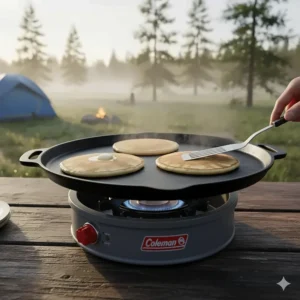
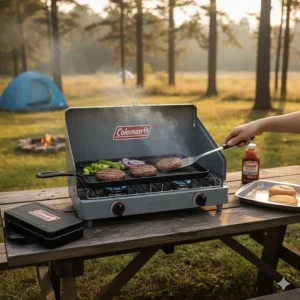
Classic Diner-Style Pancakes: The large, flat surface of a coleman griddle camp stove is perfect for pancakes. The key is medium heat and a properly seasoned surface. I can fit 6-8 pancakes simultaneously, making feeding a group efficient and enjoyable.
Smash Burgers: Using a metal spatula, press seasoned beef balls flat against the hot griddle. The direct contact creates incredible crust and flavor—something you can’t achieve on a standard grill. This technique works brilliantly at lunch or dinner.
Fajitas and Stir-Fry: The high heat capacity of quality griddles like those on the Cascade 3-in-1 handles rapid cooking needed for fajitas. Slice peppers and onions thin, add seasoned proteins, and cook everything hot and fast directly on the griddle surface.
Advanced Techniques
Bacon weave for sandwiches: Lay bacon strips in an overlapping weave pattern on your coleman camping stove griddle. As it cooks, the strips fuse together, creating a bacon mat perfect for the ultimate breakfast sandwich or BLT.
Grilled cheese with weight: Place your sandwich on the griddle, then set a heavy cast-iron pan on top. The weight creates even contact for perfectly golden, crispy bread and evenly melted cheese.
Breakfast hash: Dice potatoes, onions, and peppers. Cook potatoes first until nearly tender, then add other ingredients. The large surface area of a griddle allows proper browning without steaming—the secret to excellent hash.
Environmental Impact and Sustainability
Responsible camping means considering environmental impacts, and your choice of coleman camping stove with griddle affects your outdoor ethics in several ways.
Propane vs. Alternative Fuels
Propane’s environmental profile: Propane burns relatively cleanly compared to wood fires, producing primarily carbon dioxide and water vapor. It doesn’t leave ash, char, or fire scars in wilderness areas. However, disposable propane cylinders create waste.
Refillable solutions: As mentioned earlier, using refillable 20 lb tanks or refilling 1 lb cylinders (where legal) significantly reduces waste. Some camping supply stores now offer propane cylinder refilling services.
Alternative fuel systems: Some modern camping stoves can run on multiple fuel types. While coleman griddle camp stove models typically use propane exclusively, being aware of multi-fuel options helps you make informed future purchases.
Leave No Trace Principles
Using a coleman camping stove with griddle aligns well with Leave No Trace ethics:
Reduces fire impact: Propane stoves eliminate the need for wood fires, which scar landscapes and deplete natural resources in popular camping areas.
Easier cleanup: Griddle cooking confines grease and food waste, making proper disposal simpler. Always pack out grease rather than pouring it in nature.
Lower carbon footprint: While propane is a fossil fuel, the efficiency of modern camping stoves means you’re using minimal amounts compared to burning wood or charcoal.
Troubleshooting Common Issues
Even the best coleman camping stove griddle occasionally presents problems. Here’s how to diagnose and fix common issues quickly, often without professional service.
Ignition Problems
Symptom: Clicking but no flame
Diagnosis: Propane isn’t reaching the burner or isn’t vaporizing properly.
Solutions: Verify cylinder isn’t empty, check for kinked hose, ensure connection is tight but not over-tightened. In cold weather, warm the cylinder as propane doesn’t vaporize well below 32°F.
Symptom: No click sound when pressing ignition button
Diagnosis: Ignition system failure—battery, electrode, or wiring issue.
Solutions: Replace battery in push-button systems. Clean electrode with fine sandpaper if corroded. Check wiring connections. In the field, use matches or a lighter as backup.
Uneven Heating
Symptom: Hot spots or cold spots on griddle
Diagnosis: Burner blockage, poor griddle contact, or warped griddle surface.
Solutions: Clean burner ports thoroughly, ensure griddle sits flat on supports, check for warping (replace if severe). Some uneven heating is normal—learn your stove’s hot zones and cook accordingly.
Flame Issues
Symptom: Yellow or orange flames instead of blue
Diagnosis: Incomplete combustion due to insufficient air mixing or burner contamination.
Solutions: Clean burner thoroughly, check venturi tubes for blockages, ensure proper air intake. Yellow flames reduce efficiency and can produce more carbon monoxide.
Symptom: Flames blow out easily in wind
Diagnosis: Inadequate wind protection or propane pressure issues.
Solutions: Deploy or adjust wind guards, create additional windbreak with vehicle or equipment, check regulator function and replace if faulty.
Frequently Asked Questions
❓ How long does a coleman camping stove with griddle last on one propane tank?
❓ Can you use a coleman griddle camp stove at high altitudes?
❓ Do cast iron griddles for coleman camping stove griddle come pre-seasoned?
❓ What's the difference between the Coleman Classic 3-in-1 and Cascade 3-in-1?
❓ Can I use my coleman camping stove with griddle in freezing temperatures?
Conclusion: Finding Your Perfect Coleman Camping Stove with Griddle
After exploring dozens of models and cooking countless meals outdoors, I can confidently say there’s a coleman camping stove with griddle perfect for virtually every outdoor cooking scenario. The key is honestly assessing your actual needs rather than being dazzled by maximum features or swayed by minimum price.
For most campers, the Coleman Cascade 3-in-1 hits the sweet spot. It provides genuine restaurant-quality cooking capability, outstanding temperature control, and included cast-iron accessories that’ll last decades. The $110-160 investment pays dividends in meal quality and cooking enjoyment.
Budget-conscious adventurers should seriously consider the Coleman Classic 3-in-1. It delivers core griddle functionality without premium pricing, making it ideal for families testing the camping waters or casual weekend warriors.
Serious outdoor chefs might find the Blackstone 22″ Tabletop or Camp Chef Professional systems more aligned with their ambitions. The jump in capability justifies the higher investment if you’re cooking frequently or for larger groups.
Ultralight travelers will appreciate the Coleman 4-in-1 Portable, which prioritizes packability without completely sacrificing cooking capability. It’s proof that great outdoor meals don’t require massive equipment.
The coleman griddle camp stove market continues evolving, but the fundamentals remain constant: quality construction, reliable ignition, adequate BTU output, and proper griddle materials matter more than gimmicky features. Whether you’re flipping pancakes at a KOA campground or cooking bacon at 10,000 feet in the Rockies, the right equipment transforms outdoor cooking from a chore into genuine pleasure.
Your camping kitchen deserves better than bland freeze-dried meals and burned hot dogs. Invest in quality gear, learn proper technique, and discover why outdoor cooking has become one of my favorite aspects of any camping adventure.
Ready to Transform Your Camp Cooking?
✨ These coleman camping stove with griddle options represent tested, proven outdoor cooking solutions that’ll elevate your camping experience. Check current pricing and availability now—many models qualify for free shipping on Amazon! Don’t settle for mediocre camp meals when restaurant-quality outdoor cooking is just a click away! ️
Recommended for You
- Camp Chef Tundra 3 Burner Stove with Griddle: 7 Best Picks for 2025
- Camp Stove Griddle: Top 7 Picks That Transform Outdoor Cooking
- 7 Best 2 Burner Camp Stove Models for 2025 [Expert Guide]
Disclaimer: This article contains affiliate links. If you purchase products through these links, we may earn a small commission at no additional cost to you.
✨ Found this helpful? Share it with your friends!
