
In This Article
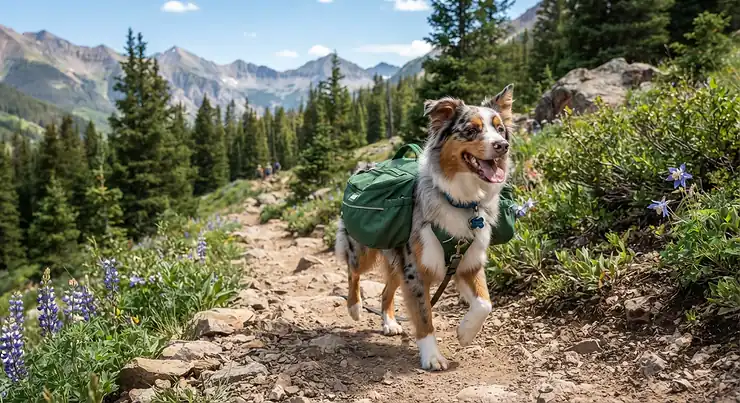
Somewhere around mile four of a summer hike, most owners have the same realization at the same time: their dog is carrying nothing, while the human is hauling water for two, a first-aid kit, snacks, and a collapsible bowl that keeps clanging against a carabiner. A good dog backpack for hiking fixes that lopsided arrangement. Strapped across your dog’s shoulders instead of your own, a dog backpack for hiking is a saddlebag-style harness that lets your dog carry its own food, water, and gear — typically 10 to 25% of its body weight once conditioned, following the safety basics outlined in the National Park Service’s guide to hiking with pets. It’s not a toy. It’s a genuine piece of trail equipment, and the difference between a good one and a bad one shows up exactly when you need it least: three miles from the trailhead, when a saddlebag starts sliding sideways or a strap starts chafing.
This guide breaks down seven real, currently available packs across budget, mid-range, and premium tiers, with honest analysis of what each one gets right and where it falls short — based on real specs, aggregated reviewer sentiment, and side-by-side comparison, not marketing copy. We’ll cover fit, saddlebag capacity, harness integration, and the weight distribution dog owners actually need to think about before their first trail day. If you’re relatively new to dog pack hiking altogether, stick around for the buyer’s framework near the end — it’ll save you from buying the wrong size twice.
Quick Comparison Table
| Pack | Best For | Capacity | Price Range |
|---|---|---|---|
| Kurgo Baxter | Budget beginners | 3.75L (7.5L Big Baxter) | Under $70 |
| Outward Hound DayPak | Casual/urban walks | Small, expandable pockets | Under $40 |
| AlphaPak Adventurer | Best overall value | Detachable saddlebags | $50-$80 range |
| Mountainsmith K9 | Large-capacity mid-range | Up to 16L (large) | $70-$100 range |
| EzyDog Summit | Harness-first control | Moderate, water-bottle pouches | $60-$90 range |
| Ruffwear Approach | All-around day hiking | ~13-14.5L | $90-$110 range |
| Ruffwear Palisades | Multi-day backcountry | 10L/14L/19L | $140-$160 range |
Looking at the spread above, the gap between the Kurgo Baxter and the Ruffwear Palisades isn’t just price — it’s use case. Budget packs like the Kurgo Baxter and Outward Hound DayPak are built for dogs learning to carry weight on day walks, while the Ruffwear Palisades is engineered for dogs already conditioned to multi-day loads. The AlphaPak Adventurer and Mountainsmith K9 sit in the sweet spot most hikers actually need: enough saddlebag room for a real day hike without the premium price tag of the backcountry-specific packs.
💬 Found a pack that looks like the one? Tap that heart icon — it helps other hikers find the right gear too!😊
Top 7 Dog Backpacks for Hiking: Expert Analysis
1. Kurgo Baxter — easiest budget intro pack for first-time trail dogs
The Kurgo Baxter is the pack most trail dogs cut their teeth on, and for good reason. Its 3.75-liter combined saddlebag capacity (7.5 liters in the Big Baxter size) sits on the smaller end, which sounds like a downside until you realize that’s exactly the point for a dog who’s never worn a pack before. The nine points of adjustment and padded, contoured back panel mean it fits a genuinely wide range of body types, from lean pointer mixes to stockier mastiffs, without needing a size exchange. Based on the spec comparison against pricier packs, what the Kurgo Baxter lacks in capacity it makes up for in fit forgiveness — reviewers across retailers consistently note that dogs adjust to it quickly, with several owners specifically mentioning it fit unusually large or unusually small dogs better than expected. The tradeoff, and it’s a real one, is that the standard size simply can’t hold multi-day food supplies; this is a day-hike and short-overnight tool, not a thru-hiking pack.
Pros:
- ✅ Budget-friendly entry point for new trail dogs
- ✅ Nine adjustment points fit unusually varied body shapes
- ✅ Padded spine panel improves comfort for beginners
Cons:
- ❌ 3.75L capacity too small for multi-day trips
- ❌ Saddlebags aren’t removable from the harness
Priced under $70, the Kurgo Baxter is one of the best-value entry points in this roundup — check current price before buying, since it fluctuates with size and color.
2. Outward Hound DayPak — lightest pick for casual city walks
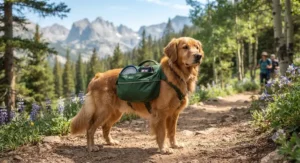
If the Kurgo Baxter is a starter pack, the Outward Hound DayPak is the pack you buy just to see whether your dog tolerates wearing one at all. It’s light (under 11 ounces), unstructured, and built around four expandable pockets rather than a rigid saddlebag frame. That flexibility means it can stretch to fit a water bottle and a few treats, but the lack of internal structure is also its biggest limitation — reviewers consistently report that the saddlebags shift sideways during more energetic movement, especially without a rider bracing the load evenly. What most buyers overlook about this pack is that it was never designed to be a hiking-specific tool in the first place; it reads more like a well-ventilated harness with pockets sewn on, which is precisely why it excels for neighborhood walks and short urban outings rather than technical trail days.
Pros:
- ✅ Extremely lightweight and breathable for warm weather
- ✅ Four expandable pockets for small essentials
- ✅ Reflective piping adds visibility on evening walks
Cons:
- ❌ Saddlebags shift noticeably with active dogs
- ❌ No true structure for hauling heavier loads
At under $40, the Outward Hound DayPak is the cheapest entry in this guide and a reasonable way to test the waters — just don’t expect it to survive a rugged, multi-mile backcountry day.
3. AlphaPak Adventurer — best value with quick-detach saddlebags
The AlphaPak Adventurer punches well above its price bracket. Its EZ Latch system lets the saddlebags slide on and off the harness in seconds, so the same rig doubles as an everyday walking harness when you’re not actively hiking — a detail competitors in this price range simply don’t offer. Constructed from recycled, water-resistant RPET nylon with triple-stitched seams, it held up well enough in independent testing to earn a “best overall” nod from at least one major gear outlet, which tested it across day hikes, overnight trips, and even cross-country ski outings. Here’s what to weigh: the detachable design that makes it so versatile is also a slightly weaker connection point than a fully integrated saddlebag system, so an unevenly packed load can shift a touch more than on the pricier Ruffwear Approach. For most owners doing weekend day hikes, though, that’s a minor tradeoff against the convenience of a harness-and-pack combo you can actually use daily.
Pros:
- ✅ Detachable saddlebags double as standalone harness
- ✅ Recycled, water-resistant materials with triple stitching
- ✅ Rated a top overall pick in independent field testing
Cons:
- ❌ Detach points can allow minor shifting when overloaded
- ❌ Fewer size options than some competitors
The AlphaPak Adventurer typically lands in the $50-$80 range, making it arguably the best value-for-durability pick in this entire lineup.
4. Mountainsmith K9 Dog Pack — most breathable large-capacity option
Mountainsmith has been building dog packs since the 1980s, and the current Mountainsmith K9 shows that experience in its six top-mounted cinch points — a feature borrowed straight from human backpacking packs, letting you cinch the saddlebags tighter against your dog’s body the same way you’d tighten a load closer to your own spine. With up to 16 liters of storage in the large size, it holds more gear than every other pack in this list except the Ruffwear Palisades. The perforated foam-and-mesh design against the dog’s body makes this the most breathable option here, a genuine advantage for hiking in hot climates. Reviewers consistently note that the sheer size of the saddlebags makes overloading tempting, and because the pack lacks a true integrated harness the way Ruffwear’s models do, some dogs — especially those without a traditionally proportioned chest — don’t get quite as secure a fit.
Pros:
- ✅ Up to 16L capacity, among the largest in this guide
- ✅ Six cinch points for precise, snug adjustment
- ✅ Highly breathable mesh for hot-weather hikes
Cons:
- ❌ Large saddlebags make overloading easy
- ❌ Less integrated harness fit than Ruffwear models
At roughly $75-$100, the Mountainsmith K9 is a strong mid-range pick for owners prioritizing capacity and airflow over ultra-precise fit.
5. EzyDog Summit — strongest harness integration for pullers
The EzyDog Summit leans hard into its award-winning Chest Plate Harness, and it shows: the wide V-shaped chest panel molds to a dog’s front end in a way that functions as a genuine no-pull harness first and a gear-hauling pack second. Dual leash attachment points — one at the front, one at the back — give owners real control options depending on whether a dog needs correction or simply a leash clip for a calm trail walk. The waterproof zippers and coated ripstop shell held up in owner reports even through creek crossings, and the side pouches are sized for a standard water bottle on each flank, which is exactly the water bottle holder dog owners look for when they don’t want to carry hydration gear themselves. On the downside, several buyers reported the center strap self-loosening under load, which is worth checking and re-tightening periodically on longer hikes, and the saddlebags aren’t removable, so you’re committed to the full setup even on days you only need the harness.
Pros:
- ✅ Chest Plate Harness gives class-leading pulling control
- ✅ Dual front and rear leash attachment points
- ✅ Waterproof zippers and pouches sized for water bottles
Cons:
- ❌ Center strap can self-loosen under active movement
- ❌ Saddlebags aren’t removable from the harness
Expect to pay in the $60-$90 range for the EzyDog Summit, a fair ask given the harness-first engineering most competitors don’t match.
6. Ruffwear Approach Pack — best all-rounder for day hikes and light overnights
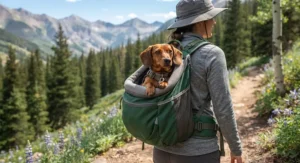
The Ruffwear Approach Pack is the one most frequently named “best overall” across independent testing outlets, and the reasoning holds up under scrutiny. Its radial-cut, weight-forward saddlebags combined with a “flopper stopper” stabilization system create what Ruffwear calls a passive compression setup — in plain terms, the load stays closer to the dog’s shoulders instead of swinging loose with every stride. At roughly 13 to 14.5 liters of combined capacity and about a pound in total weight, it strikes a genuinely useful middle ground between the small-capacity budget packs and the bulkier multi-day options. What most buyers overlook about this pack is how much of the design is inherited from Ruffwear’s human-backpacking DNA: the padded handle and girth straps disperse lifting force evenly, which matters far more than it sounds when you’re hauling a tired 60-pound dog over a creek crossing. Reviewers do consistently flag that the saddlebags aren’t removable and that the newer 150-denier shell trades some of the older model’s ruggedness for lighter weight, showing wear faster under abrasive rock-scrambling use.
Pros:
- ✅ Radial-cut saddlebags stabilize load over shoulders
- ✅ Padded handle and girth straps ease lifting assistance
- ✅ Frequently rated best overall in independent field tests
Cons:
- ❌ Saddlebags are fixed, not removable
- ❌ Lighter 150D shell shows wear faster on rough terrain
Typically priced in the $90-$110 range, the Ruffwear Approach Pack is the safest single recommendation for an owner who wants one pack that handles most day-hiking scenarios well.
7. Ruffwear Palisades Pack — top pick for multi-day backcountry trips
The Ruffwear Palisades Pack exists for a different mission than everything else on this list: multi-day backpacking and thru-hiking with a dog carrying real supplies. Saddlebag volume scales with size — 10 liters small, 14 liters medium, 19 liters large — which is more room than the Mountainsmith K9‘s large size and dramatically more than the day-hiking packs above. The saddlebags detach fully from the harness via four pass-through buckles, so a dog can shed the load at camp while still wearing a comfortable, breathable harness base. Based on the spec comparison, the extra capacity and removable-bag engineering come at a real cost in pack weight — at roughly 1.2 pounds, it’s among the heaviest packs in this guide, which matters because that weight counts against your dog’s carrying capacity before a single ounce of food goes in. Reviewers, including a CNN Underscored field test with a 60-pound lab mix, consistently praise the fit adjustability and the two included collapsible water bladders, while flagging that initial setup takes real time to dial in and that loaded saddlebags can still slide forward on steep downhill sections.
Pros:
- ✅ Massive 10-19L capacity scales by pack size
- ✅ Saddlebags fully detach for camp breaks
- ✅ Includes two collapsible hydration bladders
Cons:
- ❌ Heaviest pack in this guide at ~1.2 lbs
- ❌ Initial setup and fit take real time to dial in
Priced in the $140-$160 range, the Ruffwear Palisades Pack is the clear buy for owners planning genuine backcountry trips, not casual day walks.
✨ Don’t Miss These Exclusive Deals!
🔍 Take your dog backpack for hiking search to the next level with these carefully selected picks. Click on any highlighted item to check current pricing and availability. The right pack turns your dog into a genuine trail partner, not just a passenger!
Practical Usage Guide: Conditioning Your Dog to a Backpack
Getting a dog comfortable in a pack isn’t instant, and rushing it is the single most common first-30-days mistake. Start indoors: strap on the empty harness for five to ten minutes at a time, treating and praising calmly so the dog associates the gear with something good rather than a strange, restrictive object. Once your dog moves normally with the empty pack on, add a small amount of weight — a rolled towel or half-filled water bottle on each side — and repeat short indoor or backyard sessions for several days before heading anywhere near a trailhead.
On the actual trail, load evenly on both sides first; an off-balance saddlebag is the fastest way to create the shifting and chafing that shows up in nearly every negative review across this guide’s seven packs. Check your dog’s shoulders and armpits after the first few outings for any redness or hot spots, and stop immediately if you see limping or reluctance to move. A reasonable maintenance rhythm is a quick buckle-and-strap inspection before every hike and a full wash down (per that specific pack’s care instructions) every few weeks of regular use, since built-up dirt and salt from sweat can quietly wear down stitching and zippers faster than the trail itself does.
Real-World Scenarios: Matching a Dog Pack to Your Trail Style
If you’re a weekend warrior with a 45-pound mutt who does one three-mile loop every Saturday, a mid-capacity pack like the AlphaPak Adventurer or Mountainsmith K9 covers you comfortably without wasted capacity or unnecessary weight. If you’re a thru-hiker planning multi-night trips where your dog genuinely needs to carry its own food for several days, the math changes entirely — that’s the scenario the Ruffwear Palisades Pack was built for, since its removable saddlebags and larger capacity absorb a real supply load. And if you’re simply trying to figure out whether your apartment-dwelling dog even tolerates wearing gear before committing serious money, the Outward Hound DayPak or standard Kurgo Baxter are the low-risk way to find out, since both sit at the affordable end of this guide’s price spread.
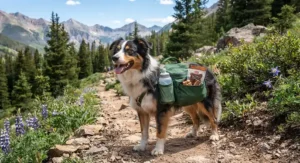
How to Choose a Dog Backpack for Hiking
- Weigh your dog and calculate carrying capacity first. As Backpacker’s veterinary-reviewed weight guidelines explain, most healthy adult dogs can carry 10-15% of body weight, with well-conditioned dogs occasionally handling up to 20-25% under veterinary guidance.
- Measure chest girth and neck, not just weight. Packs like the Kurgo Baxter and Ruffwear Approach size off chest measurements, and a mis-measured dog will shift and chafe regardless of pack quality.
- Match capacity to trip length, not ambition. Day hikers rarely need the 19-liter Ruffwear Palisades; overnighters rarely fit into the 3.75-liter Kurgo Baxter.
- Prioritize harness integration over saddlebag size. A well-fitted harness with a smaller saddlebag beats a huge saddlebag on a poorly integrated harness every time.
- Check for removable saddlebags if you’ll use the harness alone. The AlphaPak Adventurer and Ruffwear Palisades both offer this; several competitors don’t.
- Look at breathability for your climate. The Mountainsmith K9‘s perforated mesh is a real advantage in hot-weather regions.
- Budget for conditioning time, not just gear cost. No pack fixes a dog that hasn’t been gradually trained to carry weight.
Dog Pack Hiking vs Traditional Dog Harness
A standard walking harness and a dog pack hiking setup solve different problems, even though they often look similar at a glance. A traditional harness exists purely for leash control and comfort — it distributes pulling force across the chest instead of the throat, full stop. A dog pack hiking rig builds on that same chest-and-shoulder distribution but adds load-bearing saddlebags designed to keep weight centered and stable during movement, which a standard harness was never engineered to handle. Trying to strap gear onto a plain harness with bungee cords or an aftermarket saddlebag tends to concentrate weight unevenly and can pull against the dog’s shoulders in ways a purpose-built pack, like the EzyDog Summit or Ruffwear Approach, is specifically constructed to avoid. The tradeoff is cost and bulk: a dedicated hiking pack costs more and adds weight even when empty, so owners who only need occasional leash control and never plan to load gear are generally better served sticking with a simple harness.
Saddlebag for Dogs: What to Expect on the Trail
A saddlebag for dogs behaves differently in practice than it looks in a product photo, and setting realistic expectations early prevents a lot of frustration. Expect some sideways shift on turns and rough terrain even with a well-fitted pack — reviewers across every pack in this guide, including the highly-rated Ruffwear Approach, note that turbulence causes some movement regardless of price point. Expect your dog’s gait to change slightly in the first few outings as they adapt to the added width and weight; this is normal and typically resolves within a handful of hikes. What the spec sheet won’t tell you, but reviewers note repeatedly, is that a saddlebag for dogs performs best when packed with heavier items low and close to the body, mirroring how human backpackers load a frame pack. Expect creek crossings and steep descents to be the moments a saddlebag is most likely to slide, so those are the spots to physically check the fit rather than assuming the morning’s adjustment still holds.
Weight Distribution Dog Owners Need to Get Right
Weight distribution dog packs handle well only when the two saddlebags carry genuinely equal loads — not roughly equal, but weighed or measured equal, since dogs notice asymmetry far more readily than a human wearing an unevenly packed backpack would. The most common mistake buyers make, cited across nearly every review in this guide, is loading one side with food and the other with a water bladder or bowl without checking that the total weight per side actually matches. A second frequent error is packing everything toward the rear of the saddlebag rather than forward and low, which shifts the center of gravity backward and makes a pack feel heavier and less stable than it should. Researchers at institutions like UC Davis’s veterinary orthopedics and biomechanics program study musculoskeletal loading patterns in animals, underscoring why uneven, poorly centered weight is worth taking seriously rather than shrugging off as a minor annoyance. Packs with a genuine weight-forward design, like the Ruffwear Approach‘s radial-cut saddlebags, are engineered specifically to correct for this tendency, but even the best-engineered pack can’t compensate for a dog owner who tosses gear in without thinking about balance first.
Harness Integration Pack Features That Actually Matter
Not every feature marketed on a harness integration pack earns its keep on the trail. What actually matters: multiple adjustment points (the Kurgo Baxter‘s nine points and the Mountainsmith K9‘s six cinch points both genuinely improve fit precision), a padded sternum or chest plate that spreads pressure rather than concentrating it in one strap, and dual leash attachment points like those on the EzyDog Summit, which give real flexibility for correction versus casual walking. What matters far less than marketing suggests: elaborate color customization, decorative side badges, and high thread-count claims that don’t correlate with actual reviewer-reported durability. Reflective trim is a genuine safety feature worth having, not hype — it shows up as a standard inclusion across every pack in this guide for a reason, and it costs almost nothing to manufacture while meaningfully improving visibility at dawn, dusk, or on shaded forest trails.
Water Bottle Holder Dog Gear: Hydration on the Trail
A water bottle holder dog owners can rely on needs to do more than just physically hold a bottle — it needs to keep that bottle from banging against a moving dog’s ribs with every stride. The EzyDog Summit‘s side pouches are specifically sized for a standard bottle on each flank, which several Chewy reviewers confirmed directly, while packs like the Ruffwear Palisades go a step further with included collapsible hydration bladders rather than relying on rigid bottles at all. On paper this means less water for you to carry, but the honest tradeoff is that a loaded water pouch adds weight exactly where a dog’s shoulders are already working hardest, so it should count directly against that dog’s 10-25% total carrying capacity rather than being treated as a bonus extra. For hot-weather hikes, pairing a breathable pack like the Mountainsmith K9 with a collapsible water source tends to outperform a rigid bottle setup, since the dog stays cooler while still carrying its own hydration.
Long-Term Cost & Maintenance
Sticker price only tells part of the story with any dog carry pack trail owners plan to use regularly. A $40 pack that needs replacing every season after a handful of rugged hikes can cost more over two years than a $100 pack built to survive rock scrambles and creek crossings without the seams giving out. Independent testing has flagged real durability gaps: the Ruffwear Approach‘s newer, lighter shell shows wear faster under abrasive use than older heavier-denier models, while the AlphaPak Adventurer‘s triple-stitched RPET construction has held up well across seasons of testing despite its lower price point. Maintenance costs stay low across the board — most packs need only occasional hand washing and a periodic buckle and zipper check — but replacement parts like collapsible water bladders (included with the Ruffwear Palisades) or side badges (a customization option on the EzyDog Summit) add small recurring costs worth budgeting for if you plan to keep a dog carry pack trail-ready for years rather than one season.
Safety & Regulations: Hiking with Dogs on Public Lands
Before any dog backpack for hiking gets loaded up, it’s worth confirming where your dog is actually allowed to hike in the first place. National parks generally require dogs on a six-foot leash and restrict them from many backcountry trails entirely, so checking with the specific park ahead of time is essential. National forests, managed under different rules through the U.S. Forest Service’s guidelines on dogs in national forests, are typically more permissive but still require leashing in developed recreation areas and near trailheads. Regardless of land management agency, the same core safety practices apply everywhere: bring extra water, watch for overheating since dogs don’t cool themselves the way humans do, and never leave a loaded pack on a dog for hours without checking underneath the straps for chafing or hot spots.
FAQ
❓ How much weight can a dog carry in a hiking backpack?
❓ What size dog backpack for hiking do I need?
❓ Can small dogs wear a hiking backpack?
❓ Are saddlebag dog packs bad for a dog's shoulders?
❓ How do I get my dog used to wearing a backpack?
Conclusion
There’s no single best dog backpack for hiking — there’s only the best one for your dog’s size, your trip length, and how much your dog has already been conditioned to carry. For a first-timer testing the waters, the Kurgo Baxter or Outward Hound DayPak offer low-risk, low-cost entry points. For most weekend hikers, the AlphaPak Adventurer, Mountainsmith K9, or Ruffwear Approach Pack hit the real sweet spot of capacity, fit, and price. For genuine multi-day backcountry trips, the Ruffwear Palisades Pack remains the standout, built specifically for dogs already conditioned to carry real supply loads over real distance. Whichever pack you choose, the fundamentals matter more than the brand name: even loading, gradual conditioning, and regular fit checks are what actually keep a hiking dog comfortable, mile after mile.
🔍 Ready to get your dog carrying its own weight? Check current prices on today’s top pick and start planning your next trail day together!
Recommended for You
- 7 Best Dog Sleeping Bags for Camping in 2026
- Dog Tent for Camping 2026: 7 Real Picks That Actually Hold Up
- 7 Best Machete for Camping Picks in 2026: The Honest Guide
Disclaimer: This article contains affiliate links. As an Amazon Associate, I earn from qualifying purchases. If you purchase products through these links, we may earn a small commission at no additional cost to you.
✨ Found this helpful? Share it with your friends! 💬🤗
