
In This Article
Picture this: You’ve just finished setting up camp as the sun dips below the horizon, painting the sky in shades of amber and purple. Your stomach growls—it’s dinner time. But here’s where things get tricky. Without proper lighting, cooking becomes a fumbling disaster, reading your favorite adventure novel turns into squinting torture, and navigating to the restroom at 2 AM feels like an extreme sport you never signed up for.
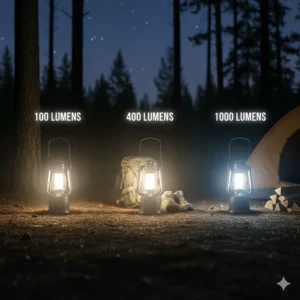
That’s where a quality LED lantern for camping becomes your overnight best friend. Unlike traditional gas lanterns that require mantles and fuel, or those ancient battery-powered lights that barely illuminate your hand in front of your face, modern LED camping lanterns have revolutionized outdoor lighting. They’re brighter, last longer, and won’t wake up the entire campground when you need a midnight snack.
I’ve spent countless nights under the stars testing various camping lights, and trust me—not all lanterns are created equal. Some promise 1000 lumens but deliver the luminosity of a firefly, while others are so heavy you’ll question whether you packed a lantern or a dumbbell. After researching and analyzing the latest models available in 2026, I’ve compiled this comprehensive guide to help you find the perfect LED lantern for camping that matches your outdoor adventures. Whether you’re car camping with the family, backpacking through wilderness trails, or preparing for emergency power outages, the right lantern makes all the difference between a memorable trip and a frustrating experience.
Quick Comparison Table: Top LED Lanterns at a Glance
| Product | Lumens | Battery Life | Weight | Price Range | Best For |
|---|---|---|---|---|---|
| Glocusent 106 LED Camping Lights | 1200 | 80 hrs | 8.5 oz | $30-$40 | Maximum brightness |
| ZMNT LED Camping Lantern | 1000 | 300 hrs | 14 oz | $25-$35 | Extended runtime |
| JOYEKY LED Lantern | 1000 | Varies | 10.4 oz | $28-$38 | Hand-crank backup |
| LE 1000LM LED Camping Lantern | 1000 | 10-14 hrs | 1.2 lbs | $30-$35 | Budget brightness |
| XTAUTO Collapsible LED Lantern | Adjustable | 25+ hrs | Lightweight | $35-$45 (4-pack) | Value pack |
| Vont 2 Pack LED Camping Lantern | 140 | 90 hrs | Ultralight | $15-$25 | Ultralight camping |
| LETMY 4 Pack Camping Lantern | 600 | 12+ hrs | Varies | $40-$50 (4-pack) | Family camping |
💬 Just one click – help others make better buying decisions too! 😊
Top 7 LED Lantern for Camping: Expert Analysis
1. Glocusent 106 LED Camping Lights – The Brightness Champion
When you need serious illumination that rivals a small sun, the Glocusent 106 LED delivers in spectacular fashion. This powerhouse cranks out an impressive 1200 lumens, making it the brightest camping lantern in our roundup. What sets it apart is the intelligent design featuring 106 individual LEDs that provide 360-degree coverage without creating harsh shadows.
Key Specifications:
- Maximum output: 1200 lumens with SOS mode
- Battery capacity: 5000mAh rechargeable
- Runtime: Up to 80 hours on lowest setting
- Waterproof rating: IP68 (fully submersible)
- Color temperatures: 3000K, 4000K, 6000K plus SOS
The IP68 waterproof rating means you can literally drop this thing in a lake up to 1.5 meters deep for 30 minutes without damage. I’ve accidentally kicked mine into a creek during a night fishing trip, and it kept right on glowing underwater like nothing happened. The USB-C charging port makes recharging convenient, and at just 8.5 ounces, it won’t weigh down your pack.
Customer feedback consistently praises the adjustable brightness levels and the natural light quality. One reviewer mentioned using it to illuminate their entire campsite for group dinners, while another appreciated how the warm 3000K setting doesn’t attract as many insects.
Pros:
✅ Exceptional 1200-lumen maximum output
✅ Three color temperature options for different needs
✅ Fully waterproof and drop-resistant design
Cons:
❌ Higher price point than basic models
❌ Heavier than ultralight alternatives
2. ZMNT LED Camping Lantern Rechargeable – Marathon Runner
If battery anxiety keeps you up at night, the ZMNT LED Camping Lantern is your solution. This remarkable light boasts a massive 6700mAh battery that delivers up to 300 hours of runtime on the lowest brightness setting. Yes, you read that correctly—300 hours. That’s nearly 13 days of continuous light on a single charge.
Key Specifications:
- Brightness: 1000 lumens maximum
- Battery: 6700mAh lithium-ion rechargeable
- Runtime: 300 hours (low) to 8 hours (high)
- Features: 4 lighting modes, magnetic base, IPX5 water-resistant
- Weight: 14 ounces
The anti-glare frosted globe is a game-changer. Unlike cheaper lanterns that blast your retinas with harsh LED light, the ZMNT provides comfortable illumination that’s bright enough to read by without causing eye strain. The magnetic base is surprisingly useful—stick it to your car hood for nighttime repairs or attach it to any metal surface at camp.
Campers love the built-in power bank feature, which has saved more than a few smartphones from dying mid-trip. The four lighting modes (cold white, natural white, warm white, and SOS) cover virtually every camping scenario. One user reported using it throughout a week-long camping trip without recharging, still having battery left over.
Pros:
✅ Incredible 300-hour runtime capability
✅ Functions as 6700mAh power bank
✅ Comfortable anti-glare lighting
Cons:
❌ Slightly heavier than compact models
❌ Takes longer to fully recharge due to large battery
3. JOYEKY LED Lantern with Hand-Crank – The Survivor
Never worry about dead batteries again with the JOYEKY LED Lantern. This innovative rechargeable camping lantern combines a powerful 6400mAh battery with a unique hand-crank backup system. When your battery eventually dies in the backcountry, just crank the handle to generate emergency power—no batteries or wall outlet required.
Key Specifications:
- Output: 1000 lumens maximum brightness
- Battery: 6400mAh built-in rechargeable
- Charging: USB-C, hand-crank, and solar options
- Light modes: Cold white, natural white, warm white, SOS
- Dimensions: 2.79 x 2.2 x 4.87 inches
The hand-crank feature might sound gimmicky, but it’s genuinely useful during extended wilderness trips or emergency situations. A few minutes of cranking provides enough juice for several hours of light on low mode. The four distinct lighting modes handle everything from late-night reading in your tent to emergency signaling.
Customer reviews highlight the peace of mind this lantern provides. One reviewer mentioned using it during a multi-day power outage, praising how the hand-crank kept their family from sitting in complete darkness. The 1000-lumen output matches competing models that cost significantly more.
Pros:
✅ Hand-crank backup ensures you’re never without light
✅ Powerful 1000-lumen maximum output
✅ Multiple charging methods for versatility
Cons:
❌ Hand-crank requires physical effort
❌ Slightly bulkier than single-function models
4. LE 1000LM LED Camping Lantern – Budget Powerhouse
Don’t let the affordable price fool you—the LE 1000LM LED Camping Lantern punches well above its weight class. This rechargeable camping lantern delivers professional-grade 1000-lumen output at a fraction of the cost of premium models, making it perfect for budget-conscious campers who refuse to compromise on brightness.
Key Specifications:
- Brightness: 1000 lumens maximum
- Battery: 4400mAh rechargeable power bank
- Runtime: 10-14 hours depending on mode
- Modes: 4 light modes including daylight and warm white
- Waterproof: IP44 rating
The 4400mAh battery pulls double duty as a power bank, keeping your smartphone charged during multi-day trips. The four lighting modes provide flexibility—use daylight white for camp chores, warm white for cozy evening ambiance, full brightness when you need maximum visibility, and flashing mode for emergencies. The IP44 waterproof rating handles rain and splashes without issue.
Reviewers consistently praise the incredible value. Multiple users mention purchasing several units for different family members, appreciating how the affordable price makes it practical to outfit an entire group. The USB cable is included in the package, which is a nice touch many competitors skip.
Pros:
✅ Exceptional brightness-to-price ratio
✅ Built-in 4400mAh power bank function
✅ Four versatile lighting modes
Cons:
❌ Shorter battery life than premium models
❌ Basic IP44 rating (not submersible)
5. XTAUTO Collapsible Portable LED Camping Lantern (4-Pack) – Family Value Champion
When you need multiple lights for family camping or want backups for emergencies, the XTAUTO Collapsible LED Lantern 4-pack offers unbeatable value. Each lantern features a clever collapsible design that shrinks down to phone-size when not in use, while the solar and USB charging options ensure you’ll always have power.
Key Specifications:
- LED array: 6+1 high-intensity LED chips
- Battery: 1600mAh lithium-ion rechargeable (per unit)
- Charging: Dual method—solar panel and USB
- Runtime: 25+ hours when fully charged
- Design: Collapsible with adjustable brightness
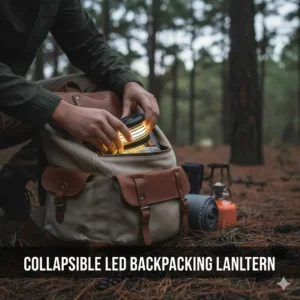
The collapsible design is brilliantly simple. Pull up the lantern to turn it on and adjust brightness—the higher you extend it, the brighter it shines. Push it down to turn off. No fumbling for switches in the dark. The folding handles make hanging these lights inside tents, on tree branches, or anywhere around camp incredibly easy.
What makes this package special is getting four quality lanterns at a price point where competitors offer just one. The solar charging panel on each unit is genuinely functional, not just a gimmick. One reviewer mentioned leaving them on their car dashboard during the day, arriving at camp with fully charged lights ready to go. The waterproof construction and durable ABS material withstand the bumps and drops inevitable with family camping.
Pros:
✅ Four lanterns provide exceptional value
✅ Solar and USB charging versatility
✅ Ultra-compact when collapsed
Cons:
❌ Lower individual lumen output than premium single units
❌ Smaller battery capacity per lantern
6. Vont 2 Pack LED Camping Lantern – Ultralight Backpacker’s Choice
For minimalist hikers and ultralight backpackers, the Vont LED Camping Lantern represents the sweet spot between weight, functionality, and reliability. This original collapsible design weighs almost nothing yet provides up to 90 hours of steady illumination from a simple set of AA batteries.
Key Specifications:
- LED count: 30 quality LEDs
- Power: 3 AA batteries per unit (included)
- Runtime: Up to 90 hours continuous
- Weight: Ultralight when collapsed
- Waterproof: Military-grade materials, survives 10-foot drops
The beauty of the Vont lies in its simplicity. There are no buttons, no complicated settings—just pull up the handles to illuminate, push down to turn off. The collapsible design means these lanterns pack down to smartphone dimensions, barely taking up space in your backpack. Despite their compact size, the 30 LEDs provide 360-degree illumination that adequately lights a small tent or camping area.
Customer reviews frequently mention the durability. The military-grade construction and lifetime warranty back up claims of serious toughness. One reviewer reported accidentally running over their Vont lantern with a car—it still worked perfectly. The AA battery power source, while not rechargeable, means you can easily replace batteries anywhere, making these lights reliable for remote backcountry trips where charging isn’t possible.
Pros:
✅ Extremely lightweight and portable
✅ Impressive 90-hour battery life
✅ Lifetime warranty and proven durability
Cons:
❌ Requires AA batteries (not rechargeable)
❌ Lower lumen output compared to rechargeable models
7. LETMY 4 Pack Camping Lantern – The Versatile All-Rounder
Rounding out our list is the LETMY 4 Pack Camping Lantern, the Swiss Army knife of camping lights. With three different power sources—solar panel, USB charging, and AA battery backup—these lanterns ensure you’ll never be stuck without light, regardless of circumstances.
Key Specifications:
- Brightness: 600 lumens per unit
- Power sources: Solar, USB rechargeable, 3 AA batteries
- LED technology: Upgraded COB (Chip-on-Board) design
- Runtime: 12+ hours continuous operation
- Construction: Water-resistant military-grade ABS
The triple power system is the standout feature. Forgot to charge before your trip? Pop in AA batteries. Batteries dead and no store nearby? Let the solar panel recharge during the day. Have access to USB power? Plug it in for the fastest charge. This flexibility makes the LETMY pack incredibly practical for various situations beyond just camping—think power outages, hurricane preparedness, and emergency kits.
The upgraded COB LED technology provides 360-degree lighting that far surpasses standard 30-LED lanterns in both brightness and coverage area. At 600 lumens each, these lights strike a nice balance—bright enough for practical use without being blinding. The collapsible, portable design makes storage and transport hassle-free.
Users particularly appreciate having four lanterns, allowing family members to each have their own light source. One reviewer mentioned equipping different tents at their campsite, while another keeps one in their car, one at home for emergencies, and two for camping trips.
Pros:
✅ Triple power source flexibility
✅ Four lanterns for multiple uses
✅ Bright 600-lumen COB LED technology
Cons:
❌ Solar charging is slower than USB
❌ Slightly heavier when batteries are included
Understanding Lumens Output Camping: How Bright Do You Really Need?
Let’s talk about lumens, the measure that determines how much light your LED lantern for camping actually produces. It’s easy to get caught up in the “bigger is better” mentality, but choosing the right brightness level depends entirely on how you plan to use your lantern.
What Are Lumens?
Lumens measure the total amount of visible light emitted by a source in all directions. Think of it this way: a standard 60-watt incandescent bulb produces about 800 lumens, while a 100-watt bulb generates around 1600 lumens. For camping purposes, you’ll typically encounter lanterns ranging from 75 lumens on the low end to 1200+ lumens for the brightest models.
Brightness Levels Explained
75-200 Lumens (Low Output) Perfect for intimate settings like reading inside your tent, playing cards, or creating ambient lighting. These lower-output lanterns won’t disturb neighboring campers and consume less battery power, extending runtime significantly. According to outdoor recreation safety guidelines from the U.S. Forest Service, having reliable illumination at night is essential for campsite safety, but excessive brightness can actually be counterproductive.
300-600 Lumens (Medium Output) The sweet spot for most camping activities. This brightness level adequately illuminates cooking areas, provides enough light for camp setup and takedown, and creates a comfortable atmosphere for evening socializing. Most campers find this range sufficient for general use.
700-1000+ Lumens (High Output) Reserved for situations requiring maximum visibility—searching for dropped items, emergency signaling, lighting large group camping areas, or power outage situations at home. The brightest camping lantern options in this category can illuminate entire campsites, but they drain batteries much faster.
Adjustability Matters More Than Maximum Output
Here’s a pro tip many first-time buyers miss: having adjustable brightness matters more than sheer maximum lumens. A lantern that only operates at 1000 lumens becomes annoying quickly—it’s too bright for most tasks, drains battery unnecessarily, and attracts every flying insect within a half-mile radius. Look for models offering multiple brightness settings so you can dial in exactly what you need.
Modern rechargeable camping lantern models typically include 3-5 brightness levels plus special modes like SOS flashing for emergencies. This versatility ensures you’re using only the power necessary for your current activity, maximizing battery life while maintaining functionality.
Color Temperature Considerations
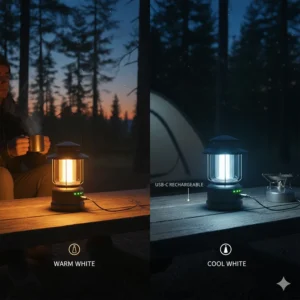
Beyond brightness, consider color temperature measured in Kelvin (K). Warm white light (2700-3000K) creates a cozy ambiance and attracts fewer insects, making it ideal for evening relaxation. Cool white or daylight (5000-6500K) provides better color accuracy and visibility for tasks like cooking or reading maps. The best LED lanterns offer multiple color temperature options, letting you choose based on your needs.
Battery Life Lantern: Powering Your Adventures
Nothing ruins a camping trip faster than dying lights. Understanding battery technology and runtime helps you choose a LED lantern for camping that keeps shining when you need it most.
Rechargeable vs. Disposable: The Great Debate
Rechargeable Lithium-Ion Batteries Modern rechargeable camping lantern options use lithium-ion technology similar to smartphones. These batteries offer several advantages: no need to constantly buy replacements, higher energy density (more power in less space), and consistent output until nearly depleted. Most rechargeable models include USB charging, making them convenient to top off from portable power banks, solar panels, or car chargers.
The downside? If you’re deep in the wilderness without charging capability and your battery dies, you’re stuck. However, the latest models offer such extended runtime that this rarely becomes an issue. The ZMNT lantern, for example, provides 300 hours on low—that’s over 12 days of continuous use.
Disposable AA/D Batteries Traditional battery-powered lanterns offer one major advantage: replaceability. Run out of power? Swap in fresh batteries and you’re back in business. This makes them popular for remote expeditions where charging isn’t possible. The Vont lantern exemplifies this approach, offering 90 hours from three AA batteries.
However, carrying spare batteries adds weight, and constantly buying replacements gets expensive and creates waste. Quality disposable batteries also deliver inconsistent output, dimming gradually as they drain.
Hybrid Systems: Best of Both Worlds Smart campers often carry both types. Use rechargeable models as your primary lights, keeping a battery-powered backup for emergencies. The LETMY 4-pack brilliantly addresses this by offering solar, USB, and AA battery options in the same unit.
Runtime Reality Check
Manufacturers advertise impressive runtime numbers, but read the fine print. That “300-hour runtime” typically refers to the lowest brightness setting—which might barely illuminate your immediate surroundings. At maximum brightness, the same lantern might last only 8-10 hours.
Consider your typical usage patterns. Most campers don’t run lanterns continuously; you’ll use them for a few hours each evening. A 20-hour runtime on medium brightness translates to several nights of normal use. For weekend trips, almost any quality lantern suffices. Multi-day backcountry expeditions require serious battery capacity or solar charging capability.
Power Bank Functionality: Double Duty
Many modern LED camping lanterns double as power banks, letting you charge phones and other USB devices. While convenient, remember that using your lantern to charge devices significantly reduces its runtime as a light source. The 6700mAh battery in the ZMNT lantern can charge a typical smartphone 1-2 times, but doing so cuts available lighting time proportionally.
For extended trips, bring dedicated power banks alongside your lantern rather than relying on it for both purposes. According to camping safety recommendations from the National Park Service, maintaining reliable illumination should always take priority over device charging in the backcountry.
Solar Charging: Sustainable but Slow
Solar panels on lanterns sound perfect for extended trips, but set realistic expectations. Most built-in solar panels require 8-12 hours of direct sunlight for full charging—and that’s in optimal conditions. Cloudy days or partial shade dramatically slow charging. Solar works great for maintaining charge during long trips where you have consistent sun exposure, but it shouldn’t be your only charging option.
Waterproof and Weather Resistance: Staying Bright in Any Conditions
Mother Nature doesn’t care about your camping plans. Rain, humidity, accidental drops into streams—your LED lantern for camping needs to handle whatever gets thrown at it.
Understanding IP Ratings
The IP (Ingress Protection) rating system tells you exactly how well a device resists water and dust. The rating consists of two numbers: the first indicates dust protection (0-6), the second indicates water protection (0-9).
Common Ratings for Camping Lanterns:
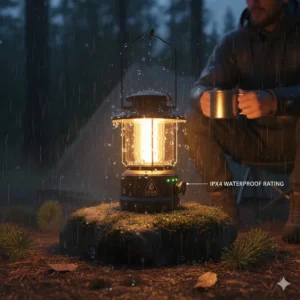
IPX4 (Water Resistant) Protected against splashing water from any direction. Your lantern will survive rain and accidental spills but shouldn’t be submerged. This basic protection suits fair-weather camping where you primarily need rain resistance.
IPX5 (Water Resistant) Protection against water jets. These lanterns can handle heavy rain, being rinsed under a faucet, or brief submersion. The ZMNT lantern’s IPX5 rating makes it suitable for most outdoor conditions short of dropping it in a lake.
IP65 (Dust Tight, Water Jet Protection) Completely dust-tight and protected against water jets. This excellent all-around rating handles dusty desert camping, sandy beaches, and heavy storms with ease.
IP68 (Fully Waterproof) The gold standard for outdoor gear. IP68-rated lanterns like the Glocusent model can be fully submerged in water (typically up to 1.5 meters) for extended periods without damage. If you’re kayak camping, fishing, or simply want maximum protection, this rating provides peace of mind.
Practical Weatherproofing Features
Beyond official ratings, construction quality matters. Look for:
- Sealed ports: USB charging ports should have rubber covers that seal completely when not in use
- Gasket seals: Quality lanterns use rubber gaskets around battery compartments and lens assemblies
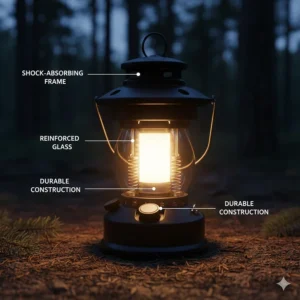
- Durable materials: Military-grade plastics and rubberized exteriors resist impact and weather better than basic molded plastics
Impact Resistance Matters Too
According to outdoor safety guidelines from Recreation.gov, having reliable equipment that withstands rough handling is crucial for safe outdoor recreation. Your lantern will get knocked over, dropped, kicked, and generally abused. The Vont lantern’s ability to survive a 10-foot drop isn’t just impressive—it’s practical. Look for models advertising drop-test certifications or impact-resistant construction.
Cold Weather Performance
Battery performance drops significantly in freezing temperatures. Lithium-ion batteries lose capacity when cold, though they recover when warmed. If you’re winter camping, look for lanterns specifically rated for cold weather use, or plan to keep your lantern in your sleeping bag overnight to maintain battery temperature.
Hanging Loop Tent Light: Versatile Mounting Options
The difference between a good camping lantern and a great one often comes down to how you can position and mount it around your campsite.
Traditional Hanging Loops
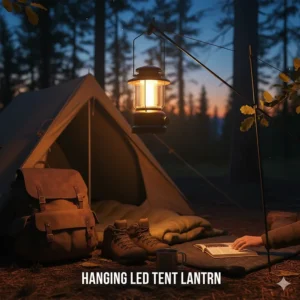
Every quality LED lantern for camping includes some form of hanging loop or handle. The simplest versions feature fold-out metal handles that let you suspend the lantern from tent loops, tree branches, or dedicated lantern stands. The Vont and XTAUTO models excel here with sturdy metallic handles that support the lantern’s weight reliably.
Pro Tips for Hanging:
- Inside tents, hang from the ceiling loop to create overhead lighting that illuminates the entire space without shadows
- From tree branches, position lanterns at head height to light pathways and sitting areas
- On picnic table umbrellas or portable canopy frames for cooking and eating areas
Magnetic Bases: The Modern Innovation
Some newer models like the ZMNT include magnetic bases that stick to any metal surface. This seems like a minor feature until you experience how useful it is. Attach your lantern to:
- Vehicle hoods for nighttime mechanical work
- RV exteriors for hands-free lighting
- Metal tent poles or camp chairs with metal frames
- Tool boxes and camping equipment
The magnetic feature transforms your lantern from a stationary light source into a versatile tool that goes wherever you need illumination.
Carabiner Compatibility
Look for lanterns with sturdy loops or built-in carabiner clips. These allow you to quickly attach lights to backpack straps, belt loops, or camping gear without fumbling with handles. This matters most when you need hands-free lighting while hiking to the restroom at night or setting up camp in fading daylight.
Multi-Directional Lighting
Some advanced models offer adjustable light panels or multiple LED arrays that let you direct light where needed. While not common in basic camping lanterns, this feature appears in premium models and proves valuable for task lighting versus ambient illumination.
Tripod Mounts
A few lanterns include standard camera tripod mounts (1/4-20 threading) on the base. While not essential for most campers, photographers and serious outdoor enthusiasts appreciate being able to mount their lantern on a tripod for precise positioning and stable overhead lighting.
Brightness Settings and Special Modes: Customize Your Light
Modern LED lanterns offer far more than simple on/off functionality. Understanding available lighting modes helps you choose a lantern that fits your specific needs.
Standard Brightness Levels
Most quality lanterns provide 3-5 brightness levels, typically controlled by a button that cycles through options:
Low (10-25% brightness) Perfect for overnight tent lighting when you wake up and need to find something without blinding your camping partner. Uses minimal battery, extending runtime dramatically. Many campers leave their lantern on low all night for safety and convenience.
Medium (40-60% brightness) The everyday workhorse setting for reading, playing games, eating dinner, and general campsite activities. Bright enough for practical use while conserving battery compared to maximum output.
High (100% brightness) Reserved for specific tasks requiring maximum visibility—cooking in total darkness, searching for lost items, setting up camp after sunset, or emergency situations. Most campers rarely use maximum brightness for extended periods.
Color Temperature Options
Advanced models like the Glocusent and ZMNT offer multiple color temperatures:
Warm White (2700-3000K) Creates cozy, relaxing ambiance similar to traditional incandescent bulbs. Bonus: warm light attracts significantly fewer flying insects than cool white, making evening hours more pleasant. Choose this for dining, socializing, and winding down before bed.
Natural White (4000-4500K) Balanced lighting that’s comfortable for eyes while providing good color accuracy. Ideal for camp chores, cooking, and general activities where you need to see clearly without harsh glare.
Cool White/Daylight (5000-6500K) Crisp, bright illumination excellent for task lighting, reading detailed maps, or any activity requiring accurate color perception. Great for morning routines and packing up camp, though it can feel harsh in evening settings.
SOS and Emergency Modes
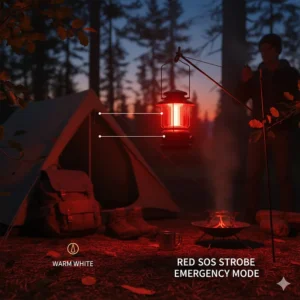
Nearly every modern lantern includes an SOS flashing mode. While you hopefully never need it, this feature can be lifesaving in emergencies. The internationally recognized SOS pattern (three short, three long, three short flashes) signals distress and helps rescuers locate you.
Some models include additional strobe or flashing modes useful for:
- Marking your campsite location when returning after dark
- Making yourself visible to passing vehicles on roadside emergencies
- Deterring wildlife with unexpected light patterns
Red Light Mode
A few specialized camping lanterns include red light settings. Red light preserves night vision—crucial for stargazing, astronomy enthusiasts, and anyone who needs to see their surroundings while maintaining dark-adapted eyes. It’s also less disruptive when you need light but don’t want to wake sleeping camping companions.
Dimming Control
Rather than fixed brightness levels, premium models offer continuous dimming via hold-to-adjust buttons or touch controls. This lets you fine-tune brightness to exactly what you need rather than settling for pre-set levels. The ZMNT lantern exemplifies this feature with smooth brightness control via long-press buttons.
LED Technology: Why LEDs Changed Everything
Understanding why LEDs revolutionized camping lights helps appreciate what you’re buying and why modern lanterns far exceed their predecessors.
Energy Efficiency That Actually Matters
LEDs convert electricity to light dramatically more efficiently than older technologies. While traditional incandescent bulbs waste 90% of their energy as heat, LEDs convert 80-90% directly to light. For camping, this efficiency translates to:
Longer Battery Life The same battery capacity that powered an old flashlight for 2-3 hours now runs an LED lantern for 20-30 hours or more. This efficiency explains how the ZMNT achieves 300-hour runtime—it’s not magic, it’s superior technology.
Cooler Operation LEDs generate minimal heat, making them safe to use inside tents and touch even after hours of operation. You’ll never burn yourself on a modern LED camping lantern, unlike old-school gas lanterns that got dangerously hot.
Compact Size Because LEDs don’t require large reflectors, mantles, or heat dissipation systems, manufacturers can design incredibly compact lanterns without sacrificing brightness. The collapsible designs from Vont and XTAUTO simply wouldn’t be possible with older bulb technology.
Durability and Lifespan
LEDs are solid-state devices with no fragile filaments to break. According to information from Wikipedia, quality LEDs last 25,000-50,000 hours before dimming significantly—that’s decades of camping use. Drop-test a traditional incandescent lantern and you’ll probably shatter the bulb. Drop an LED lantern like the military-grade Vont model, and it keeps right on shining.
This durability extends to vibration resistance, impact tolerance, and temperature extremes. Your LED lantern survives bouncing around in your car trunk, getting kicked across the campsite, and being stored in freezing garages without performance degradation.
Instant On, No Warm-Up
Remember fluorescent lights that took minutes to reach full brightness? LEDs illuminate instantly at full power the moment you switch them on. In camping situations where you wake up to investigate a noise or need immediate light, this instant response provides both convenience and safety.
COB Technology: The Latest Evolution
Newer lanterns like the LETMY feature COB (Chip-on-Board) LED technology, where multiple LED chips are packaged directly onto a circuit board. This creates more uniform, diffused light without the distinct point-source appearance of individual LEDs. The result is more pleasant, shadow-free illumination that’s easier on the eyes during extended use.
Environmental Considerations
LEDs contain no mercury or other toxic materials found in fluorescent lights. They’re also fully recyclable and energy-efficient, making them the environmentally responsible choice for conscious campers.
Power Options Compared: Which Charging Method Suits Your Style?
Choosing the right power source for your LED lantern for camping depends on your camping style, trip duration, and access to resources.
USB Rechargeable: The Modern Standard
Best For: Weekend campers, car camping, anyone with access to vehicle power or portable battery banks
USB rechargeable lanterns dominate the modern market for good reason. They’re convenient, environmentally friendly, and integrate seamlessly with the charging ecosystem most people already carry. The ZMNT, JOYEKY, and LE models all feature USB charging (many now include USB-C for faster charging).
Advantages:
- No ongoing battery purchase costs
- Consistent brightness until battery depletion
- Can be recharged from multiple sources (wall adapters, car chargers, power banks, solar generators)
- Lightweight without spare batteries
Limitations:
- Requires access to charging capability
- Limited runtime in true backcountry settings
- If battery dies with no charging option, you’re out of light
Runtime Tip: Bring a portable power bank with at least 10,000mAh capacity. This provides enough juice to fully recharge most camping lanterns 1-2 times, effectively doubling or tripling your total available lighting hours.
Solar Charging: Sustainable but Slow
Best For: Extended trips, sunny climates, environmentally conscious campers, emergency preparedness
Solar panels integrated into lanterns like the XTAUTO and LETMY models offer self-sufficiency that appeals to many outdoor enthusiasts. Leave your lantern in direct sunlight during the day, and it recharges for free using renewable energy.
Advantages:
- Unlimited “fuel” in sunny conditions
- Perfect for extended wilderness trips
- No need to carry charging cables or spare batteries
- Environmentally friendly operation
Limitations:
- Requires 8-12 hours of direct sunlight for full charge
- Virtually useless on cloudy days or in dense forest camps
- Solar panels add weight and bulk
- Slower charging than USB
Reality Check: Solar works best as a supplementary charging method rather than your primary power source. Use it to maintain charge during long trips, but don’t rely on it exclusively.
Battery-Powered: Traditional Reliability
Best For: Remote expeditions, backup lighting, situations where weight allows carrying spares
Lanterns powered by AA or D batteries like the Vont model offer old-school reliability. When batteries die, pop in fresh ones and you’re immediately back in business—no waiting for recharging.
Advantages:
- Instant “recharge” by swapping batteries
- Batteries available globally
- No charging infrastructure needed
- Predictable performance
Limitations:
- Ongoing cost of replacement batteries
- Environmental waste from disposables
- Added weight carrying spare batteries
- Performance degrades as batteries drain
Pro Tip: If choosing battery-powered lanterns, invest in quality lithium AA batteries rather than cheap alkalines. Lithium batteries last 3-4 times longer, perform better in cold weather, and weigh significantly less—worth the extra cost for serious camping.
Hybrid Systems: Ultimate Flexibility
Best For: Campers wanting maximum flexibility, emergency preparedness, variable trip lengths
Models like the LETMY that offer solar, USB, and battery options provide the best of all worlds. Start with USB charging for convenience, use solar for extended trips, fall back on AA batteries if everything else fails.
This redundancy proves invaluable during unexpected situations—longer stays due to weather, forgotten charging cables, or equipment failures. The added cost and slight weight penalty buy significant peace of mind.
Hand-Crank Emergency Power
Best For: Emergency kits, extreme situations, preparedness-minded campers
The JOYEKY’s hand-crank feature seems like a gimmick until you actually need it. A few minutes of cranking generates enough power for hours of emergency lighting. While you wouldn’t want to rely on this as your primary charging method (your arm would get tired), it’s a genuine lifesaver in true emergency situations.
Portability and Weight: Choosing Based on Your Camping Style
Not all camping trips are created equal, and neither are the lanterns designed for them.
Ultralight Backpacking (<5 oz)
When every ounce counts and you’re carrying everything on your back for miles, ultralight models like the Vont collapsed lantern shine. These featherweight options sacrifice battery capacity and brightness for portability.
What to Look For:
- Collapsible designs that pack down small
- Weight under 5 ounces
- Multi-function capability (fewer items to carry)
- Sufficient brightness for basic needs (75-200 lumens)
Trade-Offs:
- Shorter runtime compared to heavier models
- Lower maximum brightness
- Often limited to battery power (rechargeable batteries add weight)
- Less durability than heavy-duty models
Backpacker Strategy: Many serious backpackers now ditch traditional lanterns entirely in favor of lightweight headlamps. However, a small collapsible lantern provides nice ambient tent lighting and serves well for cooking areas, making it worth the few ounces for many hikers.
Car Camping and Family Trips (Weight Less Critical)
When you’re parking 50 feet from your campsite, weight restrictions disappear. This freedom lets you bring powerhouse lanterns like the Glocusent or ZMNT that prioritize performance over portability.
What to Look For:
- Maximum brightness (600-1200+ lumens)
- Long battery life for multi-day trips
- Power bank functionality
- Comfortable handles for repositioning
- Durability for family use
Bonus Features Worth the Weight:
- Multiple color temperatures
- Magnetic mounting options
- Adjustable brightness levels
- Premium waterproofing
Multi-Lantern Approach: Car camping allows bringing multiple lights. Consider one high-output primary lantern for the main gathering area, plus smaller lights for individual tents. The LETMY or XTAUTO 4-packs perfectly suit this approach.
Kayak and Canoe Camping (Waterproofing Priority)
Paddling trips demand completely waterproof gear that floats or at least survives submersion. The Glocusent’s IP68 rating makes it ideal, as does anything with verified submersion protection.
Critical Features:
- IP67 or IP68 waterproof rating
- Buoyant or bright colors for visibility if dropped
- Secure hanging loops
- Impact resistance
- Compact storage for limited dry bag space
Safety Note: Even “waterproof” lanterns should be stored in dry bags when on the water. Murphy’s Law states that the one time you don’t secure your gear is when you’ll capsize.
Motorcycle and Bike Camping (Compact and Durable)
Limited packing space and constant vibration make motorcycle camping uniquely challenging for gear. Compact, durable lanterns with shock resistance prove essential.
Ideal Characteristics:
- Small collapsed size
- No fragile components
- Shock and vibration resistant
- Lightweight but rugged construction
- Rechargeable to avoid carrying spare batteries
The collapsible designs from XTAUTO and similar models work well here, packing down to nearly nothing while surviving the constant jarring of motorcycle travel.
Emergency Home Use (Performance Over Portability)
For power outage preparedness, performance matters far more than weight or size. Go big with maximum-brightness models featuring long runtime.
Home Emergency Priorities:
- Very high lumen output (1000+)
- Extended runtime (200+ hours low mode)
- Power bank capability
- Multiple brightness levels
- Family-friendly operation
The ZMNT’s 300-hour runtime and 1000-lumen output make it perfect for keeping at home as emergency backup. Its power bank feature keeps phones charged during extended outages—crucial for receiving emergency information and staying connected.
How to Choose the Right LED Lantern for Camping
Selecting the perfect LED lantern for camping requires matching features to your specific needs. Follow these practical steps:
Step 1: Determine Your Primary Use Case
Ask yourself where and how you’ll use the lantern most. Weekend car camping requires different features than week-long backpacking trips. Power outage backup needs different capabilities than motorcycle touring. Be honest about your typical camping style rather than planning for theoretical situations that rarely happen.
Step 2: Set Your Budget Realistically
Quality LED lanterns range from $15 budget options to $60+ premium models. More expensive doesn’t always mean better for your needs. The affordable LE lantern performs admirably for most campers, while specialized users might justify the Glocusent’s premium price. Determine what you’re willing to spend, then maximize value within that range.
Step 3: Prioritize Your Essential Features
You can’t have everything in one lantern, so prioritize based on your Step 1 assessment:
- Brightness: How many lumens do you actually need for your activities?
- Runtime: How long between charging opportunities?
- Weight: Are you carrying it on your back or in a vehicle?
- Waterproofing: Basic splash resistance or full submersion protection?
- Power source: Rechargeable convenience or battery-powered reliability?
Step 4: Consider Secondary Features
After establishing must-haves, evaluate nice-to-have features:
- Multiple brightness levels and color temperatures
- Magnetic mounting or specialized hanging options
- Power bank functionality
- Solar charging capability
- Impact resistance ratings
- Warranty and customer support
Step 5: Read Real User Reviews
Manufacturer specifications tell one story; actual user experiences reveal the truth. Look for reviews mentioning:
- Real-world runtime (often differs from advertised)
- Durability over time and rough use
- Customer service experiences
- Comparison to similar products
- Problems that emerge after extended use
Step 6: Calculate Total Cost of Ownership
A $20 battery-powered lantern seems cheap initially, but factor in the cost of constantly replacing batteries over several years. That $35 rechargeable model might actually cost less long-term while performing better and reducing waste.
Step 7: Plan for Redundancy
According to camping safety recommendations, reliable lighting is essential for outdoor safety. Don’t rely on a single light source. Bring a backup headlamp or small secondary lantern. The multi-pack options from LETMY and XTAUTO provide built-in redundancy.
LED Lantern Review: Common Pitfalls to Avoid
Learn from others’ mistakes when shopping for a brightest camping lantern:
Chasing Maximum Lumens Unnecessarily
Many buyers obsess over maximum lumen output, purchasing the brightest lantern available without considering whether they’ll actually use that capability. A 1200-lumen lantern at full brightness is overkill for most camping situations, drains battery rapidly, and attracts insects like a bug zapper.
Better Approach: Focus on adjustability and medium-brightness performance. A lantern with excellent 300-lumen output and long runtime serves most campers better than one with 1200 lumens that dies in three hours.
Ignoring Beam Pattern and Light Quality
Lumens measure total light output, but don’t indicate beam pattern or quality. Some cheap lanterns blast harsh, uneven light with dark spots and glare. Others provide pleasant, diffused illumination at the same lumen rating.
What to Check: Look for descriptions mentioning “360-degree coverage,” “diffused lens,” “anti-glare,” or “frosted globe.” The ZMNT’s frosted globe creates comfortable lighting that harsh LEDs lack.
Overlooking Battery Replacement/Charging Requirements
Rechargeable lanterns sound convenient until you realize you forgot your charging cable or there’s no power source at your campsite. Battery-powered models seem reliable until you run out of spares in the backcountry.
Smart Solution: Match your power source to your camping style. Better yet, choose hybrid models offering multiple power options.
Buying Based on Price Alone
The cheapest lantern saves money until it breaks on your first trip or provides such poor performance you immediately buy a replacement. Conversely, the most expensive option often includes features you’ll never use.
Value Sweet Spot: Mid-range models from established brands typically offer the best balance. The LE and XTAUTO lanterns exemplify excellent value—affordable without cutting critical corners on quality.
Failing to Consider Durability
A lantern that works perfectly in your living room but shatters when dropped three feet won’t survive actual camping conditions. Look for impact ratings, drop test certifications, and military-grade construction claims backed by warranty coverage.
Durability Indicators:
- Rubberized exteriors and corners
- Reinforced lens assemblies
- Metal rather than plastic handles
- Manufacturer drop-test ratings
- Extended warranty coverage
Not Accounting for Cold Weather Performance
Lithium-ion batteries lose significant capacity in freezing temperatures. If you camp in cold conditions, battery runtime drops 30-50% compared to manufacturer specifications based on room temperature testing.
Cold Weather Solutions:
- Look for lanterns rated for low-temperature use
- Keep lanterns in your sleeping bag overnight
- Consider battery-powered models with lithium batteries (better cold performance)
- Plan for shorter runtime and bring backup lighting
Skimping on Waterproofing
“Water resistant” sounds good enough until your lantern dies after one rainstorm. The difference between IPX4 and IP68 ratings matters dramatically in real-world conditions.
Waterproof Reality Check: If there’s any chance your lantern encounters serious moisture—heavy rain, kayaking, humid conditions, accidental submersion—invest in genuine waterproof ratings (IP67 or IP68), not basic water resistance.
Maintenance and Care: Extending Your Lantern’s Lifespan
Proper care ensures your LED lantern for camping performs reliably for years.
Battery Care for Rechargeable Models
Lithium-ion batteries degrade over time, but proper maintenance significantly extends lifespan:
Storage Guidelines:
- Store lanterns at 40-60% charge for long-term storage
- Avoid leaving batteries completely drained for extended periods
- Recharge every 3-4 months during storage to prevent deep discharge
- Keep in cool, dry locations (heat accelerates battery aging)
Charging Best Practices:
- Use manufacturer-provided or quality replacement cables
- Avoid cheap, off-brand chargers that may damage batteries
- Don’t leave lanterns on chargers indefinitely after full charge
- Charge before trips rather than leaving them plugged in constantly
Performance Maintenance:
- Perform full discharge/recharge cycles every 3-4 months to calibrate battery management
- Replace batteries after 2-3 years or when runtime drops noticeably
- Some manufacturers offer battery replacement programs
Cleaning and Maintenance
After Each Trip:
- Wipe down exterior with slightly damp cloth to remove dirt and debris
- Check rubber seals and gaskets for damage or displacement
- Ensure USB port covers seal properly
- Verify handles and hanging loops remain secure
Lens Care:
- Clean diffuser lens or globe with soft, lint-free cloth
- Use mild soap and water for stubborn grime
- Avoid abrasive cleaners that scratch lens surfaces
- Ensure lens assemblies remain watertight after cleaning
Seasonal Maintenance:
- Inspect for cracks, loose components, or water intrusion signs
- Test all brightness modes and special functions
- Check waterproof seals with soapy water (bubbles indicate leaks)
- Verify charging functionality works properly
Storage Best Practices
Short-Term (Between Trips):
- Store in cool, dry location
- Partial charge (50-60%) if rechargeable
- Remove disposable batteries to prevent corrosion
- Keep in protective bag to prevent dust accumulation
Long-Term (Seasonal):
- Thoroughly clean and dry before storage
- Check and replace worn gaskets or seals
- Store away from temperature extremes
- Remove from storage once per season to test functionality
Troubleshooting Common Issues
Dim or Flickering Light:
- Clean battery contacts with cotton swab and rubbing alcohol
- Check for corrosion on battery terminals
- Verify charging cable functions properly
- May indicate battery nearing end of life
Won’t Turn On:
- Ensure battery has charge or replace batteries
- Check that battery compartment is properly sealed
- Inspect charging port for debris or damage
- Try resetting via power cycling (if applicable)
Water Intrusion:
- Immediately dry all components thoroughly
- Leave battery compartment open to air dry completely
- Do not attempt to power on until fully dry (24-48 hours)
- Check seals and gaskets for damage requiring replacement
Reduced Runtime:
- Normal after 500+ charge cycles for rechargeable batteries
- Consider battery replacement for older units
- Verify brightness settings (accidentally running on high drains faster)
- Check for background drain or faulty components
When to Replace vs. Repair
Most LED lanterns are designed for replacement rather than extensive repair. Consider replacing when:
- Battery replacement costs exceed 60% of new lantern price
- Physical damage compromises waterproofing
- Light output drops below 70% of original brightness
- Multiple features fail simultaneously
However, many manufacturers offer excellent warranty coverage. Contact customer service before discarding a faulty lantern—many issues qualify for free replacement or repair.
FAQ: Your LED Lantern for Camping Questions Answered
❓ What is the brightest LED lantern available for camping in 2026?
❓ How long do rechargeable camping lantern batteries typically last?
❓ Can I leave my LED camping lantern in my car during winter?
❓ What's the difference between lumens and watts in camping lanterns?
❓ Are cheap LED lanterns worth buying or should I invest in premium brands?
Conclusion: Finding Your Perfect Camping Companion
Choosing the right LED lantern for camping transforms your outdoor experiences from fumbling in darkness to comfortably illuminated adventures. Throughout this guide, we’ve explored everything from lumen specifications and battery technology to waterproof ratings and mounting options—all crucial factors in finding your ideal camping light.
The seven lanterns reviewed here represent the best options available in 2026 for different camping styles and budgets. The Glocusent 106 LED delivers unmatched brightness and IP68 waterproofing for demanding users who refuse to compromise. The ZMNT Rechargeable Lantern provides marathon runtime perfect for extended trips. The JOYEKY with hand-crank offers ultimate reliability through backup power generation. Budget-conscious campers find exceptional value in the LE 1000LM, while families appreciate the multi-pack convenience of the XTAUTO and LETMY options. Ultralight backpackers favor the minimalist Vont design that packs down to practically nothing.
Remember that the brightest camping lantern isn’t always the best choice—prioritize features matching your specific needs. Weekend car campers benefit from different capabilities than serious backpackers or emergency preparedness enthusiasts. Consider your typical usage patterns, preferred camping environments, and realistic brightness requirements before making your decision.
Quality LED lighting technology has eliminated the hassles of traditional camp lighting while providing superior performance, longer runtime, and greater reliability. Combined with proper care and maintenance, a well-chosen LED lantern serves you faithfully through countless outdoor adventures. Whether you’re roasting marshmallows with family, reading in your tent after dark, or simply navigating your campsite safely, the right lantern makes every moment easier and more enjoyable. Choose wisely, charge fully, and illuminate your next great outdoor adventure with confidence!
Recommended for You
- 7 Best Water Softener for Camper 2025
- Best Camper Water Pump 2025: 7 Top Choices for Perfect Pressure
- 7 Best Truck Camper Tie Downs for Safe Travel 2025
Disclaimer: This article contains affiliate links. If you purchase products through these links, we may earn a small commission at no additional cost to you.
✨ Found this helpful? Share it with your friends! 💬🤗
