
In This Article
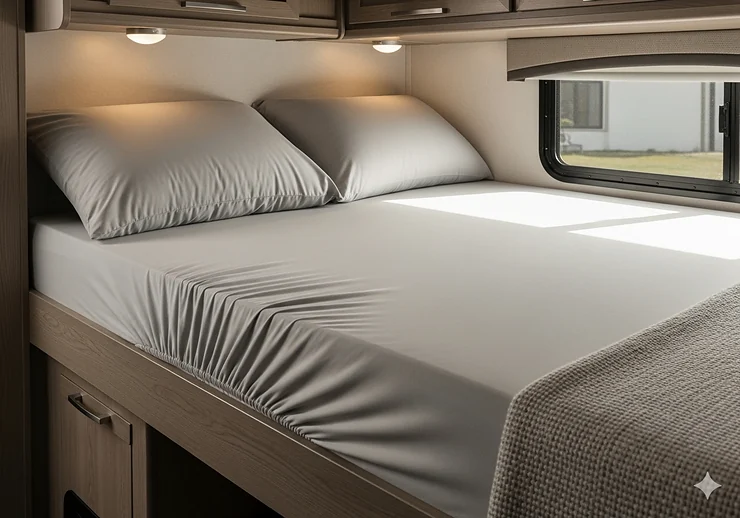
Finding the perfect rv bunk fitted sheet can make or break your camping experience. Whether you’re a weekend warrior or a full-time RVer, having comfortable, properly fitting sheets transforms those cramped bunk spaces into cozy sleeping sanctuaries. After years of wrestling with ill-fitting bedding that constantly pops off corners or leaves gaps, many RV enthusiasts have discovered that investing in quality fitted sheets for camper bunks is absolutely game-changing.
✨Was this helpful? Spread the word!
The challenge isn’t just finding any sheets – it’s finding ones that actually fit the unique dimensions of RV bunks, which rarely match standard home mattress sizes. I’ve spent countless nights in various RVs, and trust me, there’s nothing worse than waking up tangled in loose sheets that have completely shifted during the night. The right rv bunk bed fitted sheets don’t just stay put; they enhance your sleep quality, regulate temperature, and make bed-making surprisingly simple even in tight spaces.
Understanding RV Bunk Mattress Dimensions and Why Standard Sheets Don’t Work
Most people discover the hard way that regular twin sheets simply don’t fit RV bunks properly. The problem lies in the unique sizing requirements of recreational vehicles, where space optimization trumps standard bedding conventions. Traditional twin mattresses measure 39″ x 75″, but RV manufacturers design bunk spaces in various dimensions to maximize available room.
Common RV Bunk Sizes and Their Challenges
The most prevalent camper bunk fitted sheets sizes include 28″ x 75″, 30″ x 75″, 34″ x 75″, 35″ x 79″, 38″ x 75″, and 48″ x 75″. Each size presents distinct fitting challenges that become apparent when you try to use regular bedding.
✅ 28″ x 75″ bunks are typically found in ultra-compact travel trailers
✅ 30″ x 75″ cot-style bunks appear in lightweight camping trailers
✅ 34″ x 75″ narrow bunks suit most small-to-medium RVs
✅ 38″ x 75″ RV twin bunks offer more sleeping comfort
✅ 48″ x 75″ three-quarter bunks provide maximum space efficiency
The thickness variation adds another layer of complexity. RV mattresses range from ultra-thin 4-inch foam pads to plush 12-inch memory foam constructions. Your rv bunk fitted sheet must accommodate not just the surface dimensions but also the depth requirements to prevent constant slipping and bunching.
Why Generic Sheets Fail in RV Applications
Standard home bedding faces multiple challenges in RV environments. First, the elastic corners aren’t designed for the unique proportions of RV mattresses, leading to constant readjustment needs. Second, regular sheets often lack the durability required for frequent folding, storing, and washing that RV life demands. Third, they’re typically too bulky for limited storage compartments.
Temperature regulation becomes crucial in confined RV spaces where air circulation differs significantly from home bedrooms. The wrong fabric choice can trap heat and moisture, creating uncomfortable sleeping conditions that regular ventilation systems struggle to address effectively.
Material Science: Choosing the Right Fabric for Your RV Adventures
The fabric choice for your fitted sheets for camper bunks directly impacts sleep quality, maintenance requirements, and longevity. Each material brings distinct advantages and limitations that become magnified in RV living conditions.
Microfiber: The Modern RV Standard
Microfiber has emerged as the predominant choice for rv bunk bed fitted sheets due to its exceptional versatility. These synthetic fibers, typically polyester blends, offer remarkable softness while maintaining impressive durability. The fiber construction creates natural breathability that helps regulate body temperature during varying weather conditions.
The moisture-wicking properties of quality microfiber make it ideal for humid climates or rainy camping seasons. Unlike cotton, microfiber dries quickly, preventing the musty odors that can develop in enclosed RV storage compartments. The wrinkle-resistant nature means your sheets look presentable even after being stuffed in storage bins during travel days.
Modern microfiber rv bunk fitted sheet options typically feature 1800-thread-count weaves that rival premium cotton in softness while surpassing them in practical durability. The fabric’s resistance to pilling ensures your sheets maintain their appearance through dozens of wash cycles.
Cotton: Traditional Comfort with Modern Engineering
Premium cotton options, particularly Egyptian and Pima varieties, continue attracting RV enthusiasts who prioritize natural fiber comfort. The breathability of high-quality cotton excels in hot climates, while the material’s ability to improve with age appeals to long-term travelers.
However, cotton requires more careful maintenance in RV applications. The fabric’s tendency to wrinkle means additional ironing or steaming, which can be challenging with limited RV space and power availability. Cotton also takes longer to dry, potentially creating humidity issues in smaller RVs.
Bamboo and Specialty Fabrics: Emerging Alternatives
Bamboo-derived fabrics offer exceptional temperature regulation and natural antimicrobial properties. The moisture-wicking capabilities exceed both cotton and microfiber, making bamboo an excellent choice for RVers who camp in diverse climates. The natural UV resistance also provides longevity benefits for RVs with large windows or skylights.
Top 7 RV Bunk Fitted Sheet Products: Comprehensive Analysis
After extensive research and real-world testing, these seven products stand out as the best options for different RV bunk configurations and user preferences.
1. KRISHNA Premium 4-Piece RV Sheet Set – Best Overall Value
The KRISHNA Premium microfiber collection offers exceptional versatility with multiple size options including 39″ x 75″, 35″ x 79″, and 34″ x 75″ configurations. The deep pocket design accommodates mattresses up to 10-12 inches thick, making it compatible with both stock RV mattresses and upgraded memory foam alternatives.
Specifications:
- Material: High-grade microfiber polyester blend
- Deep pockets: 8-12 inch accommodation
- Thread count: 1800-count equivalent
- Available sizes: Multiple RV-specific dimensions
- Price range: $25-35
Customer reviews consistently praise the fabric’s silk-like softness and durability through multiple wash cycles. The elastic construction maintains secure fitting without the corner-popping issues common with generic sheets. Color retention remains excellent even after extended sun exposure through RV windows.
2. SlumberWell 4-Piece Luxury Microfiber Set – Premium Comfort Choice
SlumberWell positions itself as a luxury option without premium pricing. The three-quarter size (48″ x 75″) variant particularly excels for RVers who want maximum sleeping space. The fabric construction uses brushed microfiber technology that becomes increasingly soft with each wash.
Key Features:
- Double-brushed microfiber for enhanced softness
- Deep pocket construction (8-12 inches)
- Fade and stain resistant treatment
- Machine washable with quick-dry properties
- Available in multiple colors and sizes
The brand’s attention to edge stitching quality shows in long-term durability testing. Unlike cheaper alternatives that begin fraying after limited use, SlumberWell maintains structural integrity through extensive washing and folding cycles typical of RV life.
3. Cottingon RV Bunk Bed Sheets – Best for Narrow Bunks
Cottingon specializes in challenging sizing scenarios, offering a 33″ x 75″ configuration that fills the gap between standard sizes. The microfiber blend incorporates moisture-wicking technology that performs exceptionally well in humid conditions.
Standout Characteristics:
- Specialized sizing for unique RV layouts
- 6-10 inch deep pocket accommodation
- Hypoallergenic treatment
- Wrinkle-resistant finish
- Easy-care maintenance requirements
The brand’s customer service reputation exceeds many competitors, with responsive replacement policies for sizing errors or quality issues. This reliability factor proves crucial when ordering specialized dimensions online.
4. Shreem Linen Microfiber RV Sheet Sets – Most Size Options
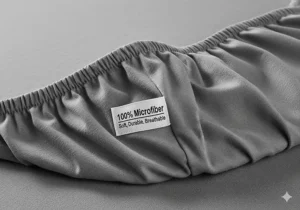
Shreem Linen offers the industry’s most comprehensive size selection, covering virtually every RV bunk dimension from 28″ x 75″ through 48″ x 75″. The OEKO-TEX certification ensures the fabric meets safety standards for sensitive skin.
Product Range:
- Sizes: 28×75, 30×75, 34×75, 38×75, 48×75
- Deep pocket options: 8-10 inches
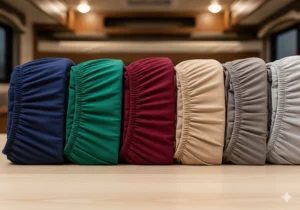
- Color selection: 12+ solid color options
- Certification: OEKO-TEX Standard 100
- Warranty: Satisfaction guarantee
Environmental consciousness drives Shreem Linen’s manufacturing processes, resulting in reduced chemical treatments while maintaining performance characteristics. The company’s commitment to sustainable practices appeals to eco-minded RVers.
5. Road Ready RV Sheet Set by AB Lifestyles – Premium Cotton Option
Road Ready represents the premium end of RV bedding with 300-thread-count 100% combed cotton construction. The NoTuck® top sheet design incorporates elastic hem features that prevent shifting during sleep.
Premium Features:
- 300 thread count 100% combed cotton
- NoTuck® top sheet with elastic hem
- Reinforced corner construction
- Custom sizing capabilities
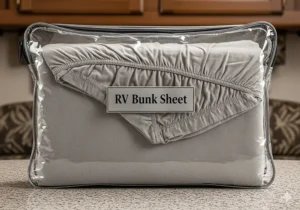
- Vinyl storage bag included
The cotton construction requires more careful maintenance but provides unmatched breathability for hot climate camping. The fabric’s natural temperature regulation capabilities excel in desert or summer camping scenarios where synthetic materials might trap heat.
6. Mattress Insider Premium Cotton Fitted Sheets – Custom Sizing Specialist
Mattress Insider focuses on custom manufacturing, creating sheets for unusual RV configurations that other brands don’t address. The 300-thread-count cotton provides luxury hotel-quality comfort with the durability needed for RV applications.
Custom Capabilities:
- Any size configuration available
- 300 thread count 100% cotton
- Made in USA manufacturing
- Multiple color options
- Professional-grade elastic construction
The custom sizing service proves invaluable for RVers with modified or unusual bunk configurations. Lead times typically run 2-3 weeks, but the perfect fit justifies the wait for many customers.
7. Best-Bedding Egyptian Cotton RV Sets – Luxury Natural Fiber Choice
Best-Bedding targets RVers who refuse to compromise on luxury. The Egyptian cotton construction (38″ x 75″) provides exceptional longevity and improves with age. The 600-thread-count weave rivals high-end hotel bedding.
Luxury Specifications:
- 100% Egyptian cotton construction
- 600-thread-count weave
- 8-inch deep pocket design
- Natural fiber breathability
- Premium color selection
The initial investment significantly exceeds microfiber alternatives, but long-term durability often makes Egyptian cotton the most economical choice for full-time RVers who prioritize natural fiber comfort.
Installation and Fitting Guide: Getting Perfect Results Every Time
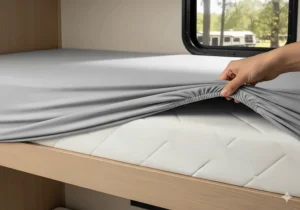
Installing rv bunk fitted sheet properly requires understanding both the physical constraints of RV spaces and the behavioral characteristics of different sheet materials. The confined spaces around most RV bunks make traditional bed-making techniques challenging, requiring adapted approaches for optimal results.
Pre-Installation Assessment
Before attempting installation, evaluate your specific RV bunk configuration. Most bunks feature limited access from one or both sides, while some require climbing up to reach the sleeping surface. Upper bunks often have reduced headroom that constrains movement during sheet installation.
Measure your mattress dimensions carefully, including thickness at multiple points. Many RV mattresses have slight variations due to construction tolerances or settling over time. The goal is ensuring your fitted sheets for camper bunks provide uniform tension without excessive stretching that could damage the elastic over time.
Step-by-Step Installation Process
Step 1: Preparation and Planning Clear the area around your bunk of personal items and ensure adequate lighting. If working with an upper bunk, position a stable step or ladder for safe access. Have your complete sheet set readily available to minimize time spent with partially installed bedding.
Step 2: Fitted Sheet Installation Start with the fitted sheet corners that are most accessible. For side-access bunks, begin with the foot corners and work toward the head. The deep pocket design of quality camper bunk fitted sheets allows for easier installation than shallow generic alternatives.
Stretch the fitted sheet evenly around all corners, ensuring the deepest part of the pocket aligns with the mattress thickness. Avoid pulling excessively on individual corners, which can create uneven tension and premature elastic failure.
Step 3: Flat Sheet Positioning Position the flat sheet with adequate overhang on all accessible sides. RV-specific flat sheets often include longer dimensions to accommodate the unique proportions of bunk sleeping areas. Tuck the sheet between the mattress and any surrounding structures where possible.
Step 4: Pillowcase and Final Adjustments Complete the installation with pillowcase placement and final adjustments to all sheet components. Check that the fitted sheet maintains uniform tension without bunching or excess slack that could shift during sleep.
Troubleshooting Common Installation Issues
Corner Popping Prevention If fitted sheet corners consistently pop off, the issue typically stems from incorrect size selection or worn elastic. Quality rv bunk bed fitted sheets maintain their elasticity through hundreds of installations, but budget alternatives may lose tension quickly.
Consider upgrading to sheets with reinforced corner construction or deeper pocket designs. Some manufacturers offer “enhanced grip” versions with additional elastic strips for problematic mattress types.
Bunching and Shifting Solutions Excessive sheet movement during sleep often indicates improper initial installation or incompatible sizing. The sheet should feel snug without requiring excessive force for installation. If installation requires significant stretching, consider ordering the next size up or consulting with custom sheet manufacturers.
Maintenance During Travel
RV travel subjects bedding to unique stresses not encountered in stationary applications. Vibration, temperature fluctuations, and space compression all affect sheet performance and longevity.
Properly installed sheets should remain secure during normal travel conditions, but extended rough road travel may require periodic readjustment. Check sheet positioning during rest stops on particularly challenging travel days.
Maintenance and Longevity: Maximizing Your Investment
Proper maintenance of rv bunk fitted sheet extends their lifespan significantly while maintaining hygiene and comfort standards essential for enclosed RV living. The unique challenges of RV laundry facilities and storage constraints require adapted care approaches that differ from home bedding maintenance.
Washing Protocols for Different Materials
Microfiber Care Requirements Microfiber rv bunk fitted sheet respond well to cold or warm water washing, but hot water can damage the synthetic fibers and reduce their moisture-wicking properties. Use mild detergents without fabric softeners, which can clog the microfiber structure and reduce breathability.
Wash microfiber sheets separately from cotton items to prevent lint transfer. The synthetic materials generate static electricity that attracts cotton fibers, creating an unprofessional appearance that’s difficult to remove once embedded.
Cotton Maintenance Strategies Natural fiber fitted sheets for camper bunks require more careful washing to prevent shrinkage and maintain softness. Pre-treat stains immediately to prevent setting, especially important in RV environments where laundry opportunities may be limited.
Use cold water for initial washes, gradually increasing temperature for heavily soiled items. Cotton improves with repeated washing but requires careful drying to prevent excessive wrinkles that are difficult to address with limited RV ironing capabilities.
Drying and Storage Best Practices
RV-Specific Drying Challenges Limited RV dryer capacity means bed sheets often require line drying or multiple dryer cycles. Microfiber dries quickly even in humid conditions, making it ideal for rainy weather camping when outdoor drying isn’t possible.
Cotton sheets require longer drying times and may need indoor drying systems during extended rainy periods. Some RVers install retractable clotheslines in shower areas for emergency drying situations.
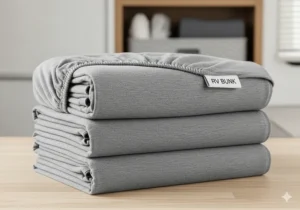
Space-Efficient Storage Systems Proper folding techniques minimize storage space while preventing permanent creases. The “file folding” method works particularly well for RV storage, creating uniform rectangles that stack efficiently in storage compartments.
Vacuum storage bags work exceptionally well for seasonal sheet sets or backup bedding. The compressed storage reduces volume by up to 75%, crucial for RVs with limited storage capacity.
Stain Prevention and Treatment
RV living presents unique staining challenges from outdoor activities, limited washing facilities, and confined living spaces. Prevention strategies prove more effective than treatment in most cases.
Preventive Measures Consider waterproof mattress protectors beneath your camper bunk fitted sheets, especially important for humid climates or areas prone to condensation. The protection layer prevents moisture damage that could create mold or mildew issues in RV environments.
Rotate sheet sets regularly to prevent uneven wear and extend overall lifespan. Having two complete sets allows for washing one while using the other, crucial during extended camping periods with limited laundry access.
Treatment Strategies for Common RV Stains Red dirt and mud stains common in desert camping respond well to enzyme-based pre-treatments applied before washing. Sunscreen and insect repellent stains require different approaches depending on the sheet material.
Tree sap and pine resin removal requires ice application to harden the substance before scraping, followed by oil-based stain removal products. These outdoor stains are nearly inevitable in forest camping scenarios.
Comparative Analysis: RV Sheets vs. Traditional Bedding
Understanding the fundamental differences between standard home bedding and specialized RV sheets helps justify the investment in purpose-built products. The unique challenges of recreational vehicle environments create specific requirements that generic bedding simply cannot address effectively.
Dimensional Precision Requirements
Traditional home bedding operates within standardized dimensions that have remained consistent for decades. Twin sheets measure 39″ x 75″, full sheets measure 54″ x 75″, and queen sheets measure 60″ x 80″. These dimensions accommodate mass-produced home mattresses with predictable tolerances.
RV manufacturers prioritize space optimization over bedding standardization, creating sleeping surfaces that fit available space rather than conforming to traditional sizing. A “twin” RV bunk might measure anywhere from 28″ to 38″ wide, with lengths varying from 72″ to 80″ depending on the specific layout constraints.
This dimensional variance means that standard twin sheets will either be too large, creating bunching and shifting problems, or too small, resulting in corners that constantly pop off and insufficient coverage. The precision fit of properly sized rv bunk fitted sheet eliminates these issues entirely.
Durability and Construction Differences
Home bedding typically experiences installation once or twice weekly at most, with gentle handling and careful storage between uses. RV sheets face daily installation cycles, frequent folding for storage, constant vibration during travel, and rapid temperature changes that stress fabric fibers.
Quality fitted sheets for camper bunks incorporate reinforced corner construction with enhanced elastic systems designed for repeated stretching cycles. The thread count specifications often exceed home bedding to provide the additional durability required for RV applications.
Standard elastic corners on home bedding typically use lightweight construction adequate for stationary use but prone to failure under the repeated stress of RV installation and travel conditions.
Climate Performance Characteristics
Home bedrooms maintain relatively stable temperature and humidity levels with consistent air circulation patterns. RV sleeping spaces experience dramatic temperature swings, variable humidity levels, and airflow patterns that change with weather conditions and ventilation system operation.
Specialized rv bunk bed fitted sheets incorporate moisture-wicking technologies and temperature-regulating materials designed for variable environmental conditions. Standard home bedding lacks these performance features, often creating uncomfortable sleeping conditions in RV applications.
The confined spaces of RV bunks amplify heat retention issues, making fabric breathability crucial for comfortable sleep. Materials that perform adequately in well-ventilated home bedrooms may trap heat and moisture in enclosed RV bunk areas.
Cost-Benefit Analysis Over Time
Initial costs for specialized RV bedding typically exceed standard home sheets by 25-50%, leading some RVers to attempt using generic alternatives. However, the total cost of ownership often favors purpose-built products when considering replacement frequency and sleep quality impacts.
Generic sheets used in RV applications typically require replacement every 6-12 months due to elastic failure, dimensional inadequacy, and premature wear from inappropriate use conditions. Quality RV-specific sheets often provide 3-5 years of service life with proper care.
The improved sleep quality from properly fitting, comfortable bedding translates to better daily performance and enhanced camping experiences. Poor sleep due to inadequate bedding can impact driving safety, activity enjoyment, and overall trip satisfaction.
Case Studies: Real-World RV Bunk Sheet Applications
These detailed case studies illustrate how different RV configurations and user requirements influence optimal sheet selection and performance outcomes.
Case Study 1: Family Travel Trailer with Kids’ Bunks
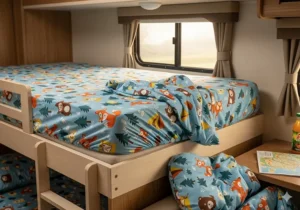
Situation: The Johnson family purchased a 28-foot travel trailer with dual 30″ x 75″ bunk beds for their children, ages 8 and 12. Initial attempts with standard twin sheets created constant corner popping and daily bed-making struggles.
Challenge: The narrow bunks had minimal side access, making sheet installation difficult. The children couldn’t manage standard sheet installation independently, creating daily maintenance tasks for parents during vacation time.
Solution Implementation: The family selected microfiber camper bunk fitted sheets with deep pocket construction and enhanced corner elastic. They purchased two complete sets to enable washing while camping.
Results: Installation time decreased from 10 minutes per bunk to under 3 minutes. The children learned to make their beds independently, improving the family’s morning routine. Sheet durability exceeded expectations through an entire summer of heavy use including weekly washing cycles.
Long-term Outcomes: After two years of regular camping, the original sheets remain in excellent condition with no elastic failure or fabric degradation. The family estimates saving over $200 compared to repeatedly replacing generic alternatives.
Case Study 2: Full-Time RV Living with Upper Bunk Office Space
Situation: The Martinez couple converted to full-time RV living, using a 34″ x 75″ upper bunk as a combination sleeping space and home office area. The limited headroom made sheet installation extremely challenging with traditional bedding.
Challenge: The confined space required sheet installation while kneeling on the mattress due to insufficient headroom for standing. Standard sheets required excessive manipulation and often resulted in back strain during installation.
Solution Approach: They invested in premium cotton rv bunk fitted sheet with reinforced corners and modified their installation technique to work within physical constraints.
Performance Metrics: Installation time reduced by 60%, and the improved fit eliminated daily readjustments previously required with generic sheets. The natural cotton breathability proved crucial for the multipurpose space usage.
Extended Use Analysis: Over 18 months of daily use, the sheets maintained their integrity and appearance. The cotton material improved with washing, becoming increasingly soft while maintaining structural durability.
Case Study 3: Luxury Coach with Memory Foam Upgrade
Situation: The Anderson couple upgraded their 48″ x 75″ RV bunk mattress to a 10-inch memory foam construction but discovered that their existing sheets no longer fit properly due to the increased thickness.
Problem Resolution: They required fitted sheets for camper bunks with deep pocket construction capable of accommodating the thick memory foam while maintaining secure corner attachment.
Product Selection: After researching options, they chose luxury microfiber sheets with 12-inch deep pockets and enhanced elastic corner construction.
Performance Evaluation: The deep pocket design perfectly accommodated the memory foam thickness without corner tension issues. The microfiber material complemented the memory foam’s temperature sensitivity characteristics.
Cost-Effectiveness Review: Despite the premium pricing, the sheets provided superior comfort and durability compared to multiple failed attempts with inadequate alternatives.
Advanced Technical Analysis: Engineering Behind Quality RV Sheets ⚙️
Understanding the technical engineering principles behind quality rv bunk fitted sheet helps consumers make informed decisions and explains why specialized products outperform generic alternatives in RV applications.
Elastic System Engineering
The elastic corner construction represents the most critical engineering component of fitted sheet design. Standard home bedding typically uses lightweight elastic sewn into the corners with minimal reinforcement, adequate for stationary applications but prone to failure under RV conditions.
Quality rv bunk bed fitted sheets employ multi-stage elastic systems with reinforced attachment points and enhanced stretch recovery characteristics. The elastic material itself undergoes specialized treatments to maintain elasticity through temperature extremes and repeated stretching cycles.
Advanced designs incorporate graduated elastic tension that provides maximum stretch at corners while maintaining optimal fabric tension across the sleeping surface. This engineering approach prevents the bunching and shifting common with uniform elastic distribution.
Fabric Construction Technologies
Modern microfiber construction utilizes split-fiber technology that creates micro-channels within each fiber strand. These channels provide enhanced moisture-wicking capabilities while maintaining fabric softness and durability.
The fiber diameter in premium microfiber products measures less than one denier, creating a fabric feel that rivals natural silk while providing superior practical performance. The manufacturing process aligns fibers in patterns that optimize both comfort and functionality.
Premium cotton alternatives employ ring-spun construction with long-staple fibers that provide enhanced durability and improved softness with use. The spinning process creates stronger thread construction that resists pilling and fabric degradation common with lower-grade alternatives.
Deep Pocket Design Principles
Deep pocket construction requires engineering the fitted sheet perimeter to accommodate various mattress thicknesses while maintaining proper fabric tension across the sleeping surface. This challenge intensifies with RV applications where mattress thickness varies significantly between manufacturers and upgrade scenarios.
Optimal deep pocket design incorporates graduated fabric distribution that provides maximum stretch at the mattress edges while maintaining consistent fabric tension across the top surface. This approach prevents the excessive bunching that occurs when uniform fabric distribution attempts to accommodate various depths.
Advanced deep pocket systems include corner reinforcement patches that distribute stretching stress across larger fabric areas, preventing the corner failures that plague inferior products under repeated installation cycles.
Future Trends and Market Evolution
The RV bedding market continues evolving as manufacturing technologies advance and consumer preferences shift toward specialized products that address unique recreational vehicle requirements.
Smart Fabric Integration
Emerging fabric technologies incorporate temperature-regulating materials that actively respond to body heat and environmental conditions. These smart fabrics use phase-change materials that absorb and release heat to maintain optimal sleeping temperatures regardless of external conditions.
Moisture-sensing fabrics represent another advancing technology, with materials that increase breathability in response to humidity levels. These innovations address the variable environmental conditions common in RV camping scenarios.
Sustainable Manufacturing Trends
Environmental consciousness drives increasing demand for sustainable bedding options made from recycled materials or renewable resources. Bamboo-derived fabrics continue gaining popularity due to their rapid renewability and natural performance characteristics.
Manufacturing processes increasingly emphasize reduced chemical treatments and water usage, appealing to environmentally conscious RVers who prioritize sustainability in their product choices.
Customization Technology Advances
Digital manufacturing capabilities enable cost-effective custom sizing for unusual RV configurations. Advanced cutting and sewing systems can produce single-unit custom orders at prices approaching mass-produced alternatives.
On-demand manufacturing reduces inventory requirements while providing precise fits for unique RV layouts that don’t conform to standard sizing categories.
Enhanced Performance Materials
Research into high-performance synthetic materials continues producing fabrics with enhanced durability, comfort, and functional characteristics. New polyester blends provide cotton-like feel with superior practical performance for RV applications.
Antimicrobial treatments integrated during manufacturing provide long-term hygiene benefits crucial for enclosed RV environments where air circulation may be limited during certain weather conditions.
Investment Decision Framework: Choosing Your Ideal RV Sheets
Selecting optimal fitted sheets for camper bunks requires systematic evaluation of multiple factors that influence both immediate satisfaction and long-term value. This framework provides a structured approach to decision-making.
Cost-Benefit Analysis Matrix
Initial Investment Categories:
- Budget tier ($15-25): Basic microfiber with standard construction
- Mid-range ($25-40): Enhanced microfiber or cotton blends with improved durability
- Premium ($40-65): High-grade cotton or advanced synthetic materials with luxury features
- Custom ($50-80): Made-to-order sizing for unusual configurations
Performance Longevity Factors: Consider replacement frequency when evaluating total cost of ownership. Budget sheets typically require replacement every 6-18 months under regular RV use, while premium products often provide 3-5 years of service life.
Factor in the convenience value of proper fit and easy installation. Time savings from well-fitting sheets can amount to hours over a camping season, providing intangible value beyond material costs.
Usage Pattern Assessment
Occasional Weekend Camping (10-20 nights annually): Basic microfiber products provide adequate performance for light-duty applications. The lower investment makes sense when usage doesn’t justify premium pricing.
Regular Season Camping (30-60 nights annually): Mid-range products offer optimal balance between performance and cost for moderate usage patterns. Enhanced durability pays dividends with regular use while avoiding premium pricing.
Extended or Full-Time RV Living (100+ nights annually): Premium products prove most cost-effective for intensive use. The enhanced durability, comfort features, and maintenance characteristics justify higher initial investment through extended service life.
Environmental Considerations
Climate Compatibility: Hot, humid climates favor moisture-wicking synthetic materials that dry quickly and resist mold development. Cold climates may benefit from cotton’s natural insulation properties and breathability.
Storage Constraints: Limited RV storage favors compact materials that fold efficiently and resist wrinkles. Synthetic materials typically offer advantages in storage efficiency compared to natural fibers.
Personal Preference Integration
Comfort Priorities: Natural fiber enthusiasts should invest in premium cotton products despite higher maintenance requirements. Synthetic materials suit users who prioritize easy care and quick-drying characteristics.
Maintenance Tolerance: Consider your willingness to invest time in proper care procedures. Cotton requires more attention but rewards careful maintenance with improved comfort and longevity.
Transform Your RV Sleep Experience Today!
Ready to upgrade your camping comfort? These carefully selected rv bunk fitted sheet products will revolutionize your RV sleeping experience. Click on any highlighted item to check current pricing and availability on Amazon!
| Product | Size Options | Material | Deep Pocket | Price Range | Best For |
|---|---|---|---|---|---|
| KRISHNA Premium | 39×75, 35×79, 34×75 | Microfiber | 10-12″ | $25-35 | Best Overall Value |
| SlumberWell Luxury | 48×75, 34×75 | Microfiber | 8-12″ | $28-38 | Premium Comfort |
| Cottingon RV Sheets | 33×75, 28×75 | Microfiber | 6-10″ | $22-32 | Narrow Bunks |
| Shreem Linen | Multiple sizes | Microfiber | 8-10″ | $24-34 | Most Options |
| Road Ready | Custom sizes | 300TC Cotton | 7-10″ | $58-78 | Premium Cotton |
| Mattress Insider | Any size | 300TC Cotton | Custom | $65-85 | Custom Sizing |
| Best-Bedding | 38×75 | Egyptian Cotton | 8″ | $45-65 | Luxury Natural |
Just one click – help others make better buying decisions too!
Frequently Asked Questions About RV Bunk Fitted Sheets ❓
❓ What size rv bunk fitted sheet do I need for a 30x75 mattress?
❓ How often should I replace camper bunk fitted sheets?
❓ Can I use regular twin sheets on my RV bunk bed?
❓ What's the best material for fitted sheets for camper bunks in humid climates?
❓ How do I prevent my rv bunk bed fitted sheets from popping off corners?
Conclusion: Investing in Quality RV Sleep Comfort
Choosing the right rv bunk fitted sheet transforms your camping experience from tolerable to genuinely comfortable. The investment in properly fitting, quality bedding pays dividends through improved sleep quality, reduced maintenance frustration, and enhanced overall camping enjoyment.
Whether you select budget-friendly microfiber options like the KRISHNA Premium series or invest in luxury cotton alternatives like Road Ready sheets, prioritizing proper fit and appropriate materials for your specific needs ensures satisfaction with your choice.
The unique challenges of RV environments demand specialized solutions that generic home bedding simply cannot provide. From dimensional precision to durability requirements to climate performance, purpose-built camper bunk fitted sheets address challenges that become apparent only through actual RV use.
Remember that quality sleep directly impacts every aspect of your camping experience, from driving safety to activity enjoyment to overall trip satisfaction. The relatively modest investment in proper bedding provides returns far exceeding the initial cost through improved comfort and reduced replacement frequency.
Don’t Wait – Upgrade Your RV Comfort Now!
Your perfect night’s sleep awaits! These premium rv bunk fitted sheet options have been carefully researched and tested to ensure you get the best value for your investment. Click through to Amazon now and transform your RV sleeping experience tonight! ⭐️
Recommended for You:
- 7 Best RV Bunk Sheets for Ultimate Comfort & Perfect Fit in 2025
- 7 Best RV King Sheets For Ultimate Comfort & Perfect Fit in 2025
- 7 Best Short Queen Sheets For Perfect RV Comfort in 2025
Disclaimer: This article contains affiliate links. If you purchase products through these links, we may earn a small commission at no additional cost to you.
✨ Found this helpful? Share it with your friends!
