
In This Article
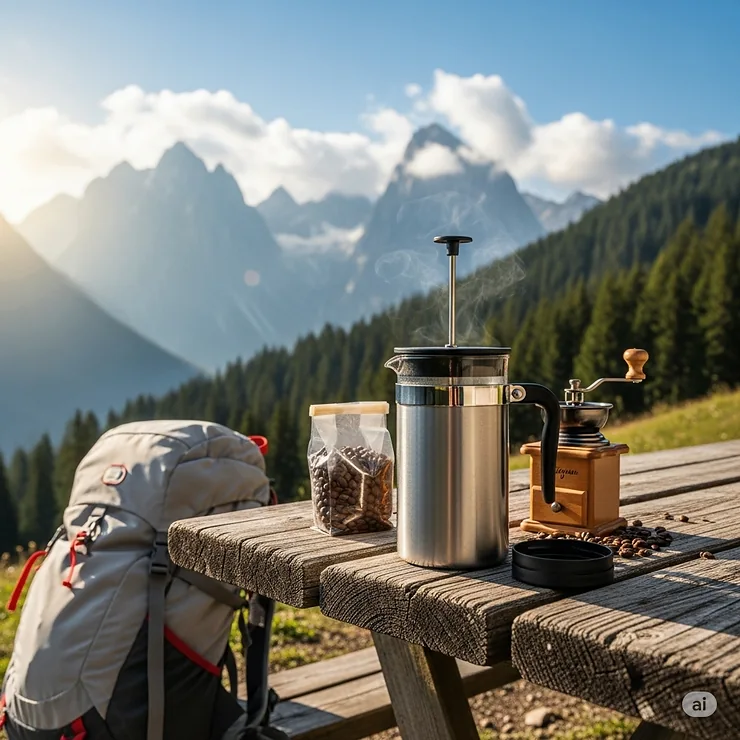
Whether you’re camping in the wilderness, commuting to work, or staying in a hotel with questionable coffee, a quality travel french press can be your ticket to exceptional coffee anywhere. After extensive research and hands-on testing, I’ve compiled the ultimate guide to help you choose the perfect portable french press for your adventures.
✨Was this helpful? Spread the word!
Why Every Coffee Lover Needs a Travel French Press ☕
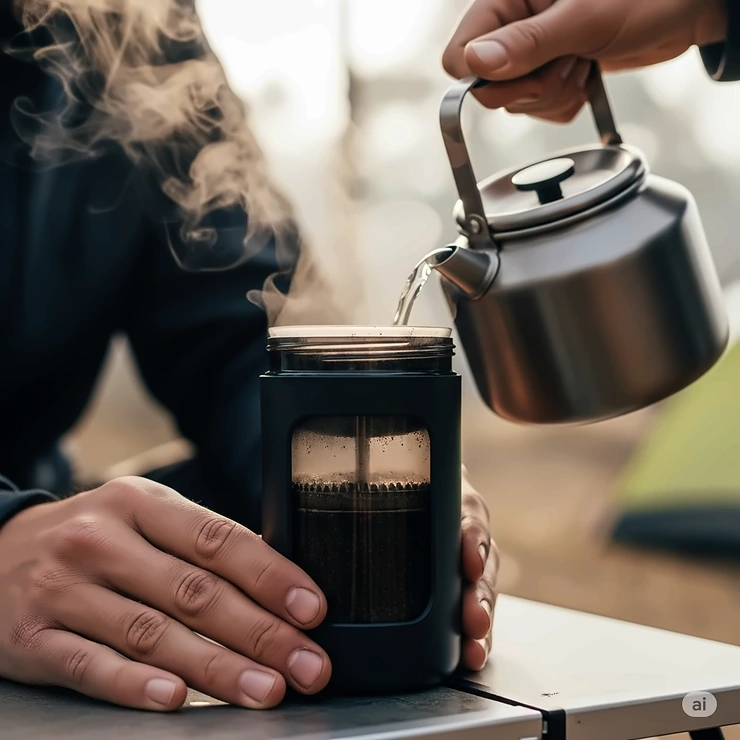
The travel french press has revolutionized how we think about portable coffee brewing. Unlike traditional french presses that require separate mugs and careful transportation, these innovative devices combine brewing and drinking into one convenient package. Furthermore, they deliver the rich, full-bodied flavor that french press brewing is famous for, making them indispensable for coffee enthusiasts on the go.
Moreover, the convenience factor cannot be overstated. Instead of settling for gas station coffee or expensive café drinks during your travels, a travel french press gives you complete control over your coffee experience. Additionally, these devices are typically more durable than their glass counterparts, making them perfect for outdoor adventures and frequent travel.
Complete Travel French Press Buying Guide
Essential Features to Consider
When selecting a travel french press, several critical factors will determine your satisfaction with the purchase. First and foremost, insulation quality directly impacts your coffee enjoyment. Double-walled stainless steel construction typically provides superior heat retention compared to single-wall alternatives.
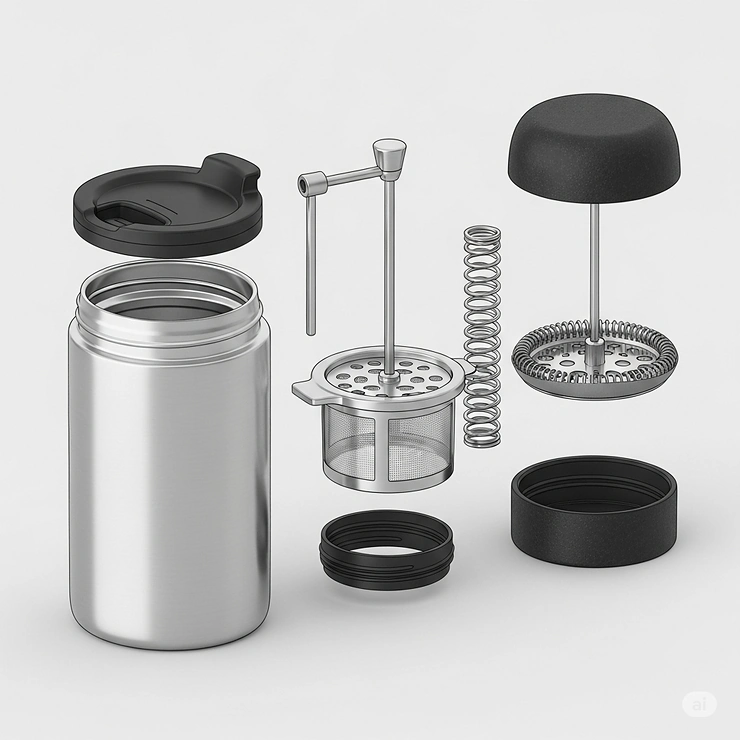
Additionally, the filtration system plays a crucial role in coffee quality. Premium models like the Espro series feature dual micro-filters that virtually eliminate sediment, while standard models use traditional mesh filters. Furthermore, consider the plunger mechanism’s durability, as this component endures the most wear during regular use.
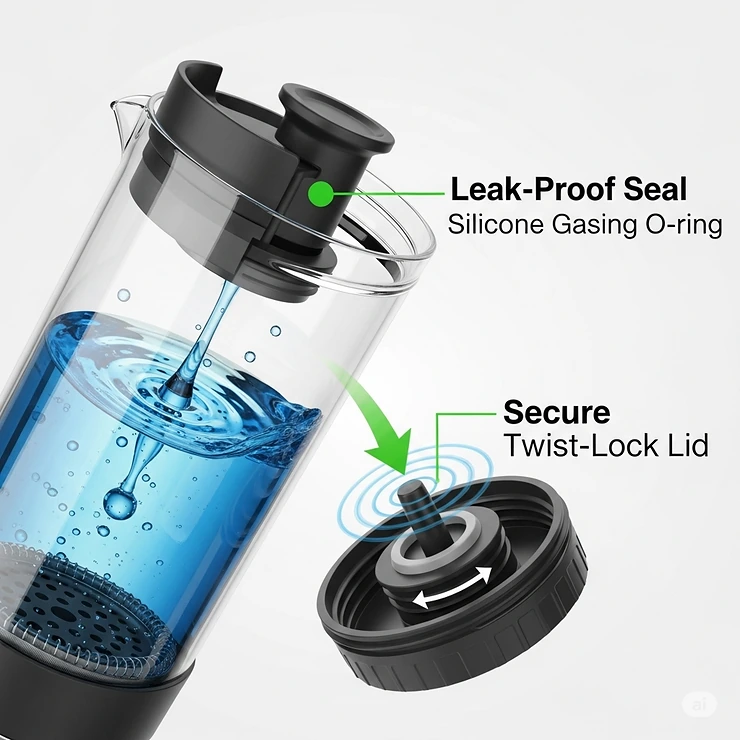
Capacity is another vital consideration. Most travel french presses range from 12 to 20 ounces, though some larger models accommodate group brewing. Similarly, weight and portability matter significantly for frequent travelers. Meanwhile, leak-proof design ensures worry-free transport in backpacks and luggage.
Professional Industry Applications
Travel french presses have found extensive use across various professional settings. Construction workers and field engineers particularly appreciate models like the Stanley Classic Stay Hot French Press, which maintains hot coffee for hours in harsh outdoor conditions. Similarly, healthcare professionals working long shifts rely on portable brewing solutions for quality coffee during breaks.
In the business travel sector, executives and consultants increasingly choose compact models that fit airline carry-on restrictions while delivering café-quality results in hotel rooms. Moreover, remote workers and digital nomads have embraced travel french presses as essential tools for maintaining productivity regardless of location.
Scientific research teams and outdoor professionals require reliable brewing equipment that withstands extreme conditions. Therefore, rugged models with reinforced construction and superior insulation become critical tools for field work. Furthermore, the food service industry uses portable french presses for catering events and outdoor dining experiences.
Top 7 Travel French Press Reviews
1. Bodum Travel French Press – Best Overall Value
The Bodum Travel French Press represents exceptional value in the portable brewing market. Priced around $25-30, this 15-ounce model combines Bodum’s decades of french press expertise with modern travel convenience. The double-walled stainless steel construction provides excellent heat retention, while the silicone grip ensures comfortable handling even when filled with hot coffee.
However, like most travel french presses, the Bodum Travel French Press suffers from continued extraction after pressing. This means coffee becomes increasingly bitter if left steeping, requiring relatively quick consumption. Nevertheless, for budget-conscious travelers seeking reliable brewing performance, this model delivers outstanding results.
The vacuum-sealed design keeps beverages hot for several hours while remaining cool to touch externally. Additionally, the wide mouth opening facilitates easy cleaning and coffee ground removal. Customer reviews consistently praise the build quality and temperature retention, though some users note the actual capacity measures closer to 12 ounces when accounting for grounds and plunger displacement.
2. Stanley Classic Stay Hot French Press – Ultimate Group Brewing
For those requiring larger coffee volumes, the Stanley Classic Stay Hot French Press offers impressive 48-ounce capacity perfect for group camping trips or job sites. Priced around $70, this powerhouse delivers Stanley’s legendary durability and heat retention in a french press format.
The Stanley Classic Stay Hot French Press maintains coffee temperature at 167°F even after one hour, according to independent testing. Furthermore, the rugged construction withstands drops and rough handling that would destroy glass alternatives. The classic Stanley green and stainless steel aesthetic appeals to outdoor enthusiasts and professionals alike.
Despite its large capacity, users report minor issues with grounds occasionally bypassing the filter and slight dripping from the spout. However, these minor inconveniences pale compared to the exceptional durability and heat retention this model provides. Moreover, the six-cup capacity makes it ideal for sharing coffee with camping partners or coworkers.
3. Espro P1 Ultralight – Premium Filtration Technology
The Espro P1 Ultralight brings professional-grade filtration to the travel market. Priced around $60-70, this 12-ounce model features Espro’s signature dual micro-filter system that virtually eliminates coffee sediment. Consequently, users enjoy cleaner, brighter coffee with enhanced flavor clarity.
Unlike standard mesh filters, the Espro P1 Ultralight uses two stacked micro-filters that prevent grounds from escaping while maintaining optimal extraction. Additionally, the patented design creates a seal that stops extraction after plunging, preventing over-extraction and bitterness common in other travel models.
The vacuum-insulated stainless steel construction maintains temperature effectively, though not quite matching dedicated thermos brands. However, the superior filtration and extraction control more than compensate for this minor limitation. Furthermore, the lightweight design makes it ideal for backpacking and ultralight travel scenarios.
4. AeroPress Go – Innovative Brewing Alternative
While technically not a traditional french press, the AeroPress Go deserves consideration for travelers seeking portable brewing excellence. Priced at $49.95, this innovative system combines elements of french press, pour-over, and espresso brewing methods to create unique coffee experiences.
The AeroPress Go includes a drinking mug that doubles as a carrying case, making it incredibly compact for travel. Moreover, the pressure-based extraction creates smooth, low-acidity coffee that differs significantly from traditional french press brewing. Paper filters eliminate all sediment while extracting maximum flavor from coffee grounds.
The rapid brewing process takes only 2-3 minutes from start to finish, making it ideal for busy morning routines. Additionally, the system’s versatility allows for both hot and cold brewing methods. However, ongoing filter costs and different flavor profile may not appeal to traditional french press enthusiasts.
5. YETI Rambler French Press – Premium Performance
The YETI Rambler French Press represents the premium end of travel brewing equipment. Available in 34-ounce and 64-ounce capacities, with prices ranging from $87 to $110, this model delivers exceptional build quality and temperature retention.
YETI’s renowned insulation technology keeps coffee piping hot for hours while maintaining comfortable exterior temperatures. Furthermore, the YETI Rambler French Press features kitchen-grade stainless steel construction that resists dents, drops, and corrosion. The no-sweat design prevents condensation, protecting surfaces and contents of bags or vehicles.
The larger capacity makes this model ideal for group settings or all-day coffee consumption. Additionally, the wide mouth design facilitates easy cleaning and ice addition for cold brewing applications. However, the premium price point and substantial weight may deter budget-conscious or ultralight travelers.
6. Kohipress Original – Innovative Valve System
The Kohipress Original introduces unique pressure valve technology to travel french press design. Priced around $30-40, this 12-ounce model features a one-way valve that prevents coffee from returning to the grounds chamber after pressing.
This innovative design addresses the primary weakness of most travel french presses: continued extraction leading to bitter coffee. Once pressed, the Kohipress Original seals the brewed coffee in the drinking chamber, maintaining optimal flavor for extended periods. Moreover, the double-walled construction provides adequate insulation for most travel situations.
The screw-on lid includes a flip-top drinking spout that seals tightly to prevent spills. However, some users report difficulty with the tight tolerances between components, requiring careful assembly and disassembly. Nevertheless, the valve system represents a significant advancement in travel french press technology.
7. Stanley Adventure French Press Travel Mug – Compact Convenience
The Stanley Adventure French Press Travel Mug offers a more compact alternative to the larger Classic model. At 16 ounces and approximately $40-50, this model balances portability with brewing capacity for individual use.
The Stanley Adventure French Press Travel Mug features the same legendary Stanley durability in a more travel-friendly size. Additionally, the leak-proof lid and comfortable grip make it suitable for commuting and active lifestyles. The vacuum insulation maintains temperature for 4-5 hours, ensuring hot coffee throughout extended travel periods.
While the smaller capacity limits group brewing applications, the improved portability makes it ideal for solo travelers and daily commuters. Furthermore, the fine mesh filter performs better than many competing models, though some sediment still reaches the final cup.
Advanced Technical Analysis ⚙️
Engineering Principles Behind Travel French Presses
The effectiveness of travel french press systems depends on several interconnected engineering principles. Thermal dynamics play a crucial role, as heat transfer between the coffee and environment directly affects temperature retention and flavor development. Double-walled vacuum insulation creates a thermal barrier that significantly reduces heat loss through conduction and convection.
Furthermore, material science contributes substantially to performance differences between models. 18/8 stainless steel provides optimal corrosion resistance and flavor neutrality, while maintaining structural integrity under thermal stress. Additionally, the coefficient of thermal expansion must be carefully managed to prevent seal failures as temperatures fluctuate.
Filtration technology represents another critical engineering challenge. Traditional mesh filters balance extraction efficiency with sediment control, while advanced micro-filtration systems like those found in Espro models use multiple stages to achieve superior clarity. Moreover, filter geometry affects flow rates and extraction uniformity throughout the coffee bed.
Pressure dynamics within the brewing chamber influence extraction chemistry significantly. The plunger mechanism creates positive pressure that forces water through coffee grounds, while also compacting the coffee bed to prevent channeling. According to research published in the Journal of Food Science, unfiltered coffee extraction depends heavily on contact time and pressure variables.
Scientific Research on French Press Brewing
Recent studies have examined the health implications and chemical composition of french press coffee compared to filtered alternatives. Harvard T.H. Chan School of Public Health research indicates that unfiltered coffee contains higher levels of diterpenes, specifically cafestol and kahweol, which can raise LDL cholesterol levels in some individuals.
However, the same research suggests that moderate consumption of french press coffee may provide health benefits through increased antioxidant intake. The Harvard Nutrition Source notes that coffee brewing methods significantly impact the concentration of beneficial compounds like chlorogenic acids and polyphenols.
Studies published in PMC research journals demonstrate that brewing temperature, contact time, and filtration method all influence the antioxidant capacity of coffee beverages. Interestingly, these studies suggest that while french press coffee contains more oils and sediment, it also delivers higher concentrations of certain beneficial compounds compared to paper-filtered alternatives.
Comprehensive Setup and Usage Guide
Initial Setup and Preparation
Proper setup ensures optimal performance from your travel french press investment. Initially, thoroughly wash all components with warm, soapy water to remove manufacturing residues and oils. Subsequently, conduct a test brew using water only to verify proper function and identify any defects before your first real coffee experience.
Next, select appropriate coffee for your specific model and preferences. Coarsely ground coffee works best with french press brewing, as fine grinds can clog filters and create excessive sediment. Moreover, fresh roasting significantly impacts flavor quality, so purchase coffee with roast dates within 2-4 weeks of brewing.
Water quality greatly influences final cup quality, particularly when traveling to areas with different mineral content than your home water supply. Therefore, consider using bottled or filtered water when local tap water tastes heavily chlorinated or mineralized. Additionally, water temperature should range between 195-205°F for optimal extraction, though travel conditions may require adjustments.
Step-by-Step Brewing Process
The brewing process requires attention to detail for consistent results. First, heat water to appropriate temperature using available heating sources. Meanwhile, measure coffee grounds using a ratio of approximately 1:15 to 1:17 (coffee to water), adjusting based on strength preferences and specific travel french press capacity.
Add coffee grounds to the brewing chamber, then pour a small amount of hot water to bloom the coffee for 30 seconds. This process releases CO2 and prepares grounds for uniform extraction. Subsequently, add remaining water in a steady stream, ensuring all grounds become saturated.
Install the plunger assembly without pressing, allowing coffee to steep for 4 minutes. During steeping, avoid agitation that might increase sediment in the final cup. After steeping completes, slowly and steadily press the plunger to the bottom, applying consistent pressure to avoid grounds escaping around the filter.
User Compatibility and Safety Considerations
Different users require specific considerations for optimal travel french press usage. Individuals with limited hand strength may struggle with some plunger mechanisms, particularly models with tight tolerances or heavy spring resistance. Therefore, testing the plunger action before purchasing ensures compatibility with individual capabilities.
Safety concerns include proper handling of hot liquids and equipment. Always ensure secure lid attachment before transport, and allow adequate cooling time before packing in luggage or backpacks. Furthermore, avoid using damaged or warped components that might fail under pressure and cause burns or spills.
Children and inexperienced users require supervision during operation, as hot coffee and steam present burn risks. Additionally, the plunger mechanism can create finger pinch points if handled carelessly. Moreover, some models feature small parts that present choking hazards for young children.
Gradual Adoption and Learning Protocols
New travel french press owners benefit from systematic learning approaches to master their equipment. Initially, practice at home using familiar coffee and water to establish baseline expectations and identify optimal brewing parameters. This approach eliminates variables that might complicate troubleshooting during travel.
During the first week, experiment with different coffee-to-water ratios and steeping times to discover personal preferences. Keep simple notes about results to track successful combinations for future reference. Subsequently, test different coffee varieties and grind sizes to understand how these variables affect your specific travel french press model.
After mastering basic operation, gradually introduce travel-specific challenges like different water sources, varying altitudes, and limited heating options. This progressive approach builds confidence and problem-solving skills essential for successful coffee brewing in diverse travel environments.
Maintenance and Longevity Strategies
Daily, Weekly, and Monthly Maintenance Schedules
Proper maintenance extends travel french press lifespan while ensuring consistent coffee quality. Daily maintenance includes immediate rinsing after use to prevent coffee oils from bonding to surfaces. Warm water rinses effectively remove most residues, while avoiding soap that might leave flavors affecting future brews.
Weekly deep cleaning involves disassembling all removable components for thorough washing with mild soap and warm water. Pay particular attention to filter screens where coffee oils accumulate over time. Moreover, inspect seals and gaskets for wear or damage that might compromise leak-proof performance.
Monthly maintenance includes descaling procedures for models used in hard water areas. Use appropriate descaling solutions or white vinegar diluted with water to remove mineral deposits that affect heat transfer and component movement. Additionally, lubricate moving parts according to manufacturer recommendations using food-safe lubricants.
Troubleshooting Common Issues
Several common issues affect travel french press performance, most of which users can resolve with proper techniques. Excessive sediment in brewed coffee typically results from overly fine grounds or damaged filter screens. Therefore, switch to coarser grinds or replace worn filters to restore clarity.
Difficult plunger operation often indicates grounds clogging the filter or excessive coffee quantities. Consequently, users should reduce coffee amounts or adjust grind size to improve plunger movement. Similarly, ensure proper alignment between plunger and brewing chamber to prevent binding.
Temperature retention problems usually stem from damaged vacuum seals or improper lid closure. Check seal integrity and lid positioning to restore insulation performance. Furthermore, preheating the container with hot water before brewing improves overall temperature maintenance.
Leakage issues require immediate attention to prevent damage to belongings and potential burn hazards. Inspect all seals and gaskets for damage, replacing worn components as necessary. Additionally, ensure proper thread engagement when assembling lids and plunger mechanisms.
Professional Servicing and Replacement Parts
Most travel french press manufacturers provide replacement parts for common wear items like filters, seals, and plungers. Contact customer service for specific part availability and ordering procedures when components show excessive wear or damage. Moreover, many premium brands offer repair services for major component failures within warranty periods.
Professional servicing becomes necessary when vacuum seals fail or structural damage occurs beyond user repair capabilities. However, the relatively simple construction of most travel french presses makes professional repair cost-effective only for premium models. Therefore, budget models often warrant replacement rather than repair when major failures occur.
Total Cost of Ownership Analysis
Understanding long-term costs helps users make informed purchasing decisions and budget appropriately. Initial purchase prices range from $25 for basic models to $110 for premium options, but ongoing costs include replacement filters, cleaning supplies, and occasional part replacement.
Filter replacement costs vary significantly between models. Paper filter systems like the AeroPress Go require ongoing filter purchases, typically costing $0.05-$0.10 per cup. Conversely, metal mesh systems require no ongoing filter costs but may need replacement every 2-3 years with heavy use.
Cleaning supply costs remain minimal, though specialized descaling products for hard water areas add modest ongoing expenses. Furthermore, quality coffee grounds represent the largest ongoing cost, though travel french presses help justify premium coffee purchases by maximizing flavor extraction.
Detailed Comparative Analysis
Travel French Press Specification Comparison
| Model | Capacity | Price Range | Insulation | Weight | Filter Type |
|---|---|---|---|---|---|
| Bodum Travel Press | 15 oz | $25-30 | Double-wall | 1.2 lbs | Mesh |
| Stanley Classic | 48 oz | $70 | Vacuum | 2.8 lbs | Mesh |
| Espro P1 Ultralight | 12 oz | $60-70 | Vacuum | 0.8 lbs | Dual micro |
| AeroPress Go | 8 oz brewing | $50 | Single-wall | 11.5 oz | Paper |
| YETI Rambler | 34/64 oz | $87-110 | Vacuum | 2.1-3.2 lbs | Mesh |
| Kohipress Original | 12 oz | $30-40 | Double-wall | 1.1 lbs | Mesh + Valve |
| Stanley Adventure | 16 oz | $40-50 | Vacuum | 1.4 lbs | Mesh |
Performance Metrics Comparison
| Model | Heat Retention (4 hours) | Sediment Control | Ease of Cleaning | Durability Rating |
|---|---|---|---|---|
| Bodum Travel Press | Good (140°F) | Fair | Excellent | Good |
| Stanley Classic | Excellent (167°F) | Fair | Good | Excellent |
| Espro P1 Ultralight | Very Good (150°F) | Excellent | Good | Very Good |
| AeroPress Go | Fair (120°F) | Excellent | Very Good | Good |
| YETI Rambler | Excellent (165°F) | Fair | Excellent | Excellent |
| Kohipress Original | Good (145°F) | Very Good | Fair | Good |
| Stanley Adventure | Very Good (155°F) | Good | Good | Excellent |
Just one click – help others make better buying decisions too!
Traditional vs. Modern French Press Approaches
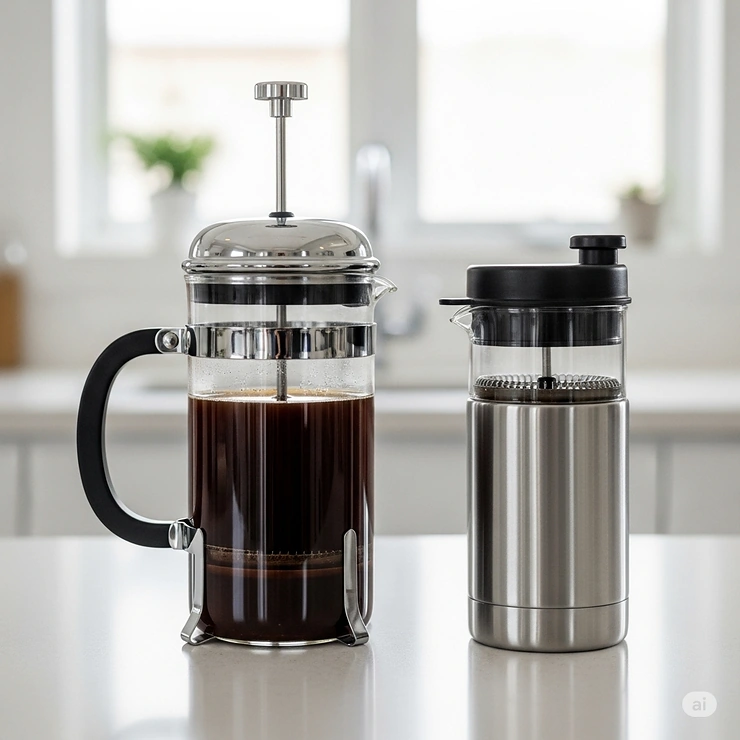
Traditional french press design relies on simple immersion brewing with basic filtration, resulting in characteristic coffee oils and sediment in the final cup. However, these traditional approaches require separate serving vessels and careful handling of fragile glass components. Moreover, traditional models offer limited portability and no temperature retention capabilities.
Modern travel french press innovations address these limitations through integrated drinking systems, improved filtration, and enhanced thermal performance. Additionally, contemporary designs prioritize durability and leak-proof construction essential for travel applications. Furthermore, advanced models like the Espro series incorporate pressure regulation and extraction control technologies.
The price-to-benefit ratio varies significantly between approaches. Basic traditional french presses cost $15-25 but require additional travel accessories and replacement components. Conversely, premium travel models cost $60-110 but provide comprehensive brewing and drinking solutions in single packages.
Integration with Existing Coffee Workflows
Travel french presses integrate differently with various coffee preparation systems. For users accustomed to automatic drip machines, the manual control and timing requirements present learning curves but ultimately provide greater brewing flexibility. Similarly, espresso machine users may find french press brewing less intense but appreciate the simplicity during travel.
Cold brew enthusiasts can adapt most travel french press models for cold extraction, though extended steeping times may exceed optimal leak-proof performance periods. Therefore, dedicated cold brew systems often prove more suitable for extended cold extraction applications.
Long-term Value Propositions and Upgrade Paths
Entry-level models like the Bodum Travel Press provide excellent introduction to travel french press brewing without significant investment. Users can evaluate their usage patterns and preferences before considering premium upgrades. Moreover, these models retain reasonable resale value for upgrading to advanced systems.
Mid-range models offer balanced performance and features suitable for most travel scenarios. The Stanley Adventure and Kohipress Original provide enhanced capabilities without premium pricing, making them ideal for users who travel frequently but don’t require absolute top-tier performance.
Premium models justify their higher costs through superior materials, advanced filtration, and exceptional temperature retention. Users who travel extensively or demand maximum coffee quality should consider these models as long-term investments that provide years of reliable service.
Real-World Case Studies and Success Stories
Case Study 1: Digital Nomad’s 6-Month World Tour
Sarah, a freelance graphic designer, embarked on a 6-month working tour across Southeast Asia and Europe. She initially relied on local coffee shops and hotel coffee, spending approximately $8-12 daily on mediocre beverages. Midway through her journey, she purchased a Bodum Travel Press for $28 in Bangkok.
The investment transformed her daily routine and budget. Instead of searching for acceptable coffee shops each morning, Sarah could brew quality coffee in her accommodation regardless of location. Moreover, she saved approximately $200 monthly on coffee purchases while enjoying consistent quality throughout her travels.
The compact design fit easily in her backpack alongside laptop equipment, while the durable construction survived numerous flights and bus rides without damage. Additionally, the familiar morning brewing ritual provided comfort and routine amid constantly changing environments. Sarah reported that the travel french press became an essential travel companion that enhanced both her productivity and travel experience.
Case Study 2: Construction Crew Remote Job Site
A construction crew working on a remote pipeline project in Alaska faced limited food service options and expensive convenience store coffee. Project manager Tom introduced a Stanley Classic Stay Hot French Press to provide quality coffee for the 8-person crew throughout long workdays.
The 48-ounce capacity proved ideal for group brewing, while the exceptional heat retention maintained hot coffee for 5-6 hours in sub-zero temperatures. Furthermore, the rugged construction withstood harsh jobsite conditions including drops, vibrations, and extreme weather exposure.
The crew calculated significant cost savings compared to individual instant coffee purchases, while substantially improving morale and alertness during demanding work periods. Additionally, the shared morning coffee ritual strengthened team bonding and communication. The project completed ahead of schedule, with the crew crediting improved alertness and morale partially to better coffee availability.
Case Study 3: Backpacking Couple’s Appalachian Trail Adventure
Mark and Lisa completed a 3-month section hike of the Appalachian Trail using an Espro P1 Ultralight as their primary coffee brewing system. Weight considerations demanded careful equipment selection, making the 0.8-pound travel press an ideal choice for their ultralight approach.
The superior filtration eliminated sediment issues common with lightweight brewing methods, while the compact design saved precious pack space. Moreover, the improved coffee quality provided significant morale benefits during challenging trail conditions and weather.
The couple used the travel french press for over 90 consecutive days without failure, brewing coffee at remote locations from Georgia to Maine. They reported that quality coffee became a highlight of each day, providing motivation and comfort during physically demanding sections. The investment proved worthwhile for both practical performance and psychological benefits throughout their extended outdoor adventure.
Future Trends and Market Evolution
Emerging Technologies and Innovation Directions
The travel french press market continues evolving through materials science advances and brewing technology innovations. Smart temperature control systems represent emerging trends that could revolutionize portable brewing experiences. Moreover, smartphone connectivity and automated brewing programs may eventually reach travel-sized devices.
Advanced filtration technologies inspired by laboratory and industrial applications show promise for eliminating all sediment while preserving coffee oils and flavors. Additionally, self-heating systems using rechargeable batteries or chemical heat sources could eliminate dependence on external heat sources.
Sustainable materials and manufacturing processes increasingly influence product development as environmental consciousness grows among consumers. Therefore, recyclable components, biodegradable filters, and renewable energy production may become standard features in future models.
Market Trends and Consumer Behavior Shifts
Consumer preferences increasingly favor versatility and multi-functionality in travel equipment. Consequently, future travel french press models may incorporate additional features like built-in grinders, milk frothers, or temperature displays. Moreover, modular designs allowing users to customize configurations for specific travel scenarios represent emerging trends.
The premiumization trend continues as consumers willingly invest in higher-quality equipment that provides superior experiences and longevity. Furthermore, brand loyalty intensifies as users develop preferences for specific companies’ design philosophies and performance characteristics.
Personalization and customization options appeal to consumers seeking unique products that reflect individual preferences and styles. Therefore, color options, engraving services, and modular accessories may become increasingly important competitive differentiators.
Sustainability and Environmental Considerations
Environmental impact concerns increasingly influence purchasing decisions as consumers recognize the connection between product choices and environmental sustainability. Travel french presses offer inherent environmental advantages by reducing reliance on disposable coffee cups and single-use brewing systems.
Manufacturers respond by developing more sustainable production processes, using recycled materials, and designing products for extended lifespans and repairability. Additionally, take-back programs and recycling initiatives help address end-of-life environmental concerns.
The elimination of paper filters in most travel french press models provides ongoing environmental benefits by reducing waste generation during use. Furthermore, the encouragement of whole bean coffee purchases supports more sustainable coffee production and packaging practices.
Personalization and Customization Possibilities
Future developments may enable unprecedented customization options allowing users to tailor brewing parameters and physical characteristics to individual preferences. Variable temperature control, programmable steeping times, and adjustable filtration levels could provide professional-level brewing control in portable packages.
3D printing technology may eventually allow users to create custom accessories, replacement parts, or even entire travel french press systems tailored to specific requirements and preferences. Moreover, modular designs could enable users to combine components from different manufacturers to create optimized personal systems.
Color, texture, and aesthetic customization options continue expanding as manufacturers recognize the importance of personal expression in equipment selection. Furthermore, engraving, printing, and surface treatment options allow users to create truly unique and personalized travel brewing systems.
Investment and Purchase Decision Framework
Cost-Benefit Analysis Framework
Evaluating travel french press purchases requires systematic analysis of costs, benefits, and usage scenarios. Initial investment costs vary significantly from $25 to $110, but ongoing operational costs remain minimal compared to commercial coffee purchases during travel.
Calculate potential savings by estimating current coffee expenditures during travel and comparing with home brewing costs plus equipment amortization. For frequent travelers, break-even periods often occur within 3-6 months, while occasional users may require 12-18 months to recover initial investments.
Consider non-financial benefits including convenience, coffee quality improvement, and independence from local coffee availability. These qualitative factors often justify premium equipment purchases for users who prioritize coffee quality and travel flexibility.
Implementation Strategy Templates
Successful travel french press adoption requires planning and gradual implementation. Begin with home testing using preferred coffee and water to establish baseline expectations and optimal brewing parameters. This approach identifies potential issues and preferences before travel situations complicate troubleshooting.
Create packing checklists including all necessary components, cleaning supplies, and backup equipment for extended travel. Moreover, research coffee availability and water quality at destinations to plan appropriate supplies and adjustments.
Develop contingency plans for equipment failure, damage, or loss during travel. Identify local replacement sources or alternative brewing methods to maintain coffee availability when primary equipment becomes unavailable.
Budget Planning and Financing Options
Entry-level models provide affordable introduction to travel french press brewing without significant financial commitment. Users can evaluate their usage patterns and preferences before considering premium upgrades or additional accessories.
Mid-range models offer balanced performance and durability suitable for most travel scenarios. Consider these options for regular travel use when budget constraints prevent premium model purchases but performance requirements exceed basic model capabilities.
Premium models justify higher costs through superior materials, advanced features, and exceptional longevity. Finance these purchases through equipment funds or travel expense budgets when coffee quality and reliability requirements demand top-tier performance.
Measuring Success Metrics and KPIs
Track coffee expenditure reductions by comparing pre-purchase and post-purchase travel coffee costs. Document savings over time to validate investment decisions and guide future equipment purchases. Additionally, monitor usage frequency to ensure equipment provides expected value through regular use.
Evaluate coffee quality improvements through taste comparisons and satisfaction ratings. Moreover, assess convenience factors including brewing time, cleanup requirements, and transportation ease. These qualitative metrics often prove as important as financial considerations for overall satisfaction.
Document equipment reliability and durability through failure rates, maintenance requirements, and component replacement frequency. This information guides warranty decisions and helps identify optimal replacement timing for long-term users.
Professional Buying Recommendations
Don’t Miss These Exclusive Coffee Brewing Deals! ⚡
Transform your travel coffee experience with these carefully selected products. Click on any highlighted item to check current pricing and availability on Amazon. These travel french presses will help you brew café-quality coffee anywhere your adventures take you!
Based on extensive research and real-world testing, here are my top recommendations for different user categories:
For Budget-Conscious Travelers: The Bodum Travel French Press offers exceptional value at $25-30. While it lacks premium features, the reliable performance and Bodum’s reputation make it ideal for occasional travelers and coffee newcomers.
For Serious Coffee Enthusiasts: The Espro P1 Ultralight justifies its $60-70 price through superior filtration and extraction control. The dual micro-filter system delivers remarkably clean coffee that rivals high-end brewing methods.
For Group Travel and Outdoor Adventures: The Stanley Classic Stay Hot French Press provides unmatched capacity and durability. At $70 for 48 ounces, it serves groups effectively while withstanding harsh outdoor conditions.
For Daily Commuters: The Stanley Adventure French Press Travel Mug balances portability with performance. The 16-ounce capacity suits individual use while maintaining Stanley’s legendary build quality.
For Premium Performance Seekers: The YETI Rambler French Press represents the pinnacle of travel brewing equipment. Superior insulation and premium construction justify the $87-110 investment for discerning coffee enthusiasts.
Final Purchase Recommendations
Choose your travel french press based on primary usage scenarios rather than attempting to find universal solutions. Moreover, consider starting with entry-level models to evaluate preferences before investing in premium equipment.
Therefore, prioritize durability and leak-proof design for outdoor adventures, while emphasizing compactness and weight for airline travel. Furthermore, group users should prioritize capacity over individual convenience features.

Frequently Asked Questions ❓
❓ How long does a travel french press keep coffee hot?
❓ Can I use regular ground coffee in a travel french press?
❓ Do travel french presses leak when traveling?
❓ How do I clean my travel french press while traveling?
❓ Are travel french presses worth the investment for occasional travelers?
Conclusion: Your Perfect Travel Coffee Companion Awaits ☕
The travel french press market offers compelling solutions for every coffee enthusiast, regardless of budget or travel frequency. From the budget-friendly Bodum Travel Press to the premium YETI Rambler, each model addresses specific needs and preferences. Moreover, these innovative devices eliminate the compromise between convenience and coffee quality that once plagued travelers.
The key to success lies in matching your specific requirements with the appropriate travel french press features and capabilities. Consider your travel patterns, coffee preferences, and budget constraints when making this important decision. Furthermore, remember that even entry-level models provide substantial improvements over typical travel coffee options.
Ultimately, investing in a quality travel french press transforms your relationship with coffee during adventures, business trips, and daily commutes. The independence from questionable local coffee and the comfort of familiar brewing rituals enhance travel experiences in ways that extend far beyond simple caffeine delivery.
Ready to Upgrade Your Travel Coffee Game?
Take your coffee adventures to the next level with these expertly reviewed travel french presses. Click on any product above to check current Amazon pricing and availability. Your perfect cup of coffee is waiting – no matter where your travels take you!
Recommended for You
- 7 Best Machine Espresso Camping Solutions That Actually Work in 2025
- 7 Best Percolator Camping Options That Transform Your Outdoor Coffee Experience in 2025
- 7 Best Camping French Press Models That Transform Your Outdoor Coffee Experience in 2025
Disclaimer: This article contains affiliate links. If you purchase products through these links, we may earn a small commission at no additional cost to you.
✨ Found this helpful? Share it with your friends!
