
In This Article
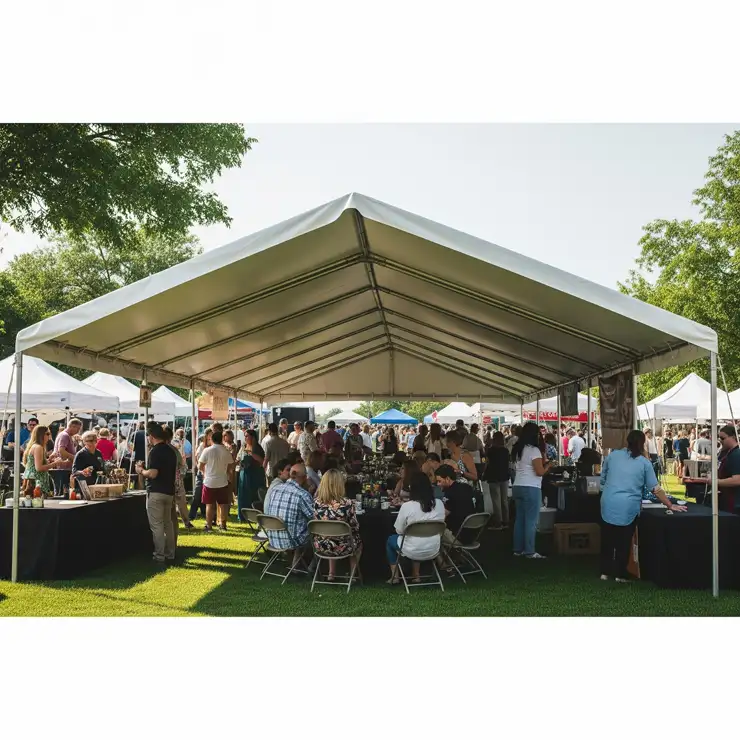
What is a 10 x 20 canopy heavy duty? It’s a pop-up shelter covering 200 square feet, built for repeated use rather than a single summer. Expect thicker steel or hexagonal tubing, a full truss frame, coated fabric rated 300D or higher, and reinforced hubs. Think vendor-grade, not “dies at the first breeze.”
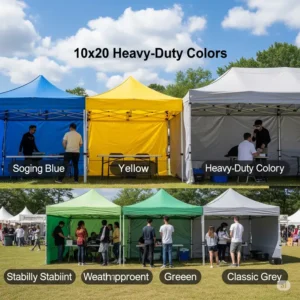
Here’s the uncomfortable truth about a 10 x 20 canopy heavy duty enough to trust: you’re buying a very large sail with a roller bag attached. University of California safety guidance notes that canopies commonly weigh 40 to 150 pounds, and that wind pressure building underneath can flip one over or drag it across open ground. The frame is also steel or aluminum, so a runaway canopy is a property-damage story waiting to happen.
That’s why the difference between a $150 shelter and a properly built 10 x 20 canopy heavy duty model matters. Tube thickness, leg shape, fabric weight, and where the hubs lock are what separate a canopy that lasts for seasons from one that folds up mid-party.
One note on method. I haven’t personally set up any of these canopies, and I won’t pretend otherwise. This guide is built from manufacturer specs, retailer listings, and published review roundups, with honest analysis layered on top. Where reviewer data is thin, I’ll say so. Prices are given as ranges only, because they move constantly.
Quick Comparison: 10 x 20 Canopy Heavy Duty Picks at a Glance
Before the deep dive, here’s the cheat sheet. Skim it, find your lane, then read the full breakdown for the models that catch your eye.
| Product | Standout Strength | Price Tier | Best For |
|---|---|---|---|
| ABCCANOPY 10×20 Premium-Series | 1.77-inch hexagonal legs | Upper-mid | Exposed, windy venues |
| Eurmax USA 10×20 Commercial Canopy | Fire-retardant certified top | Mid | Vendors with venue rules |
| CROWN SHADES 10×20 Hex Leg | 400D fabric, hex frame | Mid | All-around durability |
| COBIZI 10×20 with 6 Sidewalls | Thick truss frame, full enclosure | Mid | Rain and weddings |
| Yaheetech 10×20 Commercial | Strong value, large review base | Budget-mid | Backyard and occasional vendors |
| Outdoor Basic 10×20 with 6 Sidewalls | Silver-coated top, many walls | Budget | Tight budgets, light use |
| E-Z UP Vantage 10×20 | Established commercial brand | Premium | Frequent professional use |
Looking at the table, the ABCCANOPY 10×20 Premium-Series and CROWN SHADES target stability, while Eurmax targets compliance. The Yaheetech and Outdoor Basic models are the smart moves if your canopy sees maybe five outings a year. The E-Z UP Vantage sits alone at the top because you’re paying for pedigree and a commercial-fabric treatment, which only pencils out with heavy, repeated use.
💬 Just one click — help others make better buying decisions too!😊
Top 7 10 x 20 Canopy Heavy Duty Picks: Expert Analysis
Every pick below is a real, currently listed model. Specs come from manufacturer and retailer listings, and sentiment comes from aggregated reviews, not anything I made up. Here’s the side-by-side first.
| Product | Frame | Top Fabric | Price Range | Review Sentiment | Best For |
|---|---|---|---|---|---|
| ABCCANOPY Premium-Series | 1.77″ hex steel legs | 300D silver-coated PU | Mid-$400s to low-$500s | Praised for rigidity | Wind exposure |
| Eurmax | Full truss, hammertone steel | CPAI-84 fire-retardant polyester | Roughly $200-$450 | Mid-4-star range on retail listings | Vendors |
| CROWN SHADES | Hex legs, thickened steel | 400D Oxford, silver coat | Mid tier | Strong, smaller review pool | Durability seekers |
| COBIZI | 1.26″ tube, 0.03″ wall truss | Heavy Oxford, 1500mm waterproof | Roughly $250-$450 | Sturdy, but heavy and some defects | Rain, weddings |
| Yaheetech | Steel, reinforced straps | Polyester | Mid-$200s | 4.7 stars across about 95 ratings at one retailer | Value buyers |
| Outdoor Basic | Plastic-sprayed steel pipes | 420D silver-coated Oxford | Budget tier | 4.5 stars across about 106 ratings at one retailer | Light use |
| E-Z UP Vantage | White steel, straight leg | Commercial water/UV/fire-treated | Premium tier | Not verified for this configuration | Pros |
Notice how the price column roughly tracks the frame column. Thicker tubing and better geometry cost more, and that’s where your money actually does something. The review column is the humbling one: the Yaheetech and Outdoor Basic have the strongest verifiable review counts, while the premium names lean on reputation.
1. ABCCANOPY 10×20 Premium-Series — hexagon legs that shrug off twisting
The big idea is geometry. The ABCCANOPY 10×20 Premium-Series swaps round tubing for 1.77-inch (45mm) hexagonal powder-coated steel legs. Flat sides resist twisting better than round tubes of the same gauge, and twisting is exactly what a gust does to a 20-foot span.
The bundle commonly includes steel D-rings at each corner, three height positions, and an oversized roller bag. Retail kits often add three sidewalls and a door wall, weight bags, ropes, and stakes. Those D-rings matter: they let you run guy lines to the corners instead of hoping friction does the job. Published reviews also describe a silver-coated 300D top, which reflects heat and keeps the shade a few degrees friendlier.
The maker rates this model for winds around 50 km/h, roughly 31 mph. That lines up with the standard industry advice to stop using any canopy near 30 mph, so treat it as a ceiling rather than a challenge.
My take: price this one first if your venue is exposed, like a coastal market or an open field. It’s overkill for one reunion a year but sensible for weekly vendors. Reviewers consistently praise frame rigidity and water runoff, and a peak tensioner reportedly keeps the top taut so rain sheds rather than pools. Recurring complaints are lightweight included stakes and reports of thinner fabric in newer batches.
Pros:
- ✅ Hexagonal legs resist twisting in gusts
- ✅ Corner D-rings make guy-line anchoring easy
- ✅ Silver-coated top reflects heat
Cons:
- ❌ Included stakes are on the light side
- ❌ Newer batches reportedly use thinner fabric
Expect the mid-$400s to low-$500s for a sidewall bundle at the time of research. It’s worth it if you’ll use it ten-plus times a year.
2. Eurmax USA 10×20 Commercial Canopy — fire-retardant certified for venue rules
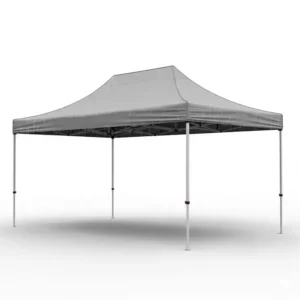
If you’ve ever been waved off by a festival inspector, you already know why this one exists. The Eurmax USA 10×20 Commercial Canopy carries a CPAI-84 fire-retardant certified polyester top, which many events and indoor halls require. Most budget canopies simply don’t have that paperwork.
The frame is a full truss with a rust-resistant hammertone powder coat and a thumb-lock system with three height positions. The top is PU-coated to block about 99% of UV, with sealed seams and steel D-rings at the corners. The oversized L-shaped roller bag is a genuinely smart design: it keeps weight low so the bag doesn’t tip when you stop. Weight reports vary by source, with the frame cited around 50 pounds and the packed set noticeably heavier.
Here’s what the spec sheet won’t tell you at a glance: many Eurmax bundles include sandbag-style weights but no stakes. Budget a few extra dollars for proper anchors. Reviewers describe the build as well made, with owners reporting several seasons of use. Optional sidewalls use hook-and-loop that some say frays over time.
This is the pick for vendors, food sellers, and anyone who needs a certified top to get through the gate.
Pros:
- ✅ CPAI-84 fire-retardant certified top
- ✅ Full truss with rust-resistant finish
- ✅ Oversized no-tip style roller bag
Cons:
- ❌ Many bundles ship without ground stakes
- ❌ Optional sidewall velcro can fray
Think roughly $200-$450 depending on bundle. The certification makes it strong value for compliance-driven users.
3. CROWN SHADES 10×20 Hexagonal Leg Canopy — 400D fabric on a hex frame
The CROWN SHADES 10×20 Hexagonal Leg Canopy borrows the same torsion-resisting hex-leg logic as the ABCCANOPY and adds fabric that’s a notch heavier. Published listings cite a 400D Oxford top with a silver coating and UPF 50+ protection, plus a thickened powder-coated alloy steel frame.
The practical extras are thoughtful. There are four height levels, a pinch-free adjustment that keeps fingers out of the lock, and a roller bag with 4-inch wheels that should handle gravel better than the stubby wheels on cheaper kits. A 2-year warranty is reported in review roundups, longer than the 1-year coverage typical in this class. That’s a meaningful signal of confidence, though you should confirm the terms on the current listing.
Where does it fit? It’s the all-rounder. If the ABCCANOPY Premium-Series is the wind specialist, this is the “I want good fabric, good legs, and fewer compromises” option. Roundups I read rate it highly, but the review pool is smaller than the big-name competitors, so I’d treat that enthusiasm as promising rather than proven. Common gripes include weight and the occasional quality-control report.
Pros:
- ✅ 400D silver-coated top for longevity
- ✅ Hexagonal legs resist wobble
- ✅ Pinch-free height adjustment
Cons:
- ❌ Fairly heavy for one person
- ❌ Smaller review pool than rivals
It sits in the mid tier, so check the current price. A strong buy if you want durability without paying premium-brand money.
4. COBIZI 10×20 Canopy with 6 Sidewalls — thick truss frame, full enclosure
The COBIZI 10×20 Canopy with 6 Sidewalls is the “bring the weather, I’ve got walls” option. Listings cite a full truss frame with 1.26-inch tubing and 0.03-inch wall thickness, which beats the roughly 0.98-inch tubing common on mid-range models. Thicker tube walls are the single most predictive factor in whether a frame wobbles in a breeze, so this is a legitimate step up.
The top is heavy Oxford fabric (listings cite 420D to 500D, so verify your exact version), with sealed seams and a waterproof rating reported around 1500mm. Six removable sidewalls let you build anything from open-air shade to a fully enclosed room, which is handy for wedding ceremonies and rainy-climate vendors.
The catch is mass. Listings put it around 100 pounds, and review roundups note the bag’s wheels can feel undersized for that load. Plan on two people. Some reviewers have also reported frame defects after few uses, although the maker backs the frame with a 1-year warranty and reviews generally describe support as responsive.
One expert note: sidewalls trap air and can turn a stable canopy into a sail. Take the windward walls off when gusts pick up.
Pros:
- ✅ 1.26-inch truss tubing resists wobble
- ✅ Six sidewalls allow full enclosure
- ✅ High waterproof rating for rainy events
Cons:
- ❌ Around 100 pounds, a real two-person lift
- ❌ Some buyers report early frame defects
Roughly $250-$450 is typical, and clearance pricing appears at times. Prices vary, so check current listings.
5. Yaheetech 10×20 Commercial Pop Up Canopy — the value pick with a proven review base
Not every 10 x 20 canopy heavy duty buyer needs vendor-grade hardware. The Yaheetech 10×20 Commercial Pop Up Canopy earns its spot with a strong, verifiable track record. On one major retailer listing it shows 4.7 stars across roughly 95 ratings at the time of research, and the aggregated review summary highlights sturdy components, reinforced straps and frame, solid value, and straightforward setup.
The specs are practical: roughly 20 feet long and 10 feet wide, with a peak around 10.3 to 10.9 feet and eave heights of about 6.2, 6.5, and 6.8 feet. It weighs around 90 pounds, and the listing mentions a banner section for signage. That eave height is the sleeper detail. Many budget canopies leave tall guests ducking, so 6.8 feet at the high setting is a real comfort bump.
A review I’d paraphrase: a vendor whose previous canopy failed in a storm bought this one for weekly events and liked the clean, professional look. That’s a single anecdote, so don’t over-read it, but it fits the broader “holds up for the money” sentiment.
My read: this is the best first buy for backyard parties, church events, and part-time vendors who want real frame strength without paying for features they’ll never use.
Pros:
- ✅ Large verified review base, high ratings
- ✅ Reinforced frame and straps
- ✅ Generous eave height on top setting
Cons:
- ❌ Around 90 pounds, so plan on help
- ❌ Fabric specs less detailed than rivals
Around the mid-$200s at one major retailer at the time of research, with stock varying. Excellent value for occasional-to-moderate use.
6. Outdoor Basic 10×20 Pop Up Canopy with 6 Sidewalls — budget pick with a silver-coated top
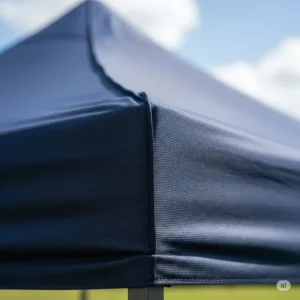
If your budget is tight and the canopy mostly lives in a garage, the Outdoor Basic 10×20 Pop Up Canopy with 6 Sidewalls is the realistic compromise. The top is described as 420D silver-coated Oxford PVC, which is a smarter fabric choice than the thin polyester on bargain-bin models. The silver lining is said to reflect about 90% of harmful light.
The frame is high-grade steel pipe sprayed with a plastic coating to resist rust, joined with nylon connectors, in an arrangement the maker calls a stable structure. It offers 200 square feet of shade, three height grades, six sidewalls, and a wheeled bag. The listing shows 4.5 stars across roughly 106 ratings at one retailer, with reviewers describing it as sturdy, easy to set up, and easy to take down and store. Several also mention it’s heavy, which tracks.
Here’s the honest caveat: nylon connectors and thinner tubing are where budget canopies save money, and they’re also where long-term wear shows up first. For five outings a year, fine. For weekly use, you’d be gambling against the frame.
Pros:
- ✅ 420D silver-coated top beats typical budget fabric
- ✅ Six sidewalls included for flexible coverage
- ✅ Positive reviews on setup and storage
Cons:
- ❌ Nylon connectors are a long-term wear point
- ❌ Heavy for a budget model
Budget tier, so check current price. A fair deal for light-duty users.
7. E-Z UP Vantage 10×20 Canopy — premium steel frame from an established name
The E-Z UP Vantage 10×20 Canopy is the premium outlier. The official listing describes a high-strength white steel frame with a straight-leg geometry, plus commercial-grade fabric treated to resist water, mildew, UV, and fire. It comes with a Wide-Trax roller bag, and the folding frame is built so you aren’t juggling loose parts.
Straight legs keep the usable floor area consistent out to the edges and let sidewalls hang flush, which is why this style is popular for craft fairs and markets. The tradeoff is that you’re paying for engineering and a brand with decades of commercial use.
Here’s where I have to be straight with you: I couldn’t verify a meaningful, current review base for this specific configuration, so treat the performance claims as manufacturer-stated rather than independently confirmed. Availability and listing details also vary by seller, so confirm before you buy.
Who should consider it? Professional vendors and organizations running canopies dozens of times per season, where a premium frame amortizes over years. If you set up quarterly, it’s an expensive way to feel responsible.
Pros:
- ✅ Established commercial-use brand
- ✅ Fabric treated for water, UV, mildew, fire
- ✅ Folding frame with no loose parts
Cons:
- ❌ Premium price tier
- ❌ Limited verifiable review data for this model
It sits well above the budget group, so check current price. It only pays off with frequent, professional use.
✨ Don’t Miss These Top Picks!
🔍 Take your next outdoor event to the next level with these carefully selected canopies. Click on any highlighted product to check current pricing and availability. A well-chosen shelter will help you create a comfortable, worry-free gathering your guests will love!
How to Set Up and Anchor a 10 x 20 Canopy Heavy Duty (Step by Step)
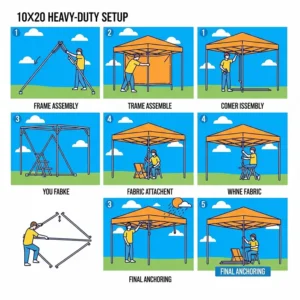
Setting up a 10 x 20 canopy heavy duty model is a two-person job, and anchoring is the part people skip. Don’t.
- Pick flat ground and clear sharp debris that could snag the top.
- Extend the frame together, starting with both legs at the lowest height. Lower setups are stabler while you work.
- Fit the top, secure the valance straps, then raise the legs one pair at a time, confirming every lock clicks.
- Anchor immediately. Tents are most vulnerable during setup and breakdown, which is why one fire district’s event canopy weight policy requires a minimum of 40 pounds per leg for canopies up to 20 x 20 feet.
- Angle stakes away from the canopy at roughly 45 degrees where the surface allows.
Industry guidance suggests about 24 pounds per leg for light wind and 40 to 50 pounds for moderate wind. One supplier calculates roughly 370 pounds of total ballast to reach a 35 mph rating for a wall-free 10 x 20. Treat that as a reference point, not a guarantee.
In the first 30 days, avoid the classic mistakes. Don’t force a stuck leg, don’t leave it up overnight, and don’t pack it wet. Wipe the frame, dry the top, and lubricate hinges lightly after the first month.
Real-World Scenarios: Matching a 10 x 20 Canopy Heavy Duty to Your Life
Specs are abstractions. Here’s how they play out for three buyers.
The weekend market vendor. Maya sets up every Saturday for eight months, with a gravel lot, mild winds, and a venue that asks for fire-rated tops. She needs certification and quick setup. The Eurmax is the logical fit, with the ABCCANOPY Premium-Series as the upgrade if her lot is exposed. Budget: mid-range, used 30-plus times a year.
The graduation-party host. Dan needs shade for 40 guests once in June on a backyard lawn. A frame that survives five outings a year is plenty. The Yaheetech or Outdoor Basic wins on cost, and he should spend the savings on proper stakes and 40-pound-per-leg weights. Frequency: roughly one to four times a year.
The coastal wedding planner. Priya works open sand with unpredictable gusts and needs full enclosure on rainy days. The COBIZI with six sidewalls handles the weather, but she must pull windward walls when gusts rise. For raw stability, the CROWN SHADES hex-leg model is the alternative. Budget: mid to upper-mid, used 15-plus times a year.
The pattern is simple. Match build quality to how often you’ll use it, then match anchoring to where you’ll use it.
Fixing Common 10 x 20 Canopy Heavy Duty Headaches: Problem and Solution Guide
Even the best 10 x 20 canopy heavy duty frame has bad days. Here’s how to handle five common ones.
Problem: water pools on the top. Pooled water adds serious weight and can buckle the frame. Solution: lower one leg pair slightly so rain sheds, and push up on the pooled area from beneath with a soft pad before it builds.
Problem: the frame wobbles. Solution: check that every leg lock is fully engaged, then inspect hubs and joints for bent tubing. Wobble on a thin-walled model usually means a thicker frame, like the COBIZI or ABCCANOPY Premium-Series, would be worth the upgrade.
Problem: sidewalls act like sails. Sidewalls can make a canopy less stable by trapping air. Solution: remove the windward walls first as gusts build, and keep full enclosure for calm, rainy days.
Problem: it’s brutally hot underneath. Solution: use the highest height setting, choose a silver-coated top like the Outdoor Basic or CROWN SHADES, and open opposing walls for cross-ventilation.
Problem: it’s too heavy to move. Solution: use the roller bag only on hard, flat surfaces, and recruit a second person. Don’t haul a 90-to-100-pound bag solo.
How to Choose a 10 x 20 Canopy Heavy Duty: 7 Steps
Use this checklist before you click anything.
- Count your real uses per year. Under five, a budget frame is fine. Over fifteen, buy commercial.
- Check tube thickness. Wall thickness around 0.03 inches and diameters of 1.26 inches or more resist wobble better than thin 0.98-inch tubes.
- Prefer hexagonal legs or a full truss. Both resist twisting forces better than basic round-leg frames.
- Match fabric weight to your climate. 300D is a solid floor, while 400D and up lasts longer under sun and rain.
- Verify fire certification if you sell. CPAI-84 or NFPA 701 labels matter for many venues.
- Weigh transport reality. Frames run roughly 60 to 110 pounds, so confirm you can lift it into your vehicle.
- Budget for anchors. Add weights and stakes to the total cost, since many bundles skimp.
Features That Actually Matter (And Those That Don’t)
Marketing for a 10 x 20 canopy heavy duty product loves buzzwords. Here’s the filter.
Worth paying for: thicker tube walls, hexagonal or truss geometry, corner D-rings, a roller bag with decent wheels, and a real warranty. These determine whether the canopy survives year two.
Nice but secondary: extra height settings, pinch-free locks, and banner sleeves. They improve comfort without changing structural strength.
Mostly noise: “windproof” labels, “all-season” claims, and enormous sidewall counts. There’s no standardized wind-rating system for canopies, so a “windproof” badge isn’t a measurement. Judge wind performance by frame geometry and your anchoring, not adjectives.
One more underrated detail is eave height. A canopy that tall guests can walk under comfortably gets used more happily. The Yaheetech listing’s roughly 6.8-foot high-setting eave is a good example of a spec that quietly improves every event.
Common Mistakes When Buying a 10 x 20 Canopy Heavy Duty
A few errors show up again and again.
- Trusting “heavy duty” in the title. The phrase is unregulated. Verify tube thickness and fabric denier instead.
- Ignoring anchor costs. A $250 canopy plus $60 in proper weights beats a $300 canopy sitting on four tiny stakes.
- Overbuying sidewalls. If you rarely use six walls, you’ve paid for fabric that becomes a wind liability.
- Skipping the weight check. A 100-pound bag is not a solo carry, and straining to lift it is how backs and frames get damaged.
- Using improvised anchors. Safety guidance from UC Irvine Environmental Health & Safety says to avoid anchoring canopies to tables, coolers, or vehicles, and to use proper sandbag-style weights strapped vertically to the legs.
- Assuming one price fits all venues. If you need fire certification, a cheaper uncertified top may be unusable at your events.
10 x 20 Canopy Heavy Duty vs Standard Pop Up Canopy
Is a 10 x 20 canopy heavy duty build really that different from a basic 10 x 20? Here’s the breakdown.
| Feature | Heavy Duty 10 x 20 | Standard Budget 10 x 20 | Best For |
|---|---|---|---|
| Frame tubing | 1.26″-1.77″, thicker walls | Roughly 0.98″, thinner walls | Heavy duty for frequent use |
| Leg shape | Hexagonal or full truss | Basic round | Hex for gusty sites |
| Top fabric | 300D-500D coated | Often 200D or less | Heavy duty for sun and rain |
| Fire certification | Sometimes (Eurmax) | Rare | Heavy duty for vendors |
| Weight | Roughly 90-110 lb | Lighter | Standard for easy transport |
| Typical lifespan | Multiple seasons | One to two seasons | Heavy duty for repeat use |
The table shows a trade: heavy duty buys durability and stability at the cost of weight and price. For a canopy used more than a handful of times, that math favors the sturdier frame, because replacing a broken budget canopy every season erases the savings. For a single event, though, a standard model plus good anchors is perfectly rational.
10 x 20 Canopy Heavy Duty for Specific Audiences
Market vendors and crafters. You need quick two-person setup, a certified top if your market asks, and a bag you can wheel from the lot. The Eurmax and ABCCANOPY Premium-Series lead here.
Families and backyard hosts. Prioritize shade comfort and value. The Yaheetech and Outdoor Basic offer enough frame for occasional use, and silver-coated tops help on hot afternoons.
Churches, schools, and nonprofits. Volunteers rotate and training varies, so durability and simple locks matter. The CROWN SHADES pinch-free adjustment is a thoughtful touch for helpers of all ages.
Wedding and event planners. Enclosure and appearance drive decisions. The COBIZI sidewall system gives flexibility, but pair it with serious anchoring and a plan to drop walls when gusts rise.
Seniors or solo operators. Honestly, a 90-to-100-pound canopy is a tall ask alone. Consider lighter frames, a dolly, or having a helper as part of the plan, not an afterthought.
Wind, Safety, and Regulations Guide for Your 10 x 20 Canopy Heavy Duty
Wind is the whole game. The National Weather Service notes that when sustained winds hit 40 to 50 mph, isolated wind damage becomes possible, and high winds can blow objects around and pose a significant safety threat. Canopies are exactly that kind of object.
Practical thresholds are more conservative. Industry guidance commonly says to take canopies down when winds exceed about 25 mph and not to use them at all above roughly 31 mph. Gusts matter as much as sustained speed, because a canopy doesn’t care about the average.
Some event organizers also require minimum weights. The example earlier set 40 pounds per leg for canopies up to 20 x 20, which is a useful baseline even when nobody asks. Local fire marshals may also require certified fabric and clearances from exits, particularly for food service or indoor spaces.
Keep a simple routine: check the forecast, anchor at setup, drop sidewalls in gusts, and take it down early if conditions turn. The canopy is replaceable. People aren’t.
Long-Term Cost and Maintenance of a 10 x 20 Canopy Heavy Duty
The sticker price isn’t the real cost. Total cost of ownership is price divided by seasons of use, plus anchors and repairs.
| Tier | Typical Price Range | Likely Lifespan | Best For |
|---|---|---|---|
| Budget (Outdoor Basic) | Lower end of market | Occasional-use seasons | Light, infrequent use |
| Value (Yaheetech) | Mid-$200s range | Moderate-use seasons | Backyard, part-time vendors |
| Mid (Eurmax, COBIZI, CROWN SHADES) | Roughly $250-$500 | Several seasons with care | Regular events |
| Premium (ABCCANOPY Premium-Series, E-Z UP Vantage) | Upper-mid to premium | Longest if maintained | Frequent professional use |
Run the numbers. A mid-tier canopy that lasts three seasons of weekly use costs far less per event than a budget one replaced every season. Add roughly $40 to $100 for quality weights and stakes regardless of tier.
Maintenance is cheap insurance. Rinse salt, dust, and sap with mild soap, dry the top fully before packing, and store in the bag in a dry space. Inspect hubs, locks, and fabric seams before each season, and replace worn velcro or frayed straps early. Handle weights safely by lifting with your legs and wearing closed-toe shoes, as campus safety guidance recommends.
FAQ: 10 x 20 Canopy Heavy Duty Questions
❓ How many people fit under a 10 x 20 canopy heavy duty model?
❓ Does a 10 x 20 canopy heavy duty tent need weights if it has stakes?
❓ Are heavy duty 10 x 20 canopies fully waterproof?
❓ Can one person set up a 10 x 20 canopy heavy duty frame alone?
❓ Which 10 x 20 canopy heavy duty option is best for windy sites?
Conclusion: Choosing Your 10 x 20 Canopy Heavy Duty
A 10 x 20 canopy heavy duty purchase comes down to honest answers about how often you’ll use it and how windy your venue is. The ABCCANOPY Premium-Series and CROWN SHADES lead on stability, the Eurmax wins when certification matters, and the COBIZI shines when you want walls and weather protection. The Yaheetech and Outdoor Basic deliver real shade for light-duty budgets, and the E-Z UP Vantage is the premium play for professionals.
Whatever you choose, remember the unglamorous truth: anchors matter as much as the frame. Budget for weights and stakes, check the forecast, drop the sidewalls in gusts, and take it down early when the sky turns. Do that, and a well-chosen 10 x 20 canopy heavy duty shelter will serve you for years.
✨ Ready to Pick Your Canopy?
🔍 Compare the models above, check current prices and availability, and choose the one that fits your events and your anchoring plan. Your guests, your goods, and your weekends will thank you!
Recommended for You
- 10 Best Pop Up Shower Tent Options for Ultimate Privacy and Convenience in 2025
- 15 Best Sports Tent Options That Will Transform Your Outdoor Adventures in 2025
- 7 Best Heavy Duty Canopy 10×10 Options That Survive ANY Weather in 2025
Disclaimer: This article contains affiliate links. As an Amazon Associate, I earn from qualifying purchases. If you purchase products through these links, we may earn a small commission at no additional cost to you.
✨ Found this helpful? Share it with your friends! 💬🤗
