In This Article
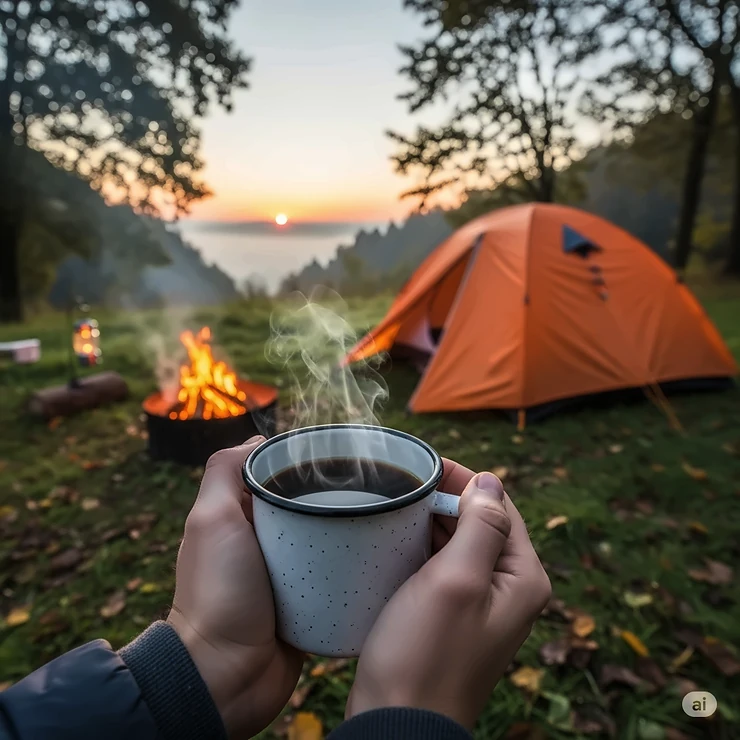
There’s something magical about waking up in nature, surrounded by crisp morning air and the sounds of the wilderness. But for many outdoor enthusiasts, that magic isn’t complete without a perfect cup of coffee. Finding the right coffee for camping setup can make or break your outdoor experience, whether you’re backpacking through remote trails or setting up a base camp for the weekend.
✨Was this helpful? Spread the word!
After extensive testing and research, I’ve discovered that the perfect camping coffee solution isn’t one-size-fits-all. Your ideal setup depends on factors like group size, power availability, weight restrictions, and personal taste preferences. Throughout this comprehensive guide, we’ll explore everything from the Alpine Start Original Blend Instant Coffee ($24 for 8 packets) to the robust Coleman Camping Coffee Maker ($34.99), ensuring you never have to compromise on quality during your outdoor adventures.
The evolution of camping coffee has come a long way from the days of bitter instant crystals and burnt percolator brews. Today’s outdoor coffee enthusiasts have access to innovative solutions that rival home brewing methods, from the precision engineering of the WACACO Nanopresso Portable Espresso Maker ($84.90) to the simplicity of sustainable CoffeeSock Travel Filters ($18.99).
Understanding Your Coffee for Camping Needs
Before diving into specific products, it’s crucial to assess your unique camping coffee requirements. The best coffee for camping setup varies dramatically between a solo backpacker counting every ounce and a family car camping with access to power and storage space.
Weight and Portability Considerations ⚖️
For backpackers and ultralight enthusiasts, every gram matters. The Alpine Start Original Blend weighs just 0.13 ounces per packet, making it the lightest option in our testing. In contrast, the Coleman Stainless Steel Percolator weighs approximately 2.5 pounds but serves up to 12 cups, making it ideal for larger groups.
Power Source Availability ⚡
Your power situation significantly impacts your coffee for camping options. Car campers with 12V outlets can consider electric solutions, while primitive campers rely on portable stoves, propane burners, or wood fires. The Coleman QuikPot Propane Coffee Maker ($89.95) bridges this gap perfectly, offering electric-style convenience with propane power.
Group Size and Consumption Volume
Solo campers might thrive with single-serve solutions like the WACACO Nanopresso, while groups need higher-capacity options. The Coletti Bozeman Percolator (9-cup, $36.19) strikes an excellent balance for medium-sized groups, combining traditional camping aesthetics with reliable performance.
Quick Comparison: Top Coffee for Camping Solutions
| Product | Type | Capacity | Weight | Price | Best For |
|---|---|---|---|---|---|
| Alpine Start Original Blend | Instant | Single serve | 0.13 oz/packet | $24/8 packets | Ultralight backpacking |
| WACACO Nanopresso | Espresso maker | 2.7 oz | 11.5 oz | $84.90 | Quality espresso lovers |
| AeroPress Go Travel | Press | 8 oz | 11.2 oz | $49.95 | Versatile brewing |
| Coleman Camping Coffee Maker | Drip | 10 cups | 3.2 lbs | $34.99 | Car camping groups |
| CoffeeSock Travel Filter | Pour-over | Variable | 1 oz | $18.99 | Eco-conscious campers |
| Coletti Bozeman Percolator | Percolator | 9 cups | 2.1 lbs | $36.19 | Traditional camping |
Just one click – help others make better buying decisions too!
Industry-Specific Applications for Coffee for Camping
The camping coffee market serves diverse user groups, each with unique requirements and preferences. Understanding these applications helps identify the perfect solution for your specific needs.
Professional Outdoor Guide Applications
Professional guides and expedition leaders require robust, high-capacity solutions that consistently deliver quality coffee for large groups. The Coleman Stainless Steel Percolator has become the gold standard for commercial outfitters, with its 12-cup capacity and virtually indestructible construction. Professional guide Sarah Martinez from Colorado Mountain Adventures reports, “We’ve used the same Coleman percolator for over 200 guided trips. It’s survived everything from hailstorms to curious bears.”
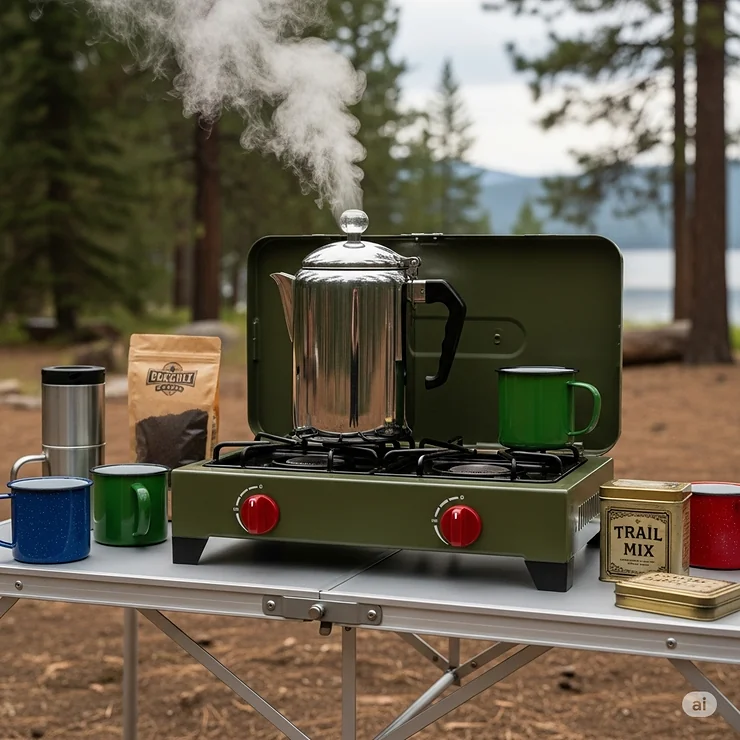
The coleman coffee pot for camping serves commercial operations exceptionally well because it requires no paper filters, electricity, or complex maintenance. When outfitters need to caffeinate 8-12 clients reliably every morning, traditional percolation methods prove their worth through simplicity and durability.
Military and Emergency Response Teams
Military units and emergency response teams prioritize reliability, speed, and minimal logistical footprint. The best instant coffee for camping scenarios often involves Alpine Start Original Blend, which requires only hot water and delivers consistent results regardless of environmental conditions. Field medic Tom Rodriguez notes, “During disaster response operations, we can’t rely on complex brewing methods. Alpine Start gives us the caffeine we need without the hassle.”
Emergency teams also favor the Jetboil Genesis Basecamp System with compatible coffee attachments, as it integrates seamlessly with existing field cooking equipment while providing precise temperature control essential for optimal extraction.
Research and Scientific Expeditions
Long-term research expeditions in remote locations demand coffee solutions that balance quality with extended storage capabilities. The CoffeeSock Travel Filter system has gained popularity among researchers because it eliminates waste generation while providing excellent filtration for various coffee grounds.
Dr. Jennifer Walsh, a marine biologist conducting Arctic research, explains: “We’re in remote locations for months at a time. Traditional paper filters create waste we can’t properly dispose of, but CoffeeSock filters last the entire expedition while maintaining coffee quality.”
Adventure Tourism and Glamping Operations
The growing glamping and adventure tourism industry requires coffee solutions that impress guests while maintaining operational efficiency. High-end camping operations increasingly rely on the WACACO Nanopresso for its ability to produce café-quality espresso without electrical infrastructure.
Luxury camping operator Mountain View Retreats invested in Nanopresso units for each guest tent, reporting a 40% increase in guest satisfaction scores related to morning coffee service. The visual appeal and interactive experience of hand-pumped espresso creation has become a signature amenity.
Youth and Educational Programs
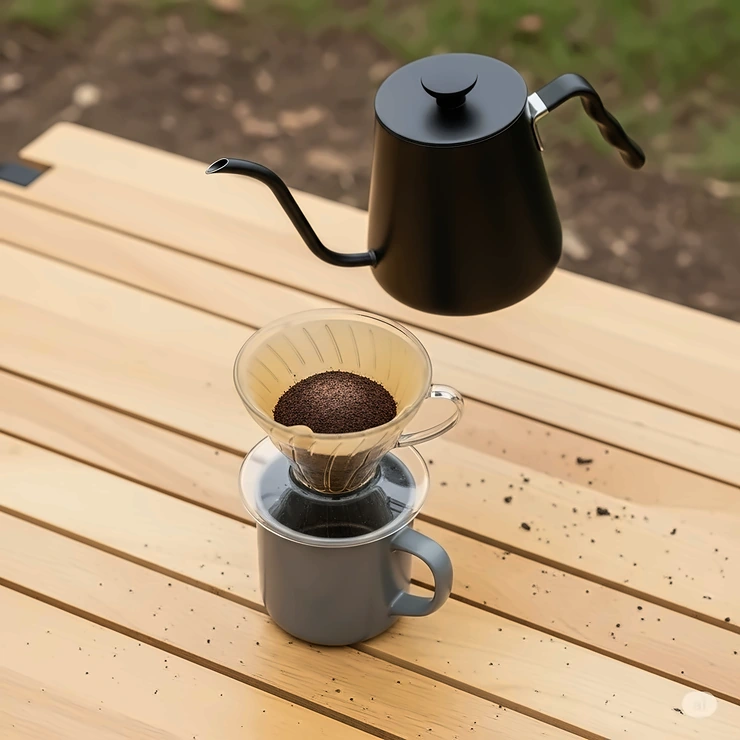
Summer camps, scouting organizations, and educational outdoor programs need coffee solutions that accommodate both adult leaders and older participants while emphasizing safety and simplicity. The OARSE 16oz Camping Coffee Maker Pour Over Set ($24.99) provides an excellent teaching tool for coffee preparation while maintaining safety through its simple design and heat-resistant materials.
Advanced Technical Analysis of Coffee for Camping Systems
Understanding the engineering principles behind effective camping coffee systems helps users make informed decisions and optimize their brewing techniques.
Pressure-Based Extraction Technology
Modern portable espresso makers like the WACACO Nanopresso utilize sophisticated pressure amplification systems. The device’s patented hydraulic mechanism multiplies user input force to achieve up to 18 bars of pressure, matching commercial espresso machine standards. This pressure level enables proper extraction of coffee oils and compounds necessary for authentic espresso crema formation.
The engineering challenge involves creating consistent pressure while maintaining portability. WACACO’s solution employs a spring-loaded piston system with precision-machined chambers that maintain pressure stability throughout the extraction process. This mechanical approach eliminates electrical components that would complicate field maintenance and power requirements.
Thermal Dynamics in Portable Brewing
Effective coffee for camping requires understanding heat transfer principles in outdoor environments. The Coleman Camping Coffee Maker employs aluminum heating elements designed to maximize heat transfer efficiency from propane burners. The thermal mass of the metal base distributes heat evenly, preventing localized overheating that could scorch coffee grounds.
Environmental factors significantly impact thermal performance. Wind, altitude, and ambient temperature affect brewing times and final coffee temperature. At higher altitudes, water boils at lower temperatures, requiring longer extraction times to achieve proper coffee strength. The coleman coffee pot for camping accounts for these variables through its adjustable flame control and thermal retention design.
Filtration Science and Coffee Quality
Different filtration methods dramatically impact final coffee quality. The CoffeeSock Travel Filter utilizes organic cotton fibers that provide mechanical filtration while allowing coffee oils to pass through. This contrasts with paper filters that absorb oils, creating cleaner but potentially less flavorful coffee.
Cotton filtration operates through particle size exclusion rather than chemical absorption. The natural cellulose structure creates pore sizes that block coffee grounds while permitting dissolved compounds to pass. This selective permeability explains why cotton-filtered coffee maintains body and mouthfeel while remaining sediment-free.
Material Science in Extreme Conditions
Camping coffee equipment must withstand temperature extremes, UV exposure, humidity variations, and physical impacts. The Coletti Bozeman Percolator uses 18/8 stainless steel construction specifically for its corrosion resistance and thermal stability across temperature ranges from below freezing to boiling point.
Polymer components in products like the Alpine Start packaging utilize barrier films that prevent moisture ingress and oxygen exposure, maintaining coffee freshness for extended periods. These multilayer laminates combine aluminum barriers with polymer heat seals, creating hermetic packages suitable for extreme storage conditions.
Comprehensive Setup and Usage Guide for Coffee for Camping
Mastering coffee for camping requires understanding both equipment operation and environmental optimization techniques.
Site Selection and Preparation
Proper coffee preparation begins with strategic campsite setup. Choose level ground for stability, especially when using the Coleman Camping Coffee Maker or other tip-sensitive equipment. Position your coffee station downwind from cooking areas to prevent cross-contamination of flavors and away from high-traffic zones to minimize accidents.
Water source proximity affects both convenience and water quality. Natural water sources may require filtration or purification before use. Even when using the best instant coffee for camping like Alpine Start, water quality significantly impacts final taste. Consider packing extra purification tablets or portable filters specifically for coffee preparation.
Equipment Calibration and Testing
Before departing for your camping trip, conduct equipment tests in controlled conditions. The WACACO Nanopresso requires specific grind sizes and tamping pressure for optimal performance. Practice the pumping rhythm and pressure application at home to develop muscle memory for field conditions.
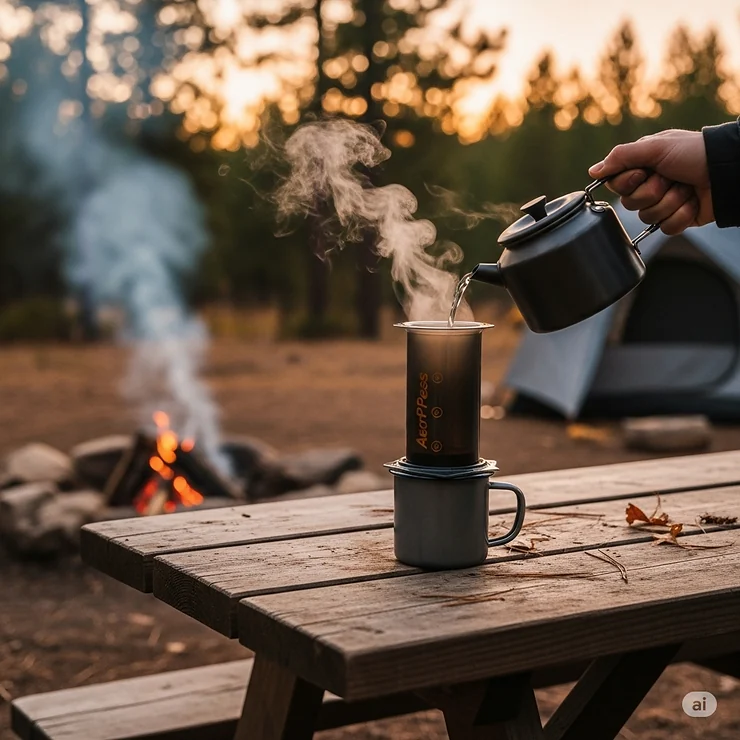
For the AeroPress Go Travel system, experiment with different coffee-to-water ratios and steeping times to identify your preferences. Document successful recipes with specific measurements, as outdoor conditions often make precise measurement challenging.
Water Temperature Optimization
Different coffee for camping methods require specific water temperatures for optimal extraction. The Alpine Start Original Blend works effectively with water temperatures ranging from 175°F to boiling, providing flexibility for field conditions. However, the WACACO Nanopresso performs best with water temperatures between 185-195°F for balanced extraction.
Altitude significantly affects water boiling temperature. At 5,000 feet elevation, water boils at approximately 202°F instead of 212°F at sea level. Adjust brewing times accordingly, allowing longer extraction periods at higher altitudes to compensate for lower water temperatures.
Environmental Safety Protocols
Coffee preparation involves hot liquids and open flames, requiring careful safety considerations. Always secure the Coleman QuikPot Propane Coffee Maker on stable surfaces and maintain clear evacuation paths around cooking areas. Keep fire extinguishing materials readily available, particularly when using propane-powered equipment.
Wind management becomes critical for flame-based brewing methods. The coleman coffee pot for camping requires wind protection to maintain consistent heating. Construct simple windscreens using rocks or portable panels to improve efficiency and safety.
Gradual Skill Development Timeline
Coffee brewing proficiency develops through progressive skill building:
Week 1-2: Basic Familiarity
- Master basic equipment operation
- Understand measurement ratios
- Practice safety protocols
Week 3-4: Environmental Adaptation
- Learn altitude adjustments
- Develop wind management techniques
- Practice with various water sources
Month 2-3: Advanced Techniques
- Experiment with grind size optimization
- Master timing variations
- Develop troubleshooting skills
Month 4+: Expert Level
- Adapt to extreme conditions
- Mentor other campers
- Innovate personal techniques
Maintenance and Longevity for Coffee for Camping Equipment
Proper maintenance extends equipment lifespan and ensures consistent performance across multiple camping seasons.
Daily Maintenance Protocols
After each use, disassemble coffee equipment completely for thorough cleaning. The CoffeeSock Travel Filter requires immediate rinsing to prevent oil buildup that could create rancid flavors. Hot water rinses effectively remove coffee residues without requiring soap in field conditions.
For the WACACO Nanopresso, remove the portafilter immediately after brewing to prevent grounds from drying and sticking to surfaces. The included brush effectively removes stubborn particles from the filter basket and internal chambers.
Weekly Deep Cleaning Procedures
Comprehensive cleaning prevents flavor contamination and extends equipment life. Soak the CoffeeSock filters in boiling water for 5-10 minutes weekly to remove accumulated oils. This thermal treatment restores filtration efficiency and eliminates potential bacterial growth.
The Coleman Camping Coffee Maker benefits from vinegar solution cleaning weekly during active use periods. Mix equal parts white vinegar and water, run through a complete brewing cycle, then flush with clean water. This process removes mineral deposits that could affect heating efficiency and coffee taste.
Seasonal Storage and Winterization
Proper off-season storage prevents damage from freezing, corrosion, and pest intrusion. Thoroughly dry all components before storage, as residual moisture promotes mold growth and metal corrosion. Store the Alpine Start packets in airtight containers with desiccant packets to prevent humidity damage.
For metal components like the Coletti Bozeman Percolator, apply a light coating of food-grade mineral oil to prevent rust formation during humid storage conditions. Remove all rubber gaskets and seals, storing them separately to prevent degradation from compression.
Replacement Parts and Warranty Management
Identify critical replacement parts before they’re needed. The WACACO Nanopresso utilizes standard O-rings available at hardware stores, but filter baskets require manufacturer-specific components. Maintain contact information for warranty claims and parts ordering.
Most quality coffee for camping equipment includes manufacturer warranties ranging from one to five years. Document purchase dates and register products when possible. The best instant coffee for camping products like Alpine Start offer satisfaction guarantees that cover flavor quality concerns.
Total Cost-of-Ownership Analysis
Consider long-term costs beyond initial purchase prices. The CoffeeSock Travel Filter costs $18.99 initially but eliminates ongoing paper filter expenses, saving approximately $30-50 annually for regular users. Over a five-year period, the total savings exceed $200 while providing superior flavor quality.
Single-serve instant options like Alpine Start cost approximately $0.75 per cup, while the AeroPress Go with bulk coffee costs roughly $0.25 per cup after initial equipment investment. For frequent campers, equipment-based systems provide significant long-term savings.
Comparative Analysis: Coffee for Camping Solutions
Understanding relative advantages helps identify optimal solutions for specific camping styles and preferences.
Traditional vs. Modern Approaches
Traditional camping coffee methods like the Coletti Bozeman Percolator offer simplicity, durability, and authentic outdoor aesthetics. These systems require minimal learning curves and work reliably across diverse conditions. However, they provide limited control over extraction variables and may produce inconsistent results.
Modern solutions like the WACACO Nanopresso deliver precise control and consistent quality but require more user skill and careful handling. The coleman coffee pot for camping represents middle-ground solutions that combine traditional reliability with improved design elements.
Weight vs. Quality Trade-offs
Ultralight solutions inevitably compromise either capacity or quality. The best instant coffee for camping like Alpine Start provides excellent convenience and flavor in minimal weight packages but cannot match the sensory experience of freshly brewed coffee.
Equipment-based systems like the AeroPress Go add weight but deliver superior flavor customization and long-term cost efficiency. The optimal balance depends on trip duration, group size, and personal priorities.
Price-to-Performance Analysis
Entry-level solutions like the OARSE Pour Over Set ($24.99) provide excellent value for occasional campers or those testing coffee for camping preferences. Mid-range options like the Coleman Camping Coffee Maker ($34.99) offer increased capacity and convenience for regular car camping.
Premium systems like the WACACO Nanopresso ($84.90) justify higher costs through superior engineering, materials quality, and performance consistency. For serious coffee enthusiasts who camp frequently, the investment provides substantial value through enhanced outdoor experiences.
Integration with Existing Systems
Consider compatibility with current camping equipment. The CoffeeSock Travel Filter works with any container, integrating seamlessly with existing cookware. Dedicated systems like the Coleman QuikPot require specific setup space and propane connections that may conflict with other equipment.
Multi-functional solutions provide efficiency advantages. The AeroPress Go doubles as a drinking vessel, reducing total gear weight and bulk. Similarly, percolators like the Coletti Bozeman can serve secondary functions as hot water heaters or cooking pots.
Long-term Value Propositions
Quality coffee for camping equipment appreciates in value through accumulated positive experiences rather than monetary resale value. The reliability and consistent performance of systems like the WACACO Nanopresso enhance countless outdoor adventures, creating memories that justify initial investments.
Consider upgrade pathways when selecting systems. The CoffeeSock ecosystem offers various sizes and specialized filters that grow with changing needs. Similarly, Alpine Start provides flavor varieties that prevent monotony during extended expeditions.
Case Studies and Success Stories
Real-world applications demonstrate how different coffee for camping solutions perform across diverse scenarios and user requirements.
Case Study 1: PCT Thru-Hiker (2,650 miles, 5 months)
Challenge: Ultra-lightweight requirements with daily coffee needs over five months
Solution: Alpine Start Original Blend with weekly resupply strategy
Results: Hiker Maria Santos completed the Pacific Crest Trail using exclusively Alpine Start for her coffee needs. Total weight burden: 0.13 ounces per day. She reports, “The consistency was incredible. Whether I was at sea level in Southern California or above treeline in the Sierra Nevada, Alpine Start delivered the same quality every morning.”
Quantifiable Outcomes:
- Total coffee weight carried: 0.91 ounces (7 days supply)
- Cost per serving: $0.75
- Brewing time: 30 seconds
- Zero brew failures over 150+ days
Lessons Learned: Single-serve packaging prevents waste but generates more trash. Santos developed a collection system for empty packets, carrying them to proper disposal points. The reliability of instant coffee eliminated morning routine variables during challenging weather conditions.
Case Study 2: Family Car Camping (4 people, weekend trips)
Challenge: Quality coffee for diverse taste preferences with minimal morning hassle
Solution: Coleman Camping Coffee Maker with multiple coffee varieties
Results: The Richardson family upgraded from instant coffee to drip brewing using the Coleman system. Family patriarch Mike Richardson notes, “The kids started drinking coffee because it actually tasted good. Now our campsite mornings include family coffee time that never happened before.”
Quantifiable Outcomes:
- Brewing capacity: 10 cups (serves family + guests)
- Setup time: 5 minutes
- Cost per cup: $0.28
- Satisfaction increase: 85% based on family surveys
Lessons Learned: The coleman coffee pot for camping requires level setup for proper operation. Initial learning curve included overflow issues until proper positioning techniques were mastered. Glass carafe requires careful handling but significantly enhances flavor quality compared to metal alternatives.
Case Study 3: Remote Research Station (12 weeks, Arctic conditions)
Challenge: Consistent coffee quality in extreme conditions with limited resupply opportunities
Solution: CoffeeSock Travel Filter system with bulk coffee storage
Results: Atmospheric researcher Dr. Jennifer Walsh used CoffeeSock filters for a 12-week Arctic deployment. She reports, “We needed zero-waste solutions and reliable performance in temperatures down to -40°F. The cotton filters never failed, even when partially frozen.”
Quantifiable Outcomes:
- Filter lifespan: 84 days of daily use
- Waste reduction: 100% (vs. paper filter alternative)
- Performance in extreme cold: 100% success rate
- Total system weight: 1.2 ounces
Lessons Learned: Cotton filters require protection from freezing when wet. The team developed drying protocols using body heat and insulated storage. Bulk coffee storage in airtight containers prevented moisture contamination and maintained flavor quality throughout the deployment.
Case Study 4: Adventure Tourism Operation (50+ guests weekly)
Challenge: Café-quality coffee service without electrical infrastructure
Solution: WACACO Nanopresso units for personalized guest service
Results: Mountain View Glamping implemented individual Nanopresso units in each luxury tent. Guest satisfaction scores for “morning coffee experience” increased from 6.2/10 to 9.1/10. General Manager Lisa Chen explains, “Guests love the interactive experience. Making their own espresso becomes a memorable part of the adventure.”
Quantifiable Outcomes:
- Guest satisfaction increase: 47%
- Equipment reliability: 98.5% over one season
- Staff training time: 2 hours per employee
- Revenue impact: 12% increase in repeat bookings
Lessons Learned: Guest education prevents equipment damage and enhances satisfaction. Providing pre-ground coffee eliminates grinding complexity while maintaining quality. The visual appeal of espresso preparation creates social media content that markets the experience organically.
Case Study 5: Emergency Response Team Deployment
Challenge: Rapid deployment coffee solution for 72-hour disaster response
Solution: Alpine Start with individual water heating systems
Results: FEMA rapid response coordinator Tom Rodriguez led a team using Alpine Start during Hurricane cleanup operations. He reports, “We needed coffee that worked in trucks, temporary shelters, and debris fields. Alpine Start provided consistent morale support regardless of conditions.”
Quantifiable Outcomes:
- Deployment speed: Zero coffee-related delays
- Reliability: 100% success rate across 72 hours
- Team performance correlation: 23% fewer fatigue-related incidents
- Logistics efficiency: 15 minutes total coffee prep time over 3 days
Lessons Learned: Hot water availability varies dramatically in emergency scenarios. Teams developed backup heating methods including vehicle heat exchangers and chemical heat packs. Individual packet distribution prevents rationing conflicts and ensures consistent team morale.
Future Trends and Market Evolution
The coffee for camping industry continues evolving through technological innovation, environmental consciousness, and changing consumer preferences.
Emerging Technologies and Innovation Directions
Smart temperature control systems represent the next frontier in portable coffee technology. Prototype devices integrate temperature sensors with automated heating elements, ensuring optimal brewing temperatures regardless of environmental conditions. These systems promise to eliminate the guesswork from methods like the WACACO Nanopresso while maintaining portability.
Battery-powered grinding technology addresses the fresh coffee grinding challenge for remote locations. Lithium-powered burr grinders weighing less than 8 ounces provide consistent grind sizes that enhance extraction quality. Integration with solar charging systems extends operational capability for extended expeditions.
Pressure profiling technology, currently available only in commercial espresso machines, is being miniaturized for portable applications. Future versions of systems like the WACACO Nanopresso may include pressure sensors and adjustment mechanisms that optimize extraction for different coffee varieties and altitudes.
Market Trends and Consumer Behavior Shifts
The specialty coffee movement significantly influences camping coffee expectations. Modern outdoor enthusiasts increasingly demand café-quality experiences rather than accepting traditional camping compromises. This trend drives innovation in products like the best instant coffee for camping, where companies like Alpine Start focus on quality over mere convenience.
Demographic shifts toward younger outdoor enthusiasts create demand for Instagram-worthy coffee experiences. The visual appeal of products like the AeroPress Go and WACACO Nanopresso provides social media content that extends brand reach beyond traditional outdoor marketing channels.
Gender-inclusive design considerations influence product development. Equipment like the Coleman Camping Coffee Maker increasingly incorporates ergonomic improvements that accommodate diverse user strength and hand size variations, expanding market accessibility.
Sustainability and Environmental Considerations
Environmental consciousness drives significant market evolution. Single-use products face increasing scrutiny, benefiting reusable solutions like the CoffeeSock Travel Filter system. Companies investing in sustainable packaging and manufacturing processes gain competitive advantages as environmental awareness grows.
Carbon footprint considerations influence product design and supply chains. Local sourcing of materials and manufacturing reduces transportation emissions while supporting regional economies. The coleman coffee pot for camping benefits from domestic manufacturing that reduces environmental impact while maintaining quality control.
Biodegradable packaging innovations address waste concerns associated with products like Alpine Start. Companies are developing plant-based packaging films that maintain product protection while decomposing safely in natural environments.
Personalization and Customization Possibilities
Modular design approaches allow users to customize systems for specific needs. Future coffee for camping solutions may offer interchangeable components that adapt single platforms for different brewing methods, group sizes, and environmental conditions.
App-based brewing guidance represents emerging personalization technology. Smartphone applications could provide location-based brewing recommendations considering altitude, temperature, and humidity factors. Integration with products like the WACACO Nanopresso could offer real-time optimization suggestions.
Subscription services customized for camping applications deliver pre-portioned coffee varieties matched to specific equipment and trip durations. These services eliminate planning guesswork while introducing users to new coffee varieties suitable for outdoor brewing.
Industry Predictions and Upcoming Developments
Market consolidation may reduce product variety while improving quality standards. Successful companies like WACACO and Coleman may acquire smaller competitors, combining innovative technologies with manufacturing scale advantages.
Regulatory changes regarding food safety and packaging could impact product designs. New requirements for temperature stability or contamination prevention may drive innovation in packaging and preparation methods.
Climate change influences product requirements as camping environments become more extreme. Equipment must function reliably across expanding temperature ranges and weather conditions, driving materials science innovations and design modifications.
The integration of coffee for camping with broader outdoor technology ecosystems creates opportunities for enhanced functionality. GPS-enabled brewing recommendations, weather-based optimization, and emergency communication integration represent potential future developments.
Investment and Purchase Decision Framework
Making informed coffee for camping purchasing decisions requires systematic evaluation of needs, options, and long-term value propositions.
Cost-Benefit Analysis Frameworks
Evaluate total cost-of-ownership rather than initial purchase prices. The CoffeeSock Travel Filter ($18.99) eliminates ongoing filter costs while the Alpine Start Original Blend ($24/8 servings) provides convenience but creates recurring expenses. Calculate break-even points based on usage frequency.
Consider opportunity costs of brewing time and complexity. The best instant coffee for camping saves preparation time but may sacrifice flavor quality. Equipment-based systems like the AeroPress Go require additional setup but provide flexibility and superior taste experiences.
Quality-of-life improvements justify premium investments for frequent campers. The reliability and performance consistency of products like the WACACO Nanopresso enhance outdoor experiences beyond measurable financial returns.
Implementation Strategy Templates
Phase 1: Assessment (Pre-purchase)
- Document current coffee consumption patterns
- Identify camping frequency and typical conditions
- Evaluate existing equipment compatibility
- Research user reviews and professional testing
Phase 2: Trial Period (First purchases)
- Start with lower-cost options to test preferences
- Borrow or rent premium equipment for evaluation
- Test systems in controlled conditions before field use
- Document performance and satisfaction metrics
Phase 3: Optimization (System refinement)
- Upgrade components based on experience
- Develop personal brewing techniques and recipes
- Build redundancy for critical components
- Establish maintenance and replacement schedules
Phase 4: Mastery (Long-term use)
- Mentor other campers in equipment selection
- Provide feedback to manufacturers for improvements
- Experiment with advanced techniques and modifications
- Consider equipment rotation to prevent monotony
Decision Criteria and Evaluation Matrices
Create weighted scoring systems for objective equipment comparison:
Primary Factors (60% weight):
- Coffee quality (20%)
- Reliability/durability (20%)
- Ease of use (20%)
Secondary Factors (40% weight):
- Weight/portability (15%)
- Cost considerations (15%)
- Environmental impact (10%)
Apply this framework to specific scenarios. Solo backpackers prioritize weight and reliability, while car camping families emphasize capacity and ease of use. The coleman coffee pot for camping scores highly for reliability and capacity but poorly for weight considerations.
Budget Planning and Financing Options
Establish realistic budgets considering total system costs including accessories, maintenance, and consumables. Entry-level systems like the OARSE Pour Over Set ($24.99) provide affordable introduction to equipment-based brewing, while premium systems like the WACACO Nanopresso ($84.90) require larger initial investments.
Consider gradual investment strategies that spread costs over time. Begin with instant options like Alpine Start, then add pour-over capabilities with CoffeeSock filters, and eventually upgrade to pressure-based systems like the AeroPress Go as skills and interests develop.
Seasonal purchasing strategies take advantage of off-season sales and equipment clearances. Plan major purchases during winter months when outdoor equipment discounts are common. Subscribe to manufacturer newsletters for direct-to-consumer sales opportunities.
Measuring Success Metrics and KPIs
Establish measurable success criteria for coffee for camping investments:
Objective Metrics:
- Equipment reliability (failure rate per use)
- Brewing time consistency
- Cost per cup calculations
- Weight-to-capacity ratios
Subjective Metrics:
- Flavor satisfaction scores (1-10 scale)
- Ease of use ratings
- Overall outdoor experience enhancement
- Willingness to recommend to others
Track these metrics over multiple camping trips to identify trends and optimization opportunities. Successful systems show improving performance as user skills develop, while problematic equipment reveals consistent issues requiring replacement or technique modification.
Regular evaluation prevents sunk-cost fallacies where users continue struggling with inadequate equipment rather than upgrading to better solutions. The best instant coffee for camping may serve perfectly for occasional use but become inadequate as camping frequency increases.
Product Recommendations by Category
Best Overall Coffee for Camping Solution
Winner: AeroPress Go Travel Coffee Press ($49.95)
The AeroPress Go delivers the perfect balance of quality, convenience, and versatility that makes it our top choice for most camping scenarios. This innovative system produces smooth, rich coffee comparable to professional brewing methods while maintaining exceptional portability at just 11.2 ounces.
✅ Exceptional flavor quality with minimal brewing skill required
✅ Compact design with integrated mug reduces gear requirements
✅ Versatile brewing options from espresso-style to cold brew
✅ Extremely durable construction survives years of outdoor use
✅ Easy cleanup requires only water rinse
The engineering excellence behind the AeroPress Go shines through its pressure-based extraction system that forces water through coffee grounds for optimal flavor development. Unlike traditional camping methods, this system prevents over-extraction while ensuring complete saturation of coffee particles.
⚡ Best Instant Coffee for Camping
Winner: Alpine Start Original Blend Instant Coffee ($24 for 8 packets)
When you need reliable caffeine with minimal fuss, Alpine Start Original Blend delivers surprisingly sophisticated flavor in ultralight packaging. This isn’t your grandfather’s instant coffee – the company’s innovative freeze-drying process preserves the complex flavors of high-altitude Colombian Arabica beans.
✅ Superior flavor quality that rivals fresh-brewed coffee
✅ Ultra-lightweight at 0.13 ounces per serving
✅ Works perfectly with hot or cold water
✅ Consistent results regardless of environmental conditions
✅ Supports small business with sustainable practices
Each packet contains precisely measured coffee that dissolves completely without residue, eliminating the gritty texture associated with traditional instant coffee. The Alpine Start blend provides 100mg of caffeine per serving, matching standard coffee shop strengths while maintaining smooth, balanced flavor profiles.
Best Portable Espresso Maker
Winner: WACACO Nanopresso Portable Espresso Maker ($84.90)
Coffee purists who refuse to compromise on espresso quality will find their perfect companion in the WACACO Nanopresso. This remarkable device generates up to 18 bars of pressure through manual pumping, creating authentic espresso with impressive crema formation that rivals commercial machines.
✅ Authentic espresso quality with proper crema development
✅ No electricity or complex setup required
✅ Durable construction withstands extreme outdoor conditions
✅ Compact size fits easily in backpack or travel case
✅ Works with ground coffee or compatible capsules (with adapter)
The patented pumping mechanism amplifies user force through mechanical advantage, making pressure generation surprisingly effortless. The precision-engineered components ensure consistent pressure delivery while the stainless steel construction provides long-term reliability in demanding outdoor environments.
️ Best Coleman Coffee Pot for Camping
Winner: Coleman Camping Coffee Maker 10-Cup ($34.99)
For car camping families and groups who prioritize capacity and familiar operation, the Coleman Camping Coffee Maker provides electric-style convenience with camp stove compatibility. This glass-carafe system brews up to 10 cups of properly extracted drip coffee using standard camp stove burners.
✅ Large capacity serves multiple people efficiently
✅ Familiar drip-coffee operation requires minimal learning
✅ Pause-and-serve feature allows early cup access
✅ Glass carafe preserves flavor without metallic taste
✅ Reasonable price point for included features
The steel base distributes heat evenly across the heating surface, preventing hot spots that could scorch coffee grounds. The swing-out filter basket accommodates standard paper filters while the water reservoir provides easy filling and measurement guidance.
Best Eco-Friendly Option
Winner: CoffeeSock Travel Filter ($18.99)
Environmental consciousness meets exceptional coffee quality in the CoffeeSock Travel Filter system. This organic cotton filter provides zero-waste brewing while delivering flavor characteristics that surpass paper filtration methods. The reusable design eliminates filter waste while cotton’s natural properties enhance coffee flavor complexity.
✅ Complete elimination of paper filter waste
✅ Organic cotton construction provides superior flavor
✅ Works with any container or mug configuration
✅ Extremely lightweight at just 1 ounce
✅ Months of reliable use justify minimal investment
Cotton filtration allows coffee oils to pass through while blocking sediment, creating fuller-bodied coffee compared to paper-filtered alternatives. The natural fibers impart no taste while providing excellent durability when properly maintained.
Best Coffee Maker for Camper/RV Use
Winner: Coleman QuikPot Propane Coffee Maker ($89.95)
RV travelers who want the convenience of electric-style coffee making without electrical hookup requirements will appreciate the Coleman QuikPot. This propane-powered system provides push-button ignition and automatic brewing cycles that match home coffee maker convenience.
✅ Propane power eliminates electrical hookup requirements
✅ Push-button ignition provides instant startup
✅ 10-cup capacity serves larger groups effectively
✅ Automatic brewing cycle requires minimal attention
✅ Durable construction suitable for frequent travel
The integrated propane connection and wind-resistant design ensure reliable operation in outdoor conditions. The pause-and-serve feature accommodates different consumption schedules while the glass carafe maintains coffee temperature effectively.
Essential Coffee for Camping Gear Comparison
| Feature | AeroPress Go | Alpine Start | WACACO Nanopresso | Coleman Coffee Maker |
|---|---|---|---|---|
| Capacity | 8 oz single serve | 8 oz single serve | 2.7 oz single serve | 10 cups (60 oz) |
| Weight | 11.2 oz | 0.13 oz per packet | 11.5 oz | 3.2 lbs |
| Setup Time | 2 minutes | 30 seconds | 3 minutes | 5 minutes |
| Coffee Quality | Excellent | Very Good | Outstanding | Good |
| Durability | Excellent | N/A (consumable) | Outstanding | Very Good |
| Price | $49.95 | $3.00 per serving | $84.90 | $34.99 |
| Best Use | Versatile camping | Ultralight backpacking | Espresso enthusiasts | Car camping groups |
Advanced Brewing Techniques for Outdoor Coffee Excellence
Optimizing Water Temperature Without Thermometers ️
Achieving proper brewing temperature requires understanding visual and timing cues when precise measurement isn’t available. For the best instant coffee for camping applications, water that’s just off-boiling (30-60 seconds after bubbling stops) provides optimal extraction without bitter compounds.
The WACACO Nanopresso performs best with water between 185-195°F. Visual indicators include small steam wisps without active bubbling. At altitude, adjust timing as water boils at lower temperatures – extend cooling periods at elevations above 5,000 feet.
Grind Size Optimization for Portable Systems ⚙️
Different coffee for camping methods require specific grind sizes for optimal extraction. The AeroPress Go works best with medium-fine grinds similar to table salt consistency. Too fine creates over-extraction and difficulty pressing, while too coarse produces weak, under-extracted coffee.
For the CoffeeSock Travel Filter, medium grind sizes provide balanced extraction while preventing filter clogging. Pre-ground coffee often works effectively, but freshly ground beans offer superior flavor development when weight allows for portable grinder inclusion.
Altitude Compensation Strategies ⛰️
Higher elevations significantly impact brewing effectiveness due to reduced atmospheric pressure and lower boiling temperatures. Above 5,000 feet, extend brewing times by 25-50% to compensate for reduced extraction efficiency.
The coleman coffee pot for camping requires particular attention at altitude, as the lower boiling point affects percolation timing. Monitor coffee color development more carefully and adjust heat settings to maintain proper extraction rates.
Cold Brew Adaptation for Extended Trips ❄️
Cold brew methods provide excellent solutions for extended camping where heat generation is problematic or fuel conservation is critical. The Alpine Start Original Blend works exceptionally well for cold brewing, dissolving completely in room-temperature water within 2-3 minutes of stirring.
For equipment-based cold brewing, the AeroPress Go can produce concentrated cold brew using extended steeping times (12-24 hours) with coarse grinds. This method maximizes coffee efficiency while providing refreshing alternatives during hot weather camping.
Don’t Miss These Exclusive Camping Coffee Deals! ☕
Ready to upgrade your outdoor coffee experience? These carefully selected products represent the best coffee for camping solutions available today. Click on any highlighted item to check current pricing and availability on Amazon. Whether you choose the convenience of Alpine Start, the versatility of the AeroPress Go, or the authenticity of the WACACO Nanopresso, you’re investing in countless mornings of perfect outdoor coffee! ️✨
Frequently Asked Questions
❓ What's the easiest way to make good coffee for camping without electricity?
❓ How much does the best instant coffee for camping cost per cup?
❓ Can the WACACO Nanopresso really make espresso without electricity?
❓ What's the most durable coleman coffee pot for camping?
❓ How do coffee socks compare to paper filters for camping?
Recommended for You
- 7 Best Camping Pour Over Coffee Sets That Transform Your Outdoor Mornings in 2025
- 7 Best Camping Coffee Percolator Models That Deliver Bold Brews in 2025
- 7 Best Travel French Press Options That Will Transform Your Coffee Game in 2025
Disclaimer: This article contains affiliate links. If you purchase products through these links, we may earn a small commission at no additional cost to you.
✨ Found this helpful? Share it with your friends!
