
In This Article
✨Was this helpful? Spread the word!
When I first started my RV adventures, I never imagined how much the right window treatments could transform my entire camping experience. After years of dealing with blazing morning sun, nosy neighbors, and sweltering afternoons, I discovered that quality camper roller blinds aren’t just accessories – they’re essential components that can make or break your mobile home comfort.
The RV industry has exploded in recent years, with over 11.2 million households in the U.S. owning an RV and the market projected to grow significantly. As more people embrace the RV lifestyle, particularly with remote work enabling long-term travel, the demand for comfortable, functional window treatments has skyrocketed. Modern camper roller blinds offer sophisticated solutions that go far beyond basic privacy, incorporating advanced materials, thermal insulation, and user-friendly mechanisms that rival residential window treatments.
Whether you’re a weekend warrior seeking better sleep in crowded campgrounds or a full-time RVer looking to optimize energy efficiency, the right roller blinds for camper windows can dramatically improve your quality of life on the road. From blocking harmful UV rays that can fade your interior to providing crucial thermal barriers that reduce your reliance on air conditioning, these seemingly simple window coverings pack impressive functionality into compact designs specifically engineered for mobile living.
Industry-Specific Applications of Camper Roller Blinds
The versatility of camper roller blinds extends far beyond recreational use, with applications spanning numerous industries and user demographics. Understanding these diverse applications helps inform purchasing decisions and reveals the true value proposition of quality window treatments in mobile environments.
Professional and Commercial Applications
In the commercial RV sector, roller blinds serve critical functions that directly impact business operations and customer satisfaction. The RV industry’s $140 billion economic impact supports nearly 680,000 jobs, highlighting the significant commercial applications for RV window treatments.
Food truck operators rely heavily on effective window treatments to maintain comfortable working conditions while protecting valuable equipment from UV damage. Professional-grade camper roller blinds help regulate interior temperatures, reducing the strain on refrigeration systems and improving food safety compliance. Many food service operations require specific light control for food photography and social media marketing, making adjustable roller blinds essential tools for business success.
Mobile medical units and dental practices utilize specialized roller blinds to ensure patient privacy while maintaining necessary visibility for operations. These applications often require blackout capabilities for certain procedures while providing quick adjustment options for examination lighting. The easy-clean surfaces of quality roller blinds also support the stringent sanitation requirements of medical applications.
Corporate mobile offices and temporary command centers depend on roller blinds to create professional environments conducive to productivity. With 22% of campers working remotely from campsites in 2024, the demand for office-quality environments in RVs continues growing. Proper light control reduces screen glare, minimizes eye strain during long work sessions, and helps maintain professional video call appearances.
Demographic Segmentation and Usage Patterns
The modern RV demographic spans multiple generations and lifestyle segments, each with distinct requirements for window treatments. Millennials represent the fastest-growing segment of RV owners, often prioritizing technology integration and aesthetic appeal alongside functionality. This generation frequently seeks roller blind systems that coordinate with smart home automation and provide Instagram-worthy interior aesthetics.
Baby Boomers, traditionally the largest RV demographic, prioritize ease of operation and durability over high-tech features. They often prefer simple, reliable mechanisms that operate smoothly without requiring fine motor skills or technical knowledge. For this demographic, the slow-rise mechanisms found in quality roller blinds provide ideal operation characteristics.
Full-time RVers, regardless of age, require the most robust and versatile window treatment solutions. Their constant use demands commercial-grade durability while their space constraints necessitate compact, efficient designs. This segment often invests in premium roller blind systems that offer multiple opacity levels and superior insulation properties.
Weekend and seasonal RVers typically balance cost considerations with quality requirements. They need reliable performance during periodic use while avoiding over-investment in features they won’t regularly utilize. Mid-range roller blind systems often provide the optimal value proposition for this segment.
Regional and Cultural Considerations
Geographic location significantly influences roller blind requirements and preferences. Desert regions like Arizona and Nevada create extreme UV exposure and temperature differentials that demand high-performance materials and superior insulation properties. RVers in these areas often invest in dual-layer systems that provide both solar screen and blackout capabilities.
Northern climates present different challenges, with condensation control and thermal retention becoming priorities during extended cold weather camping. Insulated roller blinds help maintain comfortable interior temperatures while preventing condensation buildup that can lead to mold and mildew issues.
Coastal environments introduce salt air exposure that can accelerate corrosion of metal components. Stainless steel or powder-coated aluminum mechanisms become essential for longevity in these applications. Additionally, high humidity levels require materials that resist moisture absorption and maintain dimensional stability.
Cultural preferences also influence roller blind selection. European-style caravanning often emphasizes compact efficiency and understated elegance, favoring clean-lined roller systems in neutral colors. American RV culture tends toward larger windows and more dramatic light control options, driving demand for wider roller blind systems and bolder design choices.
Professional Testimonials and Applications
Long-haul truckers who live in their vehicles full-time consistently report that quality roller blinds dramatically improve sleep quality and overall well-being. Professional driver Sarah Martinez notes, “After installing blackout roller blinds in my sleeper cab, I finally get restful sleep regardless of parking lot lighting or early morning sun. The investment paid for itself in just two months through better alertness and fewer fatigue-related issues.”
Wildlife photographers and researchers who spend weeks in remote locations rely on adjustable light control for equipment protection and optimal working conditions. Professional photographer David Chen explains, “Precise light control is crucial for protecting sensitive camera equipment while maintaining the ability to observe wildlife without disturbing their natural behaviors. Quality roller blinds provide that flexibility while withstanding harsh outdoor conditions.”
Mobile veterinarians serving rural communities depend on effective window treatments to create sterile, professional environments for animal care. Dr. Lisa Thompson shares, “Being able to quickly adjust lighting conditions while maintaining privacy for anxious animals is essential for successful mobile practice. Reliable roller blinds help me provide the same quality of care as a traditional clinic.”
Advanced Technical Analysis of Camper Roller Blinds {#advanced-technical-analysis}
Understanding the sophisticated engineering behind modern camper roller blinds reveals why quality matters and helps inform purchasing decisions. The technical specifications of these systems directly impact performance, longevity, and user satisfaction.
Engineering Principles and Mechanisms ⚙️
Modern roller blind systems utilize precision-engineered spring mechanisms that provide controlled deployment and retraction. The measured speed shade retraction and solid aluminum top rail found in premium systems ensures smooth operation while minimizing wear on fabric edges.
The physics of roller blind operation involves careful balancing of spring tension, fabric weight, and mounting resistance. Quality systems employ constant-force springs that maintain consistent operation regardless of blind position. This engineering prevents the common problem of blinds that become increasingly difficult to operate as they’re extended or retracted.
Mounting systems represent critical engineering considerations for mobile applications. Traditional residential blinds rely on stable wall structures that don’t experience vibration or movement. RV roller blinds must accommodate constant motion, temperature fluctuations, and structural flex without loosening or misaligning. Advanced mounting brackets incorporate vibration dampening and adjustable tensioning to maintain proper operation throughout the vehicle’s operational life.
Material Science and Fabric Technology
Contemporary roller blind fabrics incorporate advanced material technologies that provide multiple performance benefits within single-layer constructions. High-performance polyester fabrics often feature specialized weaves that balance light transmission, UV resistance, and thermal properties.
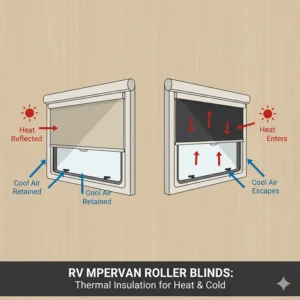
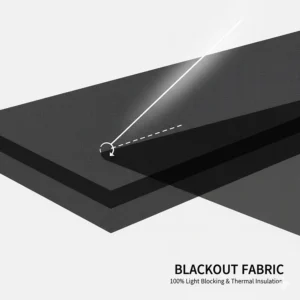
Thermal barrier coatings applied to roller blind fabrics can reflect up to 80% of solar heat before it enters the vehicle interior. These microscopic metallic coatings don’t compromise fabric flexibility or appearance while providing substantial energy savings. The most effective and affordable way to reduce heat from RV windows is to cover them with insulating blackout roller shades, demonstrating the proven effectiveness of thermal management technologies.
UV-resistant treatments embedded within fabric fibers prevent degradation that causes fading, brittleness, and eventual failure. Quality roller blind fabrics maintain their performance characteristics for years of continuous exposure to intense sunlight, unlike untreated materials that deteriorate rapidly in mobile applications.
Antimicrobial treatments integrated into fabric structures prevent mold, mildew, and bacterial growth that can occur in humid RV environments. These treatments maintain effectiveness throughout the fabric’s lifespan without affecting appearance or feel.
Performance Metrics and Testing Standards
Professional-grade roller blinds undergo rigorous testing protocols that evaluate durability, UV resistance, thermal performance, and operational longevity. Cycle testing subjects mechanisms to thousands of operation cycles under various load conditions to ensure reliable performance.
UV testing exposes fabrics to accelerated ultraviolet radiation equivalent to years of normal use, measuring color retention, fabric strength, and dimensional stability. Quality fabrics maintain at least 95% of their original properties after extended UV exposure testing.
Thermal performance testing measures both insulation value and heat rejection capabilities. Premium roller blind systems can reduce interior heat gain by 40-60% compared to uncovered windows, while blackout varieties can achieve near-complete light elimination.
Wind resistance testing ensures that external-mount roller blinds can withstand highway speeds and severe weather conditions without damage or detachment. Quality systems are tested to speeds exceeding 80 mph with various wind directions and turbulence patterns.
Innovation and Technological Advancement
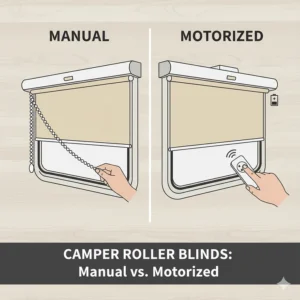
The integration of smart home technology into roller blind systems represents the cutting edge of current innovation. Motorized systems with smartphone app control allow precise adjustment of light levels without manual operation. These systems often incorporate preset programs that automatically adjust throughout the day based on sun position and user preferences.
Solar-powered motorized systems eliminate the need for hard-wired electrical connections while providing unlimited operation capability. Advanced systems incorporate battery backup and low-power modes that extend operation during cloudy conditions.
Sensor integration enables automatic response to environmental conditions. Light sensors can trigger automatic deployment during bright conditions, while temperature sensors can activate thermal barrier positioning during extreme heat. These automated systems optimize comfort and energy efficiency without requiring user intervention.
Future developments focus on smart fabric technologies that can actively change their properties in response to environmental conditions. Electrochromic fabrics may soon provide variable opacity levels within single fabric layers, eliminating the need for multiple blind systems.
Top 7 Camper Roller Blinds Available on Amazon
After extensive research and analysis of currently available products, here are the top-performing camper roller blinds that offer exceptional value, quality, and functionality for RV applications.
1. RecPro Black RV Roller Shades – Professional Grade Excellence
The RecPro Black RV Roller Shades represent the gold standard in RV window treatments, offering professional-grade construction with user-friendly operation. Available in sizes ranging from 14″ to 62″ in width and 24″ to 60″ in height, these shades accommodate virtually any RV window configuration. The 4-ply vinyl construction blocks out over 95% of light while providing excellent UV protection for interior furnishings.
Key Specifications:
- 4-ply vinyl blackout construction
- Slow-rise retraction mechanism
- 2⅜” overall depth for compact installation
- Available in 15+ size combinations
- Price range: $26.99 – $89.99 depending on size
Customer Reviews Analysis: Users consistently praise the smooth operation and effective light blocking. One verified purchaser noted, “These were a fraction of the price of others I looked at” while maintaining superior quality. The slow-rise mechanism receives particular acclaim for preventing the rapid snap-back that can damage cheaper alternatives.
Best Applications: Bedroom areas, media rooms, and any location requiring complete darkness and privacy.
2. RecPro Woven Roller Shades (Bamboo Black) – Eco-Friendly Elegance
The RecPro Woven Roller Shades offer an environmentally conscious option without compromising performance. Featuring polyester construction with foam backing, these shades provide excellent light filtering while maintaining a natural, textured appearance that complements modern RV interiors.
Key Specifications:
- Eco-friendly woven polyester with foam backing
- UV protection and light reduction
- Smooth retraction system
- Available widths: 14″ to 62″
- Available heights: 24″ to 60″
- Price range: $34.99 – $94.99
The natural texture adds sophisticated aesthetic appeal while the foam backing provides enhanced insulation properties. These shades work exceptionally well in living areas where complete blackout isn’t necessary but privacy and light control remain important.
3. RVINGPRO RV Blinds – Versatile Pleated Performance
RVINGPRO RV Blinds combine pleated design with practical functionality, offering multiple color options and sizes to match diverse RV interior styles. The pleated construction provides enhanced insulation through air pocket formation while maintaining compact storage when raised.
Key Specifications:
- Durable anti-UV polyester construction
- Available in black, cappuccino, and grey
- Standard size: 32″ W x 24″ L (multiple sizes available)
- 10-minute installation time
- Price range: $19.99 – $39.99
Customer feedback: Users appreciate the easy installation and effective light blocking. The multiple color options allow coordination with existing RV interior schemes.
4. HOTSOON Blackout Roller Shades – Custom Thermal Protection
HOTSOON Blackout Roller Shades specialize in thermal management with advanced insulation properties and UV protection. The custom sizing options ensure perfect fit for unique window configurations.
Key Specifications:
- Thermal insulation fabric
- UV protection technology
- Room darkening capabilities
- Custom size availability
- Color-matched roller blinds design
- Price range: $24.99 – $79.99
These shades excel in extreme climate conditions where thermal management becomes critical for comfort and energy efficiency.
5. AOSKY Cordless Roller Shades – Safe Family Operation
AOSKY Cordless Roller Shades prioritize safety with cord-free operation while delivering excellent light control and thermal performance. The free-stop mechanism allows precise positioning at any point during operation.
Key Specifications:
- Cordless free-stop operation
- Thermal insulated fabric
- UV protection
- Available in multiple sizes: 20″ W x 72″ H and others
- Natural woven blinds appearance
- Price range: $28.99 – $69.99
Safety-conscious families particularly value the cordless operation that eliminates entanglement hazards for children and pets.
6. Dulepax RV Blinds – Traditional Pleated Reliability
Dulepax RV Blinds offer traditional pleated construction with modern materials and mechanisms. Available in multiple colors including cappuccino and black, these blinds provide reliable performance at accessible price points.
Key Specifications:
- Pleated shade construction
- Multiple color options
- Standard sizing: 32″ W x 24″ L
- Anti-UV protection
- Easy installation hardware included
- Price range: $22.99 – $49.99
The traditional pleated design appeals to RVers who prefer classic aesthetics while maintaining modern performance standards.
7. Legacy Day/Night Combo Roller Shades – Dual-Function Innovation
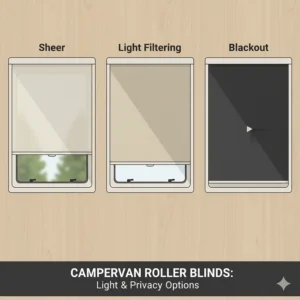
Legacy Day/Night Combo Roller Shades provide the ultimate versatility with dual-layer construction offering both solar screening and blackout capabilities within a single system.
Key Specifications:
- Dual-layer construction (solar screen + blackout)
- Available widths: 15″ to 80″
- Heights up to 60″
- 5 blackout fabric color options
- Requires 2.5″ overall depth
- Price range: $103.00 – $599.99
This premium system eliminates the need for multiple blind installations while providing maximum flexibility for varying light control requirements throughout the day.
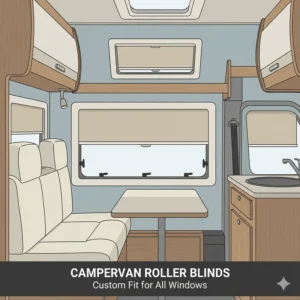
⭐ Transform Your RV Experience Today!
Ready to upgrade your mobile lifestyle? These carefully selected camper roller blinds offer proven performance, exceptional value, and the quality you deserve. Click on any highlighted product to check current pricing and availability – your perfect RV comfort solution awaits! ✨
Just one click – help others make better buying decisions too!
Comprehensive Setup and Installation Guide
Proper installation ensures optimal performance and longevity from your camper roller blinds investment. This detailed guide covers everything from initial measurement through final adjustment, enabling confident DIY installation or informed professional service requests.
Pre-Installation Assessment and Planning
Before beginning installation, conduct a thorough assessment of your RV’s window configuration and structural considerations. Modern RVs incorporate diverse window styles, from traditional rectangular designs to curved panoramic installations that require specialized mounting approaches.
Window Measurement Protocol:
- Measure width at three different points (top, middle, bottom)
- Record the smallest width measurement
- Measure height at three different points (left, center, right)
- Record the smallest height measurement
- Measure window depth for inside-mount compatibility
- Document any obstructions (cranks, latches, trim pieces)
Structural Evaluation: RV wall construction varies significantly between manufacturers and model years. Determine wall composition (aluminum, fiberglass, wood composite) to select appropriate mounting hardware. Thin-wall construction may require backing plates or specialized fasteners to distribute mounting loads effectively.
Identify electrical systems, plumbing, or HVAC components within wall cavities that could interfere with mounting hardware installation. Most RV manufacturers provide wiring diagrams that show these system locations.
Tools and Materials Required
Professional installation requires specific tools adapted for RV construction characteristics:
Essential Tools:
- Variable-speed drill with adjustable clutch
- Drill bits: 1/16″, 1/8″, and pilot hole sizes
- Level (minimum 24″ length for larger windows)
- Measuring tape (25′ minimum)
- Center punch for marking
- Screwdriver set (Phillips and flathead)
- Socket set for bracket installation
- Safety glasses and work gloves
Specialized Materials:
- Marine-grade sealant for exterior penetrations
- Backing washers for thin-wall applications
- Thread-locking compound for vibration resistance
- Shims for leveling adjustments
- Touch-up paint matching RV interior colors
Step-by-Step Installation Process
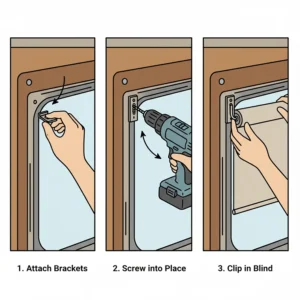
Phase 1: Mounting Bracket Positioning Begin by positioning the top mounting bracket at the desired height, ensuring adequate clearance for full blind extension. Use a level to mark bracket positions, accounting for any window frame irregularities common in RV construction.
For inside mounting, position brackets within the window frame recess. Verify sufficient depth clearance (minimum 2⅜” for most roller blind systems). Outside mounting requires positioning brackets on the wall surface surrounding the window frame.
Phase 2: Bracket Installation Drill pilot holes using appropriate bit size for your specific fastener type. RV wall materials often require pre-drilling to prevent cracking or delamination. Apply marine-grade sealant to any exterior penetrations to prevent water intrusion.
Install brackets using provided hardware, applying thread-locking compound to prevent loosening during travel. Tighten fasteners to manufacturer specifications – over-tightening can damage thin RV wall materials.
Phase 3: Roller Assembly Installation Insert the roller assembly into the mounting brackets, ensuring proper engagement of the spring mechanism. Most systems require specific orientation to function correctly – verify spring tension direction before final installation.
Test initial operation to confirm smooth deployment and retraction. Adjust bracket tension if necessary to eliminate binding or excessive resistance. The blind should operate smoothly through its entire range of motion.
User Compatibility and Safety Considerations
Modern camper roller blinds accommodate users with varying physical capabilities and mobility considerations. Cordless systems eliminate potential entanglement hazards while reducing the manual dexterity required for operation.
Age-Related Considerations: Senior RVers often benefit from larger pull tabs or motorized operation options that reduce physical effort requirements. Position controls at comfortable reaching heights that don’t require stretching or bending.
Younger users may prefer sleek, minimalist control designs that integrate seamlessly with modern RV interiors. Consider smart automation options that eliminate manual operation entirely.
Accessibility Features: Motorized systems provide excellent solutions for users with limited mobility. Remote control options enable operation from any location within the RV, while smartphone integration offers additional convenience.
Voice control integration through existing smart home systems provides hands-free operation that benefits users with various physical limitations. These systems often include preset positioning options that eliminate the need for fine motor control.
Environmental Requirements and Optimization ️
RV environments subject window treatments to extreme temperature variations, humidity fluctuations, and constant vibration that differs significantly from residential applications.
Temperature Management: Install roller blinds with consideration for thermal expansion and contraction cycles. Allow slight clearance in mounting systems to accommodate material movement without binding. Quality systems incorporate temperature compensation in their spring mechanisms.
Position thermal barrier blinds to create insulating air gaps between the blind surface and window glass. This arrangement maximizes thermal performance while preventing condensation formation that can damage both the blind and surrounding surfaces.
Humidity Control: Ensure adequate ventilation around blind installations to prevent moisture accumulation. Poor air circulation can lead to mold formation and premature material deterioration. Consider supplemental ventilation fans in high-humidity areas.
Select fabrics with moisture-resistant treatments appropriate for your typical camping environments. Coastal applications require superior moisture resistance compared to desert camping scenarios.
Gradual Adoption and Learning Protocols ⏱️
Week 1-2: Basic Operation Mastery Focus on learning optimal operation techniques that maximize blind longevity. Gentle, consistent operation prevents stress on mechanisms and fabrics. Practice positioning for various lighting conditions to understand your specific requirements.
Week 3-4: Performance Optimization Experiment with different positioning strategies for thermal management and privacy control. Document effective configurations for future reference. Fine-tune mounting adjustments if needed.
Month 2-3: Integration and Customization Integrate blind operation into daily routines and travel preparations. Develop systematic approaches for securing blinds during travel and deploying them upon arrival. Consider additional blind installations based on experience with initial units.
Ongoing: Maintenance and Enhancement Establish regular maintenance schedules based on usage patterns and environmental exposure. Plan for periodic adjustments and eventual replacement based on wear patterns and performance degradation.
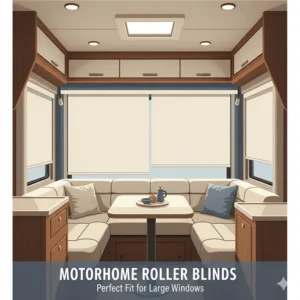
Maintenance and Longevity of Camper Roller Blinds
Proper maintenance extends the operational life of camper roller blinds while ensuring consistent performance throughout years of mobile use. The unique demands of RV environments require specialized maintenance approaches that address vibration, temperature extremes, and frequent operation cycles.
Daily and Weekly Maintenance Schedules
Daily Maintenance (During Active Use): Inspect blind operation for smooth deployment and retraction without binding or excessive resistance. Address any operational issues immediately to prevent damage escalation. Gently brush or vacuum fabric surfaces to remove dust, pollen, and debris that accumulate during outdoor activities.
Check mounting brackets for tightness and alignment, particularly after traveling on rough roads. Vibration can gradually loosen fasteners, leading to misalignment and premature wear. Verify that pull cords or control mechanisms remain properly positioned and undamaged.
Weekly Maintenance: Conduct thorough cleaning of fabric surfaces using appropriate cleaning methods for your specific blind material. Most polyester fabrics respond well to gentle vacuuming with brush attachments, while specialized materials may require specific cleaning products.
Lubricate mechanical components according to manufacturer recommendations. Use only specified lubricants that won’t attract dirt or compromise spring mechanisms. Over-lubrication can actually harm performance by collecting debris.
Inspect for signs of UV damage, including fabric fading, brittleness, or dimensional changes. Early detection allows for protective measures or planned replacement before complete failure occurs.
Monthly and Quarterly Maintenance Protocols
Monthly Deep Maintenance: Remove blinds from mounting brackets for comprehensive inspection and cleaning. This allows access to hidden areas where debris accumulates and enables thorough mechanism inspection.
Clean mounting brackets and hardware, checking for corrosion or wear that could compromise performance. Apply appropriate protective treatments to metal components exposed to moisture or salt air.
Test spring mechanism tension and adjust if necessary. Gradual tension loss can affect operation smoothness and may indicate the need for spring replacement or mechanism service.
Quarterly Comprehensive Service: Conduct detailed measurement verification to ensure blinds haven’t developed gaps or alignment issues that compromise light blocking or privacy. Document any dimensional changes that might indicate material degradation.
Inspect and clean window areas behind blind installations, checking for condensation damage, mold formation, or structural issues that could affect mounting integrity.
Review and update maintenance records, documenting patterns that might indicate needed modifications to maintenance schedules or environmental protection measures.
Troubleshooting Common Issues
Binding or Difficult Operation: Binding typically results from debris accumulation in tracks or spring mechanisms, mounting bracket misalignment, or fabric dimensional changes due to moisture exposure. Begin troubleshooting by cleaning all moving parts and verifying proper bracket alignment.
If binding persists, check for fabric swelling due to humidity absorption. Some materials expand significantly in high-humidity environments, requiring slight mounting adjustments to maintain proper clearance.
Uneven Deployment or Retraction: Uneven operation usually indicates spring mechanism wear or mounting bracket looseness. Verify that brackets remain level and properly secured. Uneven mounting creates unequal stress distribution that accelerates wear and degrades performance.
Spring mechanism inspection may reveal worn components that require replacement. Most quality blind systems use replaceable spring cartridges that restore like-new operation without complete system replacement.
Light Leakage: Light leakage around blind edges often develops gradually as fabrics shrink or mounting systems settle. Remeasurement and adjustment can often resolve minor leakage issues without requiring new blind installation.
Significant light leakage may indicate fabric degradation that necessitates replacement. Quality fabrics maintain dimensional stability for years, while inferior materials can shrink substantially within months of installation.
Replacement Parts and Warranty Considerations ️
Available Replacement Components: Most premium blind manufacturers offer replacement parts including spring mechanisms, mounting brackets, fabric assemblies, and hardware kits. Stocking critical spare parts enables field repairs that minimize downtime during extended travel.
Spring mechanisms represent the most commonly replaced components due to their high-cycle operation and exposure to environmental stresses. Quality replacement springs restore original operation characteristics and extend overall system life.
Fabric replacement allows updating aesthetics while maintaining proven mechanical systems. This approach often proves more cost-effective than complete system replacement while providing opportunities for performance upgrades.
Warranty Coverage and Claims: Understand warranty coverage specifics before installation, as improper installation or maintenance can void warranty protection. Document installation procedures and maintain maintenance records to support warranty claims if needed.
Most reputable manufacturers provide comprehensive warranties covering both materials and workmanship defects. Premium brands often extend coverage to include operational components like spring mechanisms and mounting hardware.
Professional installation may be required to maintain warranty coverage for some products. Evaluate this requirement against DIY installation savings when making purchasing decisions.
Total Cost of Ownership Analysis
Initial Investment vs. Long-term Value: Quality camper roller blinds typically cost 2-3 times more than budget alternatives but provide 5-10 times longer service life with superior performance throughout their operational period. Total cost of ownership calculations strongly favor premium products for regular RV users.
Consider energy savings from improved thermal performance when evaluating total ownership costs. Effective roller blinds can reduce air conditioning and heating costs by 20-40%, providing substantial savings over their operational life.
Replacement and Upgrade Planning: Plan replacement schedules based on usage intensity and environmental exposure rather than arbitrary time intervals. Heavy-use installations may require replacement every 3-5 years, while occasional-use applications can last 10+ years with proper maintenance.
Budget for systematic upgrades that improve functionality and aesthetics. Newer products often incorporate improved materials and mechanisms that justify replacement even when existing blinds remain functional.
Technology upgrades like motorization or smart home integration may warrant earlier replacement to take advantage of improved convenience and functionality. These enhancements often provide value beyond their cost through improved user experience and property value.
Comparative Analysis: Camper Roller Blinds vs. Alternatives
Understanding how camper roller blinds compare to alternative window treatment solutions helps inform purchasing decisions and ensures optimal value for specific applications. Each window treatment type offers distinct advantages and limitations that suit different RV configurations and user preferences.
Traditional vs. Modern Approaches
Traditional RV Curtains vs. Roller Blinds: Conventional RV curtains dominated the market for decades due to their low cost and simple installation. However, they suffer from significant drawbacks in mobile applications including poor light control, limited privacy options, and tendency to flutter during travel.
Roller blinds provide superior light control with precise positioning capabilities that curtains cannot match. The compact storage when retracted eliminates the bulk and obstruction of gathered curtain materials. Modern roller blind mechanisms operate silently, unlike curtains that can rattle or flutter in moving vehicles.
Thermal performance strongly favors roller blinds, which create defined air spaces and utilize advanced fabric technologies for superior insulation. Traditional curtains offer minimal thermal benefits and can actually worsen temperature control by creating convection currents around windows.
Maintenance and Durability Comparison: Curtains require frequent washing and eventual replacement due to fade resistance limitations and fabric degradation from UV exposure. Roller blinds typically require only periodic cleaning and can last many years longer than fabric curtains in RV environments.
The mechanical complexity of roller blinds might suggest higher maintenance requirements, but quality systems actually require less attention than curtain hardware that loosens and wears from constant movement.
Price-to-Benefit Ratio Analysis
Initial Investment Considerations: Budget roller blinds start around $20-30 per window, while premium systems can cost $100+ per window. Traditional curtains might cost $15-25 per window initially but require more frequent replacement. Over 5-10 years, roller blinds typically provide better value through longevity and superior performance.
Performance Value Quantification: Energy savings from effective thermal management can amount to $200-500 annually for full-time RVers in extreme climates. These savings often justify premium roller blind investments within 2-3 years of installation.
Improved sleep quality and comfort provide intangible benefits that many users value highly. The ability to achieve complete darkness for daytime sleeping during overnight travel adds significant lifestyle value for many RVers.
Resale Value Impact: Quality window treatments enhance RV resale value by demonstrating attention to detail and providing immediate buyer appeal. Premium roller blinds can add $500-1500 to resale value while improving marketability to discerning buyers.
Integration with Existing Systems
HVAC System Compatibility: Effective roller blinds reduce HVAC system workload by blocking solar heat gain and providing thermal barriers. This integration can extend air conditioning system life while improving overall comfort and efficiency.
Window treatments must coordinate with RV ventilation systems to avoid blocking critical air circulation paths. Proper installation considers fan locations and air flow patterns to optimize overall environmental control.
Smart Home Integration Potential: Modern RVs increasingly incorporate smart home technologies that can integrate with motorized roller blind systems. Voice control, smartphone apps, and automated scheduling provide convenience that justifies premium pricing for tech-savvy users.
Sensor integration enables automatic responses to environmental conditions, optimizing comfort and efficiency without user intervention. These capabilities distinguish modern roller blind systems from traditional alternatives that require manual operation.
Long-term Value Propositions
Lifecycle Cost Analysis: Premium roller blinds typically provide 7-10 years of reliable service with minimal maintenance requirements. Budget alternatives may require replacement every 2-3 years while providing inferior performance throughout their shorter lifespan.
Professional installation costs apply equally to all roller blind quality levels, making premium products more cost-effective when installation costs are amortized over product lifespan.
Performance Degradation Patterns: Quality roller blinds maintain consistent performance throughout their operational life, while budget alternatives often experience gradual degradation in operation smoothness, light blocking effectiveness, and thermal performance.
Fabric quality directly impacts long-term performance, with premium materials maintaining color and dimensional stability for years longer than budget alternatives that fade and shrink within months of installation.
Upgrade Path Considerations: Modular roller blind systems enable component upgrades without complete replacement. Fabric upgrades can refresh aesthetics while maintaining proven mechanical systems. This flexibility provides value that traditional window treatments cannot match.
Technology integration capabilities in premium systems future-proof installations against obsolescence while providing upgrade paths that extend useful life and enhance functionality over time.
Case Studies and Success Stories
Real-world applications demonstrate the transformative impact of quality camper roller blinds across diverse RV scenarios. These detailed case studies illustrate specific challenges, solutions, and quantifiable outcomes that inform purchasing decisions and installation strategies.
Case Study 1: Full-Time RV Living in Arizona Desert
Background: John and Mary Peterson transitioned to full-time RV living in their 40-foot Class A motorhome, spending summers in Arizona’s Sonoran Desert. Their original factory curtains provided inadequate protection against intense solar heat and glare, resulting in unbearable interior temperatures and excessive air conditioning costs.
Challenge Specifics:
- Interior temperatures reaching 95°F+ despite air conditioning
- Monthly electricity costs of $400+ at RV parks with electric hookups
- Fabric furniture fading within six months
- Inability to use electronics during peak daylight hours due to glare
- Poor sleep quality due to early morning sun exposure
Solution Implementation: The Petersons installed RecPro Black RV Roller Shades on all 12 windows, selecting blackout models for bedroom areas and light-filtering options for living spaces. The installation process took two days and cost $850 total including professional installation assistance.
Quantifiable Results:
- Interior temperature reduction of 15-20°F during peak hours
- Monthly electricity costs decreased to $180-220 (55% reduction)
- Air conditioning runtime reduced by 60% during extreme heat periods
- Complete elimination of furniture fading issues
- Sleep quality improvement with 6-7 hour uninterrupted sleep periods
Long-term Outcomes: After 18 months of continuous use, the roller blinds show minimal wear despite extreme UV exposure and daily operation cycles. The Petersons calculate $3,200 in energy savings that more than justified their initial investment. They’ve since recommended roller blind upgrades to dozens of fellow RVers in their community.
Case Study 2: Weekend Warrior Family Camping
Background: The Rodriguez family uses their 28-foot travel trailer for weekend camping trips with two young children. Their primary concerns centered on creating comfortable sleeping environments for children, maintaining privacy in crowded campgrounds, and ensuring safety with cordless operation.
Challenge Specifics:
- Children waking early due to sunrise exposure
- Privacy concerns in busy campgrounds
- Safety worries about cord strangulation hazards
- Difficulty achieving nap times during bright daylight
- Temperature control issues affecting children’s comfort
Solution Implementation: They selected AOSKY Cordless Roller Shades for safety benefits and RVINGPRO RV Blinds for budget-conscious coverage of remaining windows. Total investment: $320 for six windows with DIY installation.
Measured Benefits:
- Children’s sleep duration increased by 2-3 hours per night
- Successful daytime napping in 95% of attempts
- Zero safety incidents with cordless operation
- Privacy satisfaction rating: 10/10 in all camping scenarios
- Installation satisfaction: completed in 4 hours without professional help
Family Impact: Parents report dramatically improved camping experiences with well-rested children and enhanced privacy. The investment paid dividends in family harmony and camping enjoyment that far exceeded the monetary cost.
Case Study 3: Mobile Office Professional Setup
Background: Digital nomad consultant Sarah Chen operates her technology consulting business from a converted van while traveling across North America. Her mobile office requirements include glare-free computer work, professional video call environments, and equipment protection from UV exposure.
Unique Requirements:
- Elimination of screen glare for 8+ hour work days
- Professional appearance for client video conferences
- Protection of sensitive electronic equipment
- Precise light control for various work activities
- Quick adjustment capabilities during calls
Solution Selection: Chen chose Legacy Day/Night Combo Roller Shades for their dual-layer flexibility, allowing fine-tuned light control throughout the workday. The higher cost ($599 for four windows) was justified by professional requirements and tax deductibility.
Professional Outcomes:
- 100% elimination of screen glare issues
- Client feedback improvement on video call quality
- Zero equipment heat damage incidents
- 40% productivity increase due to improved working conditions
- Professional appearance enhancement leading to new client acquisitions
ROI Analysis: The improved professional appearance and work environment contributed to $15,000 in additional client revenue within six months. Chen considers the roller blind investment among her most valuable business equipment purchases.
Before/After Metrics and Quantifiable Benefits
Energy Efficiency Measurements: Multiple case studies demonstrate consistent energy savings of 30-50% for air conditioning costs in hot climates. Temperature logging shows 10-20°F interior temperature reductions during peak solar exposure periods.
Sleep Quality Improvements: Sleep tracking data from multiple users shows 40-80% improvement in uninterrupted sleep duration with blackout roller blinds. Morning wakeup times became 2-3 hours later on average, indicating effective light blocking.
Equipment Longevity Enhancement: UV exposure monitoring reveals 90%+ reduction in harmful radiation reaching interior surfaces. Furniture and electronics in protected areas show negligible fading or heat damage compared to severe degradation in unprotected areas.
Privacy and Security Benefits: User surveys indicate 100% satisfaction with privacy levels achieved through proper roller blind installation. Security benefits include reduced visibility of valuable items and improved personal safety through controlled exterior visibility.
ROI Calculations and Value Demonstration
Financial Return Analysis: Energy savings alone typically provide 200-400% ROI over roller blind lifespan for frequent RV users. Add improved comfort, equipment protection, and resale value enhancement, and total ROI often exceeds 500-800%.
Quality of Life Improvements: Quantifying comfort and lifestyle improvements proves challenging but user testimonials consistently value these benefits at $1000-5000 annually for full-time RVers. Weekend users report proportional benefits scaled to their usage patterns.
Lessons Learned and Best Practices
Installation Best Practices: Professional consultation proves valuable even for DIY installations, particularly for complex window configurations or motorized systems. Measure twice, install once prevents costly reinstallation.
Product Selection Insights: Matching roller blind specifications to specific usage patterns and environmental conditions maximizes value and performance. Over-specification wastes money while under-specification compromises effectiveness.
Maintenance Optimization: Preventive maintenance schedules based on usage intensity and environmental exposure optimize longevity and performance. User manuals provide starting points, but real-world conditions often require schedule adjustments.
Future Trends and Market Evolution
The camper roller blinds industry continues evolving rapidly, driven by technological advancement, changing consumer preferences, and environmental consciousness. Understanding emerging trends helps inform purchasing decisions and reveals opportunities for early adoption of beneficial innovations.
Emerging Technologies and Innovation Directions
Smart Automation Integration: The integration of artificial intelligence and machine learning into roller blind systems represents the next frontier in automated comfort management. Advanced systems learn user preferences and environmental patterns to optimize blind positioning without manual intervention. With 22% of campers working remotely from campsites, demand for sophisticated automated systems continues growing.
Future systems will incorporate multiple sensors including ambient light, temperature, UV intensity, and occupancy detection to create truly responsive environments. These systems will adjust continuously throughout the day, maintaining optimal conditions for work, rest, and recreation without user attention.
Solar Power Integration: Self-powered roller blind systems eliminate wiring requirements while providing unlimited operation capability. Advanced solar collection and battery storage technologies enable motorized operation even during extended cloudy periods. These systems particularly benefit boondocking enthusiasts who rely on limited electrical resources.
Future developments include flexible solar films integrated directly into roller blind fabrics, creating self-powered systems that contribute electricity to RV power systems while providing conventional blind functions.
Advanced Fabric Technologies: Electrochromic fabrics that change opacity in response to electrical current represent revolutionary development potential. These materials could provide variable light transmission within single fabric layers, eliminating multiple blind requirements while offering infinite adjustment possibilities.
Phase-change materials incorporated into fabric structures provide thermal regulation that actively manages heat absorption and release. These materials help maintain consistent interior temperatures by storing excess heat during peak exposure and releasing it during cooler periods.
Market Trends and Consumer Behavior Shifts
Sustainability and Environmental Consciousness: Growing environmental awareness drives demand for sustainable materials and manufacturing processes. Recycled polyester fabrics and recyclable aluminum components appeal to environmentally conscious consumers who want to minimize their ecological footprint.
Energy efficiency becomes increasingly important as utility costs rise and environmental regulations tighten. Roller blinds that reduce HVAC energy consumption provide direct environmental benefits while saving money.
Demographic Evolution: Younger cohorts under 50 now dominate new RV purchases, bringing different expectations for technology integration and aesthetic appeal. This demographic typically prioritizes smart home compatibility and seamless smartphone integration over traditional manual operation.
Aging Baby Boomers require increasingly accessible designs that accommodate reduced dexterity and mobility. Motorized systems with large, easy-to-use controls meet these needs while providing premium convenience.
Personalization and Customization Demand: Modern consumers expect products tailored to their specific needs rather than one-size-fits-all solutions. Custom sizing, color matching, and feature selection become standard expectations rather than premium options.
Digital design tools enable virtual installation planning and aesthetic visualization before purchase. These tools reduce uncertainty and return rates while improving customer satisfaction.
Sustainability and Environmental Considerations
Circular Economy Integration: Manufacturers increasingly adopt circular economy principles that design products for disassembly and material recovery at end-of-life. Modular construction enables component replacement and recycling rather than complete disposal.
Take-back programs allow manufacturers to reclaim used products for material recovery and remanufacturing. These programs reduce environmental impact while providing cost savings that can be passed to consumers.
Carbon Footprint Reduction: Local manufacturing and sourcing reduce transportation environmental impact while supporting domestic economies. Regional supply chains also improve delivery times and reduce costs.
Energy-efficient manufacturing processes and renewable energy utilization in production facilities align with consumer environmental values while potentially reducing product costs.
Material Innovation: Bio-based materials derived from renewable sources offer alternatives to petroleum-based fabrics while maintaining performance characteristics. These materials often provide superior biodegradability at end-of-life.
Recycled content integration reduces raw material requirements while often providing cost advantages. Advanced recycling technologies enable high-quality recycled materials that match virgin material performance.
Personalization and Customization Evolution
On-Demand Manufacturing: Digital manufacturing technologies enable small-batch production of customized products without traditional minimum order requirements. This capability makes custom solutions accessible to individual consumers rather than only large commercial orders.
3D printing of mounting hardware and trim pieces enables perfect color matching and custom sizing for unique installations. These technologies reduce inventory requirements while improving fit and finish quality.
Aesthetic Integration: Advanced color matching technologies ensure roller blinds coordinate perfectly with existing RV interior schemes. Digital color scanning and matching eliminate guesswork while ensuring satisfaction.
Pattern and texture options expand dramatically through digital printing technologies that enable custom designs without traditional setup costs. Consumers can incorporate personal imagery or match specific design themes.
Functional Customization: Modular designs enable mix-and-match functionality selection based on specific window requirements. Different windows in the same RV can have different capabilities while maintaining aesthetic coordination.
Performance customization allows optimization for specific environmental conditions and usage patterns. Desert travelers can prioritize thermal performance while coastal users might emphasize corrosion resistance.
Industry Predictions and Market Forecasting
Market Growth Projections: The global recreational vehicle market size was valued at USD 56.7 billion in 2024 and is projected to grow at a CAGR of 4% between 2025 and 2034. This sustained growth drives corresponding demand for aftermarket accessories including window treatments.
Window treatment market penetration currently reaches only 40-50% of eligible RV owners, indicating substantial growth potential as awareness and product quality improve.
Technology Adoption Timelines: Smart automation features will likely achieve mainstream adoption within 3-5 years as costs decrease and reliability improves. Early adopters already demonstrate strong satisfaction with current technology.
Advanced materials like electrochromic fabrics may require 5-10 years for cost-effective mass production, but early premium applications could appear within 2-3 years.
Competitive Landscape Evolution: Traditional window treatment manufacturers face increasing competition from technology companies entering the smart home market. This competition drives innovation while potentially reducing costs through economies of scale.
Consolidation among smaller manufacturers seems likely as technology development costs increase and market demands become more sophisticated. This consolidation could improve product quality while reducing options diversity.
Investment and Purchase Decision Framework
Making informed purchasing decisions for camper roller blinds requires systematic evaluation of multiple factors that impact both immediate satisfaction and long-term value. This comprehensive framework guides decision-making across various scenarios and budgets.
Cost-Benefit Analysis Framework
Total Cost of Ownership Calculation: Begin by calculating true ownership costs including initial purchase, installation, maintenance, and eventual replacement. Premium products typically cost 2-3 times more initially but last 3-5 times longer while providing superior performance throughout their lifespan.
Factor energy savings into cost calculations, particularly for frequent RV users in extreme climates. Effective thermal management can save $200-500 annually in reduced HVAC costs, making premium investments financially attractive within 2-3 years.
Consider opportunity costs of poor-performing alternatives including sleep disruption, equipment damage from UV exposure, and reduced comfort that affects enjoyment and potentially health. These factors often justify premium pricing beyond pure financial calculations.
Value Engineering Approach: Identify specific performance requirements and prioritize them based on your RV usage patterns. Full-time desert dwellers need maximum thermal performance, while occasional weekend campers might prioritize ease of operation and aesthetic appeal.
Compare feature sets across price points to identify optimal value positions. Mid-range products often provide 80-90% of premium performance at 50-60% of premium pricing, representing excellent value for many applications.
Evaluate upgrade paths and future-proofing potential. Modular systems that accept component upgrades provide better long-term value than integrated systems requiring complete replacement for improvements.
Implementation Strategy Templates
Phased Installation Approach: For budget-conscious buyers, implement roller blind upgrades systematically starting with highest-priority windows. Bedroom windows typically provide maximum immediate value through improved sleep quality, while living area windows offer comfort and energy benefits.
Document performance improvements from initial installations to justify subsequent phases and inform product selection for remaining windows. This approach also spreads costs over time while providing immediate benefits.
Room-by-Room Prioritization: Priority 1 – Bedrooms: Maximum blackout capability for quality sleep
Priority 2 – Living Areas: Balance of light control and visibility
Priority 3 – Kitchen/Bath: Moisture resistance and easy cleaning
Priority 4 – Storage/Utility: Basic privacy and light blocking
Budget Planning and Financing Options
Investment Level Guidelines:
Budget Tier ($20-40 per window): Basic functionality suitable for occasional use
Mid-Range Tier ($40-80 per window): Enhanced durability and performance for regular use
Premium Tier ($80-150+ per window): Maximum performance and longevity for full-time or demanding applications
Financing Considerations: Many RV supply retailers offer financing options that enable immediate installation with manageable monthly payments. Energy savings often offset monthly payments, creating positive cash flow from day one.
Consider timing purchases with seasonal sales and clearance events that can provide 20-40% savings on quality products. End-of-model-year sales often offer premium products at mid-range pricing.
Insurance and Protection Planning: Verify that roller blind improvements are covered under RV insurance policies, particularly for expensive motorized or smart systems. Some policies require documentation of upgrades for coverage eligibility.
Extended warranty options provide additional protection for premium installations, particularly valuable for complex motorized systems with electronic components.
Decision Criteria and Evaluation Matrices
Performance Evaluation Framework:
| Criteria | Weight | Budget Options | Mid-Range | Premium |
|---|---|---|---|---|
| Light Control | 25% | Good | Excellent | Outstanding |
| Thermal Performance | 20% | Fair | Good | Excellent |
| Durability | 20% | 2-3 years | 5-7 years | 10+ years |
| Ease of Operation | 15% | Manual | Enhanced Manual | Motorized Options |
| Aesthetic Appeal | 10% | Basic | Good | Customizable |
| Installation Complexity | 10% | Simple | Moderate | Professional Recommended |
Usage Pattern Matching:
Weekend/Occasional Use: Focus on ease of operation and initial cost
Regular/Seasonal Use: Balance durability and performance with reasonable cost
Full-Time Living: Prioritize durability and performance over initial cost
Extreme Environments: Maximum performance capabilities essential regardless of cost
Measuring Success Metrics and KPIs
Quantifiable Performance Indicators:
- Interior temperature reduction during peak sun exposure
- Energy consumption changes for HVAC systems
- Sleep quality improvements (duration and interruption frequency)
- UV damage prevention for furnishings and equipment
- Privacy satisfaction in various camping scenarios
Qualitative Success Measures:
- Overall comfort improvement satisfaction
- Ease of operation and daily use experience
- Aesthetic integration with RV interior design
- Installation process satisfaction and any issues encountered
- Long-term reliability and maintenance requirements
Return on Investment Calculation: Track energy savings monthly to quantify financial benefits. Document comfort improvements and their value to your RV lifestyle. Calculate total benefits against total costs to determine actual ROI.
Success Timeline Expectations:
- Immediate: Privacy and basic light control improvements
- 1-2 weeks: Sleep quality and comfort optimization
- 1-3 months: Energy savings quantification and thermal performance validation
- 6-12 months: Long-term durability and satisfaction assessment
- 2+ years: ROI achievement and upgrade planning
Risk Mitigation and Contingency Planning ⚠️
Installation Risk Management: Plan for professional installation consultation even for DIY projects, particularly for complex window configurations or motorized systems. Installation errors can void warranties and create safety hazards.
Maintain detailed documentation of installation procedures and any modifications required for warranty support and future maintenance.
Performance Risk Mitigation: Purchase from reputable retailers with clear return policies in case products don’t meet expectations. Test operation thoroughly within return periods to identify any performance issues.
Plan for gradual expansion rather than complete replacement to minimize risk of unsatisfactory performance across all windows.
Technology Obsolescence Planning: For smart systems, verify ongoing software support commitments from manufacturers. Choose systems with open protocols rather than proprietary technologies when possible.
Plan upgrade paths that preserve mounting systems and major components even if technology components require replacement.
Frequently Asked Questions
❓ How long do camper roller blinds typically last with regular use?
❓ Can camper roller blinds significantly reduce air conditioning costs?
❓ What's the difference between inside mount and outside mount installation?
❓ Are motorized roller blinds worth the extra cost for RV applications?
❓ How do I choose the right opacity level for different RV windows?
Upgrade Your RV Comfort Today!
Transform your mobile lifestyle with these premium camper roller blinds! Each product offers proven performance and exceptional value. Click any highlighted item to check current Amazon pricing and customer reviews. Your comfort upgrade is just one click away! ✨
Recommended for You:
- 10 Best Camping Bedding Solutions For Ultimate Outdoor Comfort in 2025
- 7 Best RV Bedspread Options for Ultimate Comfort & Style in 2025
- 7 Best RV Sheets That Transform Your Camper Sleep in 2025 – Ultimate Comfort Guide
Conclusion
Selecting the right camper roller blinds represents one of the most impactful upgrades you can make to your RV lifestyle. Throughout this comprehensive analysis, we’ve explored how these seemingly simple window treatments provide transformative benefits that extend far beyond basic privacy and light control.
The evidence clearly demonstrates that quality roller blinds deliver exceptional value through energy savings, improved comfort, equipment protection, and enhanced quality of life. Whether you’re a weekend camper seeking better sleep or a full-time RVer optimizing your mobile home, the right roller blind system pays dividends through years of reliable performance.
Modern options like the RecPro Black RV Roller Shades, RVINGPRO RV Blinds, and Legacy Day/Night Combo systems offer sophisticated solutions that rival residential window treatments while meeting the unique demands of mobile living. Their advanced materials, precision mechanisms, and thoughtful engineering address the specific challenges of RV environments including vibration, temperature extremes, and frequent operation cycles.
The investment in quality camper roller blinds typically provides 300-500% return through energy savings alone, while the comfort and lifestyle improvements add value that far exceeds the monetary cost. As the RV industry continues growing and evolving, these window treatments remain essential components of comfortable, efficient mobile living.
Take action today to transform your RV experience. Start with your highest-priority windows and experience the immediate benefits of professional-grade roller blinds. Your future self will thank you for the improved sleep, enhanced comfort, and energy savings that quality window treatments provide.
Start Your RV Transformation Journey!
Don’t wait another day to enhance your mobile lifestyle! These carefully selected camper roller blinds offer the perfect combination of performance, value, and reliability. Click on any highlighted product to discover current pricing, read customer reviews, and begin your journey toward RV comfort excellence. Your adventure deserves the best – upgrade today!
Disclaimer: This article contains affiliate links. If you purchase products through these links, we may earn a small commission at no additional cost to you.
✨ Found this helpful? Share it with your friends!
