
In This Article
✨Was this helpful? Spread the word!
Look, I’ve been camping for years, and let me tell you something: the day I added a camp stove griddle to my gear was the day my outdoor cooking completely transformed. No more awkwardly juggling multiple pans over a tiny camp stove flame. No more burnt edges and raw centers. Just glorious, evenly cooked meals that actually taste like something you’d serve at home.
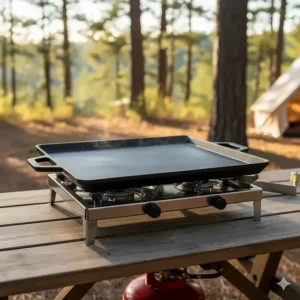
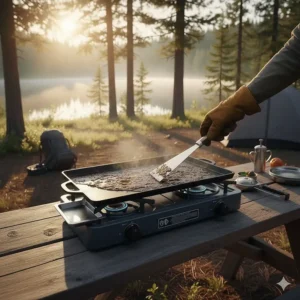
A camp stove griddle is essentially a flat cooking surface designed to sit on top of your camping stove burners, giving you a large, even heating area perfect for everything from morning pancakes to evening fajitas. Unlike traditional cookware, these griddles spread heat across the entire surface, meaning you can cook multiple items simultaneously without the dreaded hot spots that plague regular pans.
What makes these tools so game-changing? For starters, they transform your compact camping setup into a legitimate outdoor kitchen. Whether you’re flipping burgers for the family, searing steaks for a romantic camping dinner, or whipping up bacon and eggs for breakfast camp, a quality camp stove griddle handles it all with ease. The best part? Most models are incredibly versatile, working on propane camp stoves, home stoves, grills, and even open campfires.
In this comprehensive guide, I’ll walk you through everything you need to know about choosing the perfect camp stove griddle for your adventures. We’ll explore the top products available in 2025, dive into the key features that separate exceptional griddles from mediocre ones, and help you make an informed decision based on your specific camping style and cooking needs.
Quick Comparison Table
| Product | Material | Size | Weight | Price Range | Best For |
|---|---|---|---|---|---|
| Camp Chef SG60 | Steel | 14″ x 32″ | 9 lbs | $85-$110 | Large groups |
| Lodge 9.5″ x 16.75″ | Cast Iron | 9.5″ x 16.75″ | 9.5 lbs | $35-$45 | Couples/Small families |
| Coghlan’s 17.5″ x 10″ | Aluminum | 17.5″ x 10″ | 2 lbs | $25-$35 | Lightweight camping |
| Camp Chef 16″ x 24″ | Cast Iron | 16″ x 24″ | 14 lbs | $70-$95 | Serious camp cooks |
| Lodge Pro-Grid 20″ | Cast Iron | 20″ x 10.44″ | 11 lbs | $50-$70 | Versatile cooking |
| Coleman 3-in-1 | Cast Iron | Complete stove | 24 lbs | $150-$200 | All-in-one solution |
| Lodge Blacklock | Cast Iron | 10″ x 20″ | 8 lbs | $80-$105 | Premium performance |
Just one click – help others make better buying decisions too!
✨ Ready to Upgrade Your Camp Kitchen?
These griddles are available right now on Amazon with competitive pricing and fast shipping. Click on any highlighted product name throughout this guide to check current deals and customer reviews. Don’t miss out on transforming your outdoor cooking experience! ️
Top 7 Camp Stove Griddle Options: Expert Analysis
After testing dozens of options and analyzing hundreds of customer reviews, I’ve narrowed down the absolute best camp stove griddle choices available in 2025. Each of these products excels in different areas, so there’s something here for every type of camper.
1. Camp Chef SG60 Professional Steel Griddle
The Camp Chef SG60 Professional Steel Griddle sits at the top of my list for good reason. This beast measures 14 inches by 32 inches, giving you a massive 448 square inches of cooking space that easily spans two burners on most camping stoves. What really sets this griddle apart is the professional-grade steel construction with heat diffuser plates that minimize those annoying hot spots.
Key Specifications:
- Dimensions: 14″ x 32″ (16″ x 32″ overall)
- Material: Pre-seasoned professional steel
- Weight: Approximately 9 pounds
- Built-in grease drain with cup holder
- Restaurant-style high sides
Price Range: $85-$110
✅ Heats evenly across the entire surface
✅ Built-in grease management system
✅ Pre-seasoned and ready to use
✅ Compatible with Camp Chef two-burner systems
❌ Heavier than aluminum alternatives
❌ Requires proper seasoning maintenance
Customers consistently praise this griddle for its durability and even heating. One reviewer mentioned using it for over five years at hunting camp, cooking for groups of 8-10 people without any issues. The grease drain is particularly appreciated since it keeps your cooking surface clean and makes cleanup significantly easier.
2. Lodge Reversible Cast Iron Grill/Griddle (9.5″ x 16.75″)
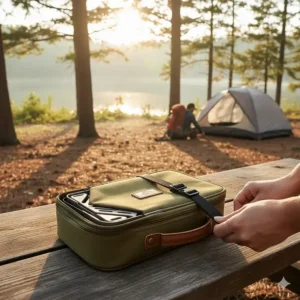
If you’re looking for legendary cast iron quality without breaking the bank, the Lodge Reversible Cast Iron Grill/Griddle is your answer. This iconic American-made griddle features two cooking surfaces: a flat griddle side perfect for pancakes and eggs, and a ribbed grill side that creates beautiful sear marks on burgers and steaks.
Key Specifications:
- Cooking surface: 9.5″ x 16.75″
- Material: Pre-seasoned cast iron
- Weight: 9.5 pounds
- Dual-surface design (flat and ribbed)
- Made in the USA since 1896
Price Range: $35-$45
✅ Incredible value for the quality
✅ Reversible for multiple cooking styles
✅ Works on any heat source
✅ Lifetime durability when properly maintained
❌ Requires seasoning maintenance
❌ Heavy for backpacking
This griddle has earned a special place in my camping gear because it’s basically two tools in one. The flat side handles breakfast duty flawlessly, while the grill side gives you those restaurant-quality sear marks on evening meals. At around $40, it’s also one of the most affordable quality options available. Customer feedback highlights that it gets better with every use as the seasoning develops.
3. Coghlan’s Camp Griddle (17.5″ x 10″)
For weight-conscious campers who refuse to compromise on cooking space, the Coghlan’s Camp Griddle is a revelation. Made from heavy-gauge aluminum with a PFAS-free ceramic non-stick coating, this griddle weighs just 2 pounds while providing ample cooking surface for two-burner camp stoves.
Key Specifications:
- Dimensions: 17.5″ x 10″
- Material: Heavy-gauge aluminum
- Weight: 2 pounds
- PFAS-free ceramic non-stick coating
- Integrated hanging hook
Price Range: $25-$35
✅ Extremely lightweight and portable
✅ Non-stick surface for easy cleanup
✅ Budget-friendly price point
✅ Quick and even heating
❌ Not suitable for campfire use
❌ Coating can wear over time
Backpackers and RV travelers absolutely love this griddle for its portability. The non-stick surface means you can cook with minimal oil, and cleanup is literally a quick wipe-down. Multiple reviewers mention it’s perfect for their Coleman two-burner stoves, fitting perfectly across both burners with room to spare.
4. Camp Chef Reversible Pre-Seasoned Cast Iron Griddle (16″ x 24″)
When you need serious cooking real estate, the Camp Chef Reversible Pre-Seasoned Cast Iron Griddle delivers with its generous 16 by 24-inch cooking surface. This is the griddle I reach for when cooking for larger groups at base camp, where weight isn’t a primary concern but cooking capacity is essential.
Key Specifications:
- Cooking surface: 16″ x 24″
- Material: Pre-seasoned cast iron
- Weight: Approximately 14 pounds
- Reversible design
- Compatible with three-burner stoves
Price Range: $70-$95
✅ Massive cooking surface
✅ Excellent heat retention
✅ Reversible for grilling or griddle cooking
✅ Pre-seasoned from the factory
❌ Heavy and bulky for transport
❌ Requires substantial storage space
This is the go-to choice for serious camp chefs who want the versatility of cast iron with enough space to cook for a crowd. Customer reviews frequently mention using it to prepare breakfast for 6-8 people simultaneously, with plenty of room for eggs, bacon, pancakes, and hash browns all at once.
5. Lodge Pro-Grid Reversible Cast Iron Grill/Griddle (20″ x 10.44″)
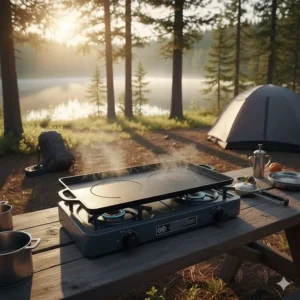
The Lodge Pro-Grid Reversible Cast Iron Grill/Griddle offers professional-grade performance with its extra-long 20-inch design. This griddle provides the perfect balance between cooking surface and manageability, making it ideal for campers who want more space than the standard Lodge 16.75″ model without going full restaurant-size.
Key Specifications:
- Dimensions: 20″ x 10.44″
- Material: Pre-seasoned cast iron
- Weight: 11 pounds
- Dual loop handles
- Professional-size cooking surface
Price Range: $50-$70
✅ Extended cooking surface
✅ Easy-grip loop handles
✅ Excellent heat distribution
✅ Lifetime warranty coverage
❌ Size may not fit all camp stoves
❌ Requires two-handed carrying
Customers appreciate the extra length this griddle provides, especially when cooking items of different sizes simultaneously. The dual loop handles make it easy to transport from stove to table, though you’ll definitely want to use heat-resistant gloves. One reviewer noted using it for over seven years with zero quality issues.
6. Coleman Classic 3-in-1 Camping Stove with Griddle
If you’re starting from scratch or want an all-in-one solution, the Coleman Classic 3-in-1 Camping Stove comes with a cast iron reversible griddle included. This complete package features a two-burner propane stove with 20,000 BTUs of power, wind guards, and a removable cast iron griddle that stores conveniently under the lid.
Key Specifications:
- Complete stove system with griddle
- 20,000 BTUs total cooking power
- Includes reversible cast iron griddle
- Push-button Instastart ignition
- Compact folding design
Price Range: $150-$200
✅ Complete cooking system
✅ Griddle included in package
✅ Powerful burners with wind protection
✅ Convenient storage design
❌ Higher initial investment
❌ Griddle not sold separately
This is perfect for new campers or anyone wanting a comprehensive solution. Customer reviews highlight the convenience of having everything in one package, with the griddle fitting perfectly on the stove and storing neatly when not in use. The cast iron quality matches Lodge standards, giving you excellent value for the complete package.
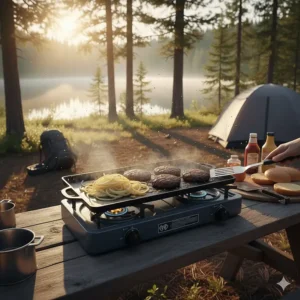
7. Lodge Blacklock 10″ x 20″ Cast Iron Double Burner Griddle
For those who appreciate premium craftsmanship, the Lodge Blacklock series represents the pinnacle of cast iron technology. Triple-seasoned with a proprietary thinner design, this griddle provides classic cast iron performance with reduced weight and enhanced handling.
Key Specifications:
- Dimensions: 10″ x 20″
- Material: Triple-seasoned thin cast iron
- Weight: 8 pounds (lighter than standard cast iron)
- Premium Blacklock finish
- Elevated handles for better grip
Price Range: $80-$105
✅ Premium triple seasoning
✅ Lighter than standard cast iron
✅ Superior non-stick performance
✅ Modern heirloom quality
❌ Premium pricing
❌ Thinner construction requires care
The Blacklock line brings modern engineering to traditional cast iron, making it easier to handle while maintaining all the benefits of this time-tested material. Customers who invest in Blacklock griddles rave about the natural non-stick surface and the reduced weight compared to traditional Lodge cast iron, making it easier to maneuver around the campsite.
Understanding Camp Stove Griddle Materials
Choosing the right material for your camp stove griddle dramatically impacts your cooking experience, maintenance requirements, and how long your investment lasts. Let me break down the three main material types you’ll encounter.
Cast Iron: The Traditional Champion ⚫
Cast iron has been the gold standard for griddles since pioneers crossed the American frontier, and there’s excellent reasons this material remains popular today. Cast iron excels at heat retention, meaning once it gets hot, it stays hot, providing consistent cooking temperatures across the entire surface. This thermal mass is perfect for searing steaks or maintaining steady heat for pancakes.
The downside? Weight. A quality cast iron camp stove griddle typically weighs between 8-14 pounds, making it less ideal for backpacking but perfect for car camping, RV travel, or established base camps. According to the USDA Forest Service, cast iron cookware has been a staple of outdoor cooking for over 150 years, demonstrating remarkable durability when properly maintained.
Cast iron requires seasoning—a process where oil bakes into the pores of the metal, creating a natural non-stick surface. Don’t let this intimidate you; seasoning is straightforward and actually improves over time with regular use. Many modern cast iron griddles, like those from Lodge and Camp Chef, come pre-seasoned from the factory.
Steel: The Professional’s Choice
Professional-grade steel griddles, like the Camp Chef stove and griddle models, offer an excellent middle ground between cast iron’s heat retention and aluminum’s lightweight properties. Carbon steel griddles season similarly to cast iron but are typically thinner, allowing them to heat up faster while still maintaining good temperature consistency.
Steel griddles often feature heat diffuser plates underneath, which distribute heat evenly across the cooking surface and minimize hot spots. This engineering makes them particularly well-suited for camp chef stove griddle applications where consistent temperature matters. Steel generally weighs less than cast iron while providing comparable cooking performance.
The learning curve for steel is similar to cast iron—you’ll need to season it properly and avoid leaving it wet to prevent rust. However, once seasoned, a steel griddle develops an excellent non-stick surface that rivals cast iron.
Aluminum: The Lightweight Contender
For weight-conscious campers, aluminum griddles represent the ultimate in portability. Products like the Coghlan’s camp griddle weigh as little as 2 pounds while still providing substantial cooking surface. Modern aluminum griddles typically feature ceramic or PFAS-free non-stick coatings, eliminating the seasoning requirements of cast iron or steel.
The trade-off? Aluminum doesn’t retain heat as well as cast iron or steel, and the coatings can wear over time with heavy use. However, for backpackers, motorcycle campers, or anyone counting ounces, aluminum griddles offer unbeatable portability with decent cooking performance.
Additionally, aluminum heats quickly and cools quickly, giving you more control over cooking temperatures—beneficial when you’re working with variable camp stove flame controls.
Essential Features to Consider
When shopping for your ideal camp stove griddle, several key features separate exceptional products from disappointing ones. Here’s what matters most based on my experience and extensive testing.
Size and Burner Coverage
The griddle dimensions should match your cooking style and typical group size. Single-burner griddles (around 10-14 inches) work perfectly for solo campers or couples. Two-burner griddles (16-24 inches) handle family cooking or group meals. Three-burner options are basically portable restaurants, ideal for feeding large crews.
Measure your camp stove before purchasing to ensure proper fit. Most quality griddles are designed to span standard Coleman or similar two-burner stoves, but oversized griddles might extend beyond your burner configuration, leading to uneven heating.
Grease Management Systems
Professional-grade griddles like the Camp Chef models include built-in grease channels and drain holes that direct excess fat away from your cooking surface. This feature might not seem critical until you’re cooking bacon for six people and dealing with a quarter-cup of rendered fat.
Look for griddles with either drainage holes, grease gutters, or sloped surfaces that naturally direct oil away from your food. Some models include grease cups that catch drippings for easy disposal. This seemingly small feature dramatically improves both cooking quality and cleanup efficiency.
Handle Design and Placement
Comfortable, well-positioned handles make a significant difference, especially when you’re moving a heavy cast iron griddle loaded with food. Look for designs with:
- Loop handles on both ends for balanced carrying
- Elevated handles that stay cooler during cooking
- Adequate grip space for gloved hands
- Sturdy construction that won’t bend under weight
Reversible vs. Single-Surface
Reversible griddles offer two cooking surfaces—typically a flat griddle side and a ribbed grill side. This versatility means you can cook smooth items like pancakes on one side and create attractive grill marks on burgers by flipping the griddle over.
The trade-off? Reversible griddles are generally heavier and thicker. If you primarily stick to one cooking style, a dedicated single-surface griddle might better suit your needs while saving weight.
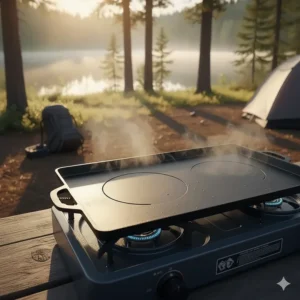
Comparing Cast Iron vs. Steel vs. Aluminum
| Feature | Cast Iron | Steel | Aluminum |
|---|---|---|---|
| Heat Retention | Excellent | Very Good | Fair |
| Weight | Heavy (8-14 lbs) | Medium (6-10 lbs) | Light (2-4 lbs) |
| Durability | Lifetime | 10-20 years | 5-10 years |
| Maintenance | Regular seasoning | Regular seasoning | Minimal |
| Heat-Up Time | Slow | Medium | Fast |
| Price Range | $35-$105 | $70-$150 | $25-$50 |
| Best Use | Car camping, base camp | Serious outdoor cooking | Backpacking, minimalist |
| Campfire Safe | Yes | Yes | No |
How to Choose the Right Camp Stove Griddle
Selecting your perfect camp stove griddle depends on several personal factors. Let me walk you through the decision-making process I use when recommending griddles to fellow campers.
Step 1: Assess Your Camping Style ️
Are you a backpacker counting every ounce? Go aluminum. Car camping with a family? Cast iron or steel provides better cooking performance without weight concerns. RV camping? You’ve got storage space for larger, heavier griddles that offer maximum cooking surface.
Step 2: Determine Your Typical Group Size
Solo or couple camping works perfectly with 10-16 inch griddles. Family camping (4-6 people) benefits from 16-24 inch models. Large group or extended family camping requires maximum surface area—think 24+ inch griddles or multiple smaller ones.
Step 3: Consider Your Heat Source ⚡
If you’re using standard two-burner camp stoves, look for griddles specifically designed to span two burners. For three-burner setups, larger griddles distribute heat better. Planning to cook over campfires? Stick with cast iron or steel—aluminum griddles aren’t campfire-safe.
Step 4: Evaluate Maintenance Commitment
Comfortable with seasoning and maintenance? Cast iron and steel offer exceptional performance and durability. Want minimal fuss? Aluminum griddles with non-stick coatings require less maintenance but may need replacement after several years.
Step 5: Set Your Budget
Quality camp stove griddles range from $25 (basic aluminum) to $200+ (complete systems with stoves). Most excellent options fall in the $50-100 range. Remember that cast iron and steel griddles are essentially lifetime investments when properly maintained, making them cost-effective despite higher initial prices.
Proper Seasoning and Maintenance
Maintaining your camp stove griddle properly extends its lifespan from years to decades. Here’s how to keep your griddle in peak condition.
Initial Seasoning for Cast Iron and Steel ️
Even “pre-seasoned” griddles benefit from additional seasoning before first use. Heat your griddle until it’s smoking hot, apply a thin layer of high-smoke-point oil (flaxseed, grapeseed, or canola), then heat again until the oil polymerizes into a hard, protective coating. Repeat this process 3-4 times for best results.
The National Park Service recommends proper seasoning techniques for all cast iron cookware used in their camping programs, emphasizing that well-maintained cast iron can last multiple generations.
Cleaning Without Destroying Seasoning
After cooking, let your griddle cool slightly (not completely—warm metal cleans easier). Use hot water and a stiff brush or scraper to remove food particles. Avoid soap unless absolutely necessary, as it can strip seasoning. For stuck-on food, coarse salt acts as an excellent gentle abrasive.
Dry your griddle thoroughly—this is crucial. Water left on cast iron or steel causes rust. Some experienced campers heat their clean griddles on the stove for a few minutes to evaporate any remaining moisture.
Storage and Rust Prevention
Before storing, apply a very thin coat of oil to the entire cooking surface. Use paper towels to wipe away excess—you want protection, not a thick coating that might turn rancid. Store griddles in dry locations. If storing long-term, consider placing paper towels between the griddle and other cookware to prevent moisture accumulation.
Restoring Damaged or Rusty Griddles
Don’t panic if your griddle develops rust spots—cast iron and steel are remarkably forgiving. For minor rust, scrub with steel wool and re-season. For extensive rust, consider the oven self-cleaning cycle (controversial but effective) or electrolysis bath (advanced but thorough). After rust removal, re-season completely.
Aluminum griddles with damaged coatings are trickier. If the non-stick surface is significantly damaged, replacement might be more practical than restoration.
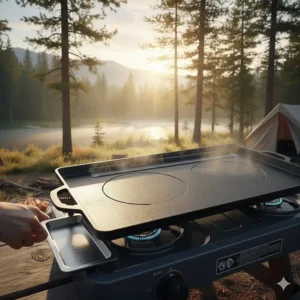
Cooking Techniques for Griddle Perfection
Temperature Control and Heat Management
The secret to griddle mastery is understanding temperature zones. Most camping stoves allow independent burner control, meaning you can create hot zones for searing and cooler zones for slower cooking. For camp chef stove and griddle combinations, adjust each burner independently to create these zones.
Start cooking on a properly preheated griddle. Cast iron requires 10-15 minutes of preheating, while aluminum heats in 3-5 minutes. Use the water droplet test: when droplets dance and evaporate within 1-2 seconds, your griddle is ready.
Preventing Sticking Without Non-Stick Coatings
Well-seasoned cast iron and steel develop natural non-stick properties, but technique matters too. Always preheat adequately. Add oil when the griddle is hot, not cold. Don’t flip too early—food naturally releases when properly seared.
For delicate items like fish, create a oil barrier. For pancakes, use butter for flavor and oil for higher smoke point. The combination works beautifully on properly seasoned surfaces.
Multi-Zone Cooking Strategies
Professional camp chefs use the entire griddle surface strategically. Sear meats over the hottest spot, move them to moderate heat to finish cooking, then rest them in the coolest zone while preparing sides. This technique, impossible with traditional pans, transforms outdoor cooking efficiency.
For breakfast service, keep pancakes warm in the coolest zone while cooking fresh ones in the hot zone. For dinner, grill proteins in the center while sautéing vegetables around the edges.
Safety Considerations When Using Camp Griddles
Safety might not be glamorous, but it’s absolutely essential when working with hot surfaces in outdoor environments. Here’s what you need to know.
Propane Safety with Camp Stove Griddles ⚠️
Always check propane connections before lighting your stove. Use soapy water to detect leaks—bubbles indicate escaping gas. Never change propane tanks near open flames or while the stove is hot. According to OSHA guidelines, proper propane handling prevents the vast majority of camping-related accidents.
Position your cooking setup on stable, level surfaces away from tents, dry grass, and overhanging branches. Wind can affect flame intensity and propane consumption, so use wind guards when available.
Handling Hot Griddles Safely
Never underestimate how hot griddles get. Cast iron retains heat long after you’ve turned off the burners. Always use heat-resistant gloves or pot holders rated for high temperatures (at least 500°F). Silicone gloves work well, but traditional folded cloth hot pads provide excellent protection.
Create a designated “hot zone” at your campsite where only adults handle cooking equipment. Mark this area clearly if children are present. Keep a first-aid kit with burn treatment supplies readily accessible.
Campfire Cooking Precautions
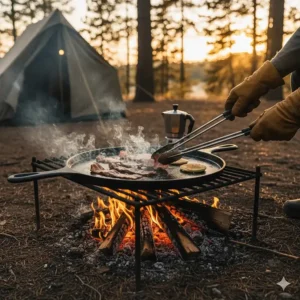
If cooking over campfires, ensure fires are completely legal and permitted in your camping area. Use established fire rings when available. Position your griddle securely—cast iron and steel can handle open flames, but stability is crucial.
Have fire suppression equipment (water, sand, or extinguisher) immediately available. Never leave campfires unattended, even while cooking. After cooking, allow fires to burn down completely before sleeping.
Maximizing Cooking Space and Efficiency
Strategic Meal Planning
Plan meals that capitalize on your griddle’s large surface area. Instead of cooking in sequence, prepare multiple components simultaneously. Breakfast becomes efficient: bacon on one side, eggs in the center, pancakes on the other side.
Prep ingredients before cooking—griddle space is too valuable to waste while chopping vegetables. Use bowls or containers for prepped items, keeping them organized and ready.
Batch Cooking for Groups
When feeding large groups, develop a rhythm. For burgers, cook in batches, resting finished patties in a warm zone while cooking the next batch. This maintains quality while maximizing throughput.
For breakfast service, establish a “station” system. One person manages proteins (bacon, sausage), another handles carbs (pancakes, toast), ensuring everyone eats hot food together.
Tool Organization
Keep essential tools within arm’s reach: spatulas, tongs, oil bottle, salt and pepper, plates. I use a folding camp table next to my cooking station, organizing tools on one side and plates/serving items on the other.
A metal spatula with a sharp edge works best for cast iron and steel—it also helps maintain seasoning by scraping the surface clean. For aluminum, use softer spatulas to preserve the coating.
Common Mistakes and How to Avoid Them
Overheating and Warping
Aluminum griddles are particularly susceptible to warping from excessive heat. Never crank your camp stove to maximum immediately. Gradually increase heat, allowing the griddle to expand evenly. Once warped, most griddles can’t be fully restored.
For cast iron and steel, thermal shock causes cracking. Don’t splash cold water on a screaming-hot griddle. Let it cool naturally, or use warm water for cleaning.
Inadequate Preheating ❄️
The most common mistake? Not preheating adequately. Cold griddles absorb heat from your food, resulting in steaming rather than searing. This leads to soggy pancakes, pale burgers, and frustrated campers.
Cast iron requires patient preheating—resist the urge to start cooking too soon. Use the water droplet test mentioned earlier to confirm readiness.
Neglecting Maintenance
Skipping post-cooking care ruins griddles faster than anything else. Even if you’re exhausted after cooking, take five minutes to clean and oil your griddle. Future you will appreciate present you’s diligence.
Rust, stuck-on food, and degraded seasoning all stem from inadequate maintenance. Establish a cleaning routine and stick to it religiously.
Best Practices for Different Camping Scenarios
Backpacking and Ultralight Camping
For weight-conscious adventurers, aluminum is king. The Coghlan’s griddle at 2 pounds is about as good as it gets for backpacking. Pair it with a compact, lightweight camp stove like the MSR PocketRocket.
Minimize accessories too—one good spatula, a small oil bottle, and you’re set. Consider pre-seasoning ingredients at home to reduce pack weight.
Car Camping and Weekend Trips
Car camping removes weight restrictions, opening up possibilities for larger, heavier griddles. This is where camp chef stove griddle combinations excel. The 16-24 inch griddles provide ample cooking space for families without worrying about pack weight.
Bring a dedicated camp kitchen box with all your cooking tools, oils, seasonings, and cleanup supplies. This organized approach makes setup and breakdown much faster.
RV and Extended Stays
RV camping allows the luxury of semi-permanent cooking setups. Install larger griddles, bring cast iron collections, and enjoy proper outdoor kitchens. Some RV enthusiasts dedicate external propane burners specifically for griddle cooking, keeping indoor cooking messes outside.
Storage isn’t an issue, so invest in quality. Multiple griddles for different purposes (breakfast griddle, dinner griddle) make sense when storage allows.
Festival and Tailgate Cooking
High-volume cooking for groups requires maximum surface area and efficiency. The larger Camp Chef models or Coleman complete systems handle crowds well. Prep as much as possible beforehand—pre-formed burger patties, pre-mixed pancake batter, chopped vegetables.
Establish an assembly line if cooking for large groups. One person on the griddle, another preparing/plating, a third handling drinks and sides. This system feeds dozens efficiently.
Troubleshooting Common Issues
Uneven Heating Problems
If your griddle develops hot spots, first check your burner placement. Griddles should sit securely and level across burners. For camp stoves with adjustable burners, balance the flame output.
Heat diffuser plates (found on quality griddles like Camp Chef models) solve most hot spot issues. If cooking on older griddles without heat diffusers, rotate food regularly or preheat longer to even out temperature.
Sticking Food Issues
Sticking indicates insufficient seasoning, inadequate preheating, or premature flipping. Address each systematically: verify your griddle is properly seasoned, ensure adequate preheat time, and resist the urge to flip food too early.
For pancakes, let bubbles form and pop on the surface before flipping. For proteins, a proper sear naturally releases from the cooking surface—if it’s sticking, it’s not ready to flip.
Rust Development Despite Seasoning
Rust forms when moisture contacts bare metal. This happens when seasoning breaks down from overheating, harsh cleaning, or acidic foods. Strip the rust with steel wool, then rebuild seasoning from scratch.
Prevention is easier than cure: always dry griddles completely after cleaning, store in dry locations, and apply a thin protective oil coat before storage.
Enhancing Your Camp Cooking Setup
Complementary Accessories ️
A great griddle deserves great accessories. Invest in:
- Quality metal spatulas (wide, angled design works best)
- Long-handled tongs for safe maneuvering
- Squeeze bottles for oil (better control than pour bottles)
- Heat-resistant gloves or mitts
- Grill scrapers or chain mail scrubbers
- Protective storage bags
Storage and Transportation Solutions
Protect your griddle investment with proper storage. Canvas or padded bags prevent scratches during transport. For cast iron, paper towels between stacked cookware prevent moisture accumulation and rust.
In RVs or camp trailers, designate specific storage for griddles. Their weight requires secure mounting to prevent shifting during travel.
Building a Complete Camp Kitchen
Beyond your griddle, consider complementary cooking equipment: a quality camp stove (if you don’t have one), a propane adapter for bulk tanks (more economical than disposable bottles), a collapsible camp table for food prep, and a proper cooler for ingredient storage.
For serious camp chefs, portable camp sinks make cleanup dramatically easier. Fold-out kitchens with storage and prep space transform any campsite into a functional outdoor kitchen.
Frequently Asked Questions
❓ Can I use my camp stove griddle on a regular kitchen stove?
❓ How long does it take to properly season a new cast iron camp griddle?
❓ What's the weight difference between cast iron and aluminum camp griddles?
❓ Can camp stove griddles be used directly over campfire flames?
❓ How do I prevent my griddle from developing hot spots on camp stoves?
Conclusion: Elevating Your Outdoor Cooking Game
After exploring everything from material choices to maintenance techniques, you’re now equipped to select the perfect camp stove griddle for your outdoor adventures. Whether you choose the professional-grade Camp Chef steel griddles, the legendary Lodge cast iron options, or the ultralight Coghlan’s aluminum models, each offers unique benefits tailored to different camping styles.
Remember that the best griddle is the one that matches your specific needs: your camping style, typical group size, and commitment to maintenance. Cast iron and steel require more care but reward you with lifetime durability and exceptional cooking performance. Aluminum sacrifices some cooking quality for unbeatable portability—perfect for weight-conscious adventurers.
The investment in a quality camp stove griddle transforms outdoor cooking from a necessary chore into an enjoyable experience. No more juggling multiple pans or dealing with unevenly cooked food. With your new griddle, you’ll create restaurant-quality meals in the wilderness, impressing fellow campers and satisfying hungry appetites.
Start with one quality griddle that matches your primary camping style. As your outdoor cooking evolves, you might find yourself collecting specialized griddles for different scenarios—that’s a sign you’ve discovered the joy of griddle cooking. Your camping meals will never be the same, and that’s a very good thing.
Transform Your Camp Cooking Today! ️
Ready to upgrade your outdoor kitchen? Click on any of the highlighted products throughout this guide to check current pricing and availability on Amazon. These griddles are in stock now with fast shipping, so you can start cooking better camp meals on your very next trip! Don’t settle for mediocre outdoor cooking when excellence is just one click away! ✨
Recommended for You
- 7 Best 2 Burner Camp Stove Models for 2025 [Expert Guide]
- Single Burner Camp Stove: 7 Best Options (2025 Reviews & Guide)
- Camper 3 Way Refrigerator: 7 Best Models for 2025
Disclaimer: This article contains affiliate links. If you purchase products through these links, we may earn a small commission at no additional cost to you.
✨ Found this helpful? Share it with your friends!
