In This Article
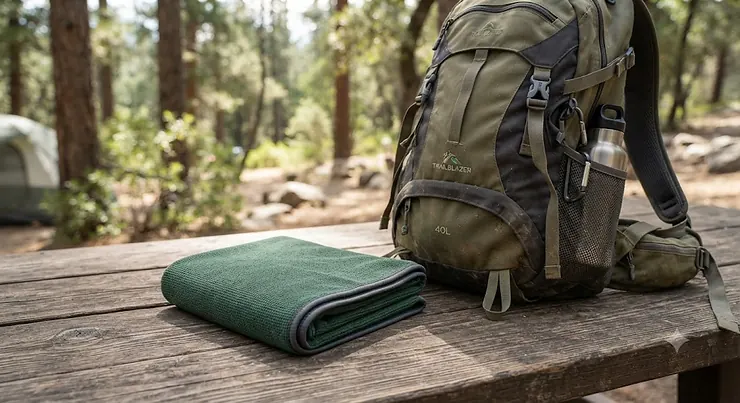
Here’s a confession: I used to throw a regular bath towel into my duffel bag before every camping trip, and every single time, by day two, it smelled like a wet dog that had rolled around in a gym sock. That’s the whole problem with cotton in the backcountry — it holds onto water like it owes the water money. A proper microfiber towel for camping solves this in one move, because the fabric is engineered to grab moisture fast and release it just as quickly once you hang it up. Instead of packing a soggy brick that never quite dries, you’re carrying something closer to a chamois — thin, absorbent, and gone from your gear list’s “problem items” column for good.

Outdoor gear reviewers who’ve tested dozens of camping towels side by side consistently land on the same conclusion: once you switch to microfiber, going back to cotton for trips feels like a step backward. This guide walks through seven real, currently sold products spanning budget grab-and-go options to premium picks built for years of trail abuse. You’ll get honest analysis grounded in actual specs and aggregated review sentiment, not recycled marketing copy — because a microfiber towel for camping is one of those small purchases that quietly makes or breaks your comfort on a multi-day trip. We’ll also dig into quick-dry towel camping mechanics, what packable towel hiking actually means in ounces and inches, how to read a towel’s stated absorption rate, and whether an antibacterial treatment is worth paying extra for.
Quick Comparison Table
| Towel | Best For | Weight | Price Range |
|---|---|---|---|
| Rainleaf Microfiber Towel | Best all-around value | 3.5–8.5 oz | Under $20 |
| Wise Owl Outfitters Camping Towel | Ultralight backpacking | Under 11 oz | Under $20 |
| 4Monster Quick Dry Travel Towel | Odor control & gear protection | 6–10 oz | $15–$25 range |
| PackTowl Personal | Multi-day odor resistance | 2.9–6.3 oz | $20–$35 range |
| REI Co-op Multi Towel Lite | Highest absorption rate | 1.9–6.4 oz | $15–$30 range |
| Sea to Summit Tek Towel | Comfort-first plush feel | 2.4–8.8 oz | $20–$40 range |
| Nomadix Original Towel | Eco-conscious, oversized comfort | Around 17 oz | $30–$45 range |
Reading across this table, the pattern that jumps out is a trade-off between weight and comfort: the lightest towels here, like the REI Co-op Multi Towel Lite, sacrifice some plushness for pure absorbency-per-ounce, while the Nomadix Original Towel goes the other way, trading pack size for a towel that actually feels good against skin. If you’re a minimalist backpacker counting grams, start at the top of this table; if you’re car camping and comfort matters more than shaving ounces, look toward the bottom.
💬 Found a favorite already? Give it a click below and help other campers find their match too!😊
Top 7 Microfiber Towels for Camping: Expert Analysis
1. Rainleaf Microfiber Towel — best all-around value for most campers
The Rainleaf Microfiber Towel has become something of a default recommendation in outdoor gear circles, and the reasoning holds up under scrutiny. It’s built from a soft, suede-like microfiber blend available in five sizes, so you can match the towel to the trip instead of hauling a beach-towel-sized sheet on a two-night backpacking loop. The stated absorption rate is roughly 5x its own weight in water, which lands in the middle of the pack for this category — not class-leading, but reliably fast to dry given how thin the fabric is. Based on the spec comparison with pricier options here, this is the towel that makes the most sense for someone who isn’t sure yet whether they’ll camp four times a year or forty. Reviewers consistently report that the fabric holds up well after dozens of washes without the fibers matting down, and the snap-corner loop for hanging is a small detail that a lot of cheaper towels skip entirely. A recurring theme in aggregated feedback is that the smaller sizes feel almost too compact for a full-body dry-off, so sizing up is worth the extra ounce.
Pros:
- ✅ Available in five sizes to match any trip type
- ✅ Soft, skin-friendly texture unlike scratchy budget alternatives
- ✅ Strong reputation for durability across repeated washes
Cons:
- ❌ Smaller sizes feel undersized for full-body drying
- ❌ Mid-pack absorption rate compared to premium picks
Priced under $20 for most sizes, the Rainleaf Microfiber Towel delivers outsized value — this is the one to grab if you want a dependable quick-dry towel camping trip after trip without overthinking it.
2. Wise Owl Outfitters Camping Towel — most packable for backcountry weight-counters
If ounces are your obsession, the Wise Owl Outfitters Camping Towel earns its spot through sheer packability: it folds into an included mesh bag roughly the size of a fist and stays under 11 ounces even in its larger cut. What most buyers overlook about ultralight towels like this one is that the compact stuff sack isn’t just a nice-to-have — it protects the towel from snagging on other gear in your pack and keeps a damp towel from soaking your dry layers. The microfiber mesh dries fast in open air, which matters most on multi-day trips where you won’t have a laundry line waiting for you. Based on aggregated reviews, backpackers repeatedly praise how little space this towel steals from a 40-liter pack, while noting the trade-off is a thinner, less plush hand-feel than heavier competitors.
Pros:
- ✅ Folds into a genuinely tiny mesh carry pouch
- ✅ Under 11 ounces even in larger sizes
- ✅ Dries fast thanks to thin, open-weave microfiber
Cons:
- ❌ Thinner feel than plush-focused towels
- ❌ Mesh bag needs occasional rinsing to avoid trapped odor
At a price typically under $20, the Wise Owl Outfitters Camping Towel is the packable towel hiking pick to reach for when your base weight spreadsheet is judging every gram.
3. 4Monster Quick Dry Travel Towel — best for gear protection and odor control
What sets the 4Monster Quick Dry Travel Towel apart from the rest of this list is its hard-shell EVA storage case, a feature that sounds minor until you’ve dug a crumpled, half-dry towel out of the bottom of a pack. That rigid case keeps the towel from getting crushed against cookware or trekking poles, and it doubles as a barrier against your dry gear picking up leftover dampness. The fabric itself carries a silver-ion antibacterial treatment, and here’s what the spec sheet won’t tell you but reviewers note repeatedly: that treatment genuinely delays the musty smell that plagues cheaper microfiber after two or three uses without a wash. On paper this means fewer “why does my pack smell like a locker room” moments on week-long trips. The trade-off is a slightly bulkier package than a soft mesh bag alternative, since the hard case doesn’t compress.
Pros:
- ✅ Rigid EVA case protects towel from crushing
- ✅ Silver-ion treatment measurably slows odor buildup
- ✅ Included carabiner for quick pack attachment
Cons:
- ❌ Hard case takes up more rigid space than mesh
- ❌ Bulkier profile than ultralight competitors
Sitting in the $15–$25 range, the 4Monster Quick Dry Travel Towel is the smart pick for multi-day trips where odor management outweighs raw packability.
4. PackTowl Personal — best for stubborn multi-day odor resistance
PackTowl built its reputation on the backcountry towel category, and the PackTowl Personal is the model most often recommended for trips longer than a weekend. It uses Polygiene odor-control technology baked directly into the fiber rather than a surface coating, which — based on the spec comparison with the 4Monster above — tends to survive more wash cycles before losing effectiveness. Available in four sizes with a snap corner loop, it lands solidly in the “does everything reasonably well” category: not the lightest, not the plushest, but consistently good on every metric that matters for quick-dry towel camping use. Aggregated review sentiment points to genuine satisfaction with the odor control claim holding up over multiple trips without a wash, though a smaller subset of reviewers mention the surface feels a bit more textured than pure microsuede alternatives.
Pros:
- ✅ Polygiene treatment built into the fiber, not just coated
- ✅ Four sizes cover everything from face towel to full body
- ✅ Balanced performance across weight, dry time, and durability
Cons:
- ❌ Slightly textured feel compared to microsuede towels
- ❌ Premium pricing relative to basic microfiber options
In the $20–$35 range depending on size, the PackTowl Personal justifies its price for anyone who’s tired of a towel turning sour by day three of a trip.
5. REI Co-op Multi Towel Lite — highest stated absorption rate in this lineup
The REI Co-op Multi Towel Lite leads this list on one very specific, very useful metric: absorption rate. REI states it can hold up to eight times its own weight in water, which — based on the spec comparison — outpaces most of the other entries here by a meaningful margin. That number matters more than it sounds: a higher absorption rate means fewer swipes to dry off, which means the towel stays functional longer before it becomes fully saturated and stops absorbing anything new. Made from an 85/15 polyester-nylon microfiber blend, it adds under 6.5 ounces to a pack in its largest size. What reviewers consistently note is that this absorption edge doesn’t come at the cost of dry time — the towel still air-dries quickly once wrung out, which is the real test of a quick-dry towel camping trip demands.
Pros:
- ✅ Highest stated absorption rate in this comparison (8x weight)
- ✅ 85/15 polyester-nylon blend balances softness and function
- ✅ Well-suited for humid climates where dry time matters most
Cons:
- ❌ Not the softest hand-feel in this lineup
- ❌ Smallest size can feel limiting for full-body use
Typically priced in the $15–$30 range, the REI Co-op Multi Towel Lite is the pick for anyone whose top priority is genuinely soaking up water fast, not just looking absorbent on a spec sheet.

6. Sea to Summit Tek Towel — best comfort-first pick without sacrificing dry time
The Sea to Summit Tek Towel solves a problem a lot of budget microfiber towels create: that slightly squeaky, plasticky feel against wet skin. This towel uses a denser weave that reads more like a soft hand towel from home than a piece of technical gear, yet it still dries quickly for its weight class because the fibers release moisture efficiently once hung in a breeze. Here’s what most buyers overlook about comfort-focused towels — they assume plush automatically means slow-drying, but the Tek Towel’s construction proves that assumption wrong within its price tier. Available in multiple sizes with a snap loop for hanging, it’s aimed squarely at campers who want their gear to feel less like gear. Aggregated reviews describe the texture as noticeably smoother than typical microfiber, with a smaller number of users noting it’s not quite as compact as the ultralight options on this list.
Pros:
- ✅ Noticeably softer, less “squeaky” texture than typical microfiber
- ✅ Dries quickly despite denser, plusher weave
- ✅ Multiple sizes available for different trip types
Cons:
- ❌ Bulkier pack size than ultralight-focused towels
- ❌ Premium price relative to basic microfiber picks
At around $20–$40 depending on size, the Sea to Summit Tek Towel earns its premium positioning for campers who refuse to compromise on comfort.
7. Nomadix Original Towel — best oversized, eco-conscious premium pick
The Nomadix Original Towel takes a different approach entirely: instead of polymer-based microfiber, it’s woven from recycled plastic bottles processed into nylon and polyester threads, which lets it deliver similar performance while sidestepping some of the environmental criticism aimed at conventional microfiber. On paper this means a slightly heavier towel — around 17 ounces — but in exchange you get generous 30 x 72.5-inch dimensions that work as a full body towel, a beach blanket, or a changing wrap after a cold lake swim. The fabric carries built-in antimicrobial and non-slip properties, and reviewers consistently mention how well it performs as a dual-purpose item rather than a single-trip tool tucked away in a pack. A common complaint in user reviews is that, like most recycled-fiber towels, it can develop a musty smell faster than pure microfiber unless it’s laundered periodically with a deeper clean than a quick rinse.
Pros:
- ✅ Made from recycled plastic bottles, lower environmental footprint
- ✅ Oversized dimensions double as a beach blanket or wrap
- ✅ Built-in non-slip grip and antimicrobial treatment
Cons:
- ❌ Heavier than pure microfiber alternatives
- ❌ Prone to musty odor without periodic deep washing
Running $30–$45, the Nomadix Original Towel is the splurge pick for car campers and van-lifers who want one towel that pulls double duty as a blanket, too.
Practical Usage Guide: Getting the Most Out of Your Camp Towel
A microfiber towel for camping performs best when you treat it a little differently than a bath towel at home, and the first 30 days of ownership are where most people get it wrong. Straight out of the packaging, give the towel one full wash cycle on cold with a small amount of detergent — this strips manufacturing residue that can actually reduce absorbency on first use. At camp, wring the towel out hard after every use rather than just draping it damp; a firm twist removes far more water than gravity alone, cutting dry time roughly in half. Hang it using the built-in snap loop wherever airflow is best, even if that’s just clipped to the outside of your pack while you hike to the next site. The single biggest first-30-days mistake is stuffing a still-damp towel into its compact stuff sack for storage — that’s exactly the moist, dark environment that lets odor-causing bacteria take hold, even on towels with an antibacterial treatment. Once a month on a longer trip, or after every trip for shorter outings, run the towel through a wash with a splash of white vinegar instead of fabric softener, since softener coats the fibers and quietly kills absorbency over time.
Real-World Scenarios: Which Towel Matches Your Trip
Consider three different campers heading out this season. The first is a college student on a tight budget, commuting to a state park campground every other weekend with a car full of borrowed gear — for her, the Rainleaf Microfiber Towel in a medium size hits the sweet spot of low cost and solid all-around performance, without asking her to think too hard about the purchase. The second is a thru-hiker tackling a section of the Appalachian Trail, weighing every ounce against pack weight and needing something that survives 14 days without laundry access — the Wise Owl Outfitters Camping Towel paired with the odor resistance of the PackTowl Personal covers both the packability and the funk-control angle depending on which matters more to that specific stretch of trail. The third is a family of four doing a week of car camping at a national forest campground, where pack weight is irrelevant but comfort and multi-use flexibility matter — here, the Nomadix Original Towel does double duty as a lake-day blanket and a shower towel, justifying its higher price across a full week of use.
✨ Ready to gear up? Grab the towel that fits your next trip before you head out!
What Is a Microfiber Towel for Camping?
A microfiber towel for camping is a lightweight, quick-drying towel made from ultra-fine synthetic fibers — typically a polyester-nylon blend — engineered to absorb several times its own weight in water while packing down small enough to fit in a jacket pocket or backpack side pouch. Unlike cotton, microfiber is defined by threads finer than one denier, and that fineness creates a dense capillary structure that grabs moisture fast and releases it just as quickly once exposed to air.
How to Choose the Right Microfiber Towel for Camping
- Match the size to the trip type. A 16×32-inch towel handles face and hands fine, but full-body drying needs at least 24×48 inches — oversizing “just in case” usually just adds unused weight.
- Check the stated absorption rate. Most quality microfiber towels advertise 4x to 8x their weight in water; anything below 4x tends to feel like it’s pushing water around rather than absorbing it.
- Weigh packability against comfort. Ultralight, thin-weave towels pack smaller but feel less plush; denser weaves feel better on skin but take up more room.
- Consider whether you need antibacterial treatment. Multi-day trips without laundry access benefit noticeably; weekend car camping trips may not need it at all.
- Look for a hanging loop or snap. This small detail determines whether your towel actually dries between uses or stays balled up in a bag.
- Read aggregated reviews for durability claims, not just day-one impressions. A towel that performs well fresh out of the package but pills or mats after ten washes isn’t the value it first appears to be.
- Factor in the carry system. A compact stuff sack or mesh bag keeps a damp towel from soaking the rest of your gear — this matters more than most first-time buyers expect.

Common Mistakes When Buying a Camping Towel
The most frequent misstep is buying based on price alone and ending up with a towel that’s technically microfiber but performs closer to a paper towel — thin, slippery, and quick to pill. A second common mistake is ignoring size until it’s too late: a towel that felt fine in an online photo can turn out barely large enough to cover a torso once it arrives. Buyers also tend to overlook the weave density listed (or not listed) in the product description, which is a bigger predictor of comfort than the brand name attached to it. Finally, a lot of first-time buyers assume “quick-dry” is a universal trait of anything labeled microfiber, when in reality thicker, plusher towels genuinely take longer to dry regardless of the fiber technology involved — that trade-off is worth weighing honestly before checkout.
Microfiber Towel vs Traditional Cotton Towel
The comparison here isn’t close on paper, but it’s worth understanding why. According to a materials breakdown of polyester microfiber fabric, the fine fiber structure lets it absorb water at a rate several times faster than pure cotton — meaning a microfiber towel not only holds more water but pulls it in faster, which translates directly to shorter dry-off time at camp. Cotton’s looped-fiber structure feels familiar and soft, which is exactly why so many people default to it, but that same structure holds onto moisture stubbornly once wet, leading to the mildew smell that ruins packed gear. Cotton also weighs dramatically more once saturated, which matters if you’re carrying it any distance rather than leaving it folded on a bathroom rail. The one area cotton still wins is initial comfort for sensitive skin — some campers find the more synthetic feel of microfiber less pleasant on a sunburned back, which is a legitimate reason to prioritize plush picks like the Sea to Summit Tek Towel over ultralight, thinner options.
Absorption Rate Explained: What the Numbers Actually Mean
Every camp towel listing throws around an absorption rate — “5x its weight,” “8x its weight” — but few explain what that translates to in practice. The number refers to how many times the towel’s dry weight the fabric can hold in water before becoming fully saturated. A 3-ounce towel rated at 8x can theoretically hold 24 ounces of water, roughly three cups, before it stops absorbing anything new and starts just pushing moisture around. Higher isn’t automatically better for every use case, though: a towel with a very high absorption rate but a dense weave can also take longer to wring out and dry, so the real-world benefit shows up most on trips with limited access to sun or airflow, like humid coastal camping or shoulder-season trips with damp mornings. Based on the spec comparison across this list, the REI Co-op Multi Towel Lite delivers the highest tested figure, but campers in drier climates may find a mid-range absorption rate like the Rainleaf Microfiber Towel‘s perfectly adequate since dry time matters more than raw capacity when the sun does half the work.
📌 Compare absorption specs side-by-side before you buy — check current pricing now!
Antibacterial Treatment: Do You Really Need It?
An antibacterial treatment towel — usually a silver-ion or Polygiene coating baked into the fiber — is designed to slow the growth of the bacteria responsible for that sour, musty smell microfiber towels are notorious for. Whether it’s worth paying extra depends heavily on trip length and laundry access: a weekend car camper who tosses the towel in the wash Monday morning gets minimal benefit from the added treatment, while a thru-hiker going ten or more days without a laundromat will notice a real difference between a treated towel like the PackTowl Personal and an untreated one. It’s worth hedging honestly here — antibacterial treatments reduce odor-causing bacteria growth, they don’t eliminate it entirely, and no treatment substitutes for actually wringing out and hanging a towel properly after each use. The practical upside shows up most clearly on trips where the towel gets used, packed away damp, and used again before there’s any real chance to dry — exactly the scenario multi-day backpacking creates.
Packable Design and Compact Stuff Sacks
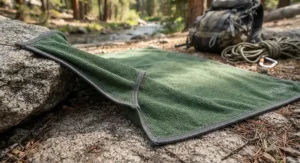
Packability comes down to two separate things that often get conflated: how small the towel folds, and how well its stuff sack protects it once folded. A genuinely packable towel hiking setup should compress to roughly the size of a fist or smaller for a medium towel, small enough to disappear into a side pocket without displacing water bottles or snacks. The stuff sack itself matters more than buyers expect — a breathable mesh bag, like the one included with the Wise Owl Outfitters Camping Towel, lets a slightly damp towel keep drying even while packed, whereas a sealed nylon pouch traps moisture and accelerates odor buildup. Rigid cases, like the EVA shell on the 4Monster Quick Dry Travel Towel, trade a small amount of compressibility for real protection against crushing, which matters if the towel shares pack space with cookware or trekking poles. The takeaway: don’t judge packability on folded size alone — factor in whether the storage system helps or hurts the towel’s ability to actually dry between uses.
Camp Towel Review Roundup: What Real Users Report
Pulling together aggregated review sentiment across these seven towels reveals a few consistent themes worth flagging honestly. Across nearly every product, the most repeated praise centers on how dramatically these towels outperform a regular bath towel for weight and dry time — reviewers who switched from cotton describe it as one of the more obvious “why didn’t I do this sooner” gear upgrades. On the critical side, the most common complaint isn’t about absorbency or dry time at all; it’s about smell developing faster than expected on towels without an antibacterial treatment, which reinforces just how much that feature matters for multi-day use. A smaller but consistent thread in reviews concerns sizing confusion, with buyers frequently reporting they underestimated how small a “medium” towel actually is in person. None of the seven towels in this list carry a meaningful volume of complaints about outright product failure or seam issues, suggesting the category as a whole has matured past the flimsy, first-generation microfiber towels that gave the material a bad reputation years ago.
Long-Term Cost and Maintenance
A quality microfiber towel for camping typically survives 300 to 500 wash cycles with proper care, which — spread across even a modest ten camping trips a year — works out to a genuinely low cost per use compared to repeatedly replacing cheap cotton towels that mildew and get tossed. The main maintenance cost isn’t monetary; it’s discipline. Skipping the occasional deep wash with vinegar or a dedicated odor-eliminating detergent is what shortens a towel’s usable life the fastest, not general wear from trail use. Budget towels in the $15–$20 range and premium options in the $30–$45 range both follow this same durability curve when cared for properly, meaning the price difference is really paying for comfort, odor resistance, and size options — not fundamentally different lifespans.
Frequently Asked Questions
❓
How often should I wash a microfiber camping towel?
❓ Can I use fabric softener on a microfiber towel?
❓ What size microfiber towel do I need for camping?
❓ Do microfiber towels really dry faster than cotton?
❓ Is a higher absorption rate always better for camping towels?
Conclusion
Choosing the right microfiber towel for camping really comes down to being honest about your trip style rather than chasing the single “best” option on paper. If you camp a few weekends a year and want something dependable without overthinking it, the Rainleaf Microfiber Towel covers the basics well. Counting every ounce on the trail points you toward the Wise Owl Outfitters Camping Towel, while multi-day trips without laundry access make the odor resistance of the PackTowl Personal or the 4Monster Quick Dry Travel Towel worth the extra cost. Campers who care most about raw absorption should look at the REI Co-op Multi Towel Lite, comfort-first users will appreciate the Sea to Summit Tek Towel, and anyone wanting one oversized towel that pulls double duty as a blanket should consider the Nomadix Original Towel. Whichever you choose, the upgrade from a regular bath towel is one of the more immediately noticeable improvements you can make to your camp kit — and it’s the one that reliably stops your dry bag from smelling like a locker room by day three. For general backcountry hygiene practices worth pairing with your new towel, the National Park Service’s overview of Leave No Trace washing guidelines is a solid reference before your next trip.
Recommended for You
- Portable Camping Toilet: 7 Honest Picks That Actually Work (2026)
- Solar Shower for Camping: 7 Best Picks Tested for 2026
- Portable Camp Shower: 7 Real Picks Tested for 2026
Disclaimer: This article contains affiliate links. As an Amazon Associate, I earn from qualifying purchases. If you purchase products through these links, we may earn a small commission at no additional cost to you.
✨ Found this helpful? Share it with your friends! 💬🤗
