In This Article
Somewhere on a riverbank in the Rockies, a well-meaning camper is squeezing a fat dollop of their bathroom shower gel directly into the current, watching the suds swirl downstream like it’s no big deal. It is, in fact, a big deal. What washes off your hands doesn’t just disappear — it drifts into someone else’s drinking water, a trout’s gills, or a frog’s egg sac. That’s the whole reason biodegradable soap for camping exists as its own category, separate from whatever’s sitting in your regular shower.
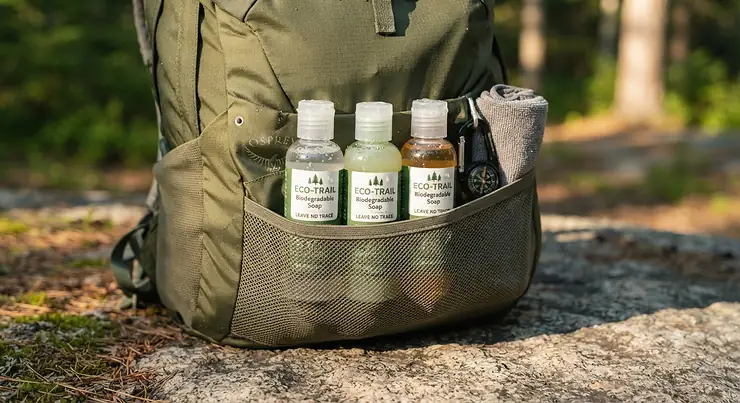
So, what is biodegradable soap for camping? It’s a cleanser formulated from plant-based, readily biodegradable surfactants — usually saponified oils rather than petroleum detergents — designed to break down into harmless organic matter through natural bacterial action once it’s dispersed on soil, away from waterways. It’s meant for hands, hair, dishes, and gear, and it’s built to rinse clean with minimal water and leave no lingering residue behind.
This guide covers exactly that: real products, honest analysis, and the practical know-how to actually use camp soap the right way. We researched a stack of concentrated liquids, bar soaps, and dissolvable sheets that show up again and again in gear-tester roundups and thru-hiker packing lists, then dug into the specs, the aggregated review sentiment, and the Leave No Trace science behind them. You’ll get a side-by-side comparison table, seven in-depth product breakdowns spanning budget to premium, and a handful of sections built specifically to solve the problems campers actually run into — greasy dishes, hard water, sensitive skin, and the eternal question of how far “200 feet” really is when you’re staring at a lake with a bar of soap in your hand.
Whether you’re outfitting a car-camping cooler for a family of four or shaving grams off an ultralight thru-hike kit, there’s a genuinely eco-friendly soap camping option ahead that fits your trip. And before you pack any of them, it’s worth skimming the Leave No Trace waste-disposal guidelines, since how you use camp soap matters as much as which one you buy. Let’s get into it.
Quick Comparison Table
Before the deep dives, here’s the fast version — useful if you’re standing in a gear shop aisle with five minutes to decide.
| Product | Format | Best For | Price Range |
|---|---|---|---|
| Dr. Bronner’s Pure-Castile Liquid Soap | Concentrated liquid | All-around versatility | $12-$20 |
| Sierra Dawn Campsuds | Concentrated liquid | Cutting dish grease | $8-$14 |
| Sea to Summit Wilderness Wash | Liquid | Sensitive skin & hair | $10-$16 |
| Sea to Summit Pocket Hand Wash | Dissolvable sheets | Ultralight hand washing | $6-$10 |
| Coleman Camp Soap Sheets | Dissolvable sheets | Budget backpacking | $5-$9 |
| Dr. Bronner’s Pure-Castile Bar Soap | Bar | No-spill simplicity | $5-$8 |
| Chagrin Valley Camping & Trail Bar | Bar (organic, small-batch) | Chemical-conscious campers | $7-$11 |
A quick read on the spread above: the liquids dominate for genuine multi-tasking — one bottle handling dishes, hair, and hands — while the sheet formats trade that versatility for near-zero pack weight, which matters a lot more on a five-day trek than a weekend car-camping trip. Bar soaps land in the middle: they can’t easily wash a greasy skillet the way a concentrated liquid can, but they never leak in your pack, which liquids occasionally do. If cutting weight is your only priority, skip straight to the sheets; if you want one product that does everything reasonably well, the castile liquids are the safer bet.
💬 Found a favorite already? Check current pricing before your next trip — availability shifts fast.
Top 7 Biodegradable Soaps for Camping: Expert Analysis
1. Dr. Bronner’s Pure-Castile Liquid Soap — the 18-in-1 backcountry workhorse
The standout here isn’t any single spec — it’s breadth. Dr. Bronner’s Pure-Castile Liquid Soap is a concentrated soap made from saponified organic coconut, olive, hemp, and jojoba oils, sold in peppermint, lavender, tea tree, citrus, and unscented versions, in bottle sizes ranging from travel-size to a 32-ounce jug. Because it’s a true concentrate, a few drops diluted in a cup of water produce enough lather for a full dish-washing session or a head-to-toe rinse, which means the bottle you pack for a weekend trip will likely outlast several more trips after that.
Based on the spec comparison against other liquid camp soaps, what sets this one apart is its ingredient simplicity: no synthetic detergents, no petrochemical foaming agents, just saponified plant oils and a small amount of citric acid to keep the formula stable. That matters in practice because it’s one of the few widely available liquid soaps that genuinely breaks down through ordinary soil bacteria rather than lingering as a synthetic surfactant. It’s the reason gear reviewers consistently name it their top overall pick for biodegradable soap for camping and backpacking, testing it against more than a dozen competitors before landing here.
Reviewers consistently note strong cleaning power even in cold water — a detail that matters more than it sounds, since most alpine lake water sits well below the temperature that lets weaker surfactants foam properly. The trade-off, which several long-distance testers flagged, is that the soap runs thin and drippy compared to thicker dish detergents, so a squeeze bottle with a flip-top is worth the extra dollar to avoid a puddle in your pack.
Pros:
- ✅ Genuinely multi-use across body, hair, dishes, and laundry
- ✅ Effective lather even in cold backcountry water
- ✅ Wide range of scents, including unscented for sensitive skin
Cons:
- ❌ Thin, runny consistency can leak from loose caps
- ❌ Peppermint variant can sting sensitive or broken skin
Bottles run in the affordable range — think under $20 for the largest size — and given how far the concentrate stretches, the cost-per-trip is about as low as camp soap gets; check current price before you buy, since bottle sizes and formulas shift seasonally.
2. Sierra Dawn Campsuds — best grease-cutter with a built-in bug deterrent
The short version: Sierra Dawn Campsuds is what you reach for when the dish grease refuses to budge. This is a concentrated all-purpose formula built with citronella, lavender, and peppermint essential oils, and it’s been sold to campers and backpackers for over five decades, according to the manufacturer, which counts for something in a product category where longevity is a real trust signal.
What most buyers overlook about this one is the double duty its essential oil blend performs. On paper, citronella and peppermint are there for scent, but reviewers and campers report a secondary insect-deterrent effect strong enough that some campers use it specifically for that reason, not just for cleaning power. That’s a genuine differentiator among biodegradable soap for camping options, most of which are scent-neutral by design.
Key numbers worth knowing: the standard bottle is 4 ounces of concentrate, and — like most castile-style concentrates — only a few drops are needed per wash, so a single small bottle typically covers a multi-week trip. It performs across hot, cold, and even salt water, which broadens its use case to coastal camping and sea kayaking, not just alpine backpacking. Based on the spec comparison with the Dr. Bronner’s line, Campsuds trades a slightly narrower ingredient story (it isn’t organic-certified) for stronger degreasing performance on cast-iron skillets and cookware — a fair trade for car campers who cook more elaborate meals at the site.
Pros:
- ✅ Cuts through cooking grease better than most competitors
- ✅ Insect-deterrent essential oils add real trail value
- ✅ Works in hot, cold, and salt water alike
Cons:
- ❌ Not organic-certified, unlike some castile alternatives
- ❌ Citrus-forward scent can be strong for scent-sensitive users
At a price typically in the single digits to low teens depending on bottle size, this is one of the best value picks on this list for anyone who cooks real meals at camp rather than just boiling water for freeze-dried pouches.
3. Sea to Summit Wilderness Wash — the gentlest option for skin, hair, and fabric
If your skin turns red and angry after a few days of trail grime and repeated washing, Sea to Summit Wilderness Wash is the pick worth a closer look. It’s formulated as a fragrance-conscious, biodegradable liquid soap positioned specifically for body, hair, and clothing rather than dishes and heavy-duty degreasing, and that narrower focus is exactly what makes it gentler.
Here’s what to weigh: this soap trades a bit of raw cutting power — it won’t strip bacon grease off a pan as fast as Campsuds — for a formula that’s noticeably milder on skin that’s already stressed from sun, wind, and sweat. Reviewers consistently frame it as the “gentle” pick in head-to-head soap tests, the one recommended specifically for extended, multi-day trips where repeated washing on the same skin and hair adds up. That’s a meaningful distinction most marketing copy glosses over: a soap that’s “biodegradable” isn’t automatically “gentle,” and vice versa.
It’s concentrated like the other liquids on this list, comes in a travel-friendly bottle, and works across body, hair, and clothes — useful if you want to wash a sweat-soaked base layer without switching products. Where it falls a bit short is dish duty on genuinely greasy cookware, where the milder surfactant blend simply has less grease-fighting muscle than Campsuds or Dr. Bronner’s.
Pros:
- ✅ Noticeably gentler formula for repeated multi-day use
- ✅ Works well across body, hair, and clothing
- ✅ Fragrance profile is lighter than most castile soaps
Cons:
- ❌ Less effective than Campsuds on heavy cooking grease
- ❌ Premium pricing compared to Campsuds and Dr. Bronner’s
Expect to pay in the low-to-mid teens for a standard bottle — a reasonable premium if sensitive skin is genuinely your priority over raw degreasing power.
4. Sea to Summit Pocket Hand Wash — the sheet format that wins on convenience
For hand-washing specifically, dissolvable soap sheets solve a problem liquids can’t: they never spill, never freeze, and never leak through your pack liner. Sea to Summit Pocket Hand Wash comes in a small, non-waterproof plastic container holding roughly 50 individual sheets, each one a thin, dry film of soap that turns into a proper lather the moment it hits water.
The real-world meaning of that format: you pop the container open, tear off one sheet, wet your hands, and rub — no dosing, no measuring, no risk of over-squeezing a bottle and wasting concentrate. Reviewers testing multiple soap-sheet brands side by side rated this one as cleaning slightly better than its closest competitor, which is a meaningful edge in a category where most sheet soaps perform roughly the same.
What the spec sheet won’t tell you, but testers note, is that these sheets aren’t built for full-body washing — they’re designed to be pulled from a dry container with dry hands, which makes lathering an entire body awkward mid-shower. A workaround some backpackers use is pre-dissolving several sheets in a water bottle to create an improvised liquid soap for that purpose, though that does eat through the supply faster.
Pros:
- ✅ Zero spill risk — ideal for airline travel and ultralight packs
- ✅ No dosing guesswork; one sheet per wash
- ✅ Slightly better lather than competing sheet brands in testing
Cons:
- ❌ Container isn’t waterproof, so sheets can clump if damp
- ❌ Impractical for full-body washing compared to liquids
At roughly $6 to $10 for a container of 50 sheets, the cost-per-wash is low, and the pack-weight savings alone justify it for anyone counting ounces on a multi-day thru-hike.
5. Coleman Camp Soap Sheets — the budget-friendly ultralight backup
Not every camper needs a premium sheet soap, and that’s where Coleman Camp Soap Sheets earn their spot. This budget-tier option delivers roughly 100 rose-scented, biodegradable soap sheets per pack, designed to dissolve quickly with minimal water — a genuine advantage on trips where you’re rationing every drop.
Based on the review sentiment gathered from campers who’ve used these in the field, the cost-effectiveness is the headline: at a price well under most sheet-soap competitors, campers report not feeling precious about using multiple sheets per wash, which actually makes for a more thorough clean than rationing a pricier product. That’s a subtle but real behavioral point — a soap that’s cheap enough to use generously often outperforms a “better” soap you’re subconsciously stretching too thin.
The trade-off is scent and skin feel: the rose fragrance is more noticeable and less neutral than the Sea to Summit sheets, and the formula leans toward basic hand-cleaning rather than the broader multi-use claims some liquid soaps make. Campers describe it as ideal for quick cleanups after setting up camp, before meals, or at trailhead pit stops where soap isn’t otherwise available — a specific, well-defined use case rather than an all-purpose claim.
Pros:
- ✅ Very low cost per wash compared to premium sheet brands
- ✅ Dissolves fast with minimal water use
- ✅ Compact enough to distribute across multiple gear pockets
Cons:
- ❌ Noticeable rose scent isn’t for everyone
- ❌ Not marketed or suited for dishes or full-body washing
Expect to pay under $10 for a pack of 100 — arguably the lowest cost-per-wash on this entire list, which makes it a smart stocking-stuffer addition to any camping first-aid kit or glovebox.
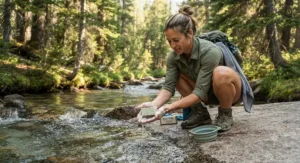
6. Dr. Bronner’s Pure-Castile Bar Soap — the no-spill, no-drip simplicity pick
Liquids are versatile, but they leak. Dr. Bronner’s Pure-Castile Bar Soap sidesteps that entire problem by being, well, a bar — made from the same saponified organic oils as the liquid line, just solidified into a form that can’t spill in your dry bag no matter how it’s packed.
The practical interpretation here: a bar soap doesn’t measure itself out in careful drops, so it’s a little less “concentrated” in the pack-weight-per-wash sense than the liquid concentrate, but it makes up for that by being genuinely foolproof for travelers who don’t want to think about dosing at all. Reviewers who’ve tested both formats from the same brand describe the bar as delivering the same clean, plant-based lather as the liquid, just in a format better suited to car-camping duffels, gym bags, and shared-bathroom camp showers where a bottle would be one more thing to lose.
On the honest-analysis side, a bar soap is a worse choice than a liquid for washing dishes with any real grease on them — there’s no way to work a bar into a scrubbing motion on a cast-iron pan the way you can with a squirt of concentrated liquid — so this is best positioned as the body-and-hair pick, not the all-purpose one, despite Dr. Bronner’s broader “18-in-1” marketing claims.
Pros:
- ✅ Zero spill or leak risk in any pack configuration
- ✅ Same trusted plant-oil formula as the liquid version
- ✅ Compact and TSA-friendly for fly-in trips
Cons:
- ❌ Awkward for washing dishes compared to liquid concentrate
- ❌ Melts faster than synthetic bar soaps if left wet in a case
Bars typically run in the single-digit-to-low-teens price range, and a travel soap case with drainage holes extends the bar’s life significantly on multi-day trips.
7. Chagrin Valley Camping & Trail Bar — the small-batch organic alternative
Rounding out the list with a lesser-known but genuinely high-quality option: the Chagrin Valley Camping & Trail Bar is a small-batch, USDA-certified organic bar built specifically for outdoor use, blending citronella, lemongrass, cedarwood, and rosemary essential oils with oat flour and cocoa butter for a gentler lather.
What most buyers overlook about small-batch soap makers like this one is the ingredient transparency — at least 70% certified organic content under the USDA National Organic Program, plus cruelty-free certification, gives skin-conscious campers a paper trail that mass-market brands rarely publish in that much detail. Based on the formulation, the oat flour addition is a specific answer to a specific problem: cold backcountry water can leave skin feeling stripped after washing, and oat flour is a well-documented skin-soothing ingredient in natural skincare formulation.
This is a niche pick rather than a do-everything soap. It’s explicitly positioned as the body-washing component of an outdoor hygiene kit — not a dish soap, not a laundry soap — which narrows its use case considerably compared to Dr. Bronner’s or Campsuds. For campers who specifically want an organic-leaning, essential-oil-based body bar and don’t mind carrying a second product for dishes, it earns its spot; for anyone wanting one soap to rule them all, it isn’t the right fit.
Pros:
- ✅ USDA-certified organic content with published ingredient sourcing
- ✅ Essential oil blend doubles as a mild insect deterrent
- ✅ Oat flour and cocoa butter soften the lather for sensitive skin
Cons:
- ❌ Not designed or marketed for dishes or laundry duty
- ❌ Smaller-batch pricing runs higher than mass-market bars
Prices sit a notch above Dr. Bronner’s bar soap, generally in the $7-$11 range depending on size, which is a fair premium for the organic certification and small-batch sourcing if that matters to your buying decision.
Your First 30 Days: Setup, Care, and Optimization Tricks
Getting a new biodegradable soap for camping into your kit is easy; using it well takes a little more thought than tossing a bottle of shower gel in your duffel. Start by decanting concentrated liquids like Dr. Bronner’s or Campsuds into a smaller, leak-tested travel bottle rather than hauling the full-size container — a 2-ounce bottle of concentrate, properly diluted, lasts most weekend trips, and it saves both weight and the heartbreak of a blown cap soaking your sleeping bag.
A common first-30-days mistake is over-pouring. Because these are true concentrates, a quarter-size dollop is almost always too much; two or three drops diluted in a cup of water produces a full lather for hands or a small dish load. Reviewers and testers repeatedly flag this as the single biggest reason people think their camp soap “isn’t working” — they’re diluting it wrong, not using a weak product.
For bar soaps, a vented travel case is worth the extra two dollars. A bar left wet in a sealed plastic bag turns to mush within a couple of trips, while a case with drainage holes lets it air-dry between uses and can double the bar’s lifespan. For sheet soaps, keep the container in a dry pocket of your pack, since even light moisture causes the sheets to clump into an unusable block — a specific packing detail that saves an entire product from becoming useless mid-trip.
Maintenance-wise, there isn’t much: rinse your travel bottle every few trips to prevent buildup, and store concentrated liquids away from direct sunlight, which can degrade the essential oils in scented formulas over time.
Real Campers, Real Setups: Matching Soap to Your Trip
If you’re a college student car-camping with friends on weekends and running a communal dish-washing station at the site, a bottle of Sierra Dawn Campsuds or the Dr. Bronner’s liquid concentrate is the practical call — you’ll wash dishes, hands, and the occasional greasy pan, and the concentrate stretches across a whole semester of weekend trips for well under the price of a single dinner out.
If you’re a thru-hiker counting grams on a multi-week trail like the Appalachian Trail, the math changes entirely. A Sea to Summit or Coleman soap-sheet pack weighs a fraction of a liquid bottle and can’t leak into your food bag, which matters more over 2,000 miles than raw cleaning power. Pair that with a small bar of Dr. Bronner’s or Chagrin Valley for body washing at longer resupply stops, and you’ve built a two-product system that covers hands, dishes, and body without carrying excess liquid weight.
If you’re a family with young kids doing a week at a developed campground with bathhouse access, gentleness matters more than concentration. Sea to Summit Wilderness Wash or the Chagrin Valley bar are the better fits — kids’ skin is more reactive to strong essential oil blends like Campsuds’ citronella-heavy formula, and a milder wash reduces the odds of a mid-trip rash complaint.
What Is Biodegradable Soap for Camping?
Biodegradable soap for camping is a cleanser made primarily from saponified plant oils and other naturally occurring surfactants that break down into harmless organic compounds through ordinary soil bacteria, rather than lingering as synthetic detergent residue. It’s formulated for use away from direct water sources and is typically concentrated, multi-purpose, and free of phosphates and synthetic fragrances…
This distinguishes it from your regular bathroom soap in two specific ways: the ingredient list (plant oils and natural surfactants instead of petrochemical detergents) and the intended disposal method (dispersed on soil at least 200 feet from water, per Leave No Trace guidance, rather than washed down a drain connected to a treatment plant). Both of those details matter more than the word “biodegradable” printed on a label, since that term isn’t tightly regulated and some products claiming it still take a long time to fully break down.
How to Choose Biodegradable Soap for Camping
- Match the format to your trip type. Car campers benefit from concentrated liquids that handle both dishes and bodies; ultralight backpackers do better with sheets or small bars that shave ounces.
- Check for phosphate-free soap and synthetic-detergent-free labeling. Genuine biodegradable soap for camping avoids phosphates and petroleum-based surfactants, both of which resist natural breakdown far longer than plant-oil formulas.
- Consider water temperature. Some surfactants lather poorly in cold alpine water; reviewer sentiment consistently favors castile-style concentrates for cold-water performance over milder formulas.
- Weigh scent against wildlife concerns. Strongly scented soaps can attract curious animals in bear country; unscented or lightly scented options are the safer call in backcountry campsites.
- Prioritize skin sensitivity for multi-day trips. A soap you’ll use daily for a week needs to be gentler than one used for a single weekend wash.
- Verify real container durability. Leak-prone bottles and non-waterproof sheet containers are common complaint themes in aggregated reviews — check for this before buying.
- Confirm it fits your Leave No Trace routine. The best soap in the world still needs to be used 200 feet from water sources and dispersed properly, so pick one you’ll actually use correctly, not just the “greenest” label on the shelf.
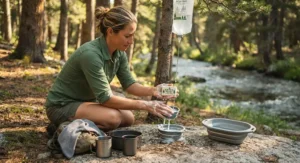
Biodegradable Soap for Camping vs Regular Soap for Camping
The core difference isn’t marketing — it’s chemistry and disposal practice. Regular bathroom soap, shower gel, and dish detergent are formulated assuming they’ll be rinsed into a municipal wastewater system built to treat them; many contain synthetic detergents and, historically, phosphates that fuel algal blooms when they reach untreated waterways. Regular soap dispersed directly into a lake or stream skips that treatment step entirely, and the surfactants can persist far longer in cold, low-bacteria backcountry soil than they would in a treatment plant’s warm, bacteria-rich tanks.
Biodegradable camp soap, by contrast, is formulated from saponified plant oils specifically because that chemical structure breaks down efficiently through ordinary soil bacteria within a matter of weeks rather than months. The trade-off is real, though: campsite soap formulas generally cost more per ounce than a bottle of dish soap from under the kitchen sink, and some campers find the cleaning power slightly gentler on stubborn grease. For anyone spending real time in the backcountry — where “just this once” habits add up across thousands of visitors per season — that trade-off is worth making. As the EPA’s nutrient pollution indicators show, phosphates and detergent residues are a well-documented driver of eutrophication even in small concentrations, which is exactly the outcome camp soap is designed to avoid.
✨ Don’t Miss These Exclusive Deals!
🔍 Take your outdoor hygiene kit to the next level with these carefully selected products. Click on any highlighted item to check current pricing and availability. These tools will help you keep your gear — and your favorite trails — genuinely clean.
Common Mistakes When Buying Biodegradable Soap for Camping
The first mistake is trusting the word “biodegradable” at face value. It’s a loosely regulated term, and some products claiming it still take months or years to break down, or leave residues behind despite the label. Reading the actual ingredient list — looking for recognizable plant oils rather than long chemical names — is a better filter than the marketing claim alone.
The second mistake is buying based on scent instead of format fit. A camper who buys a heavily citrus-scented liquid for a bear-country backpacking trip may be unknowingly increasing the odds of attracting curious wildlife to camp, when an unscented sheet soap would have served the same cleaning purpose with less risk.
The third mistake is under-buying concentration. Because campsite soap concentrates are genuinely potent, some campers assume a tiny travel bottle won’t last and over-pack multiple full-size bottles, adding unnecessary pack weight for a product that lasts far longer per ounce than a regular soap would.
The fourth mistake is skipping the “200 feet from water” step entirely because the soap is labeled eco-friendly. Even fully biodegradable soap still needs bacteria-rich soil and time to break down; using it directly in a stream defeats the purpose regardless of the ingredient list.
Leave No Trace Soap: Safety, Regulations & Compliance Guide
There’s no federal law banning shower gel from a lake, but there is a widely adopted outdoor ethic — Leave No Trace — that treats proper soap use as one of its seven core principles, and most public land managers actively enforce or strongly encourage it. Per the Leave No Trace Center for Outdoor Ethics, the standard practice is to carry wash water at least 200 feet away from any stream, lake, or spring, use only small amounts of biodegradable soap, and scatter the strained wastewater broadly over soil so it can filter naturally rather than pooling.
That 200-foot figure isn’t arbitrary — it’s roughly 70 to 80 adult paces, enough distance that soap residue and food particles have a chance to be filtered and broken down by soil bacteria before any runoff could reach open water. Even fully biodegradable soap still affects water quality if it enters a lake or stream directly, according to the National Park Service’s Leave No Trace principles, since aquatic ecosystems lack the bacteria density that soil has to break the surfactants down quickly. That’s why “biodegradable” and “safe to dump in a lake” are two different claims — no reputable camp soap brand makes the second one.
Regionally, some national parks and popular backcountry zones have additional local rules — certain alpine lake basins prohibit all soap use within a wider radius, and some frontcountry campgrounds route greywater to designated disposal stations instead of allowing dispersal on-site. Checking the specific regulations for your destination before the trip takes five minutes and avoids both environmental harm and, in stricter parks, a fine.
Long-Term Cost & Maintenance
Run the numbers over a season rather than a single trip, and the value picture shifts. A 32-ounce concentrated liquid like Dr. Bronner’s, used a few drops at a time, can realistically last a family that camps monthly through an entire season, working out to pennies per wash once you account for the dilution ratio — a far better cost-per-use than a full-size bottle of name-brand dish soap that gets used at full strength every time.
Sheet soaps trade a slightly higher per-wash cost for zero waste from evaporation, leakage, or over-pouring — every sheet is a fixed, pre-measured dose, which makes budgeting for a specific number of trips straightforward. Bar soaps sit in between: cheaper per-ounce than liquids, but they do shrink through normal use and travel-case wear, so budgeting for a replacement bar every one to two seasons of regular use is realistic.
Maintenance costs are close to zero across every format here — no batteries, no replacement parts — but small add-ons like a vented travel soap case (a few dollars) or a compact microfiber wash towel meaningfully extend the working life of whichever format you choose, which is a better return on a few dollars than upgrading to a pricier soap.
Features That Actually Matter (And Those That Don’t)
What actually matters: genuine ingredient transparency (a short, recognizable ingredient list beats a long marketing paragraph every time), phosphate-free soap formulation, real concentration ratio (how many washes per ounce), and container reliability, since a leak-proof cap or a moisture-resistant sheet container solves more real problems on the trail than an extra scent option ever will.
What matters less than the marketing suggests: the number of “uses” a brand claims for a single product. Dr. Bronner’s famous 18-in-1 claim is a genuine strength, but most campers realistically use any given camp soap for two or three actual purposes — body, hands, and maybe dishes — so buying based on a long use-case list rather than actual fit for your trip type is a common overspend. Similarly, “organic certified” is a meaningful differentiator for skin-sensitive users, but it doesn’t meaningfully change biodegradability, since non-organic castile soaps like standard Dr. Bronner’s and Campsuds break down just as effectively through the same saponified-oil chemistry.
Eco-Friendly Soap Camping for Every Type of Camper
For beginners just building their first kit, the safest starting point is a single all-purpose liquid concentrate — Dr. Bronner’s or Campsuds — since it covers the widest range of situations while you figure out your actual camping style. For minimalist backpackers, a sheet soap paired with a small bar covers every real need at a fraction of the pack weight. For car campers who host bigger groups and do real cooking at the site, prioritizing grease-cutting power over gentleness — Campsuds over Wilderness Wash, for instance — solves more real problems at the sink. For campers with young children or reactive skin, the gentler formulas (Sea to Summit Wilderness Wash, Chagrin Valley’s oat-flour bar) are worth the slightly higher price to avoid mid-trip rashes.
Frequently Asked Questions
❓ Is biodegradable soap safe to use directly in a lake or river?
❓ How long does biodegradable camping soap take to break down?
❓ Can I use biodegradable soap for both dishes and my body?
❓ Is Dr. Bronner's actually biodegradable soap for camping?
❓ Do I need phosphate-free soap specifically, or is any 'eco' label fine?
Conclusion
The right biodegradable soap for camping isn’t about finding the single “best” product — it’s about matching the format to how you actually camp. A concentrated liquid like Dr. Bronner’s or Campsuds covers the widest range of situations for anyone who hasn’t settled into a specific style yet, while dedicated sheet soaps and bars solve narrower problems — ultralight packing, zero-spill travel, gentler skin — better than any all-purpose formula can. What ties every pick on this list together is the chemistry underneath the marketing: plant-based, phosphate-free formulas that genuinely break down in soil, paired with the Leave No Trace habit of washing 200 feet from water and scattering the runoff. Get both of those right, and the soap in your pack stops being a tiny environmental liability and becomes exactly what it’s supposed to be — a small, responsible part of a trip that leaves the trail the way you found it.
Recommended for You
- Microfiber Towel For Camping: 7 Best Picks Tested for 2026
- Portable Camping Toilet: 7 Honest Picks That Actually Work (2026)
- Solar Shower for Camping: 7 Best Picks Tested for 2026
Disclaimer: This article contains affiliate links. As an Amazon Associate, I earn from qualifying purchases. If you purchase products through these links, we may earn a small commission at no additional cost to you.
✨ Found this helpful? Share it with your friends! 💬🤗
