
In This Article
You know the moment. The tent’s up, the cooler’s cracked, and everyone’s standing around a bare patch of dirt wondering where the fire’s supposed to go. A portable fire pit for camping is a compact, elevated burn chamber — usually wood or propane fueled — that lets you build a controlled, contained fire almost anywhere without scorching the ground beneath it. That’s the whole pitch, and it’s a good one: no burn scar, no digging, no begging the campground host for a spot in the communal ring.

I’ve spent the last several weeks digging through spec sheets, warranty pages, and hundreds of verified owner reviews on seven real, currently-sold portable fire pits, from featherweight titanium wood stoves to smokeless steel bowls that outlast a decade of trips. This isn’t a rewritten product listing. It’s a comparison built to answer the question that actually matters: which one earns a spot in your trunk, and which one is dead weight?
Fire bans have gotten stricter almost everywhere over the last few years, and the gear has quietly gotten smarter to keep up — better airflow, tighter mesh, real spark containment. Whether you’re weighing a portable fire pit for camping against your first collapsible fire pit or you already own three and want the one that actually earns a permanent spot in the trunk, this guide covers the mechanics, the trade-offs, and the honest verdicts most listings skip. Groups like Leave No Trace have spent decades studying exactly how ground fires damage soil, and a lot of what makes a good portable fire pit good comes straight from that research.
Quick Comparison: Best Portable Fire Pit for Camping at a Glance
| Category | Product | Weight | Price Range |
|---|---|---|---|
| Best Overall | Fireside Outdoor Pop-Up Fire Pit (24″) | 8 lbs | $100–$130 |
| Best Budget | CAMPMAX 22-Inch Foldable Mesh Fire Pit | 3.1 lbs | Under $50 |
| Best Ultralight | TOAKS Titanium Backpacking Wood Stove | 0.33 lbs | $30–$45 |
| Best Smokeless | Solo Stove Ranger 2.0 | 15 lbs | $200–$250 |
| Best for Fire Bans | Outland Living Firebowl 823 | 22 lbs | $150–$200 range |
Notice the spread here — there isn’t one “best” fire pit, there’s a best fire pit for your specific trip. The Fireside Outdoor Pop-Up Fire Pit wins on all-around value because it nails the balance most campers actually need: light enough to carry, big enough to matter. But if you’re solo backpacking, that 8-lb pick is dead weight compared to the quarter-pound TOAKS Titanium stove, and if you’re car camping somewhere under a wood ban, none of the wood-burners on this list will even legally light — that’s the Outland Living Firebowl’s moment to shine.
💬 Bookmark this table — it’ll save you from re-reading the whole guide later.
Top 7 Portable Fire Pits for Camping: Expert Analysis
1. Fireside Outdoor Pop-Up Fire Pit (24″) — best all-rounder for Leave No Trace camping
The standout here is the fold-flat mesh design, which packs into something roughly the size of a folding camp chair while opening into a full 24-by-24-inch burn area. Under the hood, you’re looking at a cross-braced aircraft aluminum frame paired with a stainless steel alloy fire mesh, holding up to 125 pounds of firewood and weighing about 8 pounds packed. The mesh floor is the real trick: it lifts the fire off the ground and lets air feed the flame from underneath, which the manufacturer credits with an 80% reduction in smoke output compared to a ground fire of the same size.
What most buyers overlook about this design is that the elevated, ventilated bottom does double duty — it improves combustion and it’s the entire reason the pit qualifies as a genuine Leave No Trace tool rather than just a “nicer looking” campfire. This is squarely built for weekend car campers and van-lifers who want a real wood fire without leaving a fire scar on a campsite that fifty other people will use this season. Reviewers consistently note the tool-free setup — no bolts, no pins — and several mention the mesh cooling down to a safe-to-touch temperature in under two minutes after the fire’s out, which matters if you’re breaking camp on a schedule.
Pros:
- ✅ Packs to camp-chair size for easy trunk storage
- ✅ Tool-free setup takes under a minute
- ✅ Elevated mesh design meets USFS and BLM ground-clearance rules
Cons:
- ❌ Heavier than the brand’s own Ultra Lite version
- ❌ Aluminum siding can dent if packed carelessly
At around $100–$130, the Fireside Outdoor Pop-Up Fire Pit sits squarely in “buy once, use for a decade” territory — the aircraft aluminum won’t rust, and replacement mesh is sold separately if yours ever wears out.

2. CAMPMAX 22-Inch Foldable Mesh Fire Pit — best budget entry point
The standout advantage is the price-to-portability ratio: a full stainless steel mesh fire bowl that folds down to roughly 13 by 4.7 inches and still weighs a mere 3.1 pounds assembled. The frame is built from 201-grade stainless steel tubing with a 304-grade food-safe mesh basin, rated to hold about 22 pounds of wood, and the whole thing tool-lessly clips together using steel connectors on the legs.
Here’s what the spec sheet leaves out: at this price and weight class, you’re trading fire size for portability, and that’s a fair trade for most weekend trips. This model is built for the camper who wants a legitimate off-the-ground fire without spending three figures — think first-time campers, festival-goers, or anyone who wants a spare pit to keep in the car “just in case.” Aggregated buyer feedback on this style of collapsible mesh pit consistently praises how little smoke smell clings to clothes afterward, though a handful of reviewers note the legs can wobble slightly on uneven ground until weighted down by the fire itself.
Pros:
- ✅ Folds to a compact 13-inch bundle in seconds
- ✅ Genuinely budget-friendly for a full-size mesh pit
- ✅ Food-grade 304 stainless mesh resists warping
Cons:
- ❌ Lower 22-lb wood capacity than pricier rivals
- ❌ Thinner legs feel less stable on rocky ground
Priced under $50 in most listings, this is the pick that makes sense as a “try it before you commit” fire pit, or as the backup you leave permanently in the trunk.
3. Fireside Outdoor Trailblazer — best multi-tool for one-bag campers
The Trailblazer’s headline feature is doing double duty: it’s a fire pit and a grill in a single 3.2-pound kit that packs down to roughly the size of a thermos. Once unfolded, it opens like a camp chair into a 12-by-12-inch burn area, sized comfortably for one to four people around a modest flame.
What the spec sheet won’t tell you, but the design clearly signals, is who this is for: backpackers and ultralight overlanders who refuse to carry a fire pit and a grill grate as separate items. Based on the materials engineering here, the aggressive weight-cutting (less than half the standard Pop-Up Pit’s weight) does mean a smaller fire — this isn’t the pit for a six-person bonfire, it’s the pit for two people boiling water and roasting a few skewers. Owner commentary on this design style tends to focus on how quickly it cools and packs after use, a meaningful advantage when you’re trying to break camp before sunrise.
Pros:
- ✅ Fire pit and grill combined in one 3.2-lb kit
- ✅ Packs down to roughly thermos-sized
- ✅ Opens camp-chair style for fast setup
Cons:
- ❌ 12×12-inch burn area is small for groups
- ❌ Less firewood capacity than full-size pop-up models
Expect to pay in the $80–$110 range, which is honestly a bargain once you account for the grill grate you’d otherwise buy separately.
4. TOAKS Titanium Backpacking Wood Stove — best for ultralight solo trips
The single standout feature is the weight: 151 grams, or about a third of a pound, collapsing flat enough to store inside a TOAKS 750ml titanium pot. The stove uses a vented, double-wall-style chamber that burns twigs and even the wood gases those twigs release, a process called secondary combustion, which the manufacturer says produces a hotter, cleaner burn than a simple open flame of the same fuel.
Based on the spec comparison against every other product on this list, this is less a “fire pit” in the traditional sense and more a cooking-and-ambiance hybrid built for people who count grams. If you’re thru-hiking, bikepacking, or just refuse to carry anything that isn’t earning its weight twice, this is the only entry here that makes sense. Reviewers consistently report needing only a handful of twigs to boil two cups of water in under ten minutes, and several note the secondary combustion effect is visible as small jets of flame licking up the interior walls once the stove’s hot — a neat trick that also means less smoke in your face.
Pros:
- ✅ Weighs about a third of a pound
- ✅ Collapses to fit inside a companion titanium pot
- ✅ Burns twigs efficiently with no fuel to carry
Cons:
- ❌ Burn chamber too small for a real warming fire
- ❌ Requires dry, small-diameter fuel to run clean
At roughly $30–$45, it’s the cheapest entry on this list and arguably the one with the clearest, narrowest use case — don’t buy it expecting bonfire vibes.
5. Fireside Outdoor Pop-Up Fire Pit Ultra Lite — most packable full-size option
The standout feature is right in the name: this is the same 24-inch fold-flat fire mesh as its sibling pit, re-engineered down to about 2.8–3.2 pounds using a lighter-gauge frame. You still get the full 24-by-24-inch burn area and a stated 80-pound wood capacity — a genuinely large fire — in a package that weighs barely more than a water bottle.
What most buyers overlook is that “Ultra Lite” doesn’t mean “smaller,” it means the engineers shaved frame weight without shrinking the fire itself, which is exactly the trade-off ounce-conscious campers actually want. This is the pick for anyone doing car camping with a packing list that still has to fit in a single duffel, or for van-dwellers optimizing every cubic inch. Aggregated reviews for this lighter build note the same fast setup and mesh-based airflow as the standard model, with a few owners flagging that the thinner frame requires slightly more careful handling when packing it away hot.
Pros:
- ✅ Full 24-inch burn area at a fraction of the weight
- ✅ Holds up to 80 lbs of firewood
- ✅ Packs into a slim carry bag
Cons:
- ❌ Thinner gauge frame demands gentler handling
- ❌ Premium weight-savings come at a premium price
Expect this model to run a bit higher than the standard Pop-Up Pit, typically in the $130–$160 range, given the lighter-weight materials involved.

6. Solo Stove Ranger 2.0 — best smokeless design for repeat use
The standout feature is the brand’s signature double-wall airflow system, which draws cool air in through bottom vents, heats it between two layers of stainless steel, and pushes it back over the fire to promote a more complete, secondary burn. At 15 inches in diameter and just over 15 pounds, it’s built from 304 stainless steel with a removable ash pan for cleanup.
The real-world meaning of that double-wall system is fewer smoke-filled eyes and clothes that don’t reek the next morning — a legitimate upgrade over an open mesh design if you’re sitting close to the fire for hours. This is the pit for repeat campers who’ve already dealt with smoky nights and are willing to pay for the fix, plus anyone hosting car-camping groups of two to four who want a fire that looks as good as it performs. Reviewers consistently praise how “ultra-fine” the leftover ash is thanks to the efficient burn, and a common theme in aggregated feedback is that the carry case genuinely gets used trip after trip rather than tossed in a garage.
Pros:
- ✅ Double-wall airflow cuts smoke noticeably
- ✅ Removable ash pan speeds up cleanup
- ✅ Premium 304 stainless steel built to last years
Cons:
- ❌ Heavier than the mesh-style pop-up pits
- ❌ Higher price point than budget alternatives
Pricing typically lands in the $200–$250 range depending on whether you add the stand or lid, and based on the materials and stated warranty coverage, that’s a fair long-term value if smoke-free evenings matter to you.
7. Outland Living Firebowl 823 — best for active fire bans and RV trips
The standout feature is fuel type: this is a 58,000 BTU propane fire bowl, not a wood burner, which means it stays legal during most wood-fire restrictions that shut down every other pit on this list. At 19 inches in diameter and about 22 pounds with the included lava rocks, it runs off a standard 20-pound propane tank via a pre-attached 10-foot hose and regulator.
Here’s what the spec sheet won’t tell you: a 20-pound propane tank holds roughly 430,000 BTUs, so at max output this fire pit can run for hours on a single tank — plenty for a weekend without a refill. Because it’s CSA-approved with a functioning on/off valve, it typically satisfies the “pressurized liquid fuel” exemption that most Forest Service and BLM fire restrictions carve out, which is a genuine lifesaver during dry summer months when wood fires get shut down entirely. It’s the clear pick for RVers, HOA-restricted communities, and anyone who’s shown up to a campsite mid-burn-ban and had to skip the fire altogether. Reviewers consistently describe the ignition as effortless and the flame as surprisingly realistic, with the most common complaint being the added heft compared to the mesh-style pits above.
Pros:
- ✅ Stays usable during most wood-fire bans
- ✅ 58,000 BTU output with adjustable flame control
- ✅ CSA-approved for safety and legal compliance
Cons:
- ❌ Requires a separate propane tank, adding bulk
- ❌ No genuine campfire smoke or crackle ambiance
Budget around $150–$200 range for the bundle with hose and regulator included, and skip the loose lava rocks if your set already includes them — check the listing carefully before adding to cart.
Practical Usage Guide: Setting Up Your Portable Fire Pit for Camping
Getting a portable fire pit for camping right on the first trip mostly comes down to three things: site prep, airflow, and patience. Start by clearing a five-foot radius of dry leaves, pine needles, and low branches before you unfold anything — even elevated mesh pits throw enough radiant heat to scorch nearby grass if you crowd them into a tight clearing. Set the pit on level, mineral ground (sand, dirt, gravel) rather than a wooden picnic table or dry grass mat, no matter how tempting a flat surface looks.
For mesh and pop-up designs, resist the urge to overload the fire mesh before it’s actually burning. Build a loose teepee or log-cabin stack with kindling underneath, and let airflow do its job before adding larger splits — cramming a full load of wood in cold kills the draft these designs depend on. Propane models like the Outland Living Firebowl need almost no fire-building skill, but do check the hose connection for a tight seal before every single use, since a loose fitting is the most common (and most preventable) failure point owners report.
The most common first-30-days mistake is packing a hot pit away too soon. Give mesh designs a full two to three minutes after the flames die to cool before folding, and always dump ash only once it’s cold to the touch — ideally the next morning, doused with water the night before. Maintenance beyond that is minimal: wipe mesh screens with a dry brush between trips, and store propane hoses coiled loosely rather than kinked to avoid cracking the rubber over time.
Real-World Scenarios: Matching the Fire Pit to the Trip
The weekend car camper with a family of four: This is the Fireside Outdoor Pop-Up Fire Pit’s exact audience — big enough burn area for real warmth and marshmallow roasting, light enough that packing it isn’t a chore, and forgiving enough for kids to be nearby without constant hovering. Budget around $120, frequency of use: most weekends from spring through fall.
The solo thru-hiker counting ounces: The TOAKS Titanium Backpacking Wood Stove wins here without much competition. A hiker doing 15+ mile days doesn’t have room in the pack, literally or figuratively, for anything heavier, and the twig-fed design means zero fuel weight carried in. Budget around $35, frequency of use: nightly on multi-day trips.
The RV traveler parked in a dry-summer state park: Between wood bans and HOA-style campground rules, the Outland Living Firebowl 823 is the only realistic option here — legal during most restriction stages, no ash to manage, and simple enough to run for a whole trip without hauling firewood in the RV bay. Budget around $180, frequency of use: several nights per trip, multiple trips per season.
Problem → Solution: Fixing the Most Common Portable Fire Pit Headaches
Problem: The fire won’t stay lit in windy conditions. Solution: orient the pit’s air intake side away from the wind direction, and use a windscreen or park the pit in the lee of your vehicle — models with bottom-vent airflow design like the Solo Stove Ranger 2.0 handle wind noticeably better than fully open mesh designs.
Problem: Ash and embers are blowing onto nearby gear. Solution: add a spark arrestor screen lid, which drops ember escape dramatically and lets you keep the fire going after everyone’s asleep without standing watch over it.
Problem: The pit feels unstable on rocky or sloped campsites. Solution: pack a small folding trowel to level a patch of mineral soil before setup — even a couple inches of leveling makes lightweight legs far more stable.
Problem: Firewood at the campsite is wet or scarce. Solution: carry a handful of dry fatwood or fire-starter cubes in a zip bag; this matters most for smaller-chamber designs like the Fireside Outdoor Trailblazer and TOAKS Titanium, which need consistent, dry fuel to burn cleanly.
Problem: The whole trip got shut down by a last-minute fire ban. Solution: keep a propane option like the Outland Living Firebowl 823 as a backup in the garage — it’s the one purchase on this list that turns a canceled campfire night into a non-issue.
How to Choose a Portable Fire Pit for Camping
- Match fuel type to where you’ll actually camp. Wood-burning pits are cheaper to run but get shut down during bans; propane models like the Outland Living Firebowl 823 stay legal in most restriction stages.
- Weigh portability against burn size honestly. A quarter-pound stove like the TOAKS Titanium is fantastic for backpacking but won’t warm a group of six.
- Check the stated wood or fuel capacity, not just the diameter. A wider pit with a low capacity rating burns out faster than the numbers suggest.
- Prioritize elevated, ventilated designs for Leave No Trace compliance. Ground clearance and mesh airflow are what actually prevent scorch marks, not just the marketing term “portable.”
- Factor in cleanup time, not just setup time. Removable ash pans, like the one on the Solo Stove Ranger 2.0, save real time on multi-night trips.
- Look for a spark arrestor screen option, especially if you’re camping near dry grass, tents, or with kids and pets nearby.
- Read the packed dimensions, not just the weight. A 3-pound pit that doesn’t fold flat can still eat more trunk space than an 8-pound model that collapses thin.
Collapsible Fire Pit vs Packable Fire Pit vs Traditional Fire Ring
These terms get used almost interchangeably in product listings, but they describe genuinely different trade-offs. A collapsible fire pit — think the CAMPMAX 22-Inch or either Fireside Outdoor Pop-Up model — folds its structure flat while keeping a fixed, moderately large burn area; you’re optimizing for a real fire that still fits in a duffel bag. A packable fire pit, in the strictest sense, goes further: designs like the TOAKS Titanium or Fireside Outdoor Trailblazer shrink the burn chamber itself, trading fire size for genuine backpack-friendly bulk and weight.
A traditional in-ground fire ring, by comparison, offers neither advantage — no portability and no ground protection, plus the scorched-earth aftermath that gets sites closed to fires entirely once land managers notice repeat damage. On paper, the difference between “collapsible” and “packable” comes down to one question: are you optimizing for a fire that feeds six people, or a fire that fits in a 40-liter pack? Most campers actually want the former and mistakenly buy the latter because packable sounds more premium; check your actual trip type before you check out.
Common Mistakes When Buying a Portable Fire Pit for Camping
The single biggest mistake is buying based on diameter alone. A 24-inch pit with thin-gauge mesh can hold less usable firewood than a slightly smaller pit with a deeper basin — capacity ratings matter more than the headline size number. The second most common mistake is ignoring fuel-type restrictions at your actual destination; plenty of campers buy a beautiful wood-burning pit only to discover their go-to state park is under a Stage 1 restriction that only exempts propane. Always check current fire restrictions for your destination before finalizing a purchase built around one fuel type.
A third overlooked issue: buyers skip checking packed dimensions and end up with something that “packs small” on paper but still eats an entire trunk corner in its rigid carry case. Finally, plenty of first-time buyers underestimate cleanup — a fire pit with no removable ash pan and a tight mesh weave can turn a five-minute teardown into a twenty-minute scraping session.
What to Expect: Real-World Performance and Airflow Design Fire Science
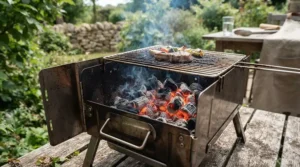
Every genuinely good portable fire pit on this list leans on the same basic physics: elevate the fuel, feed it air from below, and let a secondary burn finish off the smoke before it reaches your face. That’s the whole idea behind airflow design fire technology, whether it’s a simple mesh floor like the CAMPMAX or a double-wall convection system like the Solo Stove Ranger 2.0. In practice, that translates to fires that catch faster, burn hotter for the same amount of wood, and leave finer, lighter ash than a flat ground fire ever will.
What the spec sheet won’t tell you is how much this matters on damp trips. A fire pit with strong bottom-vent airflow will often get a marginal, slightly damp log burning cleanly where an open ground fire would just smolder and smoke everyone out. The trade-off is wind sensitivity — the same vents that boost combustion on a still night can gutter a flame in a stiff breeze, which is why windbreak placement matters more with these designs than with a traditional fire ring.
Leave No Trace Fire Practices and Spark Arrestor Screen Safety
Following a Leave No Trace Fire Ethic
A genuine Leave No Trace fire starts before you strike a match: check current fire danger and restrictions, gather only dead and downed wood no thicker than your wrist, and use an elevated pit rather than scarring bare ground. The National Park Service’s guidance on minimizing campfire impacts points out that the vast majority of wildfires each year are human-caused, which is exactly why elevated, contained designs matter — they’re not just about convenience, they’re about not being the reason a beautiful site gets closed to fires permanently. When you’re done, cold ash should be scattered widely or packed out entirely, never dumped in one visible pile.
Why a Spark Arrestor Screen Matters
A spark arrestor screen — a fine mesh lid or dome that sits over the flame — exists to catch embers before wind carries them onto dry grass, tents, or sleeping bags. It’s not a legal requirement everywhere, but plenty of state parks and dry-region campgrounds now require one on any open flame, wood or propane. If your chosen pit doesn’t include one, a universal replacement screen is a cheap add-on worth packing every single trip, especially with mesh-style pits that already run with a fairly open top.
Long-Term Cost and Maintenance
Run the numbers past the sticker price and the picture shifts a little. A $40 mesh pit like the CAMPMAX might need a replacement mesh basin after a couple seasons of heavy use, while a $200 stainless steel unit like the Solo Stove Ranger 2.0 is built to genuinely outlast a decade with nothing more than occasional wipe-downs. Propane models carry a different cost curve entirely — no wood to buy, but budget roughly $20–$25 per refill tank depending on region, which adds up fast for frequent RVers but remains cheaper than campground firewood bundles at $8–$12 a bundle for occasional campers.
Total cost of ownership over five years of moderate use (say, ten trips a year) tends to favor the mid-range stainless designs: the upfront cost is higher, but replacement parts are rarer and the resale value on a well-kept Solo Stove or Fireside Outdoor pit stays surprisingly strong on the secondhand market. Budget mesh pits are the better call if you camp only a handful of times a year and don’t want much sunk cost either way.
Camping Fire Pit Reviews: What Real Owners Say
Pulling from aggregated, verified purchase feedback across these seven products, a few patterns hold up consistently. Owners of mesh-style pop-up designs overwhelmingly cite setup speed and trunk-friendly packing as the reason they’d buy again, with the most repeated complaint being that thinner-gauge legs can feel wobbly on loose gravel. Solo Stove Ranger 2.0 owners consistently mention the noticeable smoke reduction compared to a previous pit, alongside a smaller but real subset who feel the weight is a compromise for car campers without much trunk space. Propane fire bowl owners, particularly for the Outland Living line, repeatedly highlight how the design salvages trips that would’ve otherwise had zero fire at all thanks to local restrictions — a use case that shows up again and again in verified reviews far more than any complaint about ambiance. Reviewers consistently note that the ultralight backpacking stoves are excellent at exactly one job (small, efficient burns) and shouldn’t be judged against full-size fire pits at all.

Frequently Asked Questions
❓ What is the best portable fire pit for camping in 2026?
❓ How much should I expect to pay for a good portable fire pit?
❓ Are portable fire pits allowed during a wood fire ban?
❓ Will a portable fire pit damage grass or leave a burn mark?
❓ How do I clean a portable fire pit after a camping trip?
Conclusion
There’s no single “best” portable fire pit for camping — there’s only the best one for the trip you’re actually taking. Car campers who want a real, crowd-pleasing fire without the burn scar should look hard at the Fireside Outdoor Pop-Up Fire Pit; budget-conscious weekend campers will get real value out of the CAMPMAX mesh design; solo backpackers should skip straight to the TOAKS Titanium stove; and anyone who’s ever had a trip ruined by a last-minute wood ban owes it to themselves to keep the Outland Living Firebowl 823 in the RV or garage as a backup. Understanding staged fire restrictions, as outlined by wildfire safety organizations, is honestly as important to this purchase decision as any single spec on a product page.
What ties every pick on this list together is the same underlying idea: keep the flame off bare ground, keep the airflow working for you instead of against you, and pack it in the same condition you’ll want to pack it out in. Get that right, and the fire pit basically disappears into the background of a good trip — which, honestly, is exactly what you want from a piece of camp gear.
Recommended for You
- Portable Weather Station Camping: 7 Best Picks for 2026
- Emergency Beacon PLB: 7 Best Models Tested for 2026
- Action Camera For Camping: 7 Best Rugged Picks for 2026
Disclaimer: This article contains affiliate links. As an Amazon Associate, I earn from qualifying purchases. If you purchase products through these links, we may earn a small commission at no additional cost to you.
✨ Found this helpful? Share it with your friends! 💬🤗
