
In This Article
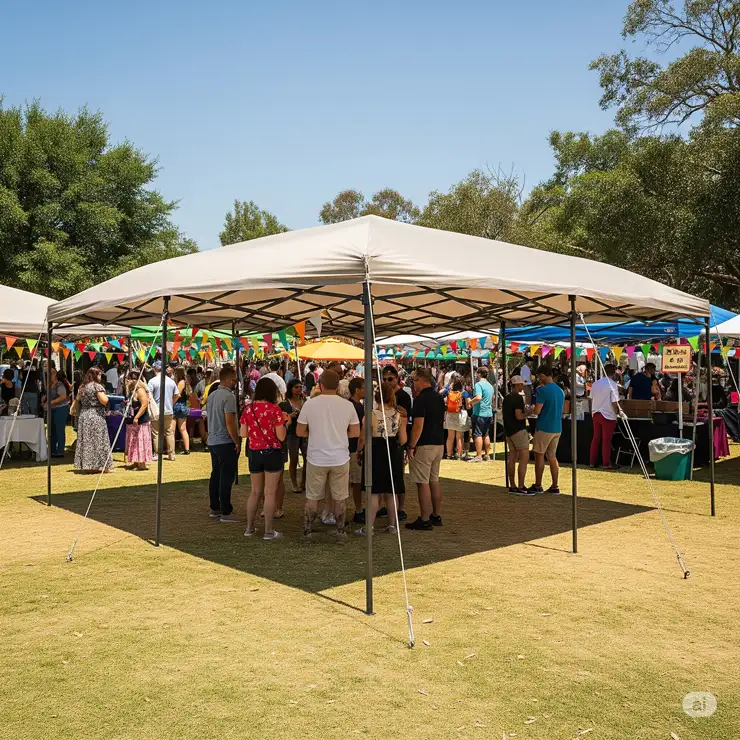
A heavy duty canopy 10×10 is a pop-up shelter that covers 100 square feet and rests on a thicker, usually powder-coated steel frame. Its commercial-weight polyester top is built to survive repeated setups, harsh sun, rain and moderate wind. It trades some portability for durability.
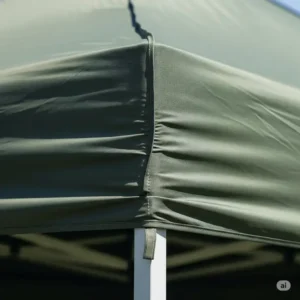
That trade is the whole story. Every pop-up tent on the internet calls itself “heavy duty,” the way every sandwich calls itself “famous.” The phrase isn’t regulated. A $90 canopy with a thin frame and a $200 canopy with a truss-braced steel skeleton can wear the same badge. The difference shows up around the third windy Saturday, when one of them folds like a lawn chair and the other just sits there looking smug.
This guide cuts through the marketing. It compares seven real, widely sold models. It explains what the specs mean in practice, and it covers the unglamorous parts: anchoring, maintenance and total cost of ownership. Shade quality matters too. The Skin Cancer Foundation notes that a UPF 50 fabric blocks about 98 percent of the sun’s rays, which is why the UPF rating on a canopy top deserves a second look.
One note on method. Product details here come from manufacturer and retailer listings and published reviews. Review commentary is aggregated sentiment from those sources, not hands-on testing, and prices are ranges that change often. If you’re hunting for the right heavy duty canopy 10×10 for markets, tailgates, backyard events or camping, the next table is your shortcut.
Quick Comparison: Heavy Duty 10×10 Canopy Tent Options at a Glance
| Product | Standout Spec | Price Range | Best For |
|---|---|---|---|
| ABCCANOPY King Kong 10×10 | Steel frame, roughly 62-66 lb shipping weight | Around $160-$300 (package-dependent) | Vendors who want maximum frame stiffness |
| E-Z UP Pyramid 10×10 | Cathedral ceiling, up to about 10’5″ headroom | Around $170-$235 | Tall users, windy-ish venues |
| Eurmax USA 10×10 Standard | Full-truss steel, 500D polyester top | Around $100-$190 | All-round value seekers |
| Quik Shade Commercial C100 | Straight legs, 3 height positions | Around $155-$230 | Markets needing every inch of floor |
| Coleman OASIS 10×10 | About 38 lb, one-push OnePeak hub | Check current price | Campers who haul gear by hand |
| CROWN SHADES Commercial 10×10 | Center-lock one-person setup | Around $110-$200 | Solo setups on a budget |
| MASTERCANOPY Heavy-Duty Commercial 10×10 | Powder-coated steel, roller bag | Around $200 | Buyers wanting a brand-name steel option |
Looking at the table, the ABCCANOPY King Kong 10×10 and Eurmax USA 10×10 Standard sit at opposite ends of the weight-versus-cost spectrum. The King Kong rewards you with frame rigidity, while the Eurmax USA 10×10 Standard gives up very little at a friendlier price. If you set up alone, the CROWN SHADES Commercial 10×10 and Coleman OASIS 10×10 are the least fiddly. Whichever you pick, a “heavy duty” frame doesn’t skip the need for proper weights.
💬 Just one click — help others make better buying decisions too!😊
Top 7 Heavy Duty Canopy 10×10 Models: Expert Analysis
1. ABCCANOPY King Kong 10×10 — stiffest frame for serious vendors
The King Kong line is built around a powder-coated steel frame. Listings put the shipping weight in the low-to-mid 60-pound range, which tells you the metal is real. That weight is a feature once the canopy is up. A heavier frame resists lift in gusts, but it does make hauling a two-trip job if your vehicle is far from your booth.
Setup is a push-button system, and several listings pitch it as a one-person job. Fabric varies by series (300D with a PU lining on some, 500D on others), so read the denier on the exact package you buy. The UPF 50+ claim is common across the range, though it’s a manufacturer figure rather than a certification.
Based on the spec sheet, this is the pick for buyers who set up weekly and want frame stiffness above all else. Reviewer sentiment is largely positive, with one Amazon-sourced listing showing about 4.4 stars across roughly 3,900 ratings. Praise centers on a sturdy feel and easy pop-up action. A recurring minority complaint concerns customer service responsiveness, so keep your order records handy.
Pros:
- ✅ Rigid steel frame resists gust flex
- ✅ Push-button, one-person setup
- ✅ Many sidewall and size packages
Cons:
- ❌ Heavy to carry, even with a roller bag
- ❌ Fabric and warranty vary by series
Price and value: around $160-$300 depending on package. Best value for weekly users; overkill for occasional picnics.
2. E-Z UP Pyramid 10×10 — cathedral ceiling and brand-backed peace of mind
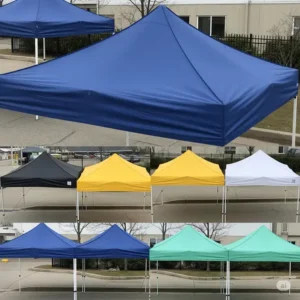
The pitch here is headroom. The cathedral-style peak gives up to roughly 10’5″ of clearance, so tall vendors and anyone hanging displays can actually stand up straight. The powder-coated steel frame adds ballast low in the structure, which, as the reviewers at OutdoorGearLab saw in fan-simulated wind testing, helped it stay put. They also noted small amounts of seam seepage after a five-minute drenching, so treat it as weather-resistant, not a waterproof tent.
The safety levers are a small detail with a big payoff, since they help avoid pinched fingers during setup. A three-year warranty is listed, which is longer than much of the field.
On paper this is the “buy it and stop thinking about it” option. Retail listings show ratings around 4.6 stars from roughly 150 reviews, with buyers praising sturdiness and headroom. A recurring theme is that it’s heavier than expected, and one reviewer felt the price should buy more durability. Both complaints are fair, and both point to the same truth: this is a frame-first design.
Pros:
- ✅ Tall peak gives real standing headroom
- ✅ Steel frame stays planted in gusts
- ✅ Three-year warranty listed
Cons:
- ❌ Heavier than it looks in photos
- ❌ Minor seam seepage in heavy rain
Price and value: around $170-$235. A solid premium-leaning value.
3. Eurmax USA 10×10 Standard — the value benchmark for heavy-duty fans
GearJunkie’s listing shows the specs that matter: a 500D polyester top that meets CPAI-84 fire certification, a roughly 7-foot edge height and an 11-foot apex. That peak does real work, shedding rain faster and giving the top more room to breathe. Weight is about 61 pounds, and two-person setup runs 15-25 minutes on the first try.
Retailer packages usually include a rolling bag and four sandbags, and some bundles add zippered sidewalls. That’s a meaningful saving, since weights alone can cost real money.
What the spec sheet won’t tell you, but user reports suggest, is that quality control isn’t perfect. Aggregated review analysis finds many buyers calling it sturdy and easy to set up, while others report missing parts or damaged legs on arrival. Inspect your unit on day one, while returns are painless. Some editorial roundups give it roughly 4.4 stars.
Pros:
- ✅ Tall 11-foot apex sheds rain well
- ✅ 500D fire-certified polyester top
- ✅ Bags and weights often included
Cons:
- ❌ Occasional missing or bent parts reported
- ❌ Slow first setup without practice
Price and value: around $100-$190. Hard to beat for the money.
4. Quik Shade Commercial C100 — straight legs and a bigger usable footprint
The straight-leg design is the story. Many pop-ups use slanted legs that shrink the floor space, while the Quik Shade Commercial C100 gives you the full 10×10 under the canopy. Listings describe 100 square feet of shade, comfortable for 8 to 12 people, with three height positions.
Retailers pitch it as lightweight for a commercial model. For vendors who load and unload alone, that’s a perk, though it does mean less built-in ballast than a steel-heavy rival. Plan on weights from day one. Compatible wall and mesh screen kits are sold separately, which helps if you need bug or sun protection.
Sentiment is solid but not glowing: roughly 4.1 stars from about 46 reviews on one retailer’s page, with praise for the straight-leg space and ease of setup. A handful of buyers call it sturdy and well worth the money. The small sample size means treat the average with caution.
Pros:
- ✅ Straight legs maximize floor space
- ✅ Three adjustable height positions
- ✅ Wall and screen kits available
Cons:
- ❌ Lighter build needs diligent anchoring
- ❌ Small review pool for judging durability
Price and value: around $155-$230 across retailers. Fair value for market vendors.
5. Coleman OASIS 10×10 — lightweight comfort for campers
Strictly speaking, this is the lighter-duty member of the group, and it earns its place by being honest about it. At roughly 38 pounds, with a one-push OnePeak center hub, it’s the easiest model here to carry and raise. Listings cite UPF 50+ protection, an apex around 8’8″ and overhanging eaves for extra coverage.
The weakness is structural. GearJunkie’s listing flags the lack of anchor points on the posts, a real gap for windy sites. One reviewer reported a roof pooling water and the structure failing in rain, and another mentioned leaks. Other buyers describe it holding up well in gusty thunderstorms with the guy lines attached.
In plain terms, this is a camping and picnic canopy with a respectable frame, not a vendor workhorse. Retail ratings sit around 4.4 stars from a few hundred reviews, with 4.6 on Coleman’s own page. Choose it when carrying ease beats raw sturdiness.
Pros:
- ✅ Light enough for one-person carrying
- ✅ One-push hub makes setup quick
- ✅ Vented roof helps in wind
Cons:
- ❌ No post anchor points
- ❌ Occasional water-pooling and leak reports
Price and value: check current price. Good for casual use, not the toughest option.
6. CROWN SHADES Commercial 10×10 — one-person setup on a budget
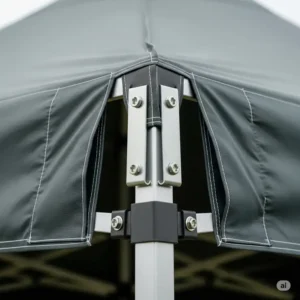
The selling point is the patented center-lock, one-push design. You raise the frame, push the center, and it locks. For anyone who has wrestled a four-corner telescoping frame alone in a parking lot, that’s the headline.
Listings show it with sidewall packages and a range of colors. Editorial roundups rate it highly, with one citing roughly 4.7 stars, while retailer review counts for specific variants are small. That makes the long-term durability evidence thin, so lean on the return policy rather than the star rating.
The honest take: it’s the easiest option here for solo users, and the price band is friendly. What you give up is a track record. Confirm the frame material and warranty on the exact variant you choose, since specs can differ across listings. For occasional tailgates and backyard events, it’s a smart gamble.
Pros:
- ✅ Center-lock lets one person set up
- ✅ Wide color and sidewall options
- ✅ Friendly price band
Cons:
- ❌ Thin verifiable long-term review data
- ❌ Specs vary between listings
Price and value: around $110-$200. Good value if the exact variant checks out.
7. MASTERCANOPY Heavy-Duty Commercial 10×10 — familiar brand, steel frame
MASTERCANOPY shows up regularly in roundups for its powder-coated steel frame and roller-bag packaging. Editorial lists mention quick assembly and UV-protected fabric, and several versions ship with sidewalls. It’s a dependable middle-of-the-road option.
I couldn’t verify a clean, model-specific review count, so treat star ratings you see with caution. The reasonable way to evaluate it is by comparing the exact variant’s frame, fabric denier and warranty to the other models above. If it matches a pricier rival on those three, it’s a bargain; if not, skip it.
Where it shines is availability. It’s easy to find in white and several colors, which matters for vendors who need a consistent look. Pair it with weights from day one, since steel alone isn’t a wind plan.
Pros:
- ✅ Steel frame at a moderate price
- ✅ Wide color and size range
- ✅ Roller bag included
Cons:
- ❌ Model-specific reviews hard to verify
- ❌ Specs differ across variants
Price and value: around $200. Reasonable, provided the specs match your needs.
How to Choose a Heavy Duty Canopy 10×10: 7 Steps That Matter
Picking the right heavy duty canopy 10×10 comes down to a handful of decisions. Work through them in order and most of the confusion disappears.
- Start with frame material. Steel is heavier and stiffer, while aluminum is lighter and rust-proof. If you move the canopy often, weight matters more than stiffness.
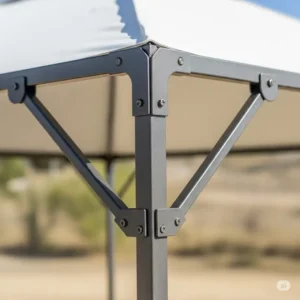
- Check the leg profile. Thicker, square or hex legs flex less in gusts. Thin round tubing is the classic failure point.
- Read the fabric denier. A 300D top is fine for casual use, but 500D resists tearing and sun fade better. Look for coatings that mention UPF 50+ and water resistance.
- Look for truss quality. The crisscross bars that make the frame fold should be thick and rivet-secured. Wobbly trusses are the first thing to fail.
- Count the extras. Weights, stakes, a roller bag and sidewalls add real money. A complete package can beat a bare frame at a lower sticker price.
- Verify the warranty. Three years is notable; six months is a signal about expected lifespan.
- Match to your routine. Weekly users should pay for stiffness; occasional campers should pay for portability.
Honest analysis beats marketing here. A heavy duty 10×10 canopy tent isn’t automatically better because it weighs more. It’s better when the extra weight sits in the frame where it resists wind, not in packaging or decorative steel.
Features That Actually Matter (And Those That Don’t)
Marketing loves a long feature list. Most of it is noise.
What matters: frame stiffness, leg thickness, a rain-shedding roof pitch, vented tops for wind relief, solid slider locks and anchor points on the legs. A tall peak helps rain run off, and a vent lets gusts pass through rather than load the whole roof like a sail.
What doesn’t matter much: claims of “waterproof” without a coating spec, dozens of color options, and gimmicky bag logos. Even “UPF 50+” is mostly a baseline now. It’s useful, but it won’t separate one competent canopy from another.
What’s underrated: straight legs, which give you true floor space, and corner pockets or hooks for weights. A canopy without anchor points is a canopy you’ll end up taping weights to.
Vent design deserves a closer look. Reviewers of the Coleman OASIS 10×10 specifically mention the vent helping in windy conditions, and cathedral roofs like the E-Z UP Pyramid 10×10 shed wind and rain more gracefully than flat tops. These details rarely make the headline spec list, yet they shape real-world behavior more than a thicker marketing claim ever will.
Steel vs Aluminum vs Standard: Which Heavy Duty Canopy 10×10 Frame Wins?
| Frame Type | Weight | Wind Behavior | Rust Risk | Cost | Best For |
|---|---|---|---|---|---|
| Steel (powder-coated) | Heavy | Stable, planted | Possible if scratched | Moderate | Weekly vendors |
| Aluminum (hex or square) | Light | Needs more ballast | None | Higher | Frequent haulers |
| Standard thin-tube | Light | Flexes, fails early | Varies | Lowest | Occasional backyard use |
Steel wins on stability, because weight sits low and flexes less, which is why models like the ABCCANOPY King Kong 10×10 and MASTERCANOPY Heavy-Duty Commercial 10×10 feel planted. Aluminum wins when you lift the canopy in and out of a vehicle many times a month, though it needs more ballast to offset its lightness. Standard thin-tube frames cost the least but are the usual suspects when canopies fold mid-event.
Think of it as buying either a brick or a sail. The brick sits where you put it and the sail catches everything. For most people running a heavy duty canopy 10×10 outdoors, the brick approach, backed by proper weights, is the safer bet. Aluminum becomes the better answer only when carrying weight is the actual problem you’re solving.
Wind, Weights and Safety: Anchoring a Heavy Duty 10×10 Canopy Tent
Here’s the uncomfortable truth: no canopy is wind-proof. There’s no standardized wind rating across the industry, so claims on listings are marketing, not certification. As commonly cited guidance puts it, once winds pass about 30 mph, it’s time to pack up. Retailer guides generally say a properly anchored 10×10 can handle steady winds in the 20-30 mph range, and that is a ceiling, not a target.
Anchoring comes in layers:
- Weights on every leg. Retailer guidance often suggests roughly 25-40 pounds per leg, more if you hang sidewalls.
- Stakes on soft ground (grass, dirt), paired with weights, not instead of them.
- Guy lines to the corners if your canopy includes them.
- Lower the height and remove sidewalls as wind rises, so air flows through rather than loading the walls.
The practical angle: sidewalls turn a canopy into a sail. Even a heavy duty canopy 10×10 should shed walls before wind builds. E-Z UP’s own guidance on securing a canopy in high winds makes a similar point. The wind hits the top first, so your anchoring must hold the roof down, and there’s always a point where securing isn’t enough.
Safety isn’t only about your setup. A flying canopy is a hazard to neighbors, which is why many event organizers require weights. Treat anchoring as a courtesy as much as a precaution. Tether weight bags with visible lines so no one trips over them.
✨ Don’t Miss These Exclusive Deals!
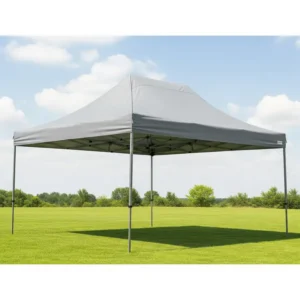
🔍 Take your outdoor setup to the next level with these carefully selected shelters. Click on any highlighted product to check current pricing and availability. These picks will help you create a comfortable, shaded space your family, customers or teammates will love!
Practical Usage Guide: Setting Up and Maintaining Your Canopy
Most canopy failures aren’t design flaws. They’re setup mistakes. Here’s a short routine that extends the life of any heavy duty canopy 10×10.
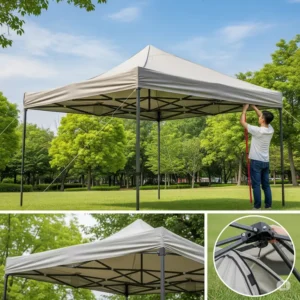
First setup (do this at home). Unbox it in a calm backyard, check every part against the packing list, then practice the full raise and takedown twice. Two people should expand the frame about halfway, attach the top, then lift each corner until the sliders click.
Every setup.
- Raise the frame fully before adjusting height, since adjusting height first strains the sliders.
- Face the narrow edge into prevailing wind.
- Attach weights before you walk away, not after.
Takedown. Dry the fabric before packing it. Wet polyester stored in a bag grows mildew in days, and mildew eats coatings. If you can’t dry it on-site, spread it open at home that night.
Monthly maintenance.
- Wipe the frame, especially the sliders, and apply a dry lubricant sparingly.
- Check for scratches in powder coating on steel frames and touch up to prevent rust.
- Inspect stitching at corners where tension concentrates.
First 30 days mistakes. Over-tightening the roof before the frame is extended, forgetting to lock the sliders, and leaving it up overnight. A pop-up can technically stay up in calm weather if secured, but unexpected gusts are exactly when it fails. The few minutes it takes to pack down is cheaper than a replacement top.
Real-World Scenarios: Matching a Heavy Duty 10×10 Canopy to You
Specs make more sense when attached to a person. Here are three profiles.
The weekend market vendor. She sets up every Saturday, sometimes in light wind, with a folding table and a few display racks. Budget is moderate, and storage is a garage. Frame stiffness and sidewalls matter most. The ABCCANOPY King Kong 10×10 or MASTERCANOPY Heavy-Duty Commercial 10×10 fit, with the Quik Shade Commercial C100 as the straight-leg alternative if floor space is tight. Plan on weights for all four legs, plus a spare set for gusty days.
The tailgate regular. He sets up in a stadium lot six or eight times a season, often alone. Hard asphalt rules out stakes, so weights are mandatory. The CROWN SHADES Commercial 10×10 or Eurmax USA 10×10 Standard give him quick setup, decent steel and low cost per game. He should skip anything that needs two people and a manual.
The camping family. They drive to a lake campsite a few weekends a year, carry gear by hand, and need shade for kids. Weight matters more than wall-to-wall rigidity. The Coleman OASIS 10×10 is the match, ideally with guy lines pegged out, since the reviews note its lack of leg anchor points. Budget around ten extra minutes for anchoring when the forecast shows gusts.
Notice the pattern. The “best” heavy duty canopy 10×10 depends less on the canopy than on your routine. Frequency of use, who’s carrying, and what the ground is made of determine the right choice more than any spec sheet.
Long-Term Cost and Maintenance: Is a Heavy Duty Canopy 10×10 Worth It?
| Price Tier | Typical Range | What You Get | Best For |
|---|---|---|---|
| Entry (e.g., CROWN SHADES Commercial 10×10) | Around $110-$200 | Easy setup, basic steel | Occasional use |
| Mid (e.g., Eurmax USA 10×10 Standard, Quik Shade Commercial C100) | Around $100-$230 | Stronger frame, better top | Regular use |
| Premium (e.g., E-Z UP Pyramid 10×10, ABCCANOPY King Kong 10×10) | Around $170-$300 | Heavier frame, longer warranty | Weekly use |
The ranges overlap, which is the useful insight. Price tiers don’t map neatly to quality, so a well-packaged Eurmax USA 10×10 Standard can outperform a poorly specified pricier model. Compare packages (weights, bag, walls) and warranty length before comparing sticker prices.
Total cost of ownership is where heavy duty earns its keep. A cheap canopy replaced every season costs more than a sturdier one lasting four or five. Add weight bags, a replacement top if fabric fades, and occasional lubricant, and the annual cost of a good frame often drops below the cost of repeated bargain purchases. It’s the same logic as buying decent boots: the expensive pair is cheaper per mile.
Fabric is the common wear item. Frames can last for years, but tops fade and coatings degrade with sun and storage mistakes. Some brands sell replacement tops, so check before you buy, since a model without replacement tops turns a $60 problem into a $200 one.
FAQ: Heavy Duty Canopy 10×10 Questions Answered
❓ How much weight do I need to hold down a heavy duty canopy 10x10?
❓ How much does a heavy duty canopy 10x10 weigh?
❓ Can I leave a heavy duty 10x10 canopy tent up overnight?
❓ Is a heavy duty canopy 10x10 actually waterproof?
❓ Does a heavy duty canopy 10x10 come with sidewalls?
Conclusion: Which Heavy Duty Canopy 10×10 Should You Buy?
If you remember one thing, make it this: “heavy duty” is a claim, not a guarantee. The real quality markers are frame stiffness, fabric denier, anchor points and warranty length. A heavy duty canopy 10×10 can only perform as well as the weights holding it down.
For weekly vendors, the ABCCANOPY King Kong 10×10 and E-Z UP Pyramid 10×10 put the most steel and headroom in your corner. For value, the Eurmax USA 10×10 Standard is the hard-to-beat benchmark, as long as you inspect it on arrival. If you set up alone, the CROWN SHADES Commercial 10×10 is the simplest. For maximizing floor space, the Quik Shade Commercial C100 earns its straight legs. The MASTERCANOPY Heavy-Duty Commercial 10×10 is a reasonable steel option if its specs match your needs, and the Coleman OASIS 10×10 is the pick when carrying weight matters most.
Whichever you choose, budget for weights, practice the setup at home, and treat the forecast as a deadline. Prices and availability change often, so check current listings before buying.
Recommended for You
- 15 Best Base Camp Tents That Will Transform Your Outdoor Adventures in 2025
- 12 Best Smart Tent Options That Will Revolutionize Your Camping Experience in 2025
- Best Tent 8 Person: 12 Top-Rated Family Camping Shelters That Actually Work
Disclaimer: This article contains affiliate links. As an Amazon Associate, I earn from qualifying purchases. If you purchase products through these links, we may earn a small commission at no additional cost to you.
✨ Found this helpful? Share it with your friends! 💬🤗
