
In This Article
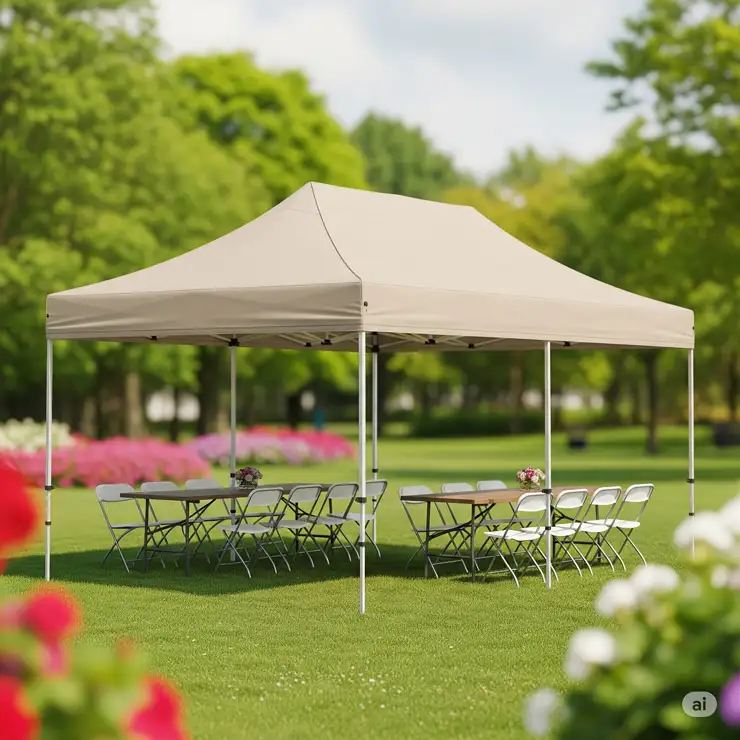
Anyone who has hosted a barbecue under a standard 10×10 canopy knows the choreography. The sun moves, the shade slides off the food table, and eight people crowd under a roof built for four. A 10 x 20 canopy pop up ends that dance. Its 200 square feet of coverage is the difference between “we squeezed in” and “everyone has a chair.”
That doubled footprint is the reason this size dominates graduation parties, farmers’ market booths, youth sports sidelines and weekend tailgates. Spec sheets for models in this class commonly describe the coverage as roomy enough for roughly 15 to 20 people with a table or two. It’s real space, not marketing fluff.
Bigger also means heavier, windier and trickier to anchor, which is where most buyers get burned. The best 10 x 20 canopy pop up for you depends less on the logo and more on frame thickness, fabric density, leg count and how well you can secure it. That’s exactly what this guide covers.
Here’s the plan. We’ll define what you’re buying, compare seven real models from budget to premium, and translate spec-sheet jargon into everyday meaning. Then comes the unglamorous stuff that keeps your tent on the ground: anchoring, setup and maintenance. Prices below are ranges, because Amazon-style pricing changes faster than a toddler’s mood.
Quick Comparison: 7 Best 10 x 20 Canopy Pop Up Options at a Glance
| Model | Standout Trait | Sidewalls / Extras | Price Range* | Best For |
|---|---|---|---|---|
| Quictent 10×20 Pop Up Canopy with Mesh Window Sidewalls | Mesh window sidewalls | Mesh-window walls | Roughly $150-$210 | Budget buyers who want airflow |
| COBIZI 10×20 Heavy Duty Pop Up Canopy | Beefy, reinforced build | 6 sidewalls, center-lock sandbags | Roughly $150-$300 depending on promotions | Big backyard parties |
| Costway 10×20 Pop Up Canopy with 6 Sidewalls | Adjustable height options | 6 sidewalls, vented top | Around $200 | Flexible, mixed-use setups |
| ABCCANOPY 10×20 Pop Up Canopy with Awning | Extra awning shade | 4 walls, 2 door walls, 6 sandbags | Check current price (mid-range) | Market vendors and events |
| CROWN SHADES 10×20 Commercial Pop Up Canopy | Hexagonal-leg stability | Sidewalls included | Check current price (mid-range) | Windy climates, groups of 20+ |
| GVDV 10×20 Pop Up Canopy with Raised Roof | Raised-roof headroom | 6 removable sidewalls | Roughly $190-$300 | Weddings and tall guests |
| Impact Canopy 10×20 Instant Pop Up, Commercial Grade | Commercial-grade pedigree | Varies by listing | Roughly high-$600s | Frequent professional use |
*Ranges reflect retail listings at the time of research. Prices change constantly, so check current price before buying.
Notice the spread. A 10 x 20 canopy pop up can cost less than a nice dinner for two or more than a used laptop. At the budget end, Quictent and COBIZI trade refinement for sheer coverage per dollar. In the middle, ABCCANOPY and CROWN SHADES lean on commercial-style frames, and Impact Canopy sits at the top for people who set up weekly, not annually.
💬 Just one click — help others make better buying decisions too!😊
What Is a 10 x 20 Canopy Pop Up?
A 10 x 20 canopy pop up is a collapsible, tool-free shelter with a fabric roof stretched over a steel or aluminum scissor frame. It opens to about 10 feet by 20 feet, creating roughly 200 square feet of shade. Most use six legs and fold into a wheeled bag.
That definition is the easy part. The useful part is what the “pop up” label actually promises. You expand the frame, extend the legs, lock the thumb latches and drape the top, usually in minutes. At this size, though, “one-person setup” is optimistic, as we’ll see in the product analysis.
Why does shade matter beyond comfort? The Skin Cancer Foundation notes that not all shade structures are equal, and fabric UPF, shade density and side protection all affect how much UV you actually avoid. That’s a useful lens for a canopy. A roof alone blocks overhead sun, but low afternoon angles slip underneath, which is why sidewalls matter more than most buyers assume.
Think of a 10 x 20 canopy pop up as a portable room without a floor. It has the benefits of a room, such as shade, privacy and a rain shield, but also its responsibilities. Anything that large catches wind like a sail, so what holds it down is as important as what holds it up.
Top 7 10 x 20 Canopy Pop Up Models: Expert Analysis
We compared seven real models spanning budget, mid-range and premium. The analysis below rests on published specs and aggregated review and roundup sentiment, not hands-on testing. Where reviews couldn’t be verified, we say so.
1. Quictent 10×20 Pop Up Canopy with Mesh Window Sidewalls — breezy shade on a budget
The headline here is airflow. Mesh window sidewalls let a breeze through while still blocking sun angles and curious bugs, which solves the “tent turns into a greenhouse” problem that plagues solid-wall setups.
On paper, the Quictent is a straightforward 10×20 instant canopy with mesh windows and a folding frame. Retailer listings show it in khaki and other neutral colors. Specs like fabric denier and leg thickness vary by listing, so confirm them on the product page you’re buying from. A mesh wall doesn’t block rain or blowing grit the way a solid wall does, but that’s the trade for ventilation.
Based on the spec comparison, this is the pick for summer tailgates, sports sidelines and backyard cookouts, anywhere heat is the bigger enemy than weather. If you expect to use sidewalls in cool, rainy conditions, a solid-wall model fits better.
Review sentiment for budget 10 x 20 tents in general skews positive on value and coverage, with occasional complaints about thinner frames in wind. Individual review counts for this specific model weren’t verifiable at the time of research, so read current reviews before you buy.
Pros:
- ✅ Mesh windows keep air moving on hot days
- ✅ Very low cost per square foot of shade
- ✅ Packs into a wheeled bag for transport
Cons:
- ❌ Mesh walls offer little rain or wind protection
- ❌ Thinner frames can flex in gusty weather
Price range: roughly $150-$210. For occasional use, that’s strong value.
2. COBIZI 10×20 Heavy Duty Pop Up Canopy — brawny build for big backyard parties
Heavy is the keyword. One roundup notes this model weighs around 100 pounds and calls it a two-to-three-person job to set up and move. That sounds like a complaint, but weight is often where the stability comes from.
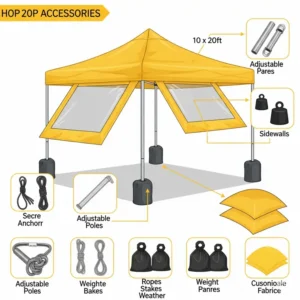
The COBIZI listings describe six removable sidewalls, a reinforced top and center-lock sandbags, with a carry bag included. In practice, reinforced corners reduce the fabric tearing at stress points, and the center-lock sandbags, which hang from the middle of the frame, add low weight right where it’s needed.
Here’s what the spec sheet won’t tell you, but reviewers consistently note across heavy-duty 10 x 20 tents: the heft that makes it sturdy also makes it a two-person lift. If you’re a solo setter, this isn’t your tent. If you’re hosting with a partner or friends, the trade is worth it.
Retailer listings show frequent promotional discounts from a roughly $300 list price, so the real price swings widely. Verified review detail for this exact configuration is limited, so check recent buyer feedback.
Pros:
- ✅ Heavier frame feels planted in moderate breezes
- ✅ Six sidewalls included for full enclosure
- ✅ Center-lock sandbags add built-in ballast
Cons:
- ❌ Needs two or three people to set up
- ❌ Awkward to carry across long distances
Price range: roughly $150-$300 depending on promotions. A good value when discounted.
3. Costway 10×20 Pop Up Canopy with 6 Sidewalls — height options for every ceiling
Adjustable height is the underrated feature on a big canopy. The Costway lists settings of 8.2, 8.5 and 8.8 feet on one version and 9.7, 10 and 10.4 feet on another. Lower is better in wind, and higher is better for tall guests and string lights.
The listing also mentions a center vent that pops up to release heat. A raised vent lets hot air escape instead of pooling, which can make a noticeable difference at midday. It also ships with six sidewalls in several colors, including gray, pink and white.
Honest analysis: this is a versatile mid-budget option rather than a standout in any single category. The lower height mode suits breezy sites, while the taller mode suits weddings or events with tall people.
On the brand’s own site, the product page shows roughly a 4.5-star average, but it’s a small sample, so treat it as directional rather than conclusive.
Pros:
- ✅ Multiple height settings for different conditions
- ✅ Vented roof helps hot air escape
- ✅ Six sidewalls for flexible enclosure
Cons:
- ❌ Small review sample limits confidence
- ❌ Not a commercial-grade frame
Price range: around $200. A fair price for the flexibility.
4. ABCCANOPY 10×20 Pop Up Canopy with Awning — extra shade where vendors need it
The awning is the hook. The listing says it adds about 23 square feet of extra shade, which is the kind of upgrade a market vendor appreciates when customers line up at the front.
The documented specs are strong for the money. They include a powder-coated steel frame with 1¼-inch square legs, a 500-denier polyester waterproof top with heat-sealed seams and 210-denier polyester sidewalls. An accessory set adds six sandbags, four 10-foot sidewalls and two door walls. A related ABCCANOPY 10×20 listing notes the product meets CPAI-84, a flame-resistance standard that matters for events and vendor rules.
What most buyers overlook is that denier numbers only tell part of the story, but 500D on top is a sensible target for a canopy that stays up for long days. Sealed seams matter more than the number when it rains.
Amazon reviewers on a related ABCCANOPY 10×20 commercial listing mention that it’s heavy compared with flimsier canopies, yet manageable for one person. They also advise taking your time on the first setup to learn the leg mechanisms and storing it dry. The brand is also a favorite in several buyer’s-guide roundups.
Pros:
- ✅ Awning adds meaningful extra shade
- ✅ Heat-sealed waterproof top and sturdy legs
- ✅ Generous accessory kit including sandbags
Cons:
- ❌ Heavier than lightweight canopies
- ❌ Leg mechanisms take a first-use learning curve
Price range: check current price; listings for comparable commercial-style 10 x 20 canopies cluster in the mid-range. A strong value for regular use.
5. CROWN SHADES 10×20 Commercial Pop Up Canopy — hexagonal legs for steadier footing
Frame geometry is the story. One buyer’s guide singles out the CROWN SHADES 10×20 with hexagonal legs as its best stability pick for windy climates, and another names the 10×20 commercial version best for groups of 20 or more.
Hexagonal legs have more surface and corners than basic square tubing, which can resist bending. At this width, that matters, because the middle of a 20-foot span is where cheap frames sag first. A larger-than-average footprint plus a commercial frame is exactly what you want for community events and larger family gatherings.
Based on the spec comparison, this is the “buy once, cry once” candidate in the mid-tier. Reviewers of Crown Shades’ smaller models praise one-person setup and fabric that stays attached, though those comments refer to the 10×10 version. Evidence for the 10 x 20 model specifically is thinner.
Pair it with heavy weights anyway. No frame turns a sail into a brick.
Pros:
- ✅ Hexagonal legs improve bending resistance
- ✅ Commercial build suits repeated use
- ✅ Roomy for groups of 20 or more
Cons:
- ❌ Costs more than basic budget canopies
- ❌ 10×20-specific reviews are limited
Price range: check current price; typically above budget tier. Good value for frequent users.

6. GVDV 10×20 Pop Up Canopy with Raised Roof — headroom for weddings and tall guests
Walk under most pop-ups and you’ll stoop at the edges. The GVDV listing highlights an upgraded raised roof, plus six removable sidewalls and a carry bag.
Extra roof height does two practical things. It improves headroom for tall guests and creates a more open, airy feel, which is why wedding and party shoppers gravitate to it. It also changes how the canopy handles wind, since a taller profile catches more air. If you pick this model, anchor it generously.
For a buyer hosting a spring graduation or an outdoor wedding reception, the aesthetic payoff may be worth it. For a windy tailgate lot, a lower profile such as the Costway at its short height setting is smarter.
The listing shows hundreds of retail reviews on some versions, but we couldn’t verify the breakdown of complaints and praise, so check the most recent critical reviews before purchasing.
Pros:
- ✅ Raised roof adds comfortable headroom
- ✅ Six sidewalls and carry bag included
- ✅ Event-friendly look for weddings
Cons:
- ❌ Taller profile catches more wind
- ❌ Fewer verified performance details
Price range: roughly $190-$300 depending on promotions. Decent value when discounted.
7. Impact Canopy 10×20 Instant Pop Up Canopy, Commercial Grade — the premium, built-for-work option
At roughly the price of three budget canopies, the Impact Canopy listing sits in a different bracket. Retail listings position it as commercial grade, aimed at people who deploy a canopy weekly for markets, trade shows or events.
The case for paying more is total cost of ownership. A budget tent that survives one summer and a premium tent that survives five can cost about the same per season. If you set up every weekend, the math starts to favor premium, assuming it holds up.
Honest limit: detailed specs and verified review sentiment for this exact listing were not available at the time of research. Premium pricing doesn’t guarantee better performance, so verify frame material, fabric weight and warranty terms before purchase.
If you run a booth for a living, this is the category to shop. If you throw two parties a year, Impact Canopy is overkill, and ABCCANOPY or COBIZI gets you 90 percent of the way for a fraction of the cost.
Pros:
- ✅ Positioned for frequent professional use
- ✅ Commercial-grade build pedigree
- ✅ Better long-term cost for heavy users
Cons:
- ❌ Premium price hard to justify casually
- ❌ Detailed specs need verification before buying
Price range: roughly high-$600s. Worth it only for frequent use.
Top 7 Spec Snapshot
| Model | Documented Detail | Sidewalls | Weight / Setup Note | Best For |
|---|---|---|---|---|
| Quictent 10×20 with Mesh Window Sidewalls | Mesh window walls; specs vary by listing | Mesh-window walls | Check listing | Hot-weather airflow |
| COBIZI 10×20 Heavy Duty | Reinforced top, center-lock sandbags | 6 | About 100 lbs, 2-3 people | Big backyard events |
| Costway 10×20 with 6 Sidewalls | Adjustable heights, vented top | 6 | Solo setup claimed on listing | Flexible use |
| ABCCANOPY 10×20 with Awning | 500D top, 1¼” square legs, CPAI-84 on related listing | 4 + 2 door walls | Heavy but one-person manageable per reviewers | Vendors, markets |
| CROWN SHADES 10×20 Commercial | Hexagonal legs, commercial build | Included | Larger frame, plan for two people | Windy sites |
| GVDV 10×20 with Raised Roof | Raised roof, carry bag | 6 | Check listing | Weddings, tall guests |
| Impact Canopy 10×20 Commercial Grade | Commercial-grade positioning | Varies | Check listing | Frequent pros |
Read the table by priority, not by column. If wind is your biggest threat, CROWN SHADES and COBIZI lead on structure. If budget is the constraint, Quictent and COBIZI win. If you’re setting up for customers, ABCCANOPY and its awning edge out the field, while Impact Canopy is for people who treat their canopy like a business tool.
✨ Don’t Miss These Exclusive Deals!
🔍 Ready to find your perfect shade? Click any highlighted product above to check current pricing and availability, then compare reviews for the exact model you’re eyeing.
How to Choose a 10 x 20 Canopy Pop Up: 7 Steps That Matter
Here’s the direct answer. Choose a 10 x 20 canopy pop up by matching frame strength, top fabric, leg count and anchoring options to your wind exposure, frequency of use and budget. Prioritize steel or thick legs, sealed seams and a solid warranty over color or sidewall count.
- Decide how often you’ll use it. Two parties a year means budget is fine. Weekly use means commercial grade.
- Check frame material and leg thickness. The legs bear the load. Square legs around 1¼ inches, as on the ABCCANOPY listing, are a reasonable benchmark.
- Look at the top fabric. Denier and seam sealing together indicate water resistance and tear resistance.
- Inspect UPF and color. The Skin Cancer Foundation explains that UPF measures how much UV a fabric lets through, and UPF 30 to 49 is very good while 50+ is excellent. Any shade fabric should rate at least UPF 30.
- Count the legs and anchor points. Six legs spread the load across 20 feet, so confirm there are leg plates or ring loops for weights and stakes.
- Weigh the setup crew. If you’re often alone, a lighter, simpler model beats a 100-pound heavyweight.
- Read the warranty and critical reviews. The complaints reveal what breaks first.
If you only remember one thing, remember this: weight, frame and anchoring beat features like sidewall count. Free sidewalls don’t matter if the frame folds in a gust.
Features That Actually Matter (And Those That Don’t)
Marketing copy loves to shout. Here’s what to listen to and what to ignore.
Features That Earn Their Keep
Frame thickness and leg shape. A 20-foot span needs more structural help than a 10-foot one. This is why hexagonal or thick square legs, as on CROWN SHADES and ABCCANOPY, deserve attention.
Sealed seams. Stitching punches holes. Heat-sealed or taped seams stop drips, as on the ABCCANOPY top.
Adjustable height. The Costway option to drop height makes a real difference in breeze.
Built-in ballast. Center-lock sandbags like those on the COBIZI listing add weight where the structure needs it.
Features That Sound Better Than They Are
Number of sidewalls. Six walls look generous, but you may rarely use more than two. In wind, extra walls can trap air and make a canopy less stable.
“Waterproof” claims without detail. Check whether seams are sealed. A waterproof label on a stitched seam is a leak waiting to happen.
Fancy colors. Pink or navy looks great in photos. Light colors reflect heat, and darker fabrics may fade faster.
The takeaway: pay for structure and seams, not decoration. Spend your savings on weights, which are the best safety upgrade you can buy.
Common Mistakes When Buying a 10 x 20 Canopy Pop Up
Mistake 1: Buying on price alone
A $150 tent and a $400 tent look identical in a product photo. Under load, they don’t. Compare frame details, not hero images.
Mistake 2: Ignoring weight
A 100-pound frame like the COBIZI is stable, but if you can’t lift it, you won’t use it. Be honest about who will carry the bag.
Mistake 3: Skipping the anchoring budget
Most buyers plan for the tent, then discover the included sandbags and stakes are minimal. Budget an extra amount for proper weights.
Mistake 4: Treating “one-person setup” as gospel
Several listings claim solo setup. At 20 feet, extending the frame is far easier with two people, because the long side flexes and fights you.
Mistake 5: Forgetting the site
Grass, concrete, gravel and sand all demand different anchoring. A 10 x 20 canopy pop up that behaves on lawn may need weights on a parking lot, since stakes don’t go into asphalt.
Mistake 6: Leaving it up in forecast gusts
Even a well-built canopy has limits. A good guide: if gusts rise, take it down.
10 x 20 Canopy Pop Up vs. Alternatives: Which Size Wins?
The right comparison depends on your guest count and your wind exposure. A smaller canopy is easier to handle but fills up fast. A larger one gives more room but is harder to secure.
| Option | Coverage | Setup Effort | Wind Exposure | Best For |
|---|---|---|---|---|
| 10×10 canopy | About 100 sq ft | One person | Lower | Small groups, camping |
| 10×15 canopy | About 150 sq ft | One to two people | Moderate | Medium gatherings |
| 10 x 20 canopy pop up | About 200 sq ft | Two people ideal | Higher | Parties, vendors, teams |
| Beach pop-up tent | Varies | Quick | Lower profile | Sand and wind |
The 10×10 remains the default for good reason. It sets up fast and fits in a trunk. Yet one roundup of backyard canopies notes it would step up to a 10×20 for larger events, and that tracks: once you pass roughly eight guests with tables, the smaller size starts to feel cramped.
Compared with a beach pop-up tent, a canopy is more open, so it breathes better but exposes you to wind. One 2026 comparison argues that a 10×10 canopy can behave like a sail in a 15 mph beach breeze, while low-profile pop-up tents often hold steadier because they present less vertical surface area. A 10 x 20 canopy pop up has twice that sail, which is why your anchoring plan matters even more.
The verdict is simple. If you host groups, run a booth or need real tabletop space, the 200-square-foot footprint is worth the extra effort. If you’re camping solo or chasing portability, stay with the smaller sizes.
Wind and Weight: How to Keep Your 10 x 20 Canopy Pop Up Grounded
This is the section that matters most. Wind is the number one killer of pop-up canopies, and the 20-foot span multiplies the problem.
What the Anchoring Guides Say
Guidance varies by source, so treat any number as a starting point and follow your manufacturer’s instructions. One anchoring guide for 10×20 tents suggests about 40 pounds in light winds of 0 to 12 mph, about 60 pounds at 13 to 18 mph, and 90-plus pounds at 25 to 31 mph. It also says most manufacturers advise taking a canopy down above 25 mph and not using one above 31 mph. Another source lists around 24 pounds per leg as a light-wind baseline.
A third dealer estimates that a 35 mph wind rating on a heavy-duty 10×20 with no walls requires 370 pounds of ballast. Those numbers differ because the sources use different assumptions, so default to the heavier end.
University of California, Irvine’s environmental health office offers sound practical rules. Follow manufacturer anchoring standards, use sandbag weights made for canopies, add weight in high winds, and avoid tables, coolers or vehicles as anchors.
Practical Anchoring Rules
- Soft ground: Use stakes and guy lines at the corners, plus weights.
- Hard surfaces: Use weights on every leg, since stakes can’t penetrate.
- Sidewalls: Remove or open them when it gets gusty. One source notes sidewalls can trap air and reduce stability.
- Lower the height: Shorter settings reduce the sail effect.
- Orient smart: Place a solid wall on the windward side only if conditions are steady, since shifting wind can make walls worse.
If gusts exceed the safe range, take it down. No canopy is worth a hospital visit, and a blown-away tent can injure people nearby.
Practical Usage Guide: Setting Up a 10 x 20 Canopy Pop Up Like a Pro
Amazon listings tell you the tent opens quickly. They don’t tell you how to avoid the mistakes that wreck frames in the first month. Here’s the routine.
Before You Open the Bag
Check the forecast. The National Weather Service publishes local wind forecasts and alerts, and it takes a minute. Choose a flat spot away from buildings, dry brush and overhead lines.
Setup in Five Steps
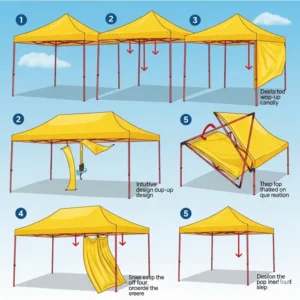
- Lay the bag flat and open the frame with a partner. One person at each end prevents the long side from twisting.
- Walk the frame outward evenly. Pulling one corner alone can bend a joint.
- Extend each leg to the same height. Listen for the thumb latches to click. A canopy missing a click is a failure waiting for a gust.
- Drape the top and fasten every hook-and-loop strap. Loose straps can let the top fly off without the frame.
- Anchor before you decorate. Weights first, then tables, lights and sidewalls.
First-30-Day Maintenance
- Wipe and fully dry the fabric before storage. Wet storage grows mildew fast.
- Inspect joints and latches monthly. Bent pieces fail first.
- Lubricate slides lightly if the manual allows it.
- Fold the frame fully before bagging so it doesn’t stress the center truss.
Treat these steps as a routine and your 10 x 20 canopy pop up will outlast the average budget tent by a wide margin.
Real-World Scenarios: Which 10 x 20 Canopy Pop Up Fits You?
Three buyer profiles show how the decision plays out. These are illustrative scenarios built from the specs above, not personal testimonials.
Scenario 1: The Weekend Soccer Parent
Profile: Two to four sideline events per month, moderate budget, grass fields, often alone.
Frequent grass setups mean stakes are an option, and a lighter frame matters when you’re loading up solo. The Costway with adjustable height or the Quictent with mesh windows suits that profile, with extra weights added for gusts. Budget for roughly 120-plus pounds of total ballast across the legs.
Scenario 2: The Backyard Graduation Host
Profile: One or two big parties a year, 20 guests, tables and food, moderate wind.
This host wants space, shade and a polished look. The COBIZI heavy-duty build or GVDV raised roof both fit, depending on whether stability or headroom matters more. Add sidewalls for sun angles, but remove them if wind picks up.
Scenario 3: The Weekend Farmers’ Market Vendor
Profile: Weekly use, hard surfaces, customers lining up, repeated setup and teardown.
Durability and weight are the whole game. ABCCANOPY with its awning or CROWN SHADES with its commercial frame make sense, and Impact Canopy earns consideration if you do this every week. Hard asphalt means weights on every leg, with no stakes.
The pattern is clear. Match the tent to the frequency of use, because the most expensive mistake is buying a casual tent for commercial punishment.
Problem → Solution Guide: Fixing Common 10 x 20 Canopy Pop Up Headaches
Problem: The center sags and pools water. Solution: Make sure the top is fully tensioned and the frame is at full extension. Tilt one side slightly lower so water runs off rather than collecting.
Problem: It’s too hot underneath. Solution: Open sidewalls, use a vented model like the Costway, or choose mesh walls like the Quictent to move air.
Problem: Low sun slips under the roof. Solution: Add sidewalls on the sun-facing side. The Skin Cancer Foundation notes that side protection improves sun defense, since UV rays can bounce off reflective surfaces into a structure.
Problem: The frame is hard to open. Solution: Open with a partner, keep joints clean and dry, and avoid forcing a stiff leg. Forcing is how bent frames happen.
Problem: Wind keeps tugging the tent. Solution: Add weights, lower the height and take it down if gusts rise. No accessory replaces judgment.
Problem: Mildew smell after storage. Solution: Dry the top fully before folding it, and store it in a dry place.
Long-Term Cost & Maintenance: Is Premium Worth It?
Sticker price is only the beginning. Total cost of ownership includes weights, replacement parts, storage and, for vendors, lost sales when a tent fails mid-event.
| Tier | Example | Upfront Cost | Likely Lifespan Pattern | Best Value For |
|---|---|---|---|---|
| Budget | Quictent, COBIZI | Roughly $150-$300 | Fine for occasional use | A few events a year |
| Mid-range | ABCCANOPY, CROWN SHADES | Check current price | Built for regular use | Frequent hosts, vendors |
| Premium | Impact Canopy | Roughly high-$600s | Built for heavy use | Weekly professional use |
Here’s the logic. A budget tent used five times a year may last several seasons and cost pennies per use. A tent used 50 times a year is a different story. Cost per use drops sharply with commercial frames, since replacement and downtime are what actually cost money.
Add the hidden costs. Quality canopy weights, a replacement top and a storage bag may add a meaningful chunk to the total. Skip them and you’re gambling with your investment. For most households, mid-range hits the sweet spot, and premium is for people who treat their canopy like equipment.
FAQ: 10 x 20 Canopy Pop Up Questions Answered
❓ How many people fit under a 10 x 20 canopy pop up?
❓ How much weight does a 10 x 20 canopy pop up need?
❓ Can one person set up a 10 x 20 canopy pop up?
❓ Are 10 x 20 canopy pop up tents waterproof?
❓ What's the best 10 x 20 canopy pop up for windy weather?
Conclusion: Pick Structure First, Then Style
A 10 x 20 canopy pop up is the rare outdoor purchase that improves nearly every gathering: more shade, more room and fewer people squinting at the sun. The trick is buying for the way you’ll actually use it, not for the glossiest listing photo.
Here’s the short version. For budget-friendly airflow, start with the Quictent. For sheer backyard muscle, the COBIZI is hard to beat when discounted. For flexibility, look at the Costway, and for vendors, the ABCCANOPY with its awning earns a spot on your shortlist. Windy sites suit CROWN SHADES, weddings may favor GVDV, and weekly professionals should consider Impact Canopy.
Whatever you choose, treat anchoring as part of the purchase. Weights, stakes and sound judgment about the forecast protect your investment and the people underneath it.
✨ Ready to upgrade your outdoor gatherings? 🔍 Click any highlighted model above to check current pricing and availability, then pick the 10 x 20 canopy pop up that matches your wind, your crew and your budget. Your next party deserves better shade!
Recommended for You
- 10 x 20 Canopy Heavy Duty: Top 7 Professional Options That Dominate 2025
- 10 Best Pop Up Shower Tent Options for Ultimate Privacy and Convenience in 2025
- 15 Best Sports Tent Options That Will Transform Your Outdoor Adventures in 2025
Disclaimer: This article contains affiliate links. As an Amazon Associate, I earn from qualifying purchases. If you purchase products through these links, we may earn a small commission at no additional cost to you.
✨ Found this helpful? Share it with your friends! 💬🤗
