
In This Article
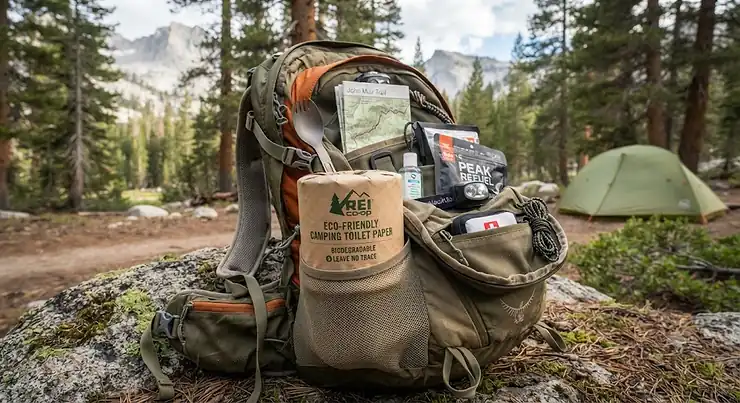
Nobody plans a camping trip around toilet paper. And yet, somewhere between mile four of a backcountry loop and the third night in an RV with a temperamental black tank, it becomes the only thing you’re thinking about. Choosing the right camping toilet paper isn’t glamorous, but get it wrong and you’ll know it — either because your tank backs up, or because regular household tissue turns into a soggy, un-flushable mess at the worst possible moment.
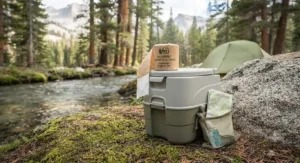
So what is camping toilet paper, exactly? It’s tissue engineered to break down far faster than the stuff at home — usually within seconds of contact with water — so it won’t clog RV black tanks, marine holding tanks, portable toilets, or septic systems that can’t handle slow-dissolving fiber. Some varieties lean into biodegradable materials like bamboo for backcountry use where you might bury or pack it out.
This guide breaks down seven real, currently available options — from bulk RV rolls to backpacking tablets — with honest analysis based on published specifications and aggregated reviewer sentiment (not invented testimonials). We’ll also cover pack-it-out bags for Leave No Trace situations, bidet alternatives if you’re ready to ditch paper altogether, and the regulatory reasons septic-safe tissue actually matters. By the end, you’ll know exactly which roll belongs in your rig, your pack, or your glovebox — and why.
Quick Comparison Table
Before the deep dive, here’s the express version for anyone standing in an aisle with three minutes before the store closes.
| Product | Ply | Best For | Price Range |
|---|---|---|---|
| Scott Rapid-Dissolving Toilet Paper | 1-ply | Best all-around RV/marine pick | $10-$20 range |
| Camco Camper & RV Toilet Paper | 2-ply | Trusted big-box RV staple | $15-$25 range |
| Firebelly Outfitters RV Toilet Paper | 2-ply | Small-batch, USA-made bulk buy | $20-$35 range |
| Caboo Tree Free Toilet Paper | 2-ply | Eco-conscious bamboo/sugarcane blend | $20-$30 range |
| Thetford Aqua-Soft Toilet Tissue | 1-ply | Purpose-built RV brand loyalty | $10-$20 range |
| Coghlan’s Camp Toilet Paper | 3-ply | Compact backpacking rolls | $8-$15 range |
| Portawipes Coin Tissues | Compressed | Ultralight solo backpacking | $10-$20 range |
Looking at the table, a clear pattern shows up fast: the cheapest options (Scott Rapid-Dissolving Toilet Paper, Thetford Aqua-Soft Toilet Tissue) trade some thickness for guaranteed dissolve speed, while Caboo Tree Free Toilet Paper costs more per roll but appeals to buyers prioritizing sustainable fiber sourcing over price. If you’re weight-conscious rather than tank-conscious, Portawipes Coin Tissues and Coghlan’s Camp Toilet Paper solve a completely different problem — pack size — and shouldn’t be judged against RV-focused rolls on the same axis.
💬 Already torn between two? Scroll down — the full breakdown untangles it fast.
Top 7 Camping Toilet Paper Picks: Expert Analysis
1. Scott Rapid-Dissolving Toilet Paper — the benchmark everyone else gets compared to
There’s a reason Scott Rapid-Dissolving Toilet Paper shows up in nearly every “best RV toilet paper” roundup — it’s often the control group other brands measure themselves against. The formula is engineered to break apart four times faster than standard bath tissue, which matters enormously in low-flow RV and marine systems where slow-dissolving fiber is public enemy number one for black tank sensors.
Specs-wise, it’s a 1-ply tissue, and that single-ply structure is the whole point: fewer fiber layers means faster water penetration and quicker breakdown, even if it sacrifices some of the plush feel you get at home. Based on the spec comparison with heavier 2-ply competitors, this is the pick for anyone who has actually dealt with a false “tank full” sensor reading and never wants to repeat the experience. Reviewers consistently note that it dissolves noticeably faster in a glass-of-water test than big-box grocery brands, though a few mention it feels thinner than they’d like for everyday comfort.
Pros:
- ✅ Fastest dissolve time in most side-by-side glass tests
- ✅ Widely stocked, easy to find at RV supply stores
- ✅ Reduces black tank sensor and clog complaints
Cons:
- ❌ Single-ply feel is noticeably thinner than home tissue
- ❌ Some multi-packs run smaller sheet counts than rivals
Price sits in the $10-$20 range for a multi-roll pack, and given how directly it addresses the core septic-safe problem, it’s a strong value verdict for anyone whose main worry is tank health over plushness.

2. Camco Camper & RV Toilet Paper — the big-box RV aisle staple
If you’ve ever wandered the RV section of a Walmart or camping supply store, you’ve seen Camco Camper & RV Toilet Paper on the shelf. Camco built its reputation on RV cleaning and sanitation products, and this tissue leans on that brand trust rather than flashy marketing.
It comes in 2-ply sheets, dye- and fragrance-free, with roughly 280-500 sheets per roll depending on the pack size you grab. What most buyers overlook about this model is that Camco’s core audience is people who already own Camco tank treatments and sensors — this toilet paper is designed as part of that same ecosystem, so it’s formulated specifically not to interfere with chemical tank treatments the way some off-brand tissue can. Aggregated reviewer sentiment is mixed on softness: several reviews specifically call the paper thin and almost see-through, which tracks with a formulation prioritizing dissolve speed over cushiness.
Pros:
- ✅ Trusted brand name with wide retail availability
- ✅ Dye- and fragrance-free formula
- ✅ Compatible with common RV tank treatment chemicals
Cons:
- ❌ Reviewers frequently describe it as thin or fragile
- ❌ Higher cost per sheet than some bulk alternatives
At around $15-$25 for a multi-pack, the value here comes less from cost-per-sheet and more from peace of mind if you’re already running a Camco-based tank maintenance routine.
3. Firebelly Outfitters RV Toilet Paper — the veteran-owned bulk buy
Firebelly Outfitters RV Toilet Paper ships in 8-roll packs at 500 sheets per roll, and it’s manufactured in the USA — a detail the brand leans into heavily, and one that resonates with buyers who specifically want to avoid supply chains they can’t trace.
The 2-ply sheets are made from 100% biodegradable material, free of dyes and parabens, which checks the septic-safe box while also keeping things gentle for sensitive skin. Here’s what the spec sheet won’t tell you, but reviewer patterns suggest: buyers frequently mention that this brand’s thickness has genuinely improved in recent production runs compared to earlier batches, landing it in a sweet spot between the ultra-thin dissolve-first rolls and standard home tissue. That makes it a sensible pick for families sharing one RV bathroom, where comfort complaints multiply fast. On the downside, a subset of reviews flag a “smaller than expected” out-of-box roll size relative to the advertised sheet count — worth factoring in if pack-size math matters to your trip planning.
Pros:
- ✅ Made in the USA with traceable manufacturing
- ✅ 100% biodegradable, dye- and paraben-free
- ✅ Softer feel than most fast-dissolve competitors
Cons:
- ❌ Some reviewers report rolls feeling smaller than advertised
- ❌ Premium pricing versus bulk grocery-store options
Expect to pay in the $20-$35 range for an 8-roll pack — a reasonable value verdict if traceable domestic manufacturing and family-friendly softness matter more to you than rock-bottom cost per sheet.
4. Caboo Tree Free Toilet Paper — the bamboo-and-sugarcane eco pick
For campers whose decision-making runs through an environmental lens first, Caboo Tree Free Toilet Paper is the standout. Instead of standard wood pulp, it’s made from a bamboo and sugarcane bagasse blend — bamboo alone can regrow to harvestable height in a few years, versus decades for hardwood trees, which is the core sustainability argument for tree-free tissue.
Specs land at 2-ply, roughly 500 sheets per roll in 8-roll packs, and the brand markets it as septic-safe and RV-appropriate. On paper, this means you’re getting a fast-dissolving profile without the “virgin forest pulp” footprint of some competitors. Reviewers describe the texture as noticeably softer and less papery than typical RV-specific tissue, likely because bamboo fiber behaves differently than recycled or single-source wood pulp. The trade-off worth flagging honestly: bamboo-blend tissue tends to run at a premium versus straight wood-pulp RV rolls, and buyers focused purely on tank-clog prevention may find the eco-positioning less relevant to their core problem.
Pros:
- ✅ Bamboo and sugarcane blend reduces deforestation impact
- ✅ Softer texture than most fast-dissolve competitors
- ✅ Marketed and formulated as septic-safe
Cons:
- ❌ Costs more per roll than standard wood-pulp options
- ❌ Sustainability benefit matters less if clog prevention is your only priority
Pricing typically runs $20-$30 for an 8-roll pack, which is a fair value verdict for eco-conscious campers, even if it’s not the cheapest way to solve a black-tank problem specifically.
5. Thetford Aqua-Soft Toilet Tissue — the purpose-built RV brand loyalty pick
Thetford isn’t a general paper company that added an RV product line — it’s a sanitation-focused RV and marine brand, and Thetford Aqua-Soft Toilet Tissue reflects that specialization. This is 1-ply tissue, marketed as 100% biodegradable and formulated to dissolve rapidly in holding tanks.
Because Thetford’s whole business revolves around RV and marine waste systems (including portable toilets and chemical treatments), the honest analytical take here is that this tissue is engineered as a system component rather than a standalone consumer product — similar logic to why printer manufacturers optimize ink for their own printheads. Aggregated reviewer sentiment from RV forums and gear-comparison writeups is decidedly split: some campers rank it among the least comfortable options tested precisely because of its thin 1-ply construction, while others value that same thinness because it’s the fastest to fully disappear in a black tank stress test. If your priority order is “never clog the tank” above all else, that trade-off may be worth it.
Pros:
- ✅ Purpose-built by a dedicated RV sanitation brand
- ✅ 100% biodegradable, marketed for rapid holding-tank dissolve
- ✅ Widely available at RV supply retailers
Cons:
- ❌ Reviewer comparisons frequently rank comfort below rivals
- ❌ Thin 1-ply feel isn’t for everyone
At roughly $10-$20 for a multi-roll pack, it’s a reasonable value verdict specifically for buyers who trust brand specialization over generic softness marketing.
6. Coghlan’s Camp Toilet Paper — the compact roll for tight backpacks
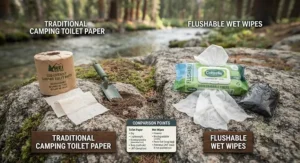
Not every camper needs a 500-sheet mega-roll. Coghlan’s Camp Toilet Paper solves a different problem entirely: pack volume. These are pre-wrapped, tightly rolled units — roughly 140 biodegradable sheets per roll — designed to take up minimal space in a backpack side pocket rather than to survive a week-long RV trip.
The compact format matters more than it sounds; a standard household roll can eat an unreasonable amount of pack space, and car campers or short-trip backpackers often care more about “will this fit in my bag” than “will this survive 10 days.” Because the sheets are biodegradable, they’re appropriate for burying in a cathole where regulations allow it, which distinguishes this from RV-specific rolls that assume a holding tank exists at all. Reviewers on gear comparison sites note it’s a solid value pick for short trips, though a few mention the paper isn’t as tear-resistant as thicker 2- or 3-ply alternatives when wet.
Pros:
- ✅ Compact, pre-rolled format saves serious pack space
- ✅ Biodegradable — appropriate for cathole burial where permitted
- ✅ Resealable packaging keeps sheets clean and dry
Cons:
- ❌ Less tear-resistant than thicker multi-ply options
- ❌ Not designed for RV holding tank use specifically
Expect $8-$15 for a multi-roll pack — a solid value verdict for weekend backpackers who care about ounces and inches more than sheet count.
7. Portawipes Coin Tissues — the ultralight tablet system for minimalist backpackers
For the gram-counting crowd, Portawipes Coin Tissues are a genuinely different category: compressed tissue tablets, roughly coin-sized and flat, that expand into a soft, usable wipe once wet. Ultra-compact and lightweight is the entire pitch, and it delivers — a stack of these takes up a fraction of the volume of a rolled alternative.
Because each tablet activates on contact with water, there’s zero waste from unused roll length sitting in a pack for a trip that didn’t need it — you carry exactly as many as you plan to use. The format is hypoallergenic and fragrance-free according to the manufacturer, which matters for backpackers managing sensitive skin on multi-day trips without shower access. Here’s the honest trade-off: this system requires water to activate, which can be genuinely tricky in arid environments where water is being rationed for drinking, and the cost per use runs higher than a standard roll once you do the math per wipe.
Pros:
- ✅ Extremely compact — ideal for ultralight packing lists
- ✅ No wasted roll length; carry exactly what you need
- ✅ Fragrance-free formulation for sensitive skin
Cons:
- ❌ Requires water access, tricky in dry environments
- ❌ Higher cost per use than standard rolled tissue
Pricing lands around $10-$20 depending on tablet count, and the value verdict is straightforward: worth it if ounces genuinely matter to your trip, less so if you’re car camping with unlimited trunk space.
Practical Usage Guide: Storing and Using Camping Toilet Paper on the Trail
Buying the right roll is half the job. The other half is not ruining it before you need it. Start with storage: humidity is the enemy of any biodegradable or fast-dissolving tissue, since the same fiber weakness that helps it break down in a tank also makes it prone to falling apart in a damp backpack pocket. A simple dry bag, a zip-top freezer bag, or even a repurposed peanut butter jar solves this instantly and weighs almost nothing.
For RVs specifically, the first-30-days mistake almost everyone makes is assuming any “biodegradable” label means “safe for my tank.” Biodegradable describes what happens to the material over months in soil or water — septic-safe describes how fast it breaks apart on contact with tank water, which is the property that actually prevents clogs. Look for both terms together, not one or the other. A quick DIY test helps: drop a sheet in a jar of water, seal it, and shake gently for ten seconds. If it hasn’t started breaking into small flakes, it’s not tank-appropriate, regardless of packaging claims.
Maintenance-wise, RV owners should still run a tank treatment or enzyme packet periodically even with fast-dissolve paper — the tissue solves the clog problem, not the odor or buildup problem, and treating both as the same issue is a common and avoidable mistake.
Real-World Scenarios: Matching Toilet Paper to Your Trip
Consider three campers with three very different needs. First, a family of four spending a week in a 30-foot travel trailer with a shared bathroom and a modest-sized black tank — for them, a bulk 2-ply pick like Firebelly Outfitters RV Toilet Paper or Camco Camper & RV Toilet Paper balances comfort against tank safety, since one person using thin 1-ply tissue is fine, but four people generating volume daily makes softness and sheet-count matter more.
Second, a solo weekend backpacker doing an 18-mile loop with a 12-liter pack — every ounce and cubic inch counts, so Portawipes Coin Tissues or Coghlan’s Camp Toilet Paper wins on volume alone, even at a slightly higher per-use cost, because carrying a full-size roll “just in case” is dead weight for a two-night trip.
Third, an environmentally motivated van-lifer running a composting toilet system rather than a traditional black tank — here, dissolve speed matters less than compostability, making Caboo Tree Free Toilet Paper‘s bamboo-sugarcane blend a better philosophical fit even though a composting setup technically tolerates a wider range of paper types than a sealed holding tank does.
✨ Match your trip type above? Check current pricing on the pick that fits before you pack.
Pack-It-Out Bags: Your Leave No Trace Backup Plan
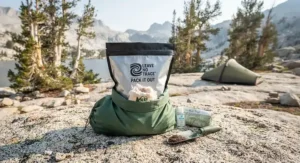
Some environments simply can’t process buried waste the way most campers assume. In desert terrain, alpine zones, slot canyons, and increasingly crowded backcountry areas, a traditional cathole doesn’t decompose fast enough — or at all — and land managers have responded by requiring pack-out systems instead. These setups, generically called WAG bags, use a gelling agent to immobilize liquid waste and surround solid waste in a sealed plastic bag that then goes in the regular trash.
This is where the secondary keyword pack-it-out bags earns its own section, separate from toilet paper itself: a WAG bag kit typically bundles a waste bag with gelling powder, an outer zip-close bag, a hand wipe, and a small amount of toilet paper — meaning your camping toilet paper and your pack-it-out system work as a pair, not substitutes for each other. A WAG bag is basically a toilet in a bag, containing a NASA-developed gelling and deodorizing powder alongside an outer disposal bag, hand sanitizer, and toilet paper. For details on when parks require this approach and how to properly dispose of human waste on Leave No Trace principles, the National Park Service publishes clear regional guidance worth checking before any desert or high-alpine trip.
Common problem-to-solution pairs here: if you’re heading into a permit-required Wilderness zone, pack a commercial kit rather than improvising with a household bag, since commercial versions are landfill-approved and puncture-resistant. If you’re worried about odor during a multi-day carry, store the sealed bag in an external pack pocket, never inside your food bag or tent — bears and rodents are drawn to the same salts and smells regardless of how well it’s sealed.
Bidet Alternatives for Camping: Do You Even Need TP?
A growing number of campers are asking whether they need rolls at all, and portable bidets have become a legitimate bidet alternative camping option worth weighing honestly. Products like the TUSHY Got2Go Travel Bidet and the ultralight CuloClean Portable Bidet attach to any standard water bottle, turning it into a rinse system without electricity or plumbing.
The appeal is straightforward: less paper packed in, less paper packed out, and for backpackers in fragile ecosystems, less total waste generated per trip. What most buyers overlook, though, is that a bidet doesn’t fully eliminate the need for tissue — you still want a small amount for drying, so it’s genuinely a reduction strategy rather than a full replacement. Based on the spec comparison between weight-conscious backpacking and RV use, bidets make more practical sense for backpackers optimizing pack weight than for RV travelers who already have holding tank capacity to spare and no shortage of water access at a campground spigot.
Cost-wise, most portable bidet attachments run in a similar price range to a multi-roll pack of premium toilet paper, so the decision usually comes down to personal comfort and water availability rather than budget.
How to Choose Camping Toilet Paper
Picking the right roll comes down to a short checklist, not guesswork:
- Identify your waste system first. RV black tank, marine holding tank, portable toilet, or cathole burial each has different tolerance for slow-dissolving fiber — this determines whether “septic safe” is a hard requirement or a nice-to-have.
- Weigh ply against dissolve speed. Thicker 2- or 3-ply tissue feels better but takes longer to break down; thinner 1-ply dissolves faster but sacrifices comfort — decide which trade-off matters more for your specific tank size.
- Factor in trip length and pack space. Multi-day backpacking favors compact or compressed formats; car camping and RV trips can afford bulkier bulk-roll purchases.
- Check for genuine biodegradable certification, not just marketing language, especially if you plan to bury waste in permitted backcountry zones.
- Consider skin sensitivity. Dye- and fragrance-free formulas reduce irritation risk on multi-day trips without regular showers.
- Price per sheet, not per roll. Bulk packs often look pricier upfront but land cheaper per use — do the math before assuming the smaller pack is the deal.
- Match your backup plan. If you’re heading somewhere pack-out is required, budget for a WAG bag kit alongside your tissue, not instead of it.
RV Toilet Paper vs Regular Toilet Paper: Why It Matters
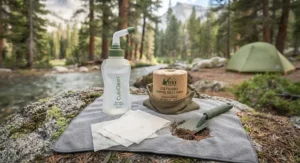
The comparison people underestimate most is RV toilet paper against the roll already sitting in their home bathroom. Regular household tissue is engineered for a completely different priority: strength and softness for daily use, with dissolve speed as an afterthought because municipal sewer systems handle slow breakdown just fine over long pipe runs and large water volumes.
RV and marine systems are the opposite environment — small holding tanks, limited water volume, and sensors that trigger false readings when solid fiber clumps instead of breaking apart. That’s why RV toilet paper is formulated with fewer layers and looser fiber bonding: it needs to disintegrate in seconds, not minutes. Using regular toilet paper in an RV black tank isn’t an emergency the first time, but repeated use compounds fiber buildup that eventually requires an expensive professional tank flush or replacement of a stuck sensor — a cost that dwarfs what you’d have spent on proper tissue over an entire season.
| Factor | Regular Household TP | Camping/RV Toilet Paper |
|---|---|---|
| Dissolve speed | Slow (minutes to hours) | Fast (seconds) |
| Tank/septic safety | Risky for small systems | Formulated for small systems |
| Comfort | Higher (thicker plies) | Variable, often thinner |
| Best For | Home plumbing, city sewer | RVs, boats, portable toilets, backcountry |
The takeaway from this table: this isn’t about one product being objectively “better” — it’s about matching fiber engineering to the system it’s flushed into, and getting that match wrong is what causes the clogged black tank horror stories every RV forum is full of.
Quick-Dissolve TP: What “Septic Safe” Actually Means
“Quick-dissolve” and “septic safe” get used almost interchangeably in product listings, but they’re not identical claims, and understanding the difference protects you from marketing language doing more work than the actual formulation. Quick-dissolve refers to how fast the sheet breaks into small pieces on contact with water — the property that prevents clogs in a mechanical sense. Septic safe is a broader claim that also covers chemical compatibility with the bacteria that break down waste in a septic tank; harsh dyes, heavy fragrances, or certain synthetic additives can disrupt that bacterial balance even in tissue that dissolves quickly.
The features that actually matter here: fiber ply count, whether the product is explicitly labeled dye- and fragrance-free, and independent dissolve testing (the glass-of-water shake test any camper can run at home). The features that don’t matter nearly as much as packaging suggests: scent claims like “fresh linen,” which add nothing to septic performance and sometimes actively work against it, and vague “eco-friendly” language without a specific material call-out like bamboo, recycled pulp, or sugarcane bagasse.
Common Mistakes When Buying Camping Toilet Paper
The single most common mistake is buying based on softness reviews alone, without checking whether the product is rated for your specific waste system — a plush 3-ply roll that feels great can be genuinely bad news for a small RV tank. A close second is assuming “camping” branding on packaging automatically means septic-safe; some products are simply marketed toward the outdoor lifestyle without any actual dissolve-speed engineering behind them.
Buyers also frequently underestimate quantity needs on long trips, running out mid-week and resorting to whatever a nearby camp store stocks, often at a steep markup. And a subtler mistake: stockpiling tissue in a garage or storage bin for years, since biodegradable and fast-dissolve formulas can degrade in storage faster than standard tissue, becoming brittle or fragile before you even get to use them.
Long-Term Cost & Maintenance: The Real Price of Cheap TP
Cost-per-sheet math tells a more useful story than sticker price alone. A bulk pack of Firebelly Outfitters RV Toilet Paper at 8 rolls of 500 sheets works out to a lower per-sheet cost than repeatedly buying smaller convenience packs of pricier name brands, even though the upfront receipt looks larger. The same logic applies to Scott Rapid-Dissolving Toilet Paper, where multi-packs consistently beat small 4-roll purchases on a per-use basis.
The maintenance side of the equation is where cheap, non-septic-safe tissue gets genuinely expensive. A single professional RV black tank pump-out and flush after a clog can run well into three figures, not counting the lost trip time waiting for service. Compare that to the marginal few extra dollars a season spent on properly formulated tissue, and the total cost of ownership case for buying it right the first time is not close.
Safety, Regulations & Leave No Trace Compliance
Human waste disposal rules vary significantly by location, and ignorance of local requirements is a common — and avoidable — problem for first-time backcountry campers. Some parks require a landfill-safe commercial toilet bag system for all overnight wilderness permit holders, and in areas without established facilities, waste must be buried at least six inches deep and a set distance from trails, campsites, or water sources, with toilet paper always carried out as trash.
The reasoning behind these rules isn’t bureaucratic overreach — it’s ecological math. Human waste takes upwards of eight months to decompose, and rising numbers of outdoor recreationists mean more waste accumulating faster than natural decomposition can process it in popular areas. For the specific rules governing your destination, always check with the managing agency before the trip; requirements differ between national forests, national parks, and state-managed land, and the Leave No Trace Center for Outdoor Ethics maintains detailed regional guidance worth a five-minute read before you go.
FAQ
❓ Is regular toilet paper okay for camping?
❓ How do I know if toilet paper is septic safe?
❓ Can I bury regular toilet paper in the backcountry?
❓ What's the difference between RV toilet paper and biodegradable toilet paper camping brands?
❓ Are pack-it-out bags required everywhere?
Conclusion
Camping toilet paper is one of those small gear decisions that only feels trivial until it isn’t. Get the match right — dissolve speed for your tank type, compact format for your pack weight, or biodegradable fiber for your ethics — and it becomes a total non-issue for the entire trip. Get it wrong, and it’s the one thing that derails an otherwise perfect week outdoors.
Across the seven picks here, Firebelly Outfitters RV Toilet Paper and Camco Camper & RV Toilet Paper cover most RV and family camping needs comfortably, Scott Rapid-Dissolving Toilet Paper and Thetford Aqua-Soft Toilet Tissue are the go-to choices when tank safety trumps everything else, Caboo Tree Free Toilet Paper serves the sustainability-first crowd, and Coghlan’s Camp Toilet Paper with Portawipes Coin Tissues handle the ultralight backpacking end of the spectrum. Pair whichever fits your trip with a pack-it-out kit if your destination requires one, and you’ve genuinely covered every scenario this category throws at you.
Recommended for You
- Camp Shower Tent: 7 Best Picks for Private, Easy Showers (2026
- Biodegradable Soap for Camping: 7 Picks That Won’t Wreck Trails (2026)
- Microfiber Towel For Camping: 7 Best Picks Tested for 2026
Disclaimer: This article contains affiliate links. As an Amazon Associate, I earn from qualifying purchases. If you purchase products through these links, we may earn a small commission at no additional cost to you.
✨ Found this helpful? Share it with your friends! 💬🤗
