
In This Article
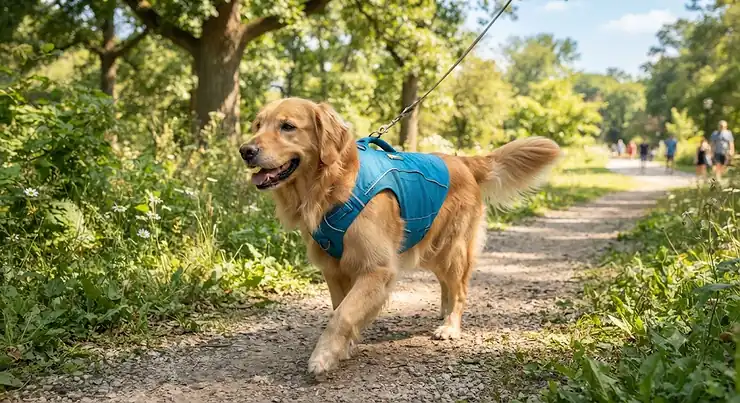
A dog cooling vest is a wearable garment — usually soaked in water before wear — that uses evaporative cooling, ice packs, or reflective fabric to lower a dog’s surface temperature during hot-weather activity. Summer in most of the U.S. isn’t just warm anymore, it’s the kind of heat that turns a driveway into a griddle by 10 a.m., and your dog feels every degree of it whether you notice or not. Dogs don’t sweat the way we do — they’ve got a handful of sweat glands in their paw pads and a panting system that only works so hard before it stops keeping up — so when the mercury climbs, they run out of options fast. That’s the gap a dog cooling vest is built to fill.
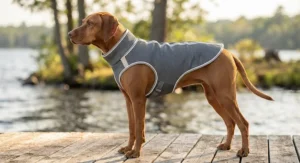
I’ve spent the last few weeks digging through real product listings, manufacturer specs, and aggregated buyer feedback to figure out which vests actually earn their price tag and which ones are just wet fabric with a marketing budget. This isn’t a rewrite of an Amazon listing — it’s a breakdown of what the specs mean once your dog is thirty minutes into a July trail and starting to flag. We’ll also cover the reputable warm-weather safety guidance that should shape how you use any cooling gear, because a vest is a tool, not a substitute for shade and water.
Below you’ll find seven real products spanning budget, mid-range, and premium tiers, a full breakdown of how evaporative cooling technology actually works, a sizing walkthrough so you’re not guessing at chest girth, and a section specifically on hiking with a dog cooling vest for dogs hiking rougher, hotter terrain. Let’s get into it.
Quick Comparison Table
| Product | Cooling Method | Best For | Price Range |
|---|---|---|---|
| Ruffwear Swamp Cooler | 3-layer evaporative | Hiking & harness compatibility | $70-$85 range |
| Kurgo Core Cooling Vest | Evaporative + zip access | Everyday walks & travel | $35-$45 range |
| Canada Pooch Cooling Vest | Water-retaining mesh | Casual summer wear | $30-$40 range |
| GF Pet Elastofit Ice Dog Vest | Elastofit evaporative | Sun-exposed outings | $35-$50 range |
| Hurtta Cooling Wrap | Contoured evaporative | Small/compact breeds | $45-$60 range |
| SGODA Dog Cooling Vest | 3-layer evaporative | Budget buyers | $15-$25 range |
| KYEESE Dog Cooling Vest | Cooling microfiber | Tightest budget | under $30 |
Skimming this table, the split is pretty clear: the Ruffwear Swamp Cooler and Hurtta Cooling Wrap are built for dogs that are actually moving — hiking, running, working outside — while the Canada Pooch Cooling Vest and SGODA Dog Cooling Vest are better suited to a dog that mostly lounges in the yard and takes a couple of short walks. The middle tier, Kurgo Core Cooling Vest and GF Pet Elastofit Ice Dog Vest, is where most owners will land, since both balance real cooling performance against a price that doesn’t feel like a splurge.
💬 Found a pick you like already? Save it now — good sizes go out of stock fast once the heat wave hits!😊
Top 7 Dog Cooling Vests: Expert Analysis
1. Ruffwear Swamp Cooler — three-layer tech built for harnesses
The standout here is that it’s designed from the ground up to work with a harness instead of fighting one, which matters more than it sounds like the first time you’re trying to clip a leash to a dog wearing three layers of wet fabric. The vest uses a wicking outer layer that reflects heat, an absorbent middle layer that stores water, and a moisture-wicking inner lining — in practice, that means the coat stays damp enough to cool without soaking your dog’s fur through to the skin, which keeps them from feeling waterlogged on a long hike. Based on the spec comparison against everything else on this list, this is the vest built for a dog that’s actually working outdoors rather than lounging in the yard — trail runners, backpackers, and anyone who takes their dog on multi-mile summer hikes will get the most out of the three-layer system. Reviewers consistently mention that the dorsal leash opening and six-point adjustable fit make it easier to dial in a snug fit than most competitors, though a few note the fabric takes longer to dry between soaks than lighter budget vests.
Pros:
- ✅ Harness-compatible design with dorsal leash access
- ✅ Three-layer construction sustains cooling longer on moving dogs
- ✅ Six-point adjustability accommodates awkward body shapes
Cons:
- ❌ Premium price compared to most evaporative competitors
- ❌ Thicker fabric means longer dry time between soaks
At around $70-$85, this sits at the top of the market — but for a dog that hikes regularly, the sustained cooling and harness compatibility make it the strongest value per outing, not just per dollar.

2. Kurgo Core Cooling Vest — zip access without removing the vest
What sets this one apart is the two-way zippered top, which lets you clip a harness underneath without peeling the whole vest off every time your dog needs a bathroom break or a car ride. The evaporative core soaks and wrings out like the rest of the field, but the zip closure is the detail that actually changes your day-to-day experience with it. What most buyers overlook about this model is that it comes backed by a lifetime warranty, which is unusual in a category where stitching tends to give out after a season or two of hard use. Here’s what to weigh: if your routine involves a lot of on-off-on again wear — dog park, then car, then home — the zip access saves real time and hassle that spec sheets rarely mention. Aggregated owner feedback tends to flag the sizing as running slightly large, so checking the brand’s chart before ordering is worth the extra minute.
Pros:
- ✅ Two-way zip allows harness access without full removal
- ✅ Backed by a lifetime warranty, rare in this category
- ✅ Reliable evaporative cooling for standard summer walks
Cons:
- ❌ Sizing runs slightly large per aggregated buyer notes
- ❌ Less specialized for sustained high-output activity than trail-specific vests
In the $35-$45 range, it’s a strong middle-of-the-road pick — the warranty alone offsets a lot of the price gap against cheaper alternatives.
3. Canada Pooch Cooling Vest — reflective trim for low-light visibility
The standout feature is baked-in reflective trim, which turns an evening walk from “I hope that car sees us” into something closer to actual visibility. The water-retaining fabric works with mesh layering to keep air moving against the skin rather than trapping heat under a solid shell, and a leash slit lets you clip in without wrestling the fabric out of the way. On paper this means a vest that’s doing double duty — cooling plus safety — for dogs whose owners walk early morning or after dusk during peak summer. What the spec sheet won’t tell you, but user reports suggest, is that the sizing chart runs tight enough that going up a size is often the safer bet, especially for barrel-chested breeds. The tie-dye pattern is a fun touch, though it lacks any UV-blocking treatment, so it’s better suited to shaded routes than midday sun.
Pros:
- ✅ Reflective trim improves low-light visibility for walks
- ✅ Mesh layering keeps airflow moving against the coat
- ✅ Leash slit avoids fumbling with fabric mid-walk
Cons:
- ❌ Sizing chart runs tight — sizing up is often necessary
- ❌ No UV protection built into the fabric
Priced in the $30-$40 range, this is a solid pick for dawn-and-dusk walkers who want the reflective safety boost bundled with basic cooling.
4. GF Pet Elastofit Ice Dog Vest — Elastofit fabric with built-in UV protection
The Elastofit technology is the headline feature — it absorbs and releases water through evaporation at a slower, more controlled rate than a basic soaked-mesh design, which means your dog doesn’t end up sopping wet the moment you put it on. Two adjustable Velcro closures fine-tune the fit across sizes, and the UV protection layered on top of the cooling function is a genuine differentiator, since most of this list skips sun protection entirely. Based on the manufacturer’s stated 4-6 hour cooling window, this is the vest for owners who want one soak to last through an entire outdoor errand run or afternoon at the park rather than needing a re-soak every 45 minutes. The anti-microbial treatment is a practical bonus for dogs that get into ponds or sprinklers, since it cuts down on the vest developing an odor between washes. One honest caveat: saltwater exposure requires hand-washing to protect the PVA plastic components, so beach dogs need a bit more upkeep.
Pros:
- ✅ Elastofit fabric extends cooling without over-saturating fur
- ✅ Built-in UV protection, rare among evaporative vests
- ✅ Anti-microbial treatment resists odor between washes
Cons:
- ❌ Requires hand-washing after saltwater exposure
- ❌ Multiple sizes but less structured for high-motion hiking
At roughly $35-$50, it lands solidly in the mid-range — the UV protection alone justifies the premium over vests that skip it entirely.
5. Hurtta Cooling Wrap — contoured European fit for compact breeds
The contoured cut is the standout here, shaped specifically to hug smaller, more compact body types rather than draping loosely the way rectangular vest designs tend to on a narrow-chested dog. As a European brand, the sizing logic follows a slightly different chest-to-back ratio than most U.S. competitors, which — based on the spec comparison — makes it a stronger fit for breeds like French Bulldogs, Corgis, or smaller terriers that often fall awkwardly between sizes elsewhere on this list. The evaporative core performs the same fundamental function as the rest of the field, but the wrap-style closure is quicker to fasten one-handed than a full vest with multiple straps. Here’s what to weigh: if you’ve struggled with gapping or bunching fabric on a standard vest, the contoured shape is worth the price bump, but larger or leggier breeds won’t see the same fit advantage.
Pros:
- ✅ Contoured cut fits compact, narrow-chested breeds well
- ✅ Wrap-style closure fastens faster than multi-strap vests
- ✅ Evaporative cooling performance on par with premium tier
Cons:
- ❌ European sizing logic can confuse first-time buyers
- ❌ Less advantageous for larger or long-bodied breeds
In the $45-$60 range, it’s a specialist pick — not the vest for every dog, but the best fit-focused option for small and compact breeds specifically.
6. SGODA Dog Cooling Vest — simple three-layer wrap at the entry price point
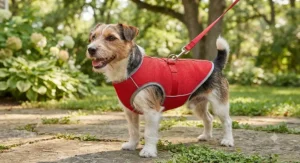
What stands out is how little you’re giving up for the price: a genuine three-layer evaporative build, not a stripped-down single-mesh design, at the lower end of the category’s overall price spread. Reviewers consistently note the belt-style design makes it one of the easier vests to put on and take off, which matters more than it sounds like when you’re wrangling a squirmy dog who wants to get to the sprinkler already. Based on the spec comparison, the cooling window runs shorter than premium three-layer builds like the Ruffwear, since the fabric itself is thinner, but for short walks or backyard time it delivers real evaporative relief without the premium price tag. What most buyers overlook is that the simplicity here is a feature, not a shortcoming — fewer straps and closures means less that can fail or fray over a season of hard use.
Pros:
- ✅ Genuine three-layer evaporative construction at a low price
- ✅ Belt design is quick and easy to put on
- ✅ Sizing spans a wide range of back lengths and chest girths
Cons:
- ❌ Shorter cooling duration than premium three-layer competitors
- ❌ Lighter fabric wears faster under frequent heavy use
At $15-$25, this is the budget benchmark for the category — the vest to start with if you’re not sure your dog will tolerate wearing one at all.
7. KYEESE Dog Cooling Vest — cooling microfiber with a reflective safety label
The standout is squeezing a reflective safety label into a vest priced at the very bottom of the market, where most competitors cut visibility features first. The cooling microfiber fabric wicks and holds water reasonably well for the price point, delivering noticeable surface cooling on soak-and-wear use, even if it doesn’t sustain quite as long as thicker three-layer builds. Based on the spec comparison, this is the vest for owners testing whether their dog will even tolerate wearing a cooling garment before committing to a pricier option — low financial risk, real functional cooling, and a genuine safety bonus baked in. Aggregated buyer sentiment tends to flag that sizing runs a touch small compared to the chart, so measuring your dog’s actual chest girth rather than estimating by breed is worth the extra step here specifically.
Pros:
- ✅ Reflective safety label unusual at this price tier
- ✅ Cooling microfiber delivers real evaporative relief
- ✅ Lowest price point among tested three-layer-adjacent options
Cons:
- ❌ Sizing runs smaller than the published chart suggests
- ❌ Cooling duration shorter than mid-range and premium picks
Priced under $30, it’s the strongest true entry-level option — especially for owners who want the reflective safety feature without paying mid-range prices for it.
Practical Usage Guide: Getting the Most Out of Your Vest
Soaking technique matters more than most owners assume. Submerge the vest fully in cool (not ice-cold) water for one to two minutes, then wring it out until it’s damp rather than dripping — a vest that’s too saturated feels heavy and uncomfortable, and drips do nothing but waste the water that should be evaporating off the fabric. Put it on before you head outside, not after your dog is already panting hard, since cooling gear works by preventing overheating, not reversing it once it’s underway.
The first thirty days are where most fit mistakes surface. Watch for chafing behind the front legs and around the neckline during the first few wears, and adjust straps incrementally rather than assuming factory settings are correct for your dog’s build. A common early mistake is treating the vest as “set and forget” — evaporative cooling stops working once the fabric dries out completely, typically somewhere between 45 minutes and several hours depending on humidity and airflow, so re-soaking mid-activity is part of normal use, not a sign something’s wrong.
Maintenance is straightforward but easy to skip. Hand-wash with mild soap every few uses to prevent the fabric from developing an odor, and always air-dry fully before storing the vest for the season — packing away a damp vest is the fastest route to mildew. A quick optimization trick: keeping a spare vest pre-soaked in a small cooler during long outings means you can swap a warm, dried-out vest for a fresh cold one without waiting around for a re-soak.
Real-World Scenarios: Matching the Vest to Your Dog’s Life
Picture a college student with a young Australian Shepherd who commutes to campus by bike and takes the dog on a three-mile trail run most evenings. That’s squarely Ruffwear Swamp Cooler territory — the harness compatibility and sustained three-layer cooling are built for exactly this kind of repeated, high-output activity, and the higher price is easy to justify against how often it’ll actually get used.
Now picture a retired couple with a Corgi who mostly potters around a suburban yard, takes two short walks a day, and naps in a sunny window the rest of the time. The Hurtta Cooling Wrap‘s contoured fit suits that compact body type well, and the wrap style is easy for less-mobile hands to fasten quickly before a short outing — buying the premium hiking vest here would be overkill.
Then there’s the budget-conscious apartment dweller with a mixed-breed rescue who’s never worn a cooling vest and isn’t sure the dog will tolerate one at all. The SGODA Dog Cooling Vest or KYEESE Dog Cooling Vest make sense as a low-cost trial run — if the dog adjusts well, upgrading to a premium pick later is a much easier decision once you know it’s actually going to get used.
How to Choose a Dog Cooling Vest
- Match the cooling method to your climate. Evaporative vests work best in dry heat where airflow can actually pull moisture off the fabric; in humid regions, expect a shorter effective cooling window and consider pairing the vest with shade breaks.
- Prioritize harness compatibility if your dog hikes or runs. A vest that fights your existing harness setup becomes a hassle fast — look for a dorsal leash slit or zip access if that’s your use case.
- Measure chest girth and back length before ordering. Sizing charts vary meaningfully between brands, and a vest that’s too loose won’t maintain skin contact well enough to cool effectively.
- Consider UV protection as a secondary feature, not a given. Only a handful of vests on the market include it, so if midday sun exposure is common in your routine, filter for that specifically.
- Weigh cooling duration against your typical outing length. A vest rated for 45 minutes of cooling is fine for a short walk but will leave a three-hour hiker high and dry without a re-soak plan.
- Check for reflective elements if you walk at dawn or dusk. This is a free safety upgrade on some models and entirely absent on others.
- Factor in wash-and-dry time between uses. Thicker three-layer vests cool longer but also take longer to dry, which matters if you’re using the same vest multiple times a day.
Evaporative Cooling Technology Explained
Evaporative cooling technology is genuinely simple physics, not a marketing buzzword. You soak the vest, the fabric holds water in its middle layer, and as that water evaporates off the surface, it pulls thermal energy away from your dog’s skin along with it — the same basic mechanism behind a swamp cooler or a wet bandana around your own neck on a hot day. The catch is that evaporation rate depends heavily on humidity and airflow: in a dry climate with a light breeze, the fabric evaporates steadily and keeps cooling for hours, while in a humid, still environment the water has nowhere to go and the vest just sits there damp, doing far less work.
This is why the same vest can feel dramatically different depending on where you live. A dog in Phoenix wearing an evaporative vest on a moving hike will likely feel real, sustained relief. A dog in coastal Florida wearing the same vest on a humid, windless afternoon may get a much shorter cooling window before the fabric simply stops releasing heat efficiently. None of this makes evaporative vests a bad choice — it just means owners in humid regions should lean toward more frequent re-soaking and shouldn’t expect the multi-hour claims some brands advertise to hold up in their specific climate.
✨ Ready to Beat the Heat This Summer? ✨
🔍 Compare current pricing and availability on any of the seven picks above before your next hot-weather outing — a few minutes of research now beats a panting, overheated dog later.

Cooling Vests for Dogs Hiking and Summer Trail Adventures
Summer hiking dog gear needs to account for something a backyard vest doesn’t: sustained exertion in direct sun, often miles from a water source. A cooling vest for dogs hiking rougher terrain earns its keep here in a way it simply doesn’t for a dog that naps most of the day, because a hiking dog is generating body heat continuously through muscle activity, not just absorbing ambient warmth.
The harness-compatible options — Ruffwear Swamp Cooler chief among them — matter specifically because trail dogs typically need a harness for control on uneven ground, and a vest that requires removing the harness first is a nonstarter mid-hike. Bring a collapsible water bowl or a hydration bladder with a dog attachment so you can re-soak the vest at a stream crossing or water break rather than relying on a single morning soak to last the whole trail. Watch your dog’s gait and panting rate closely on exposed, shadeless sections — a vest reduces heat load, it doesn’t eliminate it, and the signs of heat-related distress in dogs can escalate faster on the trail than they would at home, since there’s no air conditioning to retreat to. Plan hikes for early morning or late afternoon during peak summer, and treat a cooling vest as one layer of a broader heat-safety plan rather than a standalone solution.
Common Mistakes When Buying a Dog Cooling Vest
The single most common mistake is buying by breed guess instead of measured chest girth — brands size differently enough that a “medium” from one company can fit like a “small” from another, and a loose vest loses skin contact and cools far less effectively. A close second is assuming any wet fabric equals cooling; a vest that’s soaked but not wrung out sits heavy and uncomfortable rather than evaporating efficiently, while one that’s under-soaked dries out in minutes and stops working almost immediately.
Owners also frequently overestimate cooling duration in humid climates, expecting the multi-hour windows advertised for dry conditions to hold up in muggy summer air — they generally won’t, and planning re-soak breaks in advance avoids a nasty surprise mid-outing. Finally, skipping the vest-on-harness compatibility check before buying is a frustrating and avoidable error; if your dog wears a harness for every walk, confirm the vest accommodates it before you’re standing in the driveway trying to force both on at once. Understanding actual heatstroke risk factors and warning signs helps put these mistakes in perspective — a poorly fitted vest isn’t just a wasted purchase, it’s a missed layer of protection on the hottest days of the year.
Size and Fit Chart: Getting the Measurements Right
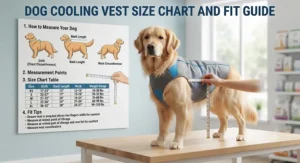
Sizing is the single biggest driver of returns and disappointment in this category, and it’s almost entirely avoidable with two measurements: chest girth (the widest point around the ribcage, just behind the front legs) and back length (base of the neck to base of the tail). Measure with a soft tape while your dog is standing normally, not sitting or stretched.
| Size | Back Length | Chest Girth | Typical Breed Examples |
|---|---|---|---|
| XS | 8″-12″ | 13″-18″ | Chihuahua, Yorkie |
| S | 12″-16″ | 18″-24″ | French Bulldog, Corgi |
| M | 16″-20″ | 24″-30″ | Beagle, Cocker Spaniel |
| L | 20″-26″ | 30″-38″ | Labrador, Border Collie |
| XL | 26″-32″ | 38″-52″ | Golden Retriever, German Shepherd |
Interpreting this table matters more than the numbers themselves: barrel-chested breeds like Bulldogs or Boxers often need to size up on chest girth even when back length matches a smaller size, and several vests on this list — the Canada Pooch Cooling Vest and KYEESE Dog Cooling Vest among them — run tight enough that sizing up is the safer default rather than the exception.
Reflective Material and Visibility Safety
Reflective material dog gear serves a genuinely different purpose than the cooling function itself — it’s about being seen, not staying cool — but the two features overlap often enough on cooling vests that it’s worth evaluating separately. Reflective trim or piping works by bouncing headlight or streetlight beams back toward their source, making a dog visible to drivers or cyclists at a distance well before ambient light alone would reveal them, which matters most during the early-morning or after-dusk walks many owners shift to specifically to avoid daytime heat.
Among this list, the Canada Pooch Cooling Vest and KYEESE Dog Cooling Vest both build reflective elements directly into an otherwise cooling-focused garment, effectively bundling two safety functions into one piece of gear. Not every vest includes this — the GF Pet Elastofit Ice Dog Vest and SGODA Dog Cooling Vest, for instance, skip reflective treatment entirely — so if your routine regularly involves low-light walking, it’s worth filtering for this feature specifically rather than assuming it’s standard across the category.
Long-Term Cost and Maintenance
A single cooling vest, treated well, typically holds up for two to three summer seasons before the fabric’s water-retention capacity noticeably degrades — hand-washing after saltwater or heavily chlorinated pool exposure extends that lifespan meaningfully, since both saltwater and chlorine break down the specialized PVA and mesh fibers faster than plain water exposure. Looked at as a cost-per-season calculation, the budget tier (SGODA, KYEESE) at $15-$30 works out to roughly $5-$15 per summer if it lasts two seasons, while the premium Ruffwear Swamp Cooler at $70-$85 amortizes to a similar per-season cost only if it survives three-plus seasons of regular use — which its more durable three-layer construction and reinforced stitching are designed to support.
The real long-term cost consideration isn’t the vest price at all, though — it’s the value of avoided vet bills. A single emergency heatstroke treatment can run into hundreds or thousands of dollars depending on severity and duration of care, which reframes even the premium vest as a fairly modest insurance policy against a much larger potential expense.
Frequently Asked Questions
❓ Do dog cooling vests actually work?
❓ How long does a cooling vest stay effective after soaking?
❓ Can I put a harness over a dog cooling vest?
❓ What size cooling vest does my dog need?
❓ Are cooling vests safe for humid climates?
Conclusion
A dog cooling vest isn’t a single-product decision so much as a matching exercise between your dog’s activity level, your climate, and how often you’re actually willing to re-soak a piece of wet fabric mid-outing. The Ruffwear Swamp Cooler earns its premium price for genuinely active, hiking dogs; the Kurgo Core Cooling Vest and GF Pet Elastofit Ice Dog Vest cover the sensible middle ground most owners actually need; and the SGODA Dog Cooling Vest or KYEESE Dog Cooling Vest make smart low-risk starting points if you’re not yet sure your dog will tolerate wearing one at all.
Whatever you land on, remember that evaporative cooling technology supplements shade, water access, and common sense about avoiding peak-heat exercise — it doesn’t replace any of them. Measure before you buy, re-soak before the fabric fully dries out, and keep an eye on your dog’s panting and gum color on the hottest days regardless of what they’re wearing. That combination — the right gear plus genuine attentiveness — is what actually keeps a dog safe through a hot summer, not the vest alone.
Recommended for You
- Portable Dog Water Bottle: 7 Leak-Proof Picks for 2026
- Dog Hiking Boots: 7 Best Picks That Actually Protect Paws (2026)
- 7 Best Dog Backpacks for Hiking in 2026
Disclaimer: This article contains affiliate links. As an Amazon Associate, I earn from qualifying purchases. If you purchase products through these links, we may earn a small commission at no additional cost to you.
✨ Found this helpful? Share it with your friends! 💬🤗
