

In This Article
A foam sleeping pad for winter camping is a closed-cell foam mat that sits between your body and frozen ground. Its tiny sealed air pockets slow conductive heat loss, and it can’t puncture or leak. It rarely insulates enough alone below freezing, but stacked under an air pad it becomes the backbone of a winter setup.

Here’s the part nobody tells you in the gear-shop glow: the ground is the biggest thief in your tent. Your sleeping bag’s insulation compresses under your body weight, so it does almost nothing beneath you. Everything between your back and the frozen dirt is the pad’s job. The standard way to measure that job is R-value, a rating of how well a pad resists heat flow. Therm-a-Rest’s support team explains R-value and the ASTM F3340 test in plain terms, and it’s worth ten minutes of your time.
So why choose foam in an age of featherweight inflatables? Because foam fails gracefully. An air pad that springs a leak at 2 a.m. turns into a cold, crinkly bag of regret. A foam mat just keeps working. Many experienced winter campers carry both, and that’s the pairing this guide is built around.
I researched current specs, retailer listings, and published editorial reviews for 2026. Below you’ll find seven real foam options, honest analysis of what each spec means on a frozen night, and practical guides for layering, setup, and safety. Product prices are shown as ranges only, because they change constantly.
Quick Comparison: 7 Foam Pads at a Glance
Before the deep dives, here’s the cheat sheet. R-values are the manufacturer or retailer figures I found, and some are not clearly tied to the ASTM standard, so treat them as approximate.
| Pad | R-Value (Claimed) | Weight (Regular) | Thickness | Best For |
|---|---|---|---|---|
| Therm-a-Rest Z Lite Sol | 2.0 | ~14 oz | 0.75 in | Fast-folding stacking layer for backpackers |
| Therm-a-Rest RidgeRest SOLite | 2.8 (one retailer lists 2.1) | ~14 oz | 0.625 in | Lightweight roll for gear-weight watchers |
| Therm-a-Rest RidgeRest Solar | 3.5 | ~19 oz | 0.75 in | Warmest roll-up foam under an air pad |
| NEMO Switchback | 2.0 | ~14.5 oz | 0.9 in | Plush-feeling, affordable accordion foam |
| Exped FlexMat Plus | 2.2 | ~17 oz | 1.5 in | Thickest, most comfortable foam |
| Exped Flex 3R | 2.8 | ~18 oz | 1.5 in | Highest-R thick foam on this list |
| Ozark Trail Closed Cell Foam Pad | ~1.4 (one roundup) | ~11 oz | Thin | Budget sit pad and emergency layer |
Look at the table and one thing jumps out: no single foam pad here clears R 4, which is the floor most guides set for true winter sleeping. The Exped Flex 3R and Therm-a-Rest RidgeRest Solar come closest, and they do it by being thick or reflective, not by magic. If you’re buying a foam sleeping pad for winter camping to use alone, plan on mild winter nights or on stacking two foam pads. If you want deep-cold performance, pair any pick with an insulated air pad, because R-values add together.
Budget shoppers should note the Ozark Trail Closed Cell Foam Pad trades warmth for price, so it’s a helper, not a hero. And the Exped FlexMat Plus wins comfort by sheer thickness, at a weight penalty over the Therm-a-Rest Z Lite Sol.
💬 Just one click — help others make better buying decisions too!😊
Top 7 Foam Sleeping Pads for Winter Camping: Expert Analysis
1. Therm-a-Rest Z Lite Sol — the folding classic that stacks flawlessly
The accordion fold is the whole personality here: shake it open in seconds, even with mittens on. Most retailers list this pad at roughly 72 by 20 inches, about 0.75 inches thick, and around 14 ounces, with an R-value of 2.0. A reflective coating on top bounces radiant heat back at you, and dimples trap warm air.
What does R 2.0 mean in practice? On its own it handles cool shoulder-season ground. Under an air pad rated R 4, it lifts your total ground insulation to about R 6, which is where many cold-season campers feel comfortable. Based on the spec comparison, it’s also the least fussy pad to pack on the outside of a bag, since it doesn’t care about branches or rain.
Reviewers consistently praise its toughness and quick setup, and a common complaint is bulk. It folds into a rectangle that doesn’t compress like an air pad. Some older listings show an R-value of 2.6, which likely reflects a pre-standard measurement, so check the label.
Pros:
- ✅ Folds open in seconds, even with gloves
- ✅ Puncture-proof and unbothered by wet snow
- ✅ Reflective top adds warmth without added weight
Cons:
- ❌ Bulky to carry compared to air pads
- ❌ Thin for side sleepers on hard ground
Price: typically around the $50-$60 range, so check current price. It’s pricier than a cheap roll, but the durability and stacking reliability justify it.
2. Therm-a-Rest RidgeRest SOLite — featherweight roll with a reflective skin
If the Z Lite Sol is the folding classic, the RidgeRest SOLite is its rolled cousin. The ridged surface creates peaks and valleys that trap warm air, and an aluminized coating reflects body heat. Retailers list the regular at around 14 ounces and 0.625 inches thick, with a claimed R-value of 2.8.
Heads-up: that number isn’t universal. Another retailer lists 2.1 for the same pad, so treat R 2.1 to 2.8 as the honest range. Either way, it’s a respectable base layer. Experienced winter campers commonly stack a closed-cell pad of this kind under an inflatable, and one in a sit-pad role pulls double duty on snow.
Reviewers describe it as nearly indestructible and note that it rolls rather than folds, which is great for strapping to the outside of a pack but awkward in a stuffed one. The ridges can feel firm, and because it’s thin, hip bones will notice.
Pros:
- ✅ Very light for its insulation value
- ✅ Lengthwise roll straps neatly outside a pack
- ✅ Virtually indestructible in rough terrain
Cons:
- ❌ Thin, firm surface on hard ground
- ❌ R-value claims vary between retailers
Price: often in the mid-$30s to mid-$50s depending on retailer and size. Strong value if you mostly want a stacking layer.
3. Therm-a-Rest RidgeRest Solar — the warmest roll-up foam on the list
Think of the RidgeRest Solar as the SOLite’s plusher, warmer sibling. Retailer specs show an R-value of 3.5, about 0.75 inches of thickness, and roughly 1 pound 3 ounces in regular. One forum analysis of the older specs suggested the higher number comes mostly from the extra thickness rather than the coating, which is a useful reminder that thickness drives foam warmth.
On a practical level, R 3.5 is the highest foam rating I could find in this roundup, and stacked under an R 4.5 air pad it reaches about R 8. That’s serious winter territory. A reviewer who bought the thicker version said the extra weight was negligible against the added warmth.
I couldn’t verify whether this model’s R-value was retested to the current standard, and availability seems limited at some retailers, so confirm the label before buying. Its lone real drawback is packed bulk, since a rolled pad this size rides outside the pack.
Pros:
- ✅ Highest R-value among the roll-up pads here
- ✅ Heat-reflective top surface adds comfort
- ✅ Won’t deflate, leak, or absorb moisture
Cons:
- ❌ Heavier and bulkier than most foam rivals
- ❌ Spec and stock details vary by retailer
Price: check current price, since availability is limited and listings vary. Worth it if cold ground is your main enemy.
4. NEMO Switchback — plush-feeling accordion foam at a friendly price
The NEMO Switchback uses a hexagonal embossed pattern and an internal reflective film. Listings show R 2.0, about 0.9 inches thick, and roughly 14.5 ounces in the regular size. That makes it noticeably thicker than the Therm-a-Rest Z Lite Sol, so it feels softer underfoot, though still a foam pad.
My analytical take: this is the “I want something that’s comfortable-ish and won’t make me think” pick. As a stacking layer it adds R 2.0 beneath an air pad, which one review says turns a R 4-ish pad into a six-plus setup. Several reviewers flag that it flattens with repeated use and isn’t ideal for side sleepers, and no long or wide size exists.
On REI, it’s rated around 4.4 out of 5 by several hundred reviewers, with most recommending it. A common theme in user reviews is that it’s tough, affordable, and surprisingly warm for its weight.
Pros:
- ✅ Thicker feel than most accordion pads
- ✅ Affordable, durable, and quiet
- ✅ Doubles as a camp seat on snow
Cons:
- ❌ Flattens with heavy repeated use
- ❌ No long or wide size offered
Price: usually in the $45-$60 range. Good value for first-time winter campers.
5. Exped FlexMat Plus — the thickest, comfiest foam you can fold
At roughly 1.5 inches thick, the Exped FlexMat Plus stands apart. Its published R-value is 2.2 under the ASTM standard, with the medium size listed near 17 ounces. That thickness is why it’s often described as the most comfortable foam mat in its class, and it even has a pillow mode for folding the head end higher.
On paper, 2.2 isn’t dramatically warmer than 2.0. What the spec sheet won’t tell you, but reviewers note, is how much more cushion you get over roots and frozen ruts. For hip and shoulder comfort, it feels closer to a thin air pad than any other pad here.
Reviewers also point out a notable weight inconsistency between retailers, with one buyer reporting a lighter measured weight than the package claim. Expect bulk, though. Packed, it’s about 20 inches long and several inches across.
Pros:
- ✅ Thickest, softest foam on this list
- ✅ ASTM-rated R 2.2 for honest comparison
- ✅ Pillow mode and fast accordion setup
Cons:
- ❌ Bulky even when folded
- ❌ Heavier than thinner foam options
Price: commonly around $60 at list, so check current price. A comfort upgrade, not a warmth miracle.

6. Exped Flex 3R — the highest-R thick foam in the lineup
The Exped Flex 3R takes the FlexMat Plus formula and pushes insulation higher. Retailer specs list R 2.8, a 23°F rating, about 1.5 inches of closed-cell IXPE foam, and roughly 18 ounces for the medium. Its marketing positions it as a layer that can lift a three-season inflatable into all-season territory.
The practical read: at R 2.8, pairing it with a basic R 3 air pad gets you near R 5.8. That’s a budget-friendly route to a real foam sleeping pad for winter camping setup without buying a premium winter inflatable. It also carries the same accordion convenience as its sibling.
Because this model is newer, independent long-term reviews were thin in my research, so I can’t summarize reviewer sentiment with confidence. The specs and IXPE material suggest the same toughness as the other Exped foam pads.
Pros:
- ✅ Highest R-value among thick accordion foams
- ✅ 1.5-inch loft eases pressure points
- ✅ Waterproof closed-cell construction
Cons:
- ❌ Heaviest accordion pick here
- ❌ Limited independent review data
Price: I couldn’t verify a stable current price, so check retailers directly. Likely worth a premium over basic foam if warmth and comfort both matter.
7. Ozark Trail Closed Cell Foam Pad — the cheap, cheerful helper layer
Not every winter camper needs a boutique pad. The Ozark Trail Closed Cell Foam Pad is a basic roll sold at Walmart, rated around 4.1 out of 5 stars across roughly 330 reviews at the time of research. One roundup lists it at about 11.2 ounces and R 1.4, though I’d treat those figures as approximate, since manufacturer data is sparse.
So where does it earn its keep? As a sacrificial layer under a tent floor, a sit pad on snow, or an emergency backup. Product listings say the polyolefin foam stays flexible to -35°F, which is useful if you’re stuffing it into an icy corner of your pack. It cuts easily, so you can trim it to size or double it up.
It won’t carry a freezing night alone. Reviewers generally appreciate the price and note it’s thin and basic, which matches the numbers.
Pros:
- ✅ Very low price for closed-cell foam
- ✅ Easy to cut, trim, and layer
- ✅ Waterproof and puncture-proof
Cons:
- ❌ Low insulation on its own
- ❌ Thin and basic for comfort
Price: under $20 at the time of research, so check current price. Great as a second pad, poor as a sole winter pad.
The comparison above tells part of the story; the table below tells the money story.
| Pad | Approx. Price Range | Best For |
|---|---|---|
| Ozark Trail Closed Cell Foam Pad | Under $20 | Budget buyers needing a helper layer |
| Therm-a-Rest RidgeRest SOLite | Mid-$30s to mid-$50s | Stackers who prize low weight |
| NEMO Switchback | $45-$60 | Comfort-leaning first-time winter campers |
| Therm-a-Rest Z Lite Sol | $50-$60 | Backpackers who want quick setup |
| Exped FlexMat Plus | Around $60 | Side sleepers wanting thicker foam |
| Therm-a-Rest RidgeRest Solar | Varies, check availability | Cold-ground fighters wanting the highest roll-up R |
| Exped Flex 3R | Check current price | Budget route to four-season stacking |
In value terms, the Ozark Trail Closed Cell Foam Pad delivers the cheapest ground insulation per dollar, but the Exped Flex 3R and Therm-a-Rest RidgeRest Solar deliver the most warmth per pad. If you’re paying roughly $55 for a NEMO Switchback or Therm-a-Rest Z Lite Sol (which are the same R-value), you’re really paying for fold style and comfort. Weigh that against the Exped FlexMat Plus if cushion matters more than pennies.
✨ Don’t Miss These Exclusive Deals!
🔍 Take your winter camp setup to the next level with these carefully selected foam pads. Click on any highlighted product to check current pricing and availability. These picks will help you build a sleeping system you can trust when the ground turns to iron!
How to Choose a Foam Sleeping Pad for Winter Camping
Choosing a foam sleeping pad for winter camping comes down to a handful of decisions. Here’s the order I’d tackle them in.
- Set your target R-value. For true winter, guides commonly recommend a total of R 5 or more, with higher numbers for snow and deep cold. Since foam tops out around R 3.5 here, plan on stacking.
- Decide on role. Is the foam your only pad, or an add-on under an air pad? As an add-on, even R 2 helps, and the extra protection against punctures is a bonus.
- Pick fold style. Accordion pads deploy instantly; rolled pads strap outside easily. Your pack volume decides this one.
- Weigh thickness against bulk. Thicker foam feels better and insulates more, but it’s harder to pack. The Exped FlexMat Plus is the extreme example.
- Check size. Most regular pads run about 72 by 20 inches. Taller or broader sleepers should look at large sizes where offered.
- Verify the R-value source. Look for ASTM F3340 ratings when possible, since older claims aren’t directly comparable.
- Add a safety margin. Cold sleepers and many women are often advised to add about 1 R-value as a hedge.
The first two steps matter most. A buyer who nails R-value and role will usually enjoy the pad; the rest is about convenience.
Foam Pad vs Air Pad for Camping: The Honest Verdict
The foam pad vs air pad for camping debate is mostly about trade-offs, not winners. SectionHiker’s foam vs inflatable breakdown puts the price gap clearly: popular foam pads cost roughly a third of the popular inflatable models. Foam wins on durability and price; air wins on comfort and packed size.
| Feature | Closed-Cell Foam | Insulated Air Pad |
|---|---|---|
| Typical R-value | About 1.0-3.5 | About 4-8+ |
| Puncture risk | None | Real |
| Packed size | Bulky | Compact |
| Comfort | Firm | Plush |
| Best For | Stacking, durability, budget | Backpacking warmth-to-weight |
Looking at the table, foam’s real strength is reliability: it’s the pad that keeps working when everything else fails. Air pads pack small and sleep soft, but a puncture at sub-freezing temperatures can wreck your night. For winter, that’s why many campers choose the foam pad vs air pad for camping answer of “both.” An air pad delivers the comfort and most of the insulation, and the foam pad adds redundancy plus R-value.
If weight isn’t your top concern, a two-pad system beats either alone.
Foam Camping Pad for Cold Ground Insulation: What Actually Happens
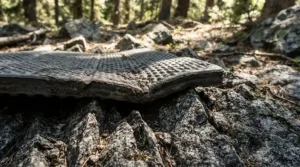
A foam camping pad for cold ground insulation works by trapping still air in tiny sealed bubbles, and still air is a poor conductor of heat. That’s why dense, thick foam resists heat loss better than thin foam.
Frozen ground behaves like a heat sink. It doesn’t care how warm you are, it just keeps pulling energy through whatever is between you and it. Conduction is the fastest route for that loss, which is exactly why a pad matters more than most people expect. Compressed bag insulation does almost nothing beneath you, so the pad carries the weight, literally and thermally.
A foam camping pad for cold ground insulation also handles two jobs air pads can’t. First, it doesn’t absorb water, so slush or condensation won’t ruin it. Second, it keeps its R-value over time unless it compresses or tears, whereas an air pad’s performance depends on staying inflated.
The weak spot? Thin foam. Thickness drives warmth, and most single foam pads are under an inch. That’s why stacking exists.
Ground Insulation by the Numbers: R-Values and Temperatures
Ground insulation is measurable, which is the good news. The ASTM F3340 standard defines how pads are tested, as SectionHiker explains in its R-value standard guide, and it lets you compare pads from different brands fairly. Pad makers that adopted it include Therm-a-Rest, NEMO, Exped, Sea to Summit, Big Agnes, Klymit, and ZenBivy.
R-values are additive. Put a 2.0 foam pad under a 4.0 insulated air pad and your ground insulation becomes roughly R 6.0. A rough guide from published charts:
| Total R-Value | Rough Use |
|---|---|
| Under 2 | Warm summer nights |
| 2-4 | Three-season camping |
| 4-5 | Winter-ready in most conditions |
| 5-6+ | True winter and snow |
Notice how one honest stack covers several ranges. A Therm-a-Rest Z Lite Sol (R 2.0) under an R 4.5 inflatable lands at about R 6.5. A Therm-a-Rest RidgeRest Solar (R 3.5) in the same role reaches about R 8.0. Treat temperature charts as starting points, since individual metabolism, sleeping bag warmth, and wind change real results. Also, sleeping bag temperature ratings assume you’re on a pad rated about R 5, so a weaker pad can make a good bag feel inadequate.
Cold-Weather Layering: Building the Pad Stack From the Ground Up
Cold-weather layering isn’t just for your torso. Your pads are layers too, and order matters.
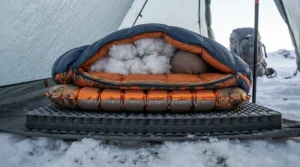
Start at the ground and work up. First, your tent floor or groundsheet. Second, optional extra foam for the shoulder zone, like a trimmed Ozark Trail Closed Cell Foam Pad. Third, your main foam sleeping pad for winter camping, such as the NEMO Switchback. Fourth, your insulated air pad. Fifth, your sleeping bag liner or bag.
Which goes on top, foam or air? Winter campers are split. Some put foam on the bottom because it protects the air pad from sharp objects and ice. Others put foam on top, since air pads can suffer from internal convection, and one source notes a puncture would drop the pad’s R-value significantly anyway. Both setups add R-value equally, as long as there’s no air gap between pads.
Cold-weather layering also applies to your body. Wear dry base layers, skip the damp daytime clothes, and add a hat and dry socks. Keep your pad system stable with a simple strap or non-slip groundsheet so it doesn’t wander overnight.
Your Sleeping System: How Pad, Bag, and Clothing Work Together
Your sleeping system is only as warm as its weakest link. A -10°F bag on a summer pad is a bad bet, because the ground will out-pull the bag. Treat bag, pad, and clothing as one machine.
Here’s a simple way to think about it. Your bag handles heat loss from above and the sides. Your pad handles heat loss below. Your clothing covers the gaps, which usually means hands, feet, head, and the outside of your hips. If any part underperforms, you’ll feel it there first.
When you’re shopping for a sleeping system, pad choice drives the most improvement per dollar. Moving from R 2 to R 5 on the ground side often feels like buying a whole new bag. A Therm-a-Rest Z Lite Sol under a modest air pad is one of the cheapest ways to do it.
Fill the system out with extras. A reflective sleeping bag liner, a hot water bottle (in a sealed, leak-proof bottle), and dry sleep socks all help. Keep tomorrow’s clothes dry by sleeping with them, not outside your bag. And remember that your sleeping system should be tested at home or in a safe, low-risk setting before you depend on it in a remote place.
Practical Usage Guide: Setup, Maintenance, and First-30-Day Mistakes
A good pad performs better when you treat it well. Here’s a simple routine.
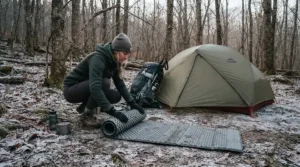
Setup. Clear sticks, ice chips, and sharp rocks from your tent footprint. Lay the foam sleeping pad for winter camping first, with the reflective side up if the pad has one, then place your air pad on top or below per your preference. Smooth out any gaps, since air spaces reduce the stacking benefit.
Daily care. Wipe off snow and dirt after each trip. Let the pad dry flat or loosely folded. Don’t store it compressed for months, since heavy compression can flatten foam and reduce thickness over time.
Packing. Accordion pads such as the Exped FlexMat Plus or NEMO Switchback strap to the outside of a pack. Rolled pads like the Therm-a-Rest RidgeRest SOLite can ride in a pack lid or along the sides.
Common first-30-day mistakes:
- Skipping a pad test at home before a cold trip.
- Letting the stack slide because there’s no anti-slip.
- Using a thin pad alone below freezing.
- Forgetting to carry a repair kit for the air pad.
The first two cause most failed first nights. Both are cheap to fix.

Real-World Scenarios: Three Winter Campers, Three Pad Plans
The budget weekender. Maya camps near the car a few times a winter with a 15°F bag. She has a cheap R 2 air mattress. Her best move is adding a Therm-a-Rest Z Lite Sol or even an Ozark Trail Closed Cell Foam Pad underneath, bringing her to about R 3.4 to 4. Not luxury, but a real step up for under $100 total.
The snowshoe backpacker. Dev covers six miles with a loaded pack and sleeps on snow. He needs warmth and low weight. A Therm-a-Rest RidgeRest Solar under an R 4.5 air pad gives him about R 8, plus a puncture-proof backup. The bulk strapped outside his pack is worth it.
The comfort-first side sleeper. Priya hates hard ground and gets cold hips. The Exped Flex 3R or Exped FlexMat Plus under her air pad adds cushioning and warmth, and the extra thickness reduces pressure on the hips. Together with a warm bag liner, she gets quieter, softer nights.
In all three cases, budget, environment, and frequency of use decide the answer, not brand loyalty. If you camp only once or twice a winter, the cheaper foam setup is the smarter spend. If you’re out every weekend, upgrading the air pad matters more.
Problem → Solution Guide: Cold Hips, Slipping Pads, and Condensation
Problem: cold hips and shoulders. The pressure points compress your bag and pad, so heat escapes fastest there. Solution: add a thicker foam layer, like the Exped FlexMat Plus, or a short torso-length extra pad under your hips.
Problem: pads slide apart overnight. Slick fabrics and smooth foam don’t grip. Solution: put a grippy groundsheet underneath, or tuck the pad edges into a bivy or footprint. Some campers use light straps.
Problem: moisture on the pad. Condensation forms when warm breath hits cold air. Solution: ventilate the tent slightly, and keep your bag dry. Closed-cell foam, like the NEMO Switchback, won’t absorb it, but your bag will if you let it.
Problem: a punctured air pad. Solution: this is the real reason foam is in your kit. Pull the foam under you, slide into your bag, and sleep. Carry a patch kit too.
Problem: bulky pack. Solution: strap the accordion pad outside, or trim a foam pad to torso length. The Ozark Trail Closed Cell Foam Pad cuts easily.
Common Mistakes When Buying a Foam Sleeping Pad for Winter Camping
Most buyers repeat the same few errors.
First, assuming one pad covers everything. It doesn’t, at least not alone below freezing. Second, trusting unstandardized R-values. Retailer pages often mix older and newer test numbers, so a pad with a “2.6” and a “2.0” listing may be the same product measured differently. Third, ignoring thickness. A 0.5-inch pad will never feel like a 1.5-inch pad.
Fourth, ignoring pack space. A foam pad that doesn’t fit your system will stay home. Fifth, forgetting that women and cold sleepers often benefit from an extra R-value of 1. And sixth, buying only on price. A cheap pad can be a smart secondary layer, but a bad sole pad.
If you’re deciding between a NEMO Switchback and a Therm-a-Rest Z Lite Sol, you’re comparing very close R-values, so choose on thickness feel and fold style. If you’re deciding between either and the Exped Flex 3R, you’re really deciding whether you want more warmth and cushion at a weight and bulk penalty.
Long-Term Cost and Durability: Why Foam Pays Off
Foam’s secret superpower is the lack of failure modes. There are no valves, seams, or air chambers to wear out. Closed-cell pads can last many seasons with ordinary care, though compression can gradually reduce their thickness.
Run the numbers on cost per year. A $55 pad used for five winters costs about $11 a season. An air pad that dies after a leak you can’t patch costs far more per night. That’s why many campers treat a foam pad as insurance, not just insulation.
Total cost of ownership also includes the weight you carry. Adding roughly 14 to 18 ounces to your pack is a modest trade for a ground insulation layer that never deflates. Over time, many winter campers decide the foam pad is the cheapest part of their sleep setup and the one least likely to disappoint them.
Safety Guide: Hypothermia, Frostbite, and Cold Ground
A better pad improves comfort, but it doesn’t remove risk. The CDC explains hypothermia and frostbite prevention for cold-weather activity, including the idea that hypothermia can strike even when it isn’t extremely cold, especially if you’re wet.
Warning signs include shivering, exhaustion, confusion, fumbling hands, and slurred speech. Constant shivering at night means your sleeping system is losing the battle, and it’s time to add insulation, eat something, and warm up. In an emergency, seek medical help promptly.
Practical habits help. Go with a buddy, carry an emergency kit, and tell someone your route. Keep a dry layer in reserve. And never rely on one pad when the forecast is dangerous, because stacking a foam sleeping pad for winter camping with an air pad adds a safety margin as well as warmth.
FAQ
❓ Can a foam sleeping pad alone handle winter camping?
❓ How many R-value points do I need on snow?
❓ Should the foam pad go on top of or under the air pad?
❓ Does a reflective coating really make a foam pad warmer?
❓ What's the best cheap foam pad for a winter stack?
Conclusion
A foam sleeping pad for winter camping isn’t glamorous, but it’s the most dependable insulation you can carry. The Therm-a-Rest Z Lite Sol and NEMO Switchback are the easy, balanced picks. The Exped FlexMat Plus and Exped Flex 3R are the comfort kings. The Therm-a-Rest RidgeRest Solar delivers the highest roll-up warmth, the Therm-a-Rest RidgeRest SOLite keeps weight low, and the Ozark Trail Closed Cell Foam Pad is the thrifty helper.
The big lesson is simple: build a stack, not a single hero pad. Combine foam with an insulated air pad, check ASTM-rated R-values, and match your total to the cold you expect. Then think of your whole sleeping system, from ground insulation to cold-weather layering, as one connected machine.
🏕️ Ready to sleep warm this winter?
❄️ Choose your foam layer, pair it with the right air pad, and head into the cold with confidence. Click through to check current pricing and availability on your favorite pick!
Recommended for You
- Foam Sleeping Pad For Ultralight Backpacking: 7 Proven Picks 2026
- Sleeping Bag For Teens Backpacking: 7 Best Picks (2026)
- Sleeping Bag For Scout Camping Kids: 7 Best Picks Compared (2026)
Disclaimer: This article contains affiliate links. As an Amazon Associate, I earn from qualifying purchases. If you purchase products through these links, we may earn a small commission at no additional cost to you.
✨ Found this helpful? Share it with your friends! 💬🤗
