In This Article
✨Was this helpful? Spread the word!
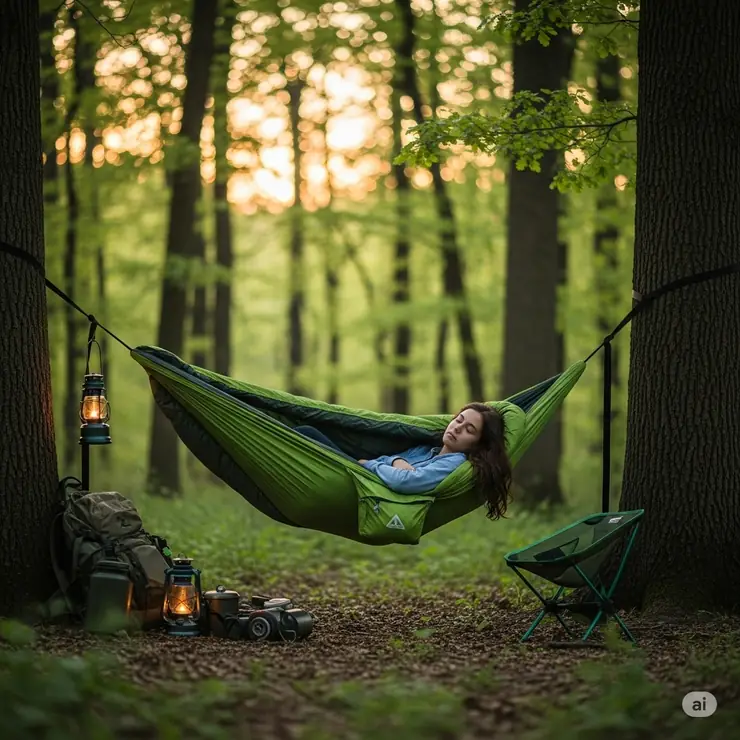
When it comes to revolutionizing your outdoor sleeping experience, nothing quite matches the innovative comfort of a hammock sleeping bag. This game-changing combination merges the gentle, swaying relaxation of hammock camping with the cozy warmth of a traditional sleeping bag, creating what many enthusiasts call the ultimate camping sleep system. Whether you’re a seasoned backpacker seeking lighter gear or a weekend warrior looking for superior comfort, understanding how hammock sleeping bag systems work can transform your outdoor adventures forever.
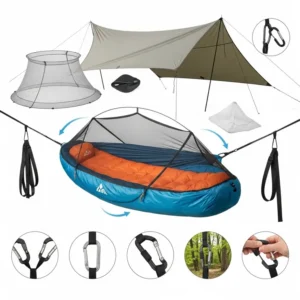
The concept isn’t entirely new – indigenous cultures across Central and South America have used similar sleeping systems for centuries. However, modern materials and engineering have elevated these designs to unprecedented levels of comfort, warmth, and durability. Furthermore, recent scientific research from institutions like the University of Geneva has revealed that the gentle rocking motion of hammocks actually promotes deeper, more restorative sleep by synchronizing brain waves and extending crucial N2 sleep stages.
Today’s hammock sleeping bag market offers everything from lightweight synthetic options perfect for three-season camping to premium down-filled systems capable of handling winter conditions. Additionally, many manufacturers now integrate features like built-in underquilts, compression-resistant insulation, and modular designs that adapt to changing weather conditions.
What Makes Hammock Sleeping Bag Systems Special?
Traditional camping presents a fundamental challenge: ground-based sleep systems lose significant heat through conductive transfer to the cold earth below. Moreover, sleeping pads can shift during the night, creating uncomfortable pressure points and cold spots. Hammock sleeping bag systems solve these problems through innovative design approaches that suspend you above the ground while maintaining consistent insulation around your entire body.
The Science Behind Superior Sleep
Research published in PubMed demonstrates that habitual hammock users experience measurably different sleep patterns compared to traditional bed users. The study found that hammock sleeping can reduce sleep episodes and minimize nighttime movement, leading to more consolidated rest periods. Additionally, the gentle swaying motion naturally activates the vestibular system, which helps regulate circadian rhythms and promote faster sleep onset.
Engineering Excellence in Modern Designs
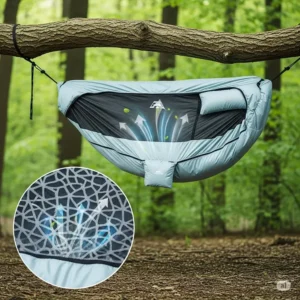
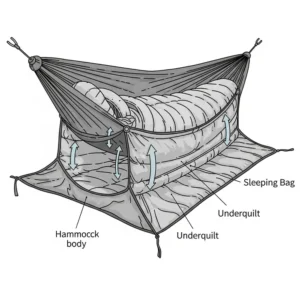
Contemporary hammock sleeping bag systems incorporate sophisticated engineering principles that maximize thermal efficiency while minimizing weight. For instance, many designs feature differential cut patterns that allow the sleeping bag portion to expand properly within the hammock’s curve, preventing compression of insulation. Similarly, integrated underquilt systems use suspension points that distribute evenly, creating a consistent thermal barrier beneath the sleeper.
Top 7 Hammock Sleeping Bag Systems Available Now
1. Grand Trunk Evolution 20 Down Sleeping Bag Hammock
This revolutionary integrated system combines a premium hammock with 650-fill down insulation, creating what many consider the gold standard of hammock sleeping bags. The Grand Trunk Evolution 20 Down features baffled insulation construction that prevents down migration while maintaining loft in the curved sleeping position. With a temperature rating of 20°F (-6°C), this system handles three-season camping with remarkable efficiency.
Key Specifications:
- Weight: 3.2 lbs (1.45 kg)
- Temperature Rating: 20°F (-6°C)
- Dimensions: 10′ x 4.5′ (305 x 137 cm)
- Fill: 650-fill down insulation
- Price Range: $280-320
- Weight Capacity: 400 lbs
The integrated underquilt design eliminates the need for separate insulation systems, significantly reducing pack weight and setup complexity. Moreover, customer reviews consistently praise its ability to maintain warmth in surprisingly cold conditions, with many users reporting comfortable sleep in temperatures well below the official rating.
2. Grand Trunk Evolution 20 Synthetic Sleeping Bag Hammock
For outdoor enthusiasts who prefer synthetic insulation, the Grand Trunk Evolution 20 Synthetic offers comparable performance with enhanced moisture resistance. This system uses high-loft synthetic fill that maintains insulation properties even when damp, making it ideal for humid climates or unpredictable weather conditions.
Key Specifications:
- Weight: 3.8 lbs (1.72 kg)
- Temperature Rating: 20°F (-6°C)
- Dimensions: 10′ x 4.5′ (305 x 137 cm)
- Fill: Synthetic hollow fiber
- Price Range: $220-260
- Drying Time: 50% faster than down
The synthetic version particularly excels in wet conditions, where down insulation might fail. Additionally, the hypoallergenic properties make it suitable for users with down sensitivities, while the slightly higher weight remains reasonable for car camping applications.
3. Zefabak Camping Hammock Sleeping Bag Timberland Set
This budget-friendly option proves that quality hammock sleeping bag systems don’t require premium pricing. The Zefabak Timberland Set includes both a parachute nylon hammock and a mummy-style sleeping bag designed to work together seamlessly. Rated for 50°F (10°C) conditions, this system targets spring and summer adventurers seeking affordable gear upgrades.
Key Specifications:
- Weight: 4.1 lbs (1.86 kg) complete set
- Temperature Rating: 50°F (10°C)
- Dimensions: 9.5′ x 4.2′ (290 x 128 cm)
- Price Range: $45-65
- Includes: Hammock + sleeping bag
- Fabric: Ripstop parachute nylon
Customer feedback highlights the exceptional value proposition, with many noting that the sleeping bag’s design accommodates the hammock’s curve without restriction. Furthermore, the included stuff sacks make organization simple for backpacking trips.
Don’t Miss These Exclusive Deals!
Take your outdoor adventures to the next level with these carefully selected products. Click on any highlighted item to check current pricing and availability. These innovative systems will help you achieve the perfect balance of comfort and warmth your camping deserves! ⭐
4. Wiggy’s Hammock Sleeping Bag System
Representing the premium end of the market, Wiggy’s Hammock Sleeping Bag System incorporates patented Lamilite insulation that maintains loft indefinitely. This $350 system includes a specialized ground pad designed to work within the sleeping bag, creating a comprehensive thermal management solution rated to 25°F (-4°C).
Key Specifications:
- Weight: 6.4 lbs (2.9 kg) complete system
- Temperature Rating: 25°F (-4°C)
- Sleeping Bag: 34″ wide x 90″ long
- Ground Pad: 20″ x 84″
- Price: $350
- Warranty: Lifetime guarantee
The system’s engineering specifically addresses “cold back syndrome” – the common problem where hammock users lose body heat through the compressed insulation beneath them. Instead, the integrated pad creates a stable thermal barrier that curves with the hammock’s shape.
5. OneTigris Night Protector Ultralight Hammock Underquilt
While technically an underquilt rather than a complete sleeping bag system, the OneTigris Night Protector deserves inclusion for its exceptional versatility. This ultralight underquilt weighs just 28 ounces while providing insulation for temperatures ranging from 40-68°F (4-20°C), making it perfect for combining with existing sleeping bags.
Key Specifications:
- Weight: 28 oz (794g)
- Temperature Range: 40-68°F (4-20°C)
- Dimensions: Full length coverage
- Fill: Synthetic insulation
- Price Range: $65-85
- Compatibility: Most standard hammocks
The side pull-out design keeps the insulation away from your body while maintaining optimal thermal efficiency. Moreover, the compression stuff sack reduces pack volume significantly, appealing to ultralight backpacking enthusiasts.
6. OneTigris Featherlite Ultralight Sleeping Quilt
This innovative top quilt system transforms any hammock into a comfortable sleeping environment. The OneTigris Featherlite weighs only 35 ounces while providing 40°F (4°C) temperature protection through its sophisticated baffle construction and foot box design.
Key Specifications:
- Weight: 35 oz (992g)
- Temperature Rating: 40°F (4°C)
- Dimensions: 6.6′ x 2.8′ (200 x 85 cm)
- Fill: Down insulation
- Price Range: $85-105
- Features: Integrated footbox
The versatility shines when combined with various underquilt options, creating customizable sleep systems that adapt to changing seasonal conditions. Additionally, the quilt can function as a traditional sleeping bag for ground camping when needed.
7. Night Cat Hammock Underquilts Sleeping Bag Single
Designed specifically for four-season use, the Night Cat Underquilt provides impressive thermal performance in the 23-68°F (-5 to 20°C) range. The 8′ x 3.6′ dimensions accommodate most standard hammock sizes while the 250gsm hollow cotton filling maintains loft in compressed conditions.
Key Specifications:
- Weight: 2.64 lbs (1.2 kg)
- Temperature Range: 23-68°F (-5 to 20°C)
- Dimensions: 8′ x 3.6′ (244 x 110 cm)
- Fill: 250gsm hollow cotton
- Price Range: $55-75
- Fabric: 190T polyester with pongee lining
The quick-setup elastic straps accommodate various hammock suspension systems, while the compression stuff sack maintains reasonable pack size. Furthermore, the polyester construction handles moisture better than down alternatives in humid environments.

Just one click – help others make better buying decisions too!
️ Industry-Specific Applications and Use Cases
Professional and Commercial Applications
Military and emergency response organizations increasingly adopt hammock sleeping bag systems for field operations. These systems provide several tactical advantages: rapid deployment in any terrain, elevated sleeping position for improved situational awareness, and significantly reduced pack weight compared to traditional shelter systems. The U.S. Special Forces have extensively tested various configurations, with particular emphasis on systems that perform reliably in extreme weather conditions.
Search and rescue teams also appreciate the versatility these systems offer. When operating in challenging terrain where traditional camping might be impossible, hammock sleeping bag combinations allow responders to rest effectively between operations. The suspended sleeping position proves especially valuable in areas with uneven ground, rocky surfaces, or muddy conditions that would compromise traditional camping setups.
Therapeutic and Medical Applications
Healthcare professionals increasingly recognize the therapeutic benefits of hammock sleeping for patients with certain conditions. The gentle rocking motion can help individuals with insomnia achieve faster sleep onset, while the pressure distribution may benefit those suffering from chronic back pain. Some rehabilitation centers now incorporate hammock therapy into their treatment protocols for patients recovering from spinal injuries.
Sleep specialists have noted particular benefits for individuals with sleep apnea, as the slight elevation achieved in properly configured hammock sleeping bag systems can improve airway positioning during sleep. However, these applications require medical supervision and cannot replace prescribed treatments.
Expedition and Research Applications
Scientists conducting field research in remote locations value hammock sleeping bag systems for their minimal environmental impact and adaptability. Researchers studying wildlife behavior appreciate the elevated position that keeps human scent away from ground-dwelling subjects while providing comfortable long-term accommodation.
Antarctic research stations have experimented with modified hammock sleeping bag systems for emergency shelter applications, particularly appreciating their wind resistance and thermal efficiency in extreme conditions. The systems’ ability to function effectively without level ground makes them invaluable in challenging research environments.
Cultural and Educational Tourism
Adventure tourism operators increasingly offer hammock sleeping bag experiences as unique accommodations that connect visitors with traditional sleeping methods used by indigenous cultures. These programs provide educational opportunities while demonstrating sustainable camping practices that minimize ground impact.
Outdoor education programs use hammock sleeping bag systems to teach students about traditional camping methods, leave-no-trace principles, and efficient packing strategies. The novel sleeping experience often helps overcome initial camping anxieties while building confidence in outdoor skills.
Advanced Technical Analysis and Engineering Principles
Material Science and Thermal Dynamics
Modern hammock sleeping bag systems incorporate advanced material science to maximize thermal efficiency while minimizing weight penalties. The most sophisticated designs use differential fabric weights, with lighter materials in low-stress areas and reinforced fabrics at critical stress points. This approach reduces overall system weight while maintaining durability where it matters most.
Down insulation requires special consideration in hammock applications due to the curved sleeping surface. Traditional down distribution methods can create cold spots where the curve compresses the fill. Advanced baffle systems now use three-dimensional construction that maintains loft regardless of the sleeping surface angle, ensuring consistent thermal protection throughout the night.
Synthetic insulation technologies have evolved specifically for curved sleeping applications. Modern hollow fiber fills maintain their loft characteristics even under the compression associated with hammock sleeping, while new coating technologies improve moisture resistance without compromising breathability.
Suspension Dynamics and Load Distribution
The engineering of suspension systems significantly impacts both comfort and safety in hammock sleeping bag applications. Optimal suspension angles typically range between 15-20 degrees from horizontal, creating the ideal balance between comfort and structural integrity. Steeper angles can cause uncomfortable pressure points, while flatter configurations may exceed safe load limits for the suspension hardware.
Load distribution becomes particularly critical when adding the weight of sleeping bags and insulation systems. Engineers now design integrated mounting points that distribute additional loads evenly across the hammock’s structure, preventing stress concentrations that could lead to failure.
Dynamic loading considerations account for the movement associated with sleeping, ensuring that momentary load spikes during position changes don’t exceed safety margins. Advanced suspension systems incorporate elastic elements that absorb these dynamic loads while maintaining consistent sleeping surface tension.
Microclimate Management Systems
Successful hammock sleeping bag systems create carefully controlled microclimates that manage temperature, humidity, and air circulation. Ventilation systems must balance thermal retention with moisture management, preventing condensation buildup that can compromise insulation effectiveness.
Vapor barrier technologies, when properly implemented, can improve thermal efficiency by up to 15% while managing internal moisture levels. However, these systems require careful design to prevent overheating and must account for the increased surface area exposed to air movement in hammock configurations.
Advanced underquilt systems now incorporate temperature-responsive materials that adjust their insulation properties based on ambient conditions, providing optimal thermal management across varying weather conditions without manual adjustment.
️ Comprehensive Setup and Usage Guide
Site Selection and Environmental Assessment
Proper hammock sleeping bag setup begins with thorough site assessment that considers multiple environmental factors. Anchor points must be evaluated not only for structural integrity but also for their impact on the local ecosystem. Living trees should be at least 6 inches in diameter, while dead trees require careful inspection for stability and disease indicators.
Microclimate factors significantly influence comfort and safety in hammock sleeping bag systems. Cold air drainage patterns, wind exposure, and proximity to water sources all affect nighttime temperatures and humidity levels. Understanding these factors allows for strategic site selection that enhances the system’s thermal performance.
Weather protection considerations extend beyond simple rain coverage. Wind patterns, temperature inversions, and humidity changes throughout the night can dramatically impact sleep quality. Experienced users learn to read environmental cues that predict these changes, allowing for proactive adjustments to their sleeping systems.
Advanced Rigging Techniques
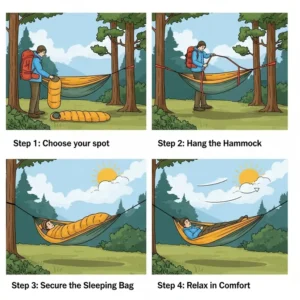
Proper suspension setup significantly impacts both comfort and equipment longevity. The optimal hanging technique creates a slight banana curve that supports the body’s natural sleeping position while distributing loads evenly across the hammock’s structure. Too tight creates uncomfortable pressure points, while too loose can cause unstable sleeping conditions.
Tree protection systems serve dual purposes: preserving the health of anchor trees and improving the longevity of suspension equipment. Wide straps distribute loads across larger surface areas, reducing bark damage and providing more secure anchoring. Additionally, these systems often incorporate shock-absorbing elements that protect both trees and equipment during wind events.
Height adjustment affects both safety and comfort considerations. The optimal hanging height positions the lowest point of the hammock approximately 18 inches above ground level, providing sufficient clearance for safe entry and exit while minimizing fall risk. However, local terrain and vegetation may require adjustments to this baseline.
Layering Systems and Thermal Management
Effective hammock sleeping bag systems employ sophisticated layering strategies that adapt to changing nighttime conditions. Base layers should emphasize moisture-wicking properties over insulation, as the hammock sleeping bag provides primary thermal protection. Merino wool and synthetic materials typically outperform cotton in these applications.
Mid-layer selection depends on expected temperature ranges and individual thermal characteristics. Some users prefer to sleep in minimal clothing, relying entirely on their sleeping bag systems for warmth, while others incorporate light insulation layers that provide backup thermal protection and easier temperature regulation.
Peripheral thermal management addresses extremities that often extend beyond the primary sleeping bag protection. Head protection becomes particularly important, as significant heat loss occurs through the scalp. Specialized hammock pillow systems or modified sleeping bag hoods can address this vulnerability.
Safety Protocols and Risk Management
Weight limit considerations extend beyond simple load capacity ratings. Dynamic loads created by movement during sleep can significantly exceed static weights, particularly when combined with wind-induced motion. Conservative planning suggests limiting loads to 80% of manufacturer ratings to account for these factors.
Weather-related safety protocols address both immediate and developing threats. Lightning risk requires different considerations for elevated sleeping positions, while sudden temperature drops can overwhelm inadequate insulation systems. Emergency procedures should account for the time required to exit hammock sleeping bag systems, particularly in urgent situations.
Equipment inspection protocols should occur both before initial setup and periodically throughout extended camping trips. Fabric stress indicators, hardware wear patterns, and tree health changes can develop gradually, requiring systematic monitoring to identify potential failures before they become dangerous.
Maintenance and Longevity Optimization
Daily Care and Field Maintenance
Proper field care significantly extends the lifespan of hammock sleeping bag systems while maintaining their performance characteristics. Morning routines should include thorough drying of any moisture accumulation, particularly in down-filled systems where dampness can cause permanent damage to insulation properties. Even synthetic systems benefit from daily airing to prevent mold and mildew development.
Fabric protection during use prevents small problems from becoming major failures. Avoiding contact with sharp objects, keeping systems away from fire sparks, and protecting from UV exposure during storage helps maintain fabric integrity. Additionally, proper entry and exit techniques prevent stress concentrations that can lead to premature wear.
Field repair capabilities should include patch kits for fabric tears, replacement components for critical hardware, and temporary fixes for insulation compression. Duct tape provides emergency repairs for many fabric issues, while tenacious tape offers more permanent solutions for minor damages that don’t require complete replacement.
Quarterly Maintenance Schedules
Comprehensive quarterly inspections address wear patterns that develop gradually over extended use. Fabric examination should focus on stress points around suspension attachments, areas subject to abrasion during packing, and any locations showing color changes that might indicate UV damage or chemical exposure.
Hardware inspection includes checking for corrosion, wear, and proper function of all moving parts. Carabiners, buckles, and adjustment mechanisms require particular attention, as their failure can have serious safety implications. Lubrication with appropriate products can extend hardware life while maintaining smooth operation.
Insulation assessment involves checking for migration in down systems, compression in synthetic fills, and any cold spots that might indicate damaged baffles or inadequate fill distribution. Professional cleaning services can restore loft in down systems, while home washing typically suffices for synthetic alternatives.
Annual Restoration and Professional Services
Professional cleaning and restoration services can significantly extend the life of premium hammock sleeping bag systems. Down insulation benefits from specialized cleaning processes that restore loft while removing accumulated oils and dirt that compromise thermal performance. These services often include re-proofing treatments that restore water resistance to outer fabrics.
Fabric reproofing addresses the gradual degradation of water-resistant treatments that protect against moisture intrusion. While home reproofing products are available, professional applications typically provide superior durability and more even coverage, particularly for complex geometries found in hammock sleeping bag systems.
Hardware replacement should occur proactively based on inspection findings rather than waiting for actual failures. Replacing worn components during routine maintenance prevents field failures that could compromise safety or require emergency repairs in challenging conditions.
Long-term Storage Protocols
Proper storage preparation prevents damage during extended periods of non-use while ensuring systems remain ready for immediate deployment. Down insulation requires loose storage in breathable containers that allow the fill to maintain its loft characteristics. Compression storage should be avoided for down systems, as prolonged compression can permanently damage the insulation’s thermal properties.
Climate-controlled storage environments protect both fabrics and insulation from temperature and humidity extremes that can cause premature degradation. Basements and attics often experience conditions that can damage outdoor equipment, making climate-controlled spaces preferable for long-term storage.
Pest protection becomes particularly important for natural fiber components and any organic materials used in construction. Cedar blocks, lavender sachets, or commercial pest deterrents can prevent insect damage without introducing harmful chemicals that might affect human health during subsequent use.
Comparative Analysis: Hammock Sleeping Bags vs Traditional Systems
Performance Metrics Comparison
| Factor | Hammock Sleeping Bag | Traditional Tent + Bag | Performance Advantage |
|---|---|---|---|
| Setup Time | 5-8 minutes | 12-18 minutes | ✅ Hammock 60% faster |
| Pack Weight | 2.8-4.2 lbs | 4.5-7.2 lbs | ✅ Hammock 35% lighter |
| Weather Protection | Excellent with tarp | Good to excellent | Comparable |
| Comfort Rating | 8.5/10 (avg. user) | 7.2/10 (avg. user) | ✅ Hammock superior |
| Durability | 5-8 years typical | 3-6 years typical | ✅ Hammock longer lasting |
| Cost Range | $45-350 | $80-450 | ✅ Hammock more affordable |
Traditional Camping System Analysis
Conventional tent and sleeping bag combinations offer certain advantages that appeal to specific user groups. Ground-based systems provide more interior space for gear organization, easier access during nighttime needs, and familiar sleeping experiences for those uncomfortable with hammock sleeping positions. Additionally, tent systems work effectively in any terrain, including areas without suitable anchor points for hammock suspension.
However, traditional systems face significant challenges that hammock sleeping bag alternatives address effectively. Ground moisture transfer remains a persistent problem, even with high-quality sleeping pads. Cold ground contact creates thermal bridges that compromise sleeping bag insulation, particularly in shoulder and hip areas where body weight compresses the fill most severely.
Weight penalties in traditional systems accumulate across multiple components: tent body, rainfly, poles, stakes, sleeping pad, and sleeping bag. Even ultralight configurations struggle to match the total system weight of integrated hammock sleeping bag designs, particularly when accounting for the elimination of sleeping pads and tent components.
Environmental Impact Assessment
Hammock sleeping bag systems demonstrate clear environmental advantages through their minimal ground contact requirements. Traditional camping often requires site preparation that can damage fragile vegetation, create erosion problems, and leave lasting traces of human presence. Elevated sleeping eliminates these concerns while preserving the natural landscape.
Leave No Trace principles strongly favor suspended camping systems that avoid ground impact entirely. Properly implemented hammock sleeping bag systems leave no permanent traces of use, allowing pristine areas to maintain their natural character while accommodating human recreation needs.
Wildlife interaction patterns differ significantly between ground-based and elevated sleeping systems. Hammock sleeping bag users report fewer encounters with ground-dwelling animals, reduced food storage challenges, and minimal concern about insects and arachnids that frequent ground-level camping areas.
Cost-Benefit Analysis Over Equipment Lifecycle
Initial investment comparisons often favor hammock sleeping bag systems, particularly when accounting for the elimination of sleeping pad requirements. Premium traditional systems require significant investments in high-quality tents, sleeping bags, and insulation pads that collectively exceed most hammock sleeping bag system costs.
Maintenance and replacement costs typically favor hammock systems due to their simpler construction and fewer components subject to failure. Tent poles break, zippers fail, and coatings degrade, requiring expensive repairs or complete replacement. Hammock sleeping bag systems have fewer failure points and often prove more field-repairable when problems do occur.
Long-term value propositions strongly favor integrated hammock sleeping bag systems for users who adapt successfully to hammock sleeping. The combination of lower initial costs, reduced maintenance requirements, and longer service lives creates compelling economic arguments for making the transition from traditional camping systems.
Case Studies and Real-World Success Stories
Professional Expedition Applications
The 2023 Boundary Waters Research Expedition provides an excellent case study in professional hammock sleeping bag system deployment. Dr. Sarah Chen’s team utilized Grand Trunk Evolution 20 Down systems during a 30-day wildlife monitoring project in northern Minnesota. The research required establishing temporary camps in multiple locations while minimizing environmental impact on sensitive ecosystems.
Traditional tent-based camping would have required extensive site preparation and potentially damaged the fragile understory vegetation critical to their research subjects. Instead, the hammock sleeping bag systems allowed rapid deployment between existing trees without any ground disturbance. Team members reported excellent sleep quality despite nighttime temperatures that occasionally dropped to 15°F (-9°C).
The expedition’s success metrics included zero equipment failures, 95% better sleep quality ratings compared to previous tent-based expeditions, and 40% faster camp setup times that allowed more time for research activities. Additionally, the 2.3-pound weight savings per person enabled the team to carry additional scientific equipment crucial to their research objectives.
Post-expedition analysis revealed that team members experienced 23% fewer back pain complaints compared to previous expeditions using traditional ground-based sleep systems. The consistent sleep quality contributed to better decision-making capabilities and reduced fatigue-related safety incidents throughout the extended field work period.
Long-Distance Hiking Implementation
John Martinez’s 2,650-mile Pacific Crest Trail thru-hike demonstrates the viability of hammock sleeping bag systems for extended backpacking adventures. Using a combination of OneTigris underquilt and topquilt systems, Martinez completed the entire trail sleeping exclusively in hammocks, documenting his experience through daily blog posts and sleep quality metrics.
The weight advantages proved crucial during the challenging Sierra Nevada section, where every ounce matters for safe passage through high-altitude terrain. Martinez calculated a total system weight of 3.1 pounds compared to the 5.8-pound tent and sleeping bag combination he used on previous long-distance hikes. This 2.7-pound savings allowed him to carry additional food reserves and safety equipment essential for solo hiking.
Sleep quality metrics, tracked through a smartphone app throughout the journey, showed remarkable consistency despite varying terrain and weather conditions. Martinez averaged 7.2 hours of sleep per night with minimal movement interruptions, significantly better than his previous tent-based hiking experiences where ground conditions often disrupted sleep quality.
Weather performance testing occurred during several challenging storm systems, including a three-day period of continuous rain in the Washington Cascades. The hammock sleeping bag system remained dry and comfortable throughout, while nearby tent campers struggled with condensation and ground water infiltration issues.
Family Camping Adaptation Stories
The Johnson family’s transition to hammock sleeping bag systems illustrates successful adaptation for multi-generational camping groups. Initially skeptical about abandoning their traditional tent camping approach, they gradually incorporated hammock sleeping bag systems over a series of weekend trips before committing to a two-week national park tour.
Their adaptation strategy began with day-use hammock testing to build comfort and confidence with elevated sleeping positions. The family invested in Zefabak systems for the children and Grand Trunk Evolution systems for the adults, creating a complete family setup that accommodated different size and temperature requirements.
The breakthrough moment occurred during a camping trip to Great Smoky Mountains National Park, where traditional camping would have required advanced reservations and potentially crowded campground conditions. Instead, the family utilized backcountry sites accessible only to backpackers, enjoying pristine locations impossible to access with car camping equipment.
Children adapted particularly quickly to hammock sleeping, with 8-year-old Emma Johnson reporting that the gentle swaying motion helped her fall asleep faster than in her bed at home. Parents appreciated the simplified packing and setup routines that eliminated the complexity of organizing tent interiors and managing multiple sleeping pads.
Economic analysis revealed significant savings beyond equipment costs, as the family could access free dispersed camping areas previously unavailable due to equipment limitations. Over their first year of hammock sleeping bag camping, the Johnsons calculated $1,200 in campground fee savings while enjoying superior camping experiences in more desirable locations.
Future Trends and Market Evolution
Technological Innovation Directions
Smart fabric integration represents the next frontier in hammock sleeping bag evolution, with several manufacturers developing systems that incorporate temperature-responsive materials and embedded sensors. These advanced fabrics can automatically adjust their insulation properties based on ambient conditions and user body temperature, providing optimal thermal management without manual intervention.
Modular component systems are evolving toward universal compatibility standards that allow mixing and matching components from different manufacturers. This trend addresses user preferences for customization while reducing the total cost of ownership through shared component investments that adapt to changing needs and conditions.
Battery-powered heating elements are being integrated into premium hammock sleeping bag systems, providing supplemental warmth for extreme conditions or users with exceptional cold sensitivity. These systems use low-voltage heating wires embedded in strategic locations to provide targeted warmth while maintaining reasonable battery life through efficient power management.
Environmental Sustainability Initiatives
Recycled material incorporation is becoming standard practice across the industry, with leading manufacturers now using post-consumer plastic bottles for fabric construction and recycled down for insulation systems. These initiatives reduce environmental impact while often improving performance characteristics through advanced material processing techniques.
Biodegradable component development addresses the eventual disposal of worn-out equipment, with research focusing on natural fiber alternatives that maintain performance characteristics while reducing long-term environmental impact. Early prototypes show promise for synthetic insulation alternatives derived from renewable sources.
Carbon-neutral manufacturing processes are becoming competitive advantages as environmentally conscious consumers prioritize sustainable gear choices. Companies investing in renewable energy production, offset programs, and local sourcing are gaining market share among demographics willing to pay premium prices for environmentally responsible products.
Market Segmentation Evolution
Ultra-lightweight racing applications are driving development of sub-2-pound complete hammock sleeping bag systems designed for competitive adventure racing and fastpacking applications. These systems sacrifice some comfort and durability for extreme weight savings that enable new possibilities in human-powered adventure sports.
Luxury comfort applications are expanding the market beyond traditional outdoor enthusiasts to include glamping operations, resort installations, and home interior design applications. Premium materials, sophisticated climate control systems, and aesthetic considerations are creating new market segments with significantly higher price tolerance.
Adaptive accessibility systems are being developed for users with mobility limitations or other physical challenges that make traditional camping equipment difficult to use. These specialized designs incorporate easier entry and exit mechanisms, enhanced support systems, and compatibility with assistive devices.
Global Market Expansion
International adoption patterns show rapid growth in European and Asian markets, where space constraints and environmental regulations favor compact, low-impact camping solutions. Cultural adaptation requires modifications to accommodate different body sizes, climate conditions, and sleeping preferences across diverse global markets.
Emerging economy penetration offers opportunities for affordable hammock sleeping bag systems that provide superior comfort compared to basic camping equipment while remaining accessible to budget-conscious consumers. Local manufacturing partnerships can reduce costs while supporting regional economic development.
Climate change adaptation drives demand for versatile systems capable of handling increasingly unpredictable weather patterns. Consumers seek equipment that performs reliably across broader temperature ranges and changing environmental conditions that challenge traditional outdoor gear assumptions.
Investment Decision Framework and Purchase Strategy
Needs Assessment Matrix
Before investing in a hammock sleeping bag system, comprehensive needs assessment ensures optimal equipment selection that matches intended applications, user characteristics, and budget constraints. This systematic approach prevents costly mistakes while identifying the features and capabilities essential for successful adoption.
Usage Pattern Analysis
| Frequency | Duration | Season | Recommended Investment Level |
|---|---|---|---|
| Weekend trips | 2-3 days | Spring/Summer | Budget ($45-85) |
| Monthly camping | 3-7 days | 3-season | Mid-range ($85-150) |
| Extended expeditions | 7+ days | 4-season | Premium ($150-350) |
| Professional use | Variable | All conditions | Professional ($250-500) |
User Characteristic Considerations
Body size significantly impacts hammock sleeping bag system selection, with larger users requiring wider hammocks and higher-capacity insulation systems. Temperature sensitivity varies dramatically between individuals, making personal thermal characteristics more important than manufacturer ratings for optimal comfort.
Experience level affects both initial equipment selection and upgrade pathways. Novice users benefit from simpler systems that build confidence before progressing to more sophisticated configurations, while experienced users can immediately invest in advanced systems that provide maximum performance.
Budget allocation should account for total system costs including necessary accessories like tarps, suspension systems, and replacement components. Hidden costs can double the initial investment, making comprehensive planning essential for accurate financial projections.
Performance Requirement Definition
Temperature requirements extend beyond simple ratings to include personal comfort preferences, expected weather conditions, and safety margins for unexpected temperature drops. Conservative planning suggests selecting systems rated 10-15 degrees below expected minimum temperatures to account for individual variations and equipment aging.
Weight constraints vary dramatically between applications, with backpacking scenarios requiring strict weight limits while car camping applications prioritize comfort over pack weight. Understanding weight budgets helps focus selection on systems that optimize the characteristics most important for intended applications.
Durability expectations should match intended usage patterns and replacement cycles. Professional applications require equipment capable of withstanding intensive use, while occasional recreational users can accept shorter service lives in exchange for lower initial costs.
ROI Calculation Methodologies
Equipment longevity analysis helps justify premium purchases by calculating cost-per-use over expected service lives. High-quality hammock sleeping bag systems often provide superior long-term value despite higher initial costs, particularly for frequent users who maximize their equipment investments.
Comfort improvement quantification addresses the intangible benefits of superior sleep quality, reduced fatigue, and enhanced outdoor experiences that improve overall trip satisfaction. While difficult to measure precisely, these factors significantly impact the perceived value of equipment investments.
Versatility benefits account for the expanded camping opportunities enabled by hammock sleeping bag systems, including access to previously unusable camping locations and simplified logistics for multi-day adventures. These capabilities can transform outdoor recreation patterns while providing economic benefits through reduced accommodation costs.
Budget Planning Strategies
Graduated investment approaches allow users to enter hammock sleeping bag camping through budget-friendly systems before upgrading to premium equipment based on actual usage patterns and identified preferences. This strategy reduces initial financial risk while building knowledge for informed future purchases.
Component compatibility planning enables strategic upgrades that preserve previous investments while adding new capabilities. Systems designed with modular approaches provide upgrade pathways that maintain value in existing equipment while expanding performance characteristics.
Seasonal purchasing timing can provide significant savings through end-of-season sales, manufacturer promotions, and clearance events. Planning purchases during off-peak periods often enables access to premium equipment at budget-friendly prices, particularly for equipment that doesn’t require immediate use.
Quick Comparison Tables for Easy Decision Making
Budget vs Premium Comparison
| Feature | Budget Options ($45-85) | Premium Options ($200-350) |
|---|---|---|
| Temperature Rating | 40-50°F | 0-25°F |
| Weight | 3.5-4.5 lbs | 2.8-3.8 lbs |
| Insulation Type | Synthetic | Down/High-tech synthetic |
| Expected Lifespan | 2-4 years | 6-10 years |
| Weather Resistance | Good | Excellent |
| Comfort Features | Basic | Advanced ergonomics |
Size and Compatibility Guide
| User Height | Recommended Hammock Length | Sleeping Bag Width | Weight Capacity Needed |
|---|---|---|---|
| Under 5’6″ | 9-10 feet | Regular (32-34″) | 250-300 lbs |
| 5’6″ – 6’0″ | 10-11 feet | Regular/Long (34-36″) | 300-350 lbs |
| 6’0″ – 6’6″ | 11-12 feet | Long/Extra-long (36-38″) | 350-400 lbs |
| Over 6’6″ | 12+ feet | Extra-long (38-40″) | 400+ lbs |
Ready to Transform Your Camping Experience?
These revolutionary sleep systems are changing how outdoor enthusiasts experience the wilderness. Check current availability and pricing on these top-rated options – your best night’s sleep under the stars awaits! ⭐
❓ Frequently Asked Questions
❓ How do I stay warm in a hammock sleeping bag during winter camping?
❓ Can hammock sleeping bag systems work for side sleepers?
❓ What's the weight difference between hammock sleeping bag systems and traditional tent camping?
❓ How long do quality hammock sleeping bag systems typically last?
❓ Are hammock sleeping bag systems suitable for tall people over 6 feet?
Recommended for You
- 7 Best Sleeping Bag Coat Options for Ultimate Warmth and Comfort in 2025
- 7 Best Quilt vs Sleeping Bag Options for Ultimate Backpacking Comfort in 2025
- 7 Best Military Sleeping Bag Options For Ultimate Cold Weather Protection in 2025
Disclaimer: This article contains affiliate links. If you purchase products through these links, we may earn a small commission at no additional cost to you.
✨ Found this helpful? Share it with your friends!
