
In This Article
Picture this: You’re cruising down the highway at 65 mph with your brand-new camper nestled in your truck bed. Suddenly, you feel an unsettling wobble. Your heart races as you realize your tie-downs might not be doing their job. Sound terrifying? It should be, because improper camper securing is one of the leading causes of RV accidents on American roads.
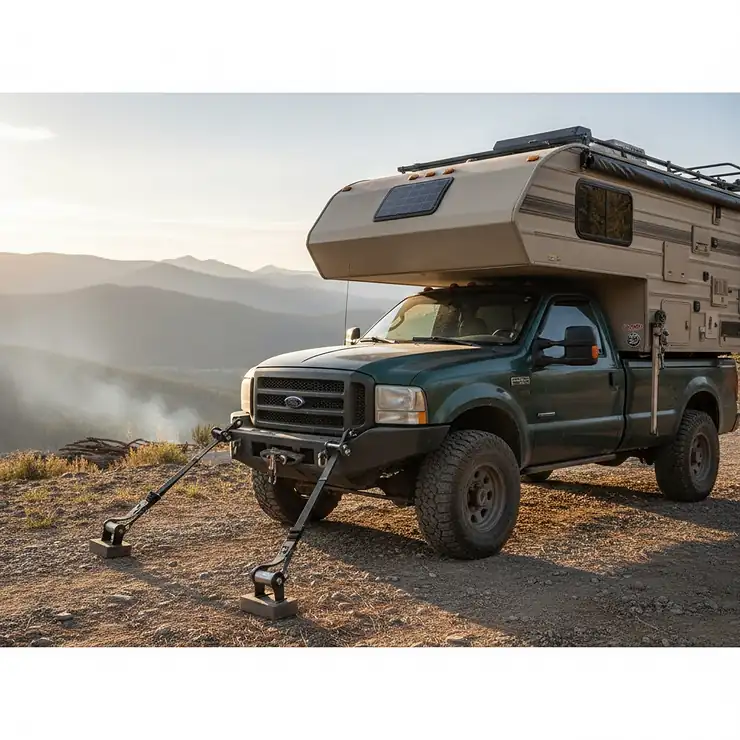
The truck camper tie downs you choose aren’t just accessories—they’re the critical safety system keeping thousands of pounds of equipment exactly where it belongs. With over 75,000 RV-related hospitalizations occurring annually in the United States, according to insurance industry reports, the stakes couldn’t be higher. Your tie-down system is the invisible hero preventing catastrophic failures, protecting your investment, and most importantly, keeping you and your loved ones safe.
Whether you’re a weekend warrior or a full-time nomad, understanding what makes an exceptional tie-down system can mean the difference between worry-free adventures and roadside disasters. In this comprehensive guide, I’ll walk you through everything from budget-friendly clamp-on systems to premium frame-mounted solutions that professional RVers swear by. You’ll discover which products actually deliver on their promises, what installation pitfalls to avoid, and how to maximize the lifespan of your investment.
Quick Comparison Table
| Product | Type | Material | Price Range | Best For |
|---|---|---|---|---|
| AIYOTAR Truck Camper Tie Downs | Clamp-on | 10mm Steel | $60-$80 | Budget-conscious buyers |
| Torklift Frame Mounted System | Frame-mounted | Steel | $850-$900 | Premium stability seekers |
| HappiJac Qwik-Load Turnbuckles | Turnbuckle | Stainless Steel | $180-$220 | Easy installation preference |
| KUAFU 4-Pack Tie Downs | Bed-mounted | Powder-Coated Steel | $70-$95 | Full-size pickup owners |
| Mepareri 4-Piece Set | Clamp-on | High-Quality Steel | $65-$85 | No-drill installations |
| BROPHY TDSF Stake Mount | Stake pocket | Powder-Coated | $45-$60 | Light to mid-weight campers |
| HappiJac Standard Turnbuckle Set | Replacement | Zinc-Coated Steel | $120-$150 | System upgrades |
💬 Just one click – help others make better buying decisions too!😊
Top 7 Truck Camper Tie Downs: Expert Analysis
1. AIYOTAR Truck Camper Tie Downs – Best Overall Value
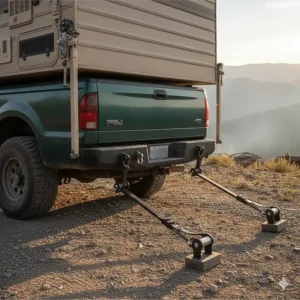
When it comes to balancing affordability with genuine performance, AIYOTAR Truck Camper Tie Downs stand out from the crowded marketplace. This 4-pack system has earned its reputation through thousands of successful installations across the country, and for good reason.
Key Specifications:
- Material: 10mm thick structural steel with black powder coating
- Design: Full clamp-on system (no drilling required)
- Compatibility: Most full-size non-dual pickup trucks
- Includes: 16 neoprene protective pads, all mounting hardware
Customers consistently praise the threaded rod design that creates exceptional contact with the truck bed interior. The wide clamps distribute pressure evenly, which experienced RVers know is crucial for long-term reliability. One user noted that after a 3,000-mile cross-country trip, the system showed zero signs of loosening or wear.
The powder-coated finish isn’t just for looks—it provides genuine protection against the elements. Whether you’re dealing with coastal salt spray or mountain snow, this coating holds up remarkably well.
✅ Pros:
- No drilling means reversible installation
- 16 neoprene pads protect truck finish
- Superior holding strength for the price point
❌ Cons:
- Not compatible with drop-in bed liners
- External bed rail width cannot exceed 5.5 inches
Price Range: $60-$80
2. Torklift Frame Mounted Tie Down System – Premium Choice
For those who refuse to compromise on safety, Torklift Frame Mounted Tie Down System represents the gold standard in camper truck tie downs. This isn’t just marketing hype—Torklift’s patented design has been protecting campers for decades with their legendary lifetime warranty.
Key Specifications:
- Mounting: Direct-to-frame (4 independent tie-down points)
- Construction: American-made steel
- Compatibility: Vehicle-specific models available
- Installation: No-drill on most applications
The genius of Torklift’s system lies in its engineering. Unlike universal systems, each model is specifically designed for particular truck makes and models, ensuring perfect fit and maximum strength. The removable inserts mean the system virtually disappears when not in use—no loss of ground clearance, no visual clutter.
Real-world testing shows these systems can handle even the heaviest slide-in campers without breaking a sweat. Professional RV technicians often recommend Torklift as the only system they trust for extended overland adventures.
✅ Pros:
- Legendary lifetime warranty
- Frame-mounting provides maximum stability
- Hidden design when not in use
❌ Cons:
- Higher price point ($850-$900 for complete front/rear set)
- Vehicle-specific fitment requires careful selection
Price Range: $850-$900 (complete set)
3. HappiJac Qwik-Load Turnbuckles – Easiest Installation
Installation anxiety? HappiJac Qwik-Load Turnbuckles eliminate it entirely. This system has revolutionized the turnbuckle game with its tool-free design that even first-time camper owners can master in minutes.
Key Specifications:
- Material: Zinc-coated stainless steel barrels
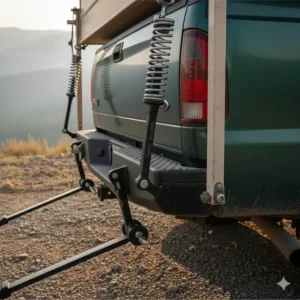
- Features: Rubberized release handles, spring-loaded front
- Reach: Front 16.5″-23.5″, Rear 22.5″-35.5″
- Set includes: 4 turnbuckles (2 front, 2 rear)
The rubberized handles aren’t a gimmick—they provide legitimate leverage and comfort during adjustment. The spring-loaded front turnbuckles reduce stress on anchor points, a detail that prevents long-term damage to both your truck and camper. Customer feedback highlights how the quick-release mechanism saves precious setup time at campgrounds.
After 50+ years in the RV industry, HappiJac understands what matters. Their Qwik-Load system proves that innovation doesn’t require complexity.
✅ Pros:
- No manual tightening required
- Corrosion-resistant construction
- Compatible with bed, bumper, or frame mounts
❌ Cons:
- Requires existing tie-down anchor points
- Premium pricing compared to basic turnbuckles
Price Range: $180-$220
4. KUAFU 4 Camper Tie Down – Budget-Friendly Reliability
Don’t let the affordable price fool you—KUAFU 4 Camper Tie Down delivers solid performance for full-size pickup owners on a budget. This system has gained traction among DIY enthusiasts who appreciate straightforward engineering.
Key Specifications:
- Construction: High-quality steel with powder coating
- Design: Tab lock anchors prevent lifting and twisting
- Compatibility: Full-size pickups (not for 1988+ Rangers, 2011+ mid-size)
- Package: 4 tie-downs with all mounting hardware
The tab lock anchor system addresses a common complaint with cheaper tie-downs—unwanted movement during transport. By securing the tie downs firmly to the truck rail, KUAFU eliminates the slight shifting that can gradually loosen connections over time.
Installation is bolt-on simple, though professional installation is recommended for those unfamiliar with torque specifications. Several customers report successful installations using basic tools and a weekend afternoon.
✅ Pros:
- Excellent price-to-performance ratio
- Tab lock system prevents movement
- Powder coating resists scratches and wear
❌ Cons:
- Not recommended for campers over 8 feet
- Limited compatibility with newer mid-size trucks
Price Range: $70-$95
5. Mepareri Truck Camper Tie Downs – No-Drill Champion
For truck owners who treat their vehicles like family heirlooms, Mepareri Truck Camper Tie Downs offer a completely reversible installation that leaves zero permanent marks. This 4-piece set proves you don’t need to drill holes to achieve rock-solid security.
Key Specifications:
- Material: Steel with black powder coating
- Installation: Simple bolt tightening (no drilling)
- Includes: Neoprene protective pads
- Bed rail requirements: Under 5.5″ width, 2″ minimum space beneath lip
The beauty of Mepareri’s design is its simplicity. The clamp mechanism creates enough pressure to rival permanently mounted systems, yet can be removed in minutes when you need your truck bed for other purposes. This versatility appeals to owners who use their trucks for multiple applications throughout the year.
User reviews consistently mention the quality of the included protective pads, which prevent paint damage and maintain truck resale value—a consideration often overlooked until it’s too late.
✅ Pros:
- Completely reversible installation
- Protects truck paint with neoprene pads
- Quick installation process
❌ Cons:
- Not compatible with plastic bed rails or double-walled beds
- Requires specific bed rail dimensions
Price Range: $65-$85
6. BROPHY CR Machine Works TDSF – Stake Pocket Solution
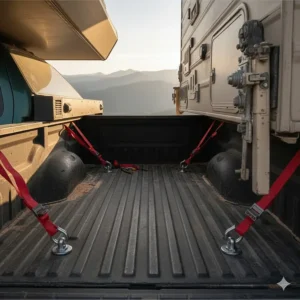
Traditional stake pocket mounting gets a modern upgrade with BROPHY CR Machine Works TDSF. This black powder-coated system offers permanent yet low-profile security for light to mid-weight campers.
Key Specifications:
- Mounting: Stake tube installation
- Construction: Heavy-duty powder-coated steel
- Features: Three removable spacer tabs for custom fit
- Compatibility: Most pickups with stake pockets
The three removable spacer tabs are the secret sauce here, allowing you to customize the fit for your specific truck model. This attention to detail prevents the wobble and play that plague one-size-fits-all designs. Once installed, the tie-downs sit flush and ready, always prepared for your next adventure.
Customer feedback reveals mixed installation experiences—some find it straightforward, while others recommend professional help for optimal alignment. The consensus? When properly installed, these deliver reliable performance at an approachable price point.
✅ Pros:
- Always ready—permanent installation
- Customizable fit with spacer tabs
- Heavy-duty construction
❌ Cons:
- Mixed reviews on installation difficulty
- Requires stake pockets on truck bed
Price Range: $45-$60
7. HappiJac Standard Turnbuckle Replacement Set – Upgrade Essential
Already have a tie-down system but need fresh turnbuckles? The HappiJac Standard Turnbuckle Replacement Set brings your existing setup back to factory performance—or better.
Key Specifications:
- Length: 25.5 inches
- Set includes: 4 turnbuckles (2 spring-loaded FM-TBS, 2 stress guard FM-TBR)
- Material: Zinc-coated steel
- Adjustability: Fully adjustable post-installation tension
This replacement set isn’t just about swapping old for new—it’s about upgrading your system’s capabilities. The spring-loaded front turnbuckles absorb road shock, while the stress guard rear turnbuckles provide rigid support. Together, they create a balanced system that professional RV technicians often install on high-end setups.
The fully adjustable design means you can fine-tune tension even after initial installation, accommodating camper load changes or addressing settling over time.
✅ Pros:
- Spring-loaded and stress guard combination
- Direct replacement for standard systems
- Post-installation adjustability
❌ Cons:
- Requires compatible existing tie-down anchors
- Not suitable as standalone system
Price Range: $120-$150
Understanding Truck Camper Tie Down Systems
Let me share something most salespeople won’t tell you: the truck camper tie down market is flooded with options, but they all fall into three fundamental categories. Understanding these distinctions will save you hundreds of dollars and countless headaches.
Frame-Mounted Systems: The Professional’s Choice
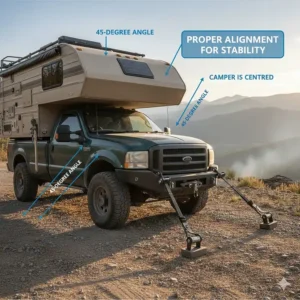
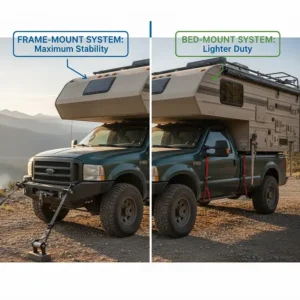
Frame-mounted systems bolt directly to your truck’s frame—the strongest part of your vehicle. Think of it like this: would you rather hang a heavy chandelier from drywall or from a ceiling joist? The answer’s obvious, and the same principle applies here.
Companies like Torklift pioneered this approach because it distributes weight more effectively and provides superior stability. The National Park Service emphasizes the importance of proper RV securing systems to prevent accidents and ensure safe travels. Frame mounting creates an I-beam truss structure that essentially makes your camper an integral part of the truck, not just cargo sitting on top.
The installation requires more expertise, but the payoff is dramatic. You’ll notice improved handling, reduced sway, and that peace-of-mind feeling when tackling mountain passes or dealing with crosswinds.
Bed-Mounted Systems: The Popular Middle Ground
Bed-mounted systems clamp or bolt to your truck bed rails. They’re the Swiss Army knife of tie downs—versatile, accessible, and suitable for most situations. Products like AIYOTAR and Mepareri excel in this category.
These systems work beautifully for weekend warriors and seasonal campers. Installation is straightforward enough for most DIYers, and the results are solid. The key is ensuring proper fitment—your bed rail dimensions must fall within the manufacturer’s specifications, or you’re setting yourself up for problems.
One advantage rarely discussed: bed-mounted systems typically cost 60-70% less than frame-mounted alternatives while still providing adequate security for most camper weights.
Turnbuckle Systems: The Adjustable Solution
Turnbuckles aren’t a mounting type—they’re the connection between your anchors and your camper. But choosing quality turnbuckles like HappiJac’s Qwik-Load can transform a mediocre system into an exceptional one.
Modern turnbuckles feature spring-loaded mechanisms that maintain consistent tension despite road vibration and temperature changes. This isn’t just convenience; it’s engineering that prevents the gradual loosening that leads to dangerous situations.
According to safety experts, turnbuckle failure ranks among the top causes of camper shifting incidents. Investing in quality here pays dividends in safety and longevity.
How to Choose the Right Truck Camper Tie Downs
Selecting truck camper tie downs isn’t rocket science, but it does require methodical thinking. Here’s my battle-tested approach developed over years of installations and mistakes (so you don’t have to repeat them).
Step 1: Know Your Camper’s Actual Weight
Don’t trust the manufacturer’s dry weight—it’s fiction. Your camper, loaded with gear, water, and supplies, weighs significantly more. Get it weighed at a truck scale. This number determines everything else.
As a rule of thumb, your tie-down system should handle at least 150% of your loaded weight. Building in this safety margin accounts for road shock, emergency braking, and the unexpected pothole at highway speed.
Step 2: Measure Your Truck Bed Rails
Grab a tape measure and check three dimensions: external bed rail width, the depth beneath the lip, and the distance between stake pockets (if applicable). Write these down—they’re your compatibility checklist.
Most systems require bed rails under 5.5 inches wide with at least 2 inches of clearance beneath the lip. Deviation from these specs doesn’t just risk poor fit; it risks system failure under load.
Step 3: Consider Your Usage Pattern
Weekend trips to established campgrounds? A bed-mounted system like KUAFU or Mepareri makes perfect sense. Planning extended backcountry expeditions or full-time living? Frame-mounted systems like Torklift become necessary, not optional.
Think about frequency too. If you’re constantly loading and unloading your camper, quick-release systems justify their premium pricing through time savings and convenience.
Step 4: Check Compatibility with Existing Equipment
Drop-in bed liners, tonneau covers, running boards extending over the bed—these accessories can interfere with tie-down installation. Review compatibility carefully, or you might discover conflicts after purchase.
Some systems work around these obstacles; others don’t. AIYOTAR specifically notes incompatibility with drop-in liners, for example.
Step 5: Budget for the Complete System
Don’t fall into the trap of buying tie-downs without budgeting for quality turnbuckles, safety chains, and installation (if needed). A complete, professional installation typically costs $300-$500 on top of product prices.
Remember: this system is literally holding your investment over your head. Skimping here is like buying cheap brake pads—technically possible, but profoundly unwise.
Installation Best Practices and Safety Tips
Even the best camper tie downs fail when improperly installed. I’ve seen $800 Torklift systems rendered useless by careless installation, and $60 budget systems perform flawlessly when installed correctly. The difference? Attention to these critical details.
Torque Specifications Matter More Than You Think
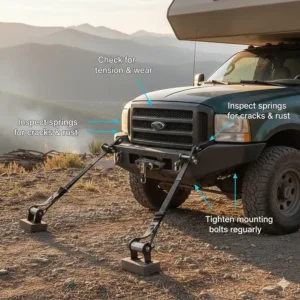
Every bolt has a specified torque value for good reason. Under-tightening allows movement and gradual loosening. Over-tightening strips threads or cracks components. Use a proper torque wrench, not your strongest grip.
For most steel tie-downs, mounting bolts require 25-35 ft-lbs of torque. Consult your specific product’s instructions, and check these values after the first 50 miles of travel—things settle and may need retightening.
The Critical Importance of Level Installation
Unlevel tie-downs create uneven weight distribution, forcing some attachment points to carry disproportionate loads. This accelerates wear and increases failure risk. Use a level during installation, and double-check that your truck is on level ground when initially mounting the camper.
I once helped a fellow camper whose tie-down bent after just 200 miles. The culprit? A 3-degree angle that concentrated all force on one corner. Simple level check would’ve prevented a $150 replacement.
Regular Inspection Schedules
Before every trip, inspect all connection points. Check for:
- Cracks in metal components
- Stripped or damaged threads
- Loose bolts or nuts
- Wear on protective pads
- Corrosion spots, especially in hidden areas
Monthly during active use season, perform a more thorough inspection including removing and lubricating threaded components. Annually, consider professional inspection—many RV service centers offer this for $50-$75.
Weather Protection Strategies
Powder coating helps, but it’s not invincible. Apply a thin layer of anti-corrosion spray to exposed metal components, especially if you encounter road salt or coastal environments. Store your camper with tie-downs slightly loosened to reduce constant tension stress on components.
According to FEMA safety guidelines, proper RV equipment maintenance significantly reduces accident risk and extends equipment lifespan.
Emergency Procedures
Always carry spare turnbuckles, extra hardware, and basic tools. A broken turnbuckle 200 miles from civilization turns a great trip into a nightmare. I keep a small emergency kit with spare quick-links, replacement bolts, and a backup turnbuckle in my truck’s toolbox.
Know the warning signs of tie-down failure: unusual camper movement, creaking sounds from connection points, or visible gaps between camper and truck bed. If you notice any of these, pull over immediately and investigate.
✨ Don’t Miss These Exclusive Deals!
🔍 Take your truck camping adventures to the next level with these carefully selected products. Click on any highlighted item to check current pricing and availability. These tools will help you create authentic memories your family will cherish for years to come!
Comparing Tie Down Materials and Construction
Material choice determines longevity, weight capacity, and maintenance requirements. Let’s cut through the marketing jargon and examine what actually matters.
Steel vs. Aluminum vs. Stainless Steel
Standard steel tie-downs (like AIYOTAR and KUAFU) offer exceptional strength-to-cost ratios. With proper powder coating and minimal maintenance, they’ll last 10-15 years of regular use. The weakness? Susceptibility to rust if coating is compromised.
Stainless steel (found in premium HappiJac turnbuckles) resists corrosion naturally and maintains appearance longer. However, stainless costs 40-50% more and, contrary to popular belief, can still corrode in certain conditions—especially lower-grade stainless.
Aluminum systems exist but are rare in truck camper applications. While lightweight and rust-proof, aluminum’s lower tensile strength makes it less suitable for heavy loads. Torklift offers aluminum Talon systems for those prioritizing weight savings, but at premium pricing ($685-$750 for fronts alone).
Powder Coating Quality Variations
Not all powder coating is created equal. Quality powder coating undergoes multi-stage preparation including degreasing, phosphate treatment, and proper curing at controlled temperatures. Cheap coating skips steps, resulting in premature chipping and rust formation.
Visual inspection reveals quality: look for even coverage, smooth finish without orange-peel texture, and consistent color. Quality coating should feel slightly textured but smooth—if it feels rough or gritty, that’s a red flag.
Most reputable brands like KUAFU and Mepareri use quality powder coating that holds up to years of road grime, UV exposure, and temperature extremes.
Weight Capacity Ratings Decoded
Manufacturers list weight capacities, but understanding what they actually mean requires some knowledge. A system rated for 2,000 lbs doesn’t mean it fails at 2,001 lbs—it means the manufacturer guarantees performance up to that weight with a built-in safety margin.
Quality systems typically include a 2:1 or 3:1 safety factor. So a 2,000 lb rated system might actually hold 4,000-6,000 lbs before catastrophic failure. However, operating at maximum rated capacity continuously will accelerate wear and reduce lifespan.
For reference, most truck campers weigh 1,500-3,500 lbs loaded. Choose a system rated for at least your loaded weight plus 25% to account for dynamic loads during travel.
Maintenance and Long-Term Care
Proper maintenance transforms a 5-year product into a 15-year investment. These practices take minimal time but deliver maximum value.
Monthly Maintenance Routine
Visual Inspection – Examine all visible components for cracks, unusual wear patterns, or deformation. Pay special attention to areas where different materials meet, as these experience the most stress.
Cleaning – Remove road grime, mud, and salt using mild soap and water. Avoid pressure washers directly on components—the force can drive water into threads and sealed areas where it accelerates corrosion.
Lubrication – Apply a light coat of anti-seize compound to threaded areas. This prevents thread galling and makes future adjustments smoother. Use white lithium grease on moving parts like turnbuckle handles.
Seasonal Deep Maintenance
Before and after camping season, perform thorough maintenance:
Remove tie-downs completely (if design allows) and inspect hidden surfaces. Look for rust formation in areas protected from view during normal use. Clean thoroughly and touch up any powder coating chips with matching paint.
Check all protective pads for wear. These $2 components protect your $50,000 truck’s finish—replace them at the first sign of deterioration. Many manufacturers sell replacement pad kits for under $15.
Test turnbuckle operation by cycling them through full range of motion. They should move smoothly without binding. Stiffness indicates rust formation or thread damage requiring attention.
Storage Best Practices
When storing your camper off the truck, slightly loosen tie-down tension to relieve constant stress on components. Store removable pieces in a dry location—moisture during storage causes more damage than years of active use.
If your truck sits unused during winter, cover exposed tie-down components with breathable fabric to prevent moisture accumulation while allowing air circulation. Never use plastic bags or tarps that trap condensation.
Consider applying a thin coat of oil-based protectant before extended storage. This creates a barrier against humidity without interfering with future operation.
Knowing When to Replace
Even quality tie-downs eventually reach end-of-life. Warning signs include:
- Visible cracks in welds or structural components
- Persistent loosening despite proper torque
- Severe corrosion penetrating beyond surface level
- Deformation or bending under normal loads
- Thread damage preventing proper tightening
Don’t gamble with worn components. Replacement costs pale compared to the consequences of failure at highway speeds.
Common Mistakes to Avoid
Learning from others’ mistakes beats learning from your own. Here are the most frequent errors I’ve witnessed—and how to avoid them.
Mistake #1: Choosing Systems Based on Price Alone
The cheapest system rarely proves cheapest long-term. I’ve seen budget systems fail within months, requiring replacement plus potential damage to trucks and campers. Meanwhile, quality mid-range systems like AIYOTAR provide years of service at modest initial investment.
Calculate cost-per-year, not just upfront price. A $900 Torklift system lasting 20+ years costs $45/year. A $40 budget system failing in 2 years costs $20/year plus replacement hassle and potential damage expenses.
Mistake #2: Ignoring Truck Modifications
Added running boards, modified suspension, aftermarket bumpers—all these can interfere with tie-down installation or operation. Always check compatibility with your truck’s current configuration, not its stock form.
One camper owner spent $600 on Torklift frame mounts only to discover his aftermarket suspension lift positioned them incorrectly. The correction required custom fabrication costing another $300.
Mistake #3: Over-Tightening Turnbuckles
More isn’t better. Over-tensioning turnbuckles stresses anchor points, risks cracking your camper’s frame, and can actually warp truck bed rails over time. Follow manufacturer guidelines for proper tension—usually just snug with minimal slack.
Some systems include tension indicators showing optimal tightness. Use them. Your turnbuckles should maintain connection security without acting like you’re trying to compress your camper into a pancake.
Mistake #4: Neglecting Secondary Restraints
Tie-downs provide primary securing, but safety chains offer backup protection. Many states legally require them, yet I regularly see installations without them. Quality chains and proper attachment points cost under $50—cheap insurance for peace of mind.
Mistake #5: Installing on Uneven Surfaces
Installing tie-downs while parked on a slope creates uneven loading once the truck levels out. This subtle mistake causes premature wear and can lead to loosening during travel. Always perform installation on level ground.
Mistake #6: Forgetting About Clearance
Some systems extend below the truck frame or bed floor level. Check ground clearance, especially if you tackle rough trails. Dragging a tie-down across a boulder can destroy it instantly.
Measure lowest point with camper loaded and compare to your typical terrain challenges. Frame-mounted systems typically maintain factory ground clearance, while some bed-mounted systems reduce it slightly.
Tie Downs vs Traditional Alternatives
For context, let’s compare modern tie-down systems to older securing methods still occasionally seen.
| Feature | Modern Tie Downs | Turnbuckle-Only Systems | Chain & Binder Systems |
|---|---|---|---|
| Installation Time | 2-4 hours | 1-2 hours | 30-60 minutes |
| Adjustment Speed | Quick (5-10 min) | Moderate (15-20 min) | Slow (20-30 min) |
| Stability | Excellent | Good | Fair to Good |
| Lifespan | 10-20 years | 5-10 years | 5-15 years |
| Maintenance | Low | Moderate | High |
| Safety Features | Multiple | Limited | Minimal |
| Cost | $60-$900 | $40-$200 | $50-$150 |
Modern integrated systems offer superior performance across nearly every metric. The investment in a quality tie-down system pays dividends through improved safety, convenience, and longevity.
Price Range and Value Analysis
Understanding pricing tiers helps align expectations with budget reality.
Budget Tier ($40-$100)
Products like KUAFU, Mepareri, and BROPHY occupy this space. These deliver solid basic functionality for light to moderate use. Expect adequate performance for weekend camping and seasonal adventures, but don’t push them beyond rated capacities.
Best for: Occasional campers, light camper weights, budget-conscious buyers willing to accept moderate lifespan.
Mid-Range Tier ($100-$300)
AIYOTAR and HappiJac turnbuckle systems represent this category. These products balance quality construction, reliable performance, and reasonable pricing. Most recreational campers find this tier offers optimal value.
Best for: Regular campers, moderate to heavy campers, those wanting longevity without premium pricing.
Premium Tier ($350-$900+)
Torklift frame-mounted systems dominate this tier. Premium pricing reflects American manufacturing, lifetime warranties, vehicle-specific engineering, and maximum safety margins. These systems are built for decades of heavy use.
Best for: Full-time RVers, expedition travelers, maximum weight campers, those prioritizing absolute security over cost savings.
Total Cost of Ownership Considerations
Factor in potential additional costs:
- Professional installation: $200-$500
- Safety chains: $30-$80
- Upgraded turnbuckles: $150-$450
- Maintenance supplies: $50-$100 over lifespan
- Potential truck modifications: $0-$500
A “complete” setup often costs 30-50% beyond initial product price. Budget accordingly to avoid sticker shock.
❓ FAQ
❓ What weight capacity do I need for truck camper tie downs?
❓ Can I install truck camper tie downs myself or do I need a professional?
❓ How often should I check and maintain my camper tie downs?
❓ What's the difference between frame mounted and bed mounted tie downs?
❓ Are turnbuckles included with truck camper tie down systems?
Conclusion: Making Your Final Decision
Choosing the right truck camper tie downs represents one of the most important safety decisions you’ll make as a camper owner. After examining seven top-rated products and exploring the technical details, a clear pattern emerges: there’s no universal “best” option—only the best option for your specific situation.
For weekend warriors and budget-conscious buyers, AIYOTAR Truck Camper Tie Downs deliver exceptional value without sacrificing safety. The clamp-on design, quality construction, and protective features make it my top recommendation for recreational campers.
Serious adventurers and full-timers should seriously consider Torklift Frame Mounted Systems despite the premium investment. The lifetime warranty, superior stability, and American manufacturing quality justify the expense when you’re literally trusting your home to these components.
For those seeking the sweet spot between cost and convenience, HappiJac Qwik-Load Turnbuckles paired with quality anchor points create a system that’s both reliable and user-friendly. The tool-free installation saves time at every campsite—time better spent enjoying nature.
Remember that your tie-down system works as a complete package. Quality anchors with cheap turnbuckles create weak links. Similarly, premium turnbuckles on poorly installed anchors waste money. Invest appropriately across all components for optimal results.
Before purchasing, measure your truck precisely, know your loaded camper weight, and honestly assess your usage patterns. These three factors determine which system serves you best. Don’t let sales pressure or peer recommendations override what your specific situation requires.
Finally, commit to proper installation and regular maintenance. The best system in the world fails when improperly installed or neglected. Follow manufacturer guidelines, use proper torque specs, and inspect regularly. Your diligence prevents the disasters that make headlines and ruin adventures.
Safe travels, and may your camper always stay exactly where you put it! 🏕️
Recommended for You
- 7 Best Camping Tarps 2025: Waterproof Shelter Guide
- 7 Best Camp Bug Spray Options 2025 – Expert Reviews
- 7 Best Blinds for Camper 2025: Ultimate UV Protection Guide
Disclaimer: This article contains affiliate links. If you purchase products through these links, we may earn a small commission at no additional cost to you.
✨ Found this helpful? Share it with your friends! 💬🤗
