In This Article
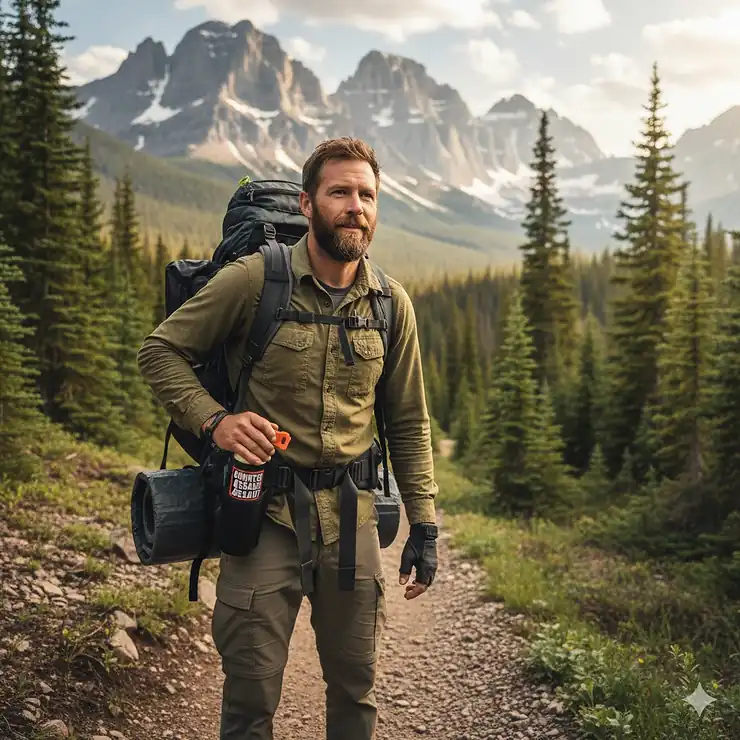
Picture this: you’re deep in the Montana wilderness, breathing in that crisp mountain air, when suddenly a 600-pound grizzly emerges from the tree line just 50 feet away. Your heart stops. In that split second, having the best bear spray accessible could mean the difference between a thrilling story and a tragic headline.
I’ve spent countless hours researching bear deterrent spray options, and here’s something that might surprise you: studies conducted by Alaska’s Department of Fish and Game show that bear spray stopped aggressive bear behavior in 92% of documented encounters. Compare that to firearms, which have a much lower success rate and often escalate the situation. The data doesn’t lie—bear spray works.
The truth is, choosing the right EPA approved bear spray isn’t just about reading Amazon reviews and picking the highest-rated canister. You need to understand capsaicin concentration, spray distance range, holster accessibility, and how different formulations perform under pressure (literally). Whether you’re a weekend warrior hitting the trails or a seasoned backcountry explorer, this comprehensive bear spray review will help you make an informed decision that could save your life.
In this guide, we’ll cut through the marketing hype and examine seven real products currently available on Amazon, covering everything from budget-friendly options to premium professional-grade deterrents. Let’s dive into what actually matters when your safety depends on it.
Quick Comparison Table: Top 7 Best Bear Spray at a Glance
| Product | Capsaicin | Spray Distance | Duration | Size | Price Range |
|---|---|---|---|---|---|
| SABRE Frontiersman MAX | 2.0% | 40 ft | 5 sec | 7.9-9.2 oz | $40-$55 |
| Counter Assault | 2.0% | 40 ft | 9.2 sec | 8.1-10.2 oz | $50-$70 |
| UDAP Pepper Power | 2.0% | 40 ft | 5 sec | 7.9 oz | $35-$50 |
| Mace Guard Alaska | 1.34% | 40 ft | 9 sec | 9 oz | $30-$45 |
| Trail Boss | 2.0% | 35 ft | 8 sec | 7.9-13.4 oz | $30-$50 |
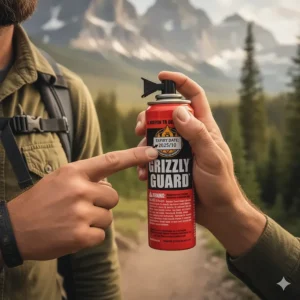
| Griz Guard | 2.0% | 40 ft | 5 sec | 7.9-9.2 oz | $35-$48 |
| SABRE Frontiersman (Standard) | 2.0% | 30 ft | 5 sec | 7.9 oz | $30-$40 |
💬 Just one click – help others make better buying decisions too! 😊
✨ Don’t Miss These Exclusive Deals!
🔍 Take your outdoor safety to the next level with these carefully selected products. Click on any highlighted item to check current pricing and availability. These tools will help you create authentic peace of mind your family will appreciate!
Top 7 Best Bear Spray: Expert Analysis
1. SABRE Frontiersman MAX Bear Spray – Editor’s Choice for Maximum Range
When it comes to the best bear spray on the market, the SABRE Frontiersman MAX Bear Spray consistently tops the charts for good reason. As the only EPA-registered spray specifically labeled for both bears and mountain lions, this powerhouse delivers 2.0% major capsaicinoids—the maximum concentration allowed by law.
Key Specifications:
- Spray distance: 40 feet (industry-leading)
- Capsaicin concentration: 2.0%
- Available sizes: 7.9 oz and 9.2 oz
- Spray duration: approximately 5 seconds
The standout feature? That impressive 40-foot spray distance range gives you precious extra seconds when a bear charges. Users consistently report feeling more confident carrying this canister, knowing they don’t need to wait until a bear is breathing down their neck to deploy an effective barrier. The glow-in-the-dark safety clip is brilliant for dawn or dusk encounters, and the included holster allows for quick draw accessibility—critical when milliseconds matter.
Customer feedback reveals high satisfaction with the fog pattern deployment, which creates a wide barrier cloud rather than a narrow stream. One verified purchaser shared: “Used it on a charging black bear in the Adirondacks. The bear hit the fog wall at about 25 feet and immediately turned around.”
✅ Pros:
- Maximum EPA-approved capsaicin concentration
- Industry-leading 40-foot range
- Glow-in-the-dark safety features
❌ Cons:
- 9.2 oz version adds noticeable weight
- Premium pricing compared to competitors
Price: $40-$55 depending on size
2. Counter Assault Bear Spray – Best for Extended Spray Duration
Counter Assault Bear Spray holds a special place in bear deterrent spray history—it was the first product to receive EPA approval back in the 1980s. Developed by bear spray pioneer Bill Pounds in collaboration with University of Montana researchers, this spray offers the longest continuous deployment time on our list.
Key Specifications:
- Spray distance: 32-40 feet (depending on model)
- Capsaicin concentration: 2.0%
- Available sizes: 8.1 oz and 10.2 oz
- Spray duration: 9.2 seconds (10.2 oz model)
That extended 9-second spray time isn’t just marketing fluff—it gives you multiple deployment opportunities if the first burst doesn’t connect or if you’re dealing with multiple bears. The formula uses 91% fewer greenhouse gases than traditional propellants, making it the eco-conscious choice without sacrificing performance. Made in Montana by people who actually live in grizzly country, the product undergoes rigorous real-world testing.
Backcountry guides and park rangers frequently choose Counter Assault for professional use. The holster design allows for hip deployment without removing the canister—a feature that’s proven invaluable during actual encounters.
✅ Pros:
- Longest spray duration (9.2 seconds)
- Environmentally friendly propellant
- Multiple burst capability
❌ Cons:
- Most expensive option on our list
- Heavier than competitors
Price: $50-$70
3. UDAP Pepper Power Bear Spray – Best Budget-Friendly Option
Created by Mark Matheny, an actual grizzly bear attack survivor, UDAP Pepper Power Bear Spray brings authentic expertise to the market. Matheny’s firsthand experience surviving a bear mauling in Montana drives the company’s commitment to effective deterrent formulation.
Key Specifications:
- Spray distance: 30-40 feet (model dependent)
- Capsaicin concentration: 2.0%
- Available size: 7.9 oz
- Spray duration: 4-5 seconds
UDAP’s unique fogger deployment system delivers what they call a “high-volume blast” that creates a dense fog barrier faster than narrow-stream competitors. The spray deploys approximately twice as fast as similar products, which can be advantageous when a bear is closing distance rapidly. Made in Montana with American materials and workers, each canister includes batch coding and a 3-year expiration date.
Customer reviews highlight the value proposition—you’re getting maximum-strength 2.0% capsaicin at a lower price point. One hiker noted: “Carried UDAP on my entire Pacific Crest Trail thru-hike. Never needed it, but knowing it was there for under $40 gave me confidence in the Sierra bear encounters.”
✅ Pros:
- Most affordable maximum-strength option
- Fast-deploying fog pattern
- Created by bear attack survivor
❌ Cons:
- Shorter spray duration than premium models
- Lighter canister may feel less substantial
Price: $35-$50
4. Mace Guard Alaska Bear Spray – Best for Extended Wilderness Trips
Mace Guard Alaska Bear Spray takes a different approach with a lower capsaicin concentration but significantly longer spray duration. This trade-off makes it ideal for multi-day wilderness adventures where you might need to deploy spray multiple times.
Key Specifications:
- Spray distance: 40 feet
- Capsaicin concentration: 1.34%
- Available size: 9 oz
- Spray duration: 9 seconds
While the 1.34% capsaicinoid content sits at the lower end of EPA-approved concentrations, it still falls within the effective range of 1.0-2.0% required for bear deterrent spray. The extended 9-second spray time means you can create multiple fog barriers or sustain a continuous cloud if needed. The formula uses 20% oleoresin capsicum, which some users report creates a particularly lingering cloud.
This spray shines in scenarios where you’re in high bear-density areas and might encounter multiple animals. Alaska guides often carry this as a backup to their primary spray, appreciating the extra deployment time for unpredictable situations.
✅ Pros:
- Longest spray duration in its price class
- 40-foot effective range
- Includes heavy-duty holster
❌ Cons:
- Lower capsaicin concentration
- Less stopping power than 2.0% formulas
Price: $30-$45
5. Trail Boss Bear Spray – Best Rapid Deployment System
Trail Boss Bear Spray is a relative newcomer that’s quickly gained traction among hikers and campers. The standout feature is its “rapid full deployment” system designed to empty the entire canister in under 8 seconds when needed.
Key Specifications:
- Spray distance: 35 feet
- Capsaicin concentration: 2.0%
- Available sizes: 7.9 oz and 13.4 oz
- Spray duration: 8 seconds
That 13.4 oz option is the largest canister on our list—ideal for extended backcountry trips where you want maximum spray capacity. The 35-foot range provides ample standoff distance, and the maximum-strength 2.0% formula delivers serious stopping power. The included holster features quick-release clips that reviewers consistently praise for accessibility.
Users report that the spray pattern creates an impressive barrier cloud. One reviewer shared: “Used the 13.4 oz version during a week-long Alaskan fishing trip. The size didn’t bother me clipped to my backpack, and knowing I had nearly double the spray volume of standard canisters was reassuring.”
✅ Pros:
- Largest canister option available
- Maximum EPA-approved concentration
- Fast deployment system
❌ Cons:
- 13.4 oz version adds significant weight
- Newer brand with less field testing history
Price: $30-$50
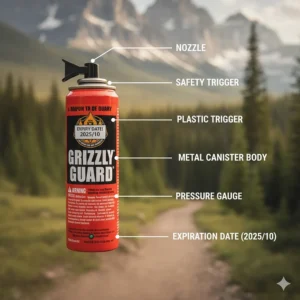
6. Griz Guard Bear Spray – Best Value for Two-Pack Options
Griz Guard Bear Spray offers exceptional value through multi-pack options, making it perfect for group expeditions or families who want everyone properly equipped. Manufactured to EPA standards, it delivers reliable performance at an accessible price point.
Key Specifications:
- Spray distance: 40 feet
- Capsaicin concentration: 2.0%
- Available sizes: 7.9 oz and 9.2 oz
- Spray duration: 5 seconds
The patented Griz Guard holster deserves special mention—it allows three deployment methods: silent top removal, side removal for low-angle bears, or shooting directly from the hip without removal. This versatility has proven valuable in actual bear encounters where positioning and angles vary unpredictably.
Available in convenient 2-pack configurations, Griz Guard makes it economical to equip multiple family members or maintain a backup canister in your vehicle. The glow-in-the-dark safety clip aids nighttime tent accessibility.
✅ Pros:
- Excellent value in 2-pack format
- Versatile holster with three deployment options
- Maximum strength 2.0% formulation
❌ Cons:
- Less established brand reputation
- Fewer independent field reports
Price: $35-$48 per canister (better value in 2-packs)
7. SABRE Frontiersman (Standard) – Best for Day Hikes
The standard SABRE Frontiersman offers the same trusted brand quality as the MAX version but at a more accessible price point with a 30-foot range. For day hikers and casual outdoor enthusiasts, this provides excellent protection without premium pricing.
Key Specifications:
- Spray distance: 30 feet
- Capsaicin concentration: 2.0%
- Available size: 7.9 oz
- Spray duration: 5 seconds
Don’t let the “standard” designation fool you—this still delivers maximum-strength 2.0% major capsaicinoids. The 30-foot range suits most hiking scenarios, especially on maintained trails where extreme standoff distance is less critical. The familiar SABRE quality and reliability come through in customer reviews, with many users appreciating the lighter weight compared to the MAX version.
The included holster provides secure carry with quick-draw capability. One day hiker noted: “Perfect for my weekend Appalachian Trail sections. The 30-foot range feels adequate on established trails, and I saved $15 compared to the MAX version.”
✅ Pros:
- Most affordable SABRE option
- Maximum capsaicin concentration
- Lighter weight for day hiking
❌ Cons:
- Shorter range than MAX version
- May feel underpowered for serious backcountry
Price: $30-$40
Understanding EPA Approved Bear Spray: What Makes It Effective?
The Environmental Protection Agency doesn’t just rubber-stamp bear spray products. Each EPA approved bear spray undergoes rigorous testing to ensure it meets specific safety and efficacy standards. According to EPA regulations, all bear deterrent spray must contain between 1.0% and 2.0% capsaicin and related capsaicinoids—the active ingredients that cause the intense burning sensation.
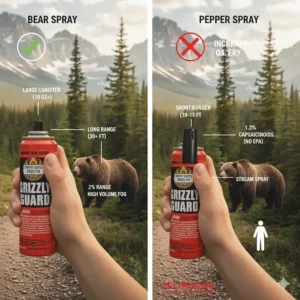
Here’s what separates EPA-registered bear spray from regular pepper spray: concentration, delivery system, and spray pattern. While personal defense sprays might contain anywhere from 0.18% to 1.33% capsaicinoids, bear spray requires higher concentrations to effectively deter a 600-pound animal charging at 35 mph. The delivery system must create a fog barrier rather than a focused stream, covering a wider area to increase the likelihood of affecting the bear’s eyes, nose, and respiratory system.
The minimum canister size is 7.9 ounces (225 grams)—anything smaller lacks sufficient spray duration for a charging bear encounter. Each canister displays an EPA registration number on the label, guaranteeing it meets federal standards for bear deterrence. This registration also ensures the product won’t harm bears long-term; the effects are temporary, allowing the animal to recover without permanent damage.
Research published by the U.S. Geological Survey confirms that widespread use of EPA approved bear spray promotes both human safety and bear conservation. According to studies documented by the Interagency Grizzly Bear Committee, bear spray is more than 90% effective at stopping aggressive bear behavior. Unlike firearms, which often result in dead bears, spray allows encounters to end without fatalities while still protecting humans effectively.
Capsaicin Concentration: The Science Behind Stopping Power
Capsaicin concentration is the most misunderstood specification in bear spray marketing. You’ll see percentages ranging from 1.0% to 2.0%, but what do these numbers actually mean for your safety?
Capsaicin and related capsaicinoids (CRC) are the compounds derived from hot peppers that create the burning sensation. The EPA determined through extensive testing that 1.0-2.0% represents the optimal range—strong enough to deter aggressive bears, but not so potent that it causes permanent harm. Products exceeding 2.0% would actually violate EPA regulations.
That 1% difference between minimum and maximum concentration translates to significant real-world impact. Field research from bear biologists indicates that 2.0% formulations tend to stop charges more decisively and from greater distances. The higher concentration creates a more immediate inflammatory response in the bear’s mucous membranes, affecting breathing and vision more rapidly.
However, concentration alone doesn’t determine effectiveness. Deployment speed, spray pattern, and user accuracy all factor into real-world performance. A 1.34% spray deployed correctly from 25 feet will outperform a 2.0% spray buried in your backpack. This is why understanding the complete picture—not just focusing on maximum concentration—matters when selecting the best bear spray.
Some manufacturers inflate their specifications by listing total oleoresin capsicum (OC) percentages rather than actual capsaicinoid content. Pay attention to the EPA-verified capsaicin and related capsaicinoid percentage, which must appear on the label.
Spray Distance Range: Why Every Foot Matters
In a bear encounter, distance equals time, and time equals survival. The spray distance range specification tells you how far the spray can effectively travel from the nozzle before dispersing too widely or falling to the ground.
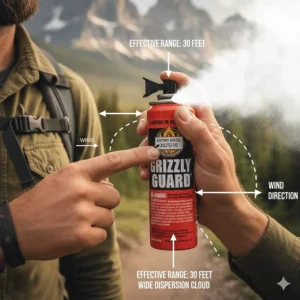
EPA regulations require a minimum 16-foot range for registered bear spray, but most quality products exceed 25 feet, with premium options reaching 40 feet. Here’s why those extra feet matter: grizzly bears can run 35 miles per hour, covering roughly 50 feet per second. If you wait until a charging bear reaches 20 feet to deploy spray, you have less than half a second before impact. Deploy at 40 feet, and you’ve roughly doubled your reaction window.
Field studies conducted in Alaska examined bear spray incidents and found that users who deployed spray at distances exceeding 25 feet had significantly better outcomes. The spray had adequate time to form a barrier cloud that the bear charged into, rather than requiring pinpoint accuracy on a rapidly moving target.
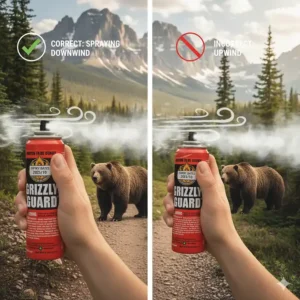
Wind significantly affects effective range. A 15 mph headwind can reduce your practical range by 30-40%, while a tailwind might extend it slightly. This is why practicing with inert training canisters in various wind conditions builds muscle memory for real encounters. The spray exits the canister at approximately 70 mph, helping it penetrate moderate wind, but extreme gusts can still affect deployment.
Maximum range specifications assume ideal conditions—calm air, proper canister angle, and full pressure. As canisters age or experience temperature fluctuations, actual range may decrease. Always check expiration dates and store canisters properly to maintain advertised performance.
Holster Accessibility: Seconds Save Lives
The most powerful bear spray in the world is useless if you can’t access it in under three seconds. Holster accessibility directly impacts your ability to respond to a charging bear, making it arguably more critical than spray specifications.
Chest holsters position the canister at sternum level, allowing incredibly fast deployment. You can draw and fire in a single fluid motion without looking down. The chest position also keeps the spray away from your pack’s hip belt, preventing interference. Many professional guides prefer chest carry, reporting that they can deploy spray in 1.5-2 seconds with practice.
Hip holsters attach to your belt or pack waist strap, offering good accessibility while keeping the canister out of your hands during hiking. Quality hip holsters include retention straps that prevent loss during scrambling or falls, while still allowing one-handed release. The downside? Hip carry can interfere with pack adjustment and feels less natural for some users.
3-in-1 holsters offer versatility, allowing chest, waist, or pack mounting. These adaptable systems work well for users who switch between day hiking and backpacking, or who want to adjust carry position based on terrain.
The holster design matters as much as placement. Look for these features:
- Silent or quiet release (loud Velcro might startle a bear)
- One-handed operation
- Secure retention during vigorous activity
- Weather-resistant materials
- Glow-in-the-dark or high-visibility markings
Practice removing your canister repeatedly until it becomes automatic. Time yourself: if it takes more than 3 seconds from “threat recognition” to “spray deployed,” keep practicing or reconsider your holster choice.
Comparing Best Bear Spray vs Personal Pepper Spray
| Feature | Bear Spray | Personal Pepper Spray |
|---|---|---|
| Capsaicin Concentration | 1.0-2.0% | 0.18-1.33% |
| EPA Registration | Required | Not required |
| Spray Pattern | Wide fog cloud | Narrow stream |
| Effective Range | 25-40+ feet | 8-20 feet |
| Purpose | Bear deterrence only | Human self-defense |
| Minimum Size | 7.9 oz | No minimum |
Never substitute personal pepper spray for bear spray. The differences aren’t just regulatory—they reflect fundamentally different threat scenarios. A human attacker typically approaches slowly, allowing aimed deployment of a focused stream to the face. A charging bear covers ground at 50+ feet per second, requiring an area-effect fog you can “throw” into its path.
Personal defense sprays optimize for concentrated, targeted delivery that maximizes incapacitation against a human nervous system. Bear spray prioritizes creating a large barrier cloud that affects bears’ heightened sense of smell and sensitive respiratory systems. Using personal spray against a bear is like bringing a scalpel to a chainsaw fight—wrong tool, wrong application, potentially fatal consequences.
The flip side also holds true: using bear spray for personal defense against humans raises serious legal questions and may violate regulations in many jurisdictions. Bear spray is registered as a pesticide under federal law, with specific approved uses. Deploying it against humans could result in legal liability even if used in legitimate self-defense.
How to Choose Best Bear Spray for Your Needs
Selecting the right bear deterrent spray requires matching product specifications to your specific outdoor activities and risk profile. Here’s a systematic approach:
Step 1: Assess Your Bear Country Risk
Not all wilderness areas carry equal bear density or aggression levels. Grizzly bear territory in Montana, Wyoming, and Alaska demands more robust protection than black bear regions in the eastern United States. Research your destination’s bear population and recent encounter history through state wildlife agencies. BearWise.org provides excellent resources for understanding regional bear behavior patterns and safety recommendations.
Step 2: Calculate Trip Duration and Group Size
Solo backpackers on week-long trips should consider carrying two canisters or opting for larger 10+ ounce sizes. Day hikers on popular trails might find a single 7.9 oz canister sufficient. Groups should equip each member with their own spray—sharing one canister between multiple people is false economy.
Step 3: Prioritize Maximum Capsaicin or Extended Duration
High-concentration 2.0% sprays offer maximum stopping power but shorter duration (4-5 seconds typical). Lower-concentration options like 1.34% spray longer (9+ seconds) but may require closer deployment. Match this decision to your risk assessment—grizzly country favors maximum concentration; extended wilderness trips might prioritize duration.
Step 4: Evaluate Carry Comfort and Weight
Ultralight backpackers scrutinize every ounce, making the 7.9 oz options more appealing. Car campers and day hikers can afford the luxury of 10+ ounce canisters with extended range. Consider how the weight distribution affects your comfort over typical hiking distances.
Step 5: Budget for Quality Over Quantity
The price difference between budget and premium bear spray is typically $20-30 per canister. In the context of a multi-thousand dollar backcountry trip (or your life), this represents minimal additional investment. However, budget options using maximum-strength 2.0% formulations can provide adequate protection if premium pricing creates barriers.
Bear Spray Reviews: What Users Actually Say
Real-world feedback reveals patterns that specifications alone can’t capture. Analyzing hundreds of verified purchase reviews across platforms shows these common themes:
Deployment Confidence: Users consistently rate products higher when they’ve practiced with inert training canisters. Those who purchased spray but never practiced report feeling anxious about whether they’d deploy correctly during an actual encounter.
Weight Perception: Interesting split here—backpackers overwhelmingly prefer lighter 7.9 oz options, while car campers and casual hikers don’t mind 9-10 oz canisters. Several reviewers noted that after the first few miles, they stopped noticing the weight difference.
Holster Quality: This is where budget products receive criticism most frequently. Premium brands include well-designed holsters with secure retention and smooth release. Budget options sometimes ship with flimsy holsters that fail during actual use.
Peace of Mind Value: Nearly all reviewers—regardless of product choice—emphasize the psychological benefit. “Never had to use it, but felt safer knowing it was there” appears repeatedly. This suggests that any quality EPA approved bear spray provides substantial value beyond physical protection.
Actual Deployment Stories: Verified reviews describing real bear encounters (roughly 2-3% of total reviews) consistently report successful deterrence across all brands. The common factor in successful deployments? Users who kept spray readily accessible and deployed decisively.
One particularly detailed review from a Yellowstone backpacker described deploying SABRE Frontiersman MAX against a sow grizzly with cubs: “The fog cloud appeared instantly, the bear ran straight into it at maybe 20 feet out, and immediately veered away coughing and pawing at her face. The entire encounter lasted maybe 8 seconds. Worth every penny.”
Proper Bear Spray Storage and Maintenance
Your bear spray’s effectiveness degrades without proper care. Follow these storage and maintenance practices:
Temperature Control: Store canisters between -7°F and 120°F. Extreme heat can cause pressure buildup leading to canister rupture, while extreme cold may reduce spray pressure and range. Never leave bear spray in direct sunlight or enclosed vehicles during summer—interior car temperatures can exceed 150°F.
Expiration Dates: Most bear spray carries a 3-4 year shelf life from manufacture date. The propellant loses pressure over time, reducing effective range and spray duration. Mark your calendar to replace canisters 6 months before expiration as a safety margin. Expired spray doesn’t suddenly become useless, but reliability decreases.
Inspection Routine: Before each trip, check:
- Safety clip is intact and functional
- No visible damage to canister or nozzle
- Canister feels properly pressurized (full, not light)
- Holster retention system works smoothly
- Expiration date hasn’t passed
Cleaning After Practice: If you’ve test-fired spray or used training canisters, clean the nozzle and exterior with soap and water immediately. Residual spray can cause skin irritation and attracts curious wildlife.
Disposal of Used or Expired Canisters: Contact your local hazardous waste facility for proper disposal instructions. Some outdoor retailers and park visitor centers offer bear spray recycling programs. Never puncture or incinerate canisters, as they remain under pressure even when empty.
Travel Restrictions: Bear spray is prohibited on commercial airlines—you cannot check or carry it aboard. Plan to purchase at your destination or ship ahead. Some national parks sell or rent spray at visitor centers.
Training and Practice: Mastering Deployment
Buying the best bear spray provides a false sense of security without proper training. Muscle memory developed through practice makes the critical difference during high-stress encounters.
Inert Training Canisters: Most major manufacturers sell practice canisters containing inert ingredients. These cost $8-15 and allow you to practice actual deployment without wasting expensive active spray. The feel, weight, and operation match real canisters precisely.
Practice Drills:
- Holster Draw Drill: Time yourself removing the canister from your holster. Goal: under 2 seconds consistently.
- Safety Release Drill: Practice removing the safety clip with your thumb while maintaining aim. Many users struggle with this step under pressure.
- Wind Awareness Drill: Deploy practice spray in various wind conditions (upwind, downwind, crosswind) to understand how wind affects the cloud.
- Movement Drill: Practice deploying while backing up—the motion you’d actually use during a bear encounter.
Group Training: If hiking with partners, practice coordinated deployment scenarios. Who deploys first? How do you avoid spray crossfire? These questions are best answered during calm practice, not mid-encounter.
Video Your Practice: Recording practice sessions reveals technique flaws invisible in the moment. Review footage to identify hesitation points or improper grip that could cost precious seconds.
Many wilderness education organizations and park services offer free bear spray training clinics. Yellowstone, Glacier, and Grand Teton national parks regularly host sessions during summer months. The National Park Service provides comprehensive bear spray guidelines that emphasize proper carry methods and deployment techniques. Taking advantage of professional instruction from rangers who’ve actually deployed spray during real encounters provides invaluable insights.
Environmental Impact: Choosing Eco-Friendly Options
Bear spray propellants historically relied on HFC-134a, a greenhouse gas with significant global warming potential. Recent innovations have introduced more environmentally responsible options.
Counter Assault leads the industry by using propellants that produce 91% fewer greenhouse gases compared to traditional formulations. This doesn’t compromise performance—the spray maintains identical range and duration while reducing environmental impact.
The active ingredients themselves—capsaicin and related capsaicinoids—are naturally derived from hot peppers and break down relatively quickly in the environment. They don’t persist like synthetic chemicals or accumulate in food chains. Bears affected by spray typically recover fully within 30-45 minutes with no lasting harm.
Manufacturing Practices: Several brands, including UDAP and Counter Assault, manufacture entirely in Montana using American workers and materials. This reduces transportation emissions and supports local economies in bear country communities.
Packaging: Look for brands using recyclable materials and minimal packaging waste. Some retailers offer bear spray rental programs, allowing you to return used canisters for proper disposal and recycling.
For environmentally conscious outdoors enthusiasts, the choice is clear: select brands explicitly committed to reducing their carbon footprint while maintaining safety standards. The price premium is typically minimal (often $5-10 per canister), and the environmental benefit is substantial considering the growing popularity of wilderness recreation.
Legal Considerations and Travel Restrictions
Bear spray exists in a unique legal category—it’s regulated as a pesticide by the EPA, which creates specific restrictions on possession, use, and transportation.
Airline Travel: Absolutely prohibited on all commercial flights, both checked and carry-on. TSA will confiscate bear spray at security checkpoints. Plan to purchase at your destination or use shipping services to send canisters ahead. Some wilderness lodges and outdoor retailers near national parks offer shipping options for this purpose.
State Regulations: While legal in all 50 states for bear deterrence, some jurisdictions regulate possession or use. New York City, for example, prohibits bear spray possession without valid permits, even though you’d likely never encounter bears within city limits. Check local ordinances for your destination.
National Park Policies: Most parks not only allow but actively encourage carrying bear spray. However, specific regulations vary:
- Denali National Park requires spray to be stored in backpacks when entering buildings or boarding park buses
- Some parks restrict spray in visitor centers due to accidental discharge risks
- Yosemite and other California parks have specific storage requirements
International Travel: Canada allows U.S. EPA-registered bear spray for personal protection, but it cannot be sold or left in Canada. You must bring it back across the border. Some European countries prohibit bear spray entirely. Research destination-specific regulations before international wilderness trips.
Use Restrictions: EPA registration limits bear spray to deterring aggressive bears. Using it for any other purpose (personal defense against humans, animal control beyond bears) violates federal law and may result in legal consequences. The exception is defending against mountain lions, which several products specifically include in their EPA registration.
Frequently Asked Questions
❓ What is the spray distance range for best bear spray?
❓ How does capsaicin concentration affect bear spray effectiveness?
❓ Can I use bear spray for personal defense against humans?
❓ What makes EPA approved bear spray different from regular pepper spray?
❓ How important is holster accessibility for bear spray deployment?
Conclusion: Choosing Your Best Bear Spray for 2026
After examining seven top-rated products and diving deep into the specifications that actually matter, one truth emerges: the best bear spray is the one you’ll actually carry, maintain properly, and know how to deploy confidently.
For most outdoor enthusiasts, the SABRE Frontiersman MAX represents the ideal balance of maximum protection, proven reliability, and reasonable pricing. That industry-leading 40-foot range and 2.0% capsaicin concentration provide the stopping power and standoff distance that defines premium bear deterrent spray. If budget allows, spring for the 9.2 oz version for extended backcountry adventures.
Budget-conscious hikers shouldn’t compromise safety—the UDAP Pepper Power delivers the same maximum-strength 2.0% formula at a significantly lower price point. You sacrifice some spray duration, but you’re getting legitimate EPA approved bear spray created by someone who survived a grizzly attack and dedicated his life to preventing others from suffering the same fate.
For professionals and serious backcountry travelers who want the absolute best and are willing to pay for it, Counter Assault remains the gold standard. That 9+ second spray duration, eco-friendly propellant, and Montana-made quality justifies the premium pricing when your life depends on reliable performance.
Remember: specifications matter, but practice matters more. Purchase inert training canisters, practice until deployment becomes automatic, and carry your spray where you can access it in under 3 seconds. The most powerful spray in the world won’t help if it’s buried in your pack when that grizzly appears.
Stay safe out there. Respect bear country. Carry spray. Know how to use it. And may you never need to deploy it—but feel confident knowing you’re prepared if you do.
Recommended for You
- 7 Best Garmin inReach Review Camping 2026
- 7 Best Handheld GPS for Hiking 2026
- 7 Best Compass for Hiking 2026: Expert Navigation Guide
Disclaimer: This article contains affiliate links. If you purchase products through these links, we may earn a small commission at no additional cost to you.
✨ Found this helpful? Share it with your friends! 💬🤗
