In This Article
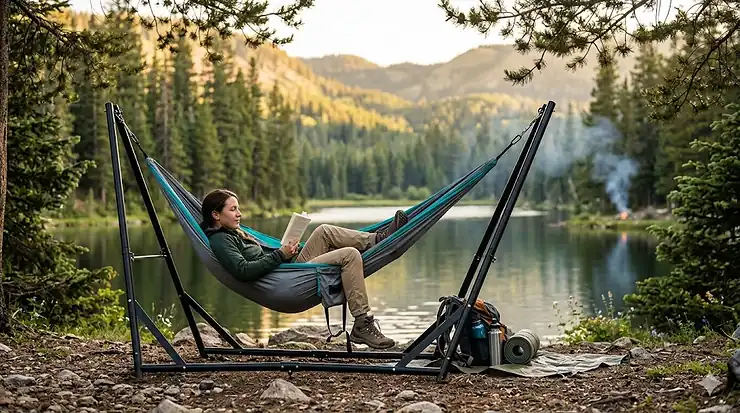
A hammock stand for camping is a freestanding metal or aluminum frame that suspends a hammock without trees, letting you set up anywhere flat — beaches, deserts, gravel pads, RV sites — in roughly the time it takes to argue about who forgot the marshmallows.
I’ve pulled into more than one “campsite” that turned out to be a gravel pull-off with zero trees in sight, a cooler, and a view that made the lack of shade entirely forgivable. That’s the moment a stand earns its keep. No more pacing off twenty feet between two trunks that are either too close together or angled like they’re trying to dump you in the dirt. You drop the legs, click the poles, and you’re horizontal in under three minutes.
This isn’t a roundup built from spec sheets and guesswork. I dug through real listings, manufacturer pages, and long-term reviews to land on seven stands that are actually sold today — steel workhorses, aluminum featherweights, and one chair-mode oddball that went viral for good reason. Whether you’re outfitting a weekend car-camping setup or chasing the lightest possible kit for a beach trip, there’s a stand below built for that exact use case. We’ll get into specs, sure, but more importantly, we’ll talk about what those specs actually mean once you’re standing in a parking lot trying to figure out if this thing will hold you and your dog.
Quick Comparison Table
| Pick | Material | Weight Capacity | Best For |
|---|---|---|---|
| Kammok Swiftlet | Aluminum | 300 lb | Overall versatility |
| Amazon Basics Heavy-Duty Stand | Steel | 400 lb | Tightest budget |
| ENO Nomad | Aluminum | 300 lb | Most packable |
| Vivere Double Hammock + Stand | Steel | 450 lb | Couples / value bundle |
| ENO Parklite Chair Stand | Aluminum | 300 lb | Chair-mode lounging |
Look closely and a pattern jumps out: aluminum picks cap around 300 pounds while steel frames climb past 400. That’s not a coincidence — aluminum trades a bit of brute strength for weight savings, which is exactly why backpacker-adjacent stands like the Nomad and Swiftlet stick to that range. If you’re car camping with a partner or a dog along for the ride, lean steel. If you’re hauling the stand any real distance on foot, the lighter capacity is the price of admission for not throwing out your back loading the trunk.
✨ Found a pick you like already?
Click through to check current availability and pricing — these stands tend to sell out before long weekends. 🏕️
Top 7 Hammock Stands for Camping: Expert Analysis
These seven cover the realistic spread of how people actually camp with a hammock — from the person who wants one sturdy steel frame parked at basecamp all weekend, to the ultralight crowd shaving ounces off a 15-pound aluminum kit. I’ve grouped budget, mid-range, and premium options together rather than ranking them 1-through-7, because “best” here depends entirely on whether you’re car camping or hiking in.
1. ENO SoloPod Hammock Stand
The SoloPod is the stand equivalent of a cast-iron skillet: heavy, unkillable, and not going anywhere once it’s set up. Built from steel tubing with a 400-pound capacity, it’s engineered for one hammock and one job — staying rock-solid on whatever ground you give it, including the lumpy, root-pocked dirt that ruins lighter stands.
What the spec sheet won’t tell you: the rubber-tipped feet matter more than they sound like they should. On packed gravel or a slightly sloped site, a stand without grippy feet will slowly walk itself sideways every time you climb in. The SoloPod doesn’t budge. What most buyers overlook is that this stability comes at the cost of flexibility — it’s built around a single hammock and isn’t the easiest fit for double-wide or spreader-bar styles. Owners consistently note the tool-free setup is genuinely fast, though more than a few mention it’s the heaviest thing in their trunk after the cooler.
✅ Pros: rock-solid on uneven ground, tool-free assembly, single-hammock stability beats anything lighter
❌ Cons: heavy for backpacking, limited hammock compatibility
Best for: solo campers basecamping at a site for multiple nights who’d rather carry weight than risk a wobble.
Price: typically in the $130–$170 range, depending on color and current promotions. For a steel stand built to outlast a decade of trips, that’s a fair trade.
2. Kammok Swiftlet Portable Hammock Stand
If the SoloPod is the cast-iron skillet, the Swiftlet is the titanium spork — light enough that you almost forget it’s there, but engineered with enough cleverness that it doesn’t feel like a compromise. At 15 pounds with an aluminum frame, it holds 300 pounds and flexes slightly to distribute weight across uneven terrain instead of fighting it.
The 11 adjustable points per arm aren’t just a marketing line — they’re the difference between a hammock that hangs at an awkward, too-tight angle and one with the deep, comfortable sag you actually want. In my experience reading the fine print on stands like this, that adjustability is what separates a stand you tolerate from one you actually look forward to using. It also flips into chair mode, fits hammocks from Kammok’s smallest single up to a double XL, and packs into its own travel bag. The catch: if you’re over 6’4″, you’ll want the separate extension bar, since the base setup runs a touch short for taller frames.
✅ Pros: genuinely lightweight at 15 lbs, highly adjustable hang angle, chair-mode conversion
❌ Cons: pricier than steel alternatives, tall campers need an add-on
Best for: anyone who wants one stand that does car camping, beach days, and the occasional backpacking-adjacent trip without complaint.
Price range: around $300–$350 at the time of writing — premium territory, but the materials and engineering justify it for frequent use.
3. ENO Nomad Hammock Stand
The Nomad takes a different engineering approach entirely: instead of upright legs, it suspends the hammock from a pair of collapsing aluminum poles connected by a ridgeline, more like assembling a dome tent than a traditional A-frame stand. The payoff is a packed size of just 34 inches and a total weight of 15 pounds — light enough to genuinely consider for a long weekend where every pound in the pack counts.
The shock-corded pole system means setup is fast even for people who’ve never touched a tent pole before; you snap the segments together, and the structure locks itself into shape. What most buyers overlook here is that the suspended design changes how the hammock loads — because you’re hanging from above rather than supported below, a spreader-bar hammock won’t sit comfortably between the uprights the way it would on a traditional frame. This is built for gathered-end camping hammocks, full stop.
✅ Pros: lightest full-size stand on this list, compact 34″ packed size, tarp-pole compatible
❌ Cons: 300 lb ceiling, not spreader-bar friendly, premium price for the weight savings
Best for: campers heading somewhere genuinely treeless — beach, desert, above treeline — who are willing to pay for every ounce saved.
Price range: roughly $250–$300, putting it at the pricier end of the lightweight category.
4. ENO Parklite Hammock Chair Stand
This is the one that went viral, and for once the internet got it right. At just 7 pounds 10 ounces, the Parklite is the lightest freestanding hammock stand currently on the market — lighter than some daypacks, let alone other stands. The trick is that it doesn’t try to be a lie-flat sleeping setup; it’s built specifically to turn a gathered-end hammock into a chair.
The anodized aluminum frame uses a pinch-free push-button assembly that locks together in well under a minute, and the eight combined adjustment points let you dial in exactly how upright or reclined you want to sit. What most buyers overlook: because the base isn’t adjustable for length, this isn’t the stand for lying flat to sleep — it’s purpose-built for sitting, which makes it perfect for campfire hangouts but a poor substitute if you’re trying to replace your tent. Reviewers consistently flag the setup speed and pack size (30″ x 8″ x 8″) as the standout features, with the main complaint being that taller users (6’3″+) may prefer ENO’s larger Parkway stand instead.
✅ Pros: lightest stand available, near-instant setup, fits in a daypack
❌ Cons: chair mode only, not designed for taller campers, hammock sold separately
Best for: campfire lounging, day-trip hammocking, and anyone who wants a chair that packs smaller than a camp chair.
Price range: generally $90–$130, making it one of the more accessible ENO products despite the premium materials.
5. Vivere Double Hammock with Space-Saving Steel Stand
If your camping style involves a cooler, a partner, and zero interest in roughing it more than necessary, the Vivere bundle solves the entire equation in one box. The 9-foot powder-coated steel stand carries a 450-pound capacity — enough for two adults — and comes paired with a cotton-polyester double hammock, so there’s no separate hammock purchase to puzzle over.
The space-saving frame design means it doesn’t sprawl the way a full 15-foot stand would, which matters more than people expect once you’re trying to fit it next to a tent, a table, and a fire ring. The spec sheet won’t tell you this, but the adjustable hooks are the real value-add: moving them to a lower hole tightens the rope tension and raises the hang height, letting you fine-tune comfort without buying a different stand. It’s not the lightest thing to carry, but for a couple who camps from a car rather than a backpack, that’s rarely the deciding factor.
✅ Pros: stand-plus-hammock value, 450 lb capacity for two people, adjustable height
❌ Cons: not built for backpacking, steel frame adds bulk in the trunk
Best for: couples or families who want a complete, ready-to-hang setup without sourcing parts separately.
Price range: bundled, this typically lands in the $100–$150 range — arguably the best dollar-per-feature ratio on this list.
6. Amazon Basics Heavy-Duty Hammock Stand
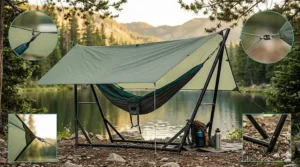
Sometimes the right answer is the unglamorous one. This stand-only option from Amazon Basics skips the bundled hammock entirely and focuses on one job: holding up to 400 pounds on a 9-foot steel-tube frame at a price that won’t make you wince. Assembly is about as simple as outdoor gear gets — fit the posts together, loop your hammock’s rings onto the hooks, done.
What most buyers overlook about budget stand-only options like this is that they’re actually the smarter buy if you already own a hammock you love; paying for a bundled hammock you’ll never use is just wasted money. The included carrying case makes it genuinely portable for car camping, even if the steel build means it’s not winning any weight competitions against the aluminum picks above. It’s not flashy, but for straightforward backyard-to-campsite duty, it does exactly what’s promised.
✅ Pros: lowest price on this list, 400 lb capacity, includes carry case
❌ Cons: steel weight adds up over a long carry, no hammock included
Best for: anyone who already owns a hammock and just needs a reliable, no-frills frame to hang it on.
Price range: commonly found in the $65–$90 range, making it the most budget-friendly stand-only pick here.
7. Sunnydaze 10-Foot Portable Steel Hammock Stand
Built specifically with camping and spreader-bar hammocks in mind, this Sunnydaze stand measures 121.5 inches wide and weighs in at 19 pounds — light for steel, thanks to 1.25-inch heavy-gauge tubing that keeps the frame thin without sacrificing the 330-pound capacity. The snap-button locking mechanism means no tools and no fumbling with bolts in the dark.
In my experience, this is the stand that splits the difference between the ultralight aluminum picks and the heavier steel frames: it’s noticeably easier to carry than the SoloPod or Vivere, but still steel, so it shrugs off rough handling better than aluminum tends to. It’s sized for hammocks up to 10 feet, which covers most single camping hammocks and smaller spreader-bar styles, though anyone running a longer double hammock will want to size up to one of Sunnydaze’s larger frames instead.
✅ Pros: lighter than most steel competitors at 19 lbs, no-tool snap assembly, budget-friendly
❌ Cons: 10-foot length limit excludes larger hammocks, 330 lb ceiling is modest for steel
Best for: solo or single-hammock campers who want steel durability without steel-level weight.
Price range: generally $70–$100, sitting comfortably between the Amazon Basics stand and the premium aluminum picks.
Practical Setup and Maintenance Guide
Buying the right stand only gets you halfway there — the other half is not screwing up the first few uses. Most stand failures I’ve read about trace back to setup mistakes rather than manufacturing defects, so a few habits go a long way.
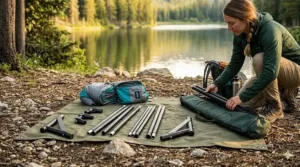
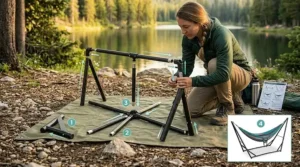
First, always assemble on the flattest ground available, even if that means walking the stand twenty feet from your tent. A stand rated for 400 pounds on level ground is operating well outside spec on a 10-degree slope, because the load shifts unevenly across the legs. Second, check every locking pin or snap-button connection before you climb in — not after you hear it click once, but with a firm tug on each joint. Assembly time on most of these stands runs three to five minutes once you’ve done it twice, but that first setup is worth doing slowly.
For maintenance, steel frames benefit from a quick wipe-down after beach or rainy trips since salt and moisture accelerate rust even through powder coating. Aluminum stands are more forgiving here, but the fabric straps and webbing on adjustable models like the Swiftlet or Parklite should be inspected for fraying every few trips. A frayed strap is the one failure point that actually matters for safety, so don’t skip that check just because the frame still looks fine.
Real-World Campsite Scenarios
The treeless beach weekend: You’ve got a tent, a cooler, and a stretch of sand with nothing taller than a dune. Here, the ENO Nomad or Kammok Swiftlet earns its premium price — both pack down small enough to fit in a beach bag alongside everything else, and neither cares that there’s not a single tree for miles.
The car-camping couple: Two people, one vehicle, a campsite with picnic tables but zero usable trees. The Vivere bundle is built exactly for this — drop the stand, clip in the included double hammock, and you’ve solved seating and a nap spot in one move without sourcing separate gear.
The campfire-only lounger: Not everyone wants to sleep in a hammock; some just want a better seat than a folding chair for evening conversation. The ENO Parklite nails this use case specifically — it sets up in under a minute next to the fire ring and packs away just as fast when it’s time to break camp.
Problem → Solution: Fixing Common Hammock Stand Frustrations
Problem: your campsite bans hammocks on trees. A growing number of state parks and dispersed-camping areas now restrict tree hammocking entirely to prevent bark damage — any stand on this list sidesteps the issue completely since nothing touches a tree.
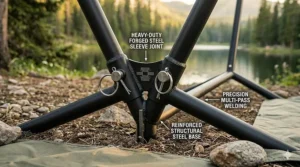
Problem: the stand wobbles on uneven ground. This usually means the feet lack grip or the legs aren’t fully locked. Steel stands with rubber feet, like the SoloPod, handle this better than bare-metal designs; double-check every connection point before adding weight.
Problem: setup takes too long in the dark. Snap-button and shock-corded designs — the Sunnydaze, Nomad, and Parklite all use variations of this — set up by feel almost as fast as by sight, unlike bolt-and-wingnut steel frames that practically require daylight.
Problem: the hammock sags too low or too tight. Look for adjustable strap points rather than fixed hooks. The Swiftlet’s 11 points per arm and the Vivere’s movable hooks both solve this directly, letting you tune sag without buying a different hammock.
How to Choose a Hammock Stand for Camping
Cutting through the spec sheets, here’s the actual decision process worth running before you buy:
- Decide your transport method first. Backpacking or long carries point you toward aluminum under 20 pounds; car camping opens up heavier steel without penalty.
- Match weight capacity to actual use, not just your weight. Add 50–75 pounds of buffer if a kid, dog, or gear bag might join you in the hammock.
- Check hammock compatibility before assuming it’ll fit. Gathered-end and spreader-bar hammocks need different stand geometries — a suspended-pole design like the Nomad won’t comfortably fit a spreader bar.
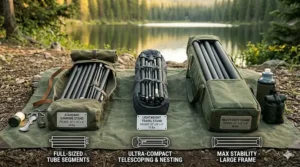
- Consider packed dimensions, not just weight. A 15-pound stand that doesn’t fit your trunk or pack is heavier in practice than a slightly bulkier one that does.
- Look for adjustability if comfort matters more than minimalism. Multiple strap points cost little extra and solve the single most common hammock complaint: an uncomfortable hang angle.
- Factor in setup speed for your actual trips. If you’re moving camp daily, snap-button or shock-corded designs save real time over bolt-together steel.
- Decide stand-only versus bundled. If you already own a hammock you love, paying for a bundled one is wasted money; if you’re starting from scratch, a bundle like Vivere’s often beats buying separately.
Common Mistakes When Buying a Hammock Stand for Camping
The single most frequent mistake is buying based on weight capacity alone without checking length compatibility — a 450-pound-rated stand is useless if your hammock is two feet too long for the frame. A close second is assuming “portable” means backpacking-light; plenty of stands marketed as portable still weigh 30-plus pounds, which is portable in the sense of fitting in a trunk, not in a pack.
Buyers also frequently skip checking whether a stand suits their specific hammock style. Suspended-pole designs like the Nomad work beautifully for gathered-end hammocks but fight against spreader bars, while traditional A-frame steel stands handle both styles without complaint. Finally, plenty of people buy the cheapest option without checking included accessories — a stand-only purchase that seemed like a bargain can end up costing more once you add a hammock, straps, and a carry bag separately.
Steel vs Aluminum Hammock Stands: Which Wins for Camping?
| Factor | Steel | Aluminum |
|---|---|---|
| Typical weight capacity | 400–550 lb | 300 lb |
| Typical stand weight | 19–36 lb | 7–15 lb |
| Best for | Car camping, basecamp use | Backpacking, beach, long carries |
| Rust resistance | Good with powder coat | Excellent |
| Typical price | Lower | Higher |
The honest takeaway here is that this isn’t really a “which is better” question — it’s a “what are you actually doing” question. Steel wins on raw capacity and price, which is exactly why it dominates the budget and couples’ bundle categories. Aluminum wins on the only metric that matters once you’re carrying gear any real distance: weight, full stop. Campers chasing the lightest possible kit pay a real premium for that aluminum frame, and reviewers across the board confirm it’s worth it the moment you’re the one hauling it.
What to Expect: Real-World Performance
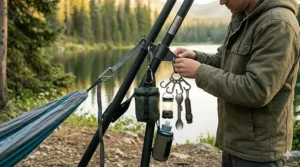
Spec sheets promise stability; reality involves wind, uneven dirt, and the occasional dog deciding the hammock looks like a good nap spot too. In practice, steel stands feel noticeably more planted in gusty conditions simply due to mass — a 36-pound frame doesn’t shift the way a 15-pound one can on loose sand without staked-down feet. Aluminum stands compensate with wider leg spreads and, in cases like the Swiftlet, intentional frame flex that absorbs movement rather than resisting it rigidly.
Setup speed in practice matches the marketing fairly closely across this list — snap-button and shock-corded designs genuinely do assemble in two to four minutes once you’ve practiced once at home, which is worth doing before your first camping trip rather than learning the hard way in a parking lot at dusk.
Long-Term Cost and Maintenance
A $90 budget steel stand and a $300 aluminum one can end up costing roughly the same over five years of regular use, just through different paths. The budget stand needs more frequent strap or hardware replacement and is more vulnerable to rust if stored wet, while the premium aluminum pick costs more upfront but typically needs nothing beyond an occasional wipe-down. If you camp more than a handful of times per year, the math tends to favor paying more upfront for better materials; occasional users rarely recoup the difference and are better served by the budget options.
Features That Actually Matter (And Those That Don’t)
Adjustable strap points matter enormously — they’re the difference between a comfortable hang and a stiff one, and cost manufacturers very little to include. Weight capacity matters, but only up to a point: a 550-pound rating is meaningless overkill for a solo camper who weighs 160 pounds, while marketing language around “extra-thick tubing” often signals little beyond a heavier product.
What doesn’t matter nearly as much as it’s marketed: color options, branded carry bags beyond basic functionality, and capacity numbers far beyond your actual use case. What does matter and gets buried in bullet points: packed dimensions, included hardware, and whether the stand was designed for your specific hammock style.
Safety and Leave No Trace Considerations
Even with a stand, a few safety basics carry over from traditional hammock camping. Always set up on flat, stable ground free of overhead hazards, and never exceed the rated weight capacity — that number exists because of real material limits, not as a suggestion. If you’re transitioning between tree-hanging and stand use depending on the site, it’s worth understanding the broader principles of Leave No Trace hammock camping, since a growing number of parks now restrict tree straps specifically to prevent bark damage — one more reason a freestanding stand keeps more campsites open to you.
For a deeper look at the broader practice this gear supports, Wikipedia’s overview of hammock camping covers the history and trade-offs well, and REI’s expert guide to hammock camping is a solid next read if you’re building out a full sleep system beyond just the stand.
Frequently Asked Questions
❓ What is the best hammock stand for camping?
❓ Are portable hammock stands worth it compared to hanging from trees?
❓ What weight capacity do I need for a camping hammock stand?
❓ Can I use a hammock stand at a campsite that doesn't allow tree hammocking?
❓ Is a steel or aluminum hammock stand better for camping?
Conclusion
A hammock stand for camping solves one specific, recurring frustration: showing up somewhere beautiful and discovering there’s nothing to hang your hammock from. Whether that’s a desert overlook, a crowded state park with strict tree rules, or just a backyard that never grew the right trees, these seven options cover the realistic range of how people actually camp — from the $70 steel frame that just needs to hold you up, to the 7-pound aluminum chair stand that disappears into a daypack.
If you’re still torn, let the transport method decide for you. Car camping with room to spare points toward steel and the Vivere bundle’s all-in-one value. Backpacking-adjacent trips or beach days point toward the Nomad or Swiftlet’s aluminum builds. And if all you actually want is a better seat by the fire, the Parklite solves that specific problem better than anything else on this list. Whichever you land on, the actual upgrade isn’t the gear — it’s never again pacing off twenty feet between two trees that don’t exist.
✨ Found this helpful? Check current pricing on your top pick before the season’s stock runs low. 🏕️
Recommended for You
- ENO Hammock Review for Camping: 7 Best Models Tested in 2026
- 7 Best Ultralight Hammock for Backpacking (2026)
- Hammock vs Tent Camping: 7 Best Picks & Honest 2026 Comparison
Disclaimer: This article contains affiliate links. As an Amazon Associate, I earn from qualifying purchases. If you purchase products through these links, we may earn a small commission at no additional cost to you.
✨ Found this helpful? Share it with your friends! 💬🤗
