In This Article
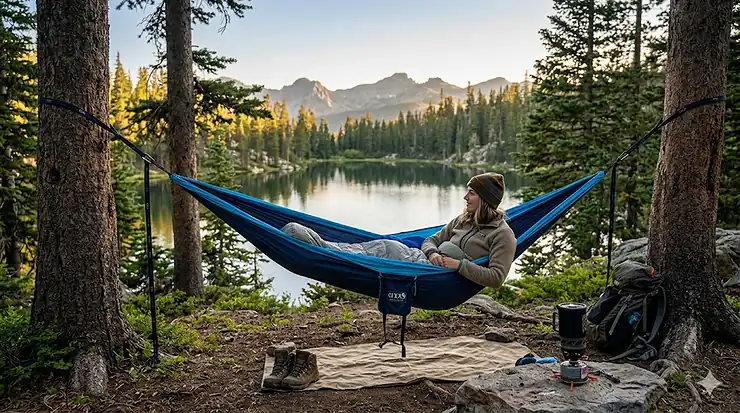
There’s a moment every hammock camper knows. You’ve just clipped in between two pines, let your weight sink into the fabric, and the world goes quiet. No tent poles to wrestle. No sleeping pad to inflate. Just you, the trees, and 30 years of ENO engineering doing its thing.
That moment is why Eagles Nest Outfitters has earned a cult following that would make most outdoor brands weep with envy. But here’s the thing nobody tells you before you drop $60 to $300 on an ENO hammock: not all of them are built for the same kind of hanging. The SingleNest you need for a lunch break at a music festival is a completely different animal from the SubLink system you’d take into a bug-dense backcountry canyon in July. Get that wrong and you’re either carrying dead weight up a mountain or lying sweaty and mosquito-bitten wondering why you didn’t spend $40 more.
This ENO hammock review camping guide exists to fix that problem. I’ve dug deep into the full Eagles Nest Outfitters lineup — the specs that actually matter, the real-world quirks the product pages gloss over, and the honest match between each model and the kind of camper who’ll love it. We’re covering 7 hammocks currently available on Amazon, from the legendary DoubleNest to the ultralight SubLink system, with enough analysis to make your buying decision genuinely easy.
What is an ENO hammock review for camping? Simply put: it’s a breakdown of Eagles Nest Outfitters’ hammock lineup, comparing suspension systems, fabric weight, capacity, packed size, and real-world comfort so you can choose the right model for your specific outdoor style — whether that’s backyard lounging or a week on the PCT.
Let’s get into it.
Quick Comparison: Top ENO Hammocks at a Glance
| Model | Capacity | Weight | Packed Size | Best For | Price Range |
|---|---|---|---|---|---|
| ENO DoubleNest | 400 lbs | 19 oz | 4″ x 5″ | Couples + versatile campers | Around $70–$85 |
| ENO SingleNest | 400 lbs | 16 oz | 3.5″ x 4.5″ | Solo day campers | Around $55–$65 |
| ENO TechNest | 350 lbs | 18 oz | 4.25″ x 6″ | Feature-hungry campers | Around $90–$110 |
| ENO JungleNest | 300 lbs | ~22 oz | 9.5″ x 4.5″ | Bug-country overnight | Around $130–$160 |
| ENO SkyLite | 250 lbs | ~20 oz | 15″ x 4.5″ | Flat-sleep enthusiasts | Around $180–$220 |
| ENO SuperNest | 400 lbs | 19.5 lbs | 25.5″ x 13.5″ | Backyard/car camping | Around $200–$280 |
| ENO SubLink System | 300 lbs | 2 lbs 7 oz | 9.75″ x 9.5″ | All-in-one backpackers | Around $250–$300 |
Looking at the comparison above, the clear takeaway is that ENO’s lineup has very intentional segmentation — the SingleNest and DoubleNest dominate the budget-friendly portable category, while the JungleNest, SkyLite, and SubLink are built for people who sleep in their hammock rather than just lounge in it. The SuperNest is almost a separate product category entirely: a premium backyard piece that happens to wear the ENO logo. Budget-conscious buyers should note that the SingleNest and DoubleNest offer the best value per ounce by a significant margin, while overnight and backpacking campers will find the extra investment in the JungleNest or SubLink pays off quickly when bugs or weather arrive uninvited.
💬 Just one click — help others make better buying decisions too!😊
Top 7 ENO Hammocks: Expert Analysis
1. ENO DoubleNest Hammock
The DoubleNest is the hammock that made ENO a household name in outdoor circles, and after years on the market, it still earns that reputation every single time.
The hammock body runs 9’6″ long and 6’4″ wide, with a 400-pound capacity — roomy enough for two adults of very different sizes to hang together comfortably. The FreeWave® nylon fabric is the quiet hero here: it’s breathable enough for summer heat but dense enough to actually hold its shape under load, unlike some discount hammocks that turn into a fabric cocoon the moment you sit down.
What most buyers overlook about the DoubleNest is how well it works solo. The extra fabric on the sides is genuinely useful — you can bundle yourself up in wind, share the space with a dog or gear, and the additional room means taller people won’t feel like they’re being squeezed into a taco shell. It also packs to 4″ x 5″ and weighs 19 oz, which means it earns its place on day hikes and weekend trips without a second thought.
Customer sentiment on Amazon is overwhelmingly positive, with reviewers consistently praising the color selection — the DoubleNest comes in 30 different color combinations including prints and “Giving Back” hammocks, where a portion of each sale goes to organizations like the PCTA, ATC, or Leave No Trace.
✅ Pros:
- Roomy enough for two, genuinely comfortable solo
- Exceptional color variety and limited edition options
- Incredibly packable for its size
❌ Cons:
- Straps sold separately (budget for the Atlas Straps as well)
- Slightly heavier than the SingleNest for true gram-counters
Value verdict: The DoubleNest in the $70–$85 range is the best all-around hammock ENO makes. If you only buy one, this is it.

2. ENO SingleNest Hammock
The SingleNest is where most people start their ENO journey, and for good reason. It strips the formula down to its essentials: FreeWave® nylon, aluminum carabiners, a stuff sack, and a geometry optimized for one comfortable human.
At 9’6″ x 4’10”, the SingleNest gives most users all the room they need for casual day use — lounging by a river, a lunch break on a trail, or an afternoon nap at a campsite. It weighs 16 oz and packs to 3.5″ x 4.5″, which is essentially the size of a baseball. Throw it in any daypack and forget it’s there.
The spec sheet won’t tell you this, but the SingleNest’s narrower width is actually a feature for some users, not a limitation. Narrower hammocks create a deeper “cradle” hang that many people find more comfortable for short rest sessions — you’re cradled in, not flopping around in extra fabric. The tradeoff? Heavier or taller users mention that the SingleNest’s narrower dimensions make extended sleeping sessions less comfortable than the DoubleNest, particularly for anyone over 6 feet or 200 lbs trying to achieve a diagonal lay.
Amazon reviewers consistently describe setup as genuinely quick — most report being in the hammock within 5 minutes of arriving at a campsite, assuming they already have straps.
✅ Pros:
- Lightest ENO gathered-end hammock at 16 oz
- Smallest packed size — fits anywhere
- Lowest entry price in the lineup
❌ Cons:
- Not ideal for taller/larger users sleeping overnight
- Straps not included
Value verdict: Around $55–$65, the SingleNest is the best ENO hammock for day use, festivals, and camping trips where you’re sleeping in a tent and just want a lounger.
3. ENO TechNest Hammock
The TechNest is what happens when ENO asks “what if the DoubleNest had a tech upgrade?” — and the answer is genuinely compelling.
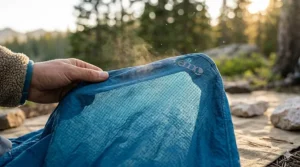
The TechNest uses 100% recycled UltraWave™ 40D Ripstop Nylon with a PFC-free water repellent finish, carries a 350-pound capacity, and measures 9’6″ x 6′ in the hammock body. That recycled-material construction isn’t just a marketing checkbox — the UltraWave fabric has a noticeably silkier hand-feel than standard FreeWave® nylon, which gear reviewers consistently call out as the best-feeling material in ENO’s lineup. The 40-denier ripstop nylon taffeta is super soft and breathable against the skin, and it’s been cited as the best-feeling fabric across multiple comparative hammock tests.
The real upgrade is the integrated stuff sack with a rolltop closure, plus a mesh cargo pocket that keeps your phone, headlamp, and snacks within reach without the whole hammock becoming a scatter field. Specially designed aluminum carabiners are linked with reflective rope — a subtle but genuinely smart feature for nighttime visibility around camp.
Who is the TechNest for? The camper who’s graduated past the DoubleNest and wants a more feature-rich hang without going full expedition hammock. It’s the sweet spot between everyday portability and comfort-focused overnight capability.
✅ Pros:
- Recycled, bluesign® approved fabric with superior feel
- Reflective rope carabiner system for nighttime safety
- Mesh cargo pocket keeps essentials organized
❌ Cons:
- Higher price than DoubleNest/SingleNest for modest feature gains
- 350-lb capacity (lower than DoubleNest’s 400 lbs)
Value verdict: In the $90–$110 range, the TechNest rewards campers who’ll actually use its features — if you’re doing overnights without a bug net and want the most comfortable bare hammock in the lineup, this is it.
4. ENO JungleNest Hammock
The JungleNest solves the most universally complained-about problem in hammock camping: bugs. And it solves it elegantly.
The JungleNest hammock body stretches to 10′ x 4’10”, uses NewWave™ 40D Ripstop Nylon for the main body and SkyWeave™ Lite Mesh for the integrated bug net, and carries a 300-pound capacity. The stowable integrated bug net features a DAC Featherlite spreader bar that creates a genuine tent-like canopy overhead — not the floppy, frustrating sock-style nets you find on cheaper integrated systems. At a full 10 feet in length with an integrated spreader bar for increased interior volume, you can stretch out for a proper night’s sleep while completely enclosed against insects.
The aluminum toggle system replaces traditional carabiners, which cuts weight and makes the attachment process faster — though it does mean you need ENO Helios straps specifically (or add-on carabiners to use Atlas straps). That’s the one friction point worth flagging before you buy.
The JungleNest is built for the camper who’s heading somewhere that requires overnight protection — humid forests, Southern summer camping, or anywhere that the bugs at dusk make a no-net hammock genuinely miserable. You’d be amazed how fast “we’ll be fine without bug protection” becomes “this was a terrible decision” in the right environment.
✅ Pros:
- Best-in-class integrated bug net with spreader bar canopy
- Extended 10′ body for full stretch-out comfort
- Lightweight toggle system for fast setup
❌ Cons:
- Lower 300-lb capacity than comparable ENO hammocks
- Requires Helios straps (or add-on carabiners) — compatibility limitation
Value verdict: In the $130–$160 range, the JungleNest is the hammock of choice for warm-weather overnights in bug-dense environments. Non-negotiable if you’re camping anywhere in the Southeast US in summer.
5. ENO SkyLite Hammock
The SkyLite is ENO’s most ambitious product — a bridge hammock design that fundamentally changes how a gathered-end hammock feels to sleep in.
The SkyLite body measures 7′ x 3′ (total length 12’6″), uses NewWave™ 40D Ripstop Nylon and SkyWeave™ Lite Mesh, and carries a 250-pound capacity. The critical difference is the removable DAC spreader bars, which keep the hammock body flat and taut rather than curved like a banana — this is what separates a bridge hammock from a gathered-end hammock, and if you’ve ever woken up from a gathered-end hang with a backache, the difference will feel like a revelation.
The integrated bug net with zippered door creates a tent-like enclosure that makes the SkyLite genuinely function as your sole shelter in warm weather. The spec sheet won’t fully convey this, but the SkyLite’s sleeping position is the closest to a flat-ground bed that any ENO hammock achieves — which is why flat-sleeping campers, side-sleepers, and people with back sensitivity tend to fall hard for this one.
The tradeoff is the lowest weight capacity in the lineup at 250 lbs, and a packed size of 15″ x 4.5″ that’s noticeably bulkier than the gathered-end models.
✅ Pros:
- Genuinely flat sleeping surface — game-changer for back and side sleepers
- Integrated bug net with proper zippered door
- DAC spreader bars create superior interior volume
❌ Cons:
- 250-lb capacity limits user range
- Larger packed size — less ideal for ultralight backpacking
Value verdict: In the $180–$220 range, the SkyLite is worth every dollar for campers who’ve struggled with back comfort in traditional gathered-end hammocks. A transformative hang.
6. ENO SuperNest Hammock
The SuperNest is a different beast entirely — this isn’t a backpacking hammock. It’s backyard luxury, engineered for the patio more than the trail.
The SuperNest uses Olefin body fabric with polyester lining, anodized aluminum hardware, and stainless steel hardware, carries a 400-pound capacity, and weighs a substantial 19 lbs 8 oz. That weight tells you everything: this hammock stays put, seasonally, outdoors. ENO spent three years developing prototypes and testing weather-resistant materials, and the result features a curved spreader bar made from anodized aluminum that contours the hammock in two directions — improving comfort, safety, and stability compared to flat-bar designs.
The 3D-contoured design and Olefin fabric are engineered to stay outdoors through weather, which no other ENO hammock in this lineup can claim. If you’ve bought cheap spreader-bar hammocks that died after one season — fabric fading, hardware rusting, ropes fraying — the SuperNest is the category correction. It’s significantly more expensive, but the quality gap is equally significant.
This hammock is for the homeowner who wants a legitimate outdoor furniture piece, not a camping product pressed into backyard service.
✅ Pros:
- Built for permanent outdoor installation — weather-resistant materials
- 400-lb capacity on a spreader-bar design
- 3D contoured design for superior stability vs. flat-bar hammocks
❌ Cons:
- 19+ lbs — not portable in any meaningful sense
- Largest packed size: 25.5″ x 13.5″ x 13.5″
Value verdict: In the $200–$280 range, the SuperNest is expensive for a backyard hammock — but it’s designed to outlast three cheap alternatives. If you’re treating it as furniture, it’s worth it.
7. ENO SubLink Ultralight Hammock System
The SubLink is the only product on this list that shows up ready to camp. Everything else requires buying straps separately — the SubLink bundles a complete shelter system in one package.
The SubLink system includes the Sub6 ultralight hammock, Helios ultralight hammock straps, ProFly Sil Rain Tarp, and Guardian SL Bug Net, all packing down to 9.75″ x 9.5″ x 4.5″ and weighing 2 lbs 7 oz at a 300-pound capacity. The Sub6 hammock itself weighs only 5.8 oz — making it one of the lightest hammock bodies available anywhere, not just within ENO’s lineup.
The included straps feature a no-knot 8′ design with a fine-tune adjustment system, and the mosquito net delivers 360-degree mesh protection for genuine bug-free camping. The ProFly Sil rain tarp rounds out the package, meaning this system handles bugs and weather without any additional purchases.
The honest caveat: the Sub6 hammock body is relatively small — at 105″ x 47″, it’s best suited to people of smaller stature, and taller campers may find the hammock body insufficient for a comfortable overnight stretch. That said, for the right user — a lightweight-obsessed backpacker in the 5’4″–5’10” range — this complete system at roughly 2.5 lbs is extraordinary value.
✅ Pros:
- Complete shelter system — hammock, straps, bug net, and rain tarp included
- Sub-3-pound total weight for the full system
- Best all-in-one value for beginner backcountry hammock campers
❌ Cons:
- Sub6 hammock body short for taller users
- 300-lb capacity (lower than flagship models)
Value verdict: In the $250–$300 range, the SubLink is the most intelligent purchase for new hammock campers who want to start right rather than buy components one miserable trip at a time.
How to Set Up Your ENO Hammock: A Practical Usage Guide
Setup sounds simple in theory. In practice, people make the same five mistakes every weekend, and a few minutes of knowledge prevents all of them.
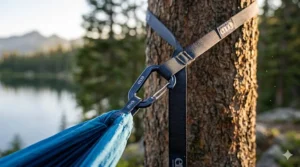
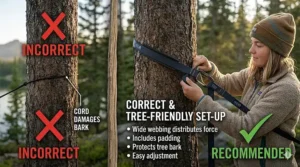
Step 1: Choose the right trees. You want two healthy, living trees with trunks at least 6–8 inches in diameter and roughly 10–15 feet apart. Dead trees fail without warning. The Leave No Trace Center recommends avoiding trees with damage or loose bark, and ENO itself designs all its strap systems to be tree-friendly with wide webbing that distributes pressure.
Step 2: Get your strap height right. Wrap your Atlas or Helios straps around each tree at about shoulder height — somewhere between 5 and 7 feet off the ground. Straps too low means a hammock that hangs too flat; straps too high means a precarious climb in and a bone-rattling drop if a carabiner slips.
Step 3: Aim for a 30-degree hang angle. This is the golden rule of hammock geometry. The strap-to-horizontal should form roughly a 30-degree angle — a tighter angle creates a flat hang that’s unstable, while a steeper angle creates excessive tension on the trees and your suspension. The American Camping Association recommends keeping hammock hanging height at 18 inches or less for safety — low enough to catch you without injury if you fall.
Step 4: Clip in and test before committing. Sit on the edge first. Bounce gently. A properly hung hammock shouldn’t sway violently — just settle with your weight.
Step 5: Dial in the diagonal lay. The biggest mistake new hammock campers make is lying straight along the hammock’s length. Shift your body diagonally — angled about 20–30 degrees off-center — and the gathered-end design will flatten out considerably, taking pressure off your back and shoulders.
Common mistakes to avoid in the first 30 days:
- Storing your hammock wet (mold and mildew damage the fabric)
- Hanging from dead trees (they look fine until they don’t)
- Skipping the diagonal lay and wondering why your back hurts
- Using too-short straps that force a steep angle and damage bark
ENO Hammock Camping: Who Should Buy What — Real-World Scenarios
The product list is only useful if you match yourself to the right hammock. Here are three profiles that capture most buyers.
The Weekend Festival-Goer / Day Camper: You’re not sleeping in the hammock — you’re using it to not sit on the ground at music festivals, state parks, and beach days. Maybe the occasional campsite afternoon. Budget is real. The ENO SingleNest is the perfect answer. At under $65 and 16 oz, it disappears into any bag and comes out whenever there are two trees within 15 feet of each other. You don’t need bug protection. You don’t need a rain tarp. You need a reliable, beautiful hammock that sets up in 3 minutes.
The Casual Overnighter: You’re car camping or hiking moderate trails with established campsites. You want to sleep in the hammock but don’t have a full backcountry setup. The ENO DoubleNest hits this perfectly — add the Atlas Straps and the ENO ProFly rain tarp if your weather is uncertain, and you have a complete sleep system that still fits in a small bag. The DoubleNest’s roomy geometry means you’re actually comfortable through the night, not just technically hanging.
The Serious Backpacker: You’re going multi-night backcountry and every ounce counts, but you’re done waking up soaked or eaten alive. Don’t piece it together yourself on your first trip — buy the ENO SubLink system and get it right immediately. The entire shelter system under 2.5 lbs, with bug protection and rain tarp included, is one of the best entry points into backcountry hammock camping available anywhere. If you’re taller than 5’10”, consider swapping the Sub6 for a DoubleNest body and supplementing with the Guardian bug net and ProFly tarp separately.
✨ Don’t Miss These Exclusive Deals!
🔍 Take your hammock camping to the next level with these carefully selected ENO products. Click any highlighted item to check current pricing and availability on Amazon. The right hammock turns a good trip into one you’ll talk about for years!
ENO Hammock vs. Traditional Tent: What the Comparison Actually Means
This comes up constantly, and the honest answer is more nuanced than most guides acknowledge.
| Factor | ENO Hammock | Traditional Tent |
|---|---|---|
| Setup time | 3–8 minutes | 10–20 minutes |
| Weight (shelter only) | 1–2.5 lbs | 2–6+ lbs |
| Requires trees? | Yes | No |
| Sleep quality | Variable (skill-dependent) | More consistent |
| Ventilation | Excellent | Moderate |
| Cost of full system | $150–$350 | $100–$600+ |
| Best For | Forest camping, warm weather | Open terrain, cold weather |
The comparison above clarifies something most hammock converts miss: hammocks don’t replace tents universally — they replace tents in specific conditions. Forested, temperate campsites where trees are plentiful? Hammocks win on setup speed, weight, and sleep experience once you’ve dialed in the diagonal lay. Alpine terrain, desert camping, or sites with tree restrictions? A tent remains the more sensible choice. The ideal setup for serious campers isn’t hammock versus tent — it’s knowing which to bring based on where you’re going.
According to research cited by the National Park Service, low-impact camping tools that distribute weight across trees (like wide hammock straps) cause significantly less environmental damage than ground sleeping in fragile ecosystems — a genuine environmental argument for hammocks in appropriate conditions.
How to Choose an ENO Hammock: 6 Criteria That Actually Matter
Forget the marketing language. Here’s how to narrow your decision to the right model.
1. Identify your primary use. Day lounging or festival camping → SingleNest. Car camping overnights → DoubleNest. Backcountry overnights → SubLink or JungleNest. Backyard furniture → SuperNest. The use case is the first filter, and most buyers who end up unhappy skipped this step.
2. Check your body dimensions. ENO’s gathered-end hammocks are comfortable for most users up to about 6’1″ in the DoubleNest and TechNest. Taller or heavier campers should look at the JungleNest (10′ body) or consider the bridge-style SkyLite for a flatter lay.
3. Factor in bug and weather conditions. If you’re camping anywhere in the Southern US in summer, an integrated bug net is not optional — it’s the difference between sleeping and not sleeping. The JungleNest and SubLink system both include this protection. For rain, all ENO hammocks pair with the ProFly or ProFly Sil rain tarp.
4. Weigh the strap cost. Every ENO hammock except the SubLink system is sold without straps. Budget $30–$45 for ENO Atlas Straps (for SingleNest/DoubleNest/TechNest) or $35–$50 for Helios Straps (for JungleNest/SkyLite). Factor this into your total cost comparison.
5. Consider packed size versus portability needs. The SingleNest and DoubleNest pack to the size of a softball — genuinely portable for any trip. The SuperNest is essentially furniture. Everything else falls somewhere between. If you’re backpacking, weight and packed dimensions matter; if you’re car camping, they don’t.
6. Read the capacity honestly. ENO’s 400-lb ratings are tested limits, not comfort limits. Two larger adults sharing a DoubleNest will be within the weight limit but might find the geometry cramped. Always match the hammock to your real-world size, not just the technical specification.
Features That Actually Matter (And Those That Don’t)
Some specs in hammock marketing are genuinely useful. Others exist to fill a product description box.
Actually matters — fabric denier. The difference between 30D and 40D nylon isn’t just numbers. 30D (like the Sub6) is lighter and packs smaller but requires more care to avoid abrasion damage on rough surfaces. 40D (like the DoubleNest, TechNest, JungleNest) is more durable for frequent use and careless storage. ENO’s 25+ year legacy of designing outdoor hammocks means these fabric choices come from tested experience, not arbitrary selection.
Actually matters — hardware quality. ENO uses anodized aluminum carabiners throughout its lineup, which resist corrosion and maintain consistent gate function across thousands of uses. Cheaper brands use steel hardware that corrodes — subtle until one morning when a carabiner refuses to open at 6 AM in the rain.
Actually matters — strap width. Wide webbing straps (1″–2″) distribute pressure across tree bark and don’t cause the bark compression or cambium damage that rope does. ENO pioneered the first patented No-Knots-Needed hammock straps — the Atlas and Helios systems both use tree-friendly webbing that most Leave No Trace guidelines specifically recommend.
Doesn’t actually matter — color options. Emotionally meaningful. Functionally irrelevant. Every ENO hammock performs identically regardless of colorway. Buy the color you love and move on.
Doesn’t actually matter — marketing words like “ultra-premium” or “luxury feel.” What matters is fabric denier, weight, and the quality of hardware. ENO’s lineup uses actual spec transparency, which is refreshing — but third-party comparison sites like Treeline Review offer the most objective cross-brand performance comparisons.
Long-Term Cost and Maintenance: What ENO Hammock Ownership Actually Costs
The purchase price is the beginning, not the whole story. Here’s what you actually spend across a typical ENO ownership experience.
Year one setup cost: A DoubleNest (~$75) plus Atlas Straps (~$35) runs about $110 total — and that’s your complete hanging system for casual camping. Add the ProFly rain tarp (~$55–$75) if weather is a concern. A SubLink system at ~$275 is more upfront but arrives complete.
Ongoing maintenance costs are essentially zero if you treat the hammock properly. Wash in cold water, hang dry only, and store dry in its stuff sack. One customer reported that their DoubleNest lasted approximately 10 years, noting it likely would have lasted longer had they stored it properly in the final year. A decade of use on a $75 hammock works out to about $7.50 per year — a frankly absurd cost-per-use ratio.
The most common replacement scenario isn’t wear — it’s the carabiners. After several seasons of hard use, the gate springs can weaken. ENO sells replacement aluminum carabiners inexpensively, so you’re replacing a $5 component rather than the entire hammock when this happens.
Biggest hidden cost: the accessories ecosystem. Bug nets ($40–$60), rain tarps ($55–$120), underquilts ($90–$140 for the ENO Ember), and structural ridgelines ($25–$35) add up quickly for backcountry campers. Budget realistically for your intended use before settling on a hammock body price point.
Common Mistakes When Buying an ENO Hammock
The return section of any hammock retailer tells a consistent story. These are the mistakes buyers make most often.
Mistake 1: Buying a hammock without budgeting for straps. This is the most common. Someone sees the DoubleNest for $75, buys it, then finds the straps cost another $35. Always price the whole system.
Mistake 2: Choosing the SingleNest for overnights when they’re over 6 feet tall. The SingleNest’s narrower width means taller users can’t achieve the diagonal lay comfortably. This isn’t a defect — it’s a use-case mismatch.
Mistake 3: Skipping bug and weather protection in warm-weather camping. No ENO gathered-end hammock (SingleNest, DoubleNest, TechNest) comes with a bug net. If you’re camping in mosquito territory without a plan for bug protection, you will regret it by midnight on night one.
Mistake 4: Overbuying for backyard use. The SuperNest is a wonderful backyard hammock, but buying a $250 backyard hammock and never taking it camping means you left $150 of portability features on the table. A DoubleNest on a hammock stand does 90% of the same job for less.
Mistake 5: Hanging at the wrong angle. A common beginner error — straps hung too low create a flat, unstable hammock that’s uncomfortable and potentially unsafe. The 30-degree angle rule is non-negotiable for comfort and structural integrity.
FAQ: ENO Hammock Review Camping — Your Top Questions Answered
❓ Is ENO hammock review camping worth it for beginners?
❓ Does the ENO DoubleNest include straps for camping?
❓ What ENO hammock is best for sleeping overnight camping?
❓ How many color options does ENO SingleNest camping hammock have?
❓ Are ENO hammocks triple stitched for durability in camping use?
Conclusion: The Right ENO Hammock Is the One That Fits Your Trip
After digging into everything ENO makes in 2026, the through-line is clear: Eagles Nest Outfitters doesn’t make a bad hammock. What they make is a carefully tiered lineup where the wrong choice for your use case can make any model feel disappointing — even when the product itself is excellent.
The DoubleNest remains the gold standard recommendation for most campers: roomy, affordable, durable, and genuinely versatile from backyard to backcountry. The SubLink system is the smartest purchase for backpackers who want to start right. The JungleNest is non-negotiable for bug-country overnights. And the SkyLite deserves serious consideration from anyone who’s ever written off hammock camping because of back discomfort — it’s a fundamentally different sleeping experience.
Whatever you choose, remember the accessories budget. Budget $35–$45 for straps minimum, factor in bug and weather protection for overnight use, and learn the diagonal lay on your first hang. Do those three things and your ENO hammock will still be carrying you comfortably a decade from now.
✨ Don’t Miss These Exclusive Deals!
🔍 These ENO hammocks are available now on Amazon. Click any highlighted product to check current pricing and availability. A few minutes of research today means years of perfect hangs ahead!
Recommended for You
- 7 Best Ultralight Hammock for Backpacking (2026)
- Hammock vs Tent Camping: 7 Best Picks & Honest 2026 Comparison
- 7 Best Hammock Straps in 2026: Tree-Friendly & Tested
Disclaimer: This article contains affiliate links. As an Amazon Associate, I earn from qualifying purchases. If you purchase products through these links, we may earn a small commission at no additional cost to you.
✨ Found this helpful? Share it with your friends! 💬🤗
