In This Article
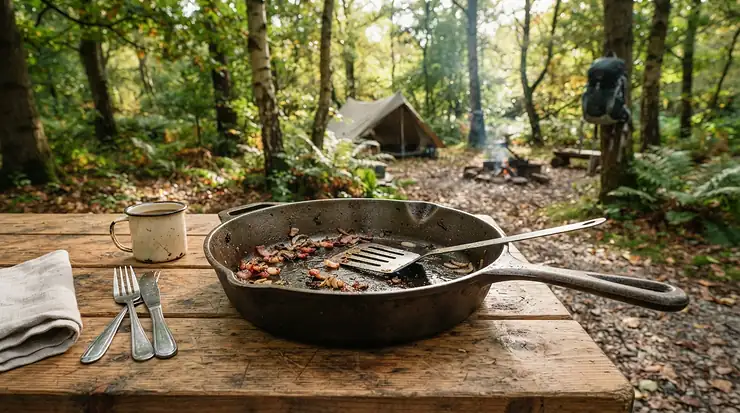
There’s a particular kind of smugness that settles over a campsite when one person is frying bacon in a skillet that’s outlived three presidential administrations while everyone else fumbles with a warped aluminum pan that flexes like a trampoline over the fire. That’s the quiet power of a good cast iron skillet for camping — it’s not flashy gear, it’s just gear that works, every single time, whether you’re at 9,000 feet or in a state park twenty minutes from a Target. This guide is built as a genuine camping skillet review: real products, real specifications, and honest analysis of where each one earns its keep and where it doesn’t.

Picking the right one isn’t as simple as grabbing whatever’s cheapest at the hardware store. Weight matters when you’re hauling gear from the trunk to the site. Handle design matters when that handle has been sitting three inches from open flame for twenty minutes. And whether the pan comes pre-seasoned or needs a curing session in your home oven before its maiden voyage matters more than most first-time buyers realize. Cast-iron cookware has been a kitchen and campfire staple for centuries precisely because it tolerates abuse that would destroy thinner metals — uneven heat, direct flame contact, and the kind of rough handling that happens when dinner is being cooked by headlamp.
Below, we’ve broken down seven real cast iron skillets currently sold for outdoor use, spanning budget three-packs to premium lightweight options that cost more than your tent stakes combined. Every product mention here includes actual specs interpreted for what they mean at the campsite — not just numbers copied off a box. We’ll also walk through comparison tables, buying mistakes to dodge, and a few campfire-tested habits that make cast iron easier to live with once you’re home. Let’s get into it.
Quick Comparison Table: Best Cast Iron Skillets for Camping at a Glance
| Skillet | Best For | Price Range | Weight |
|---|---|---|---|
| Lodge 10.25-Inch Seasoned Skillet | Best overall / first-timers | Under $35 | ~4.5 lbs |
| Lodge 12-Inch with Hot Handle Holder | Best handle heat protection | $35-$50 range | ~6 lbs |
| Field Company No. 8 | Best premium / lightest build | $130-$170 range | ~4 lbs |
| Utopia Kitchen 3-Piece Set | Best for families & groups | $35-$55 range | Varies by size |
If you only remember one row from this table, make it this: weight and budget move in opposite directions almost every time, and there’s no single “best” pick — only the best pick for how you actually camp. A family hauling gear thirty feet from a truck bed can absorb the extra pound and a half of a Lodge 12-inch without blinking, while a backpacker counting ounces will feel that difference on every uphill mile. We’ll unpack the full lineup, including three more contenders, in the detailed breakdown below.
Found a favorite already? Bookmark this page and keep scrolling — the deeper comparisons below might change your mind.
Top 7 Cast Iron Skillets for Camping: Expert Analysis
1. Lodge 10.25-Inch Seasoned Cast Iron Skillet — best all-around pick for beginners
The reason this skillet shows up on nearly every camping gear list isn’t marketing — it’s math. Lodge casts this pan from a single piece of iron in South Pittsburg, Tennessee, and sells it pre-seasoned with vegetable oil, so it’s genuinely ready to cook the moment it comes out of the box.
At roughly 4.5 pounds and 10.25 inches across, it strikes a real balance: heavy enough to hold heat evenly across a lumpy campfire, light enough that packing it doesn’t require a dedicated crate. The helper handle on the opposite side of the main handle isn’t decorative — it’s the difference between a controlled pour and a lap full of hot bacon grease. Reviewers consistently note that this pan tied premium competitors for even heat distribution during side-by-side tortilla tests, which says a lot given the price gap.
Who should buy it: first-time cast iron owners, budget-focused campers, and anyone who wants one skillet that also works at home. It’s not the lightest option here, and it’s not the prettiest surface out of the box (that comes with use), but it’s the pan most people should default to unless they have a specific reason not to.
Aggregated review sentiment across major outdoor gear outlets is remarkably consistent: owners praise the durability and the fact that it’s manufactured in the USA, while occasional complaints center on the seasoning needing a top-up after the first few uses in humid conditions.
Pros:
- ✅ Pre-seasoned and cook-ready straight out of the box
- ✅ Even heat retention across uneven campfire flames
- ✅ Widely available with a large size range if you upgrade later
Cons:
- ❌ Heavier than premium thin-cast alternatives
- ❌ Surface needs occasional re-seasoning in damp climates
Price sits in the affordable range, typically under $35, and the value verdict is simple: for a first cast iron skillet for camping, this is close to the safest purchase you can make.
2. Lodge 12-Inch Cast Iron Skillet with Silicone Hot Handle Holder — best handle heat protection
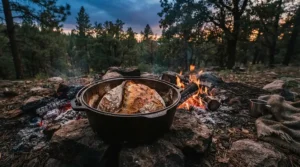
Lodge skillet camping fans who’ve been burned — literally — by a bare cast iron handle will understand why this variant exists. The 12-inch pan itself carries the same single-cast construction and pre-seasoned finish as its smaller sibling, but it ships bundled with a red silicone hot handle holder that slides over the metal handle and stays cool to the touch even after twenty minutes over active flame.
The upsized 12-inch cooking surface means more real estate for a full breakfast spread — four eggs and a pile of hash browns fit without overlap, something the 10.25-inch version can’t manage for a group of four. At roughly 6 pounds, it’s noticeably heavier, and that extra mass is exactly why it handles direct campfire flame so evenly: more iron mass means less temperature swing when one side of the pan sits closer to the coals.
What most buyers overlook about the handle cover is that it’s not just about comfort — it’s a genuine safety feature. Bare cast iron handles routinely exceed 300°F within minutes over open flame, and a moment of forgetfulness (reaching for it out of habit, the way you would with a nonstick pan handle) is how camp burns happen.
Pros:
- ✅ Included silicone hot handle holder prevents accidental burns
- ✅ Larger 12-inch surface feeds a group in one pass
- ✅ Same trusted single-cast Lodge construction
Cons:
- ❌ Noticeably heavier to pack and to lift one-handed when full
- ❌ Handle holder can scorch if left too close to direct flame
Expect a price range of roughly $35-$50, and given that a standalone handle cover typically costs $10-$15 anyway, this bundle represents genuinely solid value for anyone cooking directly over coals rather than a camp stove.
3. Camp Chef 12″ True Seasoned Cast Iron Skillet — best for dual-spout pouring control
Camp Chef built its reputation on car-camping cookware, and this skillet reflects that DNA directly. The standout feature is a pair of pour spouts cast into opposite sides of the rim, which means draining bacon grease or pouring pancake batter doesn’t require the awkward wrist angle that single-spout pans demand.
The comfort-grip handle is wider and flatter than Lodge’s rounded design, which spreads pressure across more of your palm when the pan is fully loaded — a small ergonomic choice that matters more than it sounds like after the third flip of a heavy skillet. Camp Chef’s “True Seasoned Finish” is applied without added chemicals and gets the pan cooking-ready immediately, similar in practice to Lodge’s approach.
Here’s the honest caveat worth flagging: independent testing from outdoor gear reviewers found the factory seasoning on this model needed reinforcement before it performed well on delicate foods like eggs, with one tester noting a test egg stuck badly on first use. That’s not unusual for budget-tier pre-seasoning, but it does mean new owners should plan on an extra seasoning pass rather than assuming it’s flawless from day one.
Pros:
- ✅ Dual pour spouts simplify draining and pouring
- ✅ Wide comfort-grip handle reduces hand fatigue
- ✅ Competitively priced against other 12-inch options
Cons:
- ❌ Factory seasoning often needs a reinforcement pass before eggs release cleanly
- ❌ Handle can retain more heat than competing designs during long cook times
Priced in the $30-$45 range, it’s a reasonable mid-tier pick, especially for campers who prioritize the pouring convenience over flawless out-of-box nonstick performance.
4. Victoria 12-Inch Cast Iron Skillet — best Lodge alternative with a plant-based seasoning
Victoria has quietly built a loyal following among cooks who want cast iron without the chemical-coating debate some brands face — this skillet is pre-seasoned using a plant-based oil rather than a synthetic finish, and it’s manufactured in Colombia rather than the U.S., which is worth knowing if country-of-origin factors into your purchase decisions.
At 12 inches with a long single handle (no helper handle here, which is the main structural difference from the Lodge equivalent), it’s built for campers who prioritize simplicity over accessory features. The cooking surface has a slightly rougher factory texture than Lodge’s smoother finish, which honestly works in cast iron’s favor early on — a bit of texture actually helps the seasoning layer bond faster during the first several uses.
Based on the spec comparison against Lodge and Camp Chef, Victoria’s core trade-off is straightforward: you’re getting comparable cast iron performance at a comparable price, minus the helper handle, in exchange for a seasoning process some buyers specifically seek out.
Pros:
- ✅ Plant-based seasoning appeals to buyers avoiding synthetic coatings
- ✅ Comparable heat retention to leading American brands
- ✅ Competitive pricing against similarly sized skillets
Cons:
- ❌ No helper handle for controlled pouring
- ❌ Smaller aftermarket accessory ecosystem than Lodge
Expect to pay in the $25-$40 range, positioning it as a genuine budget-to-mid alternative for shoppers who’ve already decided cast iron pan camping is the way to go but want options beyond the most obvious brand.
5. Field Company No. 8 Cast Iron Skillet — best premium pick for weight-conscious campers
This is where “cast iron” and “lightweight” stop being contradictory terms. Field Company casts this pan thinner than traditional foundry skillets, and at roughly 10.25 inches across, it weighs meaningfully less than a Lodge of the same diameter — a genuine advantage for anyone who backpacks part of the way into a site or simply hates lugging dead weight through a parking lot.
That thinner casting isn’t just about ounces, either. Thinner iron heats up faster — outdoor gear testers have clocked butter sizzling in under two minutes on this pan, noticeably quicker than traditional thick-cast alternatives. The trade-off, and it’s a real one, is that thinner iron also cools faster and can scorch food more easily if you cook it like a heavier pan; the standard advice from testers is to turn the heat down slightly compared to what you’d use on a traditional Lodge-style skillet.
The surface finish is smoother than most mass-market competitors, closer to a vintage heirloom pan than a modern casting, and it arrives pre-seasoned and ready to use. Who is this for? Campers who already own a heavy Lodge at home and want a dedicated, packable option for trips — not someone buying their very first cast iron pan on a tight budget.
Pros:
- ✅ Noticeably lighter than traditional cast iron of the same size
- ✅ Heats up significantly faster than thick-cast alternatives
- ✅ Smooth factory finish reduces early seasoning effort
Cons:
- ❌ Premium price puts it well above budget and mid-range picks
- ❌ Requires lower heat settings to avoid scorching
Priced in the $130-$170 range, this is a genuine investment pan, and the value verdict depends entirely on whether you’ll actually use it at home as well as at camp — if so, the cost per use drops fast.
6. Barebones 10-Inch All-In-One Cast Iron Skillet — best all-in-one with a matching lid
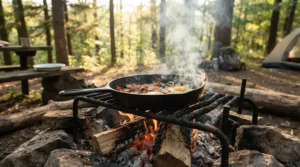
The defining feature here is right in the name: this skillet ships with a fitted lid, which quietly opens up an entire category of camp cooking that a lid-less pan can’t touch — think cornbread, braised dishes, or simply keeping food warm while you finish a second course over the same fire.
Independent testing tied this model with Lodge for the most even heat distribution during controlled tortilla tests, and it reportedly pulled ahead specifically on open-flame campfire performance, where the thicker casting and design apparently manage direct flame exposure better than some thinner competitors. A teardrop-style handle provides a secure single-hand grip, which matters when you’re maneuvering a heavier, lid-equipped pan around active coals.
Here’s the trade-off worth being upfront about: this is genuinely expensive gear, reportedly running over three times the price of a basic Lodge skillet. That’s a steep premium for a lid and a marginal performance edge, and it only makes sense for campers who specifically want the two-in-one skillet-and-baking-dish functionality rather than buying a lid separately.
Pros:
- ✅ Included lid enables baking and braising at camp
- ✅ Strong reported performance over direct open flame
- ✅ Secure teardrop handle for maneuvering a loaded pan
Cons:
- ❌ Premium pricing well above most competitors on this list
- ❌ Extra weight and bulk from the included lid
Expect a price range around $90-$130, and the honest value call is that it earns its premium specifically for campers who bake or braise at the campsite — not for straightforward frying duty alone.
7. Utopia Kitchen 3-Piece Pre-Seasoned Cast Iron Skillet Set — best budget set for families and groups
Sometimes the smartest purchase isn’t one skillet — it’s three sizes in one box. This set typically bundles a small, medium, and large pre-seasoned skillet, which solves a problem the other six entries on this list don’t: cooking multiple dishes simultaneously over one fire or a multi-burner camp stove.
Each pan arrives pre-seasoned with vegetable oil, and the polished cooking surface reportedly develops near-nonstick performance faster than some competitors after just a handful of uses — likely a result of the smoother factory finish common to this manufacturing approach. Aggregated review sentiment highlights good rust resistance even after exposure to morning dew, a real concern for anyone storing cast iron in a tent vestibule or truck bed overnight.
For a family camping trip or a group split between breakfast duty and dinner duty, having three sizes on hand means the person scrambling eggs isn’t waiting on the person frying potatoes. That said, none of the three individual pans in this set will outperform a dedicated single skillet of the same size from Lodge or Field Company — this is a breadth-over-depth purchase.
Pros:
- ✅ Three sizes cover breakfast, dinner, and side dishes at once
- ✅ Strong rust resistance reported even with moisture exposure
- ✅ Best per-pan value of any option on this list
Cons:
- ❌ Individual pans thinner than dedicated single-purchase skillets
- ❌ Storing three pans takes up more packing space
Priced around $35-$55 for the full set, this is the clear pick for group campers who’d rather have options than one flawless pan.
Practical Usage Guide: Seasoning, Setup & Your First 30 Days at Camp
A brand-new pre-seasoned skillet is ready to cook, not ready to be bulletproof — that seasoning layer is thin, and the real, durable patina builds over your first several trips. Before the first use, wipe the surface with a thin layer of high-smoke-point oil (avocado or grapeseed work well) and heat it gently for a few minutes; this reinforces the factory coating before it ever meets a campfire.
At camp, the single biggest mistake is soaking a hot pan in cold water to “clean it fast.” That thermal shock can warp thinner-cast skillets like the Field Company No. 8, and it strips seasoning off any cast iron. Instead, scrape residue while the pan is still warm, wipe with a paper towel, and apply a light oil coat before it goes back in the packing bin. Never use dish soap loaded with heavy degreasers in the first month — a quick rinse and thorough drying does more good than an aggressive scrub.
Common first-30-days mistakes: leaving a damp pan in a sealed tote overnight (hello, rust spots by trip two), cooking acidic tomato-based sauces too early before seasoning has built up, and cranking a camp stove to max heat out of habit from a nonstick pan at home. Ease into high heat, and your skillet rewards you with better performance every single trip.
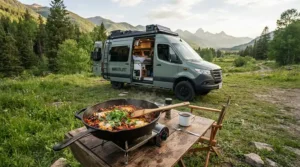
Real-World Scenarios: Which Skillet Fits Your Camping Style
If you’re a college student road-tripping to a state park twice a semester with a tight budget and a hatchback trunk, the Lodge 10.25-inch is the obvious call — cheap, durable, and forgiving of inexperience. If you’re a family of five doing a week at a developed campground with a picnic table and a fire ring, the Utopia Kitchen 3-piece set or the larger Lodge 12-inch with the handle holder makes more sense, since group cooking demands either multiple pans or one large surface with built-in burn protection.
If you’re a minimalist backpacker who still refuses to give up cast iron’s flavor and durability for a titanium pot, the Field Company No. 8 is worth the premium specifically because of its reduced weight. And if your trips regularly include baking cornbread or braising a stew over coals rather than just frying breakfast, the Barebones All-In-One’s lid earns its higher price tag in ways a standard skillet simply can’t match.
Buyer’s Decision Framework
If budget is your top priority, choose the Lodge 10.25-inch or the Utopia set, because both deliver genuine cast iron performance well under $60. If weight is your top priority, choose the Field Company No. 8, because its thinner casting shaves real pounds off your pack without sacrificing cast iron’s heat retention. If you’re cooking for a group, choose the Utopia 3-piece set or a 12-inch skillet, because surface area (or having multiple pans) solves the bottleneck a single small pan creates. If safety around an open flame is your top concern, prioritize a model with a handle cover — either the Lodge bundle or a separately purchased silicone holder for any of the others.
How to Choose a Cast Iron Skillet for Camping
Choosing the right cast iron skillet for camping comes down to matching a handful of specs to how you actually camp, not to which pan has the flashiest marketing copy. Here’s the reasoning, broken into steps:
- Start with diameter relative to your group size. A 10-inch pan comfortably feeds one to two people; 12 inches or larger is where family-sized breakfasts stop requiring two batches.
- Weigh weight against your transport method. Car campers can absorb 6+ pounds without issue; backpackers should prioritize thinner-cast options even at a premium price.
- Check whether it’s pre-seasoned. Nearly every modern option is, but the oil type and finish quality vary — plant-based seasoning tends to build a durable patina slightly faster in humid climates.
- Consider handle design and heat protection. A helper handle aids pouring; a silicone or fabric handle cover is close to mandatory if you cook over open flame rather than a controlled stove burner.
- Factor in accessories like lids. Only pay the premium for an included lid if you actually plan to bake or braise at camp.
- Compare price per pound of iron, not just sticker price. A $150 pan that’s half the weight of a $30 pan isn’t automatically a bad deal if portability genuinely matters to your trips.
- Read aggregated review themes, not star ratings alone. Recurring complaints (like factory seasoning needing reinforcement) tell you more than an average rating number ever will.
Pre-Seasoned Skillets Explained: What “Ready to Cook” Really Means
Every pre-seasoned skillet in this roundup arrives with a thin polymerized oil coating baked onto the iron at the factory, which is genuinely different from the raw, unfinished cast iron sold decades ago that required hours of home seasoning before first use. But “pre-seasoned” is a floor, not a ceiling — it means the pan won’t rust in the box and food won’t catastrophically stick on day one, not that it performs like a decades-old family heirloom immediately.
The oil used varies by manufacturer: Lodge and Camp Chef use vegetable oil, Victoria uses a plant-based alternative, and most premium foundries like Field Company apply a similarly food-safe coating over a smoother base casting. In practice, the difference buyers actually notice is texture, not chemistry — a rougher factory finish (common on budget models) tends to grip an oil layer better in early use, while a smoother premium finish releases food more easily but can take a few more cooking sessions to reach peak nonstick performance. Either way, every pre-seasoned skillet benefits from a light oil wipe-down after each camp trip; skipping this step is the single fastest way to undo the factory work.
Handle Covers and Heat Safety: Why That Little Silicone Sleeve Matters
A bare cast iron handle over an open campfire isn’t a minor inconvenience — it’s a legitimate safety hazard that catches even experienced campers off guard, usually because muscle memory from cooking indoors doesn’t account for direct flame proximity. Metal handles routinely exceed temperatures that cause instant burns within just a few minutes of sitting near active coals, and unlike a stovetop, a campfire’s heat output isn’t consistent or controllable in the same way.
This is exactly why the Lodge 12-inch bundled with a silicone hot handle holder earns a specific recommendation above: it’s a small accessory that solves a real problem, rather than a marketing add-on. If you already own a skillet without a built-in cover, a separately purchased silicone or thick leather handle sleeve costs a fraction of the price of a replacement skillet or, worse, a burn treatment kit. Look for covers rated for genuinely high heat rather than generic silicone oven mitts, since campfire handle temperatures can exceed what typical kitchen silicone is rated to withstand safely, especially during extended cook times.
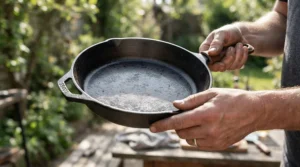
Cast Iron Pan Camping vs Carbon Steel and Non-Stick Alternatives
Cast iron pan camping has real competition these days, and pretending otherwise wouldn’t be honest. Carbon steel pans, increasingly popular in outdoor cookware over the past couple of camping seasons, offer roughly a third less weight than comparable cast iron while still developing a similar cooking patina over time — a genuine advantage for weight-conscious trips. Non-stick aluminum pans, meanwhile, heat up faster and weigh even less, but they can’t tolerate direct open-flame contact the way cast iron and carbon steel both can, and their coatings degrade with the kind of high-heat abuse campfire cooking regularly delivers.
| Material | Weight | Open-Flame Safe | Longevity | Best For |
|---|---|---|---|---|
| Cast Iron (e.g., Lodge 10.25-Inch) | Heaviest | Yes | Decades with care | Durability & heat retention |
| Carbon Steel | Moderate | Yes | Many years | Weight-conscious cast iron fans |
| Non-Stick Aluminum | Lightest | No | 2-5 years typical | Ultralight backpacking, low heat |
Looking at the comparison above, cast iron remains the only material on this list built to survive decades of direct campfire abuse without a functional decline, which is exactly why every product in this article is cast iron rather than an alternative. Carbon steel is a legitimate middle ground worth considering if the weight of a Lodge or Camp Chef skillet is genuinely a dealbreaker, but it demands similar seasoning maintenance without cast iron’s rock-solid heat retention. Non-stick aluminum simply isn’t built for the job once flames are directly involved, regardless of how convenient it feels at home.
What to Expect: Real-World Performance at Camp
On paper, the specs above tell you weight and diameter. In practice, what actually changes your cooking experience is how a given skillet handles the uneven heat that defines campfire cooking — something a controlled stove burner never fully replicates. Heavier, thicker-cast pans like the standard Lodge models absorb heat aggressively and release it slowly, meaning that even when flames lick unevenly at one side of the pan, food cooks at a comparatively steady rate rather than scorching on the hot side while staying raw on the other.
Thinner premium pans like the Field Company No. 8 flip that trade-off: faster heat-up means less waiting for that first cup of coffee’s bacon to start sizzling, but it also means less forgiveness if you walk away from the fire for a few minutes. What most buyers overlook is that cast iron’s “seasoning gets better over time” reputation is entirely real — reviewers who’ve used a single skillet across an entire camping season consistently report the surface darkening into a genuinely slick, low-stick patina that outperforms its first-use condition, sometimes dramatically.
Common Mistakes When Buying (and Using) a Camping Skillet
The most frequent buying mistake is choosing size based on the pan that looks impressive rather than the group size you actually cook for — a 14-inch skillet is overkill and genuinely awkward to pack for a solo or two-person trip. The second is ignoring handle heat protection entirely, especially for campers who primarily cook over open flame rather than a controlled stove, where the earlier safety concerns become a daily reality rather than a hypothetical.
On the usage side, the most common error is aggressive dish soap scrubbing that strips seasoning built up over multiple trips, followed closely by packing a damp pan into a sealed tote, which invites rust faster than almost anything else you could do wrong. A less obvious mistake: assuming all pre-seasoned skillets perform identically out of the box — as the Camp Chef example above shows, factory seasoning quality genuinely varies, and budgeting a few extra minutes for a reinforcement seasoning pass before your first trip prevents a frustrating stuck-egg experience.
Long-Term Cost, Maintenance & Campfire Safety
Cast iron’s real financial argument isn’t the sticker price — it’s the decades-long lifespan that spreads the initial cost across hundreds, potentially thousands, of meals. A $30 Lodge skillet used weekly for ten years works out to pennies per use, a cost-per-use calculation that non-stick aluminum pans simply can’t match once you factor in their typical 2-5 year replacement cycle.
| Skillet | Price Range | Typical Lifespan | Approx. Annual Cost (Weekly Use) |
|---|---|---|---|
| Lodge 10.25-Inch | Under $35 | 20+ years | Under $2/year |
| Utopia 3-Piece Set | $35-$55 | 15+ years | Under $4/year |
| Field Company No. 8 | $130-$170 | 20+ years | Under $9/year |
This table makes the premium pricing on something like the Field Company No. 8 look far more reasonable once it’s spread across its realistic lifespan, especially for someone who’ll also use it at home rather than exclusively at camp. Maintenance costs stay minimal across every option here — a bottle of seasoning oil lasts most owners an entire camping season, and the only real “replacement part” most campers ever need is an inexpensive handle cover.
Safety deserves equal weight in this conversation. The National Park Service’s campfire guidance emphasizes using cooking tools with insulated handles specifically to avoid burns, keeping a safe distance from open flame, and never leaving a hot campfire cooking pan unattended near children or pets — advice that applies directly to every skillet in this roundup. Beyond burn prevention, it’s worth noting that cooking in iron cookware has a documented, if modest, nutritional upside: a systematic review of iron-containing cookware found that food cooked in iron pots showed measurable increases in iron content and bioavailability, an incidental perk that non-stick alternatives simply don’t offer.
Frequently Asked Questions
❓ What is the best cast iron skillet for camping overall?
❓ Is cast iron or carbon steel better for camping?
❓ How do I season a cast iron skillet for camping the first time?
❓ Can a cast iron skillet stay outside overnight at a campsite?
❓ How much does a good camping cast iron skillet cost?
Conclusion
Choosing a cast iron skillet for camping ultimately comes down to being honest about how you actually camp, not how you wish you camped. Weekend car campers with a tight budget lose nothing by grabbing the Lodge 10.25-Inch and calling it done for the next two decades. Families running a busy camp kitchen get more mileage out of the Utopia Kitchen 3-piece set or a larger 12-inch pan than any single “best” pick could offer. And campers who genuinely count ounces on the trail have a legitimate, if pricier, answer in the Field Company No. 8.
What ties every recommendation in this camping skillet review together is the same underlying logic: match the pan’s weight, size, and handle design to your specific trips, don’t skip the seasoning maintenance, and take handle heat seriously around open flame. Do that, and whichever skillet you choose off this list should genuinely outlast most of the rest of your camping gear combined.
Recommended for You
- 7 Best Dutch Ovens for Camping in 2026: Cast Iron Picks That Deliver
- 7 Best Campfire Cooking Grates in 2026: Honest Buyer’s Guide
- 7 Portable Fire Pit for Camping Picks Worth Packing in 2026
Disclaimer: This article contains affiliate links. As an Amazon Associate, I earn from qualifying purchases. If you purchase products through these links, we may earn a small commission at no additional cost to you.
✨ Found this helpful? Share it with your friends! 💬🤗
