In This Article
A summer sleeping bag for backpacking is the piece of gear most people either wildly overbuy or dangerously underbuy — there’s rarely a middle ground. You either end up hauling a three-pound cold-weather bag through a 70°F July night, sweating like you’re in a sauna, or you grab the cheapest rectangular bag you can find and spend 2 a.m. shivering in your tent wondering why you thought “summer” meant “safe.” Neither experience is fun, and both are entirely avoidable once you understand what actually separates a genuine warm-weather bag from a three-season bag wearing a summer costume.
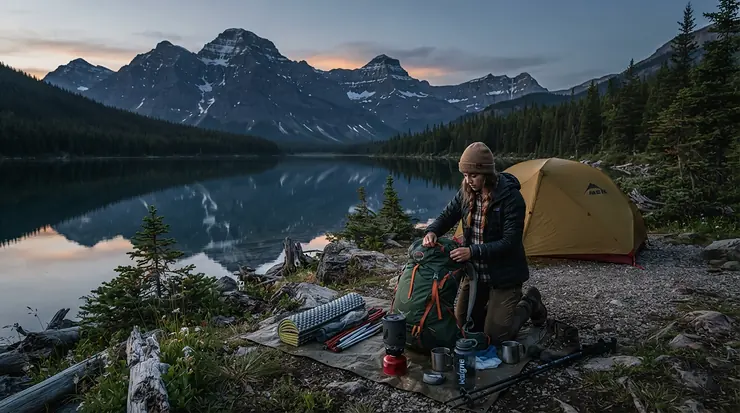
What is a summer sleeping bag for backpacking? It’s a lightweight sleeping bag, typically rated between 30°F and 50°F, engineered to trade cold-weather insulation for reduced pack weight, smaller compressed size, and better breathability during mild overnight temperatures. That trade-off is the whole story here — every ounce a manufacturer strips out of a summer bag is an ounce you don’t carry over ten miles of trail, but it’s also an ounce of margin you lose if the forecast turns.
This guide breaks down seven real, currently-sold summer sleeping bags for backpacking, spanning true ultralight options, mid-range value picks, and one budget-friendly bag that gets people into the backcountry without gutting a paycheck. We’ll also unpack temperature ratings honestly (the number on the tag is not the whole truth), compare summer bags against 3-season models, and walk through setup and care so your bag actually performs the way its spec sheet promises. If you’re heading out on a compact summer sleeping bag for hiking mission where every gram is negotiated, or you just want a breathable sleeping bag for warm nights that won’t turn your tent into a terrarium, there’s a pick here for you.
Quick Comparison Table
| Sleeping Bag | Temp Rating | Weight | Fill | Price Range | Best For |
|---|---|---|---|---|---|
| Western Mountaineering SummerLite | 32°F | 1 lb 3 oz | 850+ FP down | $500-$550 range | Ultralight purists |
| Sea to Summit Spark SPI | 46°F comfort | 12 oz | 850+ FP down | $280-$320 range | Minimalist fastpacking |
| REI Co-op Magma 30 | 30°F | 1 lb 8.4 oz | 850 FP down | $349-$379 range | Best all-around value |
| NEMO Disco 30 | 30°F | 1 lb 15 oz | 650 FP down | $270-$290 range | Side sleepers |
| Enlightened Equipment Revelation 40°F | 40°F | 14-16 oz | 850/950 FP down | $295-$460 range | Quilt converts |
| Kelty Cosmic 20 Down | 20°F rated / 32°F comfort | 2 lb 7 oz | 550 FP down | $165-$190 range | Budget-conscious campers |
| Teton Sports Trailhead 20 | 40-50°F comfort | 2 lb 12 oz | Synthetic | Under $70 | First-time backpackers |
Looking at this lineup, there’s a clear split between the sub-pound ultralight bags built for people who count every ounce and the heavier, more affordable options that trade some weight for a lower price and easier care. The Western Mountaineering SummerLite and Sea to Summit Spark SPI sit at the top of the warmth-to-weight curve, while the Teton Sports Trailhead 20 proves you can start backpacking for less than the cost of a nice dinner out. Note that “temperature rating” isn’t a single number worth trusting blindly — see the section on that further down before you buy based on digits alone.
💬 Found a bag you’re eyeing already? Bookmark this page — you’ll want to compare it against the rest before you check out.
Top 7 Summer Sleeping Bags for Backpacking: Expert Analysis
1. Western Mountaineering SummerLite — lightest fully baffled bag in its class
The SummerLite has been the benchmark ultralight summer bag for backpackers who refuse to compromise on warmth despite an obsession with pack weight, and the 2026 version keeps that reputation intact. At just 1 pound 3 ounces for a regular length, it manages a 32°F rating that most competitors need several extra ounces to match.
Under the hood, the Western Mountaineering SummerLite uses 850+ fill power goose down stuffed into continuous horizontal baffles, which means you can physically shift the down around the bag by hand — push it toward your torso on a genuinely cold night, or spread it thin and vent through the full-length zipper on a warm one. Based on the spec comparison against other ultralight bags in this price bracket, the SummerLite’s 12-denier shell fabric is thinner than almost anything else on this list, which explains both its featherweight feel and why careful owners avoid dragging it across granite.
This bag is for backpackers who have already dialed in the rest of their kit and are hunting for grams in the last few items on their list — thru-hikers, fastpackers, and anyone whose base weight obsession has become a lifestyle. What most buyers overlook about this model is that its snug mummy cut, while efficient for warmth, isn’t for side sleepers who toss and turn; it’s built for people who sleep mostly still.
Reviewers consistently note that the SummerLite performs close to its stated rating, with some noting it runs slightly warm for true summer nights above 60°F unless you unzip it fully. A common thread in aggregated feedback is praise for the continuous baffle design allowing on-the-fly adjustment, alongside occasional comments about the shell fabric needing gentle handling around rocks and zippers.
Pros:
- ✅ Exceptional warmth-to-weight ratio for its price class
- ✅ Continuous baffles let you shift down for comfort
- ✅ Made in the USA with premium 850+ FP down
Cons:
- ❌ Ultralight shell fabric demands careful handling
- ❌ Snug mummy fit isn’t ideal for active side sleepers
At around $500-$550, this is a serious investment for a bag dedicated to warm-weather use, but for ultralight backpackers who prioritize shaving grams above nearly everything else, the SummerLite earns its keep trip after trip.
2. Sea to Summit Spark SPI — most packable bag on this list
If you’ve ever unzipped a stuff sack and wondered whether the sleeping bag was actually inside, that’s the Spark SPI experience. This bag compresses down to roughly the size of a one-liter water bottle and weighs about 12 ounces, making it one of the lightest true sleeping bags — not a quilt — sold for backpacking today.
The Sea to Summit Spark SPI hits a 46°F comfort rating (with a 41°F lower limit) using just over half a pound of 850+ fill power ULTRA-DRY hydrophobic down, paired with a 10-denier nylon outer and 7-denier lining. Here’s what to weigh: the half-length zipper and hybrid baffle construction (box-wall baffles at the torso, sewn-through at the legs) are exactly how the brand shaved so much weight, but they also mean this bag has almost zero margin below its rating — reviewers treat 46°F as closer to a genuine comfort floor than a marketing suggestion.
This is the pick for adventure racers, bikepackers, and fastpackers doing genuinely warm-season missions at lower elevations, where the priority is pack volume over versatility. Aggregated review sentiment across retailer and gear-review sites consistently flags the Spark series as excellent for mid-summer trips but underwhelming the moment temperatures dip into the 30s.
Pros:
- ✅ Among the lightest true sleeping bags sold for backpacking
- ✅ Packs down to roughly a 1-liter bottle’s size
- ✅ RDS-certified hydrophobic down resists moisture
Cons:
- ❌ Half-length zipper limits ventilation options
- ❌ Thin shell fabric offers minimal margin for error
Priced around $280-$320, it’s not the cheapest bag here, but for its weight class, it’s one of the better values — you’re paying for grams saved, and this bag saves more of them than almost anything else on the market.
3. REI Co-op Magma 30 — best all-around value for the price
If you want one bag that covers the widest range of realistic summer and shoulder-season nights without an ultralight price tag, the Magma 30 is the one most gear reviewers point to first. The REI Co-op Magma 30 offers an impressive warmth-to-weight ratio at a mid-range price, and it’s a fantastic option for weight-conscious backpackers on a budget.
The REI Co-op Magma 30 uses 850-fill-power water-resistant down and a 15-denier recycled ripstop shell to hit a 30°F rating at around 1 pound 8.4 ounces for a medium size. What most buyers overlook about this bag is its inclusive sizing — REI offers short, medium, and long lengths in narrow, regular, and wide cuts, which means you’re far more likely to get a true fit than with the one-size-fits-most approach many competitors take, and that fit directly affects how warm a bag actually feels in practice.
This is the pick for backpackers who want near-premium warmth-to-weight performance without paying premium prices, and who value a fitted, less roomy cut that maximizes thermal efficiency. Reviewers consistently rank it near the top of value lists precisely because it undercuts bags like the Therm-a-Rest Parsec by roughly $100-$150 while landing in a similar performance range.
Pros:
- ✅ Best-in-class warmth-to-weight for the price
- ✅ Extensive size range including wide and narrow cuts
- ✅ Recycled, PFAS-free shell and lining materials
Cons:
- ❌ Fitted cut feels tight for larger or restless sleepers
- ❌ Hood and leg room are snugger than roomier competitors
In the $349-$379 range, this bag punches well above its price point, and it’s the one most backpacking guides recommend as the default choice for anyone who isn’t chasing absolute minimum weight.
4. NEMO Disco 30 — roomiest cut for side sleepers
Most backpacking bags assume you sleep on your back. The NEMO Disco 30 assumes you don’t, and that single design decision makes it the standout pick for anyone who tosses, turns, or sleeps curled on their side.
Its Spoon-shaped cut adds extra room at the elbows and knees compared to a standard mummy taper, which sounds like a small thing until you’ve spent a night in a snug bag trying to roll over without dragging the whole thing with you. The Disco 30 pairs 650-fill-power hydrophobic down with Thermo Gill vents — zippered panels on the chest that let you dump heat directly without opening the whole bag — and lands at a 30°F rating for about 1 pound 15 ounces. The spec sheet won’t tell you this, but user reports suggest the Gills are genuinely useful on warm nights, functioning almost like a built-in thermostat rather than the all-or-nothing approach of a single main zipper.
This bag is for side and restless sleepers who’ve fought a mummy bag’s taper for one too many nights, and who are willing to carry a few extra ounces for real comfort gains. Aggregated sentiment from outdoor gear testers who used the Disco across a full summer of trips describes it as the bag reached for specifically when comfort matters more than shaving every possible gram.
Pros:
- ✅ Spoon shape gives real room to move at night
- ✅ Thermo Gill vents allow fine-tuned temperature control
- ✅ RDS-certified, PFC-free down and materials
Cons:
- ❌ Heavier than ultralight-focused competitors
- ❌ 650 fill power is less compressible than 850+ options
Priced around $270-$290, the Disco 30 is a strong mid-range pick specifically because comfort, not just warmth-to-weight math, is genuinely part of the value proposition.
5. Enlightened Equipment Revelation 40°F — most versatile quilt-style option
Not everyone wants a full sleeping bag, and the Enlightened Equipment Revelation 40°F makes a compelling case for backpackers willing to rethink the format entirely. As a quilt rather than a bag, it has no hood, no full-length zipper, and no insulation on the underside — because that portion gets crushed under your body weight anyway and stops insulating regardless.
Here’s what to weigh: a Regular/Regular Revelation in the 40°F rating weighs roughly 14-15 ounces depending on down grade (850 or 950 fill power), which puts it in direct competition with the lightest bags on this list while offering something they don’t — the ability to lay completely flat as a blanket on genuinely hot nights, or cinch the quarter-length footbox zipper closed when temperatures drop. Reviewers consistently describe it as the most versatile piece on a warm-weather sleep system, precisely because it adapts across a wider range of conditions than a fixed-shape bag can.
This is the pick for backpackers who already use, or are willing to learn, a full sleep system approach — quilt plus a properly insulated pad plus a separate layer for your head, since the Revelation has no integrated hood. It rewards people who’ve made peace with a slightly steeper learning curve in exchange for real weight and versatility gains.
Pros:
- ✅ Can be used fully open as a blanket on hot nights
- ✅ Among the lightest options in its temperature class
- ✅ Highly customizable sizing and fill-power options
Cons:
- ❌ No hood, so you need a separate warm layer for your head
- ❌ Requires a well-insulated pad to perform as rated
Prices range from about $295 for the 850-fill version up to $460 for the premium 950-fill build — a wide spread that reflects how customizable this quilt actually is at checkout.
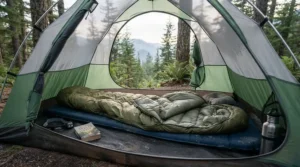
6. Kelty Cosmic 20 Down — best value for backpackers on a real budget
Not every backpacker needs, or can justify, a $300-plus sleeping bag, and the Kelty Cosmic 20 Down exists specifically for that reality. For campers looking for reasonably priced warmth in an ultra-portable package, the Cosmic Down 20 is a stellar bang for your buck.
Despite its 20°F-labeled rating, the Cosmic’s ISO-tested comfort rating sits closer to 32°F, which is exactly the zone most summer and shoulder-season backpackers actually sleep in — the extra warmth margin below that number is a nice buffer rather than a bag you should plan cold-weather trips around. It uses 550-fill-power hydrophobic down, a noticeably lower loft grade than the premium bags on this list, wrapped in a 20-denier nylon shell with a trapezoidal baffle construction that Kelty’s engineering team designed specifically to compensate for the lower fill power with smarter baffle geometry. On paper this means you’re trading some compressibility and weight for a genuinely accessible price.
This bag is for backpackers just getting into the sport, or anyone who wants a legitimate down bag without financing it. Reviewers who’ve used the Cosmic across multiple seasons consistently point to its zippered internal stash pocket and anti-snag zipper as small touches that punch above the price point, while flagging that it runs narrower through the shoulders than pricier competitors.
Pros:
- ✅ Real down insulation at a genuinely accessible price
- ✅ Trapezoidal baffles improve warmth from lower-grade down
- ✅ Anti-snag zipper and internal stash pocket
Cons:
- ❌ Bulkier and heavier than premium down alternatives
- ❌ Narrower fit through shoulders than higher-priced bags
At $165-$190, this is the bag most gear reviewers point new backpackers toward when they ask “what’s the least I can spend and still get real down insulation?”
7. Teton Sports Trailhead 20 — most affordable entry point into backpacking
Every category needs a bag that removes the financial barrier entirely, and the Teton Sports Trailhead 20 is that bag. It’s far from a serious backpacking sleeping bag, but it absolutely crushes the barrier of entry to backpacking with its incredibly affordable price point.
Its fully synthetic fill means it lacks the loft-per-ounce that down provides, which is why the comfort-focused testing lands closer to 40-50°F despite the “20” in its name — a gap worth understanding honestly rather than glossing over, since it’s the single most important thing to know before buying this bag. What most buyers overlook is that synthetic insulation actually has a real advantage here: it keeps insulating even when damp, which makes this an unusually forgiving choice for humid summer car-camping-adjacent trips where a down bag’s moisture sensitivity would be a real liability.
This bag is for people testing whether backpacking is even a hobby they want to commit to, budget-strapped scout troops, or anyone who wants a genuine backup bag without spending real money. Aggregated reviewer sentiment describes it consistently as surprisingly durable and lightweight for its price category, while repeatedly flagging that it’s a summer-only bag and shouldn’t be trusted for shoulder-season nights.
Pros:
- ✅ Among the least expensive backpacking bags sold today
- ✅ Synthetic fill keeps insulating even when damp
- ✅ Durable construction that holds up to beginner mistakes
Cons:
- ❌ Comfort rating runs well short of its labeled temperature
- ❌ Heavier and bulkier than every other bag on this list
Priced under $70, the Trailhead 20 isn’t a bag serious backpackers keep long-term, but as an entry point, it removes every excuse for not getting outside.
What Is a Summer Sleeping Bag? (Quick Answer)
A summer sleeping bag for backpacking is a lightweight, low-bulk sleeping bag rated roughly 30°F to 50°F, purpose-built to minimize pack weight and packed volume for mild-weather trips rather than to handle near-freezing or sub-freezing nights. The tradeoff is straightforward: less insulation means less weight and smaller pack volume, but also less margin if the forecast turns colder than expected.

Temperature Rating: What the Number Actually Means
The single most misunderstood spec on any sleeping bag is its temperature rating, and misreading it is the number one reason backpackers end up cold at 2 a.m. on a trip they planned for “summer.” Most reputable manufacturers now test according to the ISO 23537 standard (which replaced the older EN 13537 standard in 2017), and that standard actually generates three separate numbers rather than one. In the ISO 23537 rating there are three ranges: above the “comfort” temperature is the range where most women will be comfortable, and from “comfort” down to the “limit” number is the range where most men begin getting cold.
That means the single number printed on a bag’s spec sheet or hangtag is usually the lower-limit rating, not the comfort rating — and the gap between those two numbers can be 8-10°F. A bag “rated” to 30°F might only feel genuinely comfortable, for an average sleeper, down to around 38-40°F. Add in the fact that cold sleepers, older gear with compressed loft, and inadequately insulated sleeping pads all push your real-world comfort threshold warmer still, and it becomes clear why buying strictly by the printed number is a mistake. A good rule of thumb: buy 10-15°F below the coldest temperature you realistically expect to encounter, and separately budget for a properly rated sleeping pad, since a sleeping bag’s rating assumes an insulated surface underneath you, not bare ground or a thin foam pad.
Compact Summer Sleeping Bag for Hiking: Why Packed Size Matters
For hikers chasing a genuinely compact summer sleeping bag for hiking, packed volume deserves as much attention as weight, because the two don’t always move together. The Sea to Summit Spark SPI and Enlightened Equipment Revelation both compress to roughly the size of a one-liter bottle, freeing up meaningful pack space for food, water, or a bigger first-aid kit on multi-day trips. Down fill compresses far smaller than synthetic insulation gram-for-gram, which is exactly why every genuinely compact option on this list uses down rather than synthetic fill — and why the synthetic Teton Sports Trailhead 20, despite its low price, takes up nearly triple the pack space of the premium down bags here.
Breathable Sleeping Bag for Warm Nights: What Actually Helps
A breathable sleeping bag for warm nights isn’t just about a lower temperature rating — it’s about airflow design. Full-length two-way zippers, like the ones on the REI Co-op Magma 30 and Western Mountaineering SummerLite, let you vent from the top, bottom, or both simultaneously, effectively turning a mummy bag into an open quilt on a hot night. Dedicated vent panels, like the Thermo Gills on the NEMO Disco 30, go a step further by letting you dump heat from your chest without exposing your whole body to bugs or condensation. Shell fabric matters too: thinner, low-denier nylon (10D-15D) breathes better and dries faster than heavier fabrics, which is part of why ultralight bags often feel less clammy on humid nights even before you factor in the lower fill weight.
💬 Ready to compare specs side by side one more time? Scroll back up to the comparison table before you commit.
Summer Sleeping Bag vs 3-Season Sleeping Bag: Which Do You Actually Need?
The majority of backpacking sleeping bags are 3-season models, rated from around 20 to 30 degrees Fahrenheit, and in summer you can simply unzip a 3-season bag to stay cool while it also works for spring, fall, and alpine trips when temperatures drop toward freezing. That versatility is genuinely appealing, and it’s why a lot of backpackers own exactly one bag and call it good.
But summer bags have lower limits around 40 degrees and offer the least room for error, while keeping weight low for warm-weather use at low elevations. The real question isn’t which category is “better” — it’s which matches your actual trip calendar. If you backpack primarily June through August at low-to-moderate elevation and want the lightest possible pack, a dedicated summer bag like the SummerLite or Spark SPI is the right call, and you accept that shoulder-season trips will need a different bag or a liner boost. If you backpack across a wider range of months and elevations and only own gear budget for one bag, a 3-season pick like the REI Magma 30 or Kelty Cosmic 20 gives you far more usable trips per dollar, at the cost of a few extra ounces on your lightest summer outings. Buyers chasing minimalist missions in genuinely warm weather consistently gravitate toward dedicated summer bags for exactly this reason — the weight savings compound over every mile of a long trip.
How to Choose a Summer Sleeping Bag for Backpacking
- Start with your coldest realistic night, not your average one. Check historical low temperatures for your trip’s location and season, then buy a bag rated 10-15°F below that number for genuine margin.
- Match fill type to your climate. Down offers superior warmth-to-weight and compressibility but performs poorly wet; synthetic fill is heavier and bulkier but keeps insulating in humid or damp conditions.
- Weigh packed volume alongside total weight. Two bags with similar weight can pack to very different volumes — check compressed size, not just weight, if pack space is tight.
- Consider your sleep style. Side and restless sleepers should prioritize roomier spoon-shaped cuts like the NEMO Disco over snug mummy tapers.
- Decide between a bag and a quilt early. Quilts save weight but require a properly insulated pad and separate head insulation — know this before you buy, not after your first cold night.
- Check the fit, not just the size label. A too-large bag has dead air space that’s harder to heat; a too-small bag compresses insulation and reduces loft where you need it most.
- Budget for the whole sleep system, not just the bag. A premium bag paired with an underinsulated pad will still leave you cold — factor in pad R-value alongside bag temperature rating.
Practical Usage Guide: Setup, Care & First 30 Days
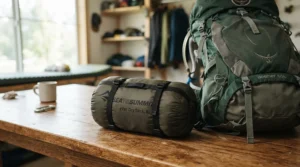
Getting the most from a new summer sleeping bag starts before your first trip. Fluff a compressed down bag for at least 24 hours before use — down loses loft when stored compressed in its stuff sack, and it can take a full day to fully recover its insulating air pockets. Store the bag loosely in a large mesh or cotton sack between trips, never in its tight compression sack, since long-term compression is the single fastest way to degrade down loft over a bag’s lifespan.
On trail, air your bag out each morning before packing it, even on short trips — overnight body moisture builds up inside the fill, and packing a damp bag invites both reduced loft and mildew over time. A silk or synthetic sleeping bag liner adds a genuine 5-10°F of warmth for a few extra ounces, which is a smart hedge for anyone buying a true summer-only bag who occasionally pushes into shoulder-season trips. The most common first-30-days mistake newer backpackers make is machine-washing a down bag in a standard washer, which can damage baffles; when cleaning is genuinely necessary, use a front-loading machine with down-specific detergent, or send it to a specialty cleaner.
Real-World Scenario: Which Bag Fits Your Trip
The weekend warrior doing 15-mile summer loops at moderate elevation, budget around $350: The REI Co-op Magma 30 is the clear match — enough warmth margin for occasional cool nights, a fit range that actually accommodates most body types, and a price that doesn’t require financing.
The thru-hiker counting every ounce across a 2,000-mile summer trail, budget flexible: The Western Mountaineering SummerLite or Sea to Summit Spark SPI both make sense here, with the SummerLite offering more warmth margin and the Spark SPI shaving a few more ounces for those chasing an absolute minimum base weight.
The college student borrowing a tent from a friend and testing whether backpacking is for them, budget under $100: The Teton Sports Trailhead 20 removes the financial risk entirely — if the hobby sticks, upgrade later; if it doesn’t, you’re out less than the cost of a pair of hiking boots.
Problem → Solution: Common Summer Sleeping Bag Issues
Problem: Waking up cold despite a “summer-rated” bag. Solution: Check whether you’re comparing the comfort rating or the lower-limit rating — pair the bag with a properly insulated pad (R-value 2+) and consider a liner for extra margin.
Problem: Bag feels clammy or damp by morning. Solution: Improve tent ventilation, crack a rainfly vent overnight, and air the bag out each morning before stuffing it.
Problem: Down bag has lost loft after a season of use. Solution: Wash with down-specific detergent in a front-loading machine, then tumble dry on low with clean tennis balls to help redistribute clumped down.
Problem: Bag feels too warm on unexpectedly hot nights. Solution: Use the full-length zipper (if your bag has one) to vent, sleep with your arms and shoulders outside the bag, or switch to a quilt-style bag like the Revelation that opens completely flat.
Buyer’s Decision Framework
If you backpack almost exclusively in warm months at low elevation and weight is your top priority, choose an ultralight down bag like the SummerLite or Spark SPI, because the weight and pack-volume savings compound over every mile. If you want one bag to cover the widest realistic range of conditions on a moderate budget, choose a 3-season down bag like the Magma 30, because the extra warmth margin protects you against unpredictable weather. If cost is the deciding factor and you’re new to the sport, choose the Trailhead 20 or Cosmic 20, because getting outside matters more than optimizing grams on your first few trips.
Features That Actually Matter (And Those That Don’t)
Fill power and shell denier genuinely matter — they’re the two biggest levers on both weight and durability. A full-length two-way zipper genuinely matters for temperature regulation across a range of nights. What matters far less than marketing suggests: extra pockets and gadget loops add weight without meaningfully improving sleep quality for most backpackers, and “extreme” temperature ratings on a summer bag are essentially irrelevant since you should never plan a trip around a survival-only number in the first place.
Long-Term Cost & Maintenance
A $500 ultralight down bag properly cared for (fluffed after storage, aired out on trail, cleaned rarely and correctly) can realistically last 10-15 years of regular use, working out to roughly $35-50 per year — competitive with replacing a $150 budget bag every 3-4 years as its loft degrades from more frequent, harder use. Down bags do require more careful handling and occasional specialty cleaning costs (typically $20-40 per professional down wash), while synthetic bags like the Trailhead 20 tolerate rougher treatment but generally need full replacement sooner as synthetic fill compresses permanently over time in a way down does not.
Safety Considerations for Warm-Weather Backpacking
Even summer nights can turn dangerously cold at elevation, after rain, or during an unexpected weather shift, and hypothermia doesn’t require freezing temperatures to set in. The warning signs of hypothermia include shivering, confusion and disorientation, memory loss, drowsiness, exhaustion, fumbling hands and poor coordination, and slurred speech — and shivering is actually a sign the body is losing heat, so a person who shivers persistently should get warmer, not push through it. Always check overnight lows for your specific elevation and location before a trip, pack a liner as insurance, and remember that a summer-rated bag is intentionally built with less margin than a 3-season bag — respect that tradeoff by watching the forecast closely.
Frequently Asked Questions
❓ What temperature is considered a summer sleeping bag?
❓ Can I use a summer sleeping bag in the fall?
❓ Is a lighter sleeping bag always better for backpacking?
❓ Do I need a sleeping bag liner with a summer bag?
❓ What's the difference between a sleeping bag and a quilt for summer backpacking?
Conclusion
Choosing the right summer sleeping bag for backpacking comes down to being honest about two things: how cold your coldest realistic night could actually get, and how much weight you’re genuinely willing to carry to hedge against it. The Western Mountaineering SummerLite and Sea to Summit Spark SPI reward backpackers who’ve already optimized the rest of their kit and want every remaining ounce trimmed. The REI Co-op Magma 30 and NEMO Disco 30 sit in a sweet spot of real warmth, real comfort, and a price that doesn’t require a second mortgage. The Enlightened Equipment Revelation opens the door to quilt-based sleep systems for backpackers ready to rethink the format entirely. And the Kelty Cosmic 20 and Teton Sports Trailhead 20 prove that getting into backpacking doesn’t have to be expensive, even if it means accepting a slightly heavier pack for a season or two.
Whichever bag you choose, don’t buy on the printed temperature number alone — read the comfort versus lower-limit distinction, factor in your sleeping pad, and buy a little more margin than you think you need. A good night’s sleep on trail is worth more than the ounces you’d save chasing the absolute minimum.
Recommended for You
- 7 Best S’mores Kits For Camping In 2026
- Firewood Carrier Bag: 7 Best Picks & Buying Secrets (2026)
- Campfire Tripod For Cooking: 7 Best Picks For 2026
Disclaimer: This article contains affiliate links. As an Amazon Associate, I earn from qualifying purchases. If you purchase products through these links, we may earn a small commission at no additional cost to you.
✨ Found this helpful? Share it with your friends! 💬🤗
