
In This Article
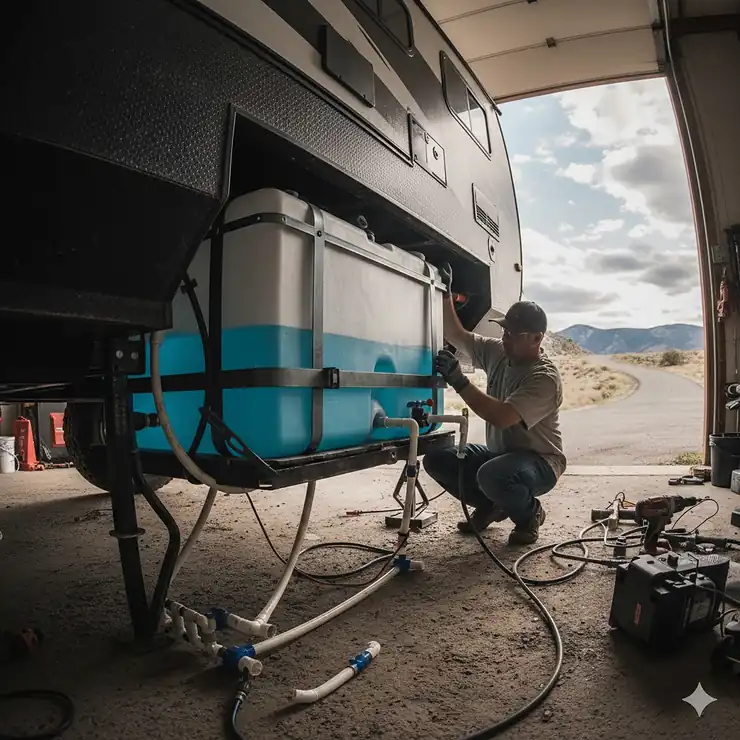
Picture this: you’re parked at your favorite boondocking spot, surrounded by nature’s beauty, when you realize your water supply is running low. There’s nothing quite like that sinking feeling when you discover your camper water tank isn’t meeting your needs. I’ve been there, and trust me, choosing the right tank makes all the difference between a stress-free adventure and constant worry about running dry.
A camper water tank is the lifeline of your RV living experience, providing fresh water for drinking, cooking, showering, and washing dishes when you’re miles away from the nearest hookup. Whether you’re a weekend warrior or a full-time RVer, understanding what makes a quality water tank is essential for comfortable travels. The right tank doesn’t just store water—it keeps it safe, clean, and readily available whenever you need it.
Today’s market offers everything from compact 6-gallon portable tanks perfect for van conversions to massive 100-gallon systems designed for extended off-grid adventures. With innovations in materials, BPA-free construction, and improved fitting designs, finding the perfect camper water tank has never been easier—or more important.
Quick Comparison Table: Top Camper Water Tanks at a Glance
| Product | Capacity | Material | Price Range | Best For | Rating |
|---|---|---|---|---|---|
| RecPro 100 Gallon | 100 gal | BPA-Free Polyethylene | $400-$500 | Long trips | ⭐⭐⭐⭐⭐ |
| TORVA 20 Gallon | 20 gal | BPA-Free Plastic | $150-$200 | Wheel well install | ⭐⭐⭐⭐½ |
| TPU Water Bladder | 110 gal | Food-Grade TPU | $120-$180 | Space-saving | ⭐⭐⭐⭐⭐ |
| Ameri-Kart 36 Gallon | 36 gal | FDA Polyethylene | $250-$300 | Versatile use | ⭐⭐⭐⭐ |
| VINGLI 6.6 Gallon | 6.6 gal | HDPE Food Grade | $40-$60 | Portable camping | ⭐⭐⭐⭐ |
| KIMISS 8 Gallon | 8 gal | LLDPE Food Grade | $70-$90 | Compact spaces | ⭐⭐⭐⭐ |
| Asixxsix 8 Gallon | 8 gal | LLDPE | $65-$85 | Budget-friendly | ⭐⭐⭐½ |
💬 Just one click – help others make better buying decisions too! 😊
Top 7 Camper Water Tanks: Expert Analysis
1. RecPro 100 Gallon RV Fresh Water Tank – Best for Extended Adventures
The RecPro 100 Gallon RV Fresh Water Tank stands as the gold standard for serious RVers who demand reliability and capacity. Made in the USA with FDA-approved, BPA-free polyethylene, this tank features a seamless rotomolded design that eliminates those frustrating weak points where leaks typically start.
Key Specifications:
- Dimensions: 50.5″ x 19.5″ x 17.5″
- Material: 100% BPA-free polyethylene
- NSF certified for potable water
Customers consistently praise its leak-proof construction and durability even after years of road vibrations. One full-timer reported using theirs for three years straight without a single issue, even through harsh winter conditions.
✅ Pros:
- Massive capacity for extended boondocking
- Made in USA with premium materials
- Includes threaded connectors for sensors
❌ Cons:
- Higher price point
- Requires significant installation space
Price Range: $400-$500
2. TORVA 20 Gallon Fresh Water Tank – Best Wheel Well Installation
The TORVA 20 Gallon Fresh Water Tank solves a common problem for van builders and smaller RVs: fitting quality water storage into tight, non-standard spaces. Its unique wheel well design maximizes every inch of available space.
Key Specifications:
- Dimensions: 47″ x 16″ x 11″
- Capacity: 20 gallons
- Multiple NPT fittings for flexibility
This tank’s matte finish isn’t just for looks—it significantly enhances wear resistance, which customers appreciate when dealing with the constant vibration and movement of RV life. The ventilation design ensures optimal functionality without pressurization issues.
✅ Pros:
- Perfect for custom wheel well installations
- Durable matte finish
- Family-sized for 2 people daily use
❌ Cons:
- Requires proper venting setup
Price Range: $150-$200
3. TPU Water Storage Bladder 110 Gallon – Most Space-Efficient Solution
Here’s where innovation meets practicality. The TPU Water Storage Bladder revolutionizes water storage by folding down to 92% less space when not in use. Crafted from high-density TPU-coated mesh fabric, it’s 100% food-grade, BPA-free, and completely odor-free.
Key Specifications:
- Capacity: 110 gallons
- Material: US Raw TPU (Polyurethane)
- Collapsible design
Users love how this bladder eliminates the plastic taste common with rigid tanks. Its lightweight construction makes it perfect for RVers who need flexible storage solutions without sacrificing capacity. The TPU material can withstand drops from 39 inches and support over 2,204 pounds when filled.
✅ Pros:
- Folds to save 92% storage space
- No plastic taste or odor
- Incredibly durable TPU construction
❌ Cons:
- Requires flat, protected surface
- More expensive initially
Price Range: $120-$180
4. Ameri-Kart 36 Gallon RV Fresh Water Tank – Best Value Mid-Range Option
The Ameri-Kart 36 Gallon strikes that sweet spot between capacity and manageability. Its cube shape (37″ x 16″ x 15″) makes installation straightforward in most standard RV configurations, and the FDA-approved polyethylene construction ensures your water stays pure.
Key Specifications:
- 36-gallon capacity
- Cube design for easy installation
- FDA-approved materials
RV owners appreciate the versatile size—large enough for extended camping but not so massive that it becomes a weight concern. The rotomolded construction creates a seamless, one-piece tank that veteran RVers know means fewer potential leak points.
✅ Pros:
- Perfect mid-size capacity
- Easy cube installation
- Great price-to-capacity ratio
❌ Cons:
- Limited fitment options
- Basic fitting configuration
Price Range: $250-$300
5. VINGLI 6.6 Gallon Tote Tank – Best Portable Solution
Don’t let its compact size fool you—the VINGLI 6.6 Gallon Tote Tank is a powerhouse for campers who value mobility. With rolling wheels and a convenient carry handle, this food-grade HDPE tank transforms water transport from a chore into a breeze.
Key Specifications:
- 6.6-gallon portable capacity
- HDPE #2 food-grade plastic
- Wheeled design with handle
Perfect for van lifers, tent campers, or as a backup water source for your RV, this tank has earned rave reviews for outdoor adventures. The grey color helps prevent algae growth, and the sealed design keeps your water fresh for days.
✅ Pros:
- Highly portable with wheels
- Lightweight and durable
- Budget-friendly
❌ Cons:
- Limited capacity for full-time use
- Not suitable for permanent installation
Price Range: $40-$60
6. KIMISS 8 Gallon RV Water Holding Tank – Best for Compact Installations
The KIMISS 8 Gallon demonstrates that good things come in small packages. Designed specifically for trailers, boats, and yachts, this LLDPE tank handles temperature extremes from -40°F to 176°F without breaking a sweat.
Key Specifications:
- Dimensions: 12.8″ x 12.4″ x 12.0″
- 100mm convenient inlet port
- Temperature resistant: -40°F to 176°F
The seamless integrated construction eliminates welded seams—those notorious weak spots that plague cheaper tanks. Users report the 100mm inlet makes filling quick and painless, while the sealing cap keeps everything contamination-free.
✅ Pros:
- Excellent temperature resistance
- Leak-proof integrated design
- Compact for tight spaces
❌ Cons:
- Small capacity for larger families
- Limited fitting customization
Price Range: $70-$90
7. Asixxsix 8 Gallon RV Fresh Water Tank – Best Budget-Friendly Option
Rounding out our list, the Asixxsix 8 Gallon proves you don’t need to break the bank for quality water storage. This LLDPE tank meets food-grade standards while offering the flexibility of a completely sealed, customizable design.
Key Specifications:
- 8-gallon capacity
- 130mm wide mouth inlet
- Shockproof LLDPE material
The smooth, sealed construction allows modifications—you can drill holes wherever needed to match your specific plumbing configuration. Budget-conscious RVers appreciate this adaptability, especially when retrofitting older campers or custom builds.
✅ Pros:
- Very affordable
- Customizable installation
- Double-layer guard on inlet
❌ Cons:
- Requires DIY fitting installation
- Basic construction
Price Range: $65-$85
🎯 Call to Action
✨ Don’t Miss These Exclusive Deals!
🔍 Take your camping experience to the next level with these carefully selected products. Click on any highlighted item to check current pricing and availability. These tanks will help you create authentic adventure memories your family will cherish!
Understanding Camper Water Tank Types and Systems
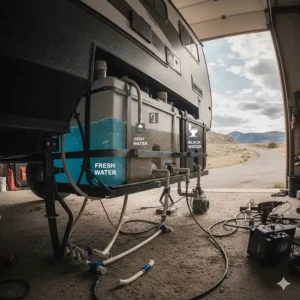
When you dive into the world of RV water systems, you’ll quickly discover there’s more to it than just a simple storage container. Your camper actually uses three distinct tank types, each serving a critical function in your mobile home’s plumbing ecosystem.
Fresh Water Tanks: Your Portable Water Supply
Fresh water tanks store clean, potable water for all your daily needs. According to the U.S. Environmental Protection Agency, maintaining water quality in storage systems requires proper materials and regular sanitization. These tanks range from tiny 10-gallon units in teardrop trailers to enormous 200-gallon systems in luxury motorhomes.
The material matters tremendously. Modern tanks use FDA-approved polyethylene or LLDPE (Linear Low-Density Polyethylene) that won’t leach chemicals into your drinking water. BPA-free construction has become the industry standard, and for good reason—nobody wants to worry about harmful chemicals contaminating their family’s water supply.
Gray Water Tanks: The Unsung Heroes
Gray water tanks collect wastewater from sinks and showers. While not as glamorous as fresh water storage, these tanks play a crucial role in responsible camping. Most gray tanks hold 40-50 gallons, though this varies based on RV size. The key is maintaining them properly to prevent odors and buildup.
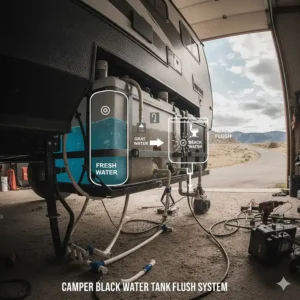
Black Water Tanks: Toilet Waste Management
Black water tanks handle toilet waste, typically ranging from 15-65 gallons. These require the most attention in terms of maintenance, using RV-specific chemicals and regular cleaning to prevent clogs and odors. Never skimp on tank treatments—your nose will thank you!
How to Choose the Right Camper Water Tank Capacity
Selecting the proper tank size isn’t just about bigger being better. You need to balance capacity with weight, available space, and your actual water consumption patterns.
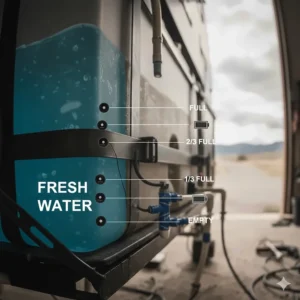
Calculate Your Daily Water Usage
The average person uses 8-10 gallons of water daily for basic needs: drinking, cooking, washing dishes, and short showers. A family of four might consume 40 gallons per day during active camping. However, if you’re boondocking with limited water conservation, that number can easily double.
Here’s a practical breakdown:
- Drinking and cooking: 2 gallons per person daily
- Dishwashing: 3-4 gallons per meal
- Shower: 2-3 gallons for a quick Navy shower
- Handwashing and misc: 2-3 gallons daily
Consider Your Camping Style
Weekend warriors might get by perfectly with a 20-30 gallon tank, especially if campgrounds offer hookups. Full-time RVers or serious boondockers should invest in 75-100+ gallon systems. The sweet spot for most families doing mixed camping (some hookups, some dry camping) sits around 40-60 gallons.
Weight Considerations Matter
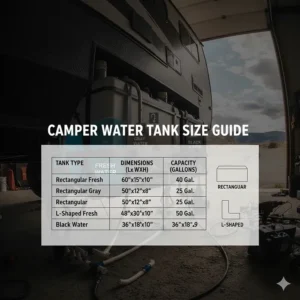
Water weighs approximately 8.34 pounds per gallon. A 100-gallon tank adds 834 pounds when full—that’s nearly half a ton! Always check your RV’s cargo carrying capacity (CCC) before installing a massive tank. You might find that two 40-gallon tanks work better than one 80-gallon unit for weight distribution.
Installation Space Requirements
Measure three times, buy once. Tank dimensions matter as much as capacity. Wheel well tanks like the TORVA maximize awkward spaces, while traditional cube designs offer easier installation in standard compartments. Don’t forget about access for fittings, sensors, and future maintenance.
Essential Materials and Construction Features
Not all plastic is created equal when it comes to storing your drinking water. Understanding tank construction helps you make informed decisions that impact both performance and longevity.
Food-Grade Materials: Why They Matter
The Safe Drinking Water Act establishes standards for water quality, making food-grade tank materials non-negotiable. Look for tanks made from:
FDA-Approved Polyethylene: The gold standard for RV tanks. This material resists UV degradation, handles temperature swings, and won’t impart flavors to your water. Most quality manufacturers use virgin polyethylene rather than recycled materials for consistency.
LLDPE (Linear Low-Density Polyethylene): Offers excellent impact resistance and flexibility. Tanks made from LLDPE can withstand the constant vibration and movement of RV travel without cracking. The material remains stable from -40°F to 180°F, perfect for four-season camping.
TPU (Thermoplastic Polyurethane): The newcomer making waves in RV water storage. TPU bladders combine durability with space-saving collapsibility. They’re completely taste-neutral and incredibly tough—some can survive drops from significant heights when filled.
BPA-Free Certification: Non-Negotiable
Bisphenol A (BPA) has been linked to various health concerns, particularly with prolonged exposure. Every tank on our list carries BPA-free certification because your family’s health isn’t worth compromising. This certification should be clearly marked on the tank or included in product specifications.
Rotomolded vs. Blow-Molded Construction
Rotomolded tanks use a rotating mold process that creates uniform wall thickness and seamless construction. These tanks typically last longer because they lack weak points where cracks can start. You’ll find rotomolding in premium tanks like the RecPro and Ameri-Kart models.
Blow-molded tanks cost less but may have thinner walls in some areas. They work fine for occasional use but might not stand up to full-time RV living as well as their rotomolded cousins.
UV Inhibitors and Weather Resistance
Tanks mounted externally or in partially exposed locations need UV protection. Quality tanks incorporate UV inhibitors directly into the plastic during manufacturing. This prevents the material from becoming brittle and cracking under constant sun exposure—a common failure point in cheaper tanks.
Installation Guide: Types and Methods
Installing a camper water tank ranges from plug-and-play portable units to complex permanent installations requiring professional help. Understanding your options helps you choose the right tank for your skill level and RV setup.
Permanent vs. Portable Installation
Permanent installations involve mounting the tank to your RV’s frame or floor structure. These setups provide the most stable water supply but require careful planning for weight distribution and plumbing access. You’ll need to consider:
- Frame mounting points and structural support
- Plumbing line routing and winterization access
- Sensor placement for accurate level monitoring
- Drain valve accessibility
Portable tanks like the VINGLI offer flexibility. Keep them in your storage bay when empty, fill as needed, and store elsewhere when camping. They’re perfect for supplementing your main tank or as a primary water source for smaller campers.
Wheel Well Installation Advantages
Wheel well tanks represent clever engineering. These oddly-shaped tanks nestle into otherwise wasted space between your RV’s frame rails. The TORVA 20-gallon excels here, turning dead space into functional water storage. Benefits include:
- No sacrifice of interior storage space
- Lower center of gravity for better handling
- Protected location from road debris
- Easier winterization access
Under-Floor Mounting Considerations
Traditional under-floor mounting remains popular because it keeps weight low and maximizes interior space. However, you’ll need to account for:
- Adequate ground clearance (minimum 8-10 inches recommended)
- Tank heater pads for winter camping
- Protection from road debris
- Easy drain access for maintenance
Fitting and Plumbing Basics
Most quality tanks come with standard NPT (National Pipe Thread) fittings. Common configurations include:
- 1/2″ NPT: Standard for inlet and outlet connections
- 1-1/2″ NPT: Used for faster filling or venting
- Sensor ports: Pre-threaded openings for level sensors
Always use Teflon tape on threaded connections and check local codes—some areas require backflow preventers on RV water systems.
Maintenance and Care Best Practices
A well-maintained camper water tank can last decades. Neglected tanks develop algae, bacteria, and eventually fail. Here’s how to keep yours in peak condition.
Regular Sanitization: The Six-Month Rule
Most RV experts recommend sanitizing your fresh water tank every six months, or more frequently if you notice off-tastes or odors. The Centers for Disease Control and Prevention provides guidance on maintaining safe water systems for recreation vehicles.
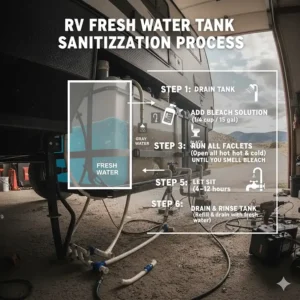
Step-by-step sanitization process:
- Drain completely: Empty tank, water heater, and all lines through low-point drains
- Mix bleach solution: Use 1/4 cup bleach per 15 gallons tank capacity
- Fill and circulate: Add solution, fill tank, run all faucets until bleach smell appears
- Wait overnight: Let solution sit 8-12 hours to kill bacteria
- Flush thoroughly: Drain and refill 2-3 times until no bleach odor remains
Preventing Algae and Bacterial Growth
Algae needs three things: light, warmth, and nutrients. Most RV tanks sit in dark compartments, but clear plumbing lines can allow algae growth. Prevention strategies include:
- Keep tanks and lines dark
- Don’t let water sit unused for more than two weeks
- Add a small amount of RV water freshener for extended storage
- Ensure proper ventilation to prevent stagnant conditions
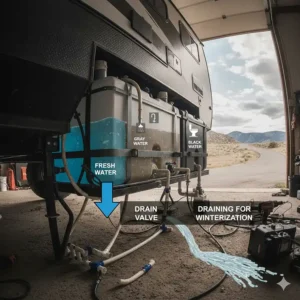
Winter Storage and Winterization
Nothing destroys tanks faster than freezing water. Water expands 9% when frozen—enough to crack even the toughest polyethylene. Before winter storage:
- Drain everything: Remove every drop of water from tanks and lines
- Add RV antifreeze: Run pink RV antifreeze through all plumbing
- Install tank heaters: If camping in freezing temps, use proper tank heating pads
- Open pressure relief valves: Prevent pressure buildup during temperature swings
Never use automotive antifreeze in your water system—it’s toxic. Only use pink RV antifreeze specifically designed for potable water systems.
Sensor Maintenance and Troubleshooting
Tank sensors give frustratingly inaccurate readings when waste buildup coats the probes. Keep sensors accurate by:
- Using tank rinse additives that clean sensors
- Performing deep tank cleaning quarterly
- Installing sensor cleaning systems (available as aftermarket upgrades)
- Understanding that sensors measure conductivity—soap, minerals, and waste all affect readings
Common Problems and Solutions
Even quality tanks encounter issues. Knowing how to diagnose and fix common problems saves money and headaches on the road.
Dealing with Leaks and Cracks
Small cracks can often be repaired with plastic welding or specialized RV tank repair kits. However, major cracks usually mean replacement time. Prevention beats repair:
- Support tank properly to prevent flexing stress
- Avoid overfilling, which creates pressure cracks
- Inspect fittings annually and replace worn gaskets
- Don’t use excessive force when tightening fittings
Odor Control Strategies
Bad smells from fresh water tanks indicate bacterial growth. Beyond regular sanitization:
- Use inline water filters to reduce contaminants
- Avoid filling from questionable water sources
- Consider UV water purification for extended boondocking
- Replace old tanks—polyethylene becomes porous over time
For gray and black tanks, enzyme-based treatments work better than harsh chemicals. They break down waste naturally without killing beneficial bacteria.
Fixing Inaccurate Tank Monitors
False sensor readings plague RVers. Solutions include:
- SeeLevel II tank monitoring system (external sensors)
- Manual dipstick checking through inspection ports
- Weight-based monitoring using RV weighing systems
- Regular sensor cleaning with specialized products
Some RVers simply learn to “read” their tanks based on usage patterns rather than relying on sensors.
Managing Water Quality Issues
Funny-tasting water usually stems from:
Plastic taste: New tanks often impart flavor. Flush several times with baking soda solution (1/4 cup per 5 gallons) to neutralize.
Metallic taste: Might indicate zinc anode rod deterioration in water heater. Replace anodes annually.
Chlorine smell: Reduce by using carbon filters or letting water sit in tank for a few hours before use.
Water Conservation Tips for Extended Trips
Making your camper water tank last longer isn’t just about capacity—it’s about smart usage. These strategies help you stretch every gallon.
Smart Showering Techniques
Traditional showers consume 2-3 gallons per minute. Navy showers cut that to 2-3 gallons total:
- Wet down (30 seconds)
- Turn water off, soap up
- Rinse off (30-60 seconds)
Baby wipes and dry shampoo can supplement showers, letting you go 2-3 days between full showers comfortably.
Efficient Dishwashing Methods
The two-basin method saves significant water:
- Fill one basin with hot, soapy water
- Scrape dishes thoroughly before washing
- Wash in soapy basin
- Rinse in second basin with minimal water
- Final rinse under running water (minimal flow)
This method uses 3-4 gallons versus 8-10 gallons for running-water washing.
Cooking Water Reuse
Don’t automatically dump cooking water:
- Pasta water (cooled) works for watering plants
- Vegetable washing water is great for initial dish soaking
- Rice cooking water makes excellent soup stock base
Greywater Recycling Considerations
Some RVers reuse gray water for flushing toilets or outdoor cleaning. While creative, ensure you understand local regulations—many areas prohibit gray water dumping even for plants. When legal and safe:
- Filter gray water through simple mesh to remove particles
- Use biodegradable, eco-friendly soaps only
- Never reuse water contaminated with cleaning chemicals
- Dump properly at designated facilities
Comparison: Camper Water Tanks vs. Alternative Systems
While traditional tanks dominate the RV market, alternatives exist worth considering depending on your camping style.
| Feature | Standard Tanks | Bladder Tanks | Water Jugs | Tankless/On-Demand |
|---|---|---|---|---|
| Capacity | 20-200+ gal | 30-200+ gal | 5-10 gal | N/A (uses city water) |
| Installation | Permanent | Flexible | None | Permanent |
| Weight (empty) | 30-80 lbs | 5-15 lbs | 2-5 lbs | 15-30 lbs |
| Cost | $200-$600 | $100-$300 | $20-$60 | $0 (uses existing) |
| Space efficiency | ⭐⭐⭐ | ⭐⭐⭐⭐⭐ | ⭐⭐ | ⭐⭐⭐⭐ |
| Durability | ⭐⭐⭐⭐ | ⭐⭐⭐ | ⭐⭐⭐ | ⭐⭐⭐⭐⭐ |
| Best for | Full-time RVing | Custom builds | Weekend trips | Hookup camping |
When Bladder Tanks Make Sense
Collapsible bladder tanks excel for:
- Custom van conversions with limited space
- RVs needing temporary capacity boosts
- Seasonal use where empty weight matters
- Backup water storage during renovations
However, bladders require flat, protected mounting surfaces and can’t handle the same abuse as rigid tanks.
Multiple Smaller Tanks vs. One Large Tank
Some RVers prefer multiple smaller tanks for:
- Better weight distribution
- Redundancy if one tank fails
- Easier replacement/maintenance
- Flexible positioning around obstacles
The downside? More plumbing connections mean more potential leak points, and monitoring multiple tanks gets complicated.
Price Range Analysis and Value Assessment
Understanding what you’re paying for helps you make smarter buying decisions. Camper water tank prices span a wide range based on capacity, materials, and features.
Budget Options ($40-$100)
Entry-level tanks like the VINGLI 6.6 gallon and Asixxsix 8 gallon serve occasional campers well. Expect:
- Basic HDPE or LLDPE construction
- Minimal included fittings
- Manual filling required
- 3-5 year lifespan with care
These work great as portable backup tanks or for weekend camping, but don’t expect premium features or extensive warranties.
Mid-Range Quality ($100-$300)
This sweet spot includes the TORVA 20 gallon and TPU bladders. You get:
- Higher quality materials and construction
- Better fitting packages included
- 5-10 year expected lifespan
- More flexible mounting options
Most RVers find excellent value here—enough quality to last without overpaying for features they won’t use.
Premium Performance ($300-$600)
Top-tier tanks like the RecPro 100 gallon justify their price through:
- Made-in-USA construction
- NSF certification
- Comprehensive fitting kits
- Lifetime warranties (some models)
- Superior materials and construction
If you’re full-timing or planning extensive boondocking, premium tanks pay for themselves through reliability and longevity.
Cost-Per-Gallon Value Calculation
Don’t just look at sticker price. Calculate cost per gallon:
- RecPro 100 gallon at $450 = $4.50/gallon
- TORVA 20 gallon at $175 = $8.75/gallon
- VINGLI 6.6 gallon at $50 = $7.58/gallon
Larger tanks almost always offer better per-gallon value, but only if you can use that capacity.
Frequently Asked Questions
❓ How long does water stay fresh in a camper water tank?
❓ Can I use my camper water tank in freezing temperatures?
❓ What size camper water tank do I need for a family of four?
❓ How do I remove plastic taste from my new RV water tank?
❓ Should I leave my camper water tank full when storing?
Conclusion: Making Your Best Choice
Selecting the perfect camper water tank boils down to matching capacity, quality, and features to your specific RV lifestyle. Whether you choose the massive RecPro 100 gallon for extended boondocking adventures, the space-saving TPU bladder for a custom van build, or the portable VINGLI for weekend getaways, each tank on our list serves distinct purposes brilliantly.
Remember that the best camper water tank isn’t necessarily the biggest or most expensive—it’s the one that reliably delivers clean water when and where you need it. Consider your typical camping duration, available installation space, weight restrictions, and maintenance commitment before clicking “buy.” A well-chosen tank becomes invisible infrastructure that simply works, trip after trip.
Don’t forget regular maintenance: sanitize every six months, winterize properly, and monitor for leaks. Your tank is an investment in camping freedom, and a little care extends its life indefinitely. Most importantly, choose from reputable manufacturers using food-grade, BPA-free materials—your family’s health depends on it.
Ready to upgrade your RV water system? Start by honestly assessing your needs, then match them to our recommendations. Whether you’re a weekend warrior or full-time nomad, clean, reliable water storage transforms good camping into great camping. Your perfect adventure awaits—don’t let water worries hold you back.
Recommended for You
- 7 Best Camper Trailer Kitchen Sinks You Need in 2025
- 7 Best Camper Toilet Parts You Need in 2025
- 7 Best Camper Shower Faucet 2025 (Expert-Tested & Reviewed)
Disclaimer: This article contains affiliate links. If you purchase products through these links, we may earn a small commission at no additional cost to you.
✨ Found this helpful? Share it with your friends! 💬🤗
