In This Article
If you’ve started shopping for a Mora knife for camping, you’ve probably noticed the lineup is bigger than it looks. Companion, Kansbol, Garberg, Eldris, Basic 511 — the names alone can send a first-time buyer back to the search bar. A Mora knife is a fixed-blade outdoor knife traditionally made in Mora, Sweden, recognized by its thin, razor-sharp Scandinavian (Scandi) grind, a lightweight polymer or rubberized handle, and a price tag that rarely breaks $100 even on the toughest models.
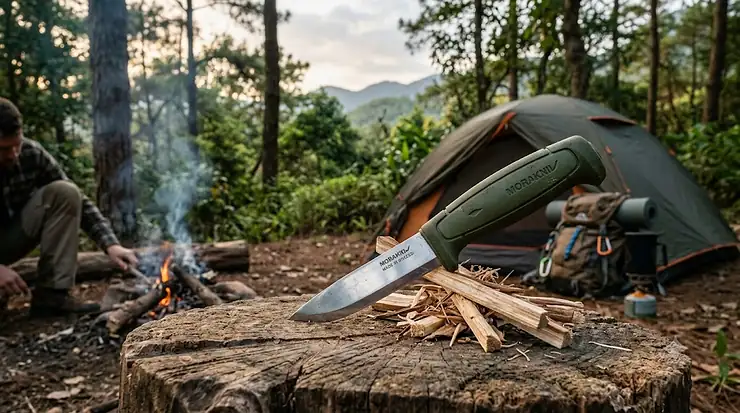
I’ve spent the last few weeks pulling apart seven real, currently sold Morakniv models — comparing steel types, blade thickness, sheath design, and the kind of feedback that only shows up after a knife has spent a season getting rained on, batoned, and dropped in a creek. Some of these knives cost less than a campground bundle of firewood. Others, like the full-tang Garberg, are clearly built for people who want one knife to outlast every backpacking trip they’ll ever take.
What most buyers overlook is that the “best” Mora knife for camping isn’t the same for everyone. A weekend car camper prepping hot dogs and kindling needs something very different from a backcountry bushcrafter batoning wet logs for a fire. This guide breaks down seven models by steel type, blade geometry, and real-world use case, so you can match the knife to your trip instead of just buying whatever’s cheapest on the shelf.
Quick context before we dive in: Morakniv blades fall into two camps — Sandvik stainless steel (rust-resistant, lower maintenance) and high-carbon steel (sharper, easier to resharpen, but needs oiling). We’ll cover that tradeoff in detail further down, along with a full comparison table, a buyer’s decision guide, and answers to the questions people search most often about Morakniv review camping topics.
Quick Comparison Table: 7 Best Mora Knives for Camping
| Knife | Steel | Blade Length | Tang | Price Range | Best For |
|---|---|---|---|---|---|
| Morakniv Garberg | Sandvik 14C28N stainless/carbon | 4.3″ | Full tang | $70–$95 | Heavy batoning, hard-use survival |
| Morakniv Bushcraft Survival | 12C27 stainless or carbon (DLC) | 4.3″ | Long partial tang | $48–$65 | Built-in fire starter + sharpener |
| Morakniv Kansbol | 12C27 stainless | 4.3″ | Partial tang | $33–$55 | Lightweight all-rounder, hunting |
| Morakniv Companion HD | 12C27 stainless/carbon | 4.1″ | Partial tang | $27–$35 | Light batoning on a budget |
| Morakniv Companion | 12C27 stainless or carbon | 4.1″ | Partial tang | $18–$26 | First bushcraft knife, all-purpose |
| Morakniv Eldris | 12C27 stainless | 2.2–2.3″ | Partial tang | $22–$35 | EDC, neck knife, backup blade |
| Morakniv Basic 511 | High carbon steel | 3.6″ | Partial tang | $10–$15 | Budget loaner, kids, glove box |
Looking at the spread above, the Garberg justifies its higher price almost entirely through its full-tang construction — it’s the only knife here that’s genuinely built for splitting wood by batoning. If you just need a dependable, do-everything camp blade, the Companion or Kansbol deliver 80% of that capability for a third of the cost. Budget shoppers shouldn’t dismiss the Basic 511 either; it sacrifices fancy sheath features but uses the same Swedish steel-making heritage as knives costing six times more.
💬 Just one click — help others make better buying decisions too! 😊
Top 7 Mora Knives for Camping: Expert Analysis
1. Morakniv Basic 511 — Best Budget Pick
The Morakniv Basic 511 is the knife Mora originally built for Scandinavian tradespeople, not campers — and that’s exactly why it works so well at a campsite. The 3.6-inch high-carbon blade is thinner than the Companion’s, which in practice means it’s noticeably better at fine carving tasks like making tent stakes or feather sticks, but it sacrifices some toughness for batoning. What most buyers overlook is that this is genuinely the same Swedish steel-hardening process Mora uses on knives costing 5–6 times as much; the difference is in the handle and sheath finishing, not the cutting performance.
Reviewers consistently describe it as punching far above its price point, with the most common complaint being that the carbon blade needs a quick wipe-and-oil routine to avoid surface rust — a fair trade for an edge that resharpens in seconds on a flat stone.
✅ Extremely cheap — easy to buy two as a backup
✅ High-carbon steel takes a wickedly sharp edge
✅ Great “first knife” for teaching kids knife safety
❌ Partial tang isn’t meant for batoning
❌ Carbon steel needs oiling to prevent rust
Verdict: At well under $15, this is the knife to throw in a glove box, tackle box, or kid’s first bushcraft kit — not the one to bring on a serious multi-day backcountry trip.
2. Morakniv Companion — Best All-Purpose Starter Knife
The Companion is the knife most people picture when they search Mora Companion review content, and for good reason — it’s the brand’s best-selling all-rounder. The 4.1-inch blade comes in either Sandvik 12C27 stainless (low-maintenance, ideal for wet camping trips) or high-carbon steel (sharper edge, more upkeep). In my experience, the stainless version is the smarter pick for most campers simply because it tolerates being left damp in a pack overnight without punishing you for it.
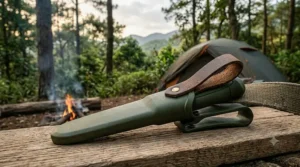
The ergonomic rubber-over-polymer handle stays grippy even with wet or cold hands, and the polymer sheath’s belt clip makes it genuinely fast to draw and resheath one-handed. Owners frequently call it the most comfortable budget knife they’ve used, with the main criticism being that the partial (“3/4”) tang means you shouldn’t lean on it for hard batoning — that’s what the Heavy Duty or Garberg versions exist for.
✅ Comfortable, all-weather grip
✅ Stainless option needs almost zero maintenance
✅ Genuinely sharp out of the box
❌ Not rated for heavy batoning
❌ Plastic sheath feels basic compared to leather options
Verdict: If you only buy one Swedish knife camping companion this year, this is the safest, most field-tested choice on the list.
3. Morakniv Eldris — Best Compact / Neck Knife
The Eldris solves a problem most camping knives create: bulk. At just 2.2 inches of blade, it won an international Scandinavian Outdoor Award for squeezing genuine bushcraft capability into a knife small enough to wear around your neck or toss loose in a daypack. What the spec sheet won’t tell you is how much the symmetrical handle shape matters here — most knives this small feel like toys in the hand, but the Eldris has enough handle bulk for a real four-finger grip.
Buyers in the optional fire-starter kit consistently praise the ground spine for throwing sparks reliably, even after the blade itself has been resharpened dozens of times. The most repeated nitpick is the lack of a built-in belt clip on the base model — you’ll want the accessory kit if you don’t plan to wear it as a neck knife.
✅ Tiny and lightweight enough to forget you’re carrying it
✅ Big enough handle for real four-finger control
✅ Award-winning design for its size class
❌ No belt clip included on the base sheath
❌ Too small for any serious wood processing
Verdict: Best treated as a backup blade or minimalist EDC, not your only knife on a backcountry trip.
4. Morakniv Companion Heavy Duty — Best Budget Batoning Knife
Think of the Companion Heavy Duty as the answer to “I love the Companion, but I want to baton wood without worrying about it.” The blade jumps from roughly 2.0–2.5mm thick on the standard Companion to a full 3.2mm here — the same thickness as the considerably pricier Garberg — while keeping the partial tang and budget-friendly price.
What most reviewers note is that this thicker spine measurably changes how the knife feels in hard use: it resists flex during split-wood tasks that would make the standard Companion uncomfortable. Feedback is overwhelmingly positive, with almost no recurring complaints beyond the usual carbon-steel maintenance caveat on that version.
✅ Same comfortable handle as the standard Companion
✅ 3.2mm spine handles batoning far better than the base model
✅ Big jump in toughness for a small jump in price
❌ Still a partial tang, not full tang
❌ Heavier than the standard Companion for EDC carry
Verdict: The sweet spot for campers who want Garberg-level blade thickness without the Garberg price.
5. Morakniv Kansbol — Best Lightweight All-Rounder
The Kansbol is Mora’s update of the long-running “2000” hunting knife, and its dual-ground blade is the real story here. The front third is profiled thinner than a standard Scandi grind, which makes it noticeably better at food prep and fine slicing than the Companion, while the rear two-thirds keeps the traditional Scandi geometry for carving and wood processing. In practice, that means you can field-dress game or prep camp dinner with the same knife you used to whittle a tent stake an hour earlier.
The symmetrical, ambidextrous sheath is a standout feature reviewers bring up unprompted — you can insert the knife blade-up or blade-down depending on how you carry. The optional Multi-Mount accessory system lets you strap the sheath to a pack, vehicle, or MOLLE gear, though some owners feel the standard sheath sits a little deep for fast one-handed draws with gloves on.
✅ Dual-grind blade excels at both carving and food prep
✅ Ambidextrous sheath works for left- or right-handed campers
✅ Lightweight enough for all-day carry
❌ Not built for serious batoning
❌ Multi-Mount sheath system costs extra
Verdict: A strong pick for hunters and general campers who want one knife that does almost everything reasonably well.
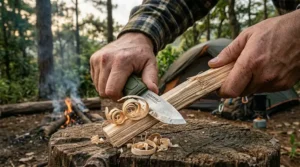
6. Morakniv Bushcraft Survival — Best Built-In Fire Kit
The Bushcraft Survival (sold in both Black carbon-steel and Orange stainless versions) is built around one core idea: you shouldn’t need three separate tools to process wood and start a fire. The thick 3.2mm blade has a squared 90-degree spine specifically ground for striking a ferro rod, and the sheath comes with an integrated diamond sharpener plus a magnesium-alloy fire starter rated for thousands of strikes. You can see where this model sits relative to the rest of the lineup on Morakniv’s own bushcraft knife collection.
Reviewers who’ve used it for actual bushcraft instruction — not just car camping — repeatedly highlight how well the combination performs in wet conditions, since fire-steel sparks come off the rod rather than the blade, so a damp knife doesn’t stop you from lighting a fire. The most common long-term complaint involves the sheath’s swiveling belt clip, which some owners say loosens with years of heavy use.
✅ Integrated ferro rod and sharpener save pack space
✅ Thick blade handles batoning well for a partial tang
✅ High-visibility orange version is easy to spot if dropped
❌ Sheath’s swivel clip can loosen over years of hard use
❌ Carbon (Black) version demands more rust upkeep than the stainless Orange
Verdict: If you want a single grab-and-go bushcraft kit rather than separate knife, sharpener, and fire starter, this is the most complete option on the list.
7. Morakniv Garberg — Best Full-Tang / Hardest Use
The Garberg is Mora’s answer to decades of full-tang critics, and it’s the toughest knife the company makes. Unlike every other entry here, the steel runs the entire length of the handle and protrudes at the pommel, which means you can use the butt as a light hammer and never worry about the tang snapping during aggressive batoning. The blade comes in premium Sandvik 14C28N stainless or carbon steel, both noticeably thicker (3.2mm) than the standard Companion line.
What the spec sheet undersells is how much sheath choice affects the price and experience: you can buy it with a handsome leather sheath, a tactical MOLLE-compatible polymer mount, or a simpler poly sheath. Independent testers like SectionHiker’s long-term field review agree this is the most “bombproof” Morakniv made, with the main criticism simply being that it costs roughly 3–4 times what a Companion does — a fair complaint for a brand built on rock-bottom pricing, but a reasonable one once you’ve tried to baton through seasoned hardwood with a partial-tang knife.
✅ True full-tang construction — won’t snap under hard batoning
✅ Premium 14C28N steel holds an edge longer than 12C27
✅ Multiple sheath systems for different carry styles
❌ Most expensive Mora knife on this list
❌ Scandi grind isn’t ideal for delicate food prep
Verdict: Worth the upgrade if you genuinely process firewood by hand or want one knife you’ll never outgrow, including for your kids someday.
How to Choose a Mora Knife for Camping
Picking the right model comes down to five practical questions, in this order:
- How hard will you actually use it? Light cooking and whittling → Companion or Eldris. Regular batoning → Companion HD, Bushcraft Survival, or Garberg.
- Stainless or carbon? If you camp in wet climates or won’t oil a blade reliably, choose stainless. If you want the sharpest possible edge and don’t mind a five-minute care routine, go carbon.
- Do you need it to double as a fire-starting tool? Only the Garberg, Kansbol, Companion Spark, and Bushcraft Survival have spines squared for ferro-rod use out of the box.
- What’s your carry style? Belt sheath, neck knife, or MOLLE mount changes which model and sheath option makes sense.
- What’s your real budget ceiling? Don’t buy a $90 Garberg if a $20 Companion will genuinely cover your trips — but don’t underbuy a knife you’ll outgrow in a season either.
Practical Usage Guide: Caring for Your New Mora Knife
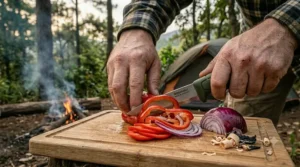
Getting the most out of any Morakniv comes down to a few habits the box doesn’t mention. First, never use the cutting edge to strike a ferro rod — only the squared spine is designed for that, and scraping the edge will dull it fast. Second, if you bought a carbon-steel model, dry it completely after every use and apply a light coat of mineral or knife oil before storing it; many owners intentionally force a vinegar or onion patina early on, which actually protects the steel from deeper rust later.
For sharpening, the Scandi grind is genuinely beginner-friendly: lay the full bevel flat against a stone and push, with no angle-guessing required. Avoid pull-through “V” sharpeners, which introduce a secondary bevel and ruin the factory edge geometry. Finally, inspect your sheath’s retention clip or belt loop every season — it’s the single most common wear point across every model in this lineup.
Real-World Scenarios: Matching a Mora to Your Trip
The weekend car camper: cooking over a fire, prepping food, maybe whittling marshmallow sticks. A standard Companion in stainless steel covers this easily, and the low price means you won’t panic if it gets left at the campsite.
The backcountry backpacker counting ounces: wants one ultralight tool for cordage, food prep, and emergency repairs. The Eldris or a basic Companion keeps pack weight down without sacrificing real cutting capability.
The bushcrafter splitting their own firewood: batons logs nightly, wants a built-in fire-starting setup, and doesn’t mind paying more for confidence under hard use. The Bushcraft Survival or full-tang Garberg are the only two knives on this list genuinely built for that workload.
Common Mistakes When Buying a Bushcraft Knife
The most frequent mistake is buying based on blade length alone instead of blade thickness and tang construction — a thin 4-inch blade can flex dangerously during batoning, while a short, thick blade like the Eldris handles fine carving better than its size suggests. The second mistake is choosing carbon steel without being honest about maintenance habits; a neglected carbon blade left damp in a pack will rust within days. Third, many first-time buyers skip checking sheath retention and belt-loop quality, then are surprised when a knife rattles loose on a rough trail. Finally, don’t assume the most expensive Mora is automatically the “best” — for most camping trips, the Companion outperforms the Garberg on value alone.
Carbon vs Stainless Mora: Which Steel Wins for Camping?
This is one of the most searched carbon vs stainless Mora questions, and the honest answer is “it depends on your climate and your patience.”
| Factor | Carbon Steel (e.g., 511, Bushcraft Black) | Stainless Steel (12C27 / 14C28N) |
|---|---|---|
| Edge sharpness | Slightly sharper, easier to resharpen | Very sharp, slightly harder to hone |
| Corrosion resistance | Rusts if left wet — needs oiling | Resists rust with minimal care |
| Best climate | Dry or seasonal use with regular care | Humid, coastal, or “grab and forget” use |
| Maintenance | Wipe + oil after every use | Wipe dry, occasional oil |
According to independent metallurgy breakdowns, the difference comes down to chromium content: stainless needs roughly 10.5%+ chromium to form a protective oxide layer, while carbon steel’s minimal chromium leaves it chemically reactive and prone to surface rust. For most campers who don’t want to think about blade care mid-trip, stainless 12C27 is the safer default — carbon steel is worth the extra attention only if you genuinely value the slightly sharper, easier-to-resharpen edge it offers.
Features That Actually Matter (And Those That Don’t)
Actually matters: blade thickness (2.0mm vs 3.2mm changes batoning performance dramatically), tang length (partial vs full tang determines hard-use durability), and steel type relative to your climate.
Doesn’t matter much: handle color, whether the box says “survival” on it, and minor cosmetic differences between otherwise-identical sheaths. A bright orange handle is genuinely useful for not losing your knife in leaf litter, but it adds nothing to cutting performance — don’t pay extra for it unless visibility matters to you specifically.
Long-Term Cost & Maintenance
Here’s the part most listings skip: total cost of ownership. A $20 Companion that needs zero accessories and lasts a decade of casual camping is, dollar for dollar, one of the best values in outdoor gear. A $90 Garberg costs more upfront but eliminates the eventual “I need a tougher knife” upgrade purchase many Companion owners make after their first serious batoning session. Carbon-steel owners should budget a few dollars a year for knife oil and the occasional honing stone; stainless owners spend essentially nothing beyond the knife itself. Either way, a properly cared-for Mora — sharpened on a flat stone rather than ruined by aggressive pull-through sharpeners — should outlast most camping trips you’ll ever take it on.
Mora vs Other Outdoor Knife Brands
| Brand/Model | Steel Type | Full Tang? | Typical Price | Best For |
|---|---|---|---|---|
| Morakniv (most models) | Sandvik stainless or carbon | Mostly partial (Garberg = full) | $10–$95 | Best value-to-performance ratio |
| Gerber Strongarm | 420HC stainless | Full tang | $50–$70 | Tactical-style flat grind, food prep |
| Opinel No. 12 | Carbon or stainless | Folding, not fixed | $25–$40 | Ultralight folding EDC |
| ESEE-4 | 1095 carbon | Full tang | $140–$170 | Premium hard-use survival |
Compared to a similarly full-tang Gerber Strongarm, the Garberg’s Scandi grind handles wood-carving tasks better, while the Strongarm’s flat grind edges it out for food prep — a tradeoff worth knowing before you buy either one. Against premium American brands like ESEE, Morakniv simply can’t match the ultra-thick stock and lifetime-guarantee ethos, but it also costs a fraction of the price, which is exactly why it remains the most recommended affordable bushcraft knife brand among outdoor educators and budget-conscious campers alike.
✨ Don’t Miss These Exclusive Deals!
🔍 Take your camping kit to the next level with these carefully selected Morakniv picks. Click on any highlighted knife above to check current pricing and availability — these tools will help you build a setup your whole family will rely on for years.
Knife Safety & Carry Laws for Campers
Knife laws vary significantly by state, county, and whether you’re on federal land, so it’s worth a quick check before any trip. The U.S. National Park Service lists a knife as one of the standard items in a basic repair kit for backcountry travel, alongside tools like duct tape and a multi-tool, treating it as ordinary camping gear rather than a restricted item — but individual parks and states can still set their own blade-length or concealed-carry rules. As a general rule, open carry of a fixed-blade camping knife on a belt is widely accepted while actively hiking, hunting, or camping, but it’s worth confirming the specific regulations for wherever you’re headed, since some states impose blade-length limits on concealed carry that don’t apply to a visible sheath knife.
Frequently Asked Questions
❓ Is a Mora knife good for camping?
❓ What is the best Morakniv for beginners?
❓ Carbon or stainless Mora for camping?
❓ How long does a Morakniv blade stay sharp?
❓ Are Morakniv knives made in Sweden or China?
Conclusion
There’s no single “best” Mora knife for camping — there’s a best Mora knife for your specific trips. Casual weekend campers and first-time buyers will get the most value from the Companion, while serious bushcrafters batoning their own firewood should look hard at the Garberg or Bushcraft Survival. Budget-conscious buyers and parents introducing kids to knife safety shouldn’t overlook the humble Basic 511, and anyone who wants a featherweight backup blade will appreciate the Eldris.
What ties all seven together is the same Swedish manufacturing heritage, the same friendly Scandi grind, and pricing that makes it easy to own more than one for different trips. Match the steel to your climate, the tang to your workload, and you’ll end up with a knife that earns its spot in your pack for years.
Recommended for You
- Best Camping Knife 2026: 7 Top Picks That Actually Hold Up
- Winter Hammock Camping Guide 2026: 7 Gear Picks That Work
- 7 Best Hammock Stands for Camping in 2026 (No Trees Needed)
Disclaimer: This article contains affiliate links. As an Amazon Associate, I earn from qualifying purchases. If you purchase products through these links, we may earn a small commission at no additional cost to you.
✨ Found this helpful? Share it with your friends! 💬🤗
