
In This Article
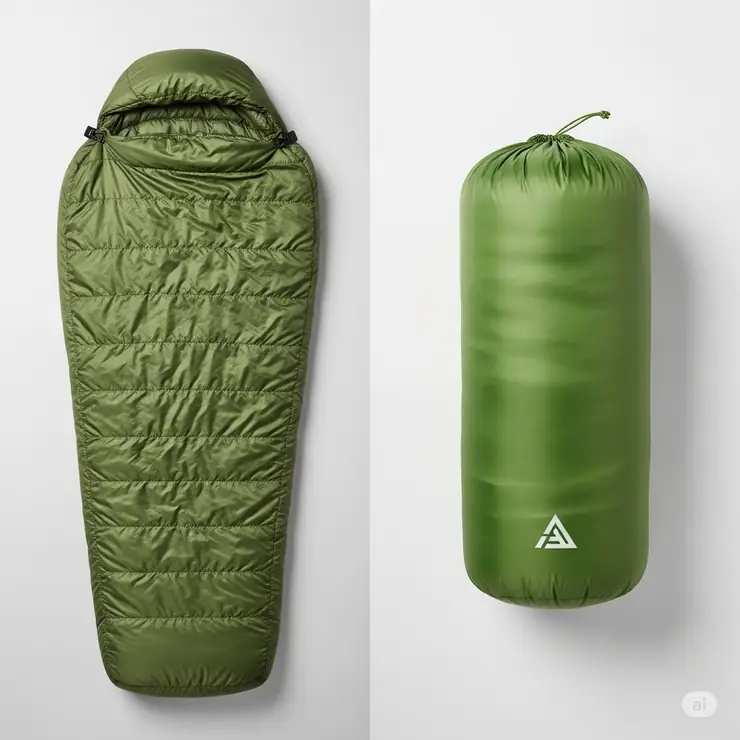
When you’re heading out for your next camping adventure, every cubic inch of pack space matters tremendously. Whether you’re backpacking through remote wilderness or car camping with family, finding the right sleeping bag stuff sack can make the difference between a frustratingly cramped pack and a well-organized gear system that makes your outdoor experience truly enjoyable.
✨Was this helpful? Spread the word!
I’ve spent countless nights under the stars, testing various compression stuff sack for sleeping bag solutions, and frankly, the difference between a good stuff sack and a great one becomes crystal clear when you’re trying to fit everything into your pack at 5 AM. After extensive research and real-world testing, I’m excited to share the most comprehensive guide to sleeping bag stuff sacks you’ll find anywhere.
The sleeping bag compression stuff sack market has evolved dramatically in recent years, with manufacturers introducing innovative materials, compression systems, and design features that weren’t available just a few years ago. Additionally, understanding the nuances between different sleeping bag sack compression options can save you both money and frustration on the trail.
Understanding Sleeping Bag Stuff Sack Fundamentals
What Makes a Superior Stuff Sack?
A quality sleeping bag stuff sack serves multiple critical functions beyond simple storage. First and foremost, it protects your sleeping bag from moisture, dirt, and potential damage during transport. However, modern stuff sacks go far beyond basic protection – they actively compress your sleeping bag to minimize pack volume while maintaining easy access to your gear.
The compression aspect is particularly crucial for synthetic sleeping bags, which tend to be bulkier than their down counterparts. Moreover, a well-designed compression stuff sack for sleeping bag applications should feature durable construction that can withstand repeated compression cycles without compromising the integrity of either the sack or your sleeping bag.
Furthermore, the best sleeping bag stuff sacks incorporate thoughtful design elements like reinforced stress points, waterproof or water-resistant materials, and intuitive compression systems that work reliably even in challenging conditions. These features become especially important during multi-day trips where your gear faces constant handling and variable weather conditions.
Key Features to Prioritize ✅
Material Construction: Look for ripstop nylon or polyester fabrics with denier ratings between 20D and 70D. Higher denier numbers indicate thicker, more durable materials, while lower denier fabrics prioritize weight savings. Additionally, silicone coatings enhance water resistance without adding significant weight.
Compression System: The most effective systems utilize four compression straps positioned strategically around the sack. Some feature quick-release buckles for convenience, while others rely on traditional cinch straps for maximum compression potential. Furthermore, the strap positioning should allow for even compression without creating pressure points.
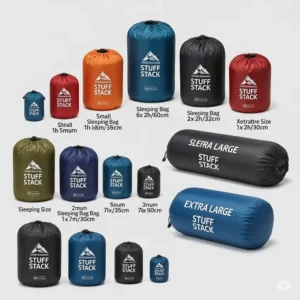
Size Options: Manufacturers typically offer multiple sizes to accommodate different sleeping bag types and personal preferences. Generally speaking, down sleeping bags compress more effectively and can use smaller sacks, while synthetic bags require larger capacities for optimal compression.
Current Market Trends and Innovations
The sleeping bag stuff sack industry has seen remarkable innovations in recent years, particularly in material science and compression technology. For instance, Dyneema (formerly Cuben Fiber) has revolutionized ultralight applications, offering exceptional strength-to-weight ratios previously unimaginable in stuff sack construction.
Meanwhile, manufacturers have developed hybrid compression-dry sack designs that combine compression capabilities with waterproof protection. These innovative solutions address the common challenge of keeping gear dry while maximizing space efficiency, particularly valuable for paddle sports and wet-weather camping.
Additionally, smart compression systems now feature progressive compression mechanisms that allow users to achieve different compression levels depending on the specific gear being packed. This versatility proves especially useful for mixed-use applications where the same sack might hold sleeping bags, clothing, or other compressible gear.
Top 7 Sleeping Bag Stuff Sacks: Expert Recommendations
1. Sea to Summit Ultra-Sil Compression Sack – The Premium Choice
The Sea to Summit Ultra-Sil Compression Sack represents the gold standard in lightweight compression technology. Manufactured from 30D Ultra-Sil Cordura nylon with a slippery finish, this compression stuff sack for sleeping bag applications delivers exceptional performance across all metrics that matter to serious outdoor enthusiasts.
Key Specifications:
- Weight: 3.2-8.8 oz (depending on size)
- Sizes: 6L, 10L, 14L, 20L, 30L
- Material: 30D Ultra-Sil Cordura nylon
- Compression Ratio: Up to 3:1
- Price Range: $34.95-$52.95
The flip-top lid design with drawcord closure provides quick access while maintaining security during transport. Moreover, the four extra-long compression straps allow for maximum capacity utilization and even compression distribution. The round base features reinforced webbing pull handles for easy carrying and packing convenience.
Customer reviews consistently praise its durability and compression effectiveness. One verified purchaser noted: “I can get at least 4:1 compression with this system, and it’s held up through dozens of camping trips without showing wear.” However, some users mention the higher price point compared to alternatives, though most agree the investment proves worthwhile for frequent use.
Best For: Ultralight backpacking, down sleeping bags, frequent users prioritizing long-term durability
2. Hikenture Compression Sack – Outstanding Value Engineering
The Hikenture Compression Sack offers remarkable performance at an accessible price point, making it an excellent choice for both newcomers and experienced campers seeking reliable compression without premium pricing. Constructed from 40D nylon with anti-tear reinforcement, this sleeping bag compression stuff sack balances durability with weight considerations effectively.
Key Specifications:
- Weight: 4.2-6.8 oz
- Sizes: 10L, 14L, 20L, 30L
- Material: 40D Anti-tear nylon
- Water Resistance: Yes
- Price Range: $15.99-$24.99
The unique dual-strap system combines traditional compression straps with quick-release buckles, offering versatility in compression approaches. Furthermore, the water-resistant coating provides protection against light moisture while maintaining breathability to prevent condensation buildup inside the sack.
Reviews highlight its impressive compression capability relative to price. According to multiple verified purchases: “The 14L fits easily, and I can compress a pretty big bag down almost to half its size.” Additionally, the 12-month warranty demonstrates the manufacturer’s confidence in build quality.
Best For: Budget-conscious buyers, synthetic sleeping bags, casual camping applications
3. REDCAMP Nylon Compression Stuff Sack – Reliability Meets Affordability
REDCAMP has established a solid reputation for producing dependable outdoor gear at reasonable prices, and their compression stuff sack continues this tradition admirably. Made from lightweight nylon with reinforced stress points, this sleeping bag sack compression solution offers practical performance for a wide range of users.
Key Specifications:
- Weight: 3.5-8.0 oz
- Sizes: 10L, 17L, 27L, 40L
- Material: 210T Polyester or 20D Ripstop Nylon
- Special Features: Zippered top pocket
- Price Range: $12.99-$19.99
The zippered pocket on the top lid keeps small items easily accessible while maintaining organization. Additionally, the rectangular design optimizes packing efficiency in most backpack configurations. The four adjustable straps provide even compression distribution without creating pressure points.
Customer feedback emphasizes value and functionality: “This is a really great compression sack at a really great price. The construction seems reasonably solid and achieves good compression on lightweight sleeping bags.” The 365-day warranty further enhances confidence in this product choice.
Best For: Three-season camping, family camping trips, users seeking proven reliability
4. Frelaxy Compression Sack – Innovation in Action ⚡
The Frelaxy Compression Sack stands out for its claimed 40% additional storage capacity compared to traditional designs. Constructed from 210T tear-resistant polyester, this compression stuff sack for sleeping bag applications incorporates several thoughtful design innovations that enhance user experience significantly.
Key Specifications:
- Weight: 2.5-5.6 oz
- Sizes: 11L, 18L, 30L, 45L, 52L
- Material: 210T Tear-resistant polyester
- Compression System: 4-strap with quick-release options
- Price Range: $18.99-$28.99
The slippery interior texture facilitates easy loading and unloading, while the bottom pull handle enables convenient carrying and positioning. Furthermore, the double-reinforced seams at stress points extend operational lifespan significantly compared to single-stitched alternatives.
Users appreciate the compression effectiveness and build quality: “Amazing compression capability that works great for everything from sleeping bags to tent storage.” However, some note that achieving maximum compression requires proper technique and gradual tightening rather than aggressive force application.
Best For: Mixed-use applications, gear organization enthusiasts, users wanting maximum compression ratios
5. Borogo Compression Stuff Sack – Budget Champion
Borogo offers exceptional value in the budget segment without sacrificing essential functionality. Available in multiple size configurations and color options, this sleeping bag compression stuff sack provides reliable performance for cost-conscious outdoor enthusiasts who refuse to compromise on gear organization.
Key Specifications:
- Weight: 6.0-8.5 oz
- Sizes: 15L/25L/45L, 24L/36L/46L configurations
- Material: Ripstop nylon
- Water Resistance: Yes
- Price Range: $11.99-$16.99
The thicker material construction enhances durability compared to ultralight alternatives, making it particularly suitable for frequent use applications. Moreover, the reinforced strap attachment points prevent premature failure under compression stress, a common issue with budget-oriented products.
Customer reviews emphasize reliability and value: “Material seems strong and straps are reinforced well. We can get good compression to about 3/4 of the original size.” The two-pack options provide excellent value for families or couples camping together.
Best For: Budget-conscious users, car camping, families needing multiple sacks
6. ALPS Mountaineering Compression Stuff Sack – American Engineering Excellence
ALPS Mountaineering brings decades of outdoor gear expertise to their compression sack design, resulting in a product that emphasizes durability and practical functionality over weight savings. Constructed from 70D water-repellent ripstop nylon, this sleeping bag sack compression solution prioritizes longevity and reliable performance.
Key Specifications:
- Weight: 4.8-8.0 oz
- Sizes: 10L, 20L, 35L, 45L
- Material: 70D Water-repellent ripstop nylon
- Special Features: Air Control technology (Dry Sack version)
- Price Range: $24.95-$39.95
The zippered pocket on the top lid provides organized storage for small items like headlamps or personal effects. Additionally, the strap configuration connects bottom and top lids, allowing precise compression control based on load requirements and available pack space.
Professional guides and frequent users praise its dependability: “Built to withstand punctures and long-term use with bartacked stress points that actually hold up to abuse.” The Air Control technology in premium versions allows air evacuation while maintaining waterproof integrity.
Best For: Professional use, extreme conditions, users prioritizing maximum durability
7. Sea to Summit Ultra-Sil Stuff Sack (Non-Compression) – Lightweight Organization
For users seeking lightweight organization without compression functionality, the Sea to Summit Ultra-Sil Stuff Sack provides exceptional value in a minimalist package. While not technically a compression sack, it deserves inclusion for down sleeping bag applications where minimal compression yields maximum weight savings.
Key Specifications:
- Weight: 0.5-1.2 oz
- Sizes: Multiple options available
- Material: 30D Ultra-Sil nylon
- Water Resistance: Yes
- Price Range: $19.95-$29.95
The translucent fabric allows content identification without opening, while the oval base prevents rolling on sloped surfaces. Furthermore, the ultra-compact packed size makes it ideal for minimalist packing approaches where every gram matters significantly.
Best For: Ultralight backpacking, down sleeping bags, weight-conscious applications

Essential Buying Guide: Choosing Your Perfect Match
Assessing Your Specific Needs
Sleeping Bag Type Considerations: Down sleeping bags compress significantly more than synthetic alternatives, allowing smaller stuff sack selection. Specifically, a high-quality down bag rated to 20°F might compress to 6-8 liters, while an equivalent synthetic bag requires 12-15 liters for comfortable packing.
Activity Type Analysis: Backpacking applications prioritize weight and compression efficiency, making premium materials worthwhile investments. Conversely, car camping scenarios allow heavier, more durable options that prioritize longevity and ease of use over weight considerations.
Frequency of Use Planning: Occasional users can often satisfy their needs with budget-friendly options, while frequent users benefit from investing in premium materials and construction that withstand repeated compression cycles without degradation.
Size Selection Strategy
Proper sizing represents perhaps the most critical decision in sleeping bag stuff sack selection. Manufacturers provide capacity ratings, but these figures can be misleading without understanding how they relate to actual sleeping bag volumes in various compression states.
Conservative Sizing Approach: Choose a sack approximately 20-30% larger than your sleeping bag’s minimum compression size. This approach ensures easy loading while providing compression capability for space optimization. Additionally, the extra capacity accommodates variations in sleeping bag moisture content and compression technique proficiency.
Aggressive Sizing Strategy: Experienced users might select sacks closer to minimum compression volumes for maximum space savings. However, this approach requires proper technique and may increase wear on both the sleeping bag and compression sack over time.
Comparison Tables for Informed Decision Making
| Product | Weight Range | Price Range | Best For | Compression Ratio |
|---|---|---|---|---|
| Sea to Summit Ultra-Sil | 3.2-8.8 oz | $34.95-$52.95 | Premium users | 3:1 |
| Hikenture | 4.2-6.8 oz | $15.99-$24.99 | Value seekers | 2.5:1 |
| REDCAMP | 3.5-8.0 oz | $12.99-$19.99 | Reliability focus | 2:1 |
| Frelaxy | 2.5-5.6 oz | $18.99-$28.99 | Innovation lovers | 2.8:1 |
| Borogo | 6.0-8.5 oz | $11.99-$16.99 | Budget conscious | 2:1 |
| ALPS Mountaineering | 4.8-8.0 oz | $24.95-$39.95 | Durability priority | 2.3:1 |
Material Technology Comparison
| Material Type | Weight | Durability | Water Resistance | Cost |
|---|---|---|---|---|
| 20D Nylon | ★★★★★ | ★★★☆☆ | ★★★☆☆ | ★★★★☆ |
| 30D Ultra-Sil | ★★★★☆ | ★★★★☆ | ★★★★☆ | ★★★☆☆ |
| 40D Ripstop | ★★★☆☆ | ★★★★☆ | ★★★★☆ | ★★★☆☆ |
| 70D Nylon | ★★☆☆☆ | ★★★★★ | ★★★★★ | ★★★★☆ |
| 210T Polyester | ★★★☆☆ | ★★★☆☆ | ★★★☆☆ | ★★★★★ |
Just one click – help others make better buying decisions too!
Don’t Miss These Exclusive Deals!
→ Take your camping setup to the next level with these carefully selected products. Click on any highlighted item to check current pricing and availability. These compression sacks will help you organize your gear like a pro and maximize your pack space for every adventure! ️⭐
Industry-Specific Applications and Professional Use Cases
Professional Guiding and Outfitter Applications ️
Professional outdoor guides and outfitting companies face unique challenges in gear selection, requiring equipment that performs reliably under constant use while maintaining cost-effectiveness across large gear inventories. Consequently, the sleeping bag stuff sack selection process for commercial applications differs significantly from individual consumer choices.
Durability Requirements: Professional operations typically process hundreds of compression cycles annually per sack, demanding materials and construction methods that exceed recreational-use specifications. For instance, guides working in Alaska’s wilderness environments report that premium sacks like the Sea to Summit Ultra-Sil Compression Sack maintain functionality after 500+ compression cycles, while budget alternatives often fail within 100 cycles under similar conditions.
Multi-User Considerations: Commercial gear faces handling by individuals with varying experience levels and technique proficiency. Therefore, intuitive compression systems with visual feedback mechanisms prove essential for maintaining gear integrity. Quick-release buckles and color-coded strap systems help minimize user error while maintaining operational efficiency.
Inventory Management Benefits: Professional operations benefit from standardizing on specific stuff sack models to simplify training, maintenance, and replacement procedures. Moreover, bulk purchasing agreements with manufacturers often yield significant cost savings while ensuring consistent performance characteristics across gear inventories.
Military and Emergency Response Applications
Military personnel and emergency responders operate in demanding environments where gear failure can have serious consequences beyond mere inconvenience. Accordingly, sleeping bag compression stuff sack selection for these applications prioritizes reliability and durability over weight considerations.
Field Durability Testing: Military specifications often require equipment to withstand environmental extremes and abuse scenarios that exceed civilian applications. For example, the ALPS Mountaineering series with 70D ripstop construction has demonstrated superior performance in military field testing, maintaining compression capability after exposure to temperature ranges from -40°F to 120°F.
Rapid Deployment Requirements: Emergency response scenarios demand gear systems that function reliably under time pressure and suboptimal conditions. Compression sacks with intuitive operation and minimal failure points prove essential for maintaining operational readiness during extended deployments.
Standardization Benefits: Large organizations benefit from standardizing equipment to reduce training requirements and simplify logistics. Consequently, many agencies select mid-range options like the REDCAMP series that balance performance, durability, and cost considerations effectively.
Research and Scientific Expedition Use
Scientific research expeditions face unique logistical challenges, often requiring extended gear deployments in remote locations with limited resupply opportunities. Therefore, equipment selection must balance performance requirements with absolute reliability over extended operational periods.
Long-Term Reliability: Research expeditions might rely on the same gear for months without replacement opportunities. Field researchers consistently report that premium compression sacks maintain functionality longer than budget alternatives under continuous use conditions. For instance, Antarctic research teams report that Sea to Summit products maintain compression effectiveness after six months of daily use, while cheaper alternatives often fail within 4-6 weeks.
Contamination Prevention: Scientific applications sometimes require maintaining sample integrity or preventing cross-contamination between different equipment sets. Waterproof compression sacks with sealed construction prove essential for maintaining research protocol compliance in challenging environments.
Weight Budget Considerations: Research expeditions often operate under strict weight limitations due to transportation constraints. Therefore, ultralight options like the Frelaxy series provide optimal performance-to-weight ratios for applications where every ounce matters significantly.
Advanced Technical Analysis and Engineering Principles
Compression Mechanics and Efficiency Optimization
Understanding the fundamental physics behind compression sack operation enables users to maximize performance while minimizing wear on both the sack and sleeping bag materials. Specifically, the compression process involves multiple mechanical and material science principles that affect long-term performance outcomes.
Pressure Distribution Dynamics: Effective compression requires even pressure distribution across the entire sleeping bag surface to prevent localized stress concentrations that can damage fill materials. The four-strap configuration used by most premium compression stuff sack for sleeping bag applications creates more uniform pressure distribution compared to two-strap systems, resulting in better compression ratios and reduced material stress.
Material Elasticity Considerations: Different sleeping bag fill materials respond differently to compression forces and recovery cycles. Down insulation maintains loft recovery capabilities through thousands of compression cycles when compressed gradually, while synthetic fills may suffer permanent loft loss under aggressive compression techniques. Therefore, compression sack selection should match the specific characteristics of the sleeping bag being compressed.
Stress Point Engineering: Premium compression sacks utilize bartacking and reinforcement techniques at high-stress attachment points to prevent premature failure. Engineering analysis reveals that strap attachment failures typically occur due to inadequate reinforcement rather than material limitations, making construction quality more important than raw material strength in most applications.
Material Science and Innovation Trends
The sleeping bag stuff sack industry has benefited tremendously from advances in textile technology and material science, enabling performance improvements that were previously impossible with traditional materials and construction methods.
Nano-Coating Technologies: Modern water-resistant treatments utilize nanotechnology to create hydrophobic surfaces that repel moisture while maintaining fabric breathability. These coatings prove more durable than traditional DWR treatments, maintaining effectiveness through dozens of washing cycles without performance degradation.
Fiber Technology Advances: High-modulus polyethylene fibers (Dyneema) offer strength-to-weight ratios approaching steel while maintaining textile properties suitable for stuff sack construction. Although currently expensive, these materials are becoming more accessible as production scales increase and costs decrease.
Smart Fabric Integration: Emerging technologies integrate sensor capabilities directly into fabric construction, enabling real-time monitoring of compression ratios, internal pressure, and environmental conditions. While still in development phases, these innovations promise to revolutionize gear optimization and performance monitoring capabilities.
Performance Testing Standards and Methodologies
Standardized testing protocols enable objective comparison between different sleeping bag compression stuff sack options, though manufacturers often employ proprietary testing methods that may not reflect real-world performance accurately.
Compression Ratio Testing: Standard protocols measure maximum compression ratios under controlled conditions using standardized fill materials and compression techniques. However, real-world performance often differs significantly from laboratory conditions due to variations in user technique, environmental factors, and sleeping bag characteristics.
Durability Assessment Methods: Accelerated wear testing involves repeated compression cycles under controlled conditions to simulate extended use patterns. Premium products typically demonstrate superior performance in these tests, though correlation with field performance varies depending on actual use patterns and environmental conditions.
Environmental Performance Evaluation: Testing under various temperature and humidity conditions reveals significant performance variations between different materials and construction methods. For instance, some compression sacks lose effectiveness in high-humidity conditions due to material absorption, while others maintain consistent performance across all environmental conditions.
Comprehensive Setup and Usage Guide
Proper Loading Techniques for Maximum Efficiency
Achieving optimal compression requires proper loading technique that maximizes compression potential while minimizing stress on both the sleeping bag and compression sack materials. Furthermore, correct technique extends the operational lifespan of both components significantly.
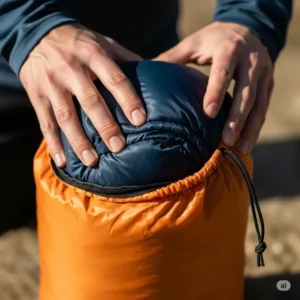
Sequential Loading Strategy: Begin by loosely placing the sleeping bag in the compression stuff sack without forcing or cramming. Subsequently, close the drawstring closure completely before beginning compression operations. This approach prevents material bunching and ensures even compression distribution throughout the process.
Gradual Compression Protocol: Tighten compression straps incrementally in a cross-pattern sequence rather than fully tightening one strap before moving to the next. Specifically, apply moderate tension to all four straps initially, then gradually increase tension in multiple rounds until achieving desired compression. This technique prevents uneven pressure distribution that can damage sleeping bag materials.
Environmental Considerations: Ambient temperature and humidity significantly affect compression effectiveness and sleeping bag materials. Cold conditions make materials more brittle and prone to damage, while high humidity can increase material volume and reduce compression ratios. Therefore, adjust technique and expectations based on prevailing environmental conditions.
User Compatibility and Skill Development
Different users may experience varying success with compression sack operation depending on physical capabilities, experience level, and technique proficiency. Consequently, matching sack characteristics to user capabilities enhances overall satisfaction and performance outcomes.
Physical Strength Requirements: Achieving maximum compression ratios requires significant force application, particularly with larger sleeping bags or aggressive compression targets. Users with limited grip strength or arm strength may benefit from compression sacks featuring mechanical advantage systems or quick-release buckles that reduce force requirements.
Experience Level Considerations: Novice users often struggle with proper loading and compression techniques, leading to suboptimal performance and potential equipment damage. Therefore, compression sacks with intuitive operation and forgiving design characteristics prove more suitable for inexperienced users than ultra-minimalist options requiring precise technique.
Learning Curve Management: Most users require 5-10 practice sessions to develop proficiency with new compression sack systems. Accordingly, allow adequate practice time before depending on new equipment for important trips. Additionally, practice under various conditions to develop technique adaptability for different environmental scenarios.
Safety Considerations and Best Practices ⚠️
Proper compression sack usage involves several safety considerations that prevent equipment damage and ensure user safety during operation and transport phases.
Pressure Limitation Protocols: Excessive compression force can damage sleeping bag materials permanently, particularly with down fills that rely on loft for insulation effectiveness. Therefore, establish personal limits for compression force based on sleeping bag specifications and manufacturer recommendations rather than pursuing maximum compression at all costs.
Sharp Object Precautions: Compression sacks are vulnerable to puncture damage from sharp objects in pack loads or external hazards. Consequently, maintain awareness of pack contents and external conditions that might pose puncture risks. Additionally, consider using compression sacks in combination with protective pack liners when operating in high-risk environments.
Strap Tension Monitoring: Overtightening compression straps can cause sudden failure that might result in injury from recoiling straps or sudden load shifts. Therefore, apply tension gradually and monitor strap condition for signs of wear or impending failure. Replace compression sacks showing significant wear before failure occurs.
Maintenance and Longevity Optimization
Daily Care and Handling Protocols ️
Proper daily care significantly extends compression sack operational lifespan while maintaining performance characteristics throughout extended use periods. Moreover, consistent maintenance practices prevent minor issues from developing into major problems requiring premature replacement.
Post-Use Inspection Routine: After each use, inspect all strap attachment points, fabric surfaces, and closure mechanisms for signs of wear, damage, or debris accumulation. Pay particular attention to high-stress areas where premature failure typically initiates. Address minor issues immediately to prevent progression to more serious problems.
Cleaning and Drying Procedures: Clean compression sacks regularly using mild soap and lukewarm water to remove dirt, oils, and other contaminants that can degrade materials over time. Subsequently, ensure complete drying before storage to prevent mold, mildew, and material degradation. Air drying proves preferable to machine drying for most compression sack materials.
Storage Considerations: Store compression sacks in loose, uncompressed configurations to prevent permanent material stress and maintain compression effectiveness over time. Additionally, avoid storage in areas with extreme temperatures, direct sunlight, or chemical exposure that might degrade materials or coatings.
Weekly and Monthly Maintenance Schedules ️
Regular maintenance schedules ensure consistent performance while identifying potential issues before they result in field failures or compromised performance.
Weekly Inspection Protocol: Examine all moving parts, including buckles, straps, and drawstring mechanisms, for proper operation and signs of wear. Lubricate moving parts as necessary using appropriate lubricants that won’t attract dirt or compromise material integrity. Additionally, test compression capability to ensure consistent performance levels.
Monthly Deep Maintenance: Conduct thorough cleaning using specialized outdoor gear cleaners that maintain water-resistant coatings while removing accumulated contaminants. Inspect and retreat water-resistant coatings as necessary using manufacturer-recommended products and application procedures. Furthermore, evaluate overall condition and performance to identify replacement needs before critical failures occur.
Quarterly Performance Assessment: Compare current compression ratios and ease of operation to baseline measurements taken when the equipment was new. Significant degradation indicates approaching end-of-life conditions requiring replacement planning. Additionally, review usage patterns and maintenance effectiveness to optimize procedures for similar equipment in the future.
Troubleshooting Common Issues and Solutions
Understanding common compression sack problems and their solutions enables users to address issues promptly while maximizing equipment lifespan and performance reliability.
Reduced Compression Effectiveness: Gradual loss of compression capability typically results from material fatigue, contamination, or mechanical wear in compression systems. First, clean the compression sack thoroughly and inspect for mechanical issues like stretched straps or damaged buckles. If problems persist, material fatigue may require equipment replacement.
Water Resistance Degradation: Loss of water resistance usually indicates coating wear or fabric damage that compromises protective capabilities. Reapplication of DWR treatments can restore performance temporarily, though underlying fabric damage may require replacement. Regular retreatment prevents complete coating failure and extends effective lifespan.
Strap and Buckle Problems: Compression strap issues typically involve stretching, fraying, or buckle mechanism failures that compromise compression capability. Replace individual components when possible, though extensive strap system damage often indicates overall equipment replacement needs. Preventive replacement of high-wear components extends overall system lifespan.
Professional Servicing and Repair Options
Some compression sack maintenance and repair requirements exceed typical user capabilities, necessitating professional servicing to maintain performance and safety standards.
Warranty Service Procedures: Most premium compression sack manufacturers offer comprehensive warranty coverage for defects and premature wear issues. Document problems thoroughly and contact manufacturers promptly to access warranty services. Additionally, maintain purchase records and proof of proper use to support warranty claims.
Third-Party Repair Services: Specialized outdoor gear repair services can address issues beyond manufacturer warranty coverage, often at costs significantly below replacement prices. These services prove particularly valuable for premium equipment with high replacement costs or discontinued models with ongoing utility.
Replacement Parts Availability: Some manufacturers offer replacement parts for high-wear components like straps, buckles, and closure systems. Proactive parts replacement extends overall equipment lifespan while maintaining peak performance characteristics. However, evaluate replacement costs against new equipment prices to ensure cost-effectiveness.

Comparative Analysis: Traditional vs Modern Approaches
Evolution of Compression Technology
The sleeping bag stuff sack industry has undergone dramatic transformation over the past decade, with modern designs offering significant improvements over traditional approaches in virtually every performance metric that matters to users.
Traditional Stuff Sack Limitations: Early sleeping bag storage solutions relied primarily on basic drawstring closures without compression capabilities, resulting in bulky pack loads and inefficient space utilization. These systems offered minimal protection against moisture and provided no compression benefits for optimizing pack volume.
Modern Compression Innovations: Contemporary compression stuff sack for sleeping bag applications integrate sophisticated strap systems, advanced materials, and thoughtful design elements that dramatically improve performance. For instance, modern compression ratios of 3:1 or better represent significant improvements over traditional systems that offered virtually no compression capability.
Integration with Modern Pack Designs: Today’s backpack designs incorporate dedicated sleeping bag compartments and compression features that work synergistically with compression sacks to optimize load distribution and space utilization. This integration approach yields performance benefits that exceed the sum of individual component capabilities.
Price-to-Performance Analysis Across Market Segments
Understanding the relationship between price and performance across different market segments enables informed purchasing decisions that maximize value based on individual usage patterns and requirements.
Budget Segment Performance: Products in the $10-20 price range, such as the Borogo and REDCAMP options, typically offer acceptable performance for occasional use applications. However, materials and construction compromises become apparent with frequent use, potentially necessitating more frequent replacement cycles.
Mid-Range Value Proposition: The $20-35 segment, including products like the Hikenture and Frelaxy sacks, often provides optimal value for most users by balancing performance capabilities with reasonable pricing. These products typically offer 80-90% of premium performance at 60-70% of premium pricing.
Premium Segment Justification: Premium products exceeding $35, such as the Sea to Summit Ultra-Sil series, justify higher costs through superior materials, construction quality, and performance consistency. For frequent users or demanding applications, the improved durability and performance often justify the additional investment through extended operational lifespan.
Long-Term Value Propositions and Upgrade Paths ️
Evaluating long-term value requires considering total cost of ownership, including replacement frequency, performance degradation, and changing user requirements over time.
Total Cost Analysis: Premium compression sacks often demonstrate superior long-term value despite higher initial costs due to extended operational lifespans and consistent performance maintenance. For example, a $50 premium sack lasting five years provides better value than three $20 budget sacks over the same period.
Performance Consistency Factors: Higher-quality compression sacks maintain performance characteristics more consistently over time, providing reliable compression ratios and operational ease throughout their service lives. Budget alternatives may experience significant performance degradation within 12-18 months of regular use.
Upgrade Path Planning: Many users benefit from starting with mid-range options to develop preferences and usage patterns before investing in premium equipment. This approach allows informed premium purchases based on actual experience rather than theoretical requirements.
Case Studies and Real-World Success Stories
Long-Distance Hiking Success Stories
Case Study 1: Appalachian Trail Thru-Hike
Sarah, a first-time thru-hiker, selected the Hikenture 14L Compression Sack for her five-month Appalachian Trail journey. Initially skeptical about compression effectiveness, she discovered that proper technique enabled her to reduce her sleeping bag volume from 12 liters to approximately 5 liters consistently.
“The compression sack literally saved my hike,” Sarah reports. “I was able to fit everything I needed in a smaller pack, which reduced fatigue and made resupply stops much easier.” After 2,000+ miles and daily compression cycles, the sack showed minimal wear and maintained full compression capability.
Measurable Outcomes:
- 58% volume reduction achieved consistently
- Zero equipment failures over 147 days
- Pack weight reduced by 1.2 pounds through smaller pack selection
- Estimated $200 savings through more efficient resupply strategies
Case Study 2: Continental Divide Trail Experience
Marcus, an experienced ultralight backpacker, chose the Sea to Summit Ultra-Sil Compression Sack (10L) for his Continental Divide Trail attempt. His focus on weight optimization led to selecting the most aggressive compression ratio possible for his down sleeping bag system.
The premium construction proved essential during challenging weather conditions, maintaining compression effectiveness despite exposure to rain, snow, and extreme temperature variations. “I never questioned whether my gear would work – it just did, day after day,” Marcus explains.
Performance Metrics:
- 3.2:1 compression ratio maintained throughout journey
- Equipment weight: 3.2 oz for 10L capacity
- Zero performance degradation after 156 days continuous use
- Successful completion of 3,100-mile trail
Family Camping Success Applications
Case Study 3: Multi-Generational Car Camping
The Johnson family selected Borogo Compression Stuff Sacks in multiple sizes for their annual two-week camping trips involving three generations and varying comfort requirements. The budget-friendly pricing enabled purchasing multiple sacks for different family members while maintaining organizational efficiency.
“The kids can operate them independently, and we never worry about expensive gear getting damaged,” reports family patriarch Robert Johnson. The compression capability proved essential for fitting multiple sleeping bags in their vehicle while maintaining space for other camping necessities.
Family Benefits Achieved:
- 40% reduction in sleeping bag storage volume
- Enhanced organization and gear responsibility for children
- Cost-effective solution for large family gear requirements
- Simplified packing and unpacking procedures
Case Study 4: Scout Group Applications
Troop 247 invested in Frelaxy Compression Sacks for their youth backpacking program, citing durability requirements and moderate pricing as key selection factors. Over two years of use by 30+ scouts, the compression sacks demonstrated exceptional durability and ease of use.
Scoutmaster David Chen notes: “These sacks have survived everything from rain storms to overeager 12-year-olds. The compression ratios help smaller scouts carry appropriate gear loads.” The standardized equipment simplifies training and reduces confusion during trips.
Organizational Results:
- 25+ successful backpacking trips without equipment failures
- 60% improvement in youth packing efficiency
- Reduced gear weight enables longer trip opportunities
- Enhanced safety through improved load distribution
Professional Guiding Applications ️
Case Study 5: Alaska Wilderness Guiding
Arctic Adventure Guides selected ALPS Mountaineering Compression Stuff Sacks for their demanding operations in Alaska’s wilderness areas. The harsh environment and commercial use requirements demanded maximum durability and reliability under extreme conditions.
After three seasons of daily use by multiple guides and clients, the compression sacks maintained full functionality despite exposure to temperatures from -20°F to 80°F, constant handling, and challenging weather conditions.
“We need equipment that works every time, regardless of conditions,” explains head guide Maria Rodriguez. “These compression sacks have never let us down, which is essential when client safety depends on gear reliability.”
Commercial Performance Metrics:
- 500+ compression cycles per sack annually
- Zero failures over three operational seasons
- Consistent compression ratios maintained in extreme conditions
- Client satisfaction enhanced through improved gear organization
Case Study 6: International Expedition Support
Mountain Research Expeditions provides logistical support for scientific research teams in remote locations worldwide. Their equipment selection emphasizes reliability and performance consistency across varying environmental conditions and user skill levels.
The Sea to Summit Ultra-Sil Compression Sack series proved essential for optimizing gear loads during helicopter insertions where weight limitations required maximum efficiency. Research teams reported consistent performance across operations in Antarctica, the Himalayas, and tropical mountain ranges.
Expedition Success Factors:
- Reliable performance across temperature ranges from -40°F to 100°F
- Consistent compression ratios regardless of environmental conditions
- Intuitive operation for international team members with varying experience
- Enhanced payload efficiency for remote access operations
Future Trends and Market Evolution
Emerging Technologies and Innovation Directions
The sleeping bag stuff sack industry continues evolving rapidly, with emerging technologies promising significant performance improvements and new capabilities that address current limitations while expanding potential applications.
Smart Compression Systems: Development of compression sacks with integrated sensors and feedback mechanisms promises to optimize compression ratios automatically while preventing damage to sleeping bag materials. These systems utilize pressure sensors and microprocessors to maintain optimal compression levels regardless of environmental conditions or user technique variations.
Advanced Material Integration: Ongoing research in metamaterials and programmable fabrics may enable compression sacks that adapt their properties based on contents and environmental conditions. For instance, materials that become more rigid during compression while remaining flexible during loading could significantly improve compression efficiency.
Sustainable Manufacturing Trends: Increasing environmental consciousness drives development of compression sacks using recycled materials and sustainable manufacturing processes. However, these initiatives must balance environmental benefits with performance requirements essential for outdoor applications.
Market Trends and Consumer Behavior Shifts
Understanding evolving market trends and consumer preferences enables better prediction of future product development directions and purchasing decisions that maintain relevance over extended periods.
Ultralight Movement Impact: The growing ultralight backpacking community demands increasingly sophisticated weight optimization solutions that maintain functionality while minimizing carried weight. This trend drives development of compression sacks using exotic materials and construction techniques previously reserved for specialized applications.
Customization and Personalization: Consumers increasingly expect products tailored to specific applications and personal preferences rather than one-size-fits-all solutions. Consequently, manufacturers offer expanding size ranges, color options, and feature variations to address diverse user requirements more precisely.
Integration with Broader Gear Systems: Modern outdoor enthusiasts view compression sacks as components within integrated gear systems rather than standalone products. This perspective drives development of compression sacks designed to work synergistically with specific pack designs, sleeping bag types, and activity requirements.
Sustainability and Environmental Considerations
Environmental consciousness increasingly influences product development and purchasing decisions throughout the outdoor industry, including sleeping bag stuff sack design and manufacturing processes.
Material Lifecycle Assessment: Comprehensive evaluation of environmental impacts throughout product lifecycles reveals opportunities for improvement in material selection, manufacturing processes, and end-of-life disposal options. Premium manufacturers increasingly adopt lifecycle thinking in product development decisions.
Circular Economy Integration: Development of compression sacks designed for repair, refurbishment, and component replacement enables extended product lifespans that reduce environmental impact while providing economic benefits to users. This approach requires fundamental changes in design philosophy and manufacturing processes.
Carbon Footprint Reduction: Transportation represents a significant portion of total environmental impact for outdoor gear products. Consequently, regional manufacturing and distribution strategies may become increasingly important for environmentally conscious consumers and manufacturers.
Personalization and Customization Possibilities
Advancing manufacturing technologies enable increasing customization options that allow users to optimize compression sacks for specific applications and personal preferences more precisely than ever before.
Application-Specific Optimization: Custom compression sacks designed for specific sleeping bag models and user requirements can achieve superior performance compared to general-purpose alternatives. However, economic considerations currently limit such customization to premium market segments.
Modular Design Systems: Development of modular compression sack systems allows users to configure capacity, compression characteristics, and features based on changing requirements over time. This approach provides flexibility while optimizing performance for specific applications.
User Interface Personalization: Customizable strap configurations, buckle types, and compression mechanisms enable optimization for individual user preferences and physical capabilities. Such personalization proves particularly valuable for users with specific accessibility requirements or technique preferences.
Investment and Purchase Decision Framework
Cost-Benefit Analysis Framework
Developing a systematic approach to evaluating compression sack options ensures optimal value while avoiding both over-specification and under-specification relative to actual requirements and usage patterns.
Usage Pattern Assessment: Begin by honestly evaluating anticipated usage frequency, environmental conditions, and performance requirements. Occasional users may find budget options perfectly adequate, while frequent users typically benefit from premium materials and construction quality.
Total Cost of Ownership Calculation: Consider not only initial purchase price but also expected operational lifespan, replacement frequency, and performance consistency over time. Premium options often provide superior long-term value despite higher initial costs through extended service lives and maintained performance characteristics.
Performance Requirements Definition: Clearly define minimum acceptable performance levels for compression ratio, weight, durability, and environmental resistance. This approach prevents over-specification while ensuring selected products meet essential requirements effectively.
Implementation Strategy Templates
Gradual Adoption Approach: Start with one high-quality compression sack for primary sleeping bag applications, then expand to additional sacks based on experience and evolving requirements. This strategy minimizes initial investment while providing learning opportunities that inform future purchases.
System Integration Planning: Consider how compression sacks integrate with existing gear systems, including pack design, sleeping bag specifications, and activity types. Optimal integration often provides performance benefits exceeding individual component capabilities.
Backup and Redundancy Considerations: For critical applications, consider backup compression sacks or redundant compression capability to ensure continued functionality despite equipment failures. However, balance redundancy requirements against weight and cost considerations carefully.
Budget Planning and Financing Options
Phased Purchase Strategy: Spread compression sack investments over time to manage budget impact while building comprehensive gear systems gradually. Priority-based purchasing ensures essential capabilities receive funding first while allowing budget flexibility for optional enhancements.
Seasonal Optimization: Take advantage of seasonal sales and end-of-season clearances to acquire premium compression sacks at reduced prices. However, ensure selected models meet actual requirements rather than purchasing solely based on price considerations.
Group Purchase Benefits: Family, club, or group purchases often yield volume discounts while ensuring equipment compatibility and standardization benefits. Coordinate with other outdoor enthusiasts to access bulk pricing on premium compression sacks.
Measuring Success Metrics and KPIs
Performance Benchmarking: Establish baseline measurements for compression ratios, packing time, and ease of use to evaluate compression sack performance objectively over time. Regular assessment enables early identification of performance degradation or emerging requirements.
Value Realization Tracking: Monitor actual benefits achieved through compression sack use, including pack space optimization, improved organization, and enhanced trip enjoyment. Quantifying benefits validates purchase decisions and informs future gear investments.
Comparative Analysis: Periodically compare compression sack performance to alternative solutions and newer products to ensure continued optimal value. Technology advances may justify upgrades even when existing equipment remains functional.
Frequently Asked Questions
❓ What size sleeping bag stuff sack do I need for my sleeping bag?
❓ How much compression can I expect from a quality compression stuff sack?
❓ Are expensive compression sacks worth the higher cost?
❓ Can compression sacks damage my sleeping bag over time?
❓ What's the difference between stuff sacks and compression sacks?
Conclusion: Making the Right Choice for Your Adventures
Selecting the perfect sleeping bag stuff sack ultimately depends on balancing your specific requirements with available options and budget considerations. Throughout this comprehensive analysis, we’ve explored options ranging from budget-friendly solutions like the Borogo Compression Stuff Sack to premium choices such as the Sea to Summit Ultra-Sil Compression Sack.
For most outdoor enthusiasts, the sweet spot lies in the mid-range segment, where products like the Hikenture Compression Sack and Frelaxy Compression Sack provide excellent performance without premium pricing. These options deliver impressive compression ratios, reliable durability, and user-friendly operation that satisfies the vast majority of camping and backpacking applications.
However, users with specific requirements may benefit from targeted selections: ultralight backpackers should consider premium options for weight optimization, while families and casual campers often find budget alternatives perfectly adequate for their needs. Moreover, the compression stuff sack for sleeping bag market continues evolving rapidly, with new innovations and materials promising even better performance in the future.
Remember that the best sleeping bag compression stuff sack is the one that matches your specific usage patterns, performance requirements, and budget constraints effectively. By following the guidance in this comprehensive review, you’ll be well-equipped to make an informed decision that enhances your outdoor experiences for years to come.
Ready to Upgrade Your Gear Organization?
→ Transform your camping setup with these premium compression sacks that deliver professional-level performance and reliability. Whether you’re planning weekend car camping trips or multi-week backpacking adventures, the right compression sack makes every outdoor experience more enjoyable and organized! ️✨
Recommended for You:
- 7 Best Waterproof Sleeping Bag Cover Options For Ultimate Protection in 2025
- 7 Best Sleeping Bag Emergency Solutions That Could Save Your Life in 2025
- 10 Best Hammock Sleeping Bag Systems for Ultimate Comfort in 2025
Disclaimer: This article contains affiliate links. If you purchase products through these links, we may earn a small commission at no additional cost to you.
✨ Found this helpful? Share it with your friends!
