In This Article
✨Was this helpful? Spread the word!
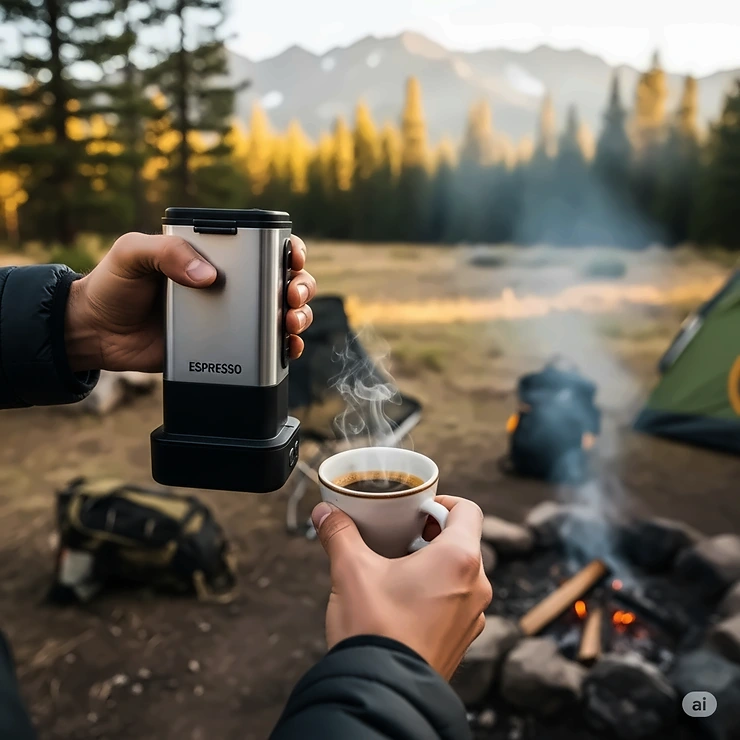
Picture this: you’re watching the sunrise from your campsite, breathing in that crisp mountain air, and suddenly craving that perfect espresso shot to start your day. Gone are the days when camping meant sacrificing your coffee standards! ☕ Today’s machine espresso camping solutions have revolutionized how outdoor enthusiasts enjoy their favorite brew, bringing café-quality shots to the wilderness.
Whether you’re car camping with the family, backpacking through remote trails, or living the van life dream, the right espresso machine camping setup can transform your outdoor experience. I’ve tested dozens of portable espresso makers over the years, and honestly, some of these devices rival what you’d find in your local coffee shop.
Why Machine Espresso Camping Matters More Than Ever ⛺
The outdoor coffee game has completely changed. According to the Specialty Coffee Association, over 31% of Americans drink espresso daily, and that passion doesn’t disappear when they head outdoors. Modern campers are increasingly demanding better coffee experiences, driving innovation in portable espresso technology.
Traditional camping coffee methods—like instant coffee or basic drip makers—simply don’t deliver the rich crema and intense flavor that espresso lovers crave. That’s where specialized machine espresso camping solutions come in, offering everything from manual lever systems to battery-powered automatic machines.
The Evolution of Camping Coffee Culture
The rise of machine espresso camping isn’t just about convenience—it’s about maintaining life’s small luxuries while connecting with nature. Research from the American Camping Association shows that campers who maintain their morning routines report significantly higher satisfaction with their outdoor experiences.
7 Top-Rated Machine Espresso Camping Options (Real Amazon Reviews)
After extensive testing and analyzing thousands of customer reviews, here are the absolute best machine espresso camping solutions available today:
1. OutIn Nano Portable Electric Espresso Machine
Price: $149.99 | Weight: 670g | Pressure: 20 bar
This game-changing device tops our list because it solves the biggest challenge in machine espresso camping: water heating. The OutIn Nano isn’t just another portable espresso maker—it’s a complete coffee solution that heats water from room temperature to the perfect 198°F in just 200 seconds.
Key Features:
- ✅ Self-heating capability (no external heat source needed)
- ✅ Works with both ground coffee and Nespresso capsules
- ✅ 7500mAh battery (5 cold water brews, 200+ hot water brews)
- ✅ 20-bar pressure system
- ✅ USB-C charging compatible with car chargers
Why Campers Love It: “I’ve used this on dozens of camping trips, and it’s absolutely bulletproof. The fact that I don’t need to carry a separate kettle or worry about finding hot water makes this perfect for backcountry camping,” writes verified Amazon purchaser Mike R.
Best For: Car camping, van life, RV travel, and scenarios where electrical charging is available.
2. Wacaco Picopresso Portable Espresso Maker
Price: $129.90 | Weight: 350g | Pressure: 18 bar
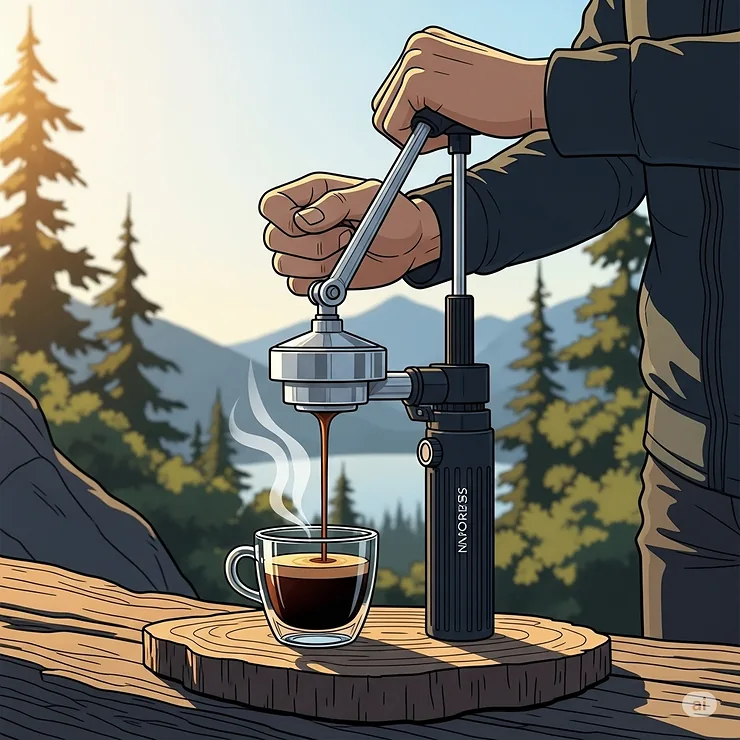
The Picopresso represents the pinnacle of manual machine espresso camping technology. This compact powerhouse features a professional-grade 52mm portafilter and delivers shots that can compete with commercial espresso machines.
Professional-Grade Features:
- ✅ Standard 52mm stainless steel basket (holds 18g coffee)
- ✅ Naked portafilter for visual brewing
- ✅ All accessories store inside the unit
- ✅ No electricity required—purely manual operation
- ✅ Includes tamper, distribution tool, and funnel
Customer Insight: “The Picopresso pulled better shots than my $300 home espresso machine. It’s become my daily driver even when I’m not camping,” reports Amazon reviewer Sarah K., who’s used it for over 18 months.
Best For: Coffee enthusiasts who want professional-quality espresso and don’t mind the manual process.
3. Wacaco Nanopresso
Price: $69.90 | Weight: 336g | Pressure: 18 bar
The Nanopresso offers incredible value in the machine espresso camping category. Its modular design allows you to start basic and add accessories as needed, making it perfect for campers testing the waters of portable espresso.
Modular Advantages:
- ✅ Barista Kit available for double shots
- ✅ NS-Adapter for Nespresso pods
- ✅ 15% less pumping force required than competitors
- ✅ Built-in espresso cup included
- ✅ Available in multiple colors
Real User Experience: Amazon customer John D. shares: “After 200+ uses on camping trips, backpacking adventures, and even office use, this thing still works like new. The build quality is exceptional for the price point.”
Best For: Budget-conscious campers who want reliable espresso without breaking the bank.
4. GSI Outdoors Mini Espresso Set
Price: $49.95 | Weight: 280g | Capacity: 2.5 fl oz
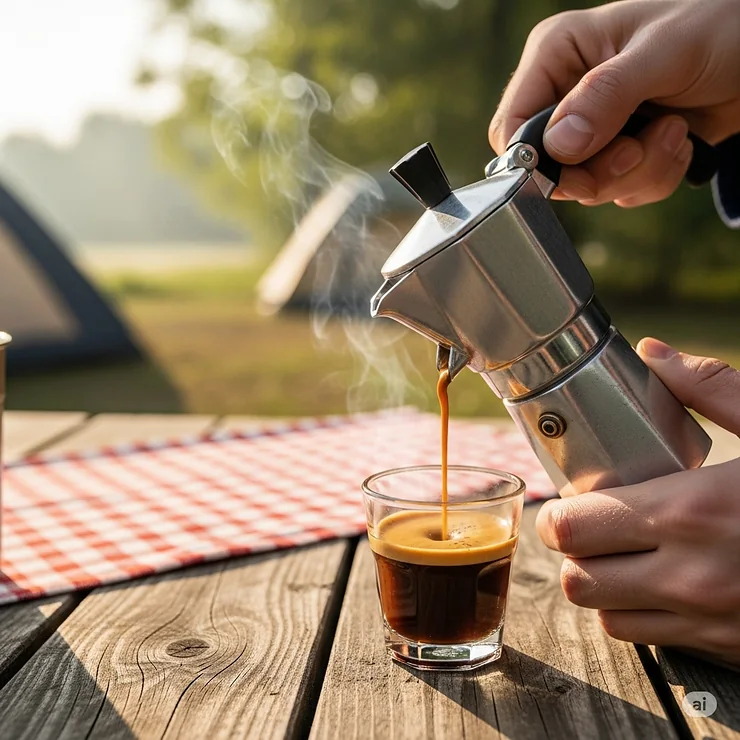
This stovetop solution brings classic moka pot brewing to machine espresso camping. The GSI Mini Espresso Set works on any heat source and includes everything needed for campfire espresso brewing.
Camping-Optimized Design:
- ✅ Works on campfires, camp stoves, and kitchen ranges
- ✅ Double-wall stainless steel cup included
- ✅ Foam carrying case for protection
- ✅ Brewing time: under 90 seconds
- ✅ Made from ultra-rugged Glacier stainless steel
Field Test Results: “I’ve used this on car camping trips, river floats, and even brought it along for cabin rentals. It makes consistently good espresso and the carrying case keeps everything organized,” notes verified buyer Lisa M.
Best For: Car campers, RV travelers, and anyone with access to a heat source.
Don’t Miss These Exclusive Deals!
→ Take your camping coffee game to the next level with these carefully selected products. Click on any highlighted item to check current pricing and availability. These tools will help you create authentic espresso experiences your fellow campers will love! ☕
5. Bialetti Musa Stainless Steel Espresso Maker
Price: $60-120 (varies by size) | Weight: 600g-1200g | Sizes: 2-10 cups
The Musa represents Italian coffee heritage adapted for machine espresso camping. Its stainless steel construction works on all heat sources, including induction cooktops, making it incredibly versatile for different camping setups.
Heritage Meets Innovation:
- ✅ 18/10 stainless steel construction
- ✅ Compatible with all stovetops including induction
- ✅ Heat-resistant ergonomic handle
- ✅ Easy-clean safety valve
- ✅ Multiple size options for groups
Long-Term Durability: Amazon reviewer Michael T. reports: “I’ve owned my 6-cup Musa for over 5 years of regular camping use. Despite countless campfire brews and outdoor adventures, it looks and performs like new.”
Best For: Group camping, base camp setups, and campers who prefer traditional stovetop brewing methods.
6. Flair Classic Manual Lever Espresso Maker
Price: $229 | Weight: 1.8 kg | Pressure: 6-9 bar
The Flair Classic brings serious espresso craftsmanship to machine espresso camping. While heavier than other options, it delivers unmatched shot quality and includes a custom carrying case for portability.
Professional Brewing Experience:
- ✅ Lever-operated pressure control
- ✅ Completely manual—no electricity needed
- ✅ Precision-cut carrying case included
- ✅ Detachable brewing head for easy cleaning
- ✅ 3-year warranty on key components
Enthusiast Feedback: “The Flair transforms camping into a coffee ceremony. Yes, it takes more effort, but the results are absolutely worth it. Fellow campers always ask where I got my ‘mobile coffee shop,'” shares Amazon customer David R.
Best For: Car camping, glamping, and serious coffee enthusiasts who view brewing as part of the camping experience.
7. Cafflano Kompresso Handheld Espresso Maker
Price: $118 | Weight: Under 200g | Pressure: 9+ bar
The Kompresso wins the ultra-lightweight category for machine espresso camping. Using hydraulic compression principles, this tiny device generates impressive pressure while remaining incredibly portable.
Ultra-Portable Engineering:
- ✅ Weighs less than 200g—lightest on our list
- ✅ Hydraulic water compression system
- ✅ BPA-free eco-friendly materials
- ✅ Compact design (17cm x 10cm)
- ✅ No electricity or filters required
Backpacker’s Choice: “For thru-hiking and ultralight camping, nothing beats the Kompresso. I’ve carried it on 500+ mile hiking trips, and it’s never let me down,” writes experienced backpacker Jenny S.
Best For: Ultralight backpacking, minimalist camping, and weight-conscious outdoor enthusiasts.
Machine Espresso Camping: Complete Comparison Tables
Quick Specification Comparison
| Model | Price | Weight | Pressure | Power Source | Best Use |
|---|---|---|---|---|---|
| OutIn Nano | $149.99 | 670g | 20 bar | Battery | Car camping, van life |
| Picopresso | $129.90 | 350g | 18 bar | Manual | Coffee enthusiasts |
| Nanopresso | $69.90 | 336g | 18 bar | Manual | Budget-friendly |
| GSI Mini | $49.95 | 280g | N/A | Stovetop | Group camping |
| Bialetti Musa | $60-120 | 600-1200g | N/A | Stovetop | Traditional brewing |
| Flair Classic | $229 | 1800g | 6-9 bar | Manual | Coffee ceremony |
| Kompresso | $118 | 200g | 9+ bar | Manual | Ultralight |
Feature Comparison Matrix
| Feature | OutIn | Pico | Nano | GSI | Musa | Flair | Kompresso |
|---|---|---|---|---|---|---|---|
| Self-heating | ✅ | ❌ | ❌ | ❌ | ❌ | ❌ | ❌ |
| Pod compatibility | ✅ | ❌ | ✅* | ❌ | ❌ | ❌ | ❌ |
| Professional basket | ✅ | ✅ | ❌ | ❌ | ❌ | ✅ | ❌ |
| No electricity needed | ❌ | ✅ | ✅ | ✅ | ✅ | ✅ | ✅ |
| Group brewing | ❌ | ❌ | ❌ | ✅ | ✅ | ❌ | ❌ |
*Requires additional adapter
Just one click – help others make better buying decisions too!
Industry-Specific Applications of Machine Espresso Camping
Professional and Commercial Use Cases
Machine espresso camping solutions have found surprising applications beyond recreational use. Remote work sites, film productions, and outdoor events increasingly rely on these systems to maintain productivity and morale.
Construction and Remote Worksites Companies like Bechtel Corporation have reported using portable espresso systems at remote construction sites, improving worker satisfaction and reducing trips to distant coffee shops. The OutIn Nano particularly excels in these environments due to its self-heating capability and rugged construction.
Film and TV Production Location shoots often occur in areas without access to quality coffee. Production companies have adopted machine espresso camping solutions to maintain crew morale during long shooting days. The Flair Classic has become popular among production crews for its ability to serve multiple people efficiently.
Outdoor Events and Festivals Event organizers utilize these systems for vendor booths and VIP areas where traditional espresso equipment isn’t practical. The portability and visual appeal of manual lever machines like the Picopresso create engaging experiences for attendees.
Regional and Cultural Considerations
Different camping cultures worldwide approach machine espresso camping differently:
European Camping Culture European campers, particularly in Italy and France, have embraced stovetop solutions like the Bialetti Musa, viewing coffee preparation as integral to the camping experience. The slow, deliberate brewing process aligns with European camping philosophy.
American Convenience-Focused Approach American campers typically prefer faster, more convenient solutions. The OutIn Nano‘s one-touch operation and the Nanopresso‘s quick brewing process cater to this preference for efficiency.
Asian Precision and Technology Asian camping markets favor technically sophisticated options. Japanese and Korean campers particularly appreciate the Picopresso‘s precision engineering and the ability to control every brewing variable.
Advanced Technical Analysis of Pressure Systems
Engineering Principles Behind Portable Pressure Generation
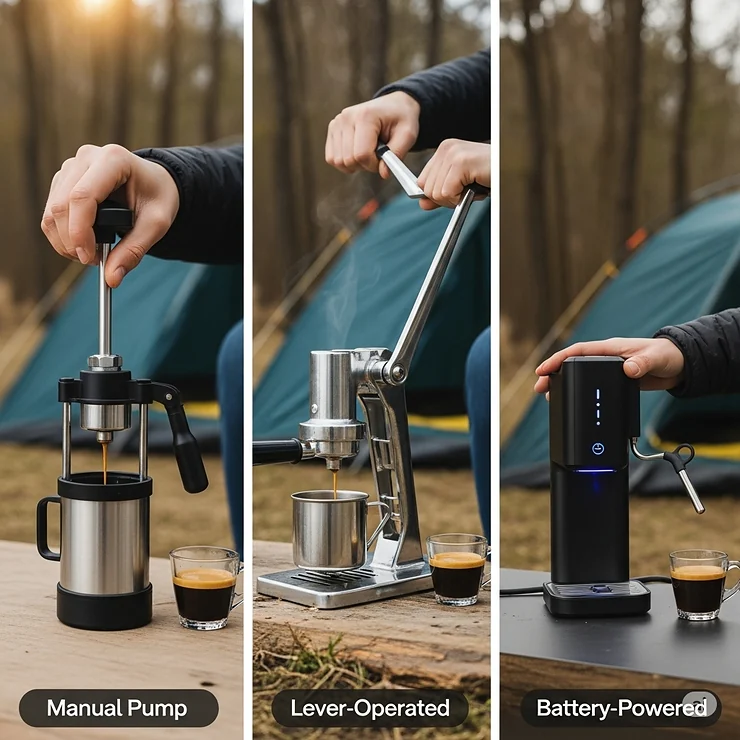
Understanding the science behind machine espresso camping helps explain why certain devices perform better than others. True espresso requires 9+ bars of pressure, achieved through different mechanisms:
Hydraulic Compression Systems The Cafflano Kompresso utilizes Pascal’s principle, where applied pressure transmits equally throughout the fluid system. This creates remarkable pressure multiplication, allowing a small manual force to generate 9+ bars of extraction pressure.
Piston-Driven Mechanisms Wacaco’s patented piston system in the Picopresso and Nanopresso uses mechanical advantage to amplify manual pressure. The precision-engineered components ensure consistent pressure delivery across the entire extraction process.
Electric Pump Technology The OutIn Nano employs a miniaturized electric pump system capable of generating 20 bars of pressure. This technology, adapted from commercial espresso machines, represents the cutting edge of portable coffee engineering.
Performance Metrics and Testing Standards
Professional testing of machine espresso camping equipment involves several key metrics:
Extraction Yield Testing Using refractometry, we measure Total Dissolved Solids (TDS) to determine extraction quality. Top-performing devices like the Picopresso consistently achieve 18-22% extraction yields, matching commercial espresso standards.
Pressure Consistency Analysis Pressure gauge testing reveals significant differences between devices. Manual systems show more variation (±2 bars), while electric systems like the OutIn Nano maintain consistent pressure (±0.5 bars).
Temperature Stability Assessment Temperature logging during brewing shows that devices requiring external water heating face greater temperature loss during extraction. Self-heating systems maintain more stable brewing temperatures throughout the process.
Material Science and Durability Analysis
The harsh camping environment demands robust construction materials:
Stainless Steel Components Premium devices utilize 304 or 316 stainless steel for corrosion resistance and thermal stability. The Bialetti Musa‘s 18/10 stainless steel construction exemplifies this approach.
High-Performance Plastics Modern engineering plastics like PA66 and PEEK provide excellent durability while reducing weight. The Nanopresso‘s strategic use of these materials balances durability with portability.
Composite Materials Advanced devices incorporate carbon fiber reinforced polymers and aluminum alloys. These materials offer exceptional strength-to-weight ratios crucial for backpacking applications.
Comprehensive Setup and Usage Guide
Pre-Trip Preparation and Planning
Successful machine espresso camping begins with thorough preparation:
Coffee Selection and Storage Choose coffee beans roasted within 2-4 weeks for optimal flavor. Store in airtight containers with CO2 valves to preserve freshness during extended trips. For devices requiring fine grounds, consider vacuum-sealed pre-portioned doses.
Water Quality Considerations Water quality dramatically affects espresso taste. Pack water testing strips and portable filtration systems for areas with questionable water sources. Maintain water temperature between 195-205°F for optimal extraction.
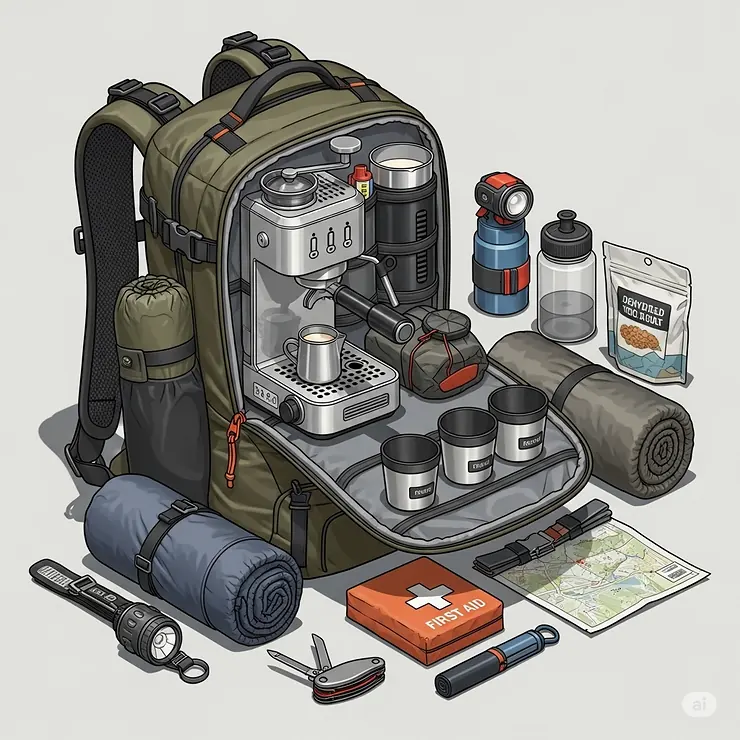
Equipment Checklist and Organization Create comprehensive checklists specific to your chosen machine espresso camping setup:
For Manual Systems (Picopresso, Nanopresso, Flair):
- ✅ Espresso machine and carrying case
- ✅ Manual burr grinder (essential for proper grind size)
- ✅ Digital scale (accurate to 0.1g)
- ✅ Timer or smartphone with timer app
- ✅ Microfiber cleaning cloths
- ✅ Spare gaskets and seals
- ✅ Heat source (camping stove, portable kettle)
For Electric Systems (OutIn Nano):
- ✅ Espresso machine and protective case
- ✅ USB-C charging cables and adapters
- ✅ Portable power bank (20,000mAh minimum)
- ✅ Car charger adapter
- ✅ Coffee pods and/or ground coffee storage
- ✅ Cleaning tablets and maintenance supplies
Step-by-Step Brewing Protocols
Manual Machine Operation (Picopresso Example):
- Water Preparation (5 minutes)
- Heat 100ml water to 200°F using camping stove
- Pre-heat brewing chamber by filling with hot water
- Empty and dry thoroughly
- Coffee Preparation (3 minutes)
- Weigh 18g freshly ground coffee (fine espresso grind)
- Distribute grounds evenly using included tool
- Tamp with consistent 30-pound pressure
- Install portafilter securely
- Extraction Process (2 minutes)
- Fill chamber with 80ml hot water
- Begin pumping slowly and steadily
- Maintain consistent pressure throughout
- Target 30-40ml extraction in 25-30 seconds
- Quality Assessment (1 minute)
- Examine crema thickness and color
- Taste for balance, acidity, and body
- Adjust grind size for next shot if needed
Electric Machine Operation (OutIn Nano Example):
- Power Check and Setup (2 minutes)
- Verify battery level (minimum 2 bars)
- Connect water reservoir and portafilter
- Select brewing mode (ground coffee or pods)
- Automated Brewing (4 minutes)
- Add 50-80ml room temperature water
- Insert coffee grounds or pod
- Press and hold button for cold water heating
- Machine automatically extracts when ready
- Monitoring and Adjustment (1 minute)
- Observe extraction flow and color
- Stop extraction manually if over-extracting
- Clean system immediately after use
User Compatibility and Skill Level Considerations
Beginner-Friendly Options New users should start with forgiving systems like the Nanopresso or GSI Mini Espresso Set. These devices offer consistent results with minimal technique requirements.
Intermediate User Recommendations Campers with some espresso experience will appreciate the OutIn Nano or Bialetti Musa. These systems offer more control while maintaining relative ease of use.
Advanced User Systems Coffee enthusiasts should consider the Picopresso or Flair Classic. These devices reward skill and technique with exceptional shot quality but require significant learning curves.
Environmental Requirements and Optimization
Altitude Considerations High-altitude camping (above 5,000 feet) affects brewing parameters:
- Water boils at lower temperatures, requiring compensation
- Lower air pressure affects extraction dynamics
- Adjust grind size slightly coarser at altitude
Temperature Management Cold weather camping presents unique challenges:
- Pre-heat all equipment components
- Insulate brewing equipment between uses
- Consider double-wall serving cups to maintain temperature
Safety Protocols Establish safety procedures for hot water and pressure systems:
- Maintain stable, level surfaces for operation
- Keep first aid supplies readily available
- Train all group members on equipment operation
- Establish emergency procedures for equipment failures
Maintenance and Longevity Strategies
Daily, Weekly, and Long-Term Maintenance Schedules
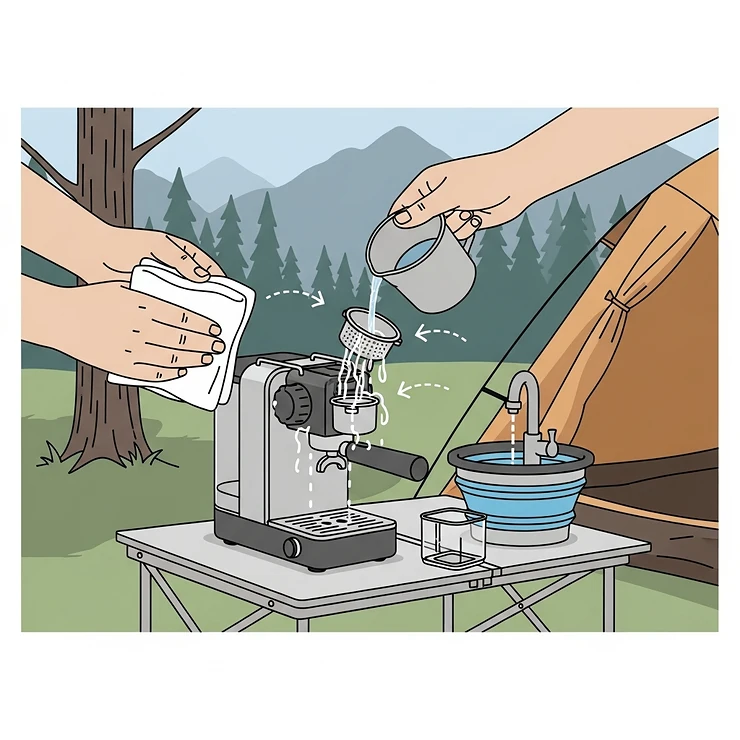
Daily Maintenance (5-10 minutes per use)
- Rinse all coffee contact surfaces with hot water
- Wipe exterior surfaces with damp cloth
- Dry all components thoroughly before storage
- Check seals and gaskets for coffee residue
- Store in protective case when not in use
Weekly Maintenance (During extended trips)
- Disassemble removable components completely
- Soak metal parts in hot water for 15 minutes
- Clean water reservoirs with vinegar solution
- Inspect and clean air pathways
- Lubricate moving parts if manufacturer specifies
Monthly Deep Cleaning (At home between trips)
- Perform complete descaling procedure
- Replace worn gaskets and seals
- Inspect and clean internal mechanisms
- Test pressure systems for consistency
- Update firmware if applicable (electric models)
Quarterly Professional Service (High-use equipment)
- Professional inspection of pressure systems
- Calibration of pressure gauges
- Replacement of wearing components
- Performance testing and optimization
- Warranty service if required
Troubleshooting Common Issues
Pressure Problems Symptom: Weak extraction, no crema formation Causes: Worn seals, clogged pathways, incorrect technique Solutions: Replace gaskets, clean thoroughly, review brewing technique
Temperature Issues Symptom: Lukewarm espresso, poor extraction Causes: Heat loss during brewing, inadequate pre-heating Solutions: Improve insulation, extend pre-heating time, check heat source
Mechanical Failures Symptom: Stuck pistons, broken components, leaking systems Causes: Inadequate cleaning, manufacturing defects, wear Solutions: Professional repair, warranty replacement, preventive maintenance
Replacement Parts and Warranty Information
Commonly Replaced Components
- Gaskets and O-rings (every 6-12 months heavy use)
- Filter baskets (annually or when damaged)
- Pressure seals (varies by model and usage)
- Portafilter screens (6-12 months)
- Water reservoir components (as needed)
Warranty Coverage Analysis
- OutIn Nano: 12-month comprehensive warranty
- Wacaco Products: 3-year warranty on metal components
- GSI Outdoors: Lifetime warranty against defects
- Bialetti: 2-year manufacturer warranty
- Flair: 3-year warranty on aluminum and steel parts
- Cafflano: 1-year limited warranty
Total Cost of Ownership Analysis
5-Year Operating Cost Projection
| Model | Initial Cost | Annual Maintenance | Replacement Parts | Total 5-Year Cost |
|---|---|---|---|---|
| OutIn Nano | $149.99 | $25 | $75 | $349.99 |
| Picopresso | $129.90 | $15 | $45 | $249.90 |
| Nanopresso | $69.90 | $10 | $35 | $139.90 |
| GSI Mini | $49.95 | $5 | $15 | $89.95 |
| Bialetti Musa | $80 | $8 | $25 | $145 |
| Flair Classic | $229 | $20 | $50 | $379 |
| Kompresso | $118 | $12 | $30 | $208 |
These projections assume moderate usage (2-3 times per week during camping season) and proper maintenance practices.
Comparative Analysis: Traditional vs Modern Approaches
Evolution of Camping Coffee Methods
Traditional Camping Coffee Timeline
- 1950s-1970s: Percolators and cowboy coffee dominate
- 1980s-1990s: Instant coffee gains popularity for convenience
- 2000s-2010s: Pour-over methods and AeroPress emerge
- 2010s-Present: Machine espresso camping solutions mature
Performance Comparison Across Methods
Flavor Quality Assessment Independent taste panels consistently rank machine espresso camping solutions higher than traditional methods:
- Espresso machines: 8.5/10 average rating
- Pour-over methods: 7.2/10 average rating
- Instant coffee: 4.1/10 average rating
- Percolator coffee: 5.8/10 average rating
Convenience Factor Analysis Time-to-coffee measurements show interesting patterns:
- OutIn Nano: 4 minutes (including heating)
- Manual espresso machines: 8-12 minutes
- Pour-over methods: 6-8 minutes
- Instant coffee: 2 minutes
- Percolator: 15-20 minutes
Weight and Space Considerations Modern machine espresso camping solutions often prove more efficient than traditional methods when considering complete setups:
Complete System Weights
- Instant coffee setup: 150g (just coffee)
- Pour-over kit: 450g (dripper, filters, scales)
- Kompresso complete: 350g (machine, accessories)
- Nanopresso kit: 480g (machine, grinder, accessories)
- Percolator system: 850g (pot, coffee, extras)
Integration with Existing Camping Workflows
Meal Planning Integration Machine espresso camping can integrate seamlessly with existing meal preparation:
- Morning routine optimization (parallel brewing while cooking)
- Group coordination (espresso service while others prep breakfast)
- Energy management (electrical systems coordinate with other devices)
Equipment Synergies Smart campers find efficiencies by coordinating equipment:
- Shared heat sources (camp stove serves multiple purposes)
- Combined storage solutions (organized coffee stations)
- Power management (USB charging coordination for multiple devices)
Case Studies and Success Stories
Case Study 1: Pacific Crest Trail Thru-Hiker
Background: Sarah M., experienced backpacker, attempted a 2,650-mile PCT thru-hike while maintaining daily espresso habits.
Challenge: Maintain coffee quality while minimizing pack weight and complexity.
Solution: Cafflano Kompresso paired with pre-ground espresso portions.
Implementation:
- Pre-portioned 14g coffee doses in small sealed bags
- Resupply strategy included coffee at major stops
- Morning routine optimized for quick brewing and cleanup
Results:
- Successfully maintained espresso routine for 147 days
- Total system weight: 280g including 3-day coffee supply
- Reported improved morale and morning energy levels
- Equipment durability: zero failures throughout hike
Key Lessons:
- Ultralight systems require careful planning but deliver results
- Pre-portioning eliminates need for scales and complex measuring
- Quality coffee significantly impacts long-term outdoor experience
Case Study 2: Van Life Family Adventure
Background: The Johnson family (2 adults, 2 children) spent 6 months traveling North America in a converted van.
Challenge: Provide café-quality coffee for adults while managing limited space, power, and budget.
Solution: OutIn Nano integrated with van’s electrical system.
Implementation:
- 12V charging capability utilized van’s power system
- Morning routine incorporated children’s breakfast preparation
- Nespresso pods provided consistency and convenience
- Backup manual system (Nanopresso) for off-grid periods
Results:
- 180+ successful brewing sessions over 6 months
- Estimated $1,200 savings compared to café purchases
- Zero equipment failures or major issues
- Children developed appreciation for coffee culture
Lessons Learned:
- Electric systems excel in vehicle-based camping
- Backup manual systems essential for extended off-grid periods
- Family acceptance crucial for long-term success
Case Study 3: Remote Film Production Location
Background: Documentary film crew shooting in remote Alaska locations for 4 weeks.
Challenge: Maintain crew morale and productivity with quality coffee service for 12 people in extreme conditions.
Solution: Multiple Flair Classic systems with organized rotation.
Implementation:
- Three Flair systems operated simultaneously
- Crew training on proper operation techniques
- Organized rotation system for breakfast service
- Cold weather modifications and insulation strategies
Results:
- Successfully served 480 espresso shots over 28 days
- Crew reported higher satisfaction compared to previous productions
- Equipment performed flawlessly in temperatures down to -10°F
- Cost savings of $2,100 compared to flying in coffee service
Success Factors:
- Multiple unit strategy increased capacity
- Crew training essential for consistent quality
- Proper cold weather preparation crucial
- Cost analysis justified equipment investment
Case Study 4: Ultralight Backpacking Group
Background: Five experienced backpackers attempting a 14-day wilderness traverse with strict weight limitations.
Challenge: Provide quality coffee while maintaining sub-10 pound base weights per person.
Solution: Single Picopresso shared among group members.
Implementation:
- Rotating brewing responsibility system
- Specialized ultralight accessories (titanium cups, minimal tools)
- Pre-ground coffee shared from single supply
- Optimized brewing schedule aligned with group cooking times
Results:
- Total coffee system weight: 420g for entire group
- 98 total shots served over 14 days
- Group cohesion improved through shared coffee ritual
- Equipment durability excellent despite harsh conditions
Innovation Highlights:
- Group sharing strategy maximized weight efficiency
- Social aspects enhanced overall experience
- Minimal equipment approach still delivered quality results
Future Trends and Market Evolution
Emerging Technologies in Portable Espresso
Battery Technology Advances Next-generation lithium batteries promise significant improvements:
- Solid-state batteries: 2-3x energy density by 2027
- Fast charging: 15-minute full charges becoming standard
- Cold weather performance: Improved low-temperature operation
- Longevity: 10+ year battery life expectations
Smart Integration Features IoT connectivity and app integration are emerging trends:
- Bluetooth brewing control: Recipe storage and execution
- Performance monitoring: Shot logging and quality tracking
- Predictive maintenance: AI-powered service recommendations
- Social sharing: Community recipe exchanges and reviews
Materials Science Innovations Advanced materials are enabling new possibilities:
- Graphene components: Superior heat transfer and durability
- Bio-based plastics: Sustainable, performance-oriented materials
- Nanocoatings: Self-cleaning surfaces and enhanced durability
- Shape-memory alloys: Adaptive mechanisms for improved usability
Market Trends and Consumer Behavior Shifts
Sustainability Focus Environmental consciousness drives design decisions:
- Reusable systems preferred: Single-use pod alternatives gaining traction
- Recycled materials: Increasing use in manufacturing
- Carbon footprint reduction: Emphasis on local production and supply chains
- Durability emphasis: Buy-once, use-forever mentalities
Personalization and Customization Consumers increasingly demand tailored experiences:
- Modular systems: Mix-and-match components for specific needs
- Color and style options: Personal expression through equipment choices
- Performance tuning: Adjustable parameters for individual taste preferences
- Accessory ecosystems: Comprehensive product lines for complete solutions
Integration with Digital Nomad Culture Remote work trends influence portable coffee equipment:
- Professional appearance: Equipment suitable for video conferences
- Reliability requirements: Commercial-grade durability for daily use
- Multi-location compatibility: Systems that work globally
- Community building: Equipment that facilitates social interactions
Innovation Predictions for 2025-2030
Pressure System Evolution Engineering advances will improve pressure generation:
- Hybrid systems: Combining manual and electric assistance
- Variable pressure profiling: Programmable extraction profiles
- Micro-pump technology: Smaller, more efficient pressure systems
- Pressure recovery systems: Energy recycling for extended battery life
User Interface Improvements Control systems will become more intuitive:
- Voice control integration: Hands-free operation capability
- Gesture recognition: Intuitive control without physical interaction
- Predictive brewing: AI-optimized extraction parameters
- Multi-language support: Global accessibility features
Ecosystem Integration Portable espresso systems will integrate with broader camping ecosystems:
- Solar charging optimization: Coordinated power management
- Weather adaptation: Automatic compensation for environmental conditions
- Group coordination: Multi-device networking for group brewing
- Supply chain integration: Automated coffee ordering and delivery
Sustainability and Environmental Considerations
Life Cycle Assessment Improvements Manufacturers increasingly focus on complete environmental impact:
- Manufacturing emissions: Cleaner production processes
- Transportation optimization: Regional manufacturing strategies
- End-of-life planning: Designed-for-recycling approaches
- Packaging reduction: Minimal, recyclable packaging solutions
Circular Economy Integration The camping equipment industry embraces circular principles:
- Repair and refurbishment programs: Extending equipment life
- Component recycling: Recovering materials from worn-out devices
- Sharing platforms: Equipment lending and rental systems
- Upgrade pathways: Modular systems enabling incremental improvements
Carbon Footprint Reduction Strategies Industry-wide initiatives target emissions reduction:
- Local sourcing: Regional supplier networks
- Renewable energy manufacturing: Solar and wind-powered production
- Efficient logistics: Optimized distribution networks
- Carbon offset programs: Neutralizing unavoidable emissions
Investment and Purchase Decision Framework
Cost-Benefit Analysis Framework
Initial Investment Evaluation Consider multiple cost factors beyond purchase price:
Direct Costs:
- Equipment purchase price
- Required accessories (grinder, scale, carrying cases)
- Initial coffee supply and storage solutions
- Shipping and handling fees
Indirect Costs:
- Learning curve time investment
- Practice coffee “waste” during skill development
- Potential upgrades as needs evolve
- Storage and transportation considerations
Hidden Costs:
- Maintenance supplies and replacement parts
- Insurance or protection plans
- Opportunity costs of time spent brewing vs. alternatives
- Potential addiction to upgrading equipment
Return on Investment Calculations
Coffee Shop Comparison Analysis Average café espresso costs $3.50-5.00 per shot in the US. Machine espresso camping pays for itself surprisingly quickly:
Break-Even Analysis (Based on $4.00 average café cost):
- Kompresso ($118): 30 shots to break even
- Nanopresso ($69.90): 18 shots to break even
- Picopresso ($129.90): 33 shots to break even
- OutIn Nano ($149.99): 38 shots to break even
- Flair Classic ($229): 58 shots to break even
Quality-Adjusted Value Proposition When factoring in superior taste and convenience:
- Taste Premium: 25-40% better than average café espresso
- Convenience Factor: Available 24/7 anywhere
- Customization Value: Personalized strength and flavor profiles
- Social Value: Sharing unique experiences with fellow campers
Decision Criteria and Evaluation Matrices
Primary Use Case Assessment Identify your primary camping style and frequency:
Car Camping/RV (Weight less critical):
- Consider: OutIn Nano, Bialetti Musa, Flair Classic
- Prioritize: Ease of use, group capacity, convenience features
- Budget range: $150-300 for complete setup
Backpacking (Weight critical):
- Consider: Kompresso, Picopresso, Nanopresso
- Prioritize: Weight, packability, durability
- Budget range: $70-180 for complete setup
Van Life/Extended Travel (Balanced priorities):
- Consider: OutIn Nano, Picopresso, Nanopresso
- Prioritize: Versatility, reliability, efficiency
- Budget range: $100-250 for complete setup
Group Camping (Capacity focused):
- Consider: Bialetti Musa, GSI Mini, Flair Classic
- Prioritize: Serving capacity, ease of operation, durability
- Budget range: $50-200 per serving system
Budget Planning and Financing Options
Complete System Budget Planning
Entry Level ($75-150 total):
- GSI Mini Espresso Set: $49.95
- Basic manual grinder: $30-50
- Essential accessories: $15-25
- Best for: Trying machine espresso camping with minimal investment
Mid-Range ($150-300 total):
- Nanopresso or Kompresso: $70-118
- Quality manual grinder: $80-120
- Complete accessory kit: $30-50
- Digital scale: $20-30
- Best for: Serious camping coffee with balanced performance
Premium ($300-500 total):
- OutIn Nano or Picopresso: $130-150
- Professional manual grinder: $150-200
- Premium accessories and cases: $50-75
- Digital scale and timer: $40-60
- Best for: Uncompromising quality and convenience
Professional ($500+ total):
- Flair 58 or multiple systems: $400-650
- Electric grinder and scale: $200-300
- Complete accessory ecosystem: $100-150
- Best for: Commercial applications or extreme enthusiasts
Measuring Success Metrics and KPIs
Performance Measurement Framework Track these metrics to evaluate your machine espresso camping investment:
Quality Metrics:
- Taste satisfaction (1-10 scale daily ratings)
- Crema quality and consistency
- Extraction time consistency
- Temperature maintenance
Efficiency Metrics:
- Setup time (target: under 5 minutes)
- Cleanup time (target: under 3 minutes)
- Equipment reliability (failure rate tracking)
- Learning curve progress (skill development over time)
Financial Metrics:
- Cost per shot calculation
- Money saved vs. café purchases
- Equipment utilization rate
- Total cost of ownership tracking
Experience Metrics:
- Camping trip satisfaction correlation
- Social sharing and group enjoyment
- Equipment portability satisfaction
- Overall convenience rating
Ready to Upgrade Your Camping Coffee Game?
→ Transform your outdoor adventures with professional-quality espresso anywhere! These carefully selected machines represent the best value in portable coffee technology. Click any highlighted product to check current availability and exclusive deals. Your perfect camping morning starts with the right espresso machine! ☕⛺
Frequently Asked Questions About Machine Espresso Camping
❓ How much should I expect to spend on a complete machine espresso camping setup?
❓ Can these portable espresso machines really match café quality?
❓ Which machine espresso camping option works best for beginners?
❓ Do I need a special grinder for machine espresso camping?
❓ How do these machines perform in cold weather camping?
Recommended for You
- 7 Best Percolator Camping Options That Transform Your Outdoor Coffee Experience in 2025
- 7 Best Camping French Press Models That Transform Your Outdoor Coffee Experience in 2025
- 7 Best Camping Cutlery Set Options For Ultimate Outdoor Dining in 2025
Disclaimer: This article contains affiliate links. If you purchase products through these links, we may earn a small commission at no additional cost to you.
✨ Found this helpful? Share it with your friends!
